
 Onwe Damian Chukwuemeka
In 2026, YouTube is more than a video platform for B2B teams, it’s where buyers search for answers, compare options, and look for proof before they talk to sales. YouTube SEO helps your videos show up for the right searches, so you can reach people who already care about the problem you solve.
That matters because B2B buyers want clear, useful content they can trust. Strong titles, thumbnails, descriptions, retention, and measurement all play a part in whether your videos get found and watched, and whether they support lead generation.
The good news is that you don’t need guesswork to make YouTube work for B2B marketing. The next steps are practical, and they start with search intent.
Why YouTube SEO matters for B2B growth
Posting videos is easy. Getting the right buyers to find them is where the real value starts. YouTube SEO helps your content show up when people are already searching for answers, which gives B2B teams a stronger shot at reaching buyers before competitors do.
That matters because YouTube supports more than one part of the funnel at once. It can build brand trust, feed demand generation, and help sales enablement with the same video asset. When the topic matches real buyer questions, the video does more than attract views, it moves people closer to a decision.

How buyers use YouTube during the research phase
B2B buyers often turn to YouTube before they ever talk to sales. They search for how-to videos, product comparisons, explainer clips, and case studies because they want to understand the problem first. They are not looking for a hard sell. They want clear answers and proof they can trust.
That early research phase shapes the shortlist. Buyers use video to learn what a product does, how it works, and whether it fits their needs. In fact, research from Just Drive Media on B2B buyer research shows that YouTube plays a real role in how buyers form opinions before they reach out.
For B2B marketers, that changes the job. Your videos need to answer real questions, remove doubt, and help buyers move forward with confidence. A strong title and clear structure matter because the viewer is usually asking, “Is this worth my time, and can I trust this company?”
A simple way to think about the content mix is this:
- How-to videos help buyers solve a problem or understand a workflow.
- Product comparison videos help them weigh options without reading a long report.
- Explainer videos make a complex offer easier to understand.
- Case studies give proof that the product works in a real business setting.
When your video answers the question that brought someone to YouTube, you earn attention early. That makes the next sales conversation easier because the buyer already knows what you do and why it matters.
What makes YouTube different from Google for B2B content
Google and YouTube both use search, but they reward different behavior. Google cares a lot about relevance and keywords. YouTube also cares about that, but it pays close attention to clicks, watch time, and viewer satisfaction. A video that gets clicked but loses attention fast will struggle, even if the topic is right.
That changes how B2B teams should choose topics. A keyword is only the starting point. The real question is whether the topic can hold attention for a few minutes and deliver a clear payoff. If the answer is weak, the video will underperform, even if the search term looks promising.
It also changes packaging. On YouTube, the title and thumbnail work like a storefront window. They have to promise something specific and useful. Then the video itself has to deliver quickly, or viewers leave. For B2B teams, that means the intro should get to the point fast, the structure should stay focused, and every section should move the viewer forward.
On YouTube, the best B2B content is not the most polished. It is the most useful for the searcher’s exact question.
There is a business reason this matters. When you optimize for how YouTube works, your content can reach people at the moment they are comparing tools, checking fit, or looking for proof. That is earlier than many teams expect, and it often leads to better-qualified demand.
Video also carries trust in a way that text alone sometimes cannot. A clear demo, a real customer story, or a direct explanation from your team gives buyers something concrete to evaluate. That makes YouTube SEO useful for more than views. It helps your content earn attention, support pipeline, and make sales follow-up feel more relevant.
Start with search intent, not just keywords
A keyword can tell you what people type. Search intent tells you what they want to do next. For B2B YouTube, that difference matters because the best topics do more than match a phrase, they match a buyer’s next step.
If someone searches for a CRM comparison, they are not looking for a brand story. They want to compare options, spot trade-offs, and narrow the field. If they search for implementation questions, they want answers that reduce risk. Your topic should meet that need head-on.
Match each video to a clear buyer question
Start with the questions buyers already ask in sales calls, support tickets, chat logs, and demo follow-ups. Those are the best topic sources because they come straight from real friction. A video built from that language feels useful right away.
For example, a sales team might hear, “How does this connect to our current CRM?” Support may keep getting asked, “How long does setup take?” Marketing can turn those exact questions into videos that answer one thing well. That keeps the content practical and easy to find.
Use the same lens across your most common topics:
- CRM comparisons help buyers choose between tools.
- Sales automation videos help them understand time savings and workflow fit.
- Account-based marketing videos help them see how the strategy works in practice.
- Implementation videos help them judge risk, setup effort, and time to value.
This approach cuts out generic content fast. Instead of making “what is our platform” videos for everyone, you make videos for people who need one clear answer. That is the difference between filler and content that earns attention.

You can also pull ideas from search behavior inside your market. If buyers often ask how to compare sales automation tools, that question is already a topic. For a broader look at how content maps to buyer needs, Sagefrog’s B2B video strategy guide gives a simple funnel breakdown that fits this same approach.
If the topic sounds like something a buyer would ask out loud, it’s usually a better video idea.
The result is a library that feels specific. Buyers see their problem, their language, and their next question in the first few seconds.
Map topics to the funnel stage
Once you know the question, match it to the funnel stage. That keeps your content mix balanced and helps you plan videos with a clear job. One video can build awareness, another can help with comparison, and another can close the gap before a decision.
Top-of-funnel videos should teach and frame the problem. These are the educational pieces, like “what is account-based marketing” or “why sales teams miss follow-up.” They bring in people who are still learning the space.
Middle-of-funnel videos should help buyers compare and evaluate. This is where product comparison videos, use-case walkthroughs, and webinars fit best. A viewer at this stage already knows the problem, so the video should show how your approach stacks up.
Bottom-of-funnel videos should reduce doubt. Demos, customer case studies, testimonial clips, and implementation videos work well here because they answer the final questions buyers have before they commit.
A simple planning map looks like this:
| Funnel stage | What the buyer wants | Video types that fit |
|---|---|---|
| Top of funnel | Learn the problem | Educational videos, explainers, trend videos |
| Middle of funnel | Compare solutions | Comparison videos, webinars, use-case walkthroughs |
| Bottom of funnel | Decide with confidence | Demos, case studies, testimonials, implementation videos |
This keeps your calendar from tilting too far in one direction. If every video is top-of-funnel, you get views without much movement. If every video is bottom-of-funnel, you miss people who are still figuring out what they need.
The best mix covers the full buying path. Buyers do not move in a straight line, but they do move through stages. When your videos match that path, your channel becomes easier to search, easier to watch, and more useful for sales.
Write titles and thumbnails that earn the click
Packaging your video is the final step before someone decides to watch. Even if your content is high quality, it only earns an audience if the title and thumbnail work together to grab attention. B2B buyers look for specific answers, not vague promises or clever wordplay. When your packaging aligns with their exact search query, you turn a passive searcher into an active viewer.
Put the main topic near the front of the title
YouTube uses titles to categorize your video, and viewers use them to decide if your content solves their specific problem. Placing your main keyword near the beginning of the title makes it easier for the algorithm to index the video for the right searches. It also ensures the most important information remains visible on mobile devices, where longer titles often get cut off.
Think of your title as a clear statement of value. If someone searches for “B2B lead generation,” your title should state exactly how you help with that specific goal. Keyword-first titles remove the guesswork for both the platform and the person behind the screen.
Consider these differences in approach:
- Weak title: Our Latest Thoughts on How to Grow Your Company
- Strong title: B2B Lead Generation: How to Scale Your Pipeline in 2026
The strong example works because it identifies the audience and the benefit immediately. You avoid unnecessary fluff by focusing on the core value proposition. When you frame your titles around what the viewer gains, you create a natural hook that leads directly to your content. Keep your titles under 60 characters to ensure the primary message stays clear and concise across all screen sizes.
Design thumbnails that feel simple and credible
B2B thumbnails should signal professional expertise rather than viral sensationalism. Avoid common tactics like red arrows, extreme facial expressions, or cluttered graphics. These often lower trust with serious business buyers who want efficient information, not manufactured hype. Instead, aim for clean, high-contrast designs that communicate one clear idea at a glance.
Credibility comes from simplicity. Use a high-quality image of a person when it adds human connection to the topic, or focus on a single relevant graphic like a chart or dashboard. Keep text overlays to four words or fewer. If you can test your thumbnail by showing it to a colleague for two seconds, they should be able to tell you exactly what the video covers.

Use these design principles to maintain a professional look:
- High contrast: Use bright text on a dark background or dark text on a light background to improve readability on mobile devices.
- Minimal text: Use only a few words to support the title rather than repeating it.
- Clear focus: Use one main visual element to anchor the eye immediately.
When your title and thumbnail work in tandem, they create a consistent promise that the video delivers. If your title focuses on a specific challenge, your thumbnail should visually confirm that you have the answer. This alignment builds authority and encourages the right buyers to click, knowing exactly what to expect when they arrive.
Help YouTube understand the video with strong metadata
Metadata is the roadmap for YouTube and search engines to interpret your content. While titles and thumbnails draw the eye, descriptions, tags, and internal signals provide the context needed for discovery. These elements work together to help the algorithm connect your video with the specific buyers searching for your solutions.
Write the first lines of the description for humans first
The first two or three lines of your video description are the most vital part of your metadata. This is the “above the fold” content that viewers see before clicking to expand the rest of the text. Because both YouTube and Google use this snippet to understand the video topic, you must prioritize clarity over keyword stuffing.
Start by summarizing what the video covers and who it helps. If your video provides a technical tutorial for IT managers, state that immediately. Include your main search phrase in a natural, readable way that fits the flow of your opening sentences. Avoid laundry lists of keywords that feel disjointed or robotic, as this reduces trust and search performance.
For best results, aim for a summary that sounds like a professional answer to the buyer’s query. According to research on YouTube description best practices, focusing on the first few sentences ensures that both the algorithm and the viewer understand your value proposition instantly. This simple approach improves your click-through rate because viewers know exactly what they will gain from watching.
Use chapters and captions to improve navigation
Chapters and captions are tools for both accessibility and searchability. Chapters break a long video into distinct, titled sections, which helps viewers skip straight to the parts relevant to their immediate questions. From an SEO perspective, each timestamped chapter acts as a secondary keyword signal, giving your video multiple chances to surface in search results for specific sub-topics.
Captions do more than help people watch in silent environments or noisy offices. They provide the platform with a full transcript of your spoken content, which is a massive help for search indexing. By providing accurate captions, you enable YouTube to “read” every technical term, product feature, or industry problem you mention.

This dual-layer approach improves user experience significantly:
- Chapters reduce friction by letting buyers find specific answers, which helps keep them on your video longer.
- Captions support accessibility and allow viewers to follow along with technical material, which builds brand authority.
- Metadata structure creates a richer index for search, as explained by experts in B2B video descriptions.
When you simplify navigation, you reduce the likelihood of viewers bouncing back to the search page. That engagement signal is exactly what the algorithm looks for when deciding which content to recommend next.
Say the topic clearly in the video itself
YouTube is increasingly capable of listening to your audio and using it as a signal for indexing. Mention your core keyword naturally within the first 60 seconds of your video. If you are discussing “sales automation for mid-sized firms,” make sure that phrase appears in your introduction.
Reinforcing the topic later in the video is also effective, provided it happens organically. Do not force keywords into every sentence; instead, use the language your buyers use when they describe their problems. If you are struggling with content discovery, consider marketing your video content on Pinterest for SEO to supplement your reach while the YouTube algorithm learns your video’s context.
By aligning your spoken words with your written metadata, you provide a consistent signal to the platform. This helps AI-driven search models correctly categorize your content, which makes it more likely to appear for the right queries. When your audio, title, and description all point to the same value, you provide a clear and credible path for your ideal B2B buyers to find your brand.
Keep viewers watching from the first 15 seconds to the end
Audience retention is a primary signal for YouTube SEO. The algorithm tracks how long people watch, and it promotes videos that keep viewers engaged. For B2B teams, this means your content must deliver value consistently from start to finish. If your video loses people in the first few seconds, the platform stops recommending it to new buyers, regardless of how relevant your topic is. Strong pacing, a sharp opening, and a clear structure are your best tools for maintaining that watch time.
Open with value fast and skip the long intro
B2B viewers are busy, and they clicked your video to find a specific answer. They don’t want to sit through a logo animation, a host introducing themselves, or a generic summary of the company. Get straight to the point within the first few seconds. State the problem you are solving, promise that you will answer it, and deliver that promise immediately.
When you start by confirming the viewer is in the right place, you build instant trust. Tell them exactly what they will learn and how it benefits them. If your video is a product tutorial, show the result first. If it is a comparison, state the core trade-off early. By skipping the fluff, you respect the viewer’s time, which encourages them to stay for the details that follow.
Use examples, visuals, and simple language
Complex ideas often cause viewers to drop off. Use concrete examples and clear visuals to make those concepts easier to follow. If you are explaining a complex integration or a abstract business process, show a screen recording, a simple graphic, or a real-world scenario. These visual cues break up long stretches of talking and keep the viewer’s eyes engaged.
Simple language is just as important. Avoid industry jargon or corporate speak that doesn’t add clarity. Talk to your audience like you would in a one-on-one sales meeting. When you use direct, accessible terms, you lower the barrier to understanding. If a concept feels heavy, break it into smaller steps. Using clear labels or simple on-screen text can help people track the progress of your argument as you move through the video.
Cut anything that does not help the viewer
Every second of your video should serve a purpose. If a section doesn’t answer the buyer’s question, offer proof, or move them toward a decision, it is likely just filler. B2B videos stay more effective when they are focused and move at a steady pace. Review your script during the planning phase to identify repetitive sentences or tangential stories that don’t directly benefit the core topic.
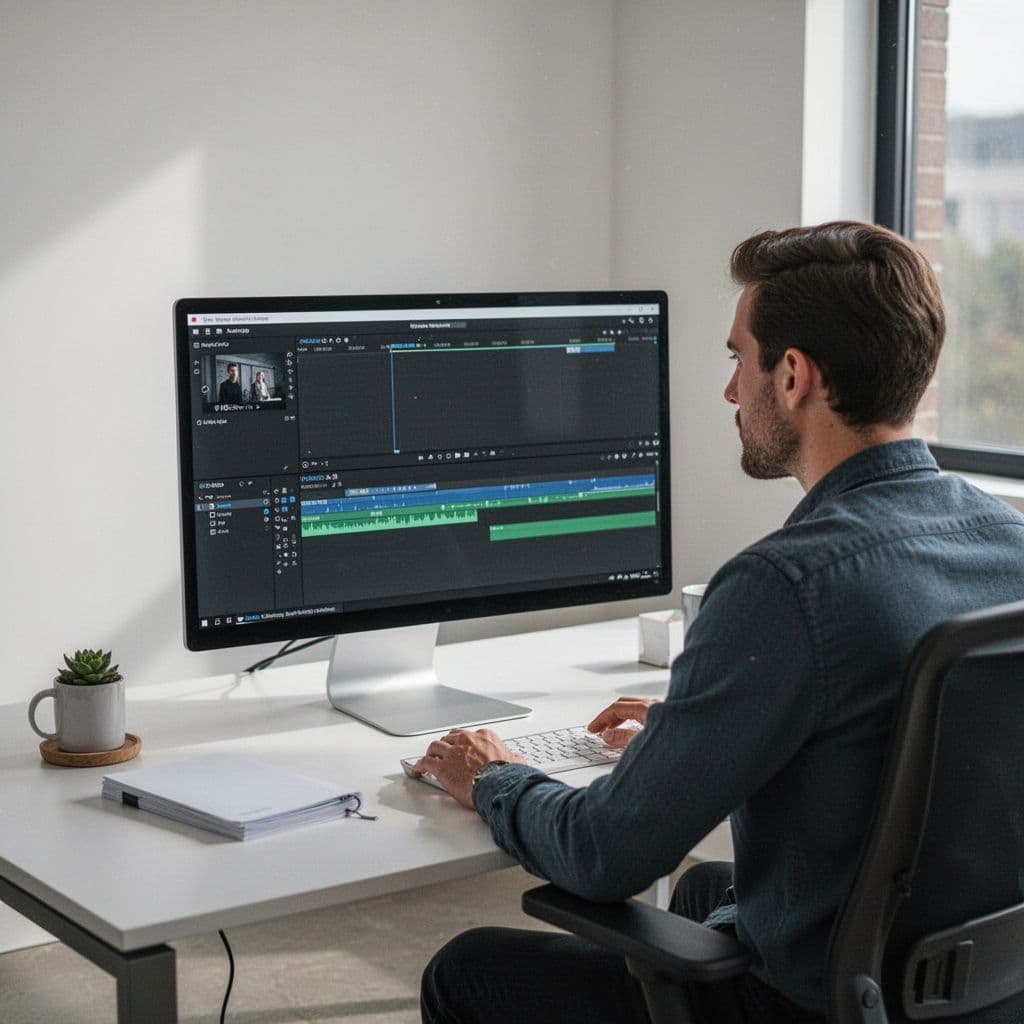
Editing is just as vital as writing. Tight cuts remove pauses and awkward transitions, which keeps the energy high. You can use jump cuts or zoom-ins to highlight key points and re-engage the viewer every 30 to 60 seconds. This approach to restructuring your video hook helps sustain momentum throughout the entire watch session. As you refine your process for monetizing your YouTube content strategy, remember that high retention leads to better search rankings and more qualified leads.
Build a YouTube content system that supports pipeline, not just views
Your YouTube channel is a business asset, not a television station. To drive pipeline, you need a repeatable system that moves viewers from passive research to active engagement. The goal is to build a library that answers the specific questions your best prospects ask, then guides them toward the next logical step in their buying journey.

Use video formats that fit B2B decision making
The right format builds trust by matching the stage of the buyer’s journey. Use how-to guides to capture top-of-funnel traffic from people searching for specific problem-solving techniques. These videos position your brand as a helpful partner before you ever mention a product.
As buyers move to the consideration phase, they look for clarity on how your solution stacks up against competitors. Product comparisons are vital here because they allow you to address objections directly. Use this list to keep your content balanced:
- Demos: Show the product in action to solve a specific pain point.
- Case studies: Share real results to provide social proof.
- Expert interviews: Feature internal leaders to build authority.
- FAQ videos: Answer common questions that your sales team hears every day.
These formats work because they provide the objective evidence buyers need to feel confident. For more ideas on how to approach these formats, creating compelling B2B video content can help you structure your narratives for higher impact.
Link related videos with end screens and cards
Don’t let a viewer leave your channel after finishing one video. Your job is to keep them in your ecosystem by suggesting the next logical piece of content. Use end screens and cards to guide them toward a related video that answers their next question.
If a viewer watches a how-to guide, the end screen should suggest a product comparison or a case study that shows the results of applying that method. Think of this as a self-serve funnel. By building a loyal YouTube audience, you turn individual views into long-term watch sessions.
Avoid sending viewers to random videos or generic playlists. Every link should provide a clear path forward. If you are struggling with a strategy, SyncGTM’s guidance on B2B sales content explains how to place pipeline calls-to-action in these areas for better conversion.
Refresh older videos instead of starting over
B2B content rarely expires as quickly as trend-based video. A high-quality explanation of a core industry problem remains relevant for years. Instead of burying older videos, you can extend their life by refreshing their packaging to keep them performing.
Update your titles to include current search terms or industry language. Create new thumbnails that use a cleaner, more modern aesthetic. You should also audit your descriptions to ensure they contain updated links to your latest lead magnets or sales pages.
This approach saves time and keeps your best assets visible in search. As noted in YouTube marketing best practices, focusing on high-intent topics ensures your library remains a powerful engine for demand generation. Regular updates tell the algorithm that your content is still fresh and worth recommending to new prospects.
Track the metrics that tell you what is working
Numbers on YouTube help you move past assumptions and see exactly how your content impacts the business. Instead of focusing on vanity stats like raw view counts, look at the data points that explain how your videos perform and whether they convert viewers into pipeline.

Use CTR to judge your title and thumbnail
Your click-through rate (CTR) is the most direct signal of whether your packaging hits the mark. When people see your video in search or browse results, they decide in a split second whether the topic addresses their needs. A high CTR tells you the title and thumbnail promise value that the buyer finds appealing.
If your CTR is low, the issue is almost always the packaging rather than the content itself. You might have the best video in the world, but nobody will see it if the title doesn’t spark interest or if the thumbnail feels cluttered. Review your lowest-performing videos and test clearer, more benefit-driven titles. Sometimes, a simple shift to focus on the specific problem you solve can double your clicks.
Use retention data to fix the content itself
Once someone clicks, the audience retention chart tells the real story of your video’s quality. This graph shows exactly where viewers stop watching. If you see a massive drop-off in the first ten seconds, your hook is likely too slow or fails to confirm that the video contains the answer they need.
Look for these common red flags in your retention data:
- Sudden dips: These usually indicate slow, repetitive sections or confusing explanations that cause people to tune out.
- Gradual declines: This often signals that the pacing feels sluggish or the content doesn’t maintain the momentum you promised in the title.
- Re-watches: These spikes happen when you explain a complex concept well or share a data point that viewers want to note down.
Use these insights to refine your next script. If a specific section consistently loses viewers, trim the fluff, add more visuals, or cut straight to the next point. Understanding what video marketing metrics matter beyond views will help you polish your content for better long-term engagement.
Connect video performance to lead quality
Views alone don’t move the needle for B2B teams. To see if your channel actually works, you need to tie your video data to tangible business outcomes like demo requests, sign-ups, or newsletter growth. Start by using UTM parameters for every link in your descriptions and comments, as this lets you track exactly which video drove a visitor to your site.
Beyond simple clicks, monitor how your video traffic converts into leads. You will often find that specific video topics, such as detailed product comparisons or specific use-case guides, generate much higher lead quality than general educational content.
This data helps you prove the ROI of your video strategy. As outlined in this guide to B2B YouTube marketing, focusing on influenced pipeline—where YouTube serves as a touchpoint in the buyer’s journey—is a much stronger way to justify your time. Focus on the videos that feed your sales cycle, and use that success to decide which topics deserve your team’s budget and effort next.
Conclusion
Success with YouTube for B2B marketing relies on helping the right buyers find the right video at the right time. You achieve this by starting with clear search intent, packaging your videos with specific and honest titles, keeping viewers engaged with practical answers, and tracking the metrics that actually show pipeline growth.
B2B teams win on YouTube when they stop chasing viral trends and focus on building trust. By creating content that answers real buying questions, you stop being just another channel and start becoming a resource that buyers rely on throughout their journey.
If you want to scale your reach further, you can supplement your video strategy by driving traffic from Pinterest to your most effective long-form content. Stay focused on solving problems, and the results will follow.
Save pin for later


- How I Make Money on Pinterest Pinning in 2026 - June 23, 2026
- How to Research Pinterest Keywords for Blog Posts In 2026 - June 23, 2026
- How to Set Up Google Search Console for a Blog - June 23, 2026