 Onwe Damian Chukwuemeka
Think of your Pinterest bio as the primary search engine optimization tool for your profile. Because Pinterest operates more like a search engine than a social media app, your bio needs to clearly communicate who you are and what value you provide to your audience.
When your bio is clear and packed with relevant keywords, you make it much easier for the right people to find your content. This small piece of text helps users decide if your account is worth a follow, so it’s a great place to start when you’re monetizing your Pinterest profile.
This guide offers a practical, step-by-step approach to writing a bio that converts visitors into followers. By the end, you’ll know exactly how to tailor your profile to attract your ideal audience and improve your search visibility.
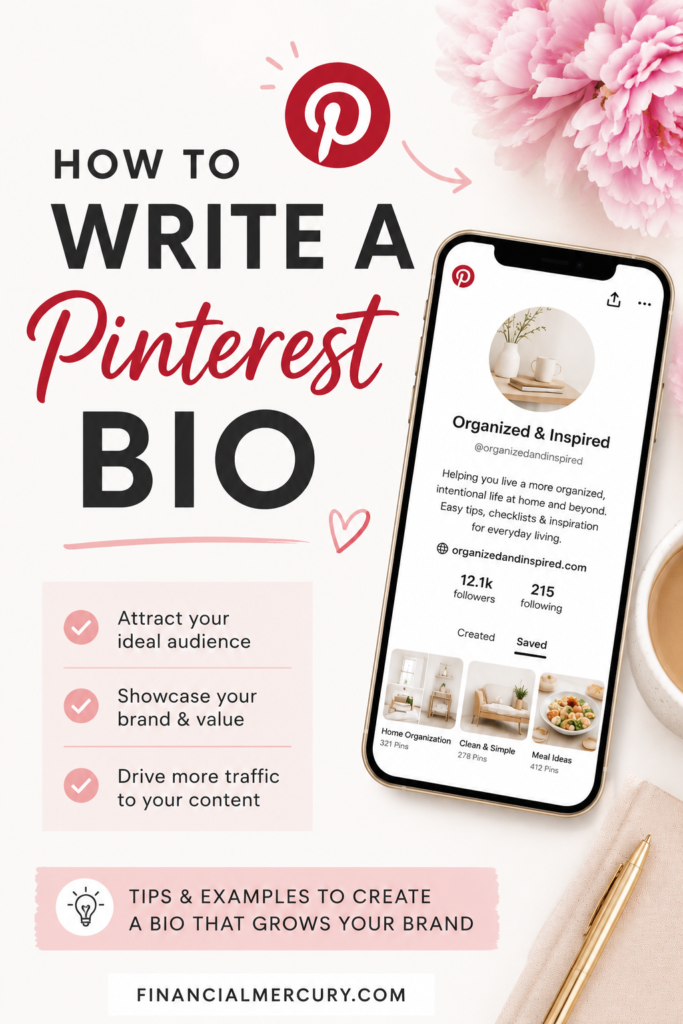
Save the pin for later
What a strong Pinterest bio needs to do
Your Pinterest bio acts as the primary signal to the platform and your visitors about the utility you provide. It is more than a simple introduction; it is a functional tool for discovery. When a user lands on your profile, your bio should immediately establish credibility and relevance to their current search. A well-constructed bio turns passive browsers into active followers by clearly articulating the value of your pins.

Show who you are and what your account is about
Visitors should know your niche within seconds of landing on your profile. If they have to guess what you share, you lose the opportunity to convert them into a follower. Your bio needs to state your topic explicitly and avoid fluff or vague statements that hide your purpose.
Clear niche signals help users identify if your account meets their needs. For example, if your boards are filled with meal ideas, your bio should clearly state terms like “easy weeknight recipes” or “healthy meal prep.” If you focus on DIY projects, use terms like “home improvement tutorials” or “budget-friendly furniture flips.” Vague phrases such as “living my best life” or “dream chaser” do not inform Pinterest or your audience about the content they can expect. Clarity is essential for building an audience that actually engages with your pins.
Help the right people decide to follow you
Your bio should speak directly to your ideal audience. Think of your profile as a solution provider rather than a digital resume. People follow accounts that promise to solve a problem or provide a specific result. When you focus your bio on the benefit to the reader, you attract followers who are actually interested in your content.
Instead of listing your professional history, explain the outcome of following your account. For example, tell them they will find “decorating tips for small apartments” or “travel guides for solo backpackers.” This approach shifts the focus from you to the user’s needs. When the reader sees that your account delivers exactly what they are looking for, the decision to click that follow button becomes much easier.
Support Pinterest SEO without sounding stuffed
Pinterest uses keywords to categorize your account and display your content in search results. Your bio is a primary location for these search signals. Include relevant phrases naturally so the platform understands your account’s topic. You can learn more about how to find Pinterest keywords to ensure you are targeting terms your audience actually uses.
Integrate these keywords into complete sentences rather than listing them in isolation. A bio filled with a random string of words reads poorly and can appear spammy to visitors. Instead, weave three to five specific terms into a brief description of your niche. If you are struggling to balance these terms, look at your most popular boards for inspiration. These board titles often contain the exact language your audience is using to find your content, making them excellent candidates for your bio. As you optimize your Pinterest posting times, keep this bio strategy consistent across all your channels.
Choose the right keywords before you write anything
Your bio acts as a bridge between what you offer and what your audience actively seeks. Before you type a single word, you must understand the language your potential followers use to find content. If you guess these terms, you might miss the mark. Instead, build your bio around specific phrases that mirror real search behavior on the platform.

Find the phrases your audience would actually search
Start by putting yourself in the shoes of someone searching for your content. Think about the exact problems they want to solve. People rarely search for broad terms like “food” or “travel.” They look for specific solutions to immediate needs.
For example, a user interested in cooking might type “easy dinner recipes” or “15-minute healthy meals” into the search bar. If you offer business advice, they might search for “small business marketing” or “content planning tips.” Travelers often look for “budget travel ideas” or “solo trip itineraries.” When you organize your thoughts, focus on these specific, actionable terms. You can refine your list by typing a broad topic into the Pinterest search bar and seeing what the platform suggests in the auto-complete dropdown. These suggestions reflect what real people are typing right now.
Pick 3 to 5 keyword phrases that fit naturally
Resist the urge to pack your bio with every possible term related to your niche. A long list of disjointed keywords creates a poor experience for the reader and often makes you look less credible. Aim for a focused selection of 3 to 5 strong phrases that define your account.
When you limit your focus, you create a cleaner and more professional bio. This narrow approach helps your target audience grasp your value immediately. Use your chosen phrases to build a natural sentence structure. If your main topics are home organization, interior design, and DIY projects, weave them into a coherent statement like, “I share practical home organization tips, small-space interior design, and simple DIY projects.” This is much more effective than simply listing keywords as if they were tags. You can follow this SEO checklist for new blog posts to learn more about how keyword placement impacts visibility across different platforms.
Match your bio to your pins, boards, and profile
Consistency acts as a trust signal for both the Pinterest search system and your human visitors. If your bio promises expert advice on finance but your boards focus on gardening, users will leave your profile quickly. Your account should present a unified theme that makes sense at a glance.
Align your bio keywords with the titles and descriptions of your most important boards. When these elements match, you reinforce your authority on that specific topic. Search systems categorize accounts faster when the signals across your profile are consistent. If the content on your pins contradicts what you write in your bio, your credibility drops. Keep the language you use in your bio in sync with the primary topics found in your pins to ensure you attract the right audience. As you prepare your strategy, you can stay informed by checking the latest insights on Pinterest trend predictions for 2026 to align your content with evolving search interests.
Use a simple bio formula that is easy to follow
Writing a Pinterest bio often feels intimidating when you stare at the blank character limit. You want to sound professional, include keywords, and explain your value all at once. The best approach is to stop trying to be creative and start being functional. Use a simple framework to build your bio piece by piece. This eliminates guesswork and ensures you hit every requirement for both search engines and human visitors.

Start with who you help or what you create
Your opening sentence is the most important part of your profile. It defines your identity and sets expectations for every new visitor. Focus on the person you serve or the specific content you produce. Avoid vague self-descriptions that focus only on your personality. Instead, state your purpose immediately.
If you are an individual creator, identify your specific role. Use a phrase like “I help busy parents” or “I teach small-space gardening.” If you are a brand, lead with the problem you solve for the customer. This direct approach provides context before the reader scrolls. A clear opening statement, such as those discussed in professional advice on writing an effective bio, helps users decide if they are in the right place within seconds.
Add the topic, niche, or result you cover
Once you define your audience, follow up with the actual subject matter of your account. This part of the bio connects your identity to the specific outcomes or skills you offer. Explain exactly what visitors will find when they explore your pins.
Use this structure to highlight the results followers gain from your content:
- Saving time: Focus on quick hacks, shortcuts, or simplified processes.
- Learning skills: Mention tutorials, how-to guides, or expert tips.
- Finding ideas: Highlight mood boards, inspiration collections, or curated lists.
Be specific with these details. A statement like “I help home cooks master 30-minute meals” is far more effective than simply saying “I post food content.” By linking your topic to a tangible result, you show potential followers that you understand their needs. For more structure on how to frame these benefits, you can consult the essential steps for a complete profile.
End with a short call to action when it makes sense
A call to action provides a simple nudge for users who are ready to engage. It tells the reader exactly what to do next to benefit from your account. Keep it brief and relevant to your goal. If you want more followers, ask them to join the community. If you sell products, invite them to browse your latest collection.
Keep your call to action natural and low-pressure. Examples like “Follow for weekly inspiration” or “Save these tips for later” work well for most creators. You do not need a pushy sales pitch to be effective here. Just provide a clear direction that makes the next step obvious for anyone who enjoys your profile content. If you need inspiration for your own specific niche, you can look into tips for creating a strategic bio to finalize your language.
Write a Pinterest bio that feels clear, not clever
Many creators fall into the trap of using cute or abstract language to describe their work. While this might feel creative, it often confuses potential followers who need to know exactly what you offer within a few seconds. Pinterest is a search engine, not a personal journal; your bio should focus on utility rather than artistic expression. By keeping your message direct, you help your audience identify the value you provide immediately.

Use short words and short phrases people can scan fast
Pinterest users move quickly. They scan through search results and profiles in a fraction of a second. If your bio is a dense paragraph, most people will skip it entirely. You should prioritize brevity and readability to ensure your main point lands before the visitor scrolls away.
Break up your text to make it easier on the eyes. Use sentence fragments or simple lists if they improve the flow. For instance, instead of writing a long sentence about your professional background, use two or three punchy phrases separated by line breaks. This formatting forces the eye to focus on your key topics. As discussed in Pinterest bio best practices, keeping your language simple helps the platform categorize your account correctly while making it approachable for your human audience.
Avoid vague lines that do not explain the account
Vague statements occupy valuable space that could be used for search terms and concrete details. Phrases like “pursuing my passion” or “creating a life I love” tell the reader nothing about your content. If someone lands on your profile, they want to know if you can solve their problem or inspire their next project.
Replace abstract fluff with specific identifiers. If you write about interior design, specify your niche rather than using broad, empty labels. Compare these two options to see the difference:
- Weak: “Just a dreamer capturing the beauty of the world.”
- Clear: “I share affordable home decor tips, small-space design ideas, and DIY furniture tutorials.”
The second option tells the user exactly what to expect and includes multiple keywords that likely align with what they are searching for on the platform. To understand more about why this shift matters, consider how effective Pinterest bio ideas impact your overall reach and conversion rate.
Keep the tone natural and close to how you speak
A bio shouldn’t read like a robotic keyword dump or a sterile corporate mission statement. Your followers are real people, and they appreciate a human voice. Write as if you are explaining your account to a friend over coffee. Confidence is helpful, but you don’t need to overdo it with jargon or high-pressure sales language.
Focus on being helpful rather than being impressive. A friendly, direct tone makes your profile feel more inviting. When you sound like a real person, you build trust with your audience. This trust is the first step toward getting profile visits and turning a casual searcher into a loyal follower who returns to your boards regularly. Your bio is your first handshake, so keep it sincere and relevant to the people you hope to attract.
Make the bio better for clicks, saves, and profile visits
Your Pinterest bio is a conversion tool. While discovery brings people to your profile, the bio convinces them to stay. It should turn a casual browser into an active participant in your content. When you demonstrate immediate value, you make it easy for users to justify clicking the follow button.

Give people a reason to follow now
Users follow profiles that promise ongoing utility. You must connect your account’s content to a clear, recurring benefit. Tell visitors exactly what they gain by keeping up with your pins. When your promise is specific, it becomes a compelling reason to follow rather than just saving a single pin.
State your value clearly to build trust. For example, mention that you share weekly meal prep tips for busy families or monthly guides for budget travel. If your account focuses on tutorials, emphasize that you provide step-by-step help for complex projects. This strategy works because it positions your profile as a reliable resource. When you provide proven strategies for Pinterest traffic growth, you establish that your account is worth the follow. Consistency in your bio sets expectations, and meeting those expectations encourages long-term engagement.
Use one simple action phrase when it helps
A short call to action guides the user toward the next step. It clarifies what you want them to do without feeling aggressive. Place this phrase at the end of your bio to keep the focus on the benefits you offer. The best calls to action feel natural and align with your account goals.
Choose an action that fits your current objective. If you want more followers, try something like “Follow for weekly inspiration.” If you sell items or promote specific resources, use “Save this for your next project” or “Shop my favorite finds.” Keep it simple and relevant. You do not need to force a sale; just offer a helpful direction. When the invitation feels useful, readers are much more likely to engage.
Build trust with one small proof point
People gravitate toward accounts that seem knowledgeable and established. Adding a subtle credibility cue makes your profile feel more authoritative. You don’t need to list every accolade, as a single point is often enough to build confidence. A brief mention of your experience, role, or specialty helps visitors feel comfortable following you.
Select a detail that reinforces why your content is helpful. For example, you might mention that you are a certified interior designer, a hobbyist with five years of experience, or a professional who specializes in small-space living. Keep this note short so it does not distract from your primary message. When you balance your value proposition with a touch of personal expertise, you stand out as a legitimate source of ideas. This small layer of trust is often the final nudge needed to secure a new follower.
Test, refine, and update your bio over time
Your Pinterest bio is not a static object that you create once and permanently lock away. It is a living component of your profile that should grow alongside your audience, your content strategy, and your professional goals. Treat it as a tool that requires periodic maintenance to ensure it remains relevant to the people you hope to reach. By dedicating a few minutes each quarter to review and adjust your profile, you maintain a strong connection with your followers and keep your account visible in search results.

Check if the bio is clear in five seconds
The most effective way to test your bio is the five-second rule. Ask a friend or colleague to look at your profile for exactly five seconds and then close the page. If they cannot describe what you do or what value your account provides, your message is likely too vague.
A clear bio must pass this test because modern users possess short attention spans. They decide whether to follow your account based on an immediate impression. If your description uses flowery language or inside jokes, you risk losing potential followers who just want to know if you can solve their current problem. If the core purpose of your account isn’t obvious, simplify your phrasing immediately. Replace ambiguous adjectives with concrete nouns and specific industry terms. When you strip away the clutter, your true value shines through to the people who need it most.
Watch for signs that the keywords need a refresh
Even a successful bio loses its impact if it doesn’t keep up with your evolving content. You should re-examine your keywords whenever you shift your content focus or target a new audience segment. If you recently started focusing on new topics, like moving from broad interior design to specialized organization hacks, your bio must reflect that transition. Otherwise, you attract followers interested in your old content while confusing those looking for your new expertise.
Keep an eye on the analytics for your pins and boards to identify these shifts. If you notice a specific topic or theme gaining traction, you may want to swap an underperforming keyword for one that accurately captures your current growth. You don’t need to reinvent the wheel, but you should perform a brief audit of your keywords every few months. This process ensures your profile signals remain accurate for the platform’s search system while serving your audience the exact content they search for. As you refine your presence, think about how to craft better blog post headlines to keep your broader content strategy in sync with your profile updates.
Compare a few versions and choose the strongest one
Before you commit to a new bio, draft two or three variations in a note-taking app. This exercise reveals which version sounds the most natural and professional. Even small changes, such as moving a keyword to the beginning of a sentence or tightening a phrase, can change the entire tone of your profile.
After you write a few drafts, read each one aloud to see if it sounds like a human speaking. The strongest option is usually the one that uses direct, active language and clearly promises a specific benefit. Once you find a version that feels both honest and professional, update your profile immediately. If you remain unsure, ask a trusted peer to choose the version they find most inviting. A polished, intentional bio reflects well on your brand and builds credibility with every new visitor who lands on your page. Consistent, incremental improvements to your profile text can often make a surprising difference in how quickly your audience grows over time.
Conclusion
A successful Pinterest bio stays clear, uses relevant keywords, and focuses entirely on the reader. You now have a simple formula to follow that highlights exactly who you help, the content you share, and the benefits you provide to your followers.
Stop guessing what might work and start using language that reflects how your audience searches. Update your bio today to make your profile a destination that converts visitors into loyal members of your community.
Save the pin for later

- How I Make Money on Pinterest Pinning in 2026 - June 23, 2026
- How to Research Pinterest Keywords for Blog Posts In 2026 - June 23, 2026
- How to Set Up Google Search Console for a Blog - June 23, 2026