
 Onwe Damian Chukwuemeka
Pitching brands for sponsored posts in 2026 is no longer about hitting high follower counts or chasing vanity metrics. Today, brands prioritize creators who foster genuine, long-term relationships and drive real trust within their communities.
You don’t need a massive audience to land your first deal; you just need to prove that you understand your followers and can create content that converts. It’s an effective way to build an online income stream while remaining true to your own voice.
Focusing on professional collaboration rather than a quick paycheck will help you secure higher-quality partnerships. Here is how you can refine your outreach to stand out to the brands you admire.
Finding the Right Brands for Your Content
Success in brand partnerships starts long before you send a single email. If you chase every brand you see, you will likely burn out and struggle to gain traction. The most effective creators focus on companies that actually share their values and interest their specific audience. When you pitch brands that align with your niche, the resulting content feels natural, builds trust, and performs better for everyone involved.
Researching Brand Values and Audience Alignment
Before reaching out, spend time getting to know how a brand communicates. You need to look past their product and understand their mission, tone, and current focus. If their recent social media activity focuses on sustainability or community giving, and your content reflects those same values, you have found a strong starting point for a connection.

Use these steps to vet your prospects:
- Scan recent content: Scroll through their Instagram, TikTok, or LinkedIn feeds to identify their visual style and the topics they prioritize.
- Track new product launches: Brands are most receptive to partnerships when they have a new product to promote.
- Analyze their current partnerships: Look at who they already work with to see if your content style fits their existing roster.
- Read their mission statement: Visit their website to confirm their corporate goals match your personal brand standards.
Taking time for this research helps you determine if a partnership is worth the effort. For deeper guidance on vetting, check out this corporate sponsorship research playbook. If you find that a brand’s target demographic does not overlap with your own, skip them and focus on a company that truly values your specific audience segment.
Avoiding Generic Pitching Mistakes
Nothing kills a potential partnership faster than a copy-pasted, generic pitch. When a brand manager receives a message that could apply to any creator, they immediately know you haven’t done your homework. Your goal is to show them you understand their business and why you are the perfect person to help them reach their goals.
Instead of writing a vague request, highlight specific details about what they do. Mention a recent product you enjoyed or a campaign they ran that caught your eye. When you explain exactly why you like their product, you build immediate credibility.
For instance, avoid saying, “I love your brand and want to collaborate.” That provides no value to the brand. Instead, try, “I noticed you just launched your new skincare line, and since my audience is focused on sustainable beauty routines, I think we could create a great educational reel about your ingredients.”
When you get specific, you demonstrate professionalism and show that you are serious about delivering results. If you are looking for more ways to stand out, you can explore strategies for monetizing your music blog with sponsorships or other niche-specific outreach tactics. Being authentic in your communication makes you much more likely to secure a response than sending a cold, mass-produced email template.
Crafting Your Professional Media Kit
Think of your media kit as your creator resume. It serves as the primary document that introduces you, your audience, and your value to a potential brand partner. A well-organized kit provides the data a brand manager needs to approve a partnership without having to hunt for information across your social platforms. You should treat this document as a living asset, updating it with your latest statistics and project highlights at least once a quarter.
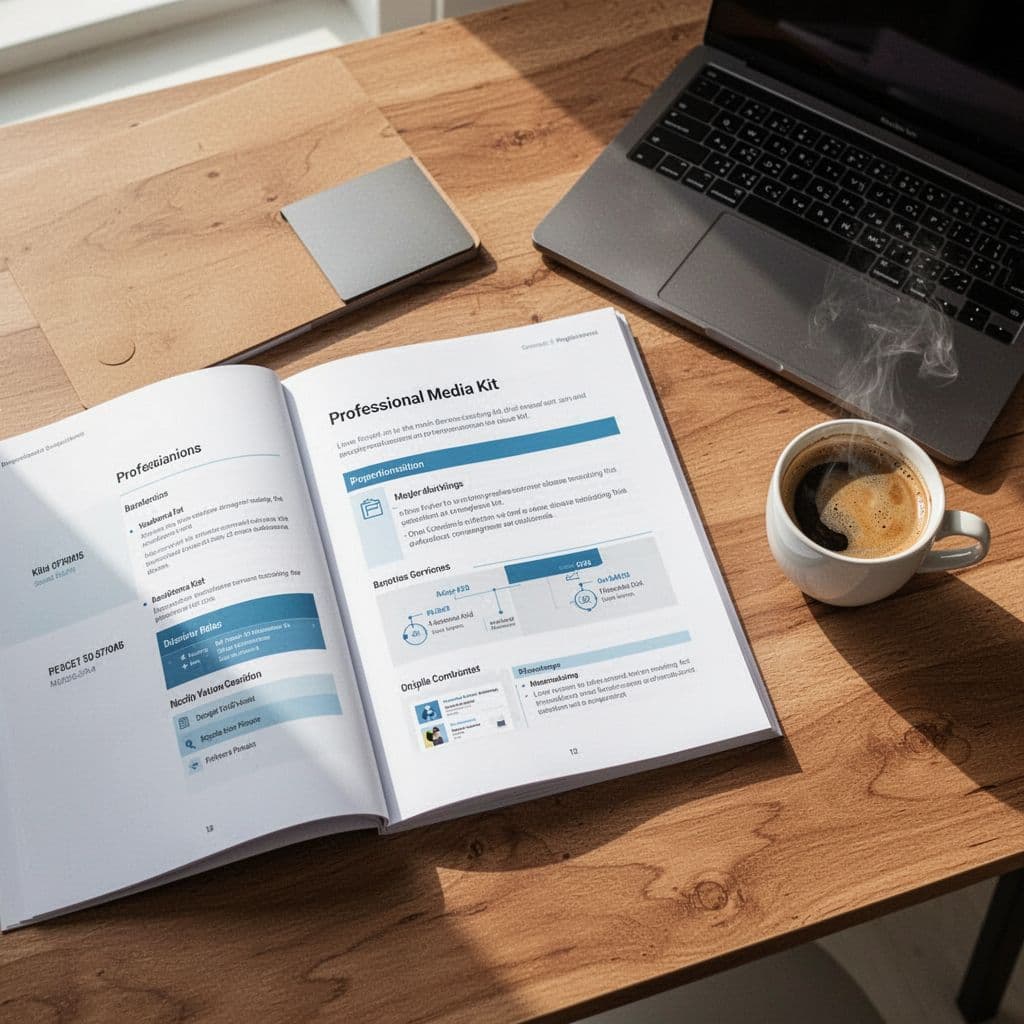
Your kit should be concise, visually appealing, and easy to scan. Whether you host it as a live webpage or send it as a PDF, the goal is to make your professional experience immediately clear. If you want to understand more about the philosophy behind professional creator branding, you can learn more about Financial Mercury and our approach to digital presence. For a step-by-step breakdown of what to include, you can reference this influencer media kit guide.
Showcasing Your Best Work and Past Results
Brands do not just buy your follower count; they buy your ability to solve their marketing problems. You must prove your worth by highlighting past successes through brief, data-driven case studies. When you show that a previous campaign drove specific actions, you remove the guesswork for the brand manager.
Structure your case studies by focusing on the challenge, the action you took, and the final result. If a past partner wanted more website traffic, show the percentage increase in clicks you generated from your post. If they wanted brand awareness, share your reach, impression, or video view numbers.
Include the following elements for each project you feature:
- Project context: Briefly state the brand name and the primary goal of the collaboration.
- Content strategy: Mention the type of content you created, such as a dedicated review or an educational video series.
- Concrete outcomes: Use specific numbers like engagement rates, click-throughs, or total video views to demonstrate success.
- Brand testimonial: A one-sentence quote from a previous contact is a strong way to build social proof.
For more inspiration on how to display these metrics effectively, look at how other professionals structure their media kit examples. When you provide clear evidence of your performance, you position yourself as a reliable business partner rather than just another content creator. This transparency builds the trust necessary to close higher-paying deals. You can also explore additional strategies to build a sponsorship media kit that highlights your unique strengths and previous wins.
Writing a Pitch That Gets a Response
Your pitch acts as your first impression. If it feels disorganized or overly formal, you risk being ignored by busy brand managers. The secret is to keep your communication clear, concise, and focused on what you offer the brand, rather than what you want from them. Whether you are turning hobbies into income streams or establishing a new partnership, the structure of your message determines your success rate.

When to Use Email versus Social Media DMs
Choosing between email and social media DMs depends entirely on the size of the brand and how they manage their partnerships. Smaller brands often handle outreach through social platforms because they monitor their feeds daily. If you are reaching out to a local shop or an emerging online store, a DM is a quick way to get noticed. Keep your message short, friendly, and under 100 words. Ask if they have an email address for partnerships so you can send over your formal media kit.
Conversely, professional email is the gold standard for established brands, agencies, and large corporations. These teams rely on email to keep records of conversations and manage contracts. When you contact a brand, check their social media bio or their website footer for a specific “pr” or “partnerships” email address. Using the correct contact channel shows that you respect their internal workflow and understand how professional business operates.
If you are unsure where to start, check their website first. Many brands maintain a dedicated page for collaborations. If you find no specific instructions, default to email for a professional introduction. You can also learn about Pinterest marketing for profit if your brand outreach strategy involves visual platforms where a hybrid approach of DM and follow-up email often works well.
To keep your outreach structured, follow this four-part framework in your pitch:
- The Introduction: State who you are and why you follow the brand in two sentences.
- The Audience Match: Describe your target audience and explain why they align with the brand.
- The Proof: Mention one recent success or a specific statistic from your media kit to build authority.
- The Call to Action: Propose a specific, low-pressure next step, such as a quick chat or a request to send your full media kit for review.
A well-crafted pitch is respectful of the brand manager’s time. By delivering the right information in the right place, you increase your chances of starting a productive conversation that leads to a paid deal. Focus on the value you provide, and the response will follow.
Strategies for Long-Term Brand Relationships
A one-off sponsored post is just the beginning of a potential partnership. Most creators treat a collaboration as a single transaction, but the real value lies in turning that one project into a recurring relationship. By consistently delivering high-quality work, you position yourself as a reliable partner rather than a vendor. This shift from transactional to ambassador-style agreements secures more predictable income and helps you build deeper trust with your audience.

To make this transition, prioritize results. After the initial post goes live, send a summary of how the content performed. Include metrics like click-through rates, audience sentiment, and engagement levels. This data shows the brand exactly how you contributed to their goals. When you demonstrate that your content provides a clear return on investment, the brand naturally wants to keep working with you on future campaigns.
Following Up Without Being Pushy
Waiting for a response can feel frustrating, but brand managers are often swamped with emails. A well-timed follow-up shows you are organized and excited about the prospect of working together. Aim to send your first check-in roughly 5 to 7 days after your initial outreach if you have not heard back. This window gives them enough time to digest your pitch without it getting buried in their inbox.
When you write your follow-up, avoid simply asking if they saw your previous email. Instead, use this as an opportunity to add value. Perhaps you have a new content idea that fits their current product launch, or you recently hit a growth milestone with your audience. For effective ways to frame these check-ins, you can look at sponsorship follow-up email best practices.
If they still do not reply after a second nudge, give it space. Persistence is good, but respect their silence as an answer for the moment. To keep your outreach organized, try these methods for adding value in every message:
- Reference recent news: Mention a recent press release or update from the brand to show you still keep up with their business.
- Share social proof: Link to a high-performing piece of content you created recently for another brand.
- Propose a small change: Offer a fresh perspective on your original pitch, such as a different format or a new campaign angle.
When you frame every interaction as a way to solve their problems, you build credibility. For more on how to stay helpful throughout the process, consider how to follow up without being annoying. Remember, your goal is to be a professional collaborator. Keep your tone light and focused on how your skills match their needs. If you make it easy for them to say yes, you will find more success in the long run. To get even more specific ideas on persuasive follow-up, check out this guide on how to write follow-up emails.
Conclusion
Success in landing partnerships depends on your commitment to professionalism and constant improvement. Every pitch you send is a chance to sharpen your communication and demonstrate your value to a potential partner. If a brand says no, treat that experience as a data point for your next attempt rather than a setback.
Stay consistent with your outreach and keep your media kit updated with your most recent work. Brands hire people they trust to deliver quality results on a reliable timeline. Keep refining your approach, focus on the needs of the businesses you admire, and your efforts will eventually lead to meaningful, long-term collaborations.
Save pin for later


- How I Make Money on Pinterest Pinning in 2026 - June 23, 2026
- How to Research Pinterest Keywords for Blog Posts In 2026 - June 23, 2026
- How to Set Up Google Search Console for a Blog - June 23, 2026