
 Onwe Damian Chukwuemeka
Staring at a blank screen while trying to figure out what to publish next is a quick path to burnout. If your current posting schedule feels more like a frantic guessing game than a growth strategy, you aren’t alone.
A 90-day content calendar changes that by replacing random decisions with a clear, actionable roadmap. By planning three months ahead, you stop scrambling for ideas and start working smarter to build long-term momentum.
This approach gives you the space to focus on quality rather than just hitting a publish button under pressure. Once you have a bird’s-eye view of your content, you can focus on growing website traffic using Pinterest or other channels that move the needle for your business.
Getting Ready to Plan Your Content
Effective planning doesn’t require expensive software or complex project management tools. You only need a simple spreadsheet, a shared calendar, or even a basic notebook to get started. Success comes from consistency and clear direction rather than over-engineering your setup. Before you fill a single date on your calendar, you must build the foundation that turns scattered ideas into a cohesive publishing machine.

Defining Your Main Content Pillars
Think of your content pillars as the core pillars of a building. They are the 3 to 5 primary topics that support your blog and define your authority in a specific area. Without these defined themes, your blog often becomes a collection of random thoughts that confuse both search engines and your readers. Focusing your energy here ensures every piece of content you produce works toward a single goal.
When you narrow your focus, you naturally attract the right audience. If you write about everything from gardening tips to investment strategies, you rarely build a loyal following because readers don’t know what to expect from your site. A structured set of pillars creates a recognizable brand identity. Content pillars are the backbone of your strategy, acting as broad themes that all your future content revolves around.
Limiting yourself to 3 to 5 pillars keeps your workflow sharp and manageable. It prevents the overwhelm that happens when you try to cover too much ground. You can still write about subtopics or related trends, but you always filter them through the lens of your main pillars. This approach makes it easier to track what topics resonate with your audience and helps you build expertise in your chosen field.
Brainstorming Ideas without Judgment
The most effective way to fill your 90-day calendar is to clear your head completely. Use the “brain dump” technique to capture every thought that comes to mind, regardless of how silly or unfinished it feels. Your objective at this stage is volume, not quality. Set a timer for 15 minutes and force yourself to keep writing until the clock runs out.
Don’t pause to edit or critique your ideas while you’re in the middle of this process. Even if an idea seems too simple or slightly off-topic, write it down anyway. Sometimes a rough, “bad” idea sparks the perfect headline or angle once you see it on paper later. When you remove the pressure to be perfect, you allow your natural creativity to flow without restriction.
Once your timer goes off, you have a massive list of potential posts to work with. Now you can move into the evaluation phase to sort them into themes and dates. You’ll likely find that you have enough material to last the full 90 days and beyond. Remember that planning requires a balance between creative freedom and structural discipline; let the brainstorm be the messy, creative part, and save the logic for your calendar organization.
Building Your Master Spreadsheet
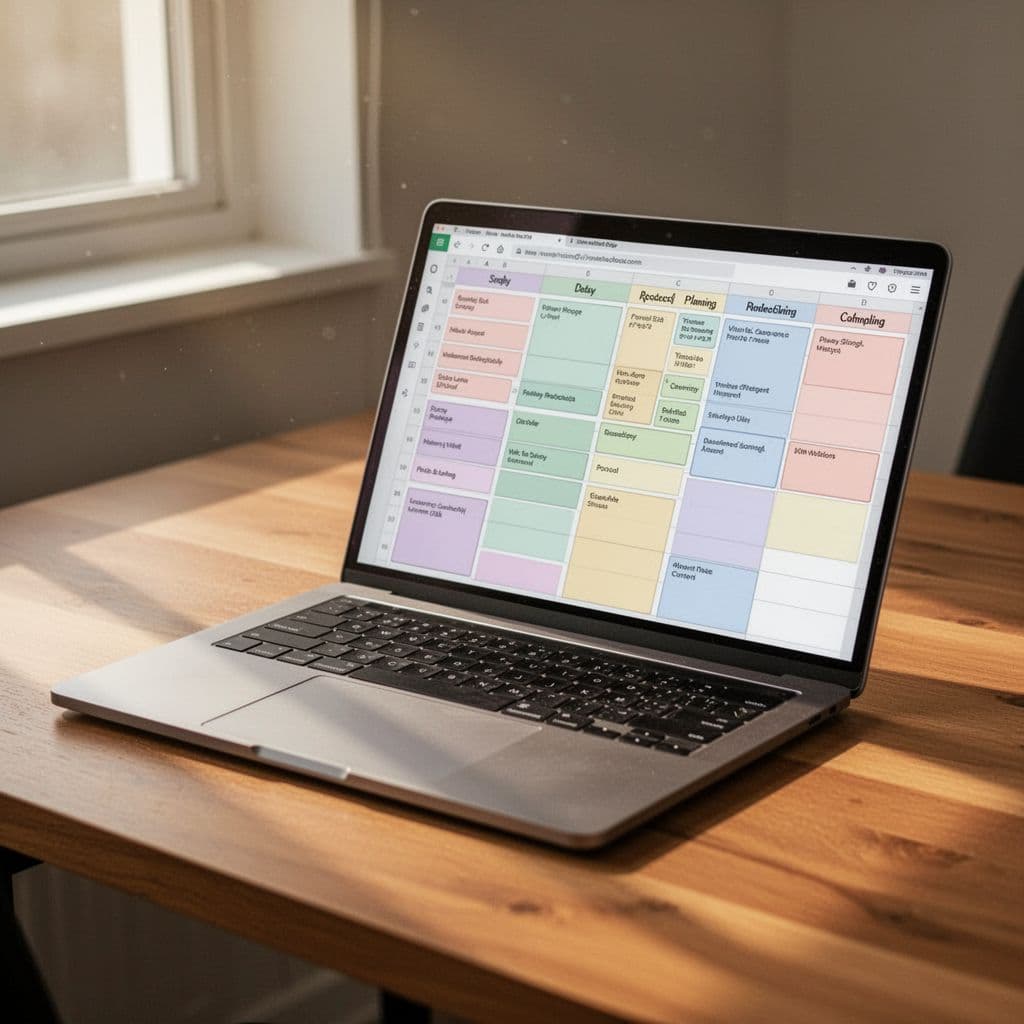
Now that you have a pile of raw ideas, it is time to move them into a structured home. A master spreadsheet acts as the command center for your entire content strategy. It prevents you from guessing what to write each morning and keeps your progress visible. You only need a simple layout with columns for your release dates, working titles, target keywords, and current status. This organization turns a chaotic list of thoughts into a reliable publishing machine.
Structuring Your Publishing Schedule
Consistency is the secret to growth, but it is easy to overcommit when you feel motivated. If you try to publish daily, you will likely burn out before you hit the 30-day mark. Start with a schedule you can maintain for at least three months. Aiming for one or two high-quality posts per week is much better than a sudden burst of activity followed by months of silence.
| Frequency | Best For | Benefit |
|---|---|---|
| 1 Post Per Week | Busy Schedules | Allows time for deep research and editing. |
| 2 Posts Per Week | Accelerated Growth | Signals consistent activity to search engines. |
| 1 Post Every 2 Weeks | In-depth Content | Prioritizes long-form guides and original data. |
Pick your target frequency and mark those dates in your spreadsheet immediately. Once your dates are set, you can monetize your online presence without the stress of constant deadlines. If your life gets hectic, it is better to scale back your frequency than to abandon your schedule entirely.
Incorporating SEO Strategy Early
Many bloggers write a post first and try to add keywords later. This approach is backward. Selecting your keywords during the planning phase ensures that every article you write solves a specific problem for your audience. When you build your strategy around search intent, you avoid wasting time on topics that no one is looking for.
Keyword research is the heart of any plan. By identifying your primary keyword before you write, you define the scope and angle of the piece naturally. You will know exactly what questions your readers have, which makes the writing process faster and more focused. This helps you profit from digital channels by ensuring your work actually reaches the right people.
Include a status column in your spreadsheet to track where each post sits in your pipeline. Common statuses like “Idea,” “Drafting,” “Optimizing,” and “Published” keep your workflow organized. Updating this tracker regularly gives you a clear picture of your progress and lets you see where you might be lagging. If you follow this system, you will find it much easier to balance your creative output with your business goals.
Mastering the Art of Batch Creation
Writing a fresh post every single day is a quick path to creative fatigue. Most bloggers find that the daily grind forces them to jump between brainstorming, writing, and editing too often. Batch creation solves this by grouping similar tasks into dedicated time blocks. When you focus on one part of the process for a longer duration, your brain stays in a productive flow state, which makes your work faster and much higher in quality.

Why Batching Wins Over Daily Writing
The main struggle with writing one post at a time is the mental energy wasted on switching tasks. When you shift from research to drafting and then to formatting, you lose time resetting your focus. Batching eliminates this friction by keeping you locked into one activity. By batching your blogging tasks, you stop wasting time on the setup for each individual piece and simply move through your calendar faster.
Working in batches also provides a much-needed buffer for your schedule. If you write two weeks of content in one sitting, you remove the pressure to perform on days when life gets in the way. This consistency is a major factor in how to start a profitable blog, as it signals to search engines that your site is active and reliable. Instead of racing against a daily deadline, you manage your workload on your own terms.
A Practical Batching Workflow
You can start small by splitting your workflow into specific functional phases. If you try to do everything at once, you will likely feel overwhelmed. Use this simple sequence to structure your next block of time:
- Idea Generation: Spend one session identifying a month of topics that align with your pillars.
- Outlining: Flesh out the structure for three or four posts during a single sitting.
- Drafting: Focus purely on getting words on the page without worrying about polish or images.
- Editing: Return to your drafts a day later to refine your message and add links.
- Scheduling: Load your finished posts into your blog and social media platforms all at once.
This method for producing blog posts prevents the burnout that often stops beginners in their tracks. It allows you to maintain momentum even when you feel uninspired. By building a profitable online presence, you learn that success is not about how hard you work every day, but how well you organize your efforts to stay consistent over the long term.
Staying Flexible When Plans Change
Even the best-laid plans hit unexpected bumps. A content calendar is a tool to keep you focused, not a set of iron shackles that prevents you from reacting to the real world. Life happens, and trends change faster than you can write a draft. You should view your 90-day roadmap as a helpful guide that points you toward your goals while remaining open to necessary adjustments.

Embrace the Power of Pivot Points
You might find that a high-priority opportunity appears or a scheduled post suddenly loses its relevance. Instead of forcing a square peg into a round hole, give yourself permission to swap topics. Maintaining a flexible editorial calendar allows you to catch emerging trends that your audience actually wants to read about right now.
When you notice an unexpected event, take a moment to evaluate its impact on your current strategy. If the change aligns with your long-term goals, go ahead and shift your schedule. The ability to pivot shows your readers that you pay attention to the current climate. It builds trust because your content remains helpful and timely rather than stale or out of touch.
Build Buffers into Your Workflow
Avoid scheduling every single slot with a specific topic and no room to breathe. One of the best ways to stay agile is by leaving one day per week or one slot per month as an open space. You can use these gaps to cover breaking news, answer a sudden influx of reader questions, or share a personal story that fits your brand.
- Keep a backlog: Maintain a small list of evergreen topics that you can swap in if a scheduled interview or collaboration falls through.
- Review regularly: Take 10 minutes every Friday to look at the upcoming week and decide if your planned topics still match the current situation.
- Prioritize urgency: If a major industry shift occurs, bump your planned content and address the new development immediately to maintain your authority.
Having a plan for unexpected events ensures you don’t panic when things do not go as expected. It turns potential stress into a creative opportunity to provide extra value. When you accept that change is a natural part of the process, you gain the confidence to create high-quality content that stays relevant no matter what the day brings.
Reviewing Your Progress Regularly
Setting a plan is only the first step in building a sustainable blog. Without a routine check-in, you may miss trends, technical errors, or shifts in audience interest that impact your growth. Treat your blog like a living project that requires ongoing maintenance rather than a static archive. Scheduling a recurring review helps you stay on track and ensures your effort actually delivers results.

Establishing a Simple Review Schedule
You do not need to monitor your stats daily, as this often leads to unnecessary stress and impulsive decisions. Instead, set a cadence that matches your publishing frequency. A monthly review works well for most creators because it provides enough data to spot patterns without consuming too much time. Use this session to look at your primary metrics, such as traffic sources, bounce rates, and total page views.
If you find yourself guessing what to optimize, consider how to analyze Pinterest engagement patterns to see how specific visuals or headlines perform. You should also check for broken links and site errors at least once a month. Tools like Google Search Console highlight critical issues, such as missing pages or crawl errors, that prevent visitors from reading your best work.
Auditing for Quality and Relevance
A regular content audit helps you identify what to update, delete, or merge. Not every post you write will remain a winner over the long term. If a piece of content sees a drop in traffic or rankings, it is a sign that the information is either outdated or no longer solves the reader’s problem. You can learn more about this process through a full guide on conducting a blog content audit to keep your library sharp.
Follow this simple checklist during your review to maintain site health:
- Accuracy Check: Does your post still contain current facts, figures, and tool recommendations?
- Engagement Review: Do readers spend time on the page, or do they leave immediately?
- Link Maintenance: Are there any broken internal or external links that need replacing?
- Goal Alignment: Does the post still support your primary content pillars or business objectives?
- Optimization Opportunities: Can you improve the headline, add a new image, or expand a section to answer reader questions better?
Acting on Your Findings
Tracking numbers is pointless if you do not use the data to change your approach. If you notice a specific topic consistently drives more traffic, shift your future calendar to include more of that subject matter. Conversely, if certain posts consistently underperform, look for ways to pivot or remove them from your site. A thorough blog audit and refresh strategy provides the framework for these decisions.
Always prioritize the user experience when making changes. If a page has a high bounce rate, consider if the content is clear or if it is too difficult for a visitor to find the next logical step. By fixing small errors and keeping your best content current, you build a foundation that search engines and readers find reliable. Planning is the engine of your blog, but your regular review process is the steering wheel that keeps you moving in the right direction.
Conclusion
You now have a clear roadmap to stop the guesswork and start building real momentum. The heavy lifting of planning is behind you, so the only remaining step is to start writing.
Consistency is the primary driver of long-term blog growth. By sticking to your calendar, you demonstrate reliability to your audience while showing search engines that your site is a valuable, active resource.
Pick your first topic from your spreadsheet and publish it this week. Your future self will thank you for getting started today.
Save the pin for later

- How I Make Money on Pinterest Pinning in 2026 - June 23, 2026
- How to Research Pinterest Keywords for Blog Posts In 2026 - June 23, 2026
- How to Set Up Google Search Console for a Blog - June 23, 2026