
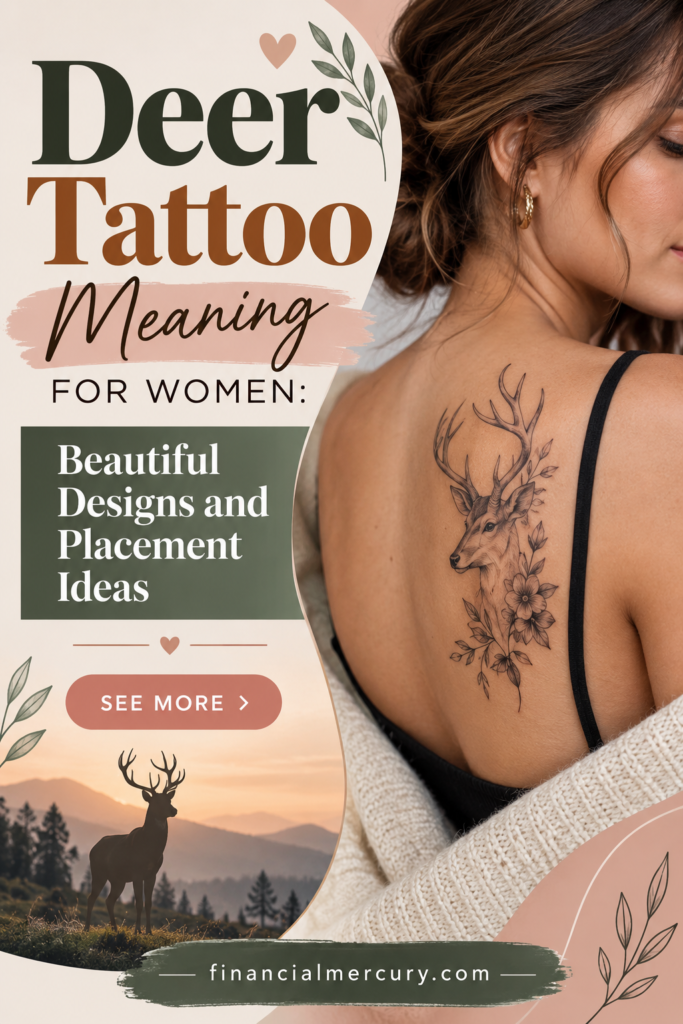
Deer Tattoo Meaning for Women: Beautiful Designs and Placement Ideas
A deer tattoo might look delicate and pretty at first glance, but there’s a lot more happening beneath the surface. For centuries, deer have symbolized grace, intuition, gentleness, and renewal, which is why they’ve become one of the most meaningful tattoo choices for women.
If you’re considering ink that actually says something about who you are, a deer design gives you plenty to work with. Different cultures attach different meanings, from the Celtic association with independence to the Native American connection with sensitivity and instinct. And they’re not fading from style anytime soon; deer tattoos are trending hard in 2026, showing up everywhere from minimalist wrist pieces to large nature-inspired sleeves.
In this guide, you’ll find everything you need: the symbolism behind these designs, popular styles worth considering, the best placements, and how to choose a tattoo that fits you. Let’s start with what a deer tattoo actually means.
What a Deer Tattoo Really Symbolizes for Women
A deer carries a quiet kind of symbolism. It stands for gentleness, grace, independence, and a strong connection to nature, all qualities many women want their ink to reflect. Unlike bold animal tattoos that announce themselves, a deer tends to speak softly, which is exactly its appeal.
There’s also a nurturing side to the symbol. Deer are attentive mothers and herd animals that stay alert to their surroundings, so the design can represent protection, care, and awareness. If you want, you can pair it with other meaningful elements; a moon phases tattoo guide is a good example of building layered meaning into one piece.
Grace, Intuition, and Inner Strength
Deer survive by trusting their instincts. They sense danger before they see it and move with a confidence that doesn’t need to be loud. Many women choose a deer tattoo to mark exactly that: a period of growth where they learned to trust themselves.
The animal is strong without aggression, which makes it a fitting symbol for quiet power. It’s a popular choice for someone coming out of a hard season, honoring a milestone, or simply reminding herself that softness and strength can live in the same body.
Deer Symbolism Across Cultures
Meaning shifts a bit depending on where you look, and knowing the background can help you choose a design that feels right.
- Native American traditions often see the deer as a messenger between worlds, tied to sensitivity and instinct. A deer tattoo can honor that connection to intuition.
- Celtic legends cast the stag as an otherworldly guide, leading travelers toward freedom and independence. It’s a favorite for anyone who values her own path.
- In Japan, deer at places like Nara are considered sacred messengers of the gods, a symbol of divine protection and peace.
- Hindu imagery links the deer with gentleness and the soul’s longing, often appearing alongside deities as a sign of harmony.
Whichever thread speaks to you, the common ground is the same: the deer is a creature that moves through the world with awareness, elegance, and calm. That’s the story your tattoo tells.
Beautiful Deer Tattoo Designs for Women with Meaning
Now that you know what the symbol carries, the next step is picking a design that fits your story. Deer tattoos come in a surprising range of styles, from a whisper-thin line on the wrist to a bold antler spread across the shoulder blade. Each one leans into a different meaning, so it helps to match the look to what you want the tattoo to say.
Minimalist Deer and Fawn Line Tattoos
Fine-line work has become the go-to style for a first tattoo, and deer suit it perfectly. A single-needle design uses hair-thin strokes to sketch a leaping deer, a standing doe, or a tiny fawn in profile. The result looks more like a pencil drawing than permanent ink.
These pieces shine in small spots: the wrist, ankle, side of the neck, or just below the collarbone. A fawn works especially well here, since its meaning is tied to innocence, new beginnings, and gentle growth. Many women choose it to mark a fresh chapter, like a new job, a move, or recovery after a hard year.
Because the lines are so fine, placement matters. Areas that see a lot of sun or friction (wrists and fingers, for example) can cause fine lines to fade faster, so a good artist will suggest slightly thicker strokes for those spots.
Deer with Antlers and Antler-Only Tattoos
Antlers carry their own message. Unlike horns, antlers shed and regrow every year, which makes them a natural symbol of renewal, resilience, and strength that comes back after loss. If you’ve rebuilt yourself after a difficult season, an antler design captures that without saying a word.
There are two main directions. A full stag with a dramatic rack reads bold and confident, and it fits larger canvases like the thigh, forearm, or upper back. An antler-only design strips the symbol down to its essentials and works beautifully on the shoulder blade, ribs, or the back of the arm, where the shape can follow the body’s lines. Some women add small details inside the antlers, such as stars, leaves, or a tiny moon, to personalize the meaning.
Stag and Doe Pair Tattoos
Paired deer designs are a favorite among couples, sisters, and close friends. A stag and doe facing each other, or split across two people, represents partnership, loyalty, and love that stays steady over time. In the wild, deer are alert and protective of their herd, so the pairing also hints at watching out for someone.
The designs don’t have to match exactly. One person might carry the stag while the other holds the doe, or you can each take half of a single scene that only completes when you stand side by side. Popular placements include the inner forearm, the ankle, and the back of the shoulder, all spots that are easy to show or hide depending on the moment.
Geometric and Deer Skull Designs
Geometric deer tattoos build the animal from clean lines, triangles, and overlapping shapes. The style feels modern and balanced, and the structured construction mirrors the meaning many women attach to it: harmony, order found after chaos, and a mind that has settled. It’s a strong choice for the forearm, calf, or sternum, where symmetry looks intentional.
The deer skull takes a darker, more contemplative route. Far from being grim, it usually stands for overcoming loss, accepting the full cycle of life and death, and finding strength in what remains. Skull designs pair well with desert florals, feathers, or arrow elements, and they hold up beautifully as larger thigh or rib pieces.
Whimsical Styles: Moon, Flowers, and Watercolor Deer
If you want something softer, whimsical deer designs offer plenty of room to play. A deer beneath a crescent moon ties the animal to intuition, dreams, and feminine energy, which connects nicely to the symbolism covered earlier. Deer surrounded by wildflowers lean toward growth, freedom, and a love of the natural world.
Watercolor is the most feminine of these styles. Color bleeds beyond the outline in loose washes, giving the piece a painted, almost weightless feel. Soft pinks and dusty blues read romantic, while earth tones like sage, terracotta, and ochre suit a nature-inspired look. Keep in mind that watercolor ink can fade faster than solid linework, so an experienced artist and diligent sun protection make a real difference in how the piece ages.
Whichever direction you take, the design should feel like yours. A deer tattoo is flexible enough to be quiet or bold, literal or abstract, but the meaning you attach to it is what makes the ink worth keeping for decades.
Best Placement Ideas for a Deer Tattoo
Once you’ve settled on a design, placement decides how it lives on your body. Size, visibility, and pain tolerance all play a part here. A fine-line fawn that looks lovely on a wrist would get lost on a thigh, and a detailed stag needs room to breathe. Think about how often you want to see it, whether your workplace allows visible ink, and how much discomfort you’re willing to sit through.
Small and Hidden Spots: Wrist, Ankle, and Behind the Ear
These spots suit minimalist designs and first tattoos. A tiny deer silhouette or a single antler branch fits neatly on the inner wrist, the outer ankle, or tucked behind the ear. Pain levels stay low to moderate in all three areas, so they’re forgiving if you’re nervous about your first session.
The practical benefit is discretion. A bracelet, watch band, or a bit of hair covers the tattoo completely, which matters in offices with strict dress codes. One trade-off to know: these areas get a lot of sun and friction, so fine lines here may need touch-ups sooner. If you want more hidden placement ideas that follow the same logic, spots like the inner arm and back of the neck work on similar principles.
Statement Spots: Thigh, Ribs, and Forearm
Larger, detailed pieces need canvas, and these three deliver. The thigh offers the most space, so full stags, forest scenes, and geometric compositions all work there. It’s also one of the least painful larger areas, since the muscle and fat cushion the needle. Ribs, on the other hand, hurt; the skin sits thin over bone, so go in expecting a tough session, especially for anything covering several inches.
The forearm falls in between. Pain is manageable, and a vertical deer design can flow naturally along the arm’s length. Forearm ink is always visible unless you wear long sleeves, so it’s a choice for women who want their tattoo as part of their everyday look. Whatever spot you pick, sit with the idea for a few weeks and test it by drawing the outline on with a skin-safe marker first. Living with the placement before committing is the cheapest insurance you’ll ever get on a tattoo.
How to Choose a Deer Tattoo Design That Fits You
By now you’ve seen the styles and placements, but picking the right tattoo comes down to a few honest decisions. A deer design works best when it connects to something real in your life, so take your time before committing to the first pretty image you scroll past.
Match the Design to Your Story
Start with the meaning, not the picture. Ask yourself why you want a deer at all. Maybe it honors a loved one who’s passed, marks a year you finally trusted yourself, or reflects the quiet independence you’ve built. A memorial might call for a fawn with a birthdate in fine script, while a personal milestone could suit a leaping stag. When the story is yours, you’ll never regret the ink.
Once you know the why, collect reference photos. Save pieces you love to a dedicated folder and note what draws you in: the linework, the mood, the extra elements like flowers or moons. After a week or two, patterns will show up, and you’ll be able to describe exactly what you want instead of gesturing vaguely at your phone.
Finding the Right Artist and Budgeting for Your Tattoo
The artist matters as much as the design. Look for someone with strong fine-line or animal work, because deer require delicate, confident strokes to read well. Check portfolios on Instagram or the studio’s website, and pay attention to healed work, not just fresh photos. A line tattoo that looked perfect on day one can blur badly if the artist went too shallow or too fine.
Pricing is straightforward once you know what to expect. Small, simple pieces usually run $80 to $200, while larger detailed work on the thigh or ribs often starts around $300 and climbs with size and color. Most studios charge a minimum session fee regardless of size, so ask upfront.
Book a consultation before committing. Bring your references, ask how the artist would adapt the design to your placement, and listen for honest feedback. A good artist will push back if a tiny design won’t age well on your wrist. That conversation is the difference between a tattoo you love for ten months and one you love for ten decades.
Caring for Your New Deer Tattoo
The session is done, but the real work starts now. Fine-line deer pieces in particular live or die on aftercare, because delicate strokes blur easily when the skin gets infected, dried out, or sunburned. Treat the first month like the tattoo depends on it, because it does.
Washing and Moisturizing
Your artist will wrap the tattoo before you leave, and that covering stays on for the first few hours (or overnight, if they used a second-skin film like Saniderm; just follow their instructions). Once you remove it, wash gently with lukewarm water and a fragrance-free soap such as Dial or Cetaphil. Use clean hands only; no washcloths, no loofahs.
Pat it dry with a paper towel, then apply a thin layer of unscented moisturizer. Aquaphor works for the first few days, then switch to a light lotion like Lubriderm. The skin should look matte, not greasy. Repeat washing two to three times daily and moisturize whenever it feels tight or flaky. Resist the urge to pick at scabs or peel any flakes; that’s how fine lines lose their crispness.
What to Avoid While It Heals
Keep the fresh ink away from anything that could trap bacteria or pull out color:
- No pools, hot tubs, lakes, or baths for at least two weeks; showers are fine
- No direct sun on the tattoo, and no tanning beds for a full month
- Skip tight clothing over the area, since friction damages healing skin
- Leave the peeling alone, even when it itches
The Healing Timeline
Most deer tattoos heal on a predictable schedule, though larger pieces on the ribs or thigh can run slower. Here’s what to expect week by week.
| Stage | What Happens |
|---|---|
| Days 1–4 | Redness, tenderness, and oozing ink are normal |
| Days 5–10 | Flaking and itching peak; keep moisturizing |
| Weeks 2–3 | Skin closes and settles; colors look duller than fresh |
| Weeks 3–4 | Fully healed on the surface, deeper layers still repairing |
Your tattoo will look slightly faded once the outer layer heals; that’s expected. The piece settles back to full color over the following month. Keep it protected from sun long-term, and a touch-up after six months will keep those fine lines sharp. If you’re still weighing up the design itself, browsing different deer tattoo designs can help you plan your next piece before the first one has even healed.
Conclusion
A deer tattoo brings together two things worth keeping: quiet beauty and personal meaning. Whether you lean toward a fine-line fawn, a bold antler design, or a watercolor piece beneath a crescent moon, the best choice is the one tied to your own story. Grace, renewal, intuition, quiet strength, pick the symbol that matches where you’ve been and where you’re headed.
Take your time with the design and placement, and choose an artist who treats fine lines with care. When the meaning is real, the ink stays meaningful for decades.
Which design speaks to you? Save your favorites to a Pinterest board or folder, and if you already carry a deer tattoo, share your pick and the story behind it in the comments. Someone else might find their perfect design through your choice.
Save pin for later

- Hunting Gothic Skin: What the Search Term Can Mean - September 25, 2026
- Skull Tattoo Designs for Men That Stay Bold Over Time - September 25, 2026
- 30 Tips to Find Your Perfect Tattoo Style and Artist - September 25, 2026
Leave a Reply