30 Tips to Find Your Perfect Tattoo Style and Artist
Finding the right tattoo means choosing a style you love and an artist who can execute it well. That takes more than saving a few striking designs: your idea needs to suit the level of detail you want, and the artist’s portfolio should show consistent skill in that style.
These 30 practical tips will help you move from gathering inspiration to reviewing portfolios, planning placement, and checking studio safety. Start with the details that will help you turn a personal idea into a design you can discuss confidently with an artist. You can also browse minimalist tattoo inspiration as you gather ideas.
Watch Tattooing 101’s video on choosing a tattoo style.
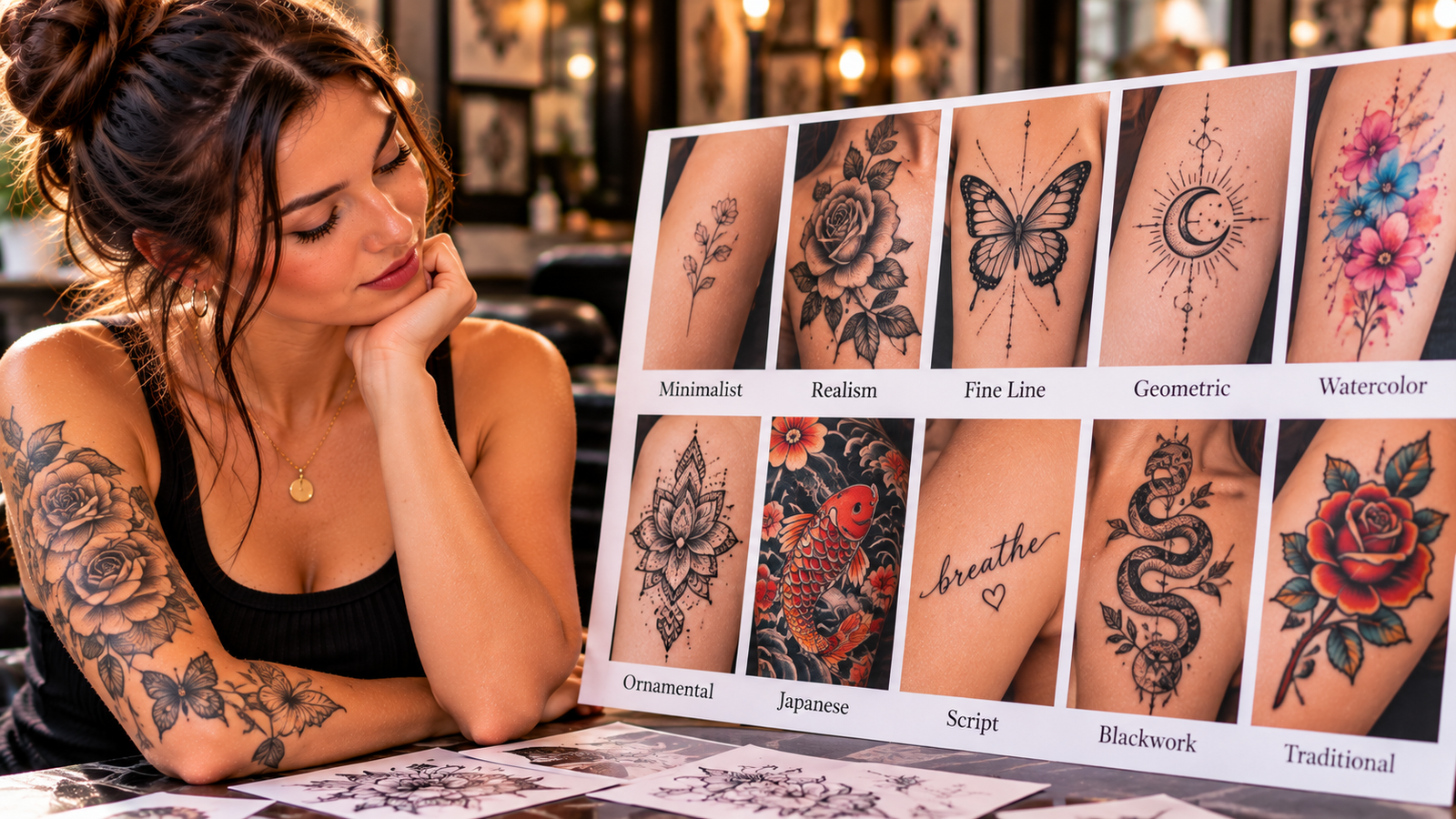
30 Tips to Find Your Perfect Match and Tattoo Style
Use this practical checklist of 30 tips, grouped into five stages, to move from an early idea toward a design and artist you feel confident about. Personal taste matters, but so do the design’s fit on your body and the artist’s ability to execute the style. Start with these first six tips.
Start with meaning, mood, and visual references
1. Write down what you want the tattoo to represent. It might honor someone, mark a life change, or remind you of a value you want to carry. A few honest words can help you explain the idea without locking yourself into a specific image.
2. Choose the mood you want the tattoo to convey. Would you like it to feel bold, delicate, playful, or calm? This gives you a useful filter when you review designs, since the same subject can look gentle or dramatic depending on its lines, shading, and color.
3. Collect a small set of clear reference images. Save examples that appeal to you, then note what catches your eye in each one: line weight, detail, composition, or color. Use references to explain your preferences, not to ask an artist to copy someone else’s tattoo exactly. Your artist can use those cues to develop a design that fits your body and idea.
Explore styles before you settle on a design
4. Compare tattoo styles by their visual features. Fine-line work uses delicate outlines, while traditional tattoos often rely on bold contours and clear color. Realism aims for lifelike shading; illustrative work can resemble a drawing; geometric designs emphasize pattern and symmetry; and blackwork uses black ink for strong shapes and contrast. Tattooing 101’s guide to tattoo styles offers examples to help you compare.
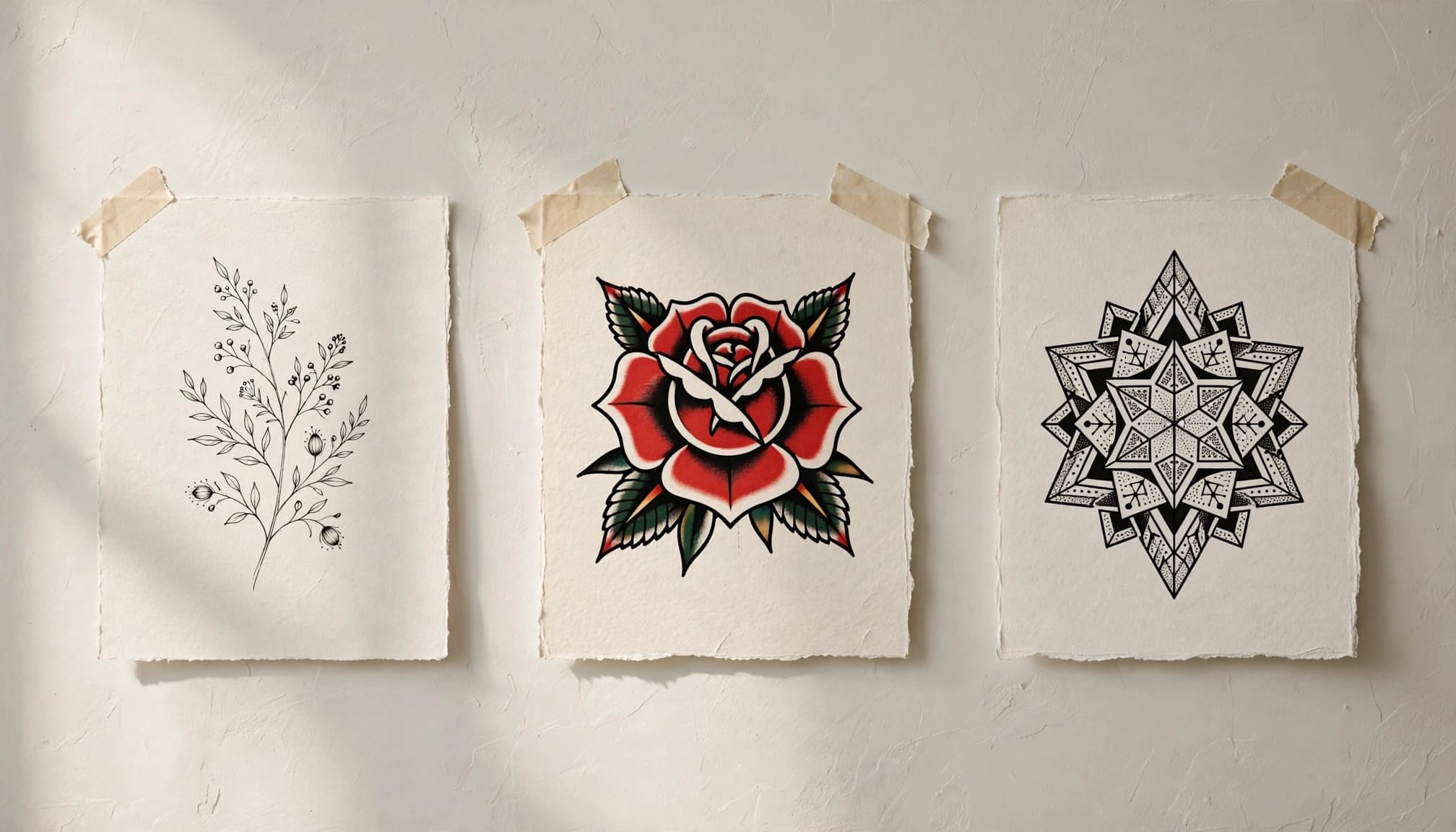
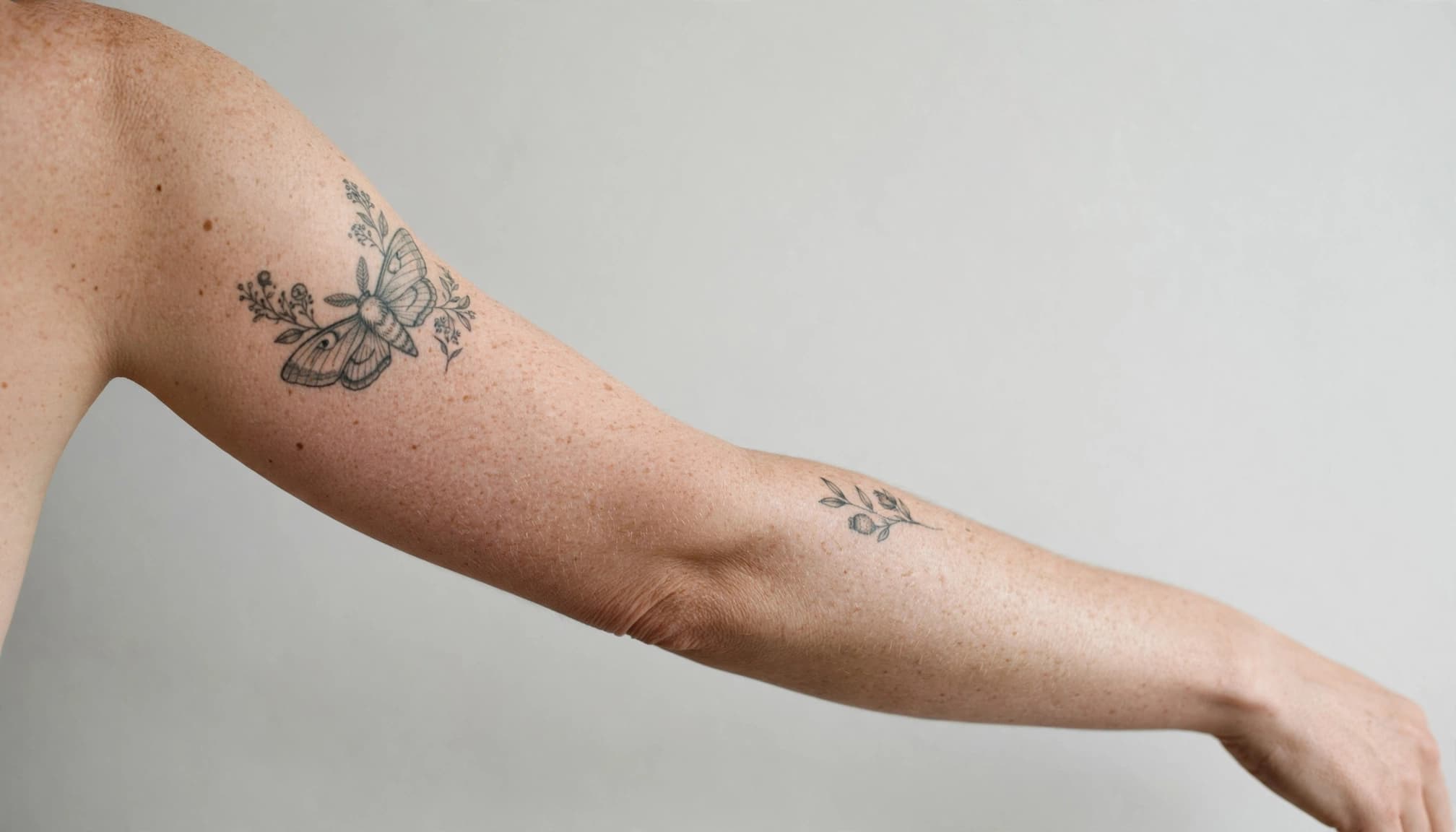
5. Look at healed tattoos, not only fresh ones. Fresh work can appear sharper and more vivid. Healed photos give you a better view of how the lines, shading, and contrast settle on skin. When possible, check whether the artist shares healed examples in the style you’re considering.
6. Narrow your options by detail and contrast. Consider how much visual information you want and how clearly you want the tattoo to read. A small, intricate design may need simplifying, while a larger piece can support more detail. Also remember that the subject alone doesn’t define the style: a flower in fine-line work can look delicate, while a traditional flower can feel bold and graphic.
Match the Tattoo Design to Your Body and Daily Life
A design needs to work on your skin and fit the way you live. Before settling on the artwork, consider how its size, placement, visibility, and care needs will affect your choice over time.
Choose a size and placement that suit the artwork
7. Decide how visible you want your tattoo to be. Hands, wrists, and necks are hard to conceal, while areas covered by everyday clothing offer more flexibility. Consider workplace dress codes, your usual wardrobe, and whether you want the tattoo on display or mostly for yourself.
8. Give the design enough room. A detailed image may need more space than you expect, and squeezing it onto a small area can make its features difficult to read. Very small tattoos may not hold fine detail clearly over time, so ask your artist whether simplifying the artwork or choosing a larger size would help.
9. Ask how your body may affect the design. Movement, muscle shape, and natural skin folds can change how a tattoo looks when you sit, bend, or raise an arm. Your artist can help position the design so it follows the body well and remains balanced in different poses.
Think ahead about skin, sun, and long-term changes
10. Keep tattoos off moles and spots you need to monitor. The American Academy of Dermatology advises choosing skin without moles, since ink can make changes in a spot harder to see. If a mole sits where you want the tattoo, ask a dermatologist about it before booking.
11. Plan for sun protection. UV exposure can fade tattoo ink, and sunlight can trigger a reaction to some pigments, even years after tattooing. Once the tattoo has healed, protect exposed skin with a broad-spectrum, water-resistant SPF 30 or higher sunscreen. The AAD also recommends reapplying sunscreen at least every two hours outdoors.
12. Choose a placement that can adapt to your routine. Your clothing, job, and preferences may change, so consider whether you’ll still feel comfortable seeing the tattoo every day or covering it when needed. If you notice a new or changing spot within a tattoo, or develop a skin reaction, the AAD’s tattoo skin reaction guidance can help you decide when to seek medical care.
Find a Tattoo Artist Whose Portfolio Fits Your Style
Once you have a style in mind, use it to narrow your artist search. Review each portfolio for evidence of both artistic fit and safe studio practices before you book.
Look for repeated skill in the style you want
13. Search for artists who specialize in your chosen style. An artist with strong work in fine-line tattoos may not have the same experience with realism or traditional designs. A polished general portfolio is a good start, but it doesn’t prove skill in every style.
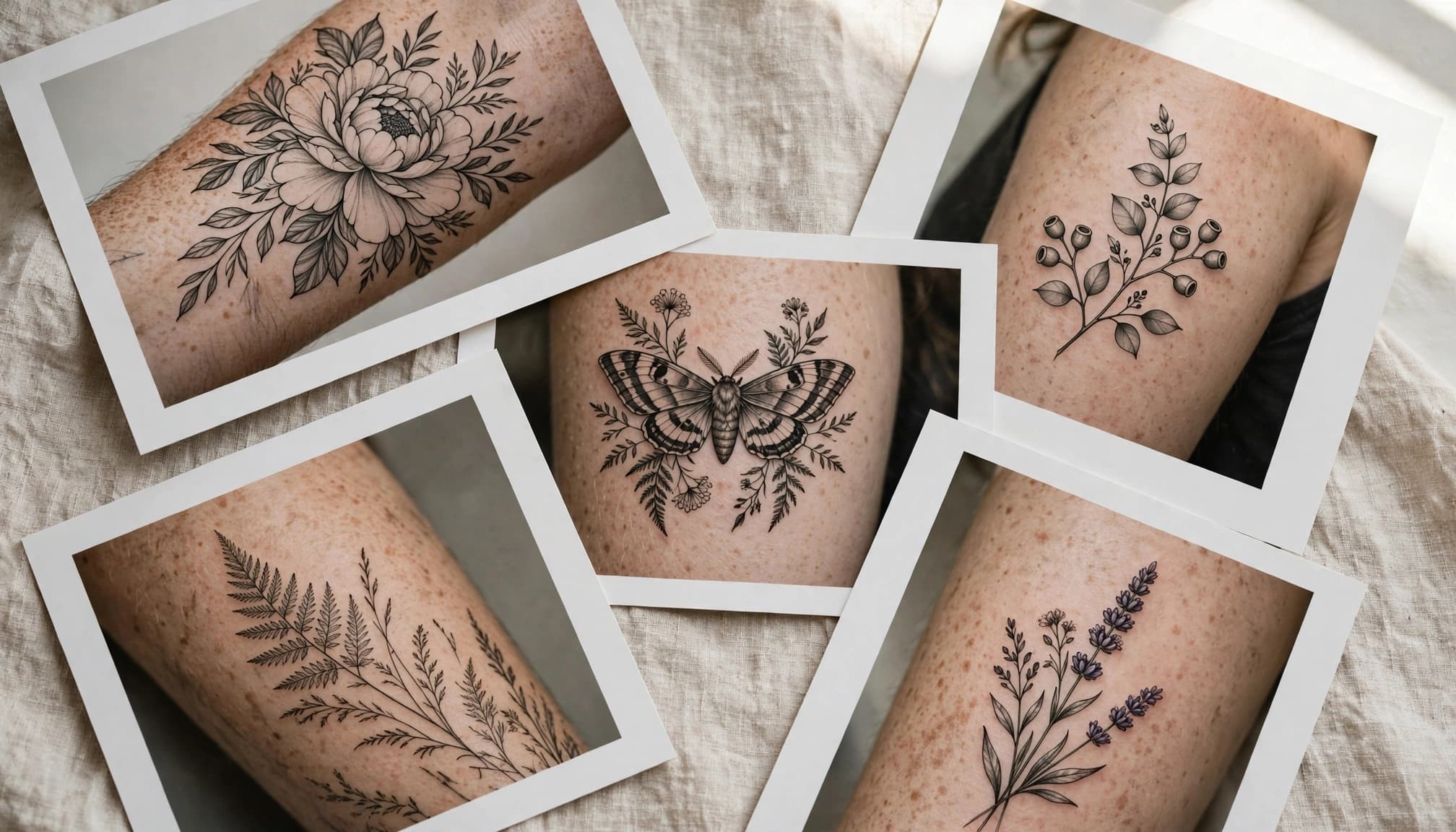
14. Compare several examples, not just a favorite. Look for steady lines, smooth shading, and even color in multiple tattoos. Consistency across different designs can tell you more than one standout photo. Also check that the artist’s work suits your subject and the level of detail you want.
15. Look for healed work and different angles. Fresh tattoos can look sharper and more saturated than healed pieces. When available, review healed photos to see how lines and color settled. Multiple angles can also show how a design follows the body, rather than hiding details in one carefully chosen shot.
Check the studio’s hygiene before you book
16. Ask about local registration or licensing. Rules vary by state and city, so contact the studio or check with your local health department. A professional artist should be comfortable explaining which requirements apply and how the studio meets them.
17. Confirm how the artist handles sterile equipment and hygiene. Ask whether needles are sterile and single-use, and whether the artist washes their hands and changes gloves as needed. Watch how the artist prepares the work area during a consultation. Clean technique helps reduce infection risk, but it cannot address every possible source of contamination.
18. Ask about tattoo ink and dilution. The ink should be made for tattooing, and any dilution should use sterile water. The FDA warns that tattoo ink can be contaminated even in a sealed container or when labeled sterile. Nonsterile water used to dilute pigment can also introduce harmful microbes. Review the FDA’s tattoo safety guidance and ask the artist direct questions if anything about ink handling is unclear.
A careful artist should answer these questions without brushing them off. If the studio can’t explain its hygiene practices clearly, keep looking.
Use the Consultation to Build a Design That Feels Personal
A consultation turns your references into a tattoo designed for your body, preferences, and the artist’s strengths. Bring ideas to discuss, then let the conversation shape the final design rather than asking for an exact copy.

Bring clear ideas and ask useful questions
19. Make a concise reference board. Choose a handful of images and explain what you like about each one. One might show the line weight you prefer, while another captures a color palette or mood. This helps the artist understand your taste without treating another person’s tattoo as a template.
20. Ask how the design will work at your chosen size and placement. A concept that looks clear on a screen may need changes on skin. Ask which details might blur together, whether the composition should follow a different direction, and what the artist would adjust to make it readable over time. A skilled artist can adapt your idea while keeping its meaning and character.
21. Talk openly about experience and care. Ask how often the artist works in your requested style, and whether they can show similar healed tattoos. Also confirm which ink they use, what aftercare they recommend, and whom to contact if healing concerns arise. If symptoms seem unusual, ask the artist for ink details, but contact a health professional for medical advice. The AAD’s guidance on wound infection signs can help you recognize symptoms that need prompt attention.
Review the sketch, details, and appointment plan
22. Review the design and placement before your appointment. Check the sketch at the intended size and ask to see the stencil position on your body. Look at it while standing naturally, since a design can shift in appearance when you move. Confirm that the scale, orientation, and key details match what you discussed.
23. Speak up while changes are still possible. If something feels off, explain what you want adjusted and why. Maybe the focal point needs more room, or a small detail competes with the main subject. Raise concerns before the tattoo begins, when revisions are easier to discuss. A good artist should explain practical limits and may recommend simplifying artwork that has too much detail for its size.
24. Confirm the appointment terms before paying a deposit. Ask how long the session is expected to last, whether the design will require multiple visits, and what the deposit covers. Check the studio’s cancellation and rescheduling policy, too. Clear expectations help you plan your time and budget, while giving both you and the artist a shared understanding before the first session.
Compare Tattoo Costs Without Cutting Corners on Safety
Price matters, but the lowest quote may not be the best value. Compare the work, studio practices, and terms together so you can choose an artist whose style and safety standards fit your priorities.
Set a realistic budget and compare quotes fairly
25. Ask how the artist prices the tattoo. Some charge by the hour, while others quote by the piece or session. Ask what the estimate includes and whether it could change if the design or appointment takes longer than expected.
26. Budget for more than the session. Include the deposit, travel, and any expected touch-up fees. Deposit and rescheduling policies vary by studio, so get the terms in writing before paying. If you’re setting aside money over time, a beginner’s guide to creating a budget can help you plan for the full cost.
27. Compare like with like. Request estimates for designs with similar size, detail, placement, and artist experience. An unusually low quote deserves questions: ask how the studio handles sterile, single-use supplies and what ink it uses. The FDA warns that contaminated tattoo ink can cause infection, so a low price should never leave basic safety practices unclear. Review the FDA’s tattoo and permanent makeup fact sheet if you want more context.
Give yourself time, then commit with confidence
28. Sit with the final design before booking if you’re unsure. Ask for time to review the size, placement, and details. A tattoo is a lasting choice, so you don’t need to commit before you feel ready.
29. Don’t let pressure or a limited-time offer make the decision for you. A trustworthy artist should give you room to consider the design and appointment terms. If something feels rushed, pause and ask for clarification.
30. Follow the artist’s aftercare instructions while your tattoo heals. Healing often takes about two weeks, though it varies. Keep the area out of pools and direct sun until it heals, and avoid picking at scabs. If you develop a rash or fever, or the skin isn’t healing, contact a health care professional.
Conclusion
Finding your perfect tattoo match means bringing together a design you connect with, a placement that fits your life, and an artist whose portfolio shows skill in the style you want. Safe studio practices matter just as much as the artwork, so ask clear questions and make sure you understand the artist’s process before booking.
Take the time to compare your options and refine the design until it feels right. For more tattoo inspiration and meaningful design ideas, explore ideas that reflect your story, then choose with care. The right tattoo is a personal choice you can feel confident carrying with you.
Save pin for later


- Skull Tattoo Designs for Men That Stay Bold Over Time - September 25, 2026
- 30 Tips to Find Your Perfect Tattoo Style and Artist - September 25, 2026
- Saniderm Healing: Wear Time, Fluid, and Aftercare - September 25, 2026
Leave a Reply