
Skull Tattoo Designs for Men That Stay Bold Over Time
A skull tattoo can look bold and personal, but tiny details may blur or fade as the tattoo ages. To keep the design readable, focus on a strong silhouette, clear contrast, and details that suit the tattoo’s size and placement.
The long-term look also depends on choosing an experienced artist and caring for the tattoo, especially after it heals. Consider how to balance striking skull tattoo ideas with practical design choices, placement, and sun protection, while remembering that no tattoo stays unchanged forever. Start with the design features that help a skull tattoo hold its visual impact.
Skull Tattoo Design for Men That Looks Bold for Years
A skull tattoo keeps its impact when its main features remain easy to recognize at a glance. Choose a style that suits the size and placement, then give the skull clear contrast, open space, and linework with room to age.
Choose a style that keeps the skull easy to read
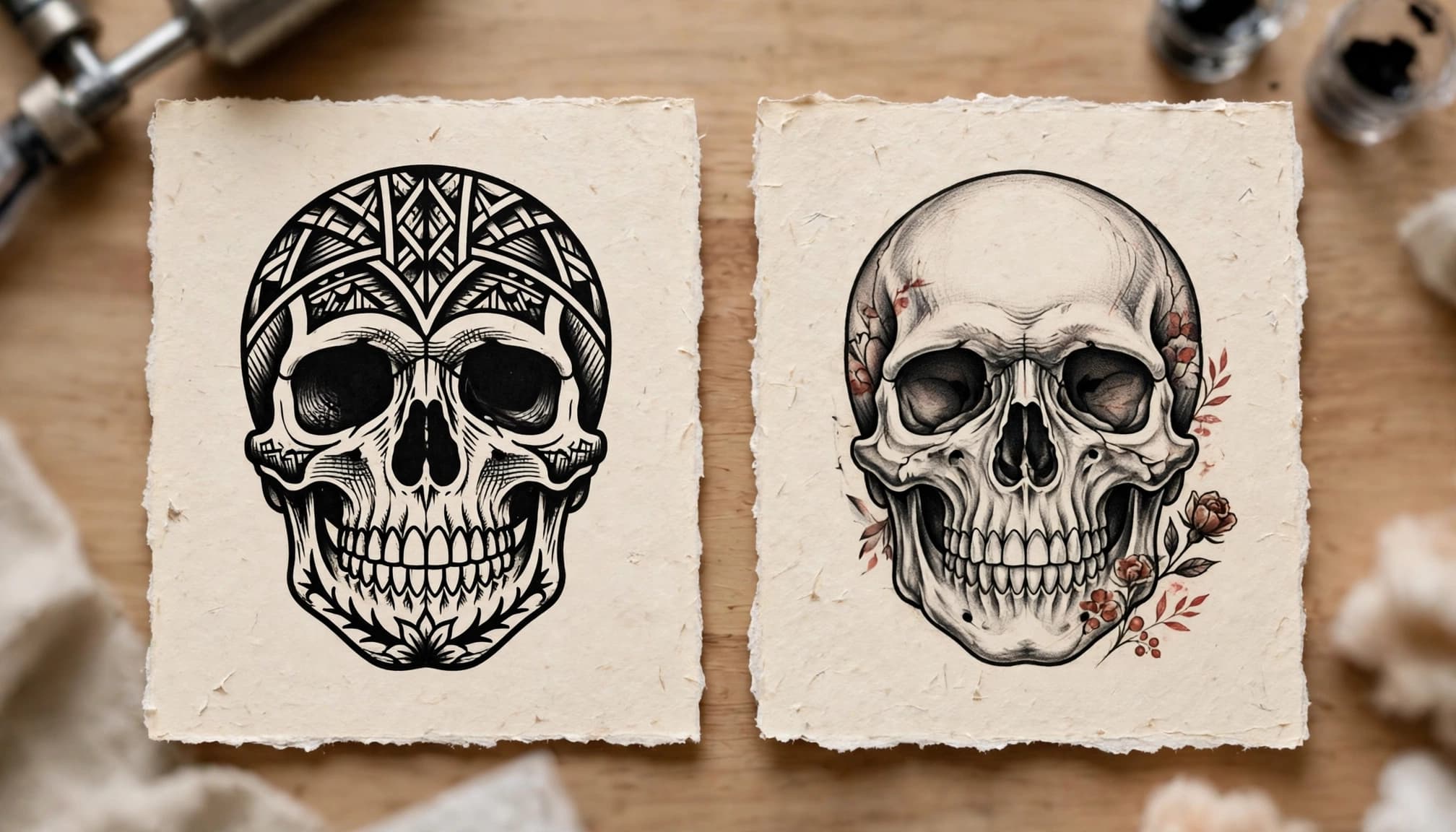
Blackwork makes a strong choice when you want a graphic skull with a clear silhouette. Solid black areas create immediate contrast, while uninked skin separates the jaw, cheekbones, and eye sockets. Traditional tattoos also hold visual clarity through heavy outlines, simplified forms, and a limited palette.

Neo-traditional designs allow more shading and decorative detail, but the skull should still read clearly beneath those additions. Illustrative work can look bold too, especially when it relies on confident lines instead of clusters of fine marks. In black-and-gray realism, value matters most: distinct light areas and dark shadows help the face retain its structure.
Realism can work beautifully, provided the tattoo is large enough to keep the teeth, sockets, and bone texture distinct. A detailed reference shrunk to fit a small area may lose its defining features. Ask your artist to adapt the design to the space rather than reproduce every mark at a smaller scale.
Build the design around strong shapes, not tiny details
Start with the skull’s big forms: a readable jaw, well-defined eye sockets, and a recognizable outline. Then use negative space to keep those areas separate. When details sit too close together, the design can become harder to read as ink softens over time.
A simple background often helps more than extra decoration. Smoke, flowers, or ornamental framing can support the skull, but they shouldn’t crowd its edges or fill every open gap. Likewise, fine cracks, tiny lettering, and dense texture may become less distinct as the tattoo ages. A study of tattoo aftercare guidance notes that sun exposure can cause premature fading, another reason to prioritize clear shapes over delicate marks in exposed areas. See the NIH review of tattoo aftercare instructions.
Line weight should match the design’s scale. A small skull needs enough space between lines and features; a larger piece can carry more texture without sacrificing readability. Work with your tattoo artist to simplify details that feel cramped, or increase the size until the important features have breathing room. A bold skull doesn’t need every bone rendered. It needs a silhouette and contrast that remain legible as the tattoo changes with time.
Pick a skull tattoo style and color plan that suits your taste
Once the skull’s shape and scale are clear, choose a finish that matches the mood you want. A stark black design feels graphic and direct, while shading or a small color accent can add character. The best option depends on your taste, the space available, and how much visual detail you want to maintain.
Blackwork and black-and-gray keep the focus on contrast
Blackwork suits a skull with a bold, graphic look. Solid black shapes can define the eye sockets, nose, or background, while open skin keeps the bone structure readable. Black-and-gray offers a softer range, using gradients and shadow to give the skull more depth without adding color.
Either style can hold its impact when the artist leaves enough separation between dark areas and highlights. If the eye sockets, teeth, and cheekbones blend into one another, the design may lose definition. Ask your artist to check the contrast at the size you plan to get, not just on a large reference image.
Use color with a clear reason and a simple palette
Color can give a skull a distinct mood, but every hue should have a job. A muted red can bring focus to a rose, a bandana, or a small detail around the skull. Warm tones can make a design feel aged or less stark, while one accent color adds personality without competing with the main shape.
Keep the palette limited, especially if the design already includes texture or decorative elements. Too many colors can make the skull harder to read, and small colored details may need touch-ups as the tattoo changes. Color also makes sun protection worth planning for: the American Academy of Dermatology notes that UV light can fade some tattoo inks. Once the tattoo has healed, follow its advice to use broad-spectrum, water-resistant SPF 30 or higher when exposed to the sun.
Ink doesn’t change at the same rate or in the same way for everyone. Placement, sun exposure, and the tattoo itself all matter. Choose a color plan you’ll still like if the tones soften over time, and ask your artist how to protect the finished piece.
Choose a placement that gives the skull room to age well
Placement affects how much detail a skull can hold, how often it rubs against clothing, and how much sun it gets. No body area guarantees that a tattoo will stay unchanged, but a thoughtful choice can help preserve its readability and make upkeep easier.

Use larger, flatter areas for skulls with more detail
The upper arm, chest, back, thigh, and calf can give a larger skull composition more room. That space lets an artist separate features such as the eye sockets, teeth, and cheekbones, while keeping shading from crowding the design. A broader surface can also make it easier to include framing or background elements without burying the skull.
Still, the best placement depends on your body and daily routine. Consider how the tattoo will sit when you move, what work clothes cover it, and whether you want it visible in short sleeves or at the beach. If you want a detailed design but prefer discretion, the chest, back, or thigh may fit better than the forearm.
Think twice about high-friction and sun-exposed spots
Hands, fingers, and joints move often and rub against objects or clothing. That movement and friction can make these areas challenging for a design with fine detail, and they may need more upkeep. Frequently exposed skin also gets more UV exposure, which can fade tattoo ink over time.
A forearm or neck skull can still be a good choice if visibility matters to you. Plan for regular sun protection once the tattoo has healed, and expect that exposed placements may need closer attention. No placement stays pristine on its own; skin changes, daily wear, and sun exposure all affect how ink looks over time.
Find an artist who designs for healed results, not just fresh photos
Fresh tattoos often look crisp in studio photos, but those images don’t show how the work settles after healing. Look for an artist who can explain how they’ll adapt the skull to your chosen placement, rather than simply shrinking a reference design. A good consultation should leave you clear about the proposed size, style, process, and cost.
Prices vary by location, tattoo size, level of detail, and the artist’s rates. Ask the studio for a quote based on your actual design and placement. If the estimate changes with the final drawing, ask what affects the price before you book.
Check healed work, line quality, and experience with your style
Review healed tattoos as well as fresh ones. Look for clean, consistent lines, even black saturation, and shading that still separates facial features. Skull tattoos are ideal portfolio examples, but work in a similar style can also show whether the artist handles bold outlines, realism, or black-and-gray shading well.
Before booking, ask how often the artist creates work in your chosen style and what hygiene practices they follow. Check the licensing or registration rules that apply where you live, since requirements vary by location. Clear answers matter. If you feel rushed or can’t get a straightforward explanation, keep looking.
Bring references and ask for a design that fits your body
Bring a few references that show the mood and features you like, not a folder of designs to copy exactly. Tell the artist your preferred size, placement, and visibility, plus any must-have details. Then ask which small marks they would simplify or enlarge for that area, and how line weight may change to keep the design readable.
Discuss the quote directly with the studio once the artist understands the scope. There’s no single reliable price for every skull tattoo, even when two designs appear similar.
Protect the tattoo while it heals and keep it bold afterward
The first stage of tattoo care is different from long-term upkeep. Fresh ink needs gentle handling while the skin heals; later, sun protection and basic skin care help limit avoidable fading. Follow your artist’s instructions for the specific bandage and products they use, and contact a health professional if you have concerns about how the skin is healing.
Keep a new tattoo clean, covered from sun, and out of soaking water
Wash the area gently as directed, and avoid picking, scratching, or rubbing it against tight clothing. Skip pools, hot tubs, and prolonged soaking until the tattoo has fully healed. Don’t put sunscreen on unhealed skin. Instead, use loose clothing or shade to protect it from the sun, and follow the American Academy of Dermatology’s tattoo care guidance.
Make sun protection part of long-term tattoo care
Once the skin has fully healed, apply broad-spectrum, water-resistant SPF 30 or higher to exposed tattooed skin. Reapply at least every two hours outdoors, and use shade or protective clothing when practical. Avoid tanning beds, too, since UV exposure can affect both the ink and the surrounding skin.
If you notice a new or changing spot within a tattoo, ask a medical professional to assess it. Sun care helps preserve the tattoo’s appearance, but it also supports the health of the skin beneath it.
Conclusion
A skull tattoo stays easier to read when its silhouette is clear, its contrast is strong, and its details have room to breathe. Choose a placement that suits the design’s size, then review an artist’s healed work to see how their lines and shading settle over time.
After the tattoo heals, protect exposed skin from the sun with broad-spectrum, water-resistant SPF 30 or higher. Tattoos naturally change as skin and ink age, but thoughtful design and consistent care help preserve readability. They can keep a skull bold without freezing the artwork in time.
Save pin for later


- Hunting Gothic Skin: What the Search Term Can Mean - September 25, 2026
- Skull Tattoo Designs for Men That Stay Bold Over Time - September 25, 2026
- 30 Tips to Find Your Perfect Tattoo Style and Artist - September 25, 2026
Leave a Reply