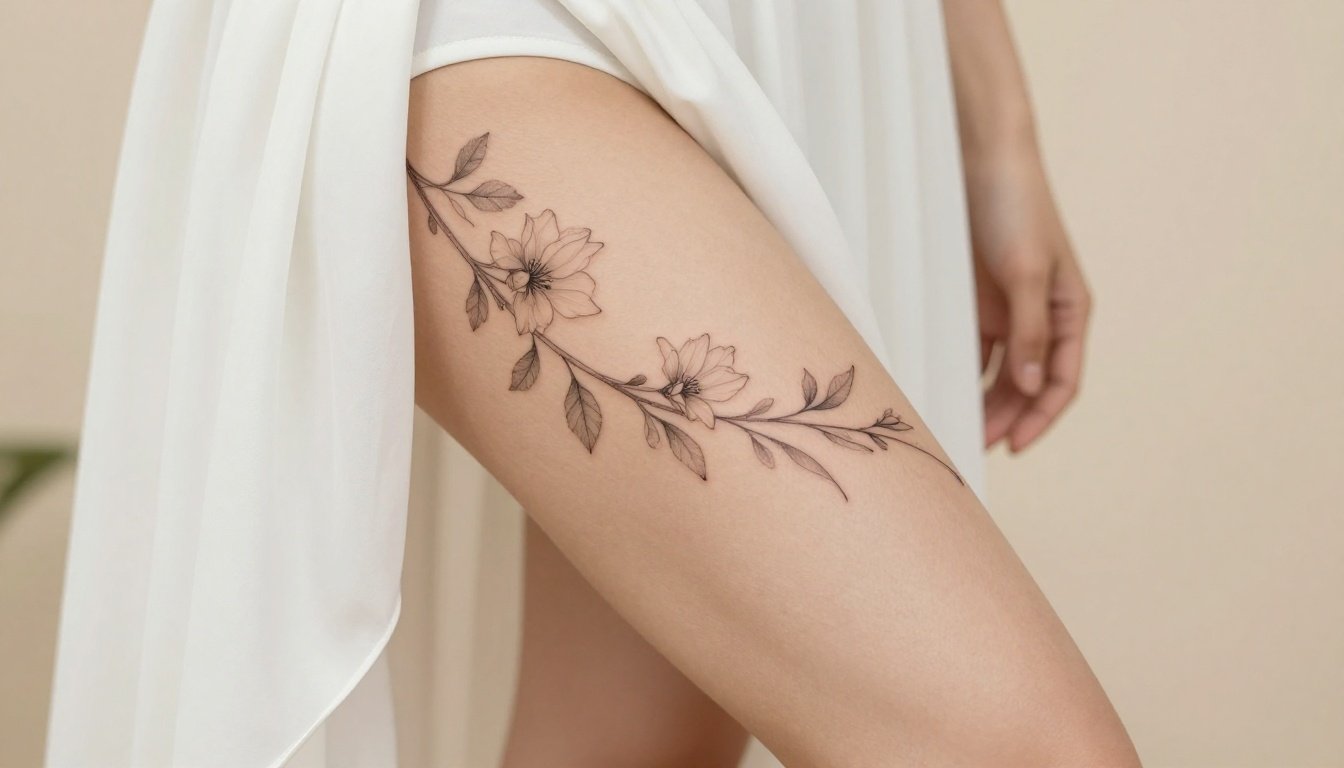
30 Thigh Tattoo Ideas for Women
A thigh tattoo gives you plenty of room to choose your style without being locked into one look. The area can hold delicate fine-line art, bold statement pieces, or a design that stays private under clothing, depending on the placement and size you choose.
This collection of 30 thigh tattoo ideas for women includes floral, ornamental, nature, animal, script, geometric, and artistic designs. Before booking, consider how visible you want the tattoo to be, how much space the design needs, how sensitive the chosen area may feel, and whether clothing could rub against it while it heals.
You’ll also find practical guidance on sizing, placement, pain, clothing, and aftercare, so you can choose an idea that looks beautiful and fits your everyday life. Let’s start with the designs.
30 Thigh Tattoo Ideas for Women
These ideas are meant to inspire your own design, not serve as templates to copy exactly. Use the flower, placement, scale, and ink style as a starting point, then adjust the details to match your personality and the shape of your thigh.
Soft Floral and Botanical Designs
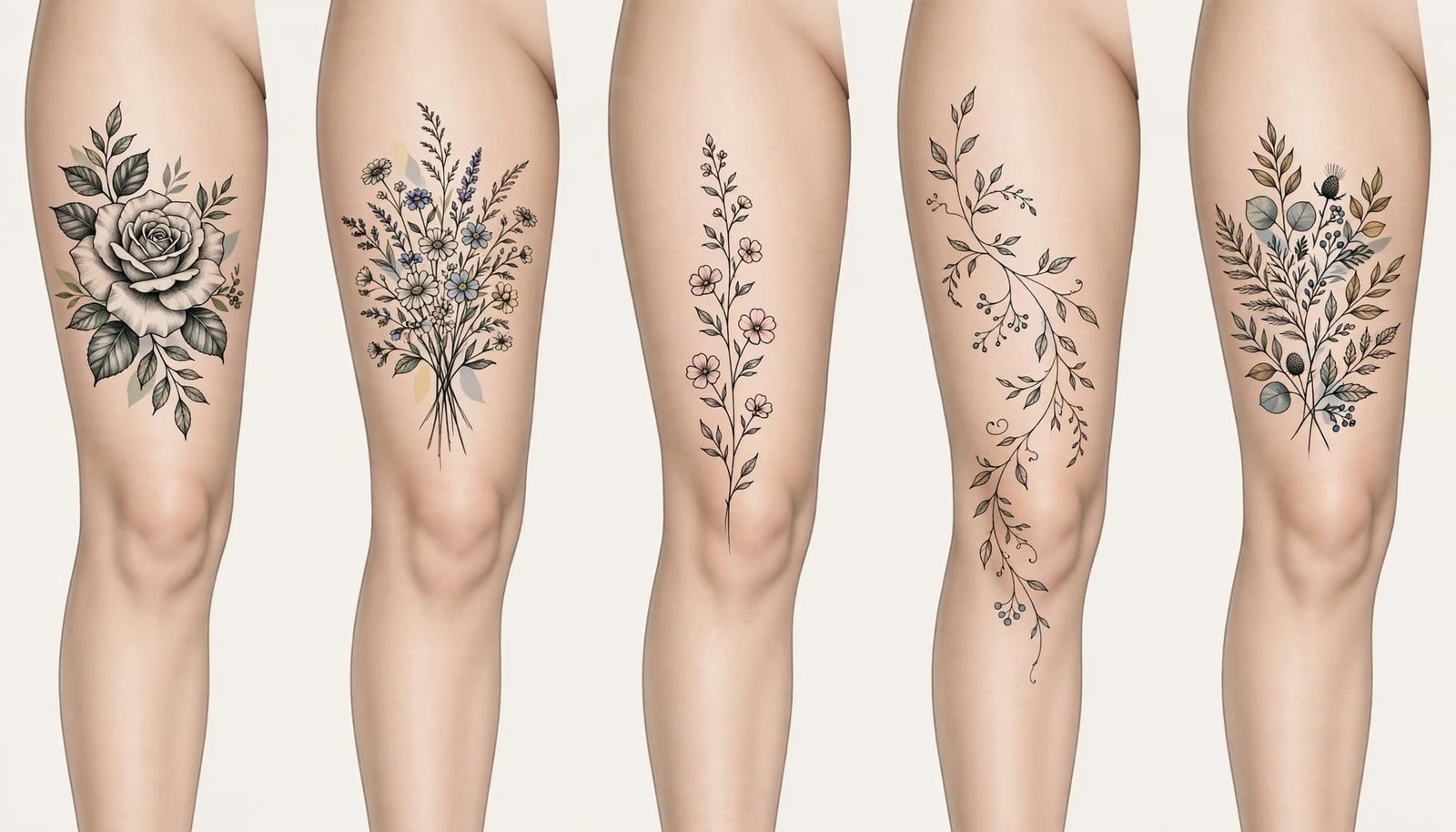
A single large rose with leafy stems works beautifully on the outer thigh, where the broad, relatively flat area gives the flower room to open. Choose fine-line petals for an airy look, or add realistic gray shading to give the rose depth. A small date, thorn detail, or meaningful leaf can personalize the design without crowding it.
For a peek-a-boo tattoo, place a wildflower bouquet high near the hip crease. The design can remain mostly hidden beneath shorts or underwear, with only the upper blooms showing when you move. Fine black lines suit a delicate bouquet, while muted color helps each flower stand apart.
A vertical flower stem running down the front thigh creates a long, elegant shape. Daisies, poppies, lilies, or a favorite native flower can form the main subject. Keep the stem slightly curved to follow the leg, then customize it with black ink, soft watercolor tones, or a single realistic bloom near the center.
A delicate vine wrapping around the side thigh has a lighter, more flowing feel than a centered floral piece. Small leaves and tiny blossoms can trail toward the hip or curve toward the back of the leg. This option suits fine-line tattoos, although open spacing helps prevent the details from blending as the ink softens over time. Guidance on tattoo line spacing and aging can help you discuss the layout with your artist.
A botanical mix of leaves, herbs, and small blooms offers a less traditional floral tattoo idea. Combine rosemary, fern leaves, lavender, olive branches, or tiny field flowers across the outer or upper thigh. Black ink keeps the arrangement clean and modern, while selective green or purple accents can identify each plant.
Larger flowers and generous open areas usually keep botanical tattoos easier to read as skin and ink change with age. If you want fine details, increasing the overall size often works better than squeezing more elements into a small design.
Ornamental, Lace, and Feminine Statement Pieces
A symmetrical ornamental design centered on the front thigh creates an intentional, polished look. The upper point can begin near the hip, while the lower details taper toward the knee. Fine lines and dotwork make the piece delicate; heavier outlines and solid shading give it a bolder presence.
A lace-inspired frame around a central flower combines softness with structure. Place it on the upper or outer thigh, then choose a rose, chrysanthemum, or lotus as the focal point. Tiny scallops and mesh details suit fine-line work, but the frame needs enough spacing to stay clear.
A mandala with hanging jewelry details fits naturally on the front or upper thigh. Its circular center provides balance, while chains, beads, or teardrop shapes can extend downward. Dotwork creates a light texture, whereas black shading and varied line weight produce a stronger statement.
A decorative garter-style band around the upper thigh can look playful, elegant, or dramatic. Lace edges, bows, beads, and ornamental patterns allow plenty of customization. Keep the band thin for a subtle effect, or use bold blackwork when you want the tattoo to read clearly from a distance.
A crescent-shaped floral ornament near the hip follows the body’s curve instead of sitting in a rigid block. Add small blooms, leaves, stars, or ornamental dots inside the crescent. Curved designs often feel more natural on the thigh, while symmetry gives front-thigh pieces their clean, balanced appearance.
Nature, Animals, and Artistic Thigh Tattoo Ideas
The thigh’s broad surface gives wildlife, botanical details, portraits, and full scenes enough room to breathe. You can keep a design centered on the front thigh, stretch it vertically along the outer leg, or place it high near the hip for a more private tattoo.
Animal and Nature-Inspired Tattoos
Nature-inspired thigh tattoos can feel delicate, mysterious, playful, or strong, depending on the subject and style. Consider these five ideas:
- A butterfly surrounded by small flowers creates a soft symbol of transformation. Center it on the front or upper thigh, with the flowers framing the wings instead of competing with them. Fine lines and light shading keep the design airy.
- A snake winding through a floral composition has a more dramatic, confident mood. Let the body curve around roses, lilies, or wildflowers on the outer thigh. Because the snake is long, its winding shape creates a flattering vertical layout that follows the leg.
- A realistic moth with moon phases brings mystery and a slightly gothic feel. This design works especially well as a centered piece because the moth creates a clear focal point. Place the moon phases above or below it, with enough space between each element.
- A bird in flight with trailing leaves suggests freedom and movement. A swallow, raven, hummingbird, or favorite native bird can travel upward along the side or front thigh. The bird’s direction gives the tattoo a sense of motion, while the leaves help fill the vertical space without making it feel heavy.
- A fox, wolf, or big cat portrait makes a strong outer-thigh statement. Choose a fox for cleverness, a wolf for loyalty and independence, or a big cat for confidence and power. Realistic eyes and fur need adequate size, so don’t shrink the portrait to fit a small area.
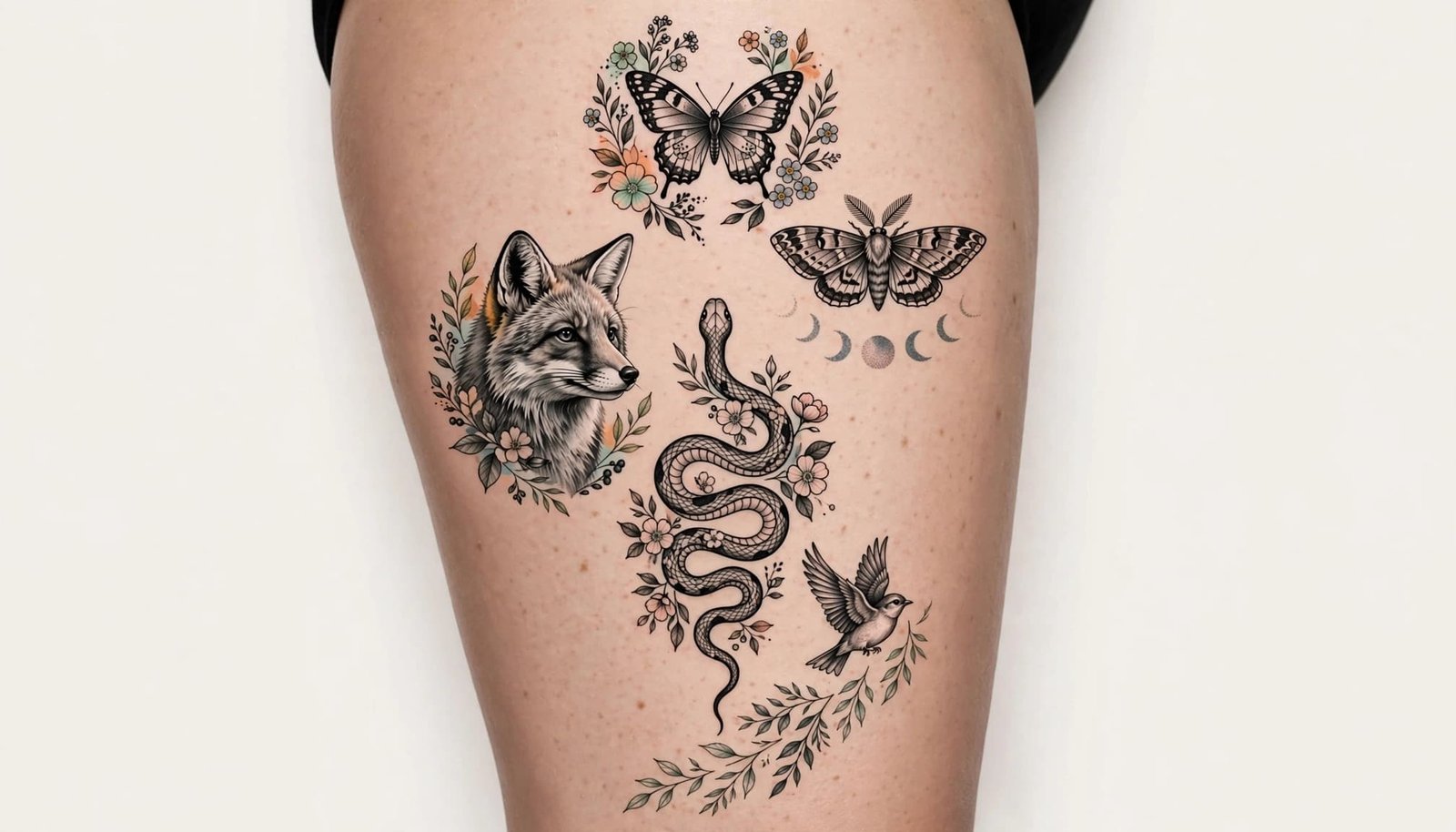
Long animals and flying birds naturally create a flattering vertical layout. Moths and butterflies usually look best as centered pieces, where their symmetry remains easy to see.
Mythic, Artistic, and High-Detail Concepts
For stronger imagery, use the thigh as a small canvas. These designs need open skin around the main subject, since dense details can blend when too many elements compete for attention.
- A celestial sun and moon composition can combine a radiant sun face, a crescent moon, stars, and fine ornamental lines. Center it on the front thigh for balance, or let the design widen across the upper thigh.
- A mermaid or siren suits the outer thigh, where her body can curve with the leg. Flowing hair, scales, shells, and waves add movement, while a larger size keeps the face and hands readable.
- A Japanese-inspired koi and wave scene can fill the side or outer thigh with bold movement. Koi, peonies, maple leaves, and curling water create a rich composition, but the artist needs room to build a clear flow.
- A classical statue or feminine portrait brings an elegant, gallery-inspired mood. Place the face on the front or outer thigh, then add draped fabric, columns, or ornamental framing around it.
- A surreal eye surrounded by flowers and stars feels symbolic and otherworldly. The eye can sit at the center, with petals and celestial details spreading toward the hip and knee.
Realism, portrait work, Japanese traditional tattoos, and dense shading require an experienced specialist. Review healed work, not only fresh photographs, and choose someone whose portfolio repeatedly shows the exact style you want. For Japanese-inspired work, a studio such as Katana Tattoo’s Japanese style work can show the level of specialization to look for.
Large concepts may take more than one session, especially when they include realistic faces, layered shading, or full background elements. Discuss the expected size, total appointments, healing gaps, and final composition before booking.
Minimalist, Script, and Modern Thigh Tattoo Ideas
A thigh tattoo doesn’t need to be large or heavily shaded to stand out. Clean lines, thoughtful spacing, meaningful words, and abstract shapes can create a striking design while keeping the tattoo easy to hide under everyday clothing.
Fine-line work usually feels lighter than bold blackwork, but both styles can look polished on the thigh. Your artist should adjust the size to protect the design’s details, especially if you choose tiny lettering, stars, or delicate facial features.
Fine-Line and Minimalist Designs
Minimalist thigh tattoo ideas work well for first tattoos because they feel personal without taking over the entire leg. They also suit private placements high on the thigh, where clothing can cover the design.
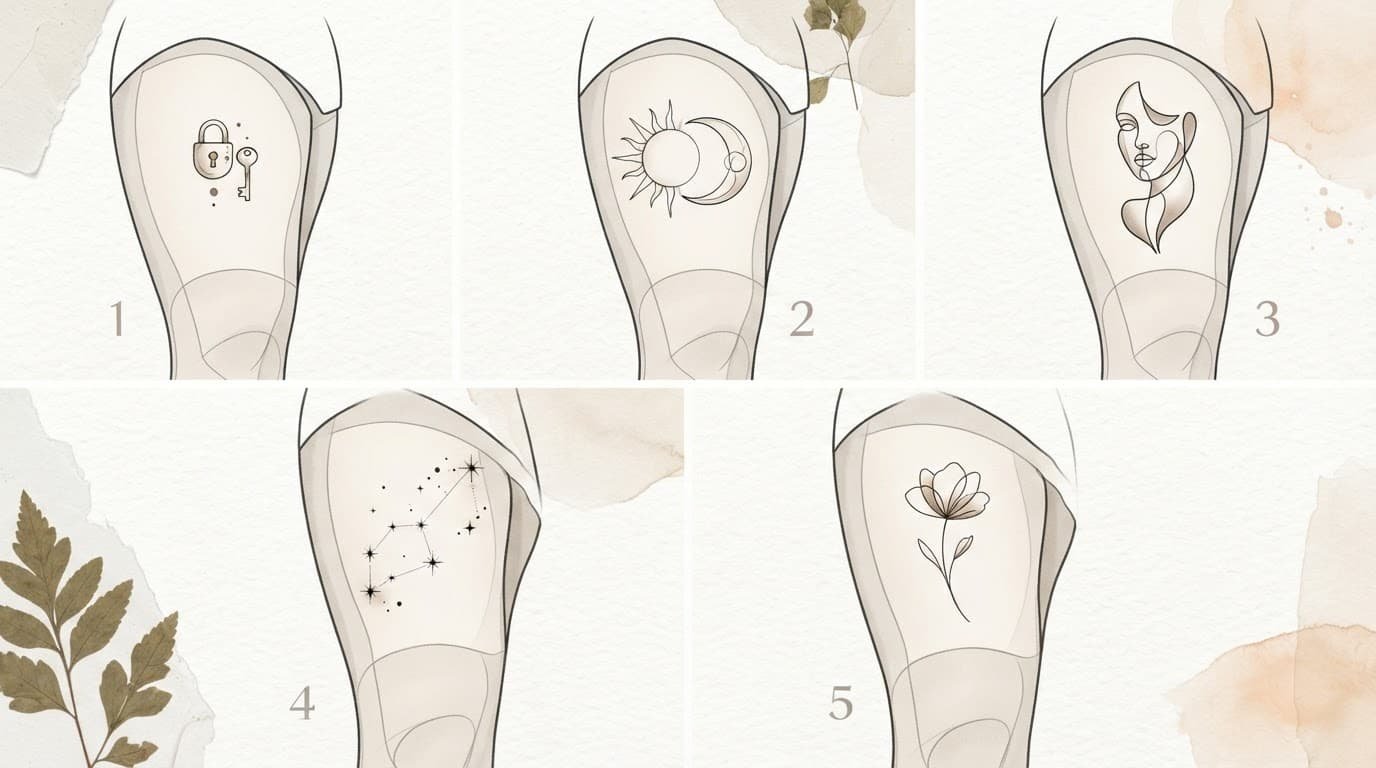
Consider these five subtle designs:
- A tiny heart or lock symbol high on the thigh can hold a private meaning. Keep the shape simple, since miniature openings and fine details may blur if the tattoo is too small.
- A fine-line sun and moon pair creates a balanced celestial design. Place the symbols side by side, or stack them vertically along the outer thigh.
- A small abstract feminine face uses one continuous line to suggest the eyes, nose, lips, and hair. Give the face enough space so its features remain readable.
- A delicate constellation with stars can follow the natural curve of the upper thigh. Use varied star sizes and open spacing instead of filling every gap with dots.
- A single-line flower or seashell offers a clean, graceful shape. A rose, tulip, shell, or favorite bloom can sit near the hip or along the side thigh.
These tattoos are discreet, but they still need careful aftercare. Wash the area gently with fragrance-free soap, apply a thin layer of moisturizer, avoid soaking the tattoo while it heals, and protect healed ink from sun exposure with broad-spectrum SPF 30 or higher. Tattoo aftercare guidance can help you prepare for the first few weeks.
Fine-line tattoos need thoughtful sizing. If several tiny details touch, the design may lose clarity as the lines soften over time.
Words, Geometry, and Modern Body Art
Script and geometric thigh tattoos create more visual presence without requiring a fully shaded image. A meaningful quote running vertically down the side thigh can make the leg appear longer, while a single word in elegant script near the hip feels intimate and easy to conceal.
For a stronger modern look, try a geometric half-sleeve style piece across the outer thigh. Repeating arcs, triangles, dots, and angular panels can create structure without copying the look of a traditional sleeve. A negative-space sunburst is another bold option, with uninked rays forming the focal point against a darker shape.
An abstract linework composition that wraps around the leg can combine curves, symbols, and open sections. Before approving it, check the design from the front, side, and back. A pattern that looks balanced from one angle may shift when the thigh turns.
Bring a clear lettering reference to your appointment, then check the spelling against the original text. Review the font at its actual size, confirm every punctuation mark, and make sure the letters remain readable as they follow the body’s curve. Test the placement first with a temporary tattoo or skin-safe marker while standing, sitting, and walking.
Choose the Best Thigh Placement for Your Tattoo
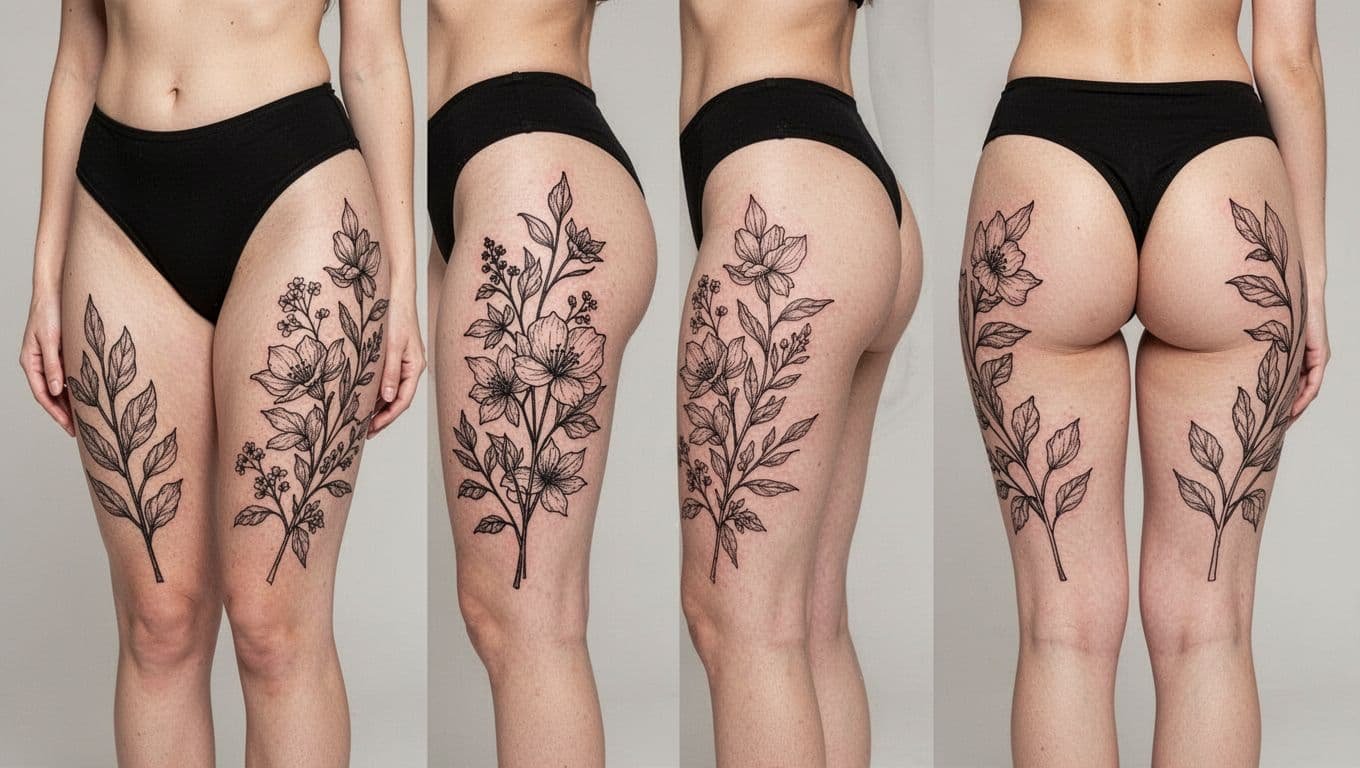
Thigh placement affects more than visibility. It changes how the design follows your body, how clothing sits over it, and how much room your artist has for detail. Before choosing a spot, view the stencil while standing, sitting, and walking. A design that looks balanced on a still leg may shift when your thigh bends or turns.
Outer, Front, and Side Thigh Placement
The outer thigh is often a comfortable, beginner-friendly choice because it has useful muscle and padding. It also offers a broad working area for medium or large tattoos. Florals, animal portraits, ornamental pieces, and abstract designs can sit neatly here without competing with the natural crease of the hip or knee.
The front thigh suits designs that need a clear center point. Centered florals, lettering, mandalas, portraits, and statement pieces usually look balanced when aligned with the front of the leg. This location is more visible with shorts, skirts, and swimsuits, so consider whether you want the tattoo to become part of your everyday outfit.
Meanwhile, the side thigh follows the leg’s natural curve. It works well for vines, mandalas, long quotes, flowing ornaments, and designs that travel vertically. A pattern can begin near the hip, move down the thigh, or wrap slightly toward the front and back for a more connected appearance.
Vertical and wraparound tattoos can visually lengthen the leg, but the stencil needs careful positioning. Ask your artist to apply it while you’re standing, then check the flow from the front, side, and back. Your tattoo should follow the body’s shape instead of looking straight only when your leg is perfectly still.
Upper, Inner, and Back Thigh Considerations
The upper thigh near the hip offers privacy and a selective reveal. High placement stays covered under many shorts, skirts, and workplace outfits, while a lower hemline or swimsuit can show part of the design. However, waistbands and underwear edges may create friction, especially while the tattoo heals.
The mid-thigh offers a practical middle ground. It gives larger designs room without placing them directly against the hip crease or knee. This area can also stay hidden beneath many everyday outfits, although shorts length and skirt movement still affect visibility.
For many people, the inner thigh feels more sensitive because the skin can be thinner and the area experiences movement and rubbing. Underwear lines, snug shorts, and walking can add contact during healing, so this placement may need extra care. Pain varies from person to person, so focus on aftercare demands rather than promises about discomfort. The American Academy of Dermatology’s tattoo care guidance recommends keeping tattooed skin moisturized with a water-based lotion or cream.
The back thigh is attractive for vertical work, trailing florals, script, and designs that continue toward the calf. Still, chairs, car seats, and clothing can rub against it. Loose, breathable clothing is often easier during healing than tight denim, shapewear, or compressive workout clothes.
Before booking, check how the placement works with your usual wardrobe. Consider underwear lines, swimsuit coverage, skirt hems, office clothing, and future tattoos nearby. Leave enough open skin between separate designs so each piece can remain readable instead of becoming one crowded patch.
How to Choose a Thigh Tattoo You Will Love Long Term
Choosing a thigh tattoo takes more than saving a beautiful reference photo. The best design fits your body, daily routine, budget, and plans for future tattoos. Before you book, narrow your options by asking what meaning you want, which visual style feels like you, how visible the tattoo should be, and how much skin you want to cover.
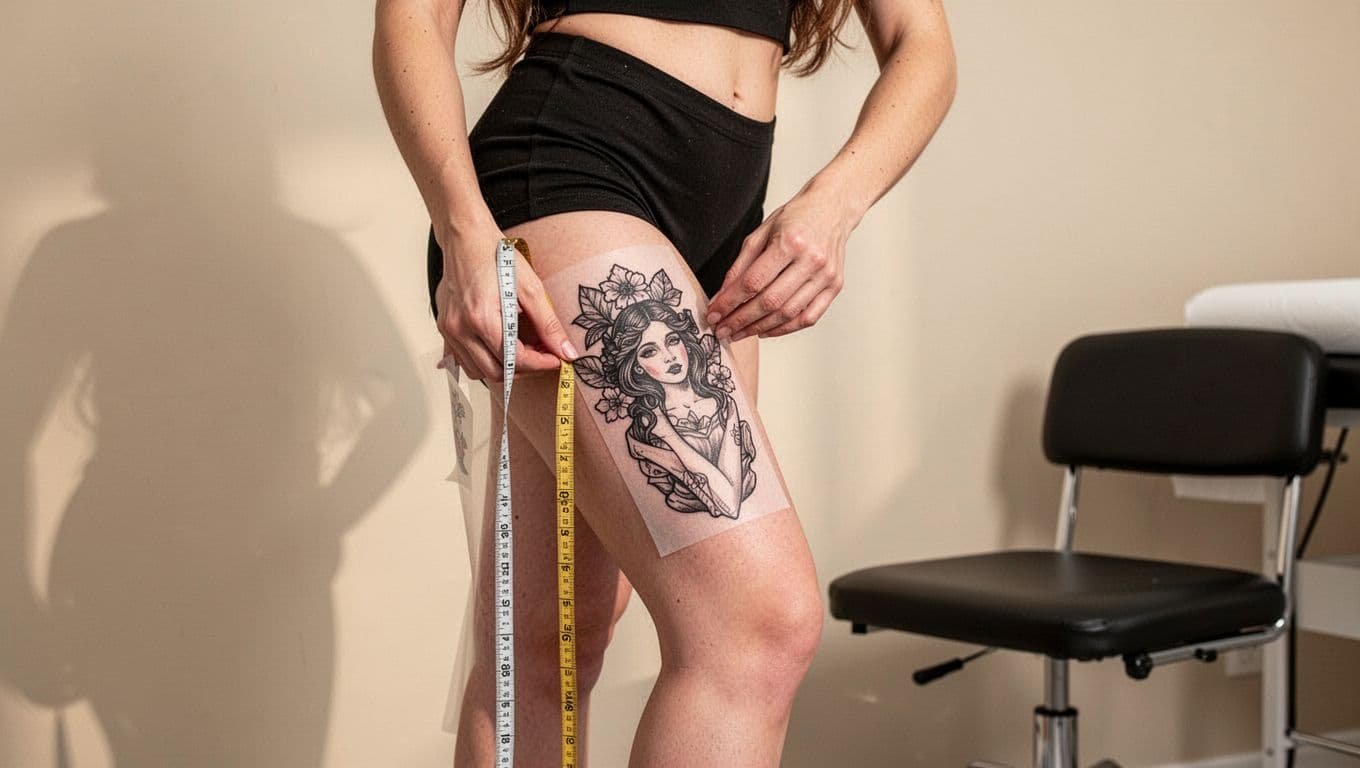
Match the Design to Your Body and Lifestyle
Body contours affect how a tattoo reads when you stand, sit, and move. A centered front-thigh design works well for symmetrical subjects such as mandalas, portraits, moths, and ornamental florals. It gives the design a clear focal point, but it also becomes more visible with shorts, skirts, and swimwear.
A curved side tattoo or wrap design follows the roundness of the thigh. Vines, snakes, flowing script, and abstract linework can travel toward the hip, back thigh, or knee instead of sitting inside one rigid shape. Ask your artist to check the stencil from the front, side, and back before the session begins. The tattoo should still look balanced when your leg turns.
Your lifestyle matters just as much. Consider:
- Whether workplace clothing needs to cover the tattoo.
- How often you wear shorts, skirts, swimsuits, or athletic clothing.
- Whether exercise, tight leggings, or swimming could affect healing.
- How much discomfort you can manage, especially near the inner thigh or hip crease.
- Whether you want the piece to connect with a future leg, hip, or back-thigh tattoo.
Size should follow the design, not the other way around. Small thigh tattoos suit simple symbols, single flowers, tiny animals, and minimal linework. Larger areas give portraits, realism, florals, and detailed scenes the breathing room they need. Dense shading and tiny details squeezed into a small space can become difficult to read over time.
A good stencil shows more than placement. It reveals whether the tattoo has enough open skin around its details to age clearly.
Plan the Artist, Budget, and Tattoo Session
Tattoo prices vary by artist, location, size, color, detail, and hourly rate. As a broad US benchmark, a small thigh tattoo may start around $100, while a larger custom piece can cost several hundred dollars or more. Realism, dense shading, color saturation, and an artist’s experience can raise the total.
Ask for a written quote before you reserve the appointment. Confirm the estimated session length, hourly or flat rate, deposit amount, cancellation policy, touch-up policy, and whether the design requires multiple sessions. A portrait or heavily shaded floral piece may need more than one appointment, with healing time between sessions. If you need help setting aside the money, creating your first personal budget can help you plan for the tattoo without ignoring regular expenses.
Choose a licensed, reputable studio with an artist whose portfolio matches your preferred style. Look for healed examples, not only fresh tattoos, because healed work shows how the lines, shading, and color settle. During your consultation, discuss your reference images, personal meaning, placement, skin coverage, and long-term plans.
The studio should use sterile, single-use needles and follow clear hygiene procedures. The National Environmental Health Association’s body art model code describes single-use needles and proper sterilization practices for reusable equipment. You should also see handwashing, fresh gloves, disinfected surfaces, and sealed supplies handled in a clean workspace. A professional who answers hygiene questions clearly is easier to trust with a permanent design.
Thigh Tattoo Pain, Healing, and Aftercare
Thigh tattoos are often more manageable than tattoos placed over bonier areas, but pain depends on your anatomy and the exact placement. The outer and front thigh are often easier for many people because they have more muscle and padding. Inner thigh tattoos may feel more sensitive, especially near the hip crease, groin, or areas affected by friction.
Your healing routine also affects the final result. Follow your artist’s instructions first, since bandage types and aftercare products vary. When you need medical guidance, the American Academy of Dermatology’s tattoo care advice can help you distinguish normal irritation from warning signs.
What to Expect During Healing
Mild redness, tenderness, slight swelling, peeling, and itching are common early signs of healing. Clear fluid or light crusting can also occur during the first few days. The surface may look healed in about two to three weeks, but deeper skin recovery can take longer, so continue treating the area gently.
Keep the bandage on for the amount of time your tattoo artist recommends. Once they tell you to remove it, wash your hands first, then clean the tattoo gently with lukewarm water and fragrance-free soap. Pat the skin dry with a clean paper towel or soft towel instead of rubbing it.
Apply only a thin layer of the recommended aftercare product. Too much ointment can trap moisture and irritate the skin. Avoid picking scabs, scratching peeling areas, or using alcohol, hydrogen peroxide, scented lotion, exfoliants, or other unapproved products.
Inner and upper thigh tattoos may need extra attention because sweat, underwear edges, and skin-to-skin friction can irritate fresh ink. Keep the area clean and dry, and contact your artist if the bandage loosens early or traps moisture against the tattoo.

Clothing, Exercise, and Sun Protection
During the first healing period, choose loose, clean clothing such as wide shorts, cotton skirts, or loose dresses. Tight jeans, leggings, shapewear, underwear edges, and rough fabrics can rub against the tattoo and increase irritation. Clean clothing also reduces contact with sweat and dirt while the skin remains sensitive.
Pause intense leg workouts, squats, lunges, cycling, and activities that cause heavy sweating for roughly 10 to 12 days, or until your artist says movement is safe. Resume gradually if the tattoo no longer feels tender, tight, or irritated. Avoid baths, hot tubs, swimming pools, and open-water swimming until the skin has fully healed.
Keep fresh tattoos out of direct sunlight. After the surface has completely healed, apply broad-spectrum sunscreen regularly to help protect the ink from fading. Never use sunscreen on peeling, scabbed, or open skin.
Get medical advice if redness spreads, pain worsens, the skin becomes increasingly hot, or you notice pus, a foul odor, fever, red streaks, or other signs of infection.
Conclusion
The best thigh tattoo balances personal meaning with visual style, placement, size, comfort, and your everyday routine. Outer and front thigh placements often give larger designs more room, while upper and inner thigh tattoos offer added privacy but may need extra care because of friction from clothing and movement.
Save a few favorite ideas, then adapt the details with a trusted tattoo artist. Review the stencil while standing, sitting, and walking, and use a sinking fund for your tattoo if you need time to plan for the cost. A careful decision gives you room to choose the right design instead of rushing toward a trend.
The strongest thigh tattoo is the one that feels personal, fits your lifestyle, and still feels like your choice long after the appointment.
Save the pin for later


- 20 Tattoo Ideas for Women on the Foot - September 19, 2026
- 5 Beautiful Tattoo Ideas for Women on Fingers - September 19, 2026
- 16 Cute Tattoo Ideas for Women on the Stomach - September 19, 2026
Leave a Reply