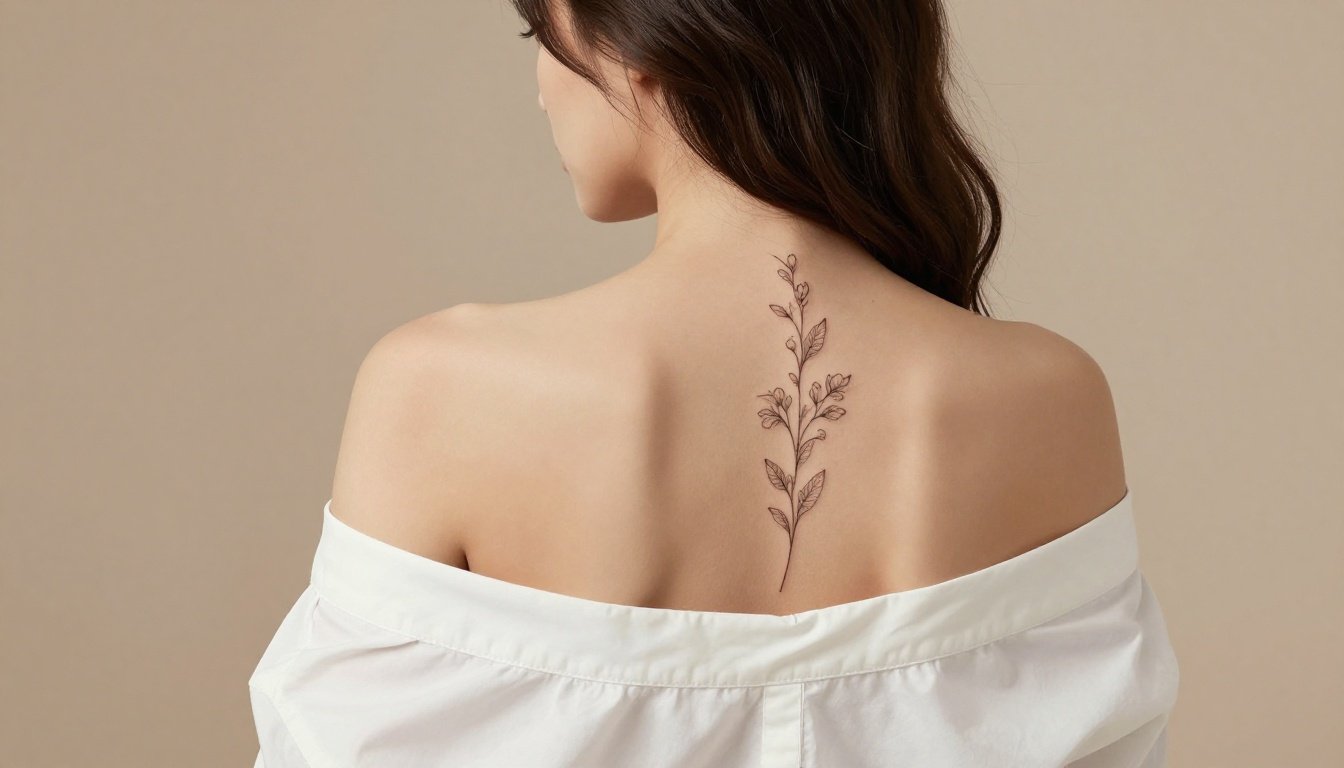
25 Tattoo Ideas for Women on the Back by Placement
A back tattoo gives you a large canvas for everything from a tiny fine-line symbol to a detailed piece that follows your entire spine. It’s also easy to cover with everyday clothing and reveal with an open-back, low-back, or strapless outfit, so you can control when your design gets noticed.
To make choosing easier, these 25 tattoo ideas for women on the back are grouped by placement and style, including spine tattoos, upper-back pieces, lower-back designs, and larger statement work. You’ll also find practical guidance on meaning, size, pain, cost factors, choosing an artist, and aftercare. Let’s start with ideas that suit each part of the back.
25 Tattoo Ideas for Women on the Back for Every Style and Placement
The best back tattoo depends on two choices: the motif and where it sits. A fine-line flower may suit the spine, while wings, koi, or a botanical scene need more room across the shoulder blades or the full back. The ideas below include the look, possible meaning, ideal placement, and style options so you can compare designs before choosing a tattoo artist.
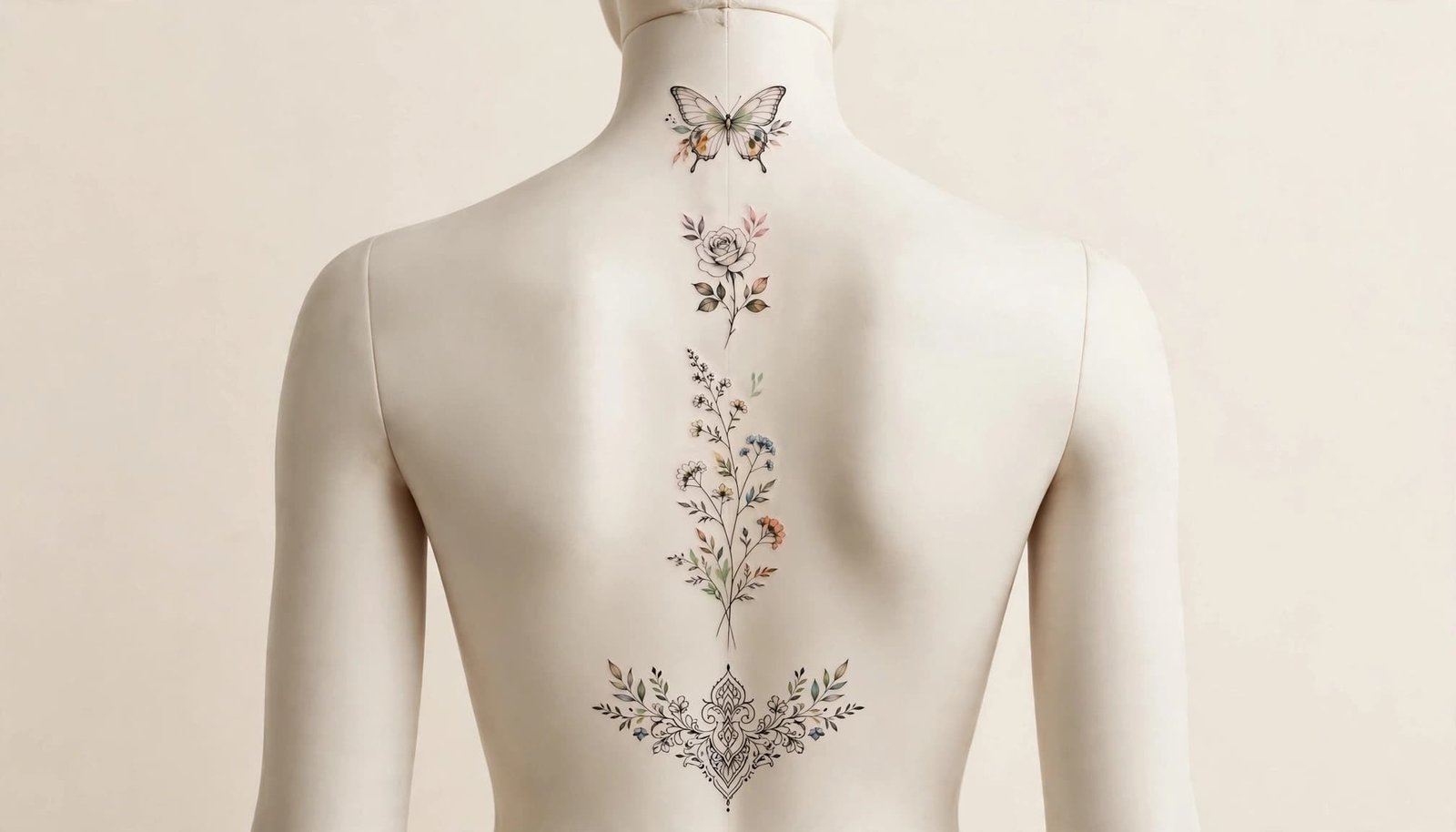
Soft floral tattoos with a feminine feel
- A fine-line wildflower stem can follow the spine in a narrow, delicate shape. Light shading keeps it airy, while muted color gives the flowers a softer mood. It may suggest growth, beauty, or a meaningful memory, depending on what the flowers mean to you.
- A rose between the shoulder blades creates a classic focal point. Black and gray shading gives it a romantic, vintage feel, while red ink makes the design more noticeable. Its meaning can include love, strength, or personal transformation.
- A cherry blossom branch across one shoulder blade works well when you want movement without covering your entire back. Fine branches look graceful, while stronger outlines and pink blossoms create a bolder finish. The design might remind you of peace, change, or a special place.
- A lotus at the upper spine fits neatly below the neck and can remain discreet under most tops. Clean linework feels modern, while layered shading adds depth. Some people connect the lotus with peace or renewal, although its meaning remains personal.
- A fern or lavender frame around the center back creates a balanced, botanical shape. Fine leaves look understated, while darker shading makes the frame stand out. These plants may suggest calm, resilience, or a favorite memory without relying on fixed symbolism.
Butterflies, moths, and graceful nature designs
- A small butterfly at the neck and upper back makes a subtle statement. Fine-line ink suits a discreet tattoo, while jewel-tone wings add color and contrast.
- A detailed moth centered below the neck offers a moodier alternative to a butterfly. Blackwork creates a dramatic look, while soft gray shading keeps the design elegant.
- A butterfly trail moving down the spine creates a vertical design with natural rhythm. Keep the insects small for a delicate effect, or vary their size for a more eye-catching composition.
- A hummingbird with flowers near one shoulder blade brings movement to the upper back. Plan the bird around the shoulder’s curve so the design follows the body instead of looking flat.
- A pressed-flower collage across the upper back suits someone who wants several small botanical details in one piece. Fine lines feel like an old journal page, while blackwork or jewel-tone color adds stronger contrast. Each idea can be scaled from discreet to striking, but the shoulder shape should guide the final layout.
Meaningful symbols and elegant ornamental work
- A vertical quote or short phrase can follow the spine, but keep the wording brief. Choose lettering large enough to remain clear and avoid ultra-thin script near waistbands, where friction may soften fine details over time.
- A mandala centered on the spine gives the back a symmetrical focal point. Crisp linework looks refined, while dotwork and shading create a more intricate finish.
- A sun and moon pairing can sit between the shoulder blades or extend vertically along the spine. Matching sizes create balance, while different textures give each symbol its own character.
- An ornamental geometric design between the shoulder blades suits a clean, structured style. Symmetry matters, so your artist should place the stencil carefully before starting.
- Angel or decorative wings can remain small near the shoulder blades or expand across most of the back. Even spacing helps the wings look balanced, while soft shading creates a graceful finish.
Bold animals and full-back statement pieces
- A winding snake along the spine uses the body’s natural vertical line. Blackwork creates a graphic look, while realistic scales require careful shading.
- A koi fish with waves needs room to curve across the back. Japanese-inspired composition, flowing water, and controlled color can create a cohesive piece.
- A phoenix rising across the back makes a dramatic statement with sweeping feathers and a strong central shape. It often suggests renewal or strength, but your personal story should guide the details.
- A tiger or deer portrait on one shoulder blade creates an expressive focal point. Choose an artist experienced in realism, especially if you want accurate eyes, fur, and facial structure.
- A dragon or botanical fantasy scene can cover most of the back with layered movement. Large designs often require multiple sessions, so plan the composition, negative space, and future additions before booking.
Small and lower-back tattoos with simple impact
- A tiny crescent moon near the upper back is easy to cover and works well in simple black ink. A few stars can add detail without making the tattoo feel crowded.
- A small star cluster fits beside the spine, below the neck, or near one shoulder blade. Keep the shapes clear so they remain recognizable as the tattoo ages.
- A minimalist heart or initials offers a personal design with very little visual weight. Choose a readable font and leave enough space between letters.
- A horizontal ornamental design above the sacrum follows the lower-back curve and can stay hidden under everyday clothing. Keep the layout open enough to move naturally with the body.
- A delicate butterfly or flower at the lower back creates a feminine accent that remains easy to conceal. Avoid overly fine details in this area, since clothing movement and friction can soften them over time.
How to choose the right back tattoo size and placement
Your back has several distinct zones, and the same motif can look completely different depending on where you place it. Before choosing a design, consider how visible you want it to be, how much detail it needs, and how clothing will interact with the finished tattoo.
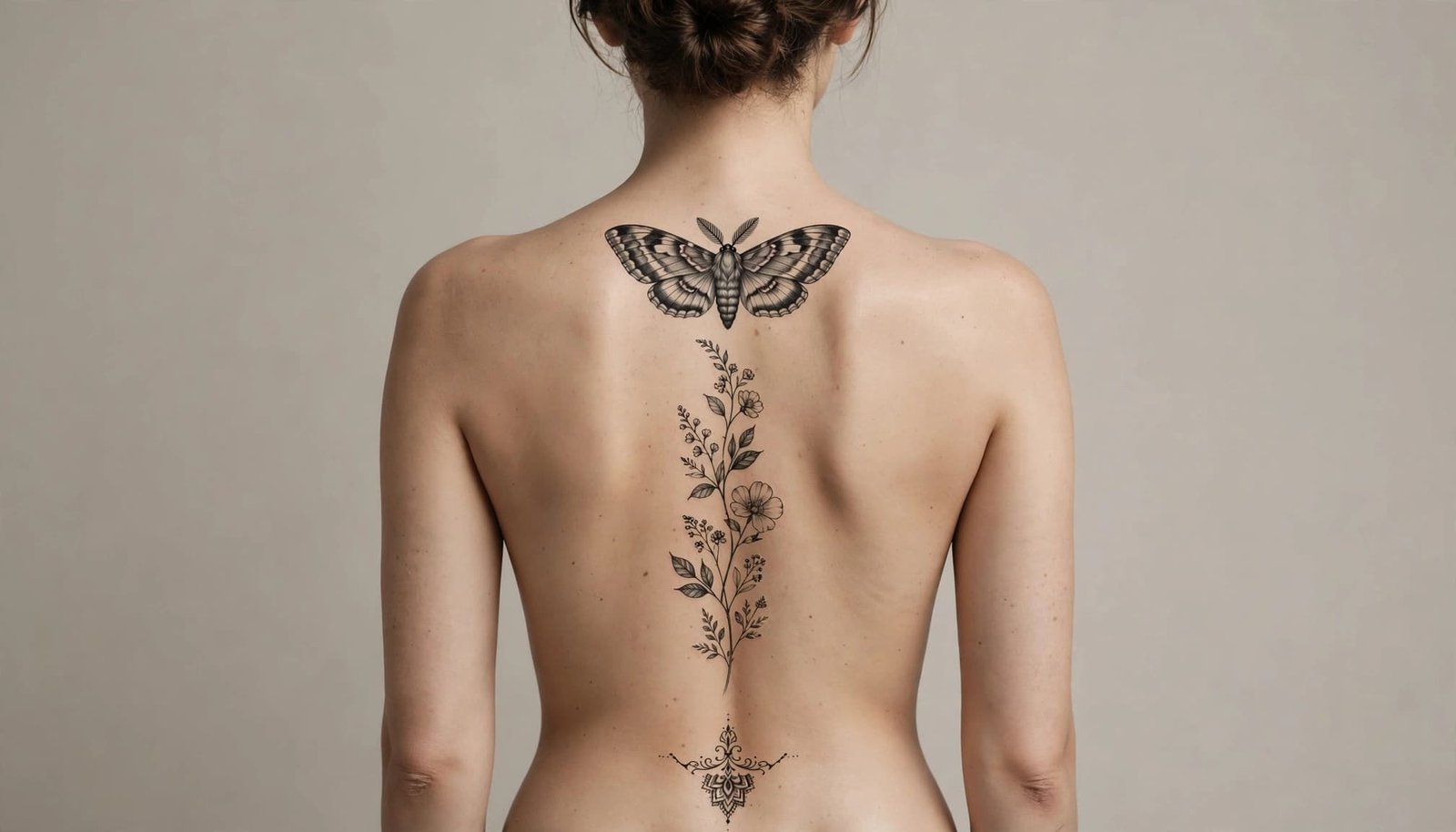
Spine tattoos for vertical designs and symmetry
The spine naturally suits designs that move up and down. Vines, snakes, floral stems, script, butterflies, and decorative patterns can follow its length without needing a wide canvas. A mandala can also sit at the center of the back, with smaller details extending above or below it.
Alignment matters more than many people expect. Your back isn’t a flat sheet of paper, so the artist must account for the natural centerline, shoulder height, waist curve, and how the skin shifts when you move. Ask to see the stencil while standing naturally, then check it again with your shoulders relaxed.
Spacing also affects readability. Letters set too close together may blur visually, while tightly packed leaves or ornamental details can make a narrow tattoo look crowded. Your artist should leave enough negative space for each part of the design to remain clear as the tattoo ages.
The skin directly over the vertebrae can feel more sensitive because the work sits close to the bone. Longer spine tattoos may require several breaks, especially when they include heavy shading or dense linework. A licensed, properly trained artist should explain expected discomfort and aftercare, while the American Academy of Dermatology’s tattoo guidance covers basic skin safety and warning signs.
Upper-back and shoulder-blade tattoos for easy coverage
The upper back gives you room to create a strong design while keeping it easy to conceal. Flowers, moths, wings, animals, and ornamental shapes can sit below the neck or spread across both shoulder blades. When the design is symmetrical, the shoulder blades provide natural points of balance.
A centered moth or pair of wings usually looks best when both sides have similar visual weight. Meanwhile, a single shoulder blade suits a looser composition, such as a bird in flight, a branch, or an animal portrait. The tattoo can follow the shoulder’s curve instead of forcing a perfectly centered layout.
Clothing will affect how much of the tattoo people see. A high neckline may hide the upper edge, while tank tops and swimsuits can reveal the shoulder blades. Work shirts often cover this zone, but open-back tops and low-cut styles can make even a small design more noticeable.
Lower-back and full-back designs that need extra planning
A lower-back tattoo can feel discreet, but waistband friction deserves attention. Jeans, shapewear, swimsuit bottoms, and elastic clothing may rub against the area during healing. Choose clothing that doesn’t press tightly against fresh ink, and consider how the design will look when you sit or bend.
The sacrum works well for horizontal ornaments, small flowers, butterflies, and designs that follow the lower-back curve. Keep the composition open enough to look balanced across the body rather than stretched from side to side.
Full-back tattoos require a larger plan. Choose a clear focal point, then build supporting details toward the shoulders and lower back. A phoenix, dragon, or botanical scene should still look intentional when viewed in sections, because clothing, posture, and distance may hide parts of it. Your artist should map the flow across the entire back before starting, including negative space and any future additions.
Back tattoo styles that change the look of the same idea
The subject is only the starting point. A flower, butterfly, snake, or quote can look delicate, dramatic, vintage, or modern depending on the line weight, shading, color, and overall layout. Before choosing a design, decide which visual direction fits your taste and lifestyle, then find an artist whose portfolio shows that style consistently.
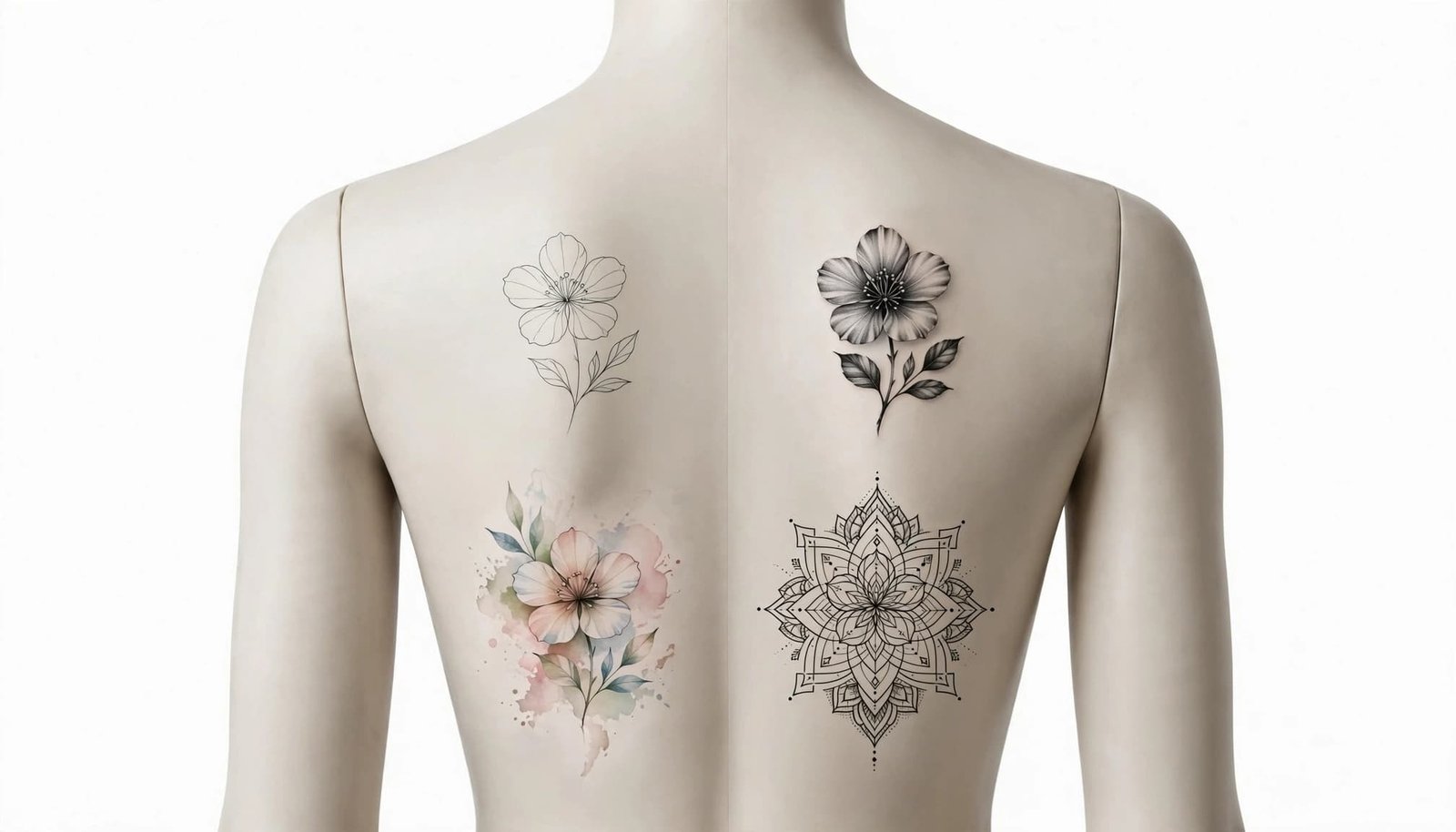
Fine-line and minimalist back tattoos
Thin outlines and open space give back tattoos a light, understated appearance. A single flower can become a narrow spine design, a butterfly can sit between the shoulder blades, and a small snake can follow the natural curve of the back without heavy shading. Delicate botanical elements, such as stems, leaves, and small blossoms, also work well when you want the skin to remain part of the composition.
Minimalist designs still need enough room to age well. Lines that are too close together can blur visually, while tiny script may lose its clarity as the ink settles and the skin changes. Ask your artist to adjust the size, spacing, and font instead of shrinking every detail to fit a smaller area.
Fresh tattoo photos can make fine-line work look sharper than it will after healing. Before booking, review healed examples from the artist, ideally photographed several months after the appointment. Look for clean lines, readable lettering, and enough space between small details.
Black and gray, watercolor, and color designs
The same flower can have three very different personalities. Black and gray shading suits realistic flowers, animals, and portraits because gradual tones can show depth, fur, feathers, and petals without relying on bright ink. Watercolor effects create softer edges and an airy feel, which can suit butterflies, flowers, and celestial designs. Saturated color gives fantasy scenes, koi, phoenixes, and bold floral work a stronger visual presence.
A realistic snake in black and gray may look sculptural and serious, while the same snake in jewel tones can feel decorative or mythical. Likewise, a short quote in plain black lettering usually reads more clearly than one surrounded by many colored effects. The artist’s technique matters as much as the style name, so study complete portfolios rather than judging one impressive photograph.
Your skin tone, daily routine, and sun exposure also affect the finished result. Ask how the chosen colors and contrast may appear on your skin, especially if you spend time outdoors. The American Academy of Dermatology recommends broad-spectrum, water-resistant sunscreen with SPF 30 or higher for healed tattooed skin because UV light can fade some inks. Follow its tattooed skin care guidance, and keep fresh ink protected from the sun until it heals.
Ornamental, geometric, and illustrative compositions
Ornamental tattoos use symmetry, dots, arches, and repeated details to create a centered design. A butterfly can become a jewel-like mandala, while a quote can sit inside a decorative frame instead of appearing as plain text. Geometry also works well over the spine, where measured spacing helps the tattoo feel balanced.
Repeating patterns require careful planning. Each element should follow the body’s centerline and curves, rather than looking uneven when the shoulders shift or the wearer bends. Your artist should apply the stencil while you stand naturally, then check the placement from several angles.
Illustrative work takes a different approach. A snake can wind through flowers, a butterfly can lead into a moonlit scene, or a short phrase can anchor a larger story across the upper back. Bring reference images for the mood, movement, and layout you prefer, but don’t ask an artist to copy another person’s tattoo exactly. A strong artist will combine your references into a design that suits your anatomy and creates a result that feels personal.
What to know before booking a back tattoo
A great back tattoo starts before you choose a date. Use the consultation to confirm the artist’s specialty, plan the design around your anatomy, understand the expected time and cost, and prepare for healing. A little research now can prevent problems with style, placement, or aftercare later.
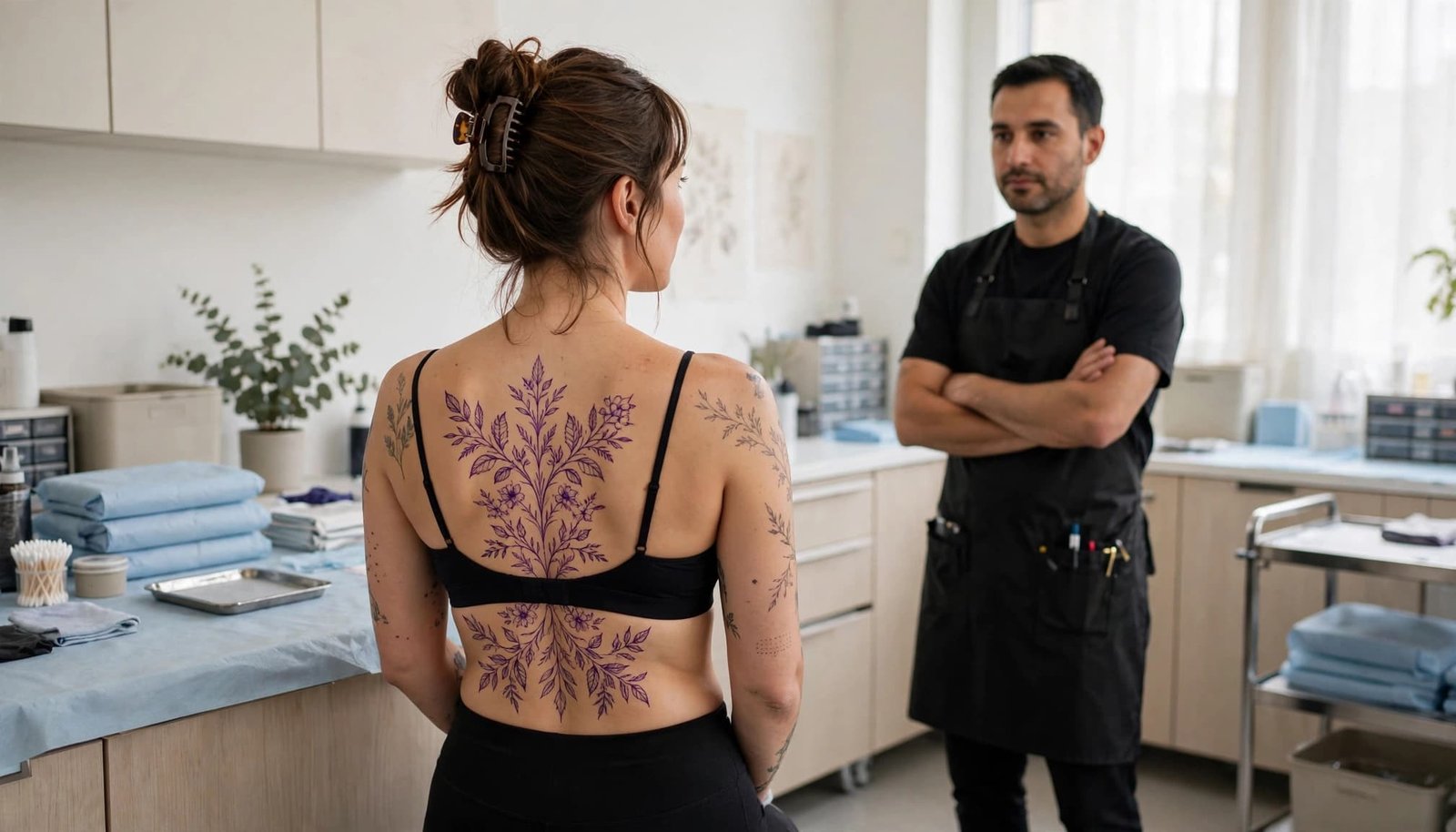
Find an artist who matches your chosen style
Search for an artist who regularly creates the style you want. Fine-line, ornamental, realism, botanical, blackwork, and Japanese-inspired tattoos each require different control of line weight, shading, composition, and color. An artist who creates beautiful realism may not be the right choice for delicate fine-line work.
Review the artist’s healed portfolio, not only fresh tattoo photos. Healed images can show whether small details remain readable, lines stay clean, and color retains enough contrast. Read recent reviews for comments about communication, cleanliness, professionalism, and how the artist handles appointments.
Before booking, look around the studio if possible. Ask how the artist uses single-use needles, gloves, razors, ink, and protective barriers. Tattoo safety requirements vary by state and local health department, so check whether the artist and shop hold the permits or licenses required in your area. The FDA’s tattoo safety guidance also explains potential reactions and what information to keep if a problem occurs.
During your consultation, bring reference images for the mood, subject, and placement you like. Then discuss:
- The exact size and position of the design.
- How it will follow your spine, shoulder blades, or lower-back curve.
- Whether the details will remain readable as the tattoo ages.
- How much negative space the composition needs.
- Whether future tattoos may connect to or surround it.
Ask to see the stencil while standing naturally, with your shoulders relaxed. A back tattoo can look centered in one position and uneven in another.
Plan for pain, time, and tattoo cost
Pain varies from person to person, and placement makes a difference. The spine, shoulder-blade edges, neck area, and sacrum often feel more sensitive because the skin sits closer to bone or has less cushioning. Fleshier areas may feel easier for some people, although no tattoo placement is completely painless.
A small symbol or simple flower may fit into one short appointment. Detailed realism, dense blackwork, large ornamental designs, and full-back scenes usually need multiple sessions. Ask how long each appointment may last, how many sessions the artist expects, and how much healing time should pass between them.
Cost depends on the tattoo’s size, detail, color, artist’s demand, hourly rate, and total session time. Request a clear estimate that explains deposits, minimum charges, touch-ups, and possible changes to the design. If you need time to set money aside, a beginner-friendly budgeting guide can help you plan without using funds needed for rent, bills, or emergencies.
The lowest quote should not decide the booking. A skilled artist, sterile workspace, thoughtful design, and reliable communication matter more than finding the cheapest appointment.
Prepare for healing and protect the finished design
Follow your artist’s cleaning and moisturizing instructions because products and bandage methods can differ. In general, avoid picking flakes, scratching the area, or soaking fresh ink in pools, hot tubs, or baths while it heals. Wear clean, loose clothing that won’t rub against the tattoo.
Back tattoos are difficult to inspect on your own. Use a handheld mirror, take clear progress photos, or ask someone you trust to check the area. Watch for unusual worsening redness, warmth, swelling, a rash, bumps, drainage, or fever, and contact your artist and a health professional if those signs appear.
Lower-back and sacrum tattoos need extra attention because waistbands, shapewear, swimsuit bottoms, and tight clothing can create friction. Once the tattoo heals, protect it from prolonged sun exposure with broad-spectrum, water-resistant SPF 30 or higher. Good sun protection helps preserve contrast and keeps fine details clearer over time.
Conclusion
These 25 tattoo ideas for women on the back show how much your choice can change with placement. A delicate spine tattoo creates a narrow, graceful line, while floral or butterfly designs suit the upper back. Meaningful script, lower-back accents, and large animal or full-back compositions offer different ways to express your style and story.
Choose a design you’ll enjoy beyond current trends, then match your artist to the style you want. Plan the size, placement, clothing coverage, and comfort level before booking, especially for detailed or larger work. The strongest back tattoo feels personal, suits your everyday needs, and leaves enough space for its lines and details to age well. When the design fits both your personality and your body, the back becomes a canvas you can enjoy on your own terms.
Save pin for later


- 30 Minimalist Tattoos That Never Go Out of Style - September 22, 2026
- 25 Fine Line Tattoo Ideas for a Feminine Look - September 22, 2026
- 15 Trending Tattoo Ideas for 2026 to Match Your Style - September 22, 2026
Leave a Reply