15 Tattoo Ideas for Women Overcoming Hard Times
A meaningful tattoo can mark survival, healing, and the beginning of a new chapter. It doesn’t erase painful memories, but it can remind you of the strength you showed while facing them and the person you became along the way.
The best design is personal, whether it’s a small symbol tucked near your wrist, a nature-inspired image that reflects renewal, or a phrase only you fully understand. These tattoo ideas for women overcoming hard times include simple symbols, flowers and other nature designs, meaningful dates, and personal reminders that can honor your experience without defining you by it.
Take time to choose an image that feels true to your story instead of copying a trend. Placement, size, visibility, and the emotions connected to the design all matter, so your tattoo should feel supportive long after the appointment. Start with these 15 ideas and find the one that speaks to your next chapter.
15 Tattoo Ideas for Women Overcoming Hard Times
A tattoo can carry a different meaning for every woman. One person may see an anchor as hope, while another may connect it to family, faith, or the decision to stay grounded. These symbols don’t guarantee healing, but they can offer a personal reminder during recovery, grief, or major life changes.
Small symbols that represent survival and hope
Small tattoos work well when you want a private reminder that remains easy to cover. Fine-line ink, simple black designs, initials, meaningful dates, or one short word can give each symbol a personal connection.
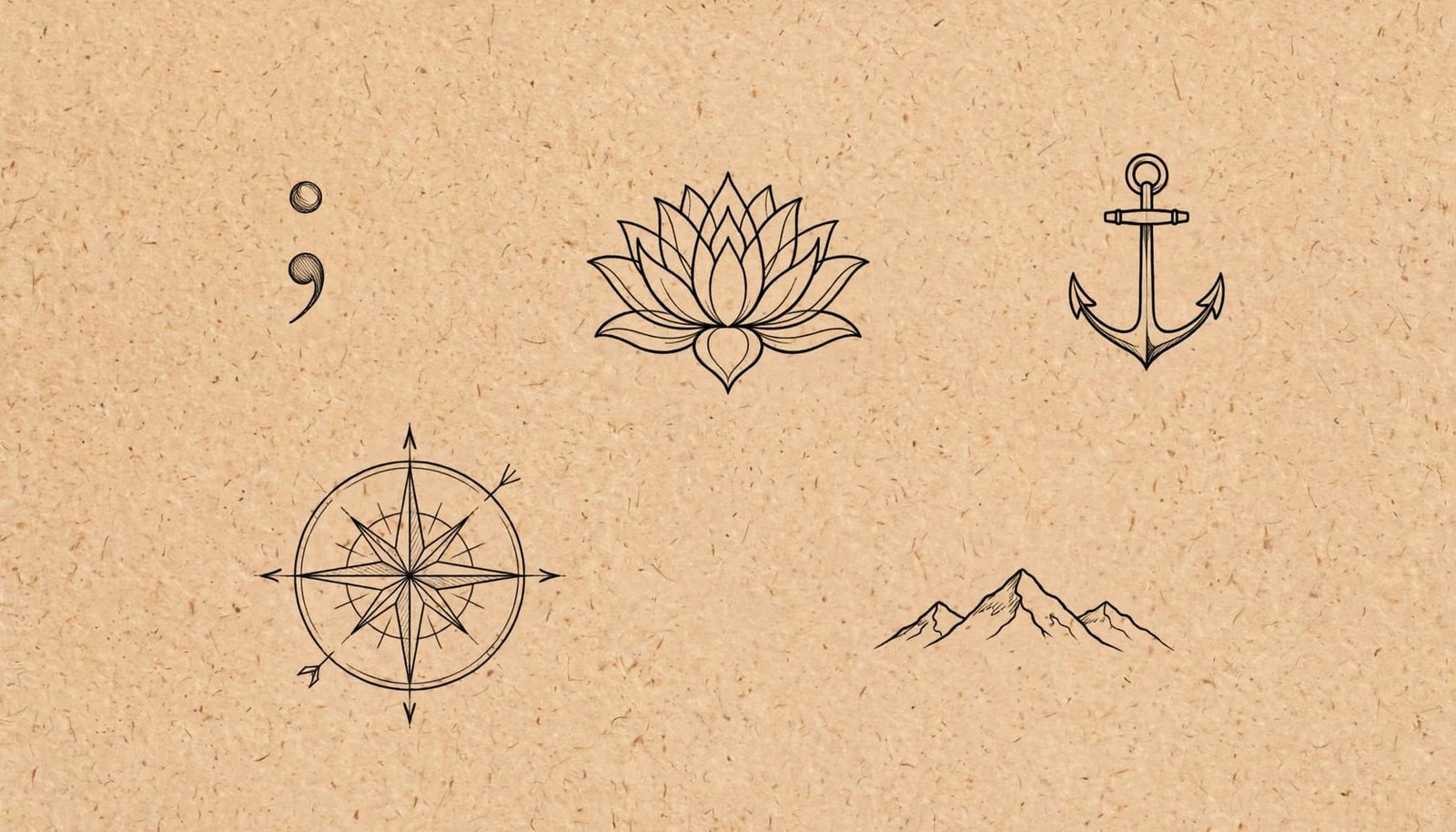
- A semicolon can reflect the choice to continue your story after a painful chapter. Add an important date beneath it or pair it with a small initial.
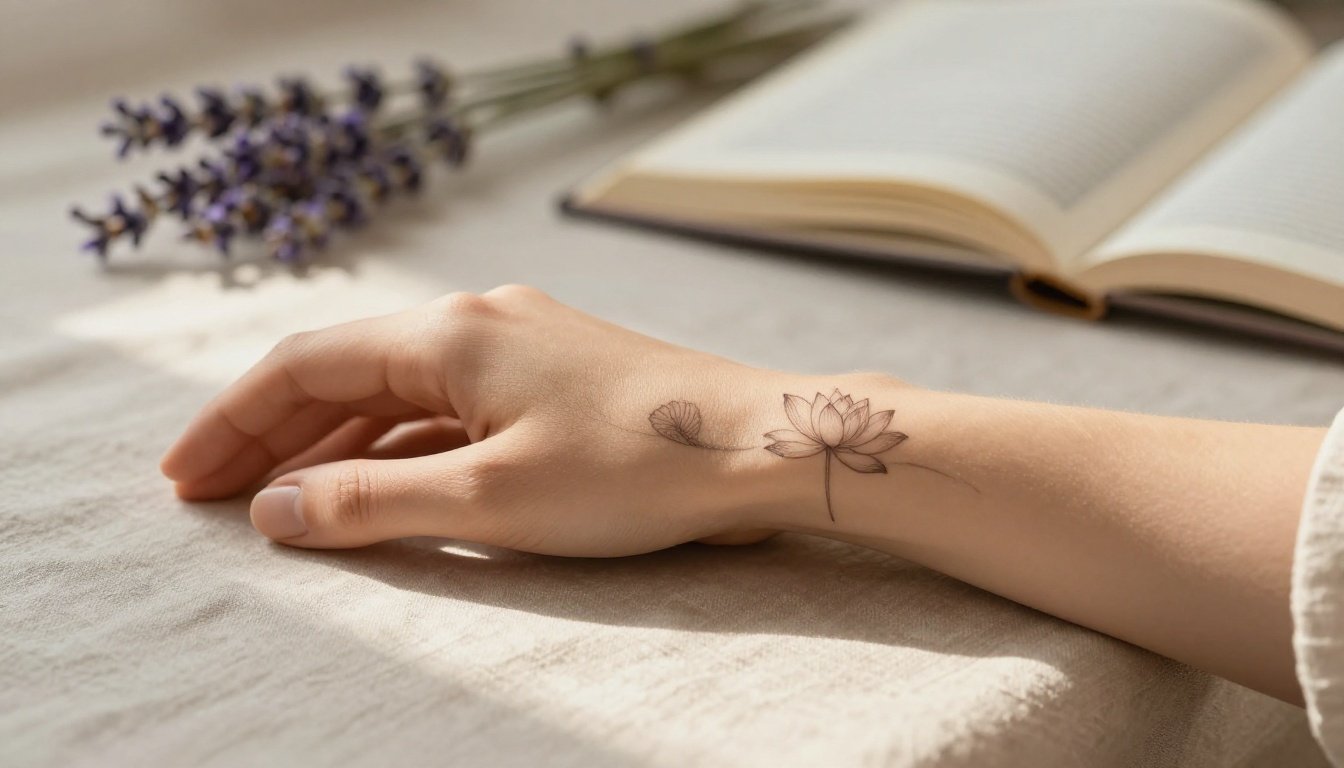
- A lotus can suggest growth through difficult circumstances. A delicate outline, a single black bloom, or a lotus with your birth flower can make the design feel more personal.
- An anchor can remind you of stability, hope, or the people who helped you stay steady. Consider adding a family member’s initial or a short word such as “steady.”
- A compass can represent finding direction again after feeling lost. A tiny compass with one highlighted point can symbolize a place, goal, or future you want to reach.
- A mountain range can honor the decision to face challenges one step at a time. Add a meaningful date to the base or choose a number of peaks connected to important people.
The inner wrist, forearm, and upper arm make these reminders easy to see, but visible placement is always your choice. Before booking, review practical guidance on tattoos and skin care, especially if you have a skin condition or concerns about healing.
Nature tattoos that show change and new beginnings
Nature designs can express change without suggesting that recovery happens quickly. A growing flower may take time to open, and that slower process can make the image feel more honest.
- A phoenix can honor the strength it took to rebuild after loss or destruction. Add warm colors, small stars, or an important date to connect it to your story.
- A butterfly can reflect personal transformation and the person you are becoming. Use your birth flower as one wing detail or choose colors linked to a meaningful memory.
- A growing flower can show healing over time. Start with a seed, stem, or unopened bud, then add leaves or petals that symbolize gradual progress.
- A feather can represent freedom, release, or letting go of something that hurt you. A family initial hidden along the shaft can connect the design to someone who supported you.
- A tree with deep roots can express strength, stability, and support. Add small leaves for family members, stars for loved ones, or roots shaped around a meaningful date.
Powerful personal designs for strength and self-trust
Some tattoo ideas feel meaningful because their message belongs mainly to the person wearing them. A private symbol or custom detail can hold more weight than a design everyone immediately recognizes.
- An ouroboros, a snake forming a circle, can symbolize cycles, renewal, and beginning again. You might replace part of the pattern with your initials or a tiny birth flower.
- An unalome can reflect a winding path toward peace and self-understanding. Ask your artist to create a custom version with a date or small star at the end.
- A wolf can express courage, independence, and trust in your instincts. A single-line profile, family initials, or a constellation can give it a more personal meaning.
- A sunrise can represent a fresh start after a difficult night. Choose the colors of a place you love or add one small ray for each new goal.
- A handwritten phrase such as “still here,” “one day at a time,” or “becoming” can offer a direct reminder. Your handwriting, a loved one’s script, or a meaningful date can make the lettering impossible to copy exactly.
A custom tattoo doesn’t need to be large or widely understood. Sometimes the design that only you fully understand becomes the most lasting reminder of your own strength.
How to choose a resilience tattoo that feels personal
The best resilience tattoo connects to something specific: a value you protect, a memory you carry, a person who helped you, or a stage of healing you have reached. Before choosing a design, ask yourself what you want the tattoo to remind you of when you see it years from now.
Write the meaning in a sentence or two before choosing the artwork. You may discover that a common symbol needs a personal detail to feel right, or that a simple line of handwriting says more than an elaborate image.
Match the symbol to the story you want to carry
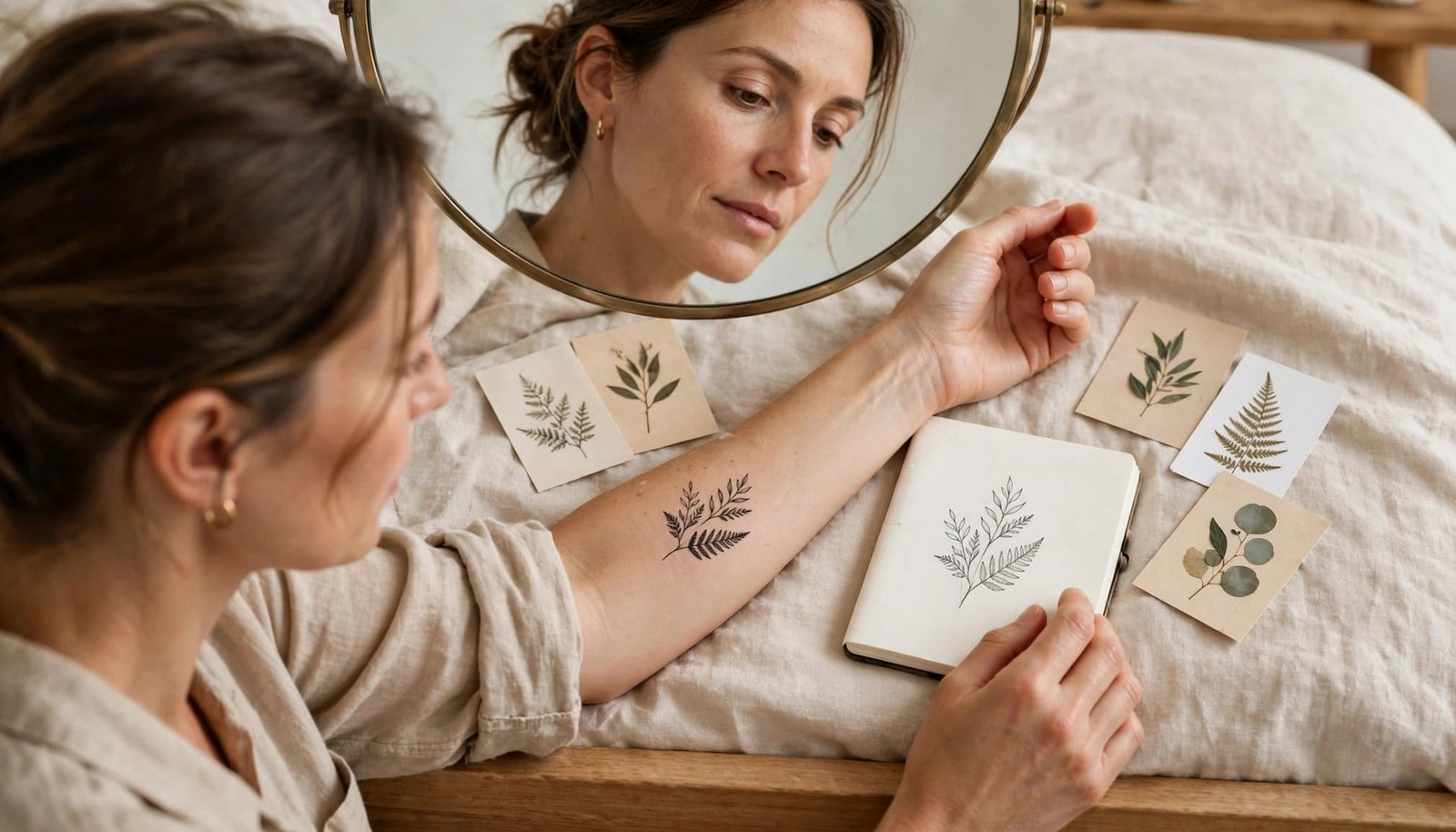
Choose a symbol based on the message behind it, not only its appearance or popularity. A semicolon can speak to survival and mental health, while a lotus or another flower may fit growth through a difficult season. For renewal, consider a phoenix, sunrise, or new sprout. A compass can express guidance after feeling lost, while an anchor or tree can remind you of protection, stability, and support.
Ask which idea feels closest to your experience:
- Survival may connect with a semicolon, a small heartbeat line, or a meaningful date.
- Growth may fit a lotus, birth flower, or branch with new leaves.
- Renewal may suit a phoenix, sunrise, or circular design that suggests beginning again.
- Guidance may call for a compass, star, or path leading toward a chosen place.
- Protection may feel right as an anchor, rooted tree, shield, or family symbol.
A popular tattoo can still become personal when you add a detail with private meaning. Try a birth flower, a specific star pattern, a loved one’s handwriting, a date hidden in the design, or a word in a meaningful language. You don’t need to explain that detail to anyone. The tattoo belongs to you, and its meaning can remain private.
Decide between a subtle reminder and a bold statement
Small fine-line tattoos can feel intimate and easy to cover. A tiny semicolon on the wrist, a small flower near the ankle, or a discreet star behind the arm may act as a private reminder rather than a public announcement. However, very small designs have limits. Fine details can blur over time, and lettering may become difficult to read if the artist shrinks it too far.
Larger tattoos give an artist more room for shading, texture, color, and layered symbolism. They can tell a fuller story, but they usually require more planning and may be harder to conceal at work or during formal events. Placement also affects how often you see the design and how much sun or friction it receives.
Ask the artist for the smallest size that will age well, rather than asking them to force a complex design into a tiny space.
Try the design as a temporary tattoo first, then view it in different sizes and placements. Take photos in everyday clothing and check how you feel after several days. The FDA warns that some temporary tattoos and black henna products can cause skin reactions, so use reputable products and avoid applying them to irritated skin. You can also ask your tattoo artist to print a mock-up.
Wait before booking the appointment. If the design still feels right after the initial excitement fades, discuss size, placement, line weight, and healing with a licensed artist who follows clean studio practices. A thoughtful pause can turn a beautiful idea into a tattoo that still feels like yours years later.
Best tattoo placements for meaningful designs and easier healing
Tattoo placement affects how often you see your design, how easy it is to cover, and how comfortable healing may feel. There isn’t one universally best location, because pain tolerance, skin sensitivity, work requirements, clothing, and future tattoo plans differ from person to person.
Visible placements that keep the reminder close
The inner wrist and forearm are easy-to-see options for a semicolon, short phrase, compass, or small flower. These areas let you glance at your tattoo during difficult moments without making the design large or dramatic. A forearm tattoo also gives an artist more room for clean lettering and details than a very small wrist tattoo.
The upper arm and shoulder offer more space for a larger flower, sunrise, tree, or custom symbol. You can also cover these areas with sleeves when needed, which may suit a workplace with stricter appearance policies. However, visible tattoos can invite questions from family, coworkers, or strangers. Before choosing one, ask yourself whether you’re comfortable sharing its meaning, or explaining that it is personal.
A visible placement should support you, not create pressure to display your healing story. Choose a location where you can see the design when you want encouragement, while still having clothing options that provide privacy.
Private placements for a more personal healing symbol
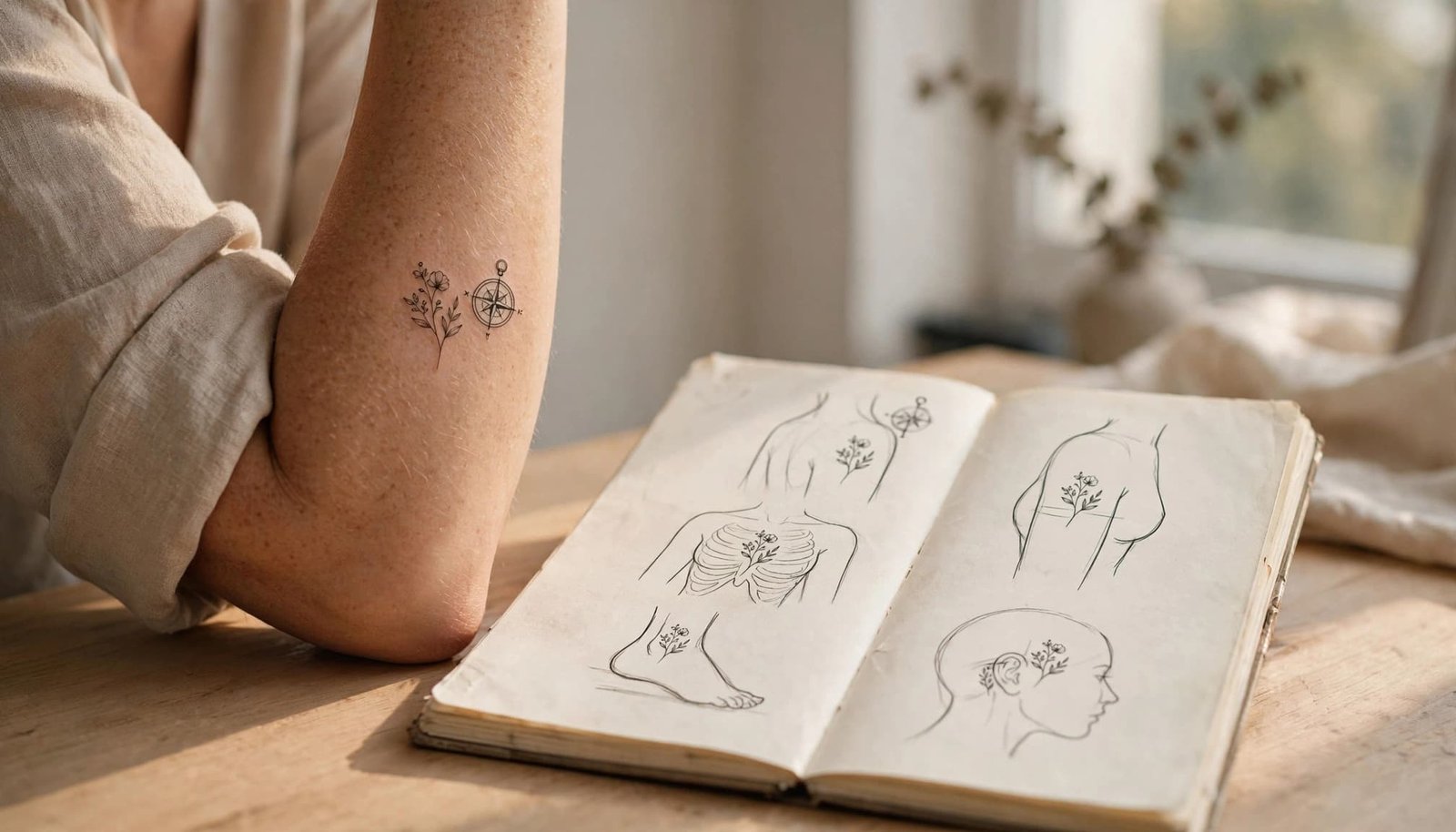
The ribs, hip, upper thigh, back, ankle, and behind the ear can make a tattoo feel more private. These locations may suit a meaningful date, personal phrase, small flower, or symbol that you want to keep mainly for yourself. Behind the ear is discreet, while the ankle can stay hidden beneath socks or shoes when necessary.
Comfort varies across the body. Ribs and areas close to bone may feel more sensitive for some people, while the hip, upper thigh, and back can experience pressure from clothing or sleeping positions. An ankle tattoo may rub against socks or shoes, and a design near the bra line can face repeated friction during healing.
Before settling on a private placement, ask your tattoo artist how body movement, skin tension, and design size may affect the result. Tight clothing, frequent movement, sun exposure, and rubbing can require extra thought while the tattoo heals. The American Academy of Dermatology’s tattoo care guidance recommends protecting healing skin from the sun and using gentle care.
Also consider future tattoos. A small design may become part of a larger sleeve, back piece, or collection later, so leave room if expansion matters to you. Most importantly, choose a location that feels emotionally safe and physically manageable. You have the right to pause, change the placement, or wait until the decision feels fully yours.
Tattoo aftercare and safety steps to protect your new design
Good aftercare protects both your skin and the meaning behind your new design. A fresh tattoo is an open area of skin, so careful cleaning, light moisturizing, and patience can reduce irritation while the surface heals. Always follow your tattoo artist’s instructions first, especially when they give you specific guidance for a protective film or dressing.
What to do during the first few days
The first 48 to 72 hours need careful handling. Wash your hands with soap and water before touching the tattoo, then follow your artist’s instructions about when to remove or replace the covering. Some artists use a standard bandage, while others apply a transparent adhesive film that can stay on longer.
Once you’re cleared to clean it, use lukewarm water and a small amount of mild, fragrance-free soap. Let the water run gently over the area, and avoid scrubbing, washcloths, loofahs, or direct pressure from the shower stream. Pat the tattoo dry with a clean paper towel or freshly washed towel, then let it air-dry briefly if needed.
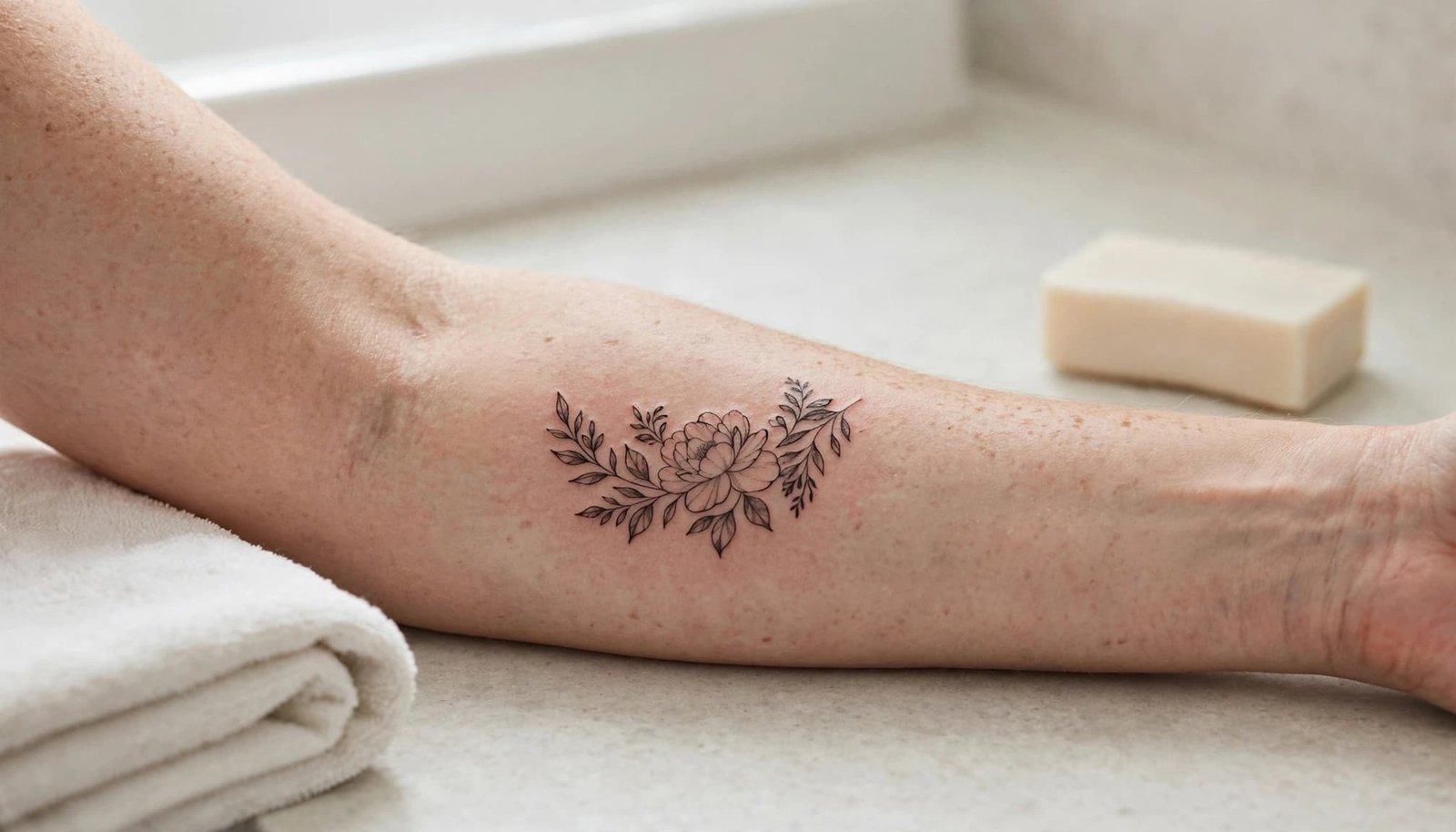
Apply only a thin layer of the recommended product once the skin is clean and dry. A heavy layer of ointment can irritate the area or trap too much moisture, so more product won’t improve healing. Product advice varies, which is why your artist’s directions and medical guidance should take priority over general tips.
During this stage, avoid:
- Peeling flakes or scabs, even when the tattoo feels itchy.
- Scratching, rubbing, or picking at the skin.
- Sharing towels, clothing, or personal care items that touch the tattoo.
- Wearing tight clothing that sticks to or repeatedly rubs the design.
- Heavy sweating or activities that create constant friction around the area.
Some redness, tenderness, mild swelling, and clear fluid can occur at first. However, worsening swelling, spreading redness, increasing warmth or pain, pus, or fever needs medical attention. Contact a healthcare professional if healing seems abnormal instead of trying to treat a possible infection yourself.
When to return to normal activities
Many tattoos heal on the surface in about one to three weeks, but healing time depends on the design, size, placement, your skin, and how well you protect it. A tattoo may look better before the deeper layers of skin have fully recovered, so continue gentle care even when peeling has stopped.
Avoid swimming, hot tubs, lakes, oceans, baths, and other long soaks until the tattoo has healed. A quick shower is usually easier on fresh ink than prolonged water exposure. Loose, breathable clothing can also help, especially when a bra band, waistband, sock, or sleeve sits near the tattoo.
Heavy exercise may increase sweating and rubbing during the early healing period. If movement repeatedly pulls across the design, choose a lighter activity until the skin settles. Your artist can help you judge when normal workouts are reasonable for your tattoo’s location.
Keep fresh ink out of direct sunlight while it heals. After the tattoo has fully healed, apply a broad-spectrum, water-resistant SPF 30 or higher and reapply it as directed. Sun protection helps reduce fading and keeps the design clearer for longer.
Conclusion
The strongest tattoo for overcoming hard times is the one that reflects your own story. A semicolon, phoenix, lotus, personal phrase, or private symbol can hold meaning that no one else needs to understand. Choose the design, size, and placement that feel honest to your experience.
Take your time before booking, and work with a reputable, appropriately licensed artist who can help you create a design that will age well. Follow the studio’s written aftercare instructions, protect your healing skin, and seek medical advice if you notice signs of infection or an unusual reaction.
A tattoo can’t define your entire healing journey. Still, it can become a lasting reminder of courage, survival, hope, or a new beginning whenever you need to see how far you’ve come.
save pin for later


- 30 Trendy Tattoo Ideas for 2026: Styles and Placement - September 27, 2026
- 30 Gorgeous Fine Line Tattoo Ideas to Try - September 27, 2026
- 25 Fine Line Tattoo Ideas for Women With Meaning - September 22, 2026
Leave a Reply