
25 Tattoo Ideas for Women Over 50 That Feel Timeless
A tattoo later in life can be a beautiful celebration of who you are now, whether it honors family, carries you through healing, or opens the door to a fresh beginning. At 50 and beyond, you don’t need to chase youth-focused trends; you can choose artwork with meaning, grace, and staying power.
These 25 tattoo ideas for women over 50 include meaningful symbols, graceful floral designs, peaceful nature imagery, celestial tattoos, and simple words that hold personal weight. Each idea can be adapted to your story, style, and comfort level, whether you prefer a small wrist tattoo, a discreet shoulder piece, or artwork with more room to breathe.
Age alone shouldn’t decide your tattoo. Placement, line weight, sun exposure, and healing time matter too, especially if you choose a high-friction or frequently exposed area. A fresh tattoo often needs about two to four weeks to heal on the surface, and healed skin still benefits from broad-spectrum SPF 30 or higher.
As you explore these designs, consider what you want to remember every time you see your tattoo, then begin with the ideas that speak to that part of your life.
Key Takeaways
- Choose tattoo ideas with personal meaning, such as flowers, family symbols, celestial shapes, nature motifs, or meaningful words.
- Favor clear designs, balanced line weight, and placements that suit your comfort, clothing, and skin.
- Aging skin may be thinner and drier, so consult an experienced artist about scale, detail, and placement.
- Select a licensed studio with sterile equipment, then follow the AAD’s tattoo aftercare guidance.
- After healing, protect your tattoo with broad-spectrum SPF 30 or higher, and review the FDA’s tattoo safety advice.
25 Tattoo Ideas for Women Over 50 That Feel Personal and Timeless
The best tattoo ideas for women over 50 often begin with a memory, relationship, place, or belief. Choose a design that feels natural to you, then let a skilled tattoo artist adjust the scale, line weight, spacing, and color for your skin and placement.

Flowers and Botanical Symbols That Celebrate Growth
Floral tattoos can hold personal meaning without looking overly literal. These five ideas offer room for family memories, love, peace, and fresh beginnings.
- Birth flower: Choose the flower linked to your birth month, then add a loved one’s initial or a short date beneath the stem. Its meaning can connect to family, identity, or the season that shaped you.
- Wildflower cluster: A small group of different blooms can honor several people, places, or chapters in your life. Keep each flower open and distinct so the cluster remains readable.
- Single rose: A rose can suggest love, remembrance, courage, or a relationship that changed you. A soft color accent, such as muted red or blush, can make it personal without overpowering the outline.
- Olive branch: Its slim leaves and curved stem create a graceful tattoo linked with peace, reconciliation, or a hard-won sense of calm. You might include a meaningful year along the stem.
- Lavender sprig: Lavender can recall rest, healing, remembrance, or a new chapter after a demanding period. Ask for a clean stem and generous spacing between the small buds.
Open shapes, clear stems, and enough space between petals help botanical tattoos stay legible as the ink settles. Sun exposure can fade tattoo ink, so healed pieces benefit from broad-spectrum, water-resistant SPF 30 or higher, as advised by the American Academy of Dermatology’s tattoo care guidance.
Nature-Inspired Tattoos for Freedom and Renewal
Nature symbols feel familiar, yet a small personal detail can make each one belong to you.
- Flying bird: A simple bird in motion can suggest freedom, independence, or the ability to choose a new direction. Base its shape on a favorite species or add a tiny initial inside the wing.
- Mountain range: A clean outline of mountains can honor endurance, travel, or a place where you found strength. Use a remembered horizon line instead of a generic landscape.
- Small ocean wave: One curved wave can express calm, renewal, or a lasting connection to the water. Add a thin horizon line or choose coordinates for a beloved shoreline.
- Tree with deep roots: A compact tree can speak to family roots, stability, and the people who helped you grow. Hide subtle initials among the roots or branches.
- Sunrise: A rising sun offers a clear image of hope, recovery, and starting again. Keep the rays simple, with a horizon that recalls a meaningful morning.
Simple silhouettes and medium-weight outlines usually age more clearly than crowded scenery. The artist can tailor the design to your chosen placement without losing its central shape.
Celestial and Spiritual Designs With Quiet Meaning
Celestial tattoos can feel personal without requiring a large, ornate design. Before choosing a protective eye, angel wing, or religious symbol, research its meaning within the tradition that uses it. Symbols carry different histories across cultures, so your design should reflect your own beliefs rather than a passing trend.
- Crescent moon: A crescent can suggest change, reflection, feminine strength, or trust in a slower season of life. Add a small birth flower beside it.
- Constellation: Use your birth constellation or one connected to someone you love. A restrained halo of dots can add depth without crowding the stars.
- Small star: One star can honor guidance, a loved one, or a goal that stayed visible during difficult years. Choose the number of points for a personal reason.
- Protective eye symbol: This design can express watchfulness, protection, or spiritual grounding. Confirm its cultural meaning before adapting it, and avoid copying details you don’t understand.
- Simple angel wing: A single wing can honor faith, remembrance, or the feeling of being protected. Keep the feathers broad and spaced rather than filling the design with tiny lines.
Minimalist Symbols for Love, Memory, and Identity
Small symbols can carry years of meaning when you choose them for a specific person or turning point.
- Meaningful initial: A single letter can honor a child, partner, parent, or your own name. Use a clear font or a loved one’s handwriting, if the original sample is easy to read.
- Tiny heart: A simple heart can express lasting love, family affection, or compassion for yourself. A small birth flower inside the outline adds a personal detail.
- Infinity symbol: This familiar shape can suggest enduring love, family bonds, or a promise that continues through change. Add one discreet dot or initial instead of extra decoration.
- Semicolon: Often chosen in connection with survival and mental health, a semicolon can honor a decision to keep going. Consider pairing it with a small flower or star.
- Handwritten word or date: A short word, anniversary, or milestone date can preserve a sentence from an important chapter. Medium-sized lettering and simple spacing will remain clearer than extremely tiny script.
The FDA’s tattoo safety information explains that reactions and healing problems can affect tattooed skin, so discuss scale and placement with a reputable artist before choosing delicate lettering.
Personal Story Tattoos With a One-of-a-Kind Feel
The most personal tattoo may look ordinary to everyone else. Its meaning becomes clear through the memory attached to it.
- Family tree: Use a small trunk with branches for children, siblings, or generations. Initials can sit on selected branches, but leave enough space to keep the design open.
- Meaningful book or open page: A book can honor learning, a favorite author, a career, or a chapter that changed your life. Pair it with a birth flower instead of filling the pages with tiny text.
- Compass: A compass can recall travel, direction, or finding your way through a major change. Add coordinates for a hometown, wedding place, or favorite destination.
- Teacup or coffee cup: This everyday object can honor a morning ritual, a parent, a friendship, or years spent in a favorite cafe. Include one small botanical detail for warmth.
- Ribbon or memorial symbol: A ribbon can remember someone, support a cause, or honor a private loss. Choose a color only when it has a clear meaning for your story.
You can combine two simple elements, such as a compass with coordinates or a book with a birth flower. Keep the composition open, and remember that the best tattoo doesn’t need to be obvious to everyone else.
The Best Tattoo Placements for Mature Skin and Lasting Clarity
Skin changes naturally with age. It can become thinner, drier, less elastic, and more prone to bruising, so a fresh tattoo may heal more slowly than it did years ago. You may notice extra dryness, tenderness, or mild bruising during recovery. Still, mature skin can be tattooed successfully with thoughtful placement, a suitable design, and an experienced artist.
The best location gives the artwork enough room to breathe while reducing friction, stretching, and daily sun exposure. Before choosing a final spot, ask your artist to assess the exact skin in person.
Placements That Offer Space and Stability
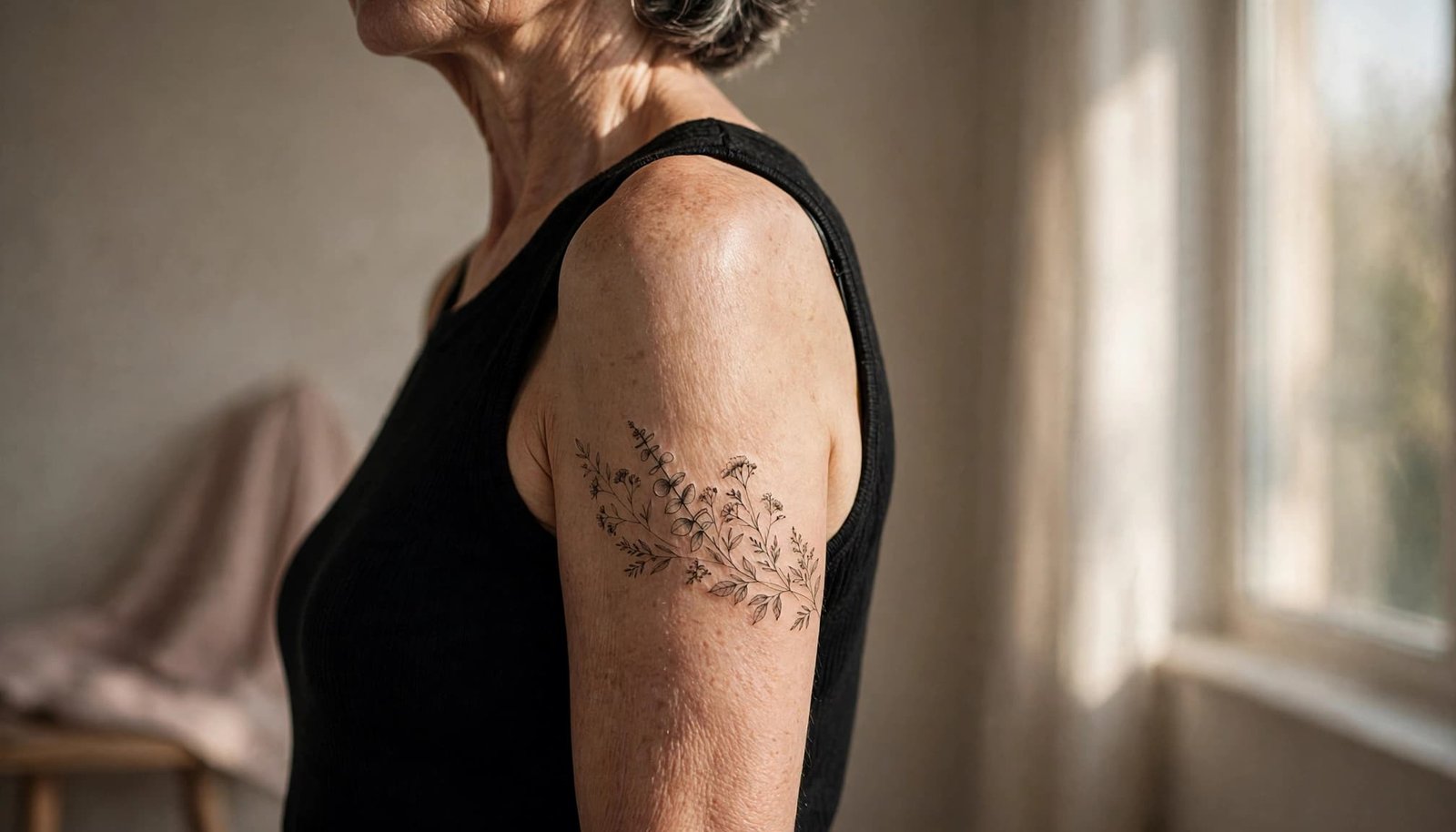
Several areas tend to provide more stable skin, less rubbing, and enough surface area for clear lines. They also work well for the meaningful flowers, birds, stars, and family symbols featured in this article.
- Outer forearm: This area offers a relatively smooth canvas and makes a tattoo easy to see. You can cover it with a long sleeve for work or expose it when you want the design visible. Because the forearm receives regular sun, plan for consistent protection after healing.
- Outer upper arm: The upper arm gives you control over visibility. A short sleeve can reveal the tattoo, while a longer sleeve can cover it. It also provides room for medium-sized designs that need clear spacing.
- Shoulder and upper back: These placements suit floral clusters, celestial designs, and larger personal symbols. Clothing usually protects them from direct sunlight, although straps and seams may rub the skin during healing.
- Outer thigh: The thigh offers generous space and less everyday friction than the hands or ankles. It works well for artwork with curved lines, though tight clothing can irritate a new tattoo.
- Calf: A calf tattoo can remain easy to cover while offering firm, open skin for readable designs. Socks, boots, and trouser cuffs may create friction, so choose clothing carefully during recovery.
A larger, simpler design often stays clearer than a tiny tattoo packed with delicate details.
What to Consider Before Choosing a Spot
Visibility matters as much as skin quality. If you work in a setting with appearance policies, the upper back, shoulder, thigh, or upper arm may offer more flexibility than the wrist or forearm. On the other hand, a visible placement can make a meaningful tattoo part of your daily style.
Sun exposure also affects long-term clarity. Fresh tattoos should stay out of the sun until fully healed. After that, the American Academy of Dermatology recommends broad-spectrum SPF 30 or higher, applied before outdoor exposure and reapplied regularly. A peer-reviewed review of tattoo aftercare also recommends protective clothing, shade, and sunscreen after healing (tattoo aftercare research).
Pain varies by person, but areas with more padding often feel easier than bony locations. Hands, fingers, feet, ankles, ribs, and skin that folds or rubs frequently can fade or blur sooner. These areas may also need more frequent touch-ups because of washing, footwear, movement, and sun exposure.
Avoid tattooing over a suspicious mole, changing growth, rash, or active skin condition. Ask your dermatologist about any area that concerns you, especially if you take blood thinners, bruise easily, form keloids, or use medication that affects immunity.
Let the Artist Check Your Skin First
A skilled artist can adjust the design to suit mature skin. They may recommend a slightly larger scale, stronger line weight, wider spacing, or fewer tiny details. Those changes can help a flower petal, handwritten date, or constellation remain readable as the skin heals and ages.
During your consultation, discuss:
- How visible you want the tattoo to be at work and at home.
- Whether clothing, straps, socks, or jewelry will rub the area.
- How much direct sun the placement receives.
- Your medication, bruising history, allergies, and previous scar reactions.
- The design size that gives the ink enough space to stay clear.
Choose the placement after this conversation, not before it. Your artist’s assessment of your actual skin is more useful than a generic placement chart.
How to Choose a Tattoo Design You Will Still Love Years From Now
A timeless tattoo usually begins with a personal memory, value, or feeling. Before searching for images, ask yourself what you want the design to hold: family love, freedom, healing, faith, independence, or a place that shaped you. Then choose a symbol that expresses that idea in a way that feels natural to you.
A bird may capture freedom, while a birth flower may honor family. A mountain outline can recall endurance, and a handwritten word may preserve a promise. The symbol matters, but the story behind it gives the tattoo its lasting value.
Test the Design Before You Commit
A temporary version can reveal details that look invisible on a phone screen. Print the design at the size you are considering, or ask your artist about a temporary decal. Place it on the intended area and live with it for several days.
Look at it in daylight, bathroom lighting, and low evening light. Wear the clothing you normally choose, including short sleeves, watches, bracelets, and fitted tops. Check whether the design still feels balanced when your arm rests naturally or your body moves.
The FDA’s tattoo safety guidance also recommends caution with temporary tattoos and advises trying them on a less noticeable area first. Some temporary products, including certain black henna products, can cause skin reactions.

Choose Clarity Over Crowded Detail
Scale affects how well a tattoo ages. A small area cannot hold a complex scene, several lines of text, and tiny decorative details without becoming crowded. Ask your artist to simplify the design if the main image gets lost at the size you want.
Line weight matters too. Extremely fine lines may look delicate at first but can soften as the skin changes. Slightly stronger outlines, open spacing, and clear shapes often keep a tattoo easier to read years later.
Color needs the same honest review. Black and deeper tones usually offer stronger contrast, while pale pastels and tightly packed color details may lose definition with sun exposure. If you prefer color, choose one or two shades that support the main image rather than filling every space.
Lettering deserves extra care. Use a short word, date, or phrase, and view it at the exact tattoo size. Ask the artist whether the chosen font will remain legible, especially if you want a small tattoo on the wrist, finger, or ankle.
Bring reference images to your consultation, but ask the artist to create an original composition. Your references can show preferred flowers, line styles, or placement. The final design should fit your body and story rather than copy another person’s tattoo.
Use This Tattoo Decision Checklist
Before booking your appointment, confirm that:
- The design connects to a memory, value, person, or feeling you still care about.
- The placement suits your clothing, work, comfort, and desired visibility.
- The size gives the design enough room to remain clear.
- The artist has experience adjusting tattoos for mature skin.
- You can afford a possible touch-up later, along with proper aftercare.
- You feel comfortable seeing the design on your body for many years.
Take your time with the final sketch. When the meaning feels right, the placement works in daily life, and the design remains clear at its true size, you have a stronger foundation for a tattoo you can continue to enjoy.
Safe Tattooing and Aftercare Advice for Women Over 50
A tattoo can heal beautifully at any age, but mature skin deserves careful preparation. Before booking your appointment, review your health history, choose a hygienic studio, and ask your artist how they adapt designs and aftercare for your skin.
Prepare Your Skin and Body Before the Appointment
Eat a full meal before your session and drink plenty of water. You may feel lightheaded if you arrive hungry, dehydrated, or anxious, especially during a longer appointment. Avoid alcohol beforehand because it can increase bleeding and make it harder to sit comfortably.
Tell your artist about any condition or medication that could affect healing. Speak with your doctor before tattooing if you:
- Take blood thinners or medicines that increase bruising.
- Have diabetes, poor circulation, or an immune condition.
- Form keloids or raised scars.
- Have serious allergies or reacted to tattoo ink before.
- Have eczema, psoriasis, a rash, a sore, or another active skin problem near the planned placement.
Don’t stop a prescribed medicine without medical advice. Your clinician can tell you whether the appointment should be delayed or whether extra precautions are needed.
Choose a Studio With Visible Hygiene Practices
A clean studio should make safety easy to see. Look for a licensed or registered business, fresh gloves, clean work surfaces, and needles opened from sealed, sterile packaging. Reusable equipment should be sterilized in an autoclave, and used needles must go directly into a sharps container.
Ask these questions before you commit:
- Are the needles single-use and opened in front of me?
- How do you sterilize reusable equipment?
- What products do you recommend during healing?
- What should I do if the tattoo becomes unusually red or painful?
A reputable artist will answer without defensiveness. You can also check licensing requirements and complaints through your state or local health department. If the studio looks rushed, cluttered, or unwilling to explain its hygiene routine, choose another one.

Clean and Moisturize the Tattoo Gently
Follow your artist’s instructions about bandage removal, since coverings differ. Once you’re told to clean the area, wash your hands first. Rinse the tattoo with lukewarm water and use a mild, fragrance-free cleanser. Avoid scrubbing, washcloths, and a direct, forceful shower stream.
Pat the skin dry with a clean paper towel or let it air-dry briefly. Then apply a thin layer of suitable fragrance-free moisturizer, following the artist’s recommendation. More product doesn’t speed healing. A heavy layer can trap moisture and irritate the skin.
For additional aftercare details, see this tattoo healing guide.
Protect the Tattoo While It Heals
During healing, don’t scratch, pick flakes, or peel away scabs. Avoid harsh exfoliants, fragranced products, tight clothing, swimming pools, hot tubs, saunas, lakes, and long baths. Friction and soaking can irritate the area and raise the risk of complications.
Keep the fresh tattoo out of direct sun. After the skin has healed, apply broad-spectrum, water-resistant SPF 30 or higher before outdoor exposure. Tanning beds and sunlamps can fade ink and damage the surrounding skin, so skip them.
Mild tenderness, peeling, and some redness can occur early. However, persistent redness, swelling, increasing pain, fever, pus, a spreading rash, unusual warmth, or continued bleeding needs medical attention. Contact a board-certified dermatologist if the skin keeps changing or the tattoo doesn’t seem to be healing normally. A dermatologist’s tattoo infection guidance can help you recognize warning signs that shouldn’t wait.
Conclusion
A tattoo after 50 can hold the wisdom of a long life, the strength of survival, the warmth of love, or the freedom of a new beginning. Whether you choose a birth flower, family symbol, celestial design, or meaningful word, the best tattoo is the one that connects to a story only you can tell.
Take your time with the decision. Choose personal meaning over a copied trend, favor clear artwork with enough space to age well, and select a placement that suits your comfort, clothing, and daily life. An experienced artist can adjust the size, line weight, and detail for your skin, while proper aftercare and broad-spectrum SPF 30 or higher after healing help protect the finished design from the sun.
Your tattoo doesn’t need to explain your life to anyone else. It only needs to feel honest when you look at it, now and years from now. There is no age limit on self-expression, and your next chapter deserves artwork that feels entirely like your own.
Save the pin for later


- 30 Trendy Tattoo Ideas for 2026: Styles and Placement - September 27, 2026
- 30 Gorgeous Fine Line Tattoo Ideas to Try - September 27, 2026
- 25 Fine Line Tattoo Ideas for Women With Meaning - September 22, 2026
Leave a Reply