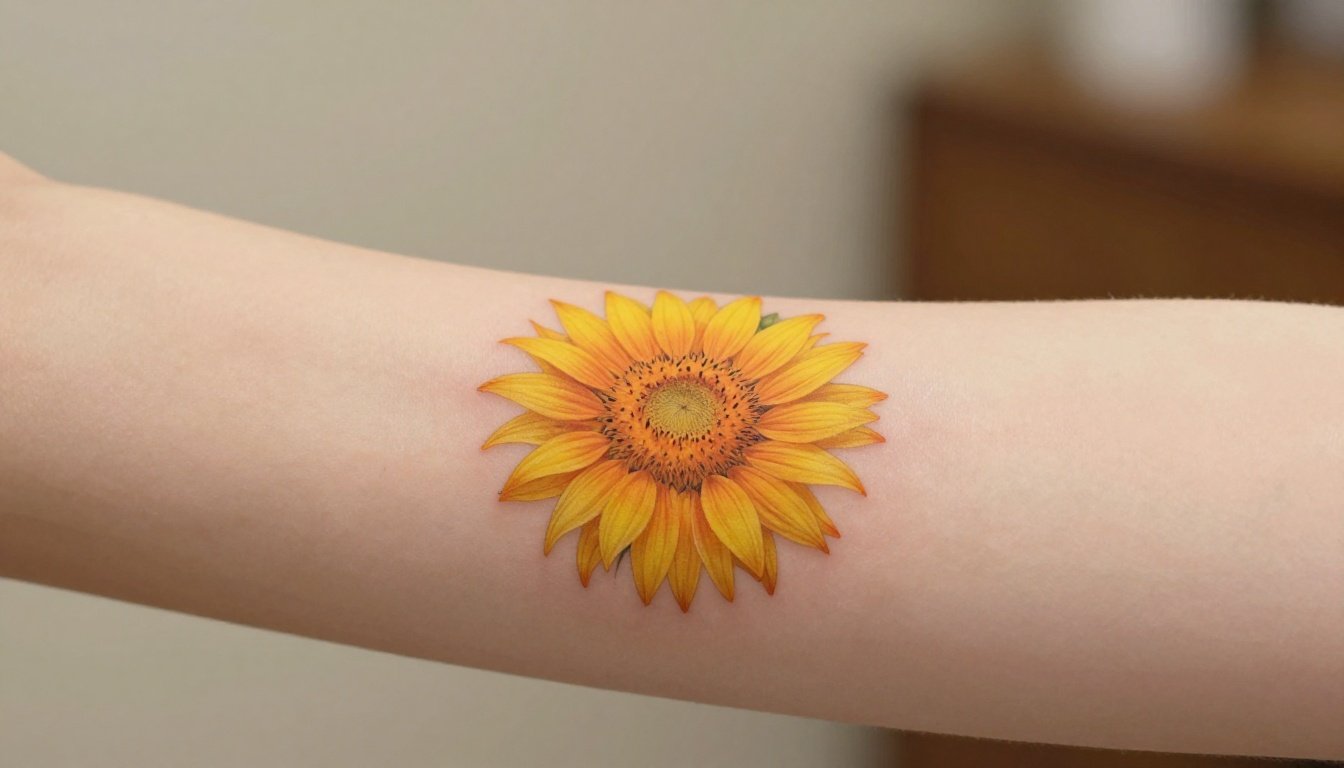
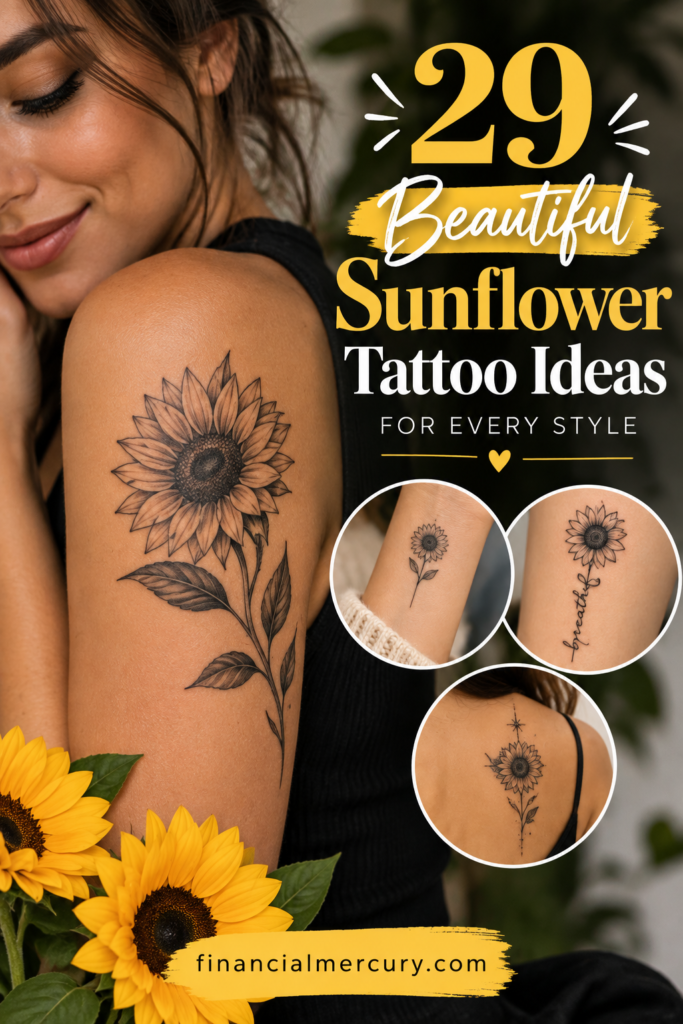
29 Beautiful Sunflower Tattoo Ideas for Every Style
A sunflower tattoo carries its own little burst of daylight: a bright face, a strong stem, and a hopeful meaning rooted in joy, optimism, and resilience. That warmth can feel personal, whether you’re honoring new growth, holding onto hope, or celebrating someone who brings light into your life.
Your design can be tiny and delicate, bold and traditional, colorful, realistic, or shaped by a memory only you understand. These 29 beautiful sunflower tattoo ideas are organized by style, meaning, pairings, and placement, so you can find inspiration that feels natural on your skin and true to your story.
After exploring the designs, you’ll also find practical guidance for choosing the right tattoo and caring for fresh ink. Let’s begin with styles that show how differently a sunflower can bloom.
29 Beautiful Sunflower Tattoo Ideas for Every Personal Style
A sunflower tattoo can feel soft, joyful, dramatic, or deeply personal. Line weight, color, scale, and negative space can change the flower’s entire mood, so even familiar imagery can become distinctly yours.
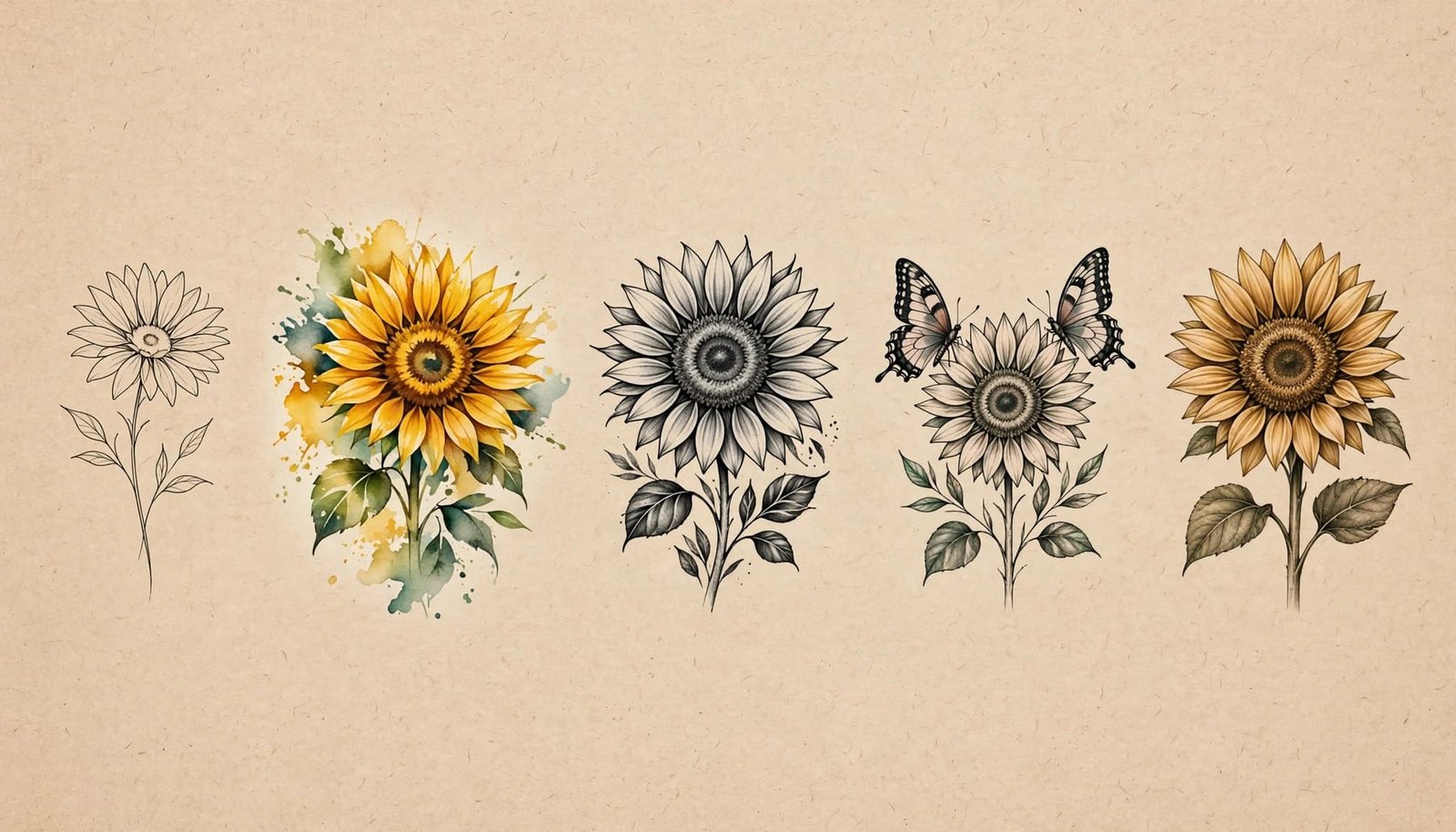
Delicate sunflower designs for a quiet, personal look
Small sunflower tattoos suit first-tattoo clients and anyone who prefers a private detail. Ask your artist to leave enough space between lines, since crowded micro-details can blur as the tattoo ages.
- A tiny fine-line sunflower behind the ear feels personal and easy to conceal with your hair. Its simple outline can express optimism without demanding attention.
- A minimalist single-stem bloom on the ankle creates a graceful vertical shape. It works well for someone who wants a small reminder of strength and growth.
- A small black sunflower on the inner wrist has a clean, graphic quality. The placement lets you see it often while keeping the design uncomplicated.
- A half-sunflower made with negative space feels modern and airy. The untouched skin forms part of the petals, creating a softer look on the forearm or rib cage.
- A petals-only sunflower on the finger or hand reduces the flower to its most recognizable shape. This tiny design feels artistic, though hand tattoos need frequent touch-ups.
- A dainty sunflower beside a short initial or date adds a personal detail without overwhelming the bloom. The collarbone, wrist, or ankle gives this keepsake room to remain legible.
Colorful sunflower tattoos that feel bright and joyful
Color brings warmth to sunflower tattoos, while surrounding garden details can suggest growth, nature, or a bright outlook. Larger placements give the artist space to blend tones and preserve texture.
- A watercolor sunflower with yellow and orange washes has a loose, painted feel. The shoulder suits its soft edges and lets the color spread naturally across the composition.
- A bold American traditional sunflower uses thick black outlines, solid yellow petals, and a strong green stem. Place it on the upper arm for a classic, durable design.
- A realistic sunflower with layered petals focuses on shadows, seed texture, and natural depth. The thigh or forearm offers enough space for the bloom to look dimensional.
- A sunflower surrounded by tiny wildflowers feels like a small meadow captured in ink. Choose the outer upper arm or shoulder blade for balanced spacing.
- A cheerful sunflower bouquet can combine several blooms with leaves and wrapped stems. The thigh or upper arm gives the arrangement room to follow the body’s shape.
- A vivid sunflower with a bee connects brightness with gardens, movement, and a love of nature. The forearm makes the pairing easy to admire without needing a large background.
Meaningful sunflower concepts for growth and remembrance
Sunflowers can hold personal memories, but no symbol has one fixed meaning for everyone. Choose words, dates, and details that still feel comfortable to carry years from now.
- A sunflower with a loved one’s name places the relationship at the center. Keep the lettering simple and choose the inner forearm, ribs, or shoulder.
- A memorial bloom with a meaningful date can honor someone without becoming visually heavy. Black and soft gold ink on the upper arm creates a gentle balance.
- A sunflower growing from visible roots connects the bloom with family, healing, and personal foundations. The calf or thigh gives the roots enough room to read clearly.
- A broken stem turning into new leaves creates a direct image of recovery and change. Place it along the forearm, where the vertical design feels natural.
- A black-and-grey sunflower for resilience relies on shading rather than bright color. The shoulder blade or outer arm suits its calm, reflective character.
- A sunflower paired with a short handwritten phrase feels intimate and unmistakably personal. Use a phrase you can live with comfortably, placed along the ribs or collarbone.
Sunflower pairings with a softer, romantic, or mystical mood
Surrounding imagery shifts a sunflower’s personality. A butterfly can make it feel light and transformative, while a skull, snake, or thorned vine can create a darker symbolic contrast.
- A sunflower and butterfly links brightness with transformation. The upper arm or shoulder gives both forms room to spread their wings.
- A rose and sunflower bouquet combines romance with warmth and strength. Place the arrangement on the thigh, chest, or upper arm for a full floral composition.
- A sunflower with a crescent moon and stars adds a spiritual, dreamlike mood. The ribs or shoulder blade provide a broad canvas for the night-sky details.
- A sunflower inside a geometric or mandala frame balances organic petals with precise structure. The sternum, forearm, or thigh can support the complete shape.
- A sunflower with a snake or thorned vine gives the cheerful flower a bolder edge. The outer thigh or upper arm allows the curves to move around the bloom.
- A sunflower with a skull creates a dramatic contrast between life, mortality, and remembrance. Choose the thigh, chest, or back so the composition has room to breathe.
Statement sunflower tattoos that turn the flower into artwork
Larger sunflower tattoos can include seed patterns, layered shading, leaves, background shapes, and multiple blooms. Size also gives your artist more freedom to create a design that follows your anatomy.
- A large realistic sunflower on the thigh can show every fold, seed, and shadow. It suits someone who wants a botanical artwork with strong visual presence.
- A spine design made from several blooms creates a natural vertical rhythm. Different flower sizes can follow the back without making the composition feel repetitive.
- A sunflower half-sleeve can combine blooms, leaves, stems, and small background shapes. The upper arm and shoulder provide a strong base for gradual expansion.
- A dense-petal sunflower cover-up can conceal older ink with layered petals, dark centers, and broad leaves. Your artist must assess the existing tattoo before promising a result.
- A sunflower on the hand or neck makes an openly visible style choice. These areas experience movement, sunlight, and fading, and workplace policies may affect your decision. The FDA also outlines tattoo risks such as infection and allergic reactions in its tattoo safety fact sheet.
Sunflower Tattoo Meanings and Design Details That Make It Yours
A sunflower tattoo can express happiness, optimism, loyalty, renewal, resilience, or remembrance. Still, no symbol comes with a fixed meaning. Your reason matters most, whether the flower honors a person, celebrates recovery, or simply brings a little brightness to your everyday life.
Color and linework shape that message. Yellow and orange petals create warmth and energy, while black-and-grey shading gives the flower a calmer, more reflective mood. Fine lines create a lighter feel, but the design needs enough space to remain clear as the tattoo ages.
Choose the right sunflower tattoo style before choosing the details
Start with the overall style before adding initials, dates, or extra flowers. Fine-line sunflower tattoos use delicate outlines and limited shading, making them a good choice for an airy, understated design. Minimalist tattoos reduce the bloom to its clearest shapes, so they work best when you want a small reminder without heavy detail.
Blackwork uses bold outlines, dark fills, and strong contrast. It suits graphic designs that need to remain visible, even when the flower includes only a few shapes. Watercolor tattoos create loose color washes and soft edges, while traditional sunflower tattoos rely on thick outlines, solid color, and a timeless illustrated look.
Realism focuses on natural petals, seed texture, shadows, and depth. Geometric designs add circles, symmetry, grids, or mandala forms around the organic flower. Abstract sunflowers may use unusual angles, broken shapes, or unexpected color while keeping enough of the bloom recognizable.
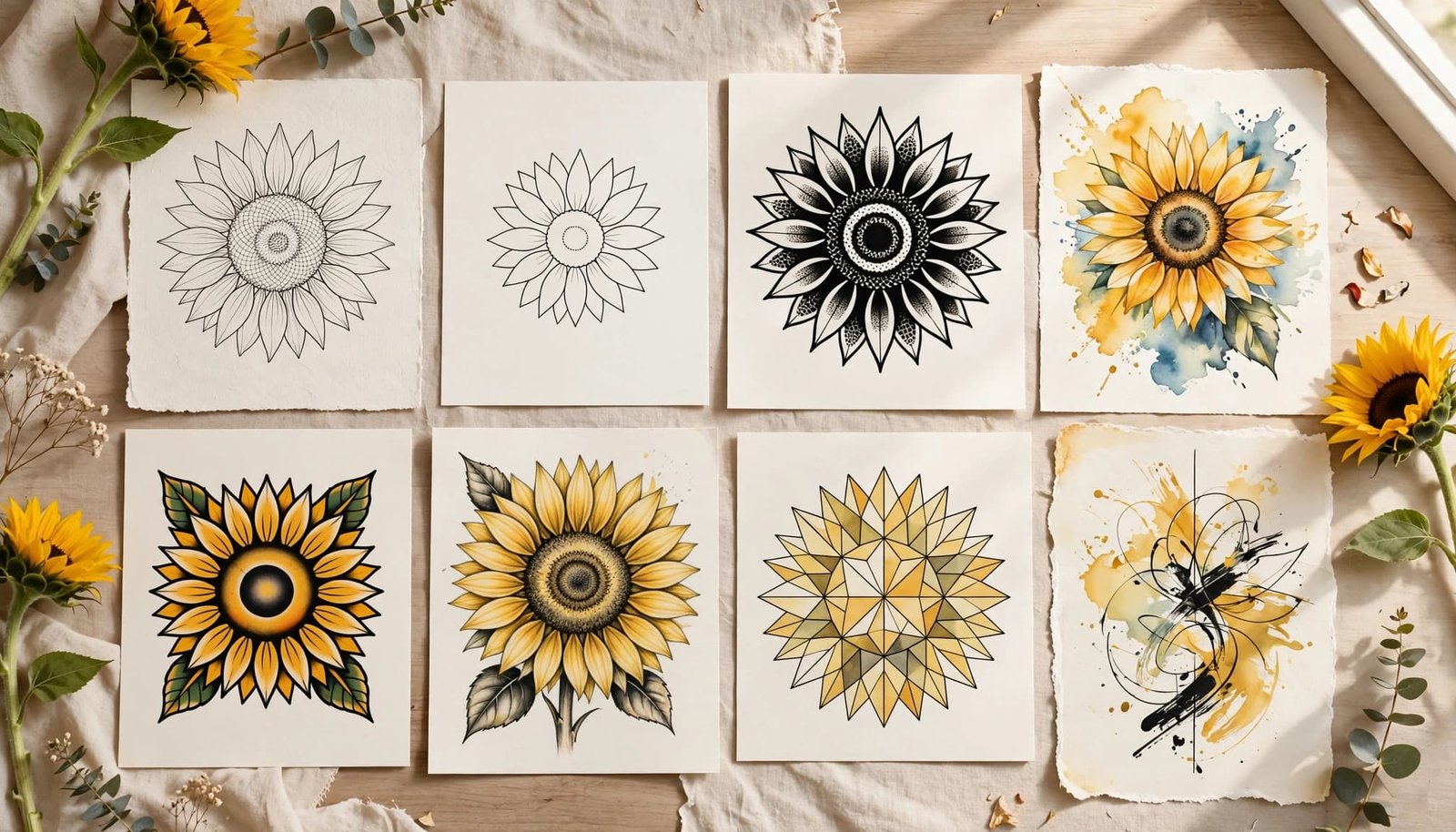
Ask an artist to show portfolio examples that match the style, size, and body area you want. Healed tattoos are especially useful because fresh ink often looks sharper and brighter than settled ink. Also ask to see realistic petals, watercolor blending, or fine-line work if those features matter to your idea.
Realistic petals and watercolor effects need room to breathe. A tiny tattoo can lose those details when too many lines and colors compete for the same small space.
For a small sunflower, choose fewer petals, clear spacing, and a simple center. Larger tattoos can support layered petals, subtle color changes, leaves, roots, lettering, and background shapes. Bring several references to your consultation, but ask the artist to create an original composition rather than copy another person’s tattoo.
Your personal details should support the flower instead of crowding it. An initial can sit near the stem, while a date may fit beneath the bloom in small, clean lettering. Handwriting works best when the phrase is short and the artist can preserve its most recognizable features. Roots can suggest family or recovery, and one additional flower can add meaning without turning the design into a packed bouquet.
Match the tattoo size and placement to your daily life
Placement affects visibility, movement, friction, clothing, and the amount of detail your artist can include. Behind-the-ear, ankle, finger, and inner-arm tattoos suit small sunflower designs. They can feel discreet, although fingers and hands receive frequent movement, washing, and friction.
The forearm, shoulder, ribcage, back, spine, thigh, and sleeve offer more room for realistic petals, watercolor shading, and supporting elements. A forearm design stays easy to see and can follow a vertical stem. Meanwhile, a shoulder or thigh allows the bloom to spread naturally across a rounded surface.
Consider your routine before settling on a visible location. A hand or neck tattoo may conflict with workplace expectations, while an ankle tattoo can rub against socks or shoes. Sun exposure and friction can also soften lines and fade color over time. The American Academy of Dermatology recommends protecting tattooed skin from the sun and caring for healed skin with appropriate moisturizer, as outlined in its tattooed skin care guidance.
Pain varies by person and body area. Ribs, fingers, feet, and areas close to bone often feel more sensitive than the outer thigh or upper arm. Your clothing matters too, since tight waistbands, bra straps, or rough fabric can irritate a healing tattoo.
Body shape should guide the flower’s direction. A stem can follow the length of the forearm, spine, calf, or thigh, while a shoulder bloom can curve around the muscle. Before the stencil becomes permanent, decide whether the sunflower should face you or face outward toward other people. A bloom facing the wearer feels personal and easy to admire; one facing outward presents the design clearly to everyone around you.
How to Plan a Sunflower Tattoo and Protect It as It Heals
A beautiful sunflower tattoo starts before the appointment. The right artist, size, placement, and aftercare plan can help your design stay clear while your skin recovers. Before booking, look beyond a fresh portfolio photo and ask how the tattoo may look after it settles.
Questions to ask before booking your sunflower tattoo
Use these questions as a short decision checklist during your research or consultation:
- Can I see healed sunflower tattoos by this artist, preferably in a similar size and style?
- How consistent are the artist’s lines in fine-line, minimalist, or geometric work?
- Does the artist have experience blending yellow, orange, and green pigments without overcrowding the petals?
- If I need a cover-up, can the artist show healed cover-up results with similar existing ink?
- What size does the artist recommend for the details I want, and what is the estimated cost?
- Will the placement work with my daily clothing, movement, work requirements, and exposure to sunlight?
- Can I request changes after seeing the stencil on my skin?
- What written aftercare instructions and products will I receive?
Bring a clear meaning or mood, rather than only a copied image. You might want a sunflower that feels hopeful, memorial, delicate, bold, or grounded. Reference photos can show the direction you like, but your artist should adapt the design to your body and create an original composition.
Schedule a consultation when the design includes a name, date, handwriting, several symbols, or a large body placement. These details affect spacing, flow, and the time needed for the appointment. A consultation also gives you a chance to discuss allergies, sensitive skin, past reactions to pigments or metals, and any concerns about color ink. The FDA notes that tattoo reactions can happen immediately or long after the appointment, so share your history honestly before choosing pigments.
Studio hygiene deserves the same attention as artistic style. Look for a clean work area, fresh barriers, hand hygiene, and sealed sterile, single-use needles. The artist should open the needle package before use and place used sharps into an approved container immediately. If the studio avoids clear answers about sanitation, choose another studio.
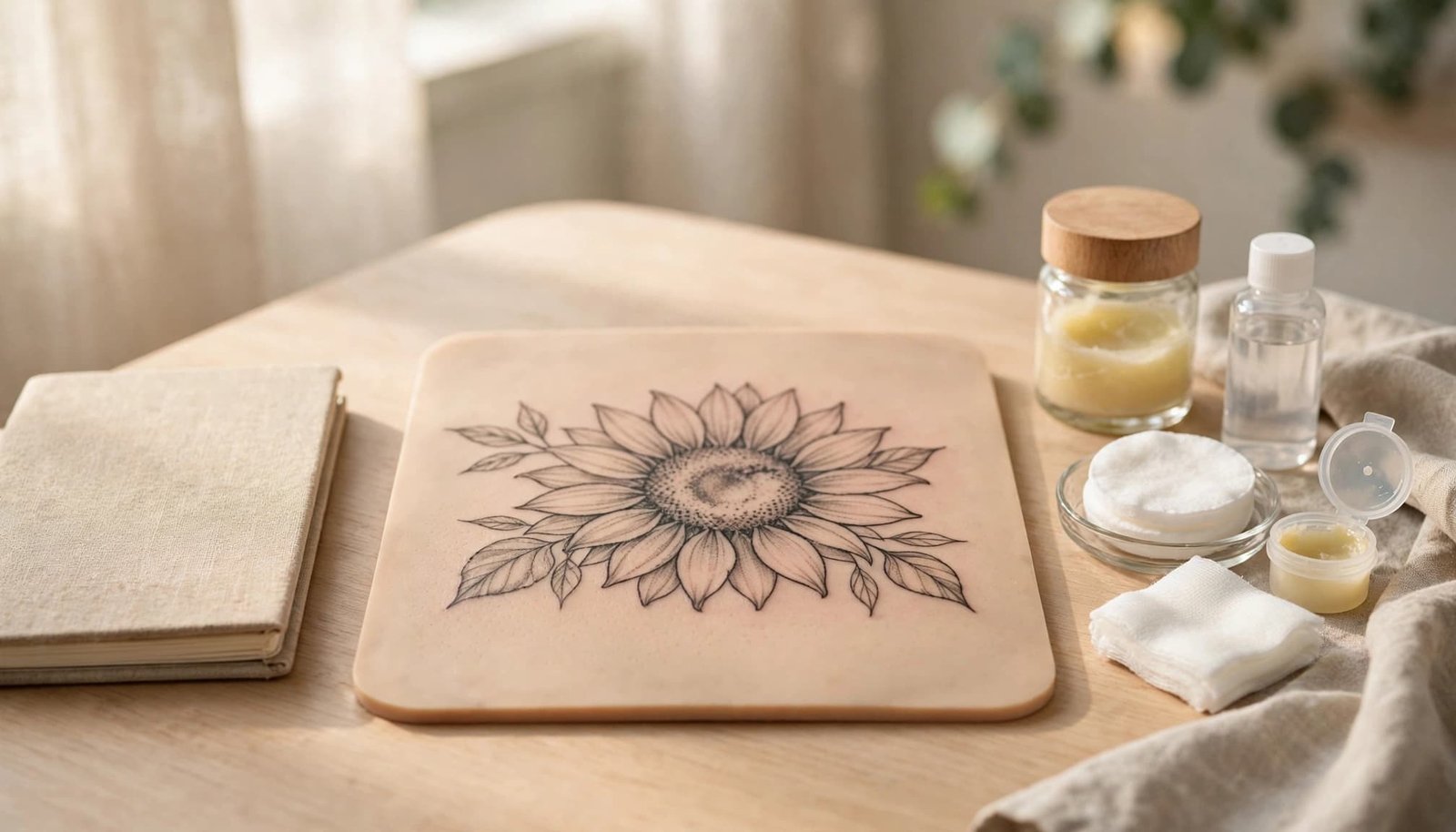
Small choices that help a sunflower tattoo age well
Clean spacing gives each petal and leaf room to remain recognizable. When lines sit too close together, natural fading can make them merge. Suitable line weight matters too. Extremely fine lines may suit a tiny, airy sunflower, while a larger or highly detailed design may need stronger outlines and more breathing room.
Ask your artist to size the tattoo according to its details, not only the space available. A realistic bloom with layered petals, seed texture, lettering, and leaves needs more room than a simple outline. Choose a design that still looks balanced if some yellow softens or a small detail becomes less sharp over time.
Placement also affects how much wear the tattoo receives. Fingers, palms, hands, feet, and other high-use areas face frequent washing, movement, rubbing, and sun exposure. They may fade or blur sooner and can require touch-ups. Areas covered by clothing and protected from constant friction often preserve detail more easily, although every person’s skin heals differently.
After the appointment, follow your licensed artist’s written instructions because dressings, products, and healing methods can vary. In general, wash your hands before touching the tattoo, then clean it gently with the recommended method. Pat the area dry with a clean towel or paper towel instead of rubbing it, and apply only the aftercare product your artist recommends.
During healing, avoid soaking the tattoo in a bath, hot tub, or pool. Reduce rubbing from tight clothing, straps, shoes, and repetitive movement when possible. Peeling and mild dryness can occur, but don’t pick at flakes or scabs. Pulling at healing skin may irritate the area and affect the finished appearance.
Keep a fresh tattoo out of direct sun. Once the skin has fully healed, apply a broad-spectrum sunscreen with SPF 30 or higher when the area is exposed, since sunlight can fade bright yellow pigment. The American Academy of Dermatology’s tattoo guidance also covers basic care and reactions that can occur after tattooing.
Some redness, tenderness, or swelling can occur soon after an appointment, but worsening symptoms need prompt medical attention. Contact a medical professional if you notice spreading redness, unusual heat, pus, fever, red streaks, or pain that keeps increasing. You can also review the warning signs of a tattoo infection if the area begins to look or feel worse instead of gradually improving.
Conclusion
A sunflower tattoo can hold whatever matters most to you. It may speak of joy, strength, new growth, a loved one, or a simple love of nature. The best design is the one that feels personal when you see it, whether you choose a delicate fine-line bloom, a colorful bouquet, or a bold black-and-grey piece.
Narrow your ideas by choosing a mood, style, size, and placement that fit your life. Then share those details with a skilled tattoo artist who can shape them into an original design that suits your body and preserves the details you care about.
Let your sunflower carry a story that feels meaningful now and still feels right years from now.
Save the pin for later

- 30 Lotus Flower Tattoo Ideas With Meaning and Symbolism - September 14, 2026
- 29 Beautiful Sunflower Tattoo Ideas for Every Style - September 14, 2026
- 15 Christian Wrist Tattoo Ideas With Meaning - September 14, 2026
Leave a Reply