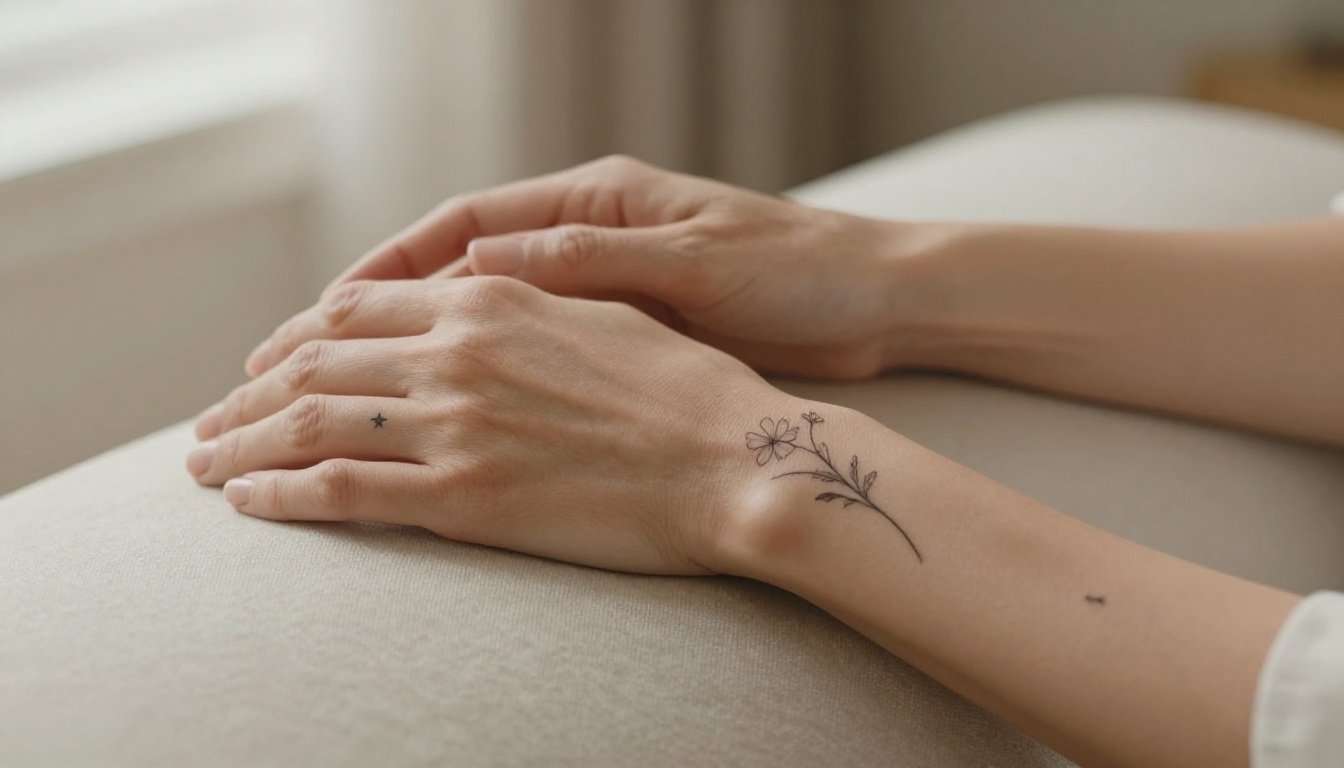
47 Simple Tattoo Ideas for Older Women Over 50
Tattoos have no age limit. After 50, a new design can mark a fresh chapter, honor family, celebrate healing, or simply express your personal style in a way that feels true to you.
This collection of 47 simple tattoo ideas for older women over 50 features designs that are easy to personalize and suited to a mature, elegant look. You’ll find inspiration for delicate flowers, meaningful symbols, initials, animals, celestial details, and simple linework, along with practical ideas for choosing a comfortable placement.
A thoughtful tattoo design should match both your story and your skin. We’ll consider clear linework, open spacing, readable sizing, and placement areas that may be more comfortable, while also covering mature-skin considerations and safe aftercare basics. Your tattoo artist can help adjust the design, scale, and technique to suit you, so you can choose an idea with confidence. Let’s start with simple designs that carry personal meaning without feeling overdone.
47 Simple Tattoo Ideas for Older Women Over 50, From Tiny Symbols to Meaningful Art
Simple tattoos can be tiny, medium-sized, colorful, black and gray, or built with clean, bold lines. The best choice is the one that feels personal while remaining readable and comfortable for your preferred placement.
For mature skin, ask your tattoo artist about open spacing, moderate detail, and a size that will age well. Keep names, dates, initials, and quotes carefully checked before your appointment. After healing, protect exposed ink with broad-spectrum SPF 30 or higher, as recommended by the American Academy of Dermatology’s tattoo care guidance.
Soft Floral and Botanical Tattoos That Stay Timeless
Flowers offer gentle symbolism without making a tattoo feel overly delicate. Clear outlines and moderate detail help each design remain recognizable as skin changes over time.
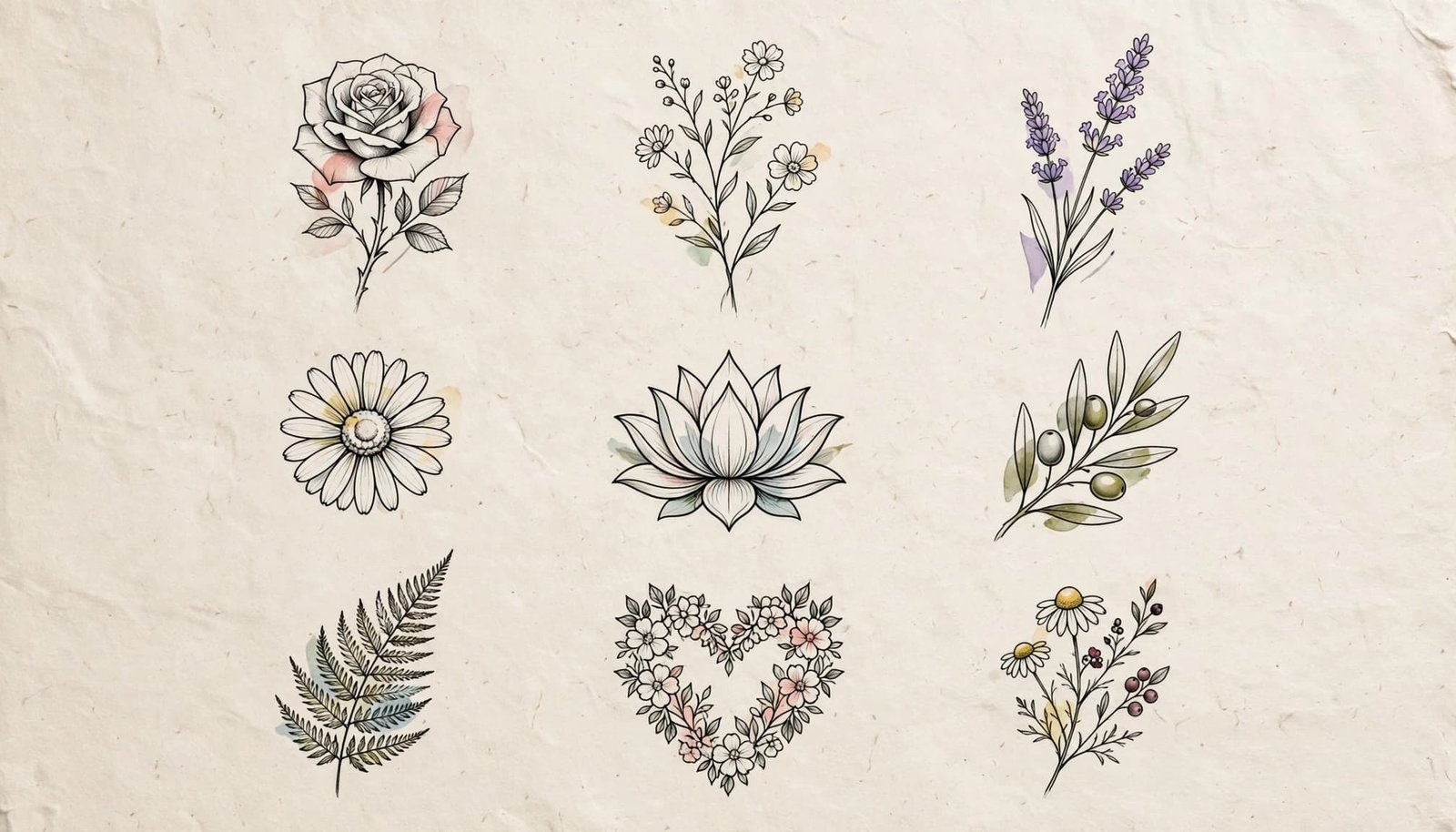
- A single rose can symbolize love, devotion, or a person who shaped your life. Personalize it with one birth date hidden along the stem or choose a favorite rose color.
- A sunflower brings thoughts of joy, optimism, and warmth. Add a small initial in the center or place it on the outer upper arm where the shape has room to breathe.
- A wildflower sprig suits someone who values individuality and natural beauty. Choose flowers from a meaningful hike, hometown, or favorite season.
- A lavender stem suggests peace, healing, and calm. A single purple accent can add personality without making the design difficult to maintain.
- A daisy is a cheerful symbol of innocence, hope, and fresh beginnings. Add a tiny birthstone-colored center or pair it with a meaningful month.
- A lotus flower can express growth, renewal, and strength after hardship. A simple lotus looks elegant on the forearm, shoulder, or outer calf.
- A birth flower honors your birth month or the month of someone you love. Use one clear bloom rather than a crowded bouquet, then personalize it with a discreet initial.
- An olive branch represents peace, reconciliation, and a settled chapter of life. Its narrow shape works well along the forearm or outer thigh.
- A small fern can symbolize endurance, family history, and continued growth. Ask for a slightly larger frond with defined leaves so the pattern stays readable.
- A floral heart combines affection with a love of nature. Fill the heart with one or two recognizable flowers connected to your family, hometown, or a fresh start.
Nature-Inspired Tattoo Ideas for Freedom, Strength, and New Beginnings
Nature designs can capture major life changes without requiring a long quote or detailed scene. In many cases, silhouettes and bold shapes age more clearly than very fine landscape details.
- A small bird is a classic symbol of freedom, independence, and movement. Personalize it with the silhouette of a favorite species or place it near a meaningful date.
- A butterfly reflects transformation, confidence, and a new chapter. Select a simple wing pattern inspired by your favorite colors rather than adding many tiny lines.
- A hummingbird can express joy, energy, and appreciation for life’s small moments. Add one restrained accent color, such as red or turquoise, to the wings.
- A crescent moon suggests change, intuition, and fresh beginnings. Pair it with one small star or choose the moon phase from an important date.
- A sun represents warmth, courage, hope, and renewed energy. A clean circle with short rays usually remains clearer than an elaborate sun face.
- A mountain range can symbolize strength, travel, courage, or a challenge you overcame. Use two or three bold peaks instead of delicate background details.
- A leafy tree reflects family roots, stability, and the life you have built. Add a few initials inside the trunk or choose leaves from a meaningful tree.
- A wave can represent calm, travel, flexibility, or learning to move through change. A single curved line with a strong crest keeps the design simple.
- A simple star offers a small reminder of hope, guidance, or someone who still inspires you. Personalize it with one accent color or place it beside a tiny initial.
Black ink works well for these ideas, while one restrained accent color can make a familiar design feel personal. Ask your artist to avoid hairline details that may blur or fade faster.
Family and Love Tattoos With Personal Meaning
Family tattoos don’t need a long list of names to carry emotional weight. Initials, birth flowers, symbols, and carefully chosen dates can honor loved ones while keeping the design open and balanced.
- A family tree represents roots, connection, and the people who came before you. Add a small number of leaves for children or grandchildren rather than crowding the branches.
- A small heart is a classic symbol of love and affection. Place one initial inside it, or choose a color associated with the person you want to honor.
- Linked hearts can symbolize a close bond between partners, siblings, parents, or friends. Use two different-sized hearts to show a special relationship without adding names.
- Children’s or grandchildren’s initials create a discreet family tribute. Arrange them in a gentle curve or around a small flower, and double-check every letter before the appointment.
- Meaningful birth dates can honor a child, grandchild, partner, or loved one. Use a clear number style, verify the date carefully, and avoid placing several dates too close together.
- A mother-and-daughter symbol may feature two flowers, linked figures, or a larger and smaller circle. Personalize it with matching birth flowers or a shared favorite color.
- A pet paw print honors a beloved companion and the comfort they brought to your life. Add one tiny heart or use a paw shape based on your actual pet’s print.
- A simple infinity symbol can express lasting love, family connection, or an enduring promise. Add a small initial at one crossing point instead of filling the design with text.
- A memory ribbon can honor someone who has passed away or support a cause close to your heart. Choose a meaningful color, but keep the ribbon wide enough to remain visible.
- A heart with a name or word creates a direct tribute to someone important. If privacy matters, use an initial, nickname, or birth flower instead of a full name.
Before approving the stencil, check spelling, dates, number placement, and the order of initials. A simple design leaves little room for corrections, so precision matters more than extra decoration.
Words, Quotes, and Symbols That Mark a Personal Milestone
Short lettering can mark recovery, faith, resilience, travel, independence, or a new beginning. Choose a font with open spacing and strong strokes, because tiny script can become difficult to read as skin changes.
- The word “hope” offers a compact reminder to keep moving forward. Use lowercase rounded lettering or add a tiny star above one letter.
- The word “love” can honor family, self-acceptance, faith, or a lasting relationship. Personalize it with a small heart in place of the letter “o,” if the word remains clear.
- “Still I rise” speaks to resilience after loss, illness, or a difficult season. Keep the lettering medium-sized and use two short lines rather than cramped text.
- “Be kind” is a simple reminder about how you want to treat yourself and others. Add a small daisy or choose handwriting based on a loved one’s script.
- “One day at a time” can support recovery, patience, and steady progress. Consider placing the phrase along the forearm with generous spacing between words.
- A semicolon often symbolizes continuing after a period when the story could have ended. Personalize it with a flower, heart, or color tied to your recovery.
- A small cross may express faith, comfort, and spiritual guidance. Add a short date or a subtle ray pattern without crowding the central shape.
- An anchor represents stability, hope, and staying grounded through change. Pair it with one initial or a small wave for a personal travel memory.
- A compass can symbolize travel, independence, and finding your direction. Use the initial of a favorite destination or highlight one cardinal point with muted color.
- A meaningful handwritten signature preserves the actual handwriting of a parent, partner, child, or loved one. Scan the original carefully and ask for a size that keeps every letter open.
Read every word aloud and inspect the stencil before the needle touches your skin. Short phrases usually age better than long quotes, especially when the letters have enough space between them.
Minimalist Shapes and Elegant Designs With a Modern Feel
Minimalist tattoos can look modern without following a short-lived trend. The secret is balance: avoid overly thin lines and details so tiny that they lose definition, then personalize the shape through placement, a date, one accent color, or a nature element.
- A single-line face can symbolize self-expression, identity, or acceptance. Choose a profile inspired by your own features, or add one small flower near the hairline.
- A small geometric circle suggests wholeness, continuity, and balance. Place a meaningful date beside it or use a single muted color inside the outline.
- A trio of dots may represent family members, life stages, or a personal milestone. Arrange the dots vertically on the wrist or add them beside a floral tattoo.
- A simple diamond can symbolize clarity, inner value, and strength. Choose one corner to hold a tiny birthstone-colored accent.
- A fine but readable crescent offers a modern symbol of change, intuition, and renewal. Make it personal with one star or the moon phase from a special evening.
- A tiny key can represent independence, opportunity, or access to a new chapter. Add a small heart-shaped bow or use the outline of a key from your family home.
- A paper airplane suggests travel, freedom, curiosity, and taking a new direction. Add a short date beneath it or use a thin route line ending at a favorite destination.
- A matching friendship symbol can be a small circle, wave, star, or paired line shared with someone special. Choose a design that works alone if your placements need to differ.
Ask your artist to show the design at its actual tattoo size, not only on a phone screen. A slightly larger, well-spaced tattoo often looks more elegant and stays legible longer than an ultra-tiny one.
How to Choose a Simple Tattoo That Still Feels Like You
With 47 ideas to consider, choosing one tattoo can feel harder than finding inspiration. Start with the design that connects to your life, then adjust its size, placement, and style until it feels natural on your body.
Start With Meaning, Appearance, or Both
Some tattoos begin with a clear meaning, such as honoring a grandchild, remembering a loved one, or celebrating a new beginning. Others simply appeal to you because the shape looks elegant. Both are valid reasons. A tattoo doesn’t need a deep explanation to deserve a place on your skin.
If meaning matters most, write down three important:
- Memories that shaped your life.
- Values you try to live by.
- People, places, or seasons you never want to forget.
Next, match each idea with a symbol. A mountain might represent a challenge you overcame, while a wave could recall a favorite coastline. A birth flower may honor family without using names or dates.
When appearance matters more, notice the designs you keep returning to. Do you prefer curved botanical lines, geometric shapes, small symbols, or restrained color? The strongest choice may combine both goals, such as a simple bird based on a meaningful trip or a flower drawn in your favorite style.
Check Size, Visibility, Color, and Line Weight
A design that looks beautiful on a phone may lose clarity when reduced to an inch. Ask to see the tattoo at its actual size, then consider how the lines and spaces will look after healing.
Placement also affects your comfort and daily routine. A wrist, forearm, or ankle tattoo is easy to see, while an upper arm, shoulder, back, or thigh offers more privacy. If you work in a setting with dress expectations or attend formal events often, choose a location that clothing can cover easily.
Color adds personality, but black ink often gives simple designs a clear foundation. One muted accent may be enough. Ask your artist whether the chosen color and line weight suit your skin, the placement, and the amount of detail in the design.
Work With Your Artist Before You Book
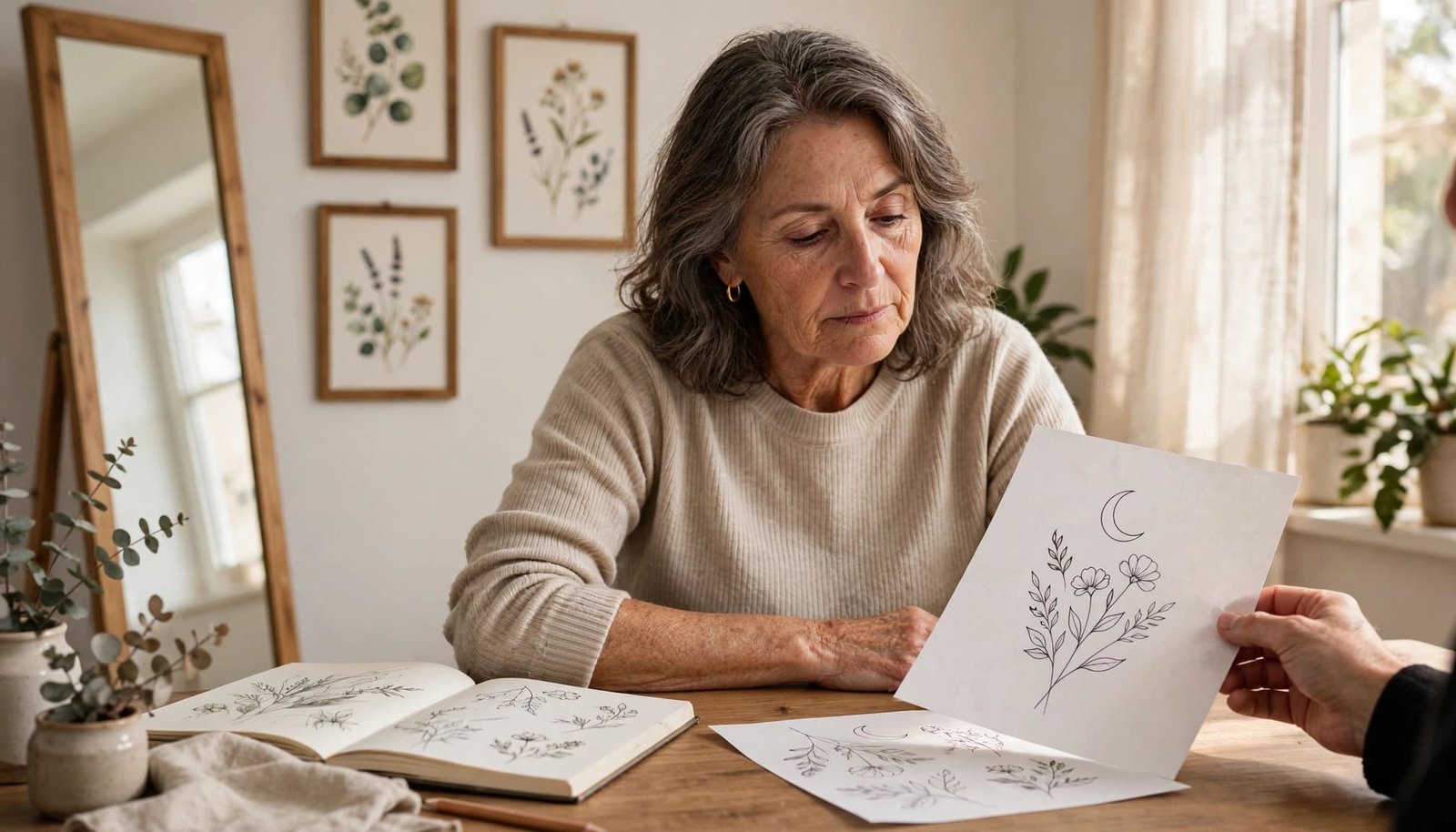
Bring reference images that show the mood, shape, placement, or line style you like. Use them as direction rather than asking for an exact copy of another person’s tattoo. Your artist can create a custom sketch that combines your symbols with proportions suited to your body.
Before the appointment, ask about the artist’s experience with mature skin, studio hygiene, ink brands, and aftercare. The FDA advises consumers to think carefully about permanent tattoos, ask about the inks used, and consider health conditions or medications with a healthcare professional.
Request a stencil preview and inspect it in a mirror, especially if the tattoo will face sideways or sit on an area you rarely see. Check spelling, dates, proportions, and placement from several angles. Then give yourself time before booking. Save the sketch as your phone wallpaper or place a temporary version nearby for a week.
Trends will change, but a design tied to your values, memories, or personal taste can remain meaningful. Choose the tattoo you would still recognize as yours years from now.
The Best Tattoo Placements for Older Women and Mature Skin
The best tattoo placement balances comfort, skin condition, visibility, and long-term appearance. Mature skin can still heal well, but areas with more cushioning and less daily friction often make the process easier.
Comfortable Placements With More Support
The outer upper arm, shoulder, outer forearm, calf, outer thigh, and upper back are often practical choices for older women. These areas usually have more soft tissue than bony locations, which can make tattooing more comfortable and give the artist a steadier surface.
They are also easier to protect during healing. Loose sleeves, longer pants, and comfortable tops can shield the fresh tattoo from excess sun, rubbing, and accidental bumps. The outer upper arm and shoulder work especially well for flowers, birds, hearts, and medium-sized symbols. Meanwhile, the calf and outer thigh provide enough space for a design with open lines and balanced proportions.
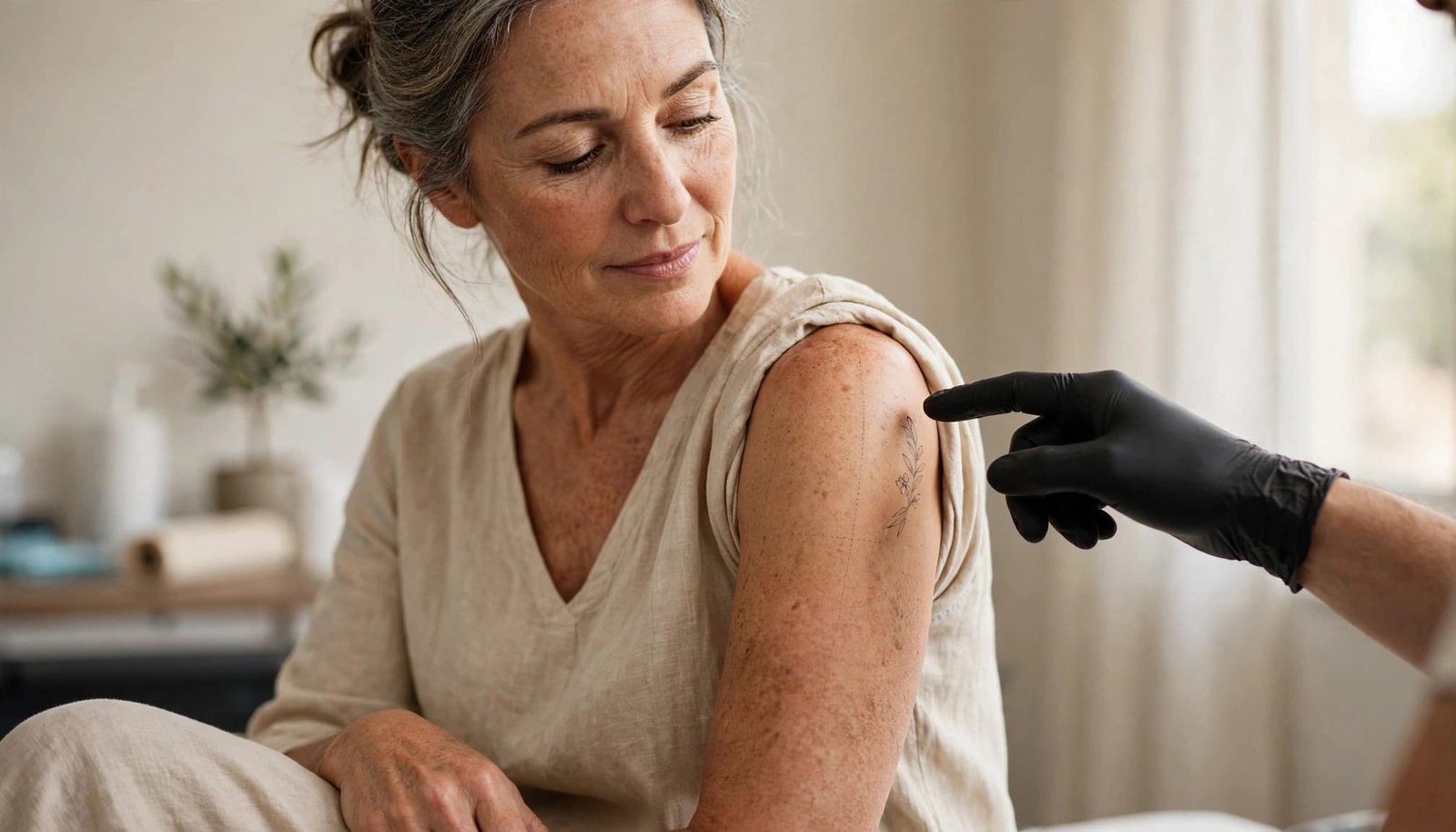
The upper back offers privacy and a broad canvas, although you may need help checking the stencil and caring for the area afterward. For simple skin care during healing, these budget-friendly body care tips can also help you keep your routine gentle and affordable.
A slightly larger tattoo with open spacing often stays clearer than an ultra-tiny design placed on thin, frequently exposed skin.
Visible Areas Have Benefits and Tradeoffs
The wrist and outer forearm make meaningful tattoos easy to see every day. They suit initials, small flowers, short words, and simple symbols, especially when you want the design to remain part of your personal style rather than something hidden.
However, visible areas receive more sunlight and may experience more frequent washing, friction, and contact with clothing. Over time, fine details can soften, and delicate lines may fade faster than they would on a covered area. Apply broad-spectrum SPF 30 or higher to healed tattoos, following the American Academy of Dermatology’s tattoo care guidance.
Consider the clothing you wear, your work environment, and how often you want to see the tattoo. A forearm design offers easy visibility, while the upper arm or shoulder gives you more control over when others see it.
Areas That May Be More Sensitive
Hands, feet, ribs, ankles, elbows, and knees often have less cushioning, more movement, or more friction. As a result, tattooing there may feel more painful and healing may require extra care. Shoes can rub against ankle and foot tattoos, while bending can irritate designs near elbows and knees.
Areas close to bone can also make the tattooing experience feel sharper. If comfort is a priority, choose a padded area first, then ask your artist whether the design can be adjusted for another location.
Check the Skin Before Choosing the Design
Never tattoo over a mole, suspicious spot, irritated skin, active rash, or scar that still needs medical monitoring. Ink can make changes in a mole harder to notice, and the American Academy of Dermatology explains that tattooing may complicate the evaluation of possible skin cancer. Review the AAD’s guidance on tattoos and suspicious skin spots before your appointment.
Ask a dermatologist to examine any concerning area first. Then have your tattoo artist assess the skin, place the stencil, and confirm that the design fits without covering a lesion or stretching across a fold. This short consultation can help you choose a tattoo that looks balanced now and remains easier to monitor later.
What to Know Before Tattooing Skin Over 50
Tattooing after 50 can be safe and rewarding, but mature skin needs thoughtful planning. Skin may have less elasticity, more sun damage, and a greater tendency toward dryness or inflammation. These changes can affect how ink settles, how quickly the area heals, and how sharply small details remain.
A consultation with your tattoo artist helps you choose a suitable size, line weight, and placement. When health or skin concerns are present, speak with a medical professional before scheduling the appointment.
Understand How Mature Skin May Respond
As skin ages, it can become thinner, drier, and less flexible. Sun exposure may also leave uneven texture, pigmentation, or areas that need regular monitoring. For that reason, a slightly larger design with open spacing often ages better than extremely fine lettering or crowded detail.
Avoid tattooing over moles, suspicious spots, rashes, irritated skin, or areas with unexplained changes. Ink can make it harder to notice changes that need medical attention. The American Academy of Dermatology’s tattoo guidance explains why tattoos should not cover possible skin cancer signs.

Arrange a consultation with a board-certified dermatologist if you have many moles, unusual skin changes, a history of skin cancer, poor wound healing, diabetes, immune concerns, or questions about your medications. A dermatologist can help you decide whether a particular area is suitable and whether extra precautions are needed.
Choose a Studio That Takes Hygiene Seriously
Your studio should feel clean, organized, and willing to answer direct questions. Choose a licensed, reputable business with an artist who has experience tattooing mature skin. Licensing rules vary by location, so check your local health department when you need to confirm requirements.
Before booking, ask:
- Will the artist open sterile, single-use needles and tubes in front of you?
- Will they wash their hands and wear a fresh pair of disposable gloves?
- Are reusable tools cleaned and sterilized in an autoclave?
- Are new, disposable ink cups used for every client?
- What ink brands, colors, and batch information will be recorded?
- Can you see healed examples in the artist’s portfolio?
- How does the studio handle touch-ups or an unexpected skin reaction?
- Is the room well-ventilated and easy to keep clean?
The Mayo Clinic’s tattoo safety advice offers a useful standard for evaluating studio hygiene and aftercare instructions.
Prepare Carefully and Watch the Healing Skin
Avoid alcohol before your appointment, and discuss blood-thinning medicines with a healthcare professional. Never stop prescribed medicine on your own. Your doctor can explain whether your medication affects bleeding, healing, or infection risk.
Follow the artist’s aftercare instructions, keep the tattoo clean, and avoid picking, soaking, and direct sun while it heals. If you develop spreading redness, worsening pain, pus, fever, severe swelling, or a persistent rash, contact a healthcare professional. A reaction can happen soon after tattooing or years later, so keep the ink brand and color information for your records.
Simple Tattoo Aftercare for a Smooth, Healthy Healing Process
Good aftercare helps your new tattoo heal cleanly and keeps the design looking sharp. Follow your artist’s instructions first, because bandage type, ink, placement, and skin condition can change the routine. In general, plan for about two to three weeks of gentle care, although some tattoos heal faster and others take longer.
Your Tattoo Aftercare Timeline
Before touching the tattoo, wash your hands with soap and water. Then follow this simple routine:
- Clean the area gently. Use warm, not hot, water and a mild, fragrance-free cleanser. Avoid scrubbing, washcloths, and direct streams of water. A gentle twice-daily wash is commonly recommended by the Mayo Clinic’s tattoo safety guidance.
- Pat the skin dry. Use a clean paper towel or freshly washed soft towel. Press lightly instead of rubbing, since friction can irritate the fresh tattoo.
- Apply a thin layer of aftercare product. Use the ointment or fragrance-free moisturizer recommended by your artist. A light layer is enough, because heavy applications can trap moisture and make the skin feel sticky.
- Protect the area from friction. Wear loose, clean clothing that won’t stick to or repeatedly rub the tattoo. If the tattoo sits beneath a sleeve or pant leg, choose soft fabric during the early healing days.
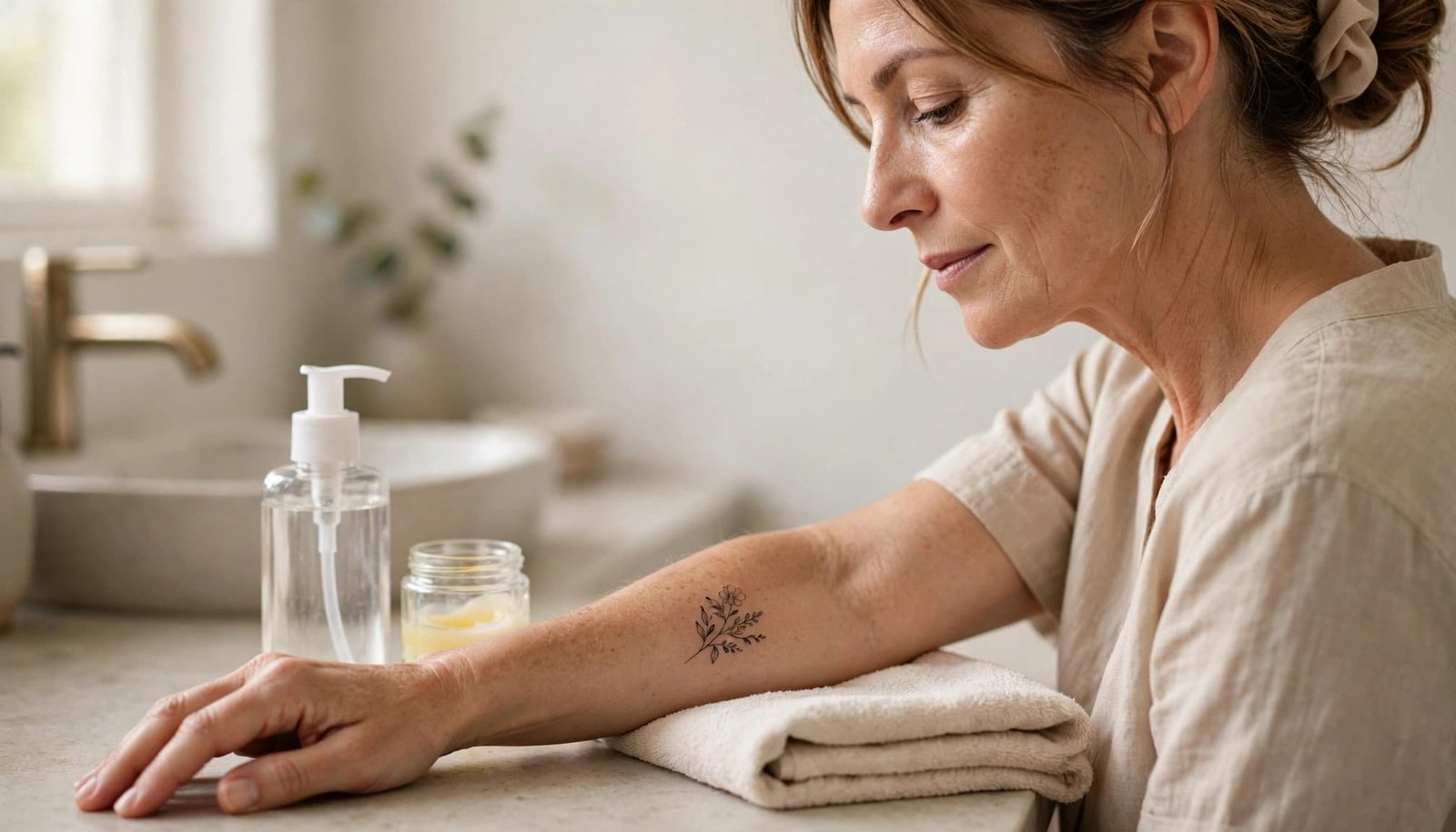
During the first week, mild tenderness, dryness, peeling, and small scabs can occur. Let flakes and scabs fall away naturally. Don’t pick, scratch, or rub the tattoo, even when itching becomes distracting. Scratching can remove ink, irritate the skin, and introduce bacteria.
What to Avoid While It Heals
Keep the tattoo out of baths, pools, hot tubs, lakes, and oceans until the skin has fully healed. Showers are usually fine, but avoid soaking the area or directing strong water pressure onto it. You should also skip saunas and activities that leave the tattoo sweaty and irritated.
Sun exposure can damage healing skin, so cover the area with loose clothing rather than applying sunscreen to an open tattoo. After the tattoo heals, use broad-spectrum, water-resistant SPF 30 sunscreen whenever it will be exposed. Regular moisturizing can also help the surrounding skin stay comfortable and reduce dryness that makes the design look dull.
Know When to Call a Health Professional
Some redness and soreness are normal at first, but symptoms should gradually improve. Contact a healthcare professional if redness spreads, swelling worsens, pain increases, or the area feels increasingly hot. Pus, fever, persistent itching, a spreading rash, or other unusual changes may point to an infection or allergic reaction.
Don’t wait for the problem to become severe. Keep your artist’s ink information and explain when the tattoo was done, which products you used, and how the symptoms changed. A medical professional can determine whether you need treatment.
How to Work With a Tattoo Artist on a Design You Will Love
A strong tattoo usually begins with a clear conversation, not a perfect sketch. Your artist can turn a favorite idea into a design with better proportions, readable details, and a placement that suits your body.
Bring Clear Ideas to the Consultation
Collect reference images that show what you like about a tattoo, such as its shape, mood, size, shading, or line style. You don’t need to find one picture that contains everything. A flower from one image, lettering from another, and the placement from a third can give your artist useful direction.
Bring notes about:
- Your preferred size, measured in inches if possible.
- The exact placement and whether you want the tattoo visible or easy to cover.
- Colors you like, including whether you prefer black and gray or one accent shade.
- The personal meaning behind the design.
- Examples of line styles, such as bold outlines, soft shading, or clean single-line work.

Explain what you want the tattoo to feel like, not only what you want it to show. For example, you might want a hummingbird that feels graceful and simple rather than highly detailed and realistic. That distinction helps the artist create something personal instead of copying a reference.
Review the Stencil Before the Appointment
Ask to see the design at its actual tattoo size. A sketch that looks clear on a phone may become cramped when reduced to two inches. If the tattoo includes a name, date, or quote, ask the artist to enlarge the lettering or simplify decorative details so every character stays readable over time.
At the appointment, inspect the stencil from several angles. Stand in front of a mirror, turn your arm or shoulder naturally, and check how the design looks when your body is relaxed. A tattoo can appear balanced on a flat arm but feel tilted when you move.
Don’t feel pressured to approve the first version. Discuss changes to spacing, thickness, size, orientation, and color before the needle touches your skin. A professional artist expects reasonable revisions and should explain what will work best on your chosen placement.
Discuss Money, Deposits, and Touch-Ups
Ask for an estimated price, how the artist charges, and whether the consultation or drawing fee is separate. Tattoo costs vary by location, artist experience, design complexity, session length, and placement, so a very low quote shouldn’t guide your choice. Skill, hygiene, and healed work matter more than finding the cheapest appointment.
Many studios require a deposit to reserve time. Confirm whether it applies to the final balance, when it becomes nonrefundable, and what happens if you need to reschedule. Before booking, plan your tattoo consultation budget alongside any travel or aftercare costs.
Also ask how the studio handles touch-ups and how long you have to request one. Policies differ, and some exclude hands, feet, fine-line designs, or changes caused by poor aftercare. Tipping isn’t usually expected for a standard consultation, but many clients tip 15% to 20% after a completed tattoo. See this tattoo tipping guide for current etiquette details.
A slower, thoughtful process gives you time to check the design, understand the cost, and choose an artist you trust. That preparation can lead to a more comfortable appointment and a tattoo that feels personal rather than copied.
Conclusion
These 47 simple tattoo ideas for older women over 50 show how personal and wearable body art can be at any age. Flowers and botanical designs offer timeless beauty, while nature symbols can express freedom, strength, or a new beginning. Family symbols, meaningful words, and minimalist shapes provide simple ways to honor the people, values, and experiences that matter most.
The strongest choice is a clear design that feels like you and suits your preferred placement. Consider the size, line weight, visibility, and comfort of the area. Choose an experienced artist who follows careful hygiene practices, ask for a skin check when a mole or unusual spot needs attention, and follow aftercare instructions while the tattoo heals. If you need time to prepare for the appointment cost, you can save gradually for a planned expense.
Save a few favorite ideas, then discuss them with a trusted tattoo artist. Review the stencil at its actual size, check every detail, and give yourself time before making the final choice. The best tattoo is one that reflects your own story and feels comfortable to wear for years to come.
Save pin for later

- 30 Trendy Tattoo Ideas for 2026: Styles and Placement - September 27, 2026
- 30 Gorgeous Fine Line Tattoo Ideas to Try - September 27, 2026
- 25 Fine Line Tattoo Ideas for Women With Meaning - September 22, 2026
Leave a Reply