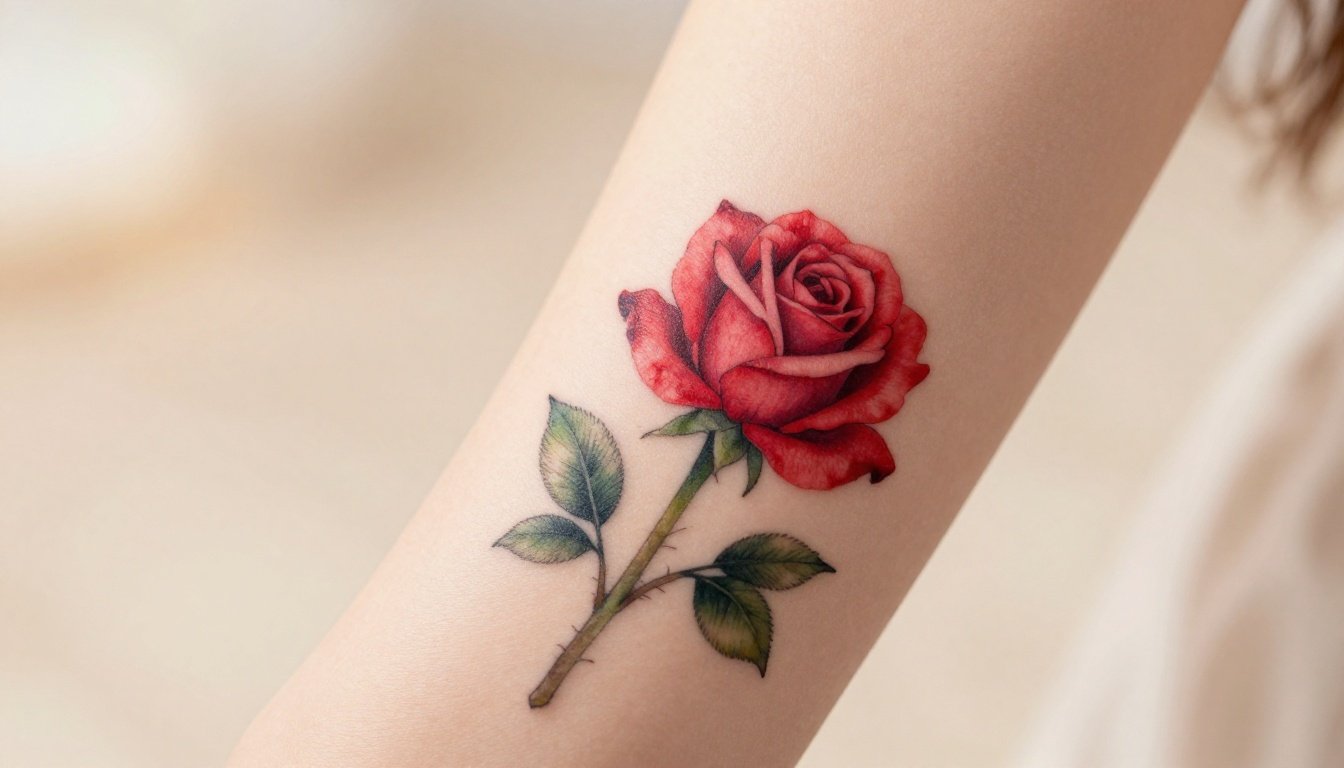
22 Rose Tattoo Ideas for Women With Personal Meaning
A rose tattoo can be far more than a pretty flower etched into your skin. Its petals may hold love, while thorns can speak to grief, courage, healing, or the strength it took to begin again. For many women, the meaning feels personal because the rose can reflect both tenderness and hard-won growth.
If you’re searching for rose tattoo ideas for women, the right design should feel connected to your story rather than copied from someone else’s body art. This collection of 22 ideas will help you consider symbolism, color, placement, tattoo style, cost, pain, and aftercare before you commit. Start with the designs below, then choose the rose that feels most like you.
22 Rose Tattoo Ideas for Women That Feel Personal and Beautiful
Rose tattoos can feel soft, dramatic, hopeful, or strong depending on the linework, color, and symbols around them. Use these ideas as starting points, then adjust the size, placement, dates, names, or details to fit your story.
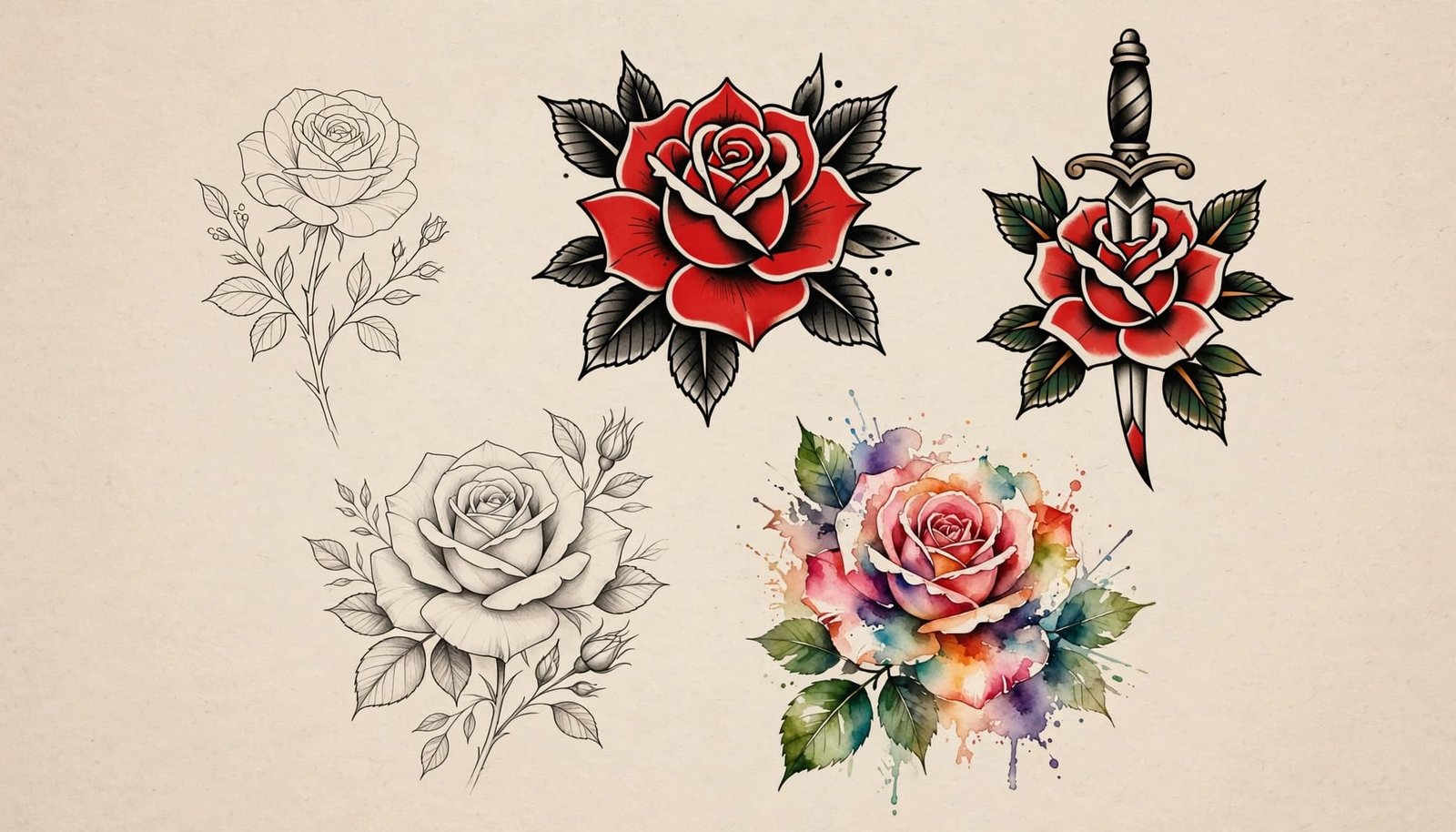
Delicate designs for a soft, feminine look
These subtle rose tattoo ideas suit anyone who wants personal body art that can stay hidden under clothing or appear easily with a rolled sleeve or open neckline.
- Fine-line single rose: Thin black lines trace the petals with generous open space, creating a graceful design that feels calm and self-assured.
- Tiny rose behind the ear: A small bloom tucked behind the ear feels private and playful. Its discreet placement makes it easy to conceal or reveal.
- Pink rose on the wrist: Soft pink shading gives this petite tattoo a gentle, feminine mood. It can symbolize self-love, tenderness, or a cherished person.
- Rose and baby’s breath bouquet: One slender rose surrounded by tiny baby’s breath flowers creates an airy bouquet with a sentimental, understated feel.
- Minimalist collarbone rose: A simple outline follows the collarbone with minimal shading and plenty of skin showing. The result feels elegant without demanding attention.
Fine-line work needs a skilled artist and thoughtful sizing. Extremely tiny details can blur over time, especially around the wrist, fingers, or behind the ear. The FDA also advises consumers to consider tattoo ink safety and possible reactions before booking an appointment. Read its tattoo safety guidance before choosing a studio.
Bold rose tattoos with classic character
Strong outlines and rich contrast help these designs stay readable while giving them the visual weight of traditional tattoo art.
- Traditional red rose with bold leaves: Saturated red petals, dark green leaves, and thick black outlines create a classic image linked with passion, courage, or independence.
- Blackwork rose with heavy shading: Dense black petals and dramatic shadows give the flower a striking, graphic appearance. This design suits someone who prefers strength over softness.
- Rose wrapped around a dagger: Twisting stems around a dagger can suggest protection, survival, heartbreak, or inner strength. Add thorns for a sharper edge.
- Rose with a banner: A banner can hold a short word, name, or meaningful date. Keep the lettering large enough to remain readable as the tattoo ages.
- Rose framed by ornamental lines: Curved filigree, dots, or symmetrical flourishes can turn a single rose into an elegant emblem with a vintage mood.
Rose tattoos inspired by healing and new beginnings
Symbolic rose tattoos can honor recovery or personal change without using any words. Choose imagery that connects to your own experience rather than relying on fixed meanings.
- Rose growing through a crack: A stem pushing through broken stone suggests strength after a difficult season and beauty that found room to grow.
- Rose bud opening into a full bloom: The closed bud speaks to potential, while the open flower suggests growth, confidence, and becoming more fully yourself.
- Rose with a sunrise: Warm rays behind the petals create a hopeful image for a fresh start after darkness, loss, or a major life change.
- Rose surrounded by delicate stars: Small stars add a sense of guidance and possibility. The design can honor a new chapter, recovery, or renewed self-belief.
Meaningful memorial and tribute rose designs
Memorial tattoos feel most personal when the details stay clear, respectful, and connected to the person being remembered.
- White rose with a loved one’s date: A pale rose paired with a birth date, passing date, or anniversary can suggest peace and remembrance.
- Black rose with a small heart: Dark petals convey grief or farewell, while the tiny heart keeps love at the center of the design.
- Rose paired with a butterfly: A butterfly beside the bloom can honor transformation, freedom, or the lasting influence of someone who has passed.
- Rose with a handwritten signature or short word: Use handwriting only when the original source is clear enough for an artist to reproduce. A few readable letters usually age better than tiny script.
Colorful and unexpected rose tattoo concepts
Color changes the flower’s mood, but your personal meaning matters more than traditional symbolism.
- Pink and purple watercolor rose: Blended petals create a dreamy, artistic effect that suits self-love, imagination, or a gentle new chapter.
- Yellow rose for friendship: Bright yellow petals can celebrate a best friend, chosen family, or a bond built on joy rather than romance.
- Blue rose for uniqueness: Blue can suggest individuality or an impossible dream, especially when the design honors a goal that once seemed out of reach.
- Rose with colorful gemstone details: Jewel-like accents in the petals or leaves give the flower a rich, unexpected finish. Plan watercolor effects and bright pigments carefully, especially on high-friction areas.
What a Rose Tattoo Can Symbolize Beyond Romance
A rose tattoo can hold love, but romance is only one part of its story. The same flower can honor grief, celebrate friendship, express self-worth, or capture the strength it took to survive a painful chapter.
Its meaning changes with the stage of the flower, the presence of thorns, and the color you choose. Use traditional symbolism as a starting point, then shape the design around your own experience.
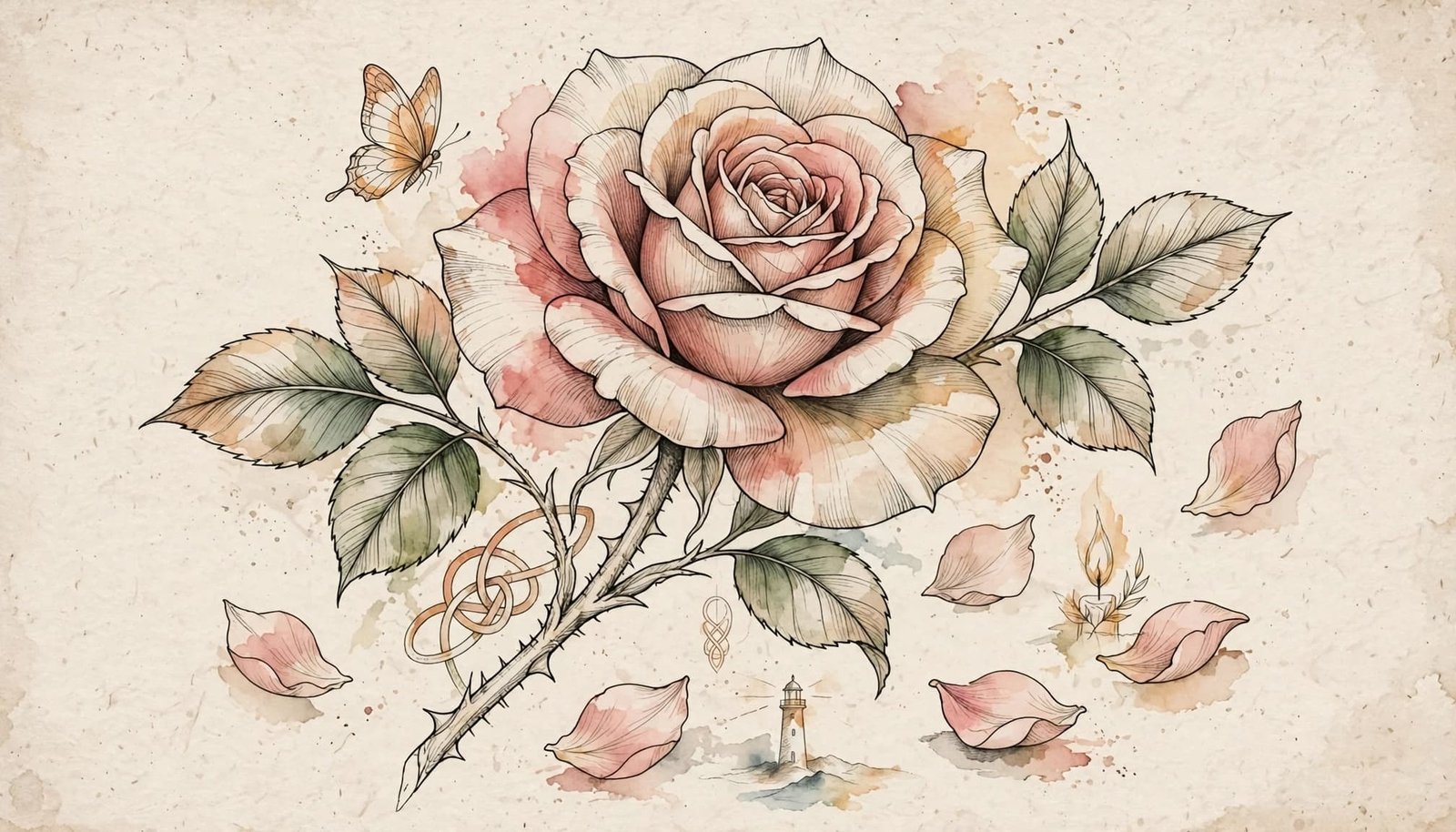
Love, grief, and beauty with pain
A red rose often suggests love, passion, desire, or devotion. However, it can also honor a relationship that changed your life, including one that ended or exists through memory rather than romance. A rose tattoo may celebrate love for a partner, parent, child, friend, or yourself.
White and black roses often suit memorial tattoos. White can suggest peace, remembrance, or a new beginning, while black can express grief, farewell, rebellion, or strength after loss. If you want a design that feels personal, add a date, handwritten detail, birth flower, or small symbol connected to the person you remember.
Thorns add another layer. They can speak to protection, sacrifice, heartbreak, or the truth that beautiful experiences may still cause pain. A rose with sharp thorns can honor your boundaries and the difficult lessons that shaped you.
A rose tattoo doesn’t have to celebrate a perfect story. Its thorns can acknowledge what the story cost you.
Growth, self-worth, friendship, and transformation
The flower’s shape can tell a story without words. A rosebud suggests potential, youth, hope, or a beginning that has not fully opened. A full bloom can symbolize confidence, maturity, fulfillment, or arriving at a more accepting version of yourself.
Fallen petals create a more reflective image. They may suggest grief, impermanence, a fading chapter, or beauty that remains meaningful after change. Leaves bring signs of growth and vitality, while a strong stem can suggest steadiness through difficult seasons.
A yellow rose often fits friendship, joy, warmth, and chosen family. Pink can express tenderness, affection, gratitude, or self-worth without carrying the intensity of red. Purple adds admiration, enchantment, dignity, or a sense of mystery. These associations vary across traditions, so compare common rose color meanings with the feeling you want your tattoo to carry.
Here is a simple guide for choosing a color:
- Red can express passion, love, courage, or commitment.
- Pink can suggest tenderness, grace, affection, or self-love.
- White can symbolize peace, remembrance, purity, or new beginnings.
- Yellow can celebrate joy, friendship, warmth, and optimism.
- Black can convey grief, rebellion, mystery, or an ending.
- Blue can represent rare dreams, mystery, individuality, or the impossible.
- Purple can suggest enchantment, admiration, wisdom, or dignity.
No color or flower stage has one permanent definition. Your rose might honor a friendship, mark recovery, or remind you that softness and strength can exist in the same design.
The Best Rose Tattoo Placements for Different Styles and Personalities
Rose tattoo placement affects more than visibility. It determines how much detail your artist can use, how the flower follows your body, and how often clothing, sunlight, or friction will affect it. Before choosing a design, consider your daily routine, workplace, pain tolerance, and whether you want the rose facing you or everyone else.
Small rose tattoos for discreet placements
Small rose tattoos work best when the design has a clear silhouette. A simple outline, single bud, short stem, or tiny bloom usually stays readable as it ages. Trying to squeeze layered petals, long quotes, and miniature symbols into a very small space can turn the tattoo into a dark blur.
The wrist and inner arm are easy-to-see placements for a personal reminder. A rose facing you can feel private, while one angled outward reads more like visible jewelry. The ankle suits a small bud or short-stem design, especially if you want something that clothing can cover. However, socks and shoes may rub a fresh ankle tattoo, so healing requires extra care.
Behind the ear creates a discreet, slightly unexpected look. Keep the design simple because the space is narrow and curved. A small collarbone rose can feel delicate and feminine, while the side of the finger suits a clean outline or one tiny bud. The hand and fingers receive frequent washing, friction, and sun exposure, so tattoos there may fade faster and need touch-ups.
Your forearm and outer arm are often easier choices for a first tattoo. They offer more room than the wrist, usually allow comfortable visibility, and give your artist a flatter surface. By contrast, the neck is highly visible and receives regular sun exposure, so consider work requirements before choosing it.
For any fresh tattoo in an exposed or high-friction area, follow your artist’s aftercare instructions. The NIH-published tattoo aftercare review notes common guidance to protect healing tattoos from sunlight until the skin closes.
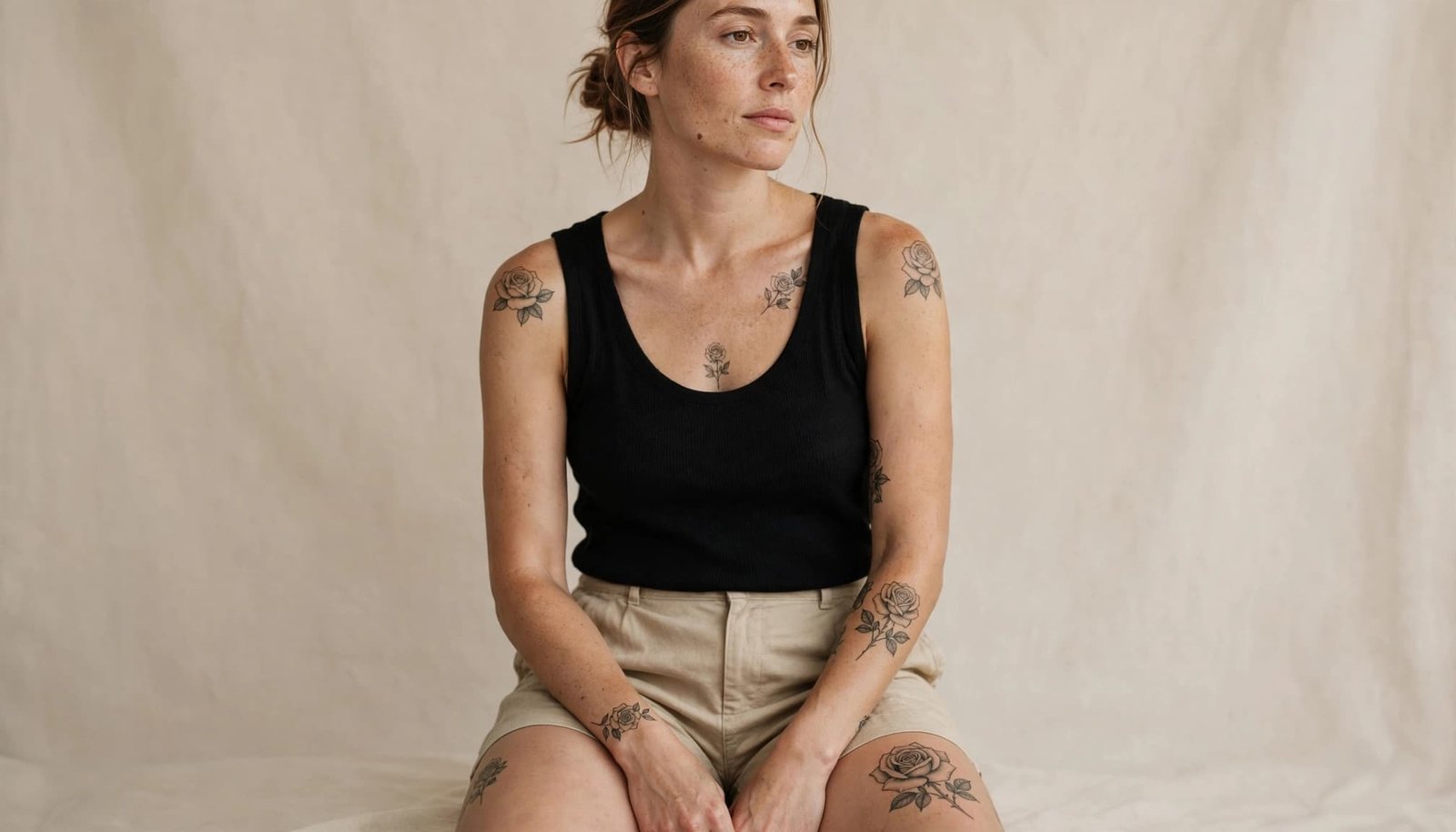
Large rose tattoos that make a statement
Larger placements give realistic rose tattoos room to breathe. The thigh, shoulder cap, upper arm, back, chest, and sternum can support layered petals, smooth shading, twisting vines, multiple blooms, and meaningful symbols.
A shoulder rose can follow the body’s natural curve. A bloom that reaches from the shoulder cap toward the upper arm often looks balanced, especially when leaves echo the line of the collarbone. The upper arm also offers a practical option when you want a statement tattoo that clothing can cover.
A thigh rose can feel more private and dramatic. The broad, relatively smooth surface allows a realistic flower, a memorial bouquet, or a full composition with dates, butterflies, or personal objects. Since the design stays hidden under many outfits, it may suit someone who wants meaningful body art without constant visibility.
The back and spine create strong vertical layouts for a stemmed rose, vine, or several flowers. However, the spine, ribs, sternum, and other bony areas are often more uncomfortable because they have less cushioning. Ribs also move with every breath, while sternum tattoos can receive pressure from clothing and sleeping positions. Plan loose clothing and careful healing support.
Rather than choosing one flower in isolation, sketch the full composition first. Decide where the stem ends, how the leaves point, and whether the design should face your reflection or outward. A rose feels more natural when its shape follows your body instead of fighting it.
How to Choose the Right Rose Tattoo Style and Color
The style and color of a rose tattoo shape its message before anyone notices the smaller details. A bold traditional rose can feel confident and protective, while a fine-line bloom may hold a private meaning close to the skin. Choose each visual element with your story in mind, not only because it looks attractive in a reference photo.
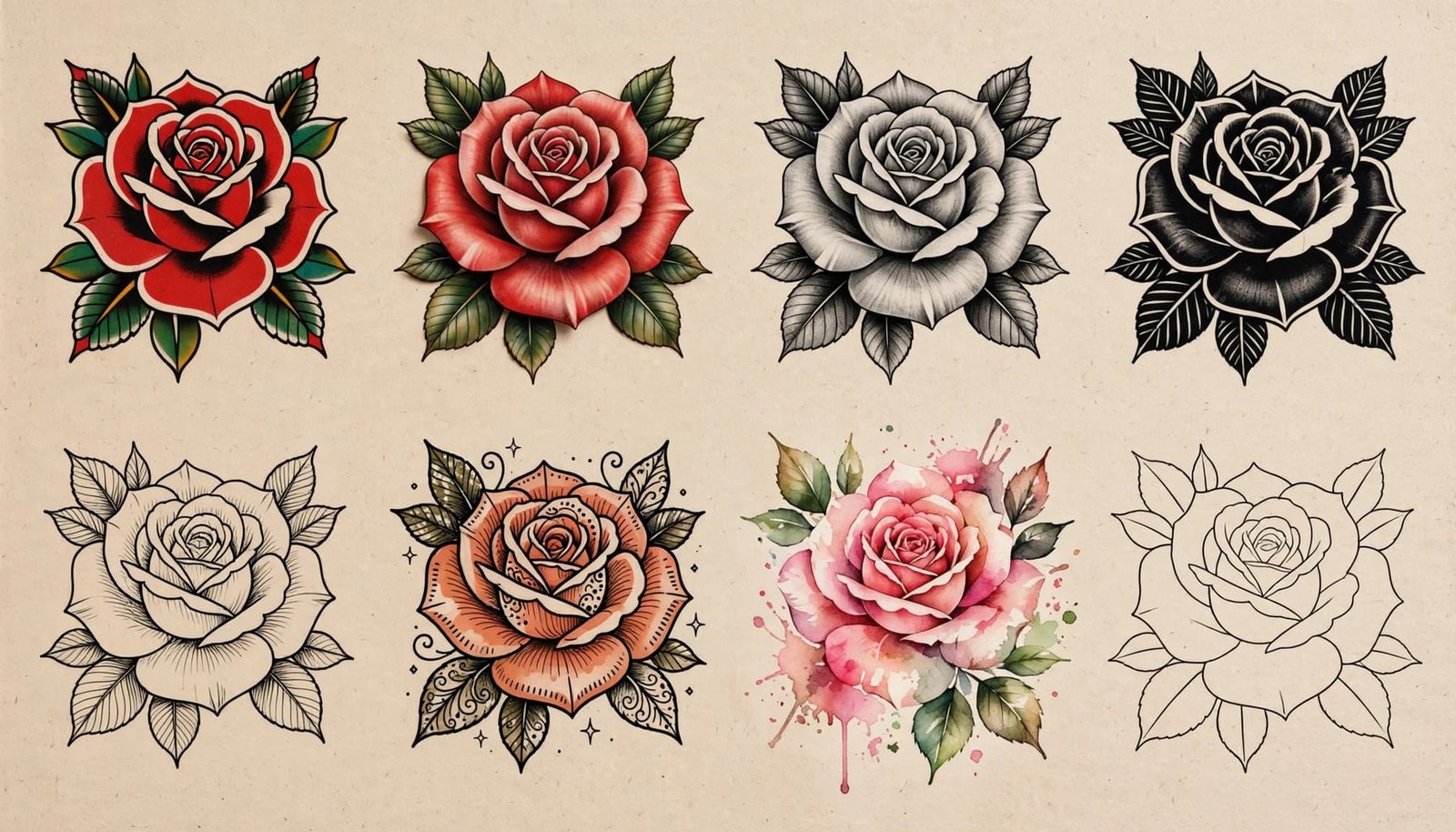
Match the tattoo style to your story
Traditional rose tattoos use strong outlines, solid color, and clear shapes. They suit bold confidence, passion, independence, or a protective attitude. Their high contrast often helps them remain readable as the tattoo ages, although the saturated work may require longer sessions.
Realistic roses focus on lifelike petals, natural folds, and soft shadows. This style works well when you want to honor a specific flower or create a memorial piece with a botanical feel. Realism demands advanced shading skills and enough space for the details to breathe.
Black-and-gray tattoos use diluted black ink, smooth gradients, and carefully placed shadows. The result can feel reflective, mature, or connected to grief and remembrance. Blackwork takes the opposite approach, using dense black areas and strong graphic shapes for a dramatic, fearless appearance.
Fine-line roses rely on delicate outlines and restrained detail. They fit quiet meaning, self-love, or a private reminder, but tiny lines can soften or blur over time. Minimalist designs simplify the flower even further, so they offer a clean look with shorter sessions and easier placement. The tradeoff is that fewer details leave less room to disguise uneven lines or fading.
Illustrative tattoos combine recognizable rose shapes with artistic linework, unusual shading, or story-based elements. Watercolor roses use blended pigments and loose edges for a soft, painterly mood. Both styles can look expressive, yet they require an artist who understands composition, color control, and how pigment settles in real skin.
Collect a few reference images before your consultation, but don’t ask an artist to copy someone else’s tattoo exactly. A custom design can combine styles, such as realistic petals with illustrative leaves. Still, too many competing details can make the final rose feel crowded. Choose an artist whose portfolio shows the exact style you want, including similar linework, shading, color saturation, and skin tones.
Use color to shape the mood
Color changes both the emotion and the upkeep of a rose tattoo. Red can suggest passion, devotion, or courage. Pink often feels tender and feminine, while white can suit peace, remembrance, or a fresh beginning. Yellow may celebrate friendship and joy; blue can express individuality or an unusual dream. Purple often carries associations with admiration, mystery, or dignity. Black creates a serious, rebellious, or memorial mood.
These meanings vary by person and culture, so your reason matters more than a fixed color chart. Black-and-gray shading is a strong alternative when you want depth without bright pigment. It can create soft petals, convincing shadows, and a lasting sense of contrast.
Before choosing pigment, discuss your skin tone and the contrast the design needs. Light colors may appear more subtle on some complexions, while dark outlines and well-placed shadows help preserve the flower’s shape. Sun exposure also reduces vibrancy over time, so review practical color-care advice such as this professional tattoo fading guide.
Ask whether the artist has experience with color packing, which is the process of placing pigment evenly into the skin. After healing, protect the tattoo with broad-spectrum SPF 30 or higher and avoid tanning beds. Your best color choice balances the mood you want today with the contrast and maintenance you can support for years.
Plan Your Rose Tattoo Before Booking the Appointment
A beautiful reference image is only the beginning. Before you book, confirm that the artist can create the rose style you want, explain the process clearly, and work in a clean, professional studio. A thoughtful consultation gives you space to adjust the design before it becomes permanent.

Questions to ask a tattoo artist
Start by reviewing the artist’s healed work, not only fresh tattoos photographed under bright studio lights. Healed examples show how fine lines, shading, color, and realistic petals settle after the skin recovers. Ask whether the artist has completed rose tattoos in your chosen style, especially if you want realism, fine-line work, blackwork, or saturated color.
Bring reference images, sketches, and notes about your personal meaning. Use them to explain the mood, shape, and details you like, but don’t ask the artist to copy another tattoo exactly. A reputable tattooer should turn your references into an original design that suits your body and story.
Discuss placement and size before the artist begins drawing. Ask how much room the petals need to remain clear, how the rose will follow your body’s curve, and whether the design may need simplifying at a smaller size. You should also understand the design process, including when you will see the draft and how much input you can provide.
Use these questions during your consultation:
- Which healed rose tattoos can I see in this style?
- How would this design change for my chosen placement and skin?
- What size will preserve the petal details over time?
- Is the design custom, and how will revisions work?
- How much is the deposit, and is it applied to the final price?
- What happens if I need to reschedule?
- Which equipment is single-use, and which items are sterilized?
- Does the studio use an autoclave for reusable equipment?
The studio should be able to explain its sanitation process without becoming defensive. Fresh needles, clean gloves, covered equipment, and properly disinfected surfaces are basic expectations. You can also review Mayo Clinic’s tattoo safety precautions before your appointment.
A good consultation feels clear, respectful, and unrushed. If the artist dismisses your questions, pressures you to book, or refuses to explain deposits and sterilization, keep looking.
Prepare for comfort, timing, and cost
Pain varies by person and placement. The outer arm, forearm, shoulder, thigh, and calf are often more manageable, while the ribs, spine, sternum, hands, feet, ankles, and other lightly padded areas may feel sharper. A large realistic rose can also require multiple sessions because detailed shading and color packing take time.
Eat a proper meal beforehand, drink water, and avoid arriving dehydrated or under the influence of alcohol or recreational drugs. Wear loose, clean clothing that gives the artist easy access to the tattoo area. Reschedule if you’re sick or sunburned, since compromised or irritated skin can make tattooing less comfortable and healing more difficult.
Price depends on size, detail, realism, color saturation, placement, session length, and the artist’s reputation. In the United States, many small, simple designs cost around $150 to $300, while large realistic work can reach $800 or more. Local prices vary, and a respected artist may charge more because the work requires stronger technique, sterile supplies, and careful planning.
A low quote should never outweigh artist quality or safe studio practices. Ask for the full estimate, expected number of sessions, deposit terms, touch-up policy, and any costs that could change if the design grows. Your rose will live with you for years, so choose the artist who earns your confidence, not simply the one with the lowest price.
Rose Tattoo Aftercare for Clean Lines and Lasting Color
Good aftercare protects more than the surface of your skin. It helps preserve sharp outlines, smooth shading, and bright color while lowering the risk of irritation, infection, and heavy scarring. Your artist’s instructions should come first because bandage types, ink saturation, placement, and skin response can change the healing process.

Care for your rose tattoo during the first days
Leave the bandage on for the exact time your artist recommends. Different coverings need different removal times. If adhesive or gauze sticks to your skin, soften it with warm water before removal when your artist advises. Never pull a stuck covering away forcefully.
Once the covering comes off, wash your hands first. Then clean the tattoo with mild, fragrance-free cleanser and warm water. Use your fingertips gently, without a washcloth, brush, or exfoliating product. Rinse away the cleanser and pat the area dry with a clean paper towel or soft towel.
Apply only the product and amount recommended by your artist. A thin layer is usually enough. Heavy ointment can trap moisture and make the skin feel irritated, while excessive dryness may cause uncomfortable cracking. The Cleveland Clinic’s tattoo aftercare guidance also advises seeking medical care when symptoms suggest infection.
During the first several days, mild redness, tenderness, peeling, and a little clear fluid can occur. Keep the tattoo clean and dry, and avoid:
- Scrubbing, rubbing, scratching, or picking at flakes and scabs.
- Tight clothing, backpack straps, or other unnecessary friction over the design.
- Baths, pools, hot tubs, and other soaking until the skin has healed.
- Heavy exercise when sweat, stretching, or shared equipment may irritate the area.
Protect the tattoo while it heals
The outer skin may look better before the deeper layers finish recovering. Continue gentle washing and follow your artist’s instructions through the next few weeks. Avoid direct sun and tanning beds while the tattoo heals. Sun exposure can irritate fresh skin and reduce color vibrancy, especially in red, pink, yellow, and watercolor designs. The NIH-published aftercare review recommends keeping healing tattoos away from sunlight until the skin closes.
After healing, use broad-spectrum SPF 30 or higher whenever your rose tattoo will be exposed. Moisturizer can also help the skin look comfortable, but sunscreen does the most to limit long-term fading.
Contact a qualified health professional if redness spreads, pain worsens, the area becomes hot or increasingly swollen, or you notice pus, foul odor, red streaks, fever, or a widespread rash. Breathing trouble, dizziness, hives, or intense swelling require prompt medical attention. Calm, consistent care gives your rose the best chance of healing with clean lines and lasting color.
Conclusion
A rose tattoo can hold romance, friendship, grief, survival, self-love, or a chapter you’re finally ready to begin. Let the meaning guide your choice of color, style, size, and placement instead of following a trend that may not feel personal later.
Save a few favorite ideas, speak with a skilled artist, and give the design enough time to feel right. The most beautiful rose tattoo is the one that carries a memory or feeling you’ll still recognize years from now.
Save the pin for later

- 30 Trendy Tattoo Ideas for 2026: Styles and Placement - September 27, 2026
- 30 Gorgeous Fine Line Tattoo Ideas to Try - September 27, 2026
- 25 Fine Line Tattoo Ideas for Women With Meaning - September 22, 2026
Leave a Reply