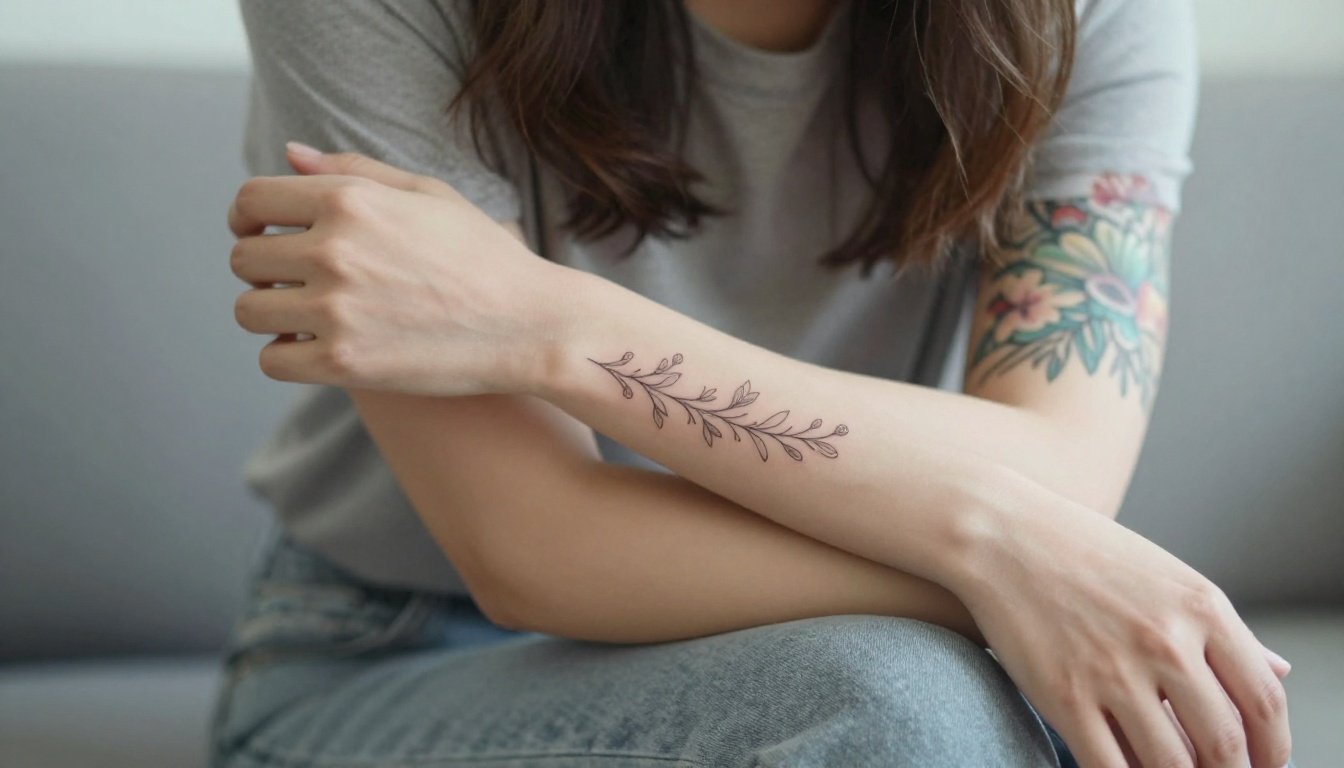
25 Pretty Tattoo Ideas for Women
Pretty tattoos can be as subtle or striking as you want, whether you love delicate fine-line designs, bold floral pieces, or meaningful symbols with a personal story. The right choice should fit your style, the meaning behind it, how visible you want it to be, and the placement that feels comfortable for your everyday life.
This collection of 25 pretty tattoo ideas for women includes tiny botanicals, celestial details, feminine animals, elegant lettering, and eye-catching designs with more color or detail. Along the way, you’ll find practical advice on choosing the right size, understanding pain and cost, finding a skilled artist, and selecting placements that may help your tattoo age well. You’ll also learn what to expect during healing and how proper aftercare can protect your new ink.
Start with these pretty tattoo ideas to find a design that feels personal, wearable, and true to you.
Small and Feminine Tattoo Ideas That Feel Personal
Small tattoos can carry plenty of meaning without covering a large area. Fine-line designs, simple symbols, and short lettering create an elegant look, especially when you choose a placement that suits your daily style.
Before choosing a micro tattoo, consider how much detail the design needs. Very fine lines and tightly packed details need enough space to stay clear as the tattoo ages. A slightly larger design with open spacing often remains more readable than an ultra-tiny version.
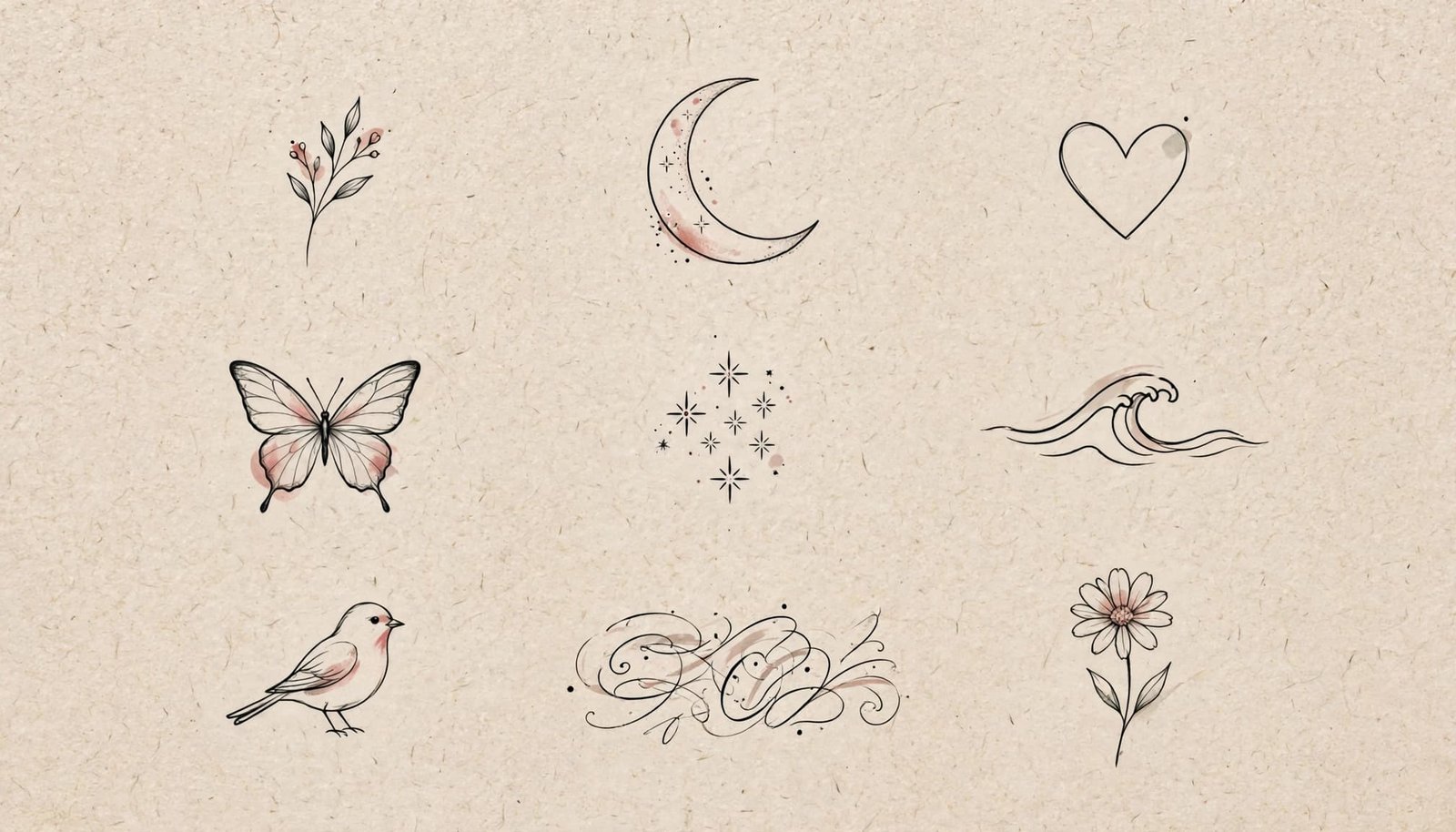
1. Tiny Birth Flower
A small birth flower tattoo combines soft botanical lines with personal meaning. Choose a daisy for April, a rose for June, or another flower connected to your birth month or a loved one’s birthday.
The design works well on the inner forearm, collarbone, ankle, or upper arm. Add one small leaf, a loved one’s initial, or the flower’s stem length to make the piece your own. Keep the petals open and avoid excessive shading if you want the fine lines to remain distinct.
2. Minimalist Crescent Moon
A crescent moon creates a graceful shape with only a few curved lines. It can symbolize change, intuition, personal growth, or a connection to nighttime and the sky.
Place it behind the ear, on the wrist, along the ribs, or above the ankle. You could add a tiny star, your birth month flower, or a few dots that match the night sky from a meaningful date. For a long-lasting result, give the moon enough width so its inner curve doesn’t blur into the outer line.
3. Delicate Butterfly
A fine-line butterfly feels feminine without looking overly ornate. Its wings can suggest transformation, freedom, healing, or a new chapter in your life.
The wrist, shoulder, shoulder blade, and inner arm all suit this design. Personalize it with asymmetrical wing details, a subtle color wash, or markings inspired by a real butterfly species. Since wing patterns can become crowded, ask your artist to simplify the smallest shapes and leave clear skin between each line. A fine-line tattoo care guide can also help you understand why line spacing matters.
4. Petite Heart
A small heart is one of the easiest tattoo ideas to adapt. A simple outline feels modern, while a hand-drawn heart can look more personal and sentimental.
Try it on a finger, wrist, rib, ankle, or just below the collarbone. You can customize the shape to match a handwritten doodle, add a tiny initial inside, or use a broken line to suggest a meaningful imperfection. Finger tattoos face more friction and fading, so the wrist or upper arm may preserve a delicate outline better.
5. Tiny Star Cluster
A group of two or three small stars gives you a subtle celestial tattoo with plenty of flexibility. The stars can represent guidance, important people, dreams, or milestones that helped shape your path.
Place them along the collarbone, wrist, side of the hand, ankle, or behind the ear. Make the cluster personal by varying the star sizes, using the number of stars to represent family members, or arranging them like a constellation connected to your birth date. Leave enough room between each star so they don’t merge visually over time.
6. Simple Wave
A single curved wave looks clean, calm, and easy to wear. It may remind you of the ocean, a favorite beach, a love of travel, or the ability to move through changing seasons.
The inner forearm, ankle, ribs, and back of the upper arm are suitable placements. Add a tiny sun, a coastline-inspired curve, or the coordinates of a meaningful shore. A wave needs only a few lines, but its curve should have enough length to look intentional rather than cramped.
7. Little Bird Silhouette
A small bird in flight can symbolize independence, hope, home, or a desire to keep moving forward. A minimalist silhouette keeps the tattoo soft and understated.
Consider the wrist, collarbone, back of the arm, shoulder, or ribcage. Personalize the bird by choosing a species linked to a memory, such as a sparrow, swallow, or hummingbird. Keep the wings simple, since tiny feather lines can lose definition when placed too close together.
8. Short Meaningful Lettering
One word or a brief phrase can become an elegant tattoo when the lettering has room to breathe. Ideas include a name, an abbreviated date, a personal value, or a word in your own handwriting.
The inner forearm, ribs, collarbone, and upper arm offer enough space for readable lettering. Use a loved one’s handwriting, a typeface from a favorite book, or a word connected to your heritage. Avoid making the text too small. As the ink softens naturally, cramped letters can become difficult to read.
9. Tiny Botanical Sprig
A slender botanical sprig adds a natural, polished detail to the skin. Olive branches, lavender, eucalyptus, and delicate stems each create a different mood while keeping the overall design light.
Place the sprig along the forearm, spine, collarbone, side of the ribs, or ankle. Personalize it with a plant from your garden, a flower from a special place, or a stem shaped to follow your body’s natural lines. Ask for balanced spacing between leaves, especially if you want a very fine-line tattoo that stays graceful as it heals and ages.
Nature and Celestial Tattoo Designs With Deeper Meaning
Nature and celestial tattoos give you more room to tell a personal story. A moon can suggest change, while a flower may remind you of someone, somewhere, or a season of life. These meanings aren’t fixed, so choose the image because it feels right to you.
The same design can also look completely different depending on the tattoo style. Black ink creates a crisp, timeless finish, while muted color softens the image. Watercolor accents feel airy and artistic, and gentle shading adds depth without making the tattoo look heavy.
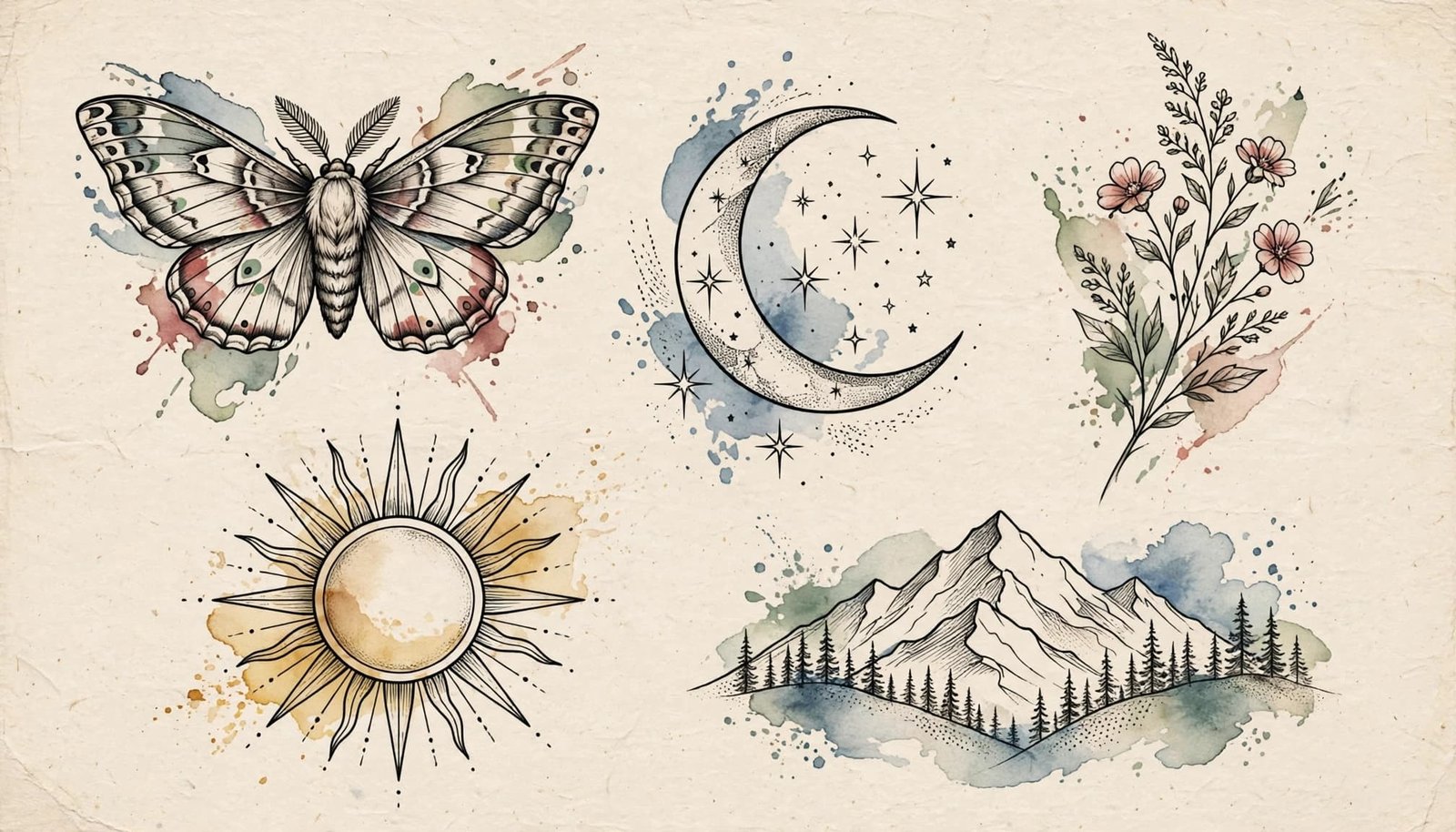
10. Detailed Moth
A moth tattoo has a mysterious, delicate quality that works well for someone who prefers unusual nature designs. Its wings can include floral patterns, dots, leaves, or tiny stars, giving your artist plenty of space to create a custom piece.
You might connect the moth with change, nighttime, persistence, or a quiet attraction to the unknown. A blackwork moth feels bold and graphic, while soft gray shading gives it a vintage illustration style. For a more feminine finish, add muted sage, dusty blue, or pale rose to selected wing details instead of filling the entire design with color.
The upper arm, shoulder blade, thigh, and ribs provide enough space for the wing pattern to remain clear. Since detailed moth tattoos need room, avoid shrinking the design too far just to fit a smaller placement.
11. Wildflower Bouquet
A small wildflower bouquet can hold several personal references in one graceful design. Include flowers from a favorite hiking trail, a childhood garden, or an important date. You can also choose blooms for their appearance alone, without assigning each one a strict meaning.
Fine black lines keep the bouquet light and easy to wear. Meanwhile, watercolor accents can make each flower feel loose and hand-painted. Soft shading behind the stems adds dimension, although open skin between the leaves helps prevent the design from becoming muddy over time.
Try this tattoo along the forearm, collarbone, side ribs, or back of the upper arm. A vertical arrangement follows the body’s natural shape, while a compact cluster works well above the ankle or on the shoulder.
12. Sun and Moon Pair
A sun and moon tattoo creates a balanced composition with strong visual contrast. The sun may feel warm and energetic, while the moon can suggest rest, intuition, or change. You can give those ideas personal meaning, or simply choose the pair because the shapes look beautiful together.
Use clean black outlines for a modern style, or add muted gold, terracotta, and blue for a softer celestial mood. Gentle shading around the moon creates depth, while small rays keep the sun recognizable without making it look overly ornate.
A paired design suits the sternum, upper back, inner forearm, or outer thigh. Ask your artist to keep the two elements visually balanced, especially if one includes more detail than the other.
13. Constellation With a Botanical Detail
A constellation tattoo becomes more personal when you connect it to a flower, vine, or small branch. You could use a constellation linked to your birth date, then weave a botanical stem through the connecting points. The arrangement can be accurate, simplified, or designed for beauty.
Black ink gives the stars a sharp, minimal appearance. Small touches of muted color create a dreamy effect, but they should support the main lines rather than compete with them. Leave enough space around each star so the pattern stays readable as the tattoo ages.
The collarbone, shoulder, back of the arm, and ribs are natural placements for this long, delicate design. If you want a smaller version, use fewer stars and let the botanical element carry more of the shape.
14. Mountain and Moon Landscape
A mountain range beneath a crescent moon can capture a love of travel, outdoor spaces, or a place that feels like home. The landscape doesn’t need to depict a specific location. A few recognizable peaks may be enough to bring back a favorite memory.
Solid black silhouettes create a clean, graphic tattoo. In contrast, soft gray shading gives the mountains a misty, illustrative appearance. A muted blue or lavender wash behind the moon can add atmosphere without turning the tattoo into a bright, high-maintenance piece.
The forearm, calf, upper arm, and shoulder blade offer enough room for layered peaks and an open sky. Before choosing a tiny size, ask whether the mountains will still have visible separation between their lines.
15. Crescent Moon With Florals
A crescent moon filled with flowers combines a celestial outline with an organic interior. Use roses, lavender, wildflowers, or a flower connected to your family or birth month. The design can feel romantic, mystical, peaceful, or simply decorative.
Fine black linework keeps the tattoo elegant, while muted pink, purple, or green adds a gentle wash of color. Soft shading inside the crescent can make the flowers appear fuller without requiring heavy outlines.
Place the design on the inner forearm, thigh, ribs, or upper back. Sun exposure can fade some tattoo inks over time, so protect healed tattoos with broad-spectrum, water-resistant SPF 30 or higher, as advised by the American Academy of Dermatology. Research published through NIH’s tattoo aftercare review also discusses how UV exposure can contribute to fading and other changes.
16. Fern Frond
A fern tattoo has a graceful, flowing shape that follows the curve of the body. It may remind you of forests, growth, independence, or a favorite outdoor place, but its meaning can remain purely visual if that feels more natural.
Choose black ink for a clean botanical study, or add a muted green wash to the smallest leaves. The frond works well along the spine, forearm, ankle, ribs, or behind the arm. Keep the leaflets spaced apart so the tattoo remains light instead of becoming a dark, crowded strip.
17. Hummingbird With a Small Flower
A hummingbird brings movement and color to a nature-inspired tattoo. Pairing it with one flower creates a focused composition, while a tiny branch keeps the design connected to the natural world.
A black-and-gray hummingbird feels refined and understated. Muted jewel tones can highlight the wings or throat, and watercolor accents make the bird look airy rather than heavily shaded. Place it on the shoulder, upper arm, thigh, or shoulder blade, where the artist has enough room to show the wing shape clearly.
Statement Pretty Tattoos for Women Who Want More Detail
Larger tattoos give you room to build depth, movement, and personality into the design. Open spacing keeps the linework readable, while shading and color can create a more finished illustration.
However, a statement tattoo needs more planning than a tiny symbol. Discuss the size, placement, estimated hours, session schedule, and total price with your artist before booking. A large piece may require multiple appointments, longer healing, and a bigger budget.
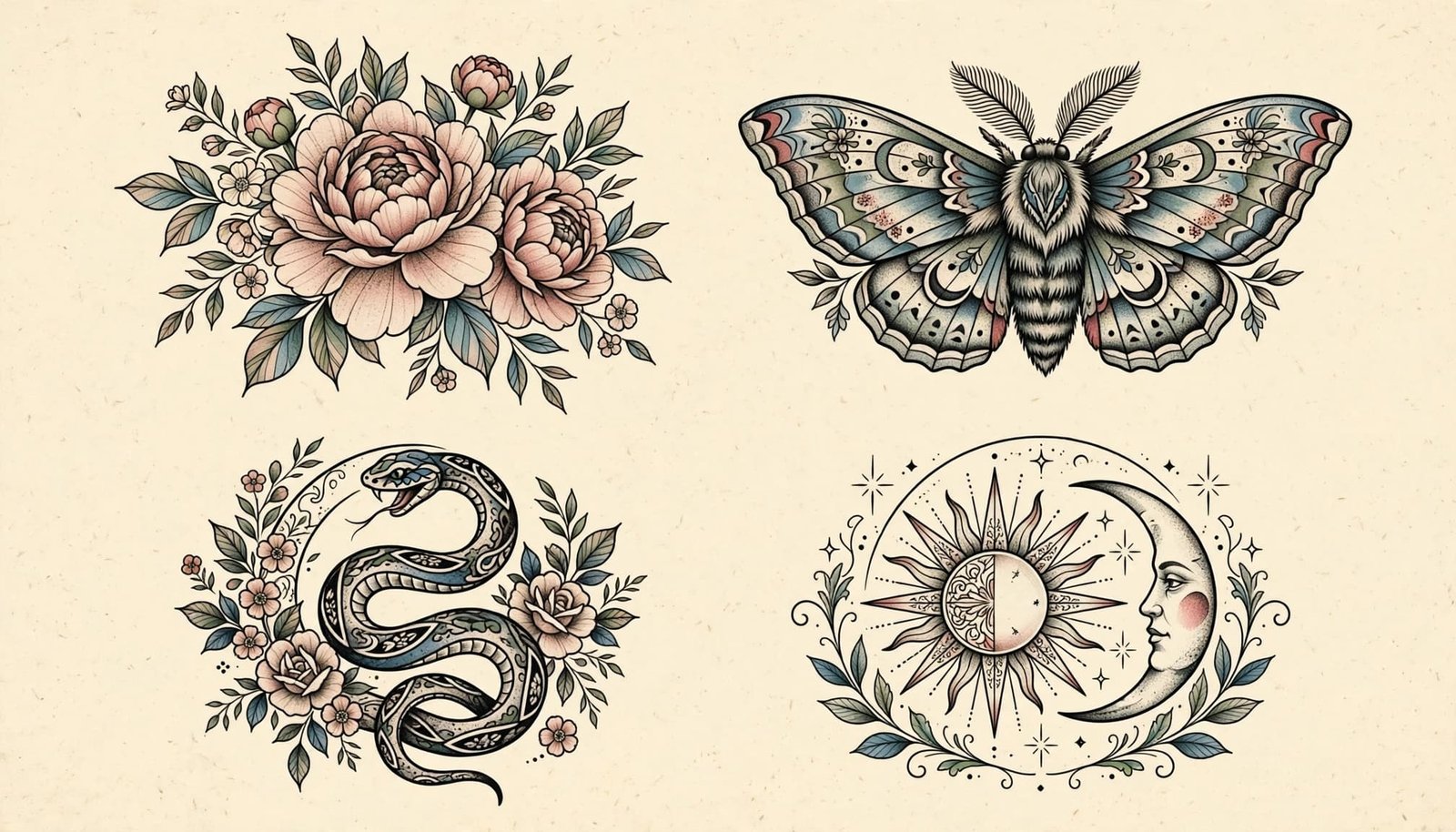
18. Ornamental Floral Shoulder Piece
An ornamental floral tattoo can follow the curve of your shoulder, upper arm, or collarbone. Combine large peonies, roses, chrysanthemums, or dahlias with curved leaves and decorative dotwork for a design that feels feminine but substantial.
The larger scale allows your artist to show layered petals instead of compressing them into a small shape. Soft gray shading can add depth between the blooms, while muted pink, burgundy, or terracotta gives the flowers a gentle color accent.
Ask your artist to sketch the design directly around your shoulder’s natural shape. A piece that wraps slightly toward the back or chest often looks more balanced than a flat image placed on top of the skin.
19. Botanical Sleeve Panel
A botanical sleeve panel gives you a graceful way to fill part of the upper arm or forearm without committing to a fully connected sleeve. Use a climbing vine, fern, wildflower branch, or mix of leaves that follows the length of your arm.
Because the design has more space, the artist can vary line weight and leave clear skin between each stem. That separation helps individual leaves remain visible as the tattoo ages. Black-and-gray ink creates a timeless result, while a few green or blue accents draw attention to selected plants.
Plan the placement with your daily clothing and future tattoos in mind. A vertical composition can stand alone, but it should also leave room for additional pieces if you later want to build a larger collection.
20. Ornamental Moth With Decorative Details
A large moth tattoo can become a detailed centerpiece on the thigh, sternum, chest, or upper back. Fill the wings with symmetrical patterns, tiny flowers, crescent shapes, and fine dotwork, then use darker shading near the body to create contrast.
The wing structure gives your artist a natural framework, so the design can feel elaborate without looking random. You can keep the palette monochrome or add muted purple, rust, blue, or rose to selected sections.
Symmetry matters with this idea, especially when the moth sits at the center of the chest or upper back. Bring reference images to your consultation, but let your artist adapt the proportions to your body rather than copying a flat design at an unsuitable size.
21. Decorative Snake and Flowers
A snake winding through flowers creates a dramatic tattoo with plenty of movement. Place it along the thigh, hip, ribs, or outer arm, then add roses, lilies, or leaves around the curves of its body.
A larger design allows the scales to remain selective instead of becoming a dense pattern. Your artist can use heavier outlines on the snake, lighter lines on the petals, and soft shading to separate each element. Black ink feels bold, while small color accents can make the flowers stand out.
This tattoo needs careful planning because the body may bend or move across the placement. A stencil helps you see how the snake will follow your shape before the session begins.
22. Detailed Sun and Moon Back Tattoo
A sun and moon composition can cover the upper back, sternum, or outer thigh with a balanced mix of bold shapes and delicate details. Give the sun expressive rays, add a textured crescent moon, and connect them with stars, clouds, florals, or ornamental patterns.
The available space lets your artist blend solid black areas with open skin, fine lines, and gradual shading. Muted gold, dusty blue, and soft lavender can add color without overpowering the central shapes.
Large back tattoos often require more than one session, especially when they include dense shading or color packing. Since healing happens in stages, schedule appointments with enough time between them and follow your artist’s aftercare instructions. If you notice signs of infection or poor healing, WebMD’s tattoo aftercare guidance recommends contacting a medical professional.
23. Woman’s Profile With Florals
A woman’s profile surrounded by flowers offers an elegant, illustrative tattoo for the thigh, upper arm, ribs, or back. Keep the facial outline simple, then let the surrounding blooms provide the texture and color.
Larger sizing gives the face enough room to remain recognizable. It also allows the artist to shade the hair, separate the petals, and add small decorative details without crowding the composition. Choose a profile that feels personal, such as a classical silhouette, a self-portrait-inspired design, or an abstract feminine figure.
Review the artist’s healed portrait work before booking. Facial proportions are difficult to correct once tattooed, so experience matters more than a low hourly rate.
24. Decorative Peacock or Bird
A peacock, swallow, or bird of paradise can become a colorful statement tattoo across the thigh, shoulder blade, or side torso. The feathers offer natural space for layered linework, shading, and jewel-toned ink.
Choose a realistic bird if you want accurate anatomy, or use an ornamental version with stylized feathers and flowers. Keep the focal area larger than the smallest details, so the design has a clear visual center.
Color tattoos usually need careful sun protection after healing. During the initial healing period, keep the area covered with clothing rather than applying sunscreen to open skin. Once healed, broad-spectrum SPF 30 or higher can help limit fading.
25. Large Decorative Heart
A large heart can feel romantic, gothic, vintage, or botanical depending on its details. Surround the shape with ribbons, roses, vines, lace-inspired lines, or celestial symbols, then choose black-and-gray shading or a controlled color palette.
This design works on the chest, thigh, upper arm, or ribs. Before booking, sketch the heart at its intended size and check how it looks while sitting, standing, and wearing your usual clothes.
Since larger tattoos cost more, set aside the money for the full project rather than only the first appointment. A personal budget for tattoo expenses can help you plan each session without taking money from essentials or savings.
How to Choose a Pretty Tattoo That Fits Your Style and Body
Choosing a pretty tattoo takes more than saving a beautiful image. You also need to consider its meaning, style, visibility, size, and how it will feel on your body years from now. A design that looks perfect online may need different proportions, fewer details, or another placement to work well on skin.
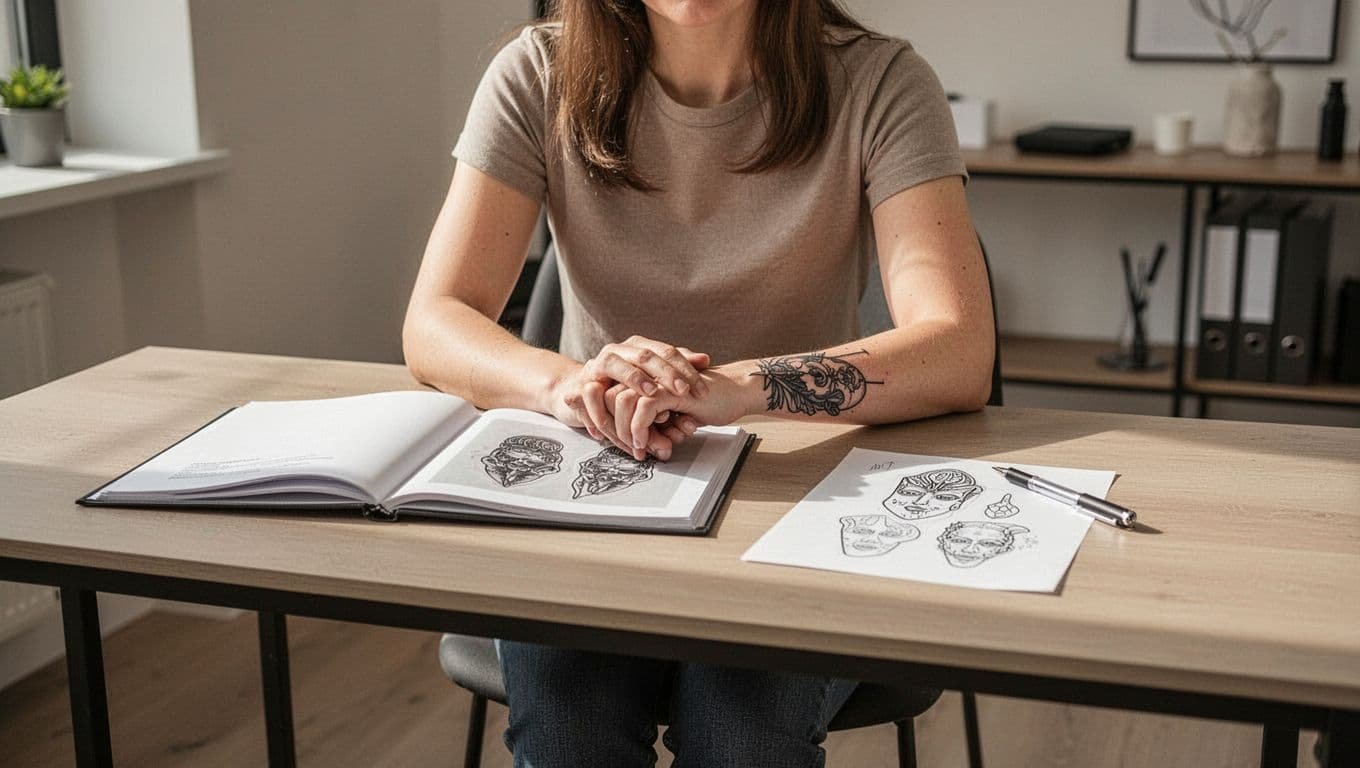
Start With Meaning and Visual Style
Begin by choosing the feeling or memory you want the tattoo to hold. You might want a reminder of someone you love, a symbol of personal growth, or a design you simply enjoy looking at. Meaning can guide your choices, but you don’t need to force a serious story onto every tattoo.
Next, identify the visual style that attracts you most. Fine-line tattoos use delicate outlines and open spacing, while micro-realism depends on tiny shading and carefully controlled detail. Watercolor tattoos use soft color transitions, ornamental tattoos rely on symmetry and decoration, and traditional tattoos use bold outlines with strong, readable shapes. Blackwork focuses on solid black areas, contrast, and graphic forms.
These styles require different skills, so don’t choose an artist based only on a single attractive photo. A useful tattoo style guide can help you compare the techniques before you book a consultation.
Match the Tattoo to Your Lifestyle
Visibility affects how comfortable you feel wearing the tattoo every day. A wrist, hand, neck, or lower-leg design is easy to show, while the ribs, upper thigh, back, or hip offers more privacy. Consider your workplace, clothing, family expectations, and whether you want the tattoo visible during formal events.
Placement also changes how a design looks. Long botanical shapes suit the forearm or ribs, while symmetrical designs often work well on the sternum, upper back, or chest. Areas with frequent friction, sun exposure, or movement may need more maintenance and may show fading sooner.
Size matters just as much. Tiny tattoos suit simple shapes, but detailed florals, portraits, moths, and lettering need enough space for each line to remain readable. Ask your artist to show the design at its proposed size and placement. Then look at it while standing, sitting, and wearing your usual clothes.
A slightly larger tattoo with clear spacing often ages better than a miniature design packed with detail.
Use This Checklist Before Booking
Save a small group of references rather than sending your artist a large, unfocused collection. Then work through these decisions:
- Choose two or three favorite references that share a similar mood or style.
- Decide whether you want the tattoo to stay private or remain easy to show.
- Select a realistic size based on the design’s detail, not only the available space.
- Ask how the lines, shading, and color may change as the tattoo heals and ages.
- Confirm the estimated sessions, total price, healing time, and aftercare requirements.
Review the artist’s portfolio for the exact style you want. Someone who creates beautiful traditional tattoos may not have the same skill with fine-line botanicals or micro-realism. Look for repeated examples, clear placement photos, and healed work rather than fresh tattoos alone. Fresh ink can look sharper before the skin settles, while healed photos show whether lines spread, colors fade, or small details remain clear.
Finally, choose a placement you can live with comfortably. If the tattoo will affect your clothing, sleep, workouts, or work routine during healing, plan around those limits. Include the full cost in your discretionary spending plan, such as the 50/30/20 budgeting rule, so the project doesn’t compete with rent, bills, savings, or debt payments.
Placement, Pain, Cost, and Aftercare Before You Book
A beautiful tattoo still needs to fit your body, schedule, budget, and comfort level. Before you book, confirm the placement, expected pain, total price, session count, healing limits, and aftercare routine with your artist.

Choose Placement With Pain and Lifestyle in Mind
Tattoo pain depends more on placement than size. A detailed thigh tattoo may feel easier than a tiny rib tattoo because the skin, muscle, and nerve density differ across the body.
Many people find the forearm, outer shoulder, upper arm, outer thigh, and outer bicep more manageable. These areas usually have more padding and fewer sensitive bones. Ribs, feet, fingers, ankles, the inner arm, neck, and behind the ear often feel sharper or more intense because the skin is thinner or closer to bone.
Your daily routine matters too. A wrist or hand tattoo is easy to show, but frequent washing, friction, and sun exposure can affect healing. Ribs may stay private, although tight clothing can irritate the area during recovery. Ask your artist to place a stencil on your skin before starting, then check it while standing, sitting, and moving your arm.
A placement that looks perfect in a photo may need a different angle or size to follow your body’s natural movement.
Plan for the Full Tattoo Cost
Tattoo prices vary by artist, city, demand, detail, color, placement, and session count. Treat these figures as planning ranges, not fixed prices:
- Tiny symbols often cost about $100 to $250 or more, especially when the shop has a minimum.
- Small fine-line tattoos commonly range from $150 to $500.
- Medium floral or ornamental pieces often cost about $400 to $1,200.
- Large back, thigh, sleeve, or realism projects can reach $1,000 to $5,000 or more.
Established artists may charge by the hour, by the piece, or by a day rate. Color work usually takes longer than black-and-gray ink, while dense shading and custom design work can increase the total. Difficult placements may also require more time because the artist must work around movement, curves, or sensitive skin.
Before you pay a deposit, ask for the estimated number of sessions, the rate or project price, deposit rules, touch-up policy, and expected total. Set aside the entire amount rather than budgeting only for the first appointment. A beginner-friendly budgeting guide can help you separate tattoo spending from rent, bills, savings, and other essentials.
Follow a Simple Aftercare Routine
Your artist’s instructions should come first because bandages, ink saturation, and skin response can vary. In general, wash the tattoo gently with lukewarm water and fragrance-free soap, then pat it dry with a clean paper towel. Apply only a thin layer of the recommended moisturizer, since heavy products can trap moisture and irritate healing skin. These tattoo washing instructions provide a useful reference for gentle cleansing.
Avoid soaking the tattoo while the surface heals. That means no swimming, hot tubs, baths, or long showers that leave the area submerged. Don’t pick peeling skin or scratch scabs, even when the tattoo feels itchy. Wear loose clothing if fabric rubs against the placement.
Surface healing often takes two to four weeks, but deeper settling can continue for several months. Keep the fresh tattoo out of direct sunlight during this period. After it heals, apply broad-spectrum SPF 50 or higher when the area is exposed, and reapply it during extended time outdoors. Additional sun protection guidance for tattoos can help you protect fine lines and color over time.
Contact a medical professional if redness, swelling, pain, warmth, or drainage gets worse instead of improving. A little tenderness is common at first, but worsening symptoms need prompt attention.
Conclusion
The best pretty tattoo is the one that feels right for your style and your story. Delicate flowers, meaningful script, butterflies, and celestial symbols suit a subtle look, while ornamental designs and larger floral pieces offer more room for shading, movement, and detail. A pretty tattoo isn’t defined by one trend or a specific body placement.
Choose a design with personal meaning, then give detailed work enough space to stay clear. Review an artist’s portfolio, ask to see healed tattoos, and discuss size, placement, cost, and aftercare before booking. If the project needs several sessions, include the full cost in your plan and review these tips for budgeting discretionary expenses.
When you’re ready, save a few references and bring them to a consultation. A thoughtful design, a skilled artist, and proper healing care will help your tattoo feel like a choice you’ll enjoy wearing for years.
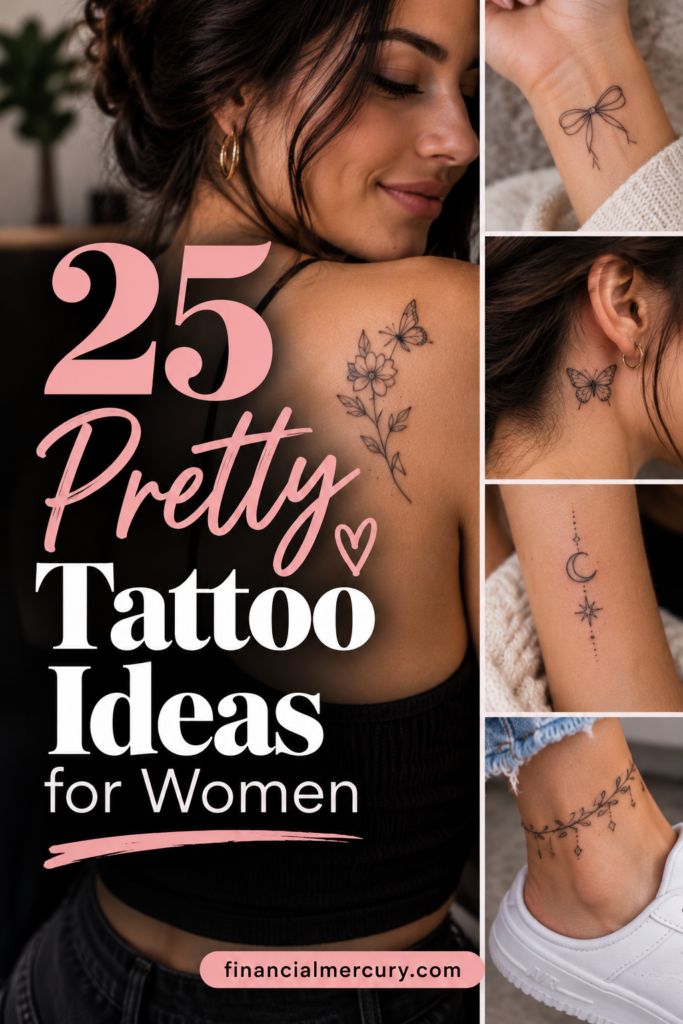
Save the pin for later

- 34 Botanical Tattoo Ideas for Nature Lovers - September 10, 2026
- 22 Rose Tattoo Ideas for Women With Personal Meaning - September 10, 2026
- 25 Magical Mushroom Tattoo Ideas for a Whimsical Design - September 10, 2026
Leave a Reply