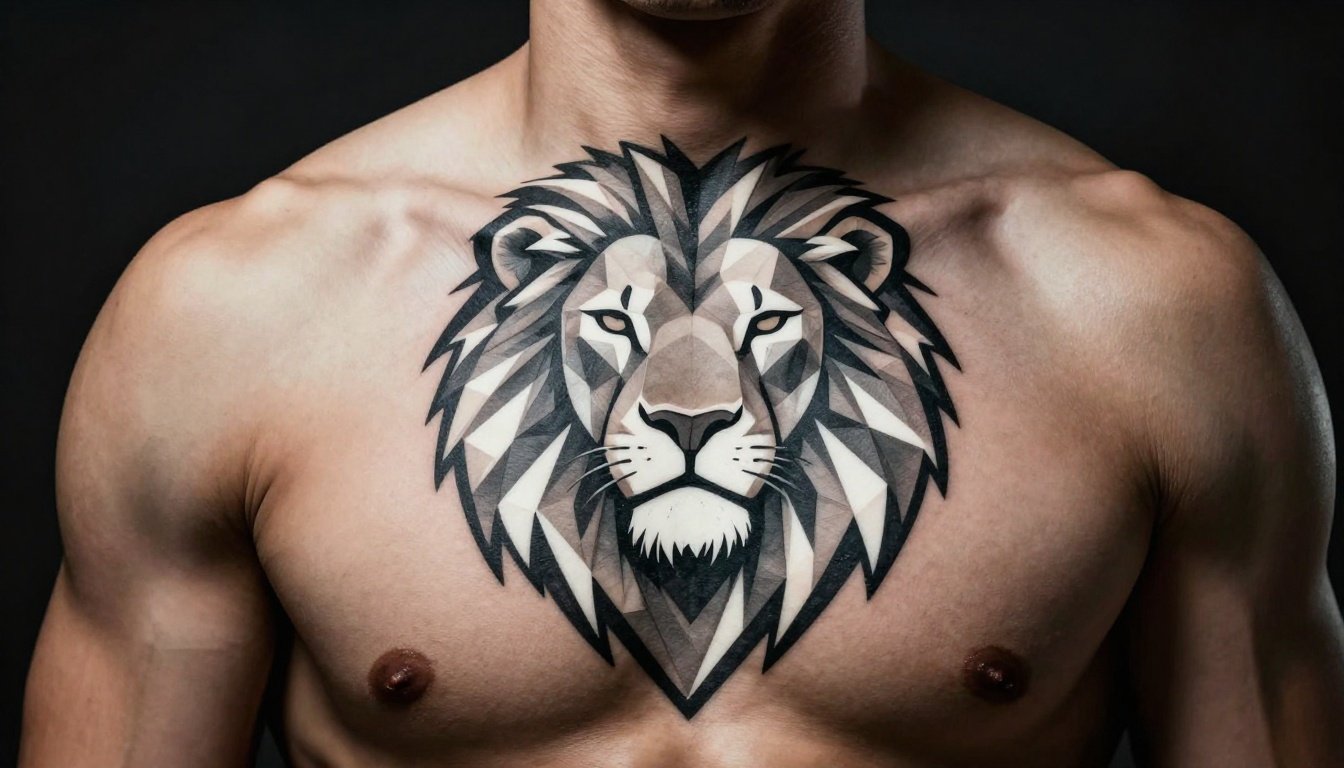
Geometric Lion Tattoo Designs to Try for Meaningful Style
A lion built from clean angles, sharp lines, and open skin can turn a familiar symbol into something strikingly modern. Geometric lion tattoos pair the animal’s courage, leadership, and protective energy with balance, structure, and precise design.
Choosing the right concept takes more than finding a fierce face. The details matter, including symbolism, placement, linework, shading, longevity, and the aftercare that helps bold geometry stay crisp as your tattoo heals. Next, explore standout geometric lion tattoo designs and the style choices that can make yours feel personal.
Key Takeaways
- Geometric lion tattoos combine courage, leadership, protection, and personal strength with sharp angles and balanced structure.
- Choose between a realistic lion face, abstract polygons, a lion paired with sacred geometry, or a minimalist outline.
- Placement affects scale and detail, with the forearm, chest, shoulder, back, and thigh offering different visual effects.
- Strong linework, thoughtful spacing, and moderate shading help geometric designs remain clear as they age.
- Follow professional aftercare, and review the American Academy of Dermatology’s tattoo care guidance if irritation or unusual healing appears.
Stunning Geometric Lion Tattoo Designs to Try
Geometric lion tattoos can look bold, calm, protective, or completely abstract, depending on the shapes and level of detail. Before showing a reference to your tattoo artist, decide whether you want the lion to feel realistic, symbolic, minimalist, or powerful at first glance.
Faceted Lion Portrait
A faceted lion portrait uses angular planes to shape the forehead, nose, cheekbones, and mane. Ask your artist to keep the eyes and muzzle recognizable, then build the rest of the face with triangles, diamonds, and clean intersecting lines. Blackwork outlines can define the main features, while dotwork or soft gray shading adds depth inside selected sections.
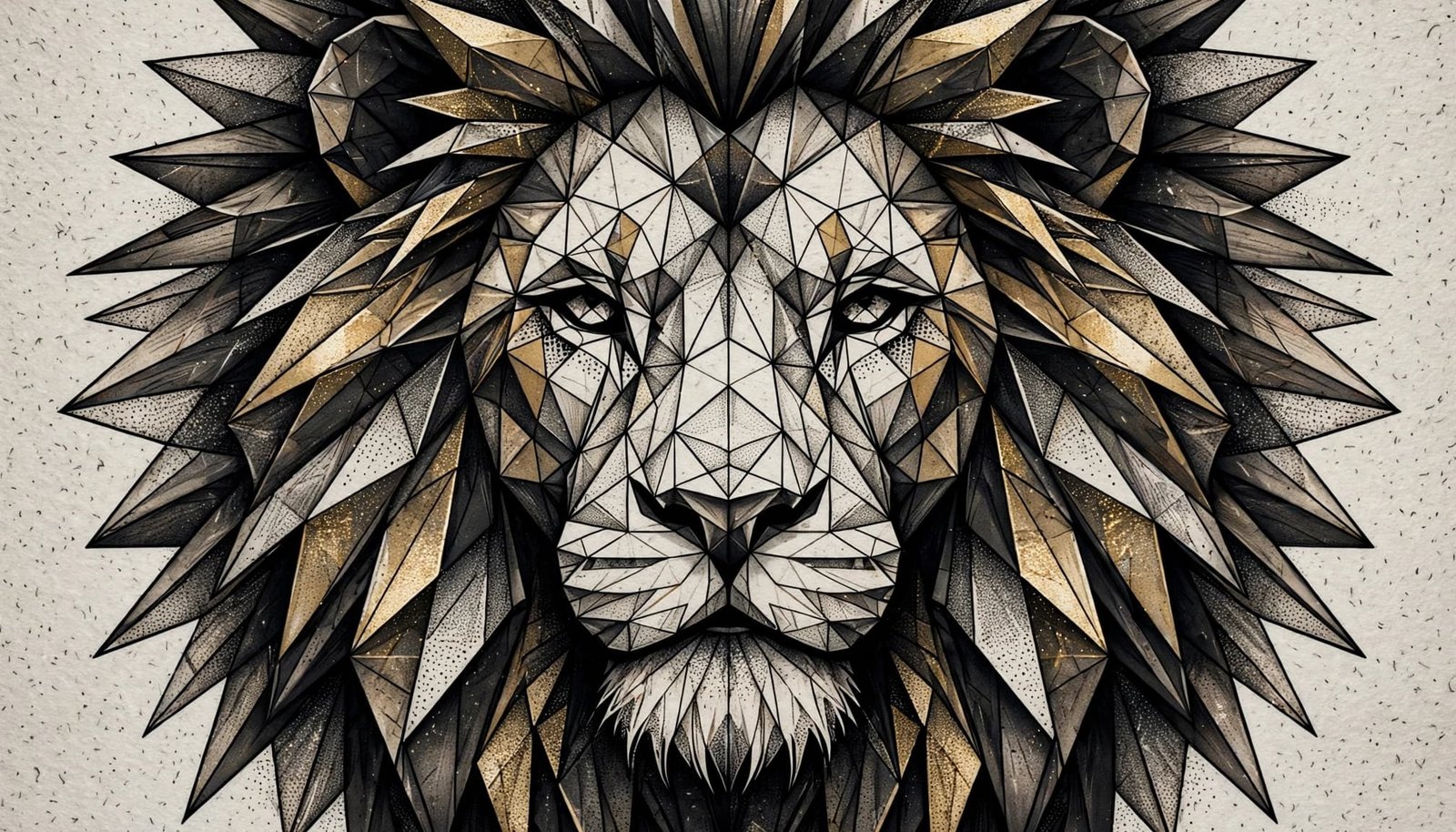
This design suits someone who wants strength without a roaring expression. A forward-facing lion can suggest confidence, self-control, and steady leadership. Keep the mane slightly open around the edges so the design has breathing room as it ages. Highly crowded micro-lines may look impressive at first, but broader shapes usually preserve the lion’s structure longer.
Lion With Sacred Geometry
For a more symbolic composition, place the lion’s head inside a mandala, flower of life pattern, or balanced geometric frame. The lion should remain the visual focus, while the surrounding geometry creates order around its face. A tattoo artist can use a circle behind the mane, overlapping triangles, or a thin hexagonal frame to connect the animal with ideas of balance and personal growth.
This concept fits someone who views strength as disciplined rather than aggressive. It can also suit a spiritual tattoo, especially when the geometry has personal meaning. If you choose a detailed pattern, ask for generous spacing between lines and keep the smallest shapes away from the eyes and mouth.
Abstract Polygon Lion
An abstract polygon lion reduces the animal to sharp silhouettes and carefully placed planes. Instead of drawing every strand of fur, the artist can suggest the forehead, ears, nose, and mane with larger geometric sections. Some areas may remain open skin, while solid black shapes create contrast along the jaw or outer mane.
The result feels modern and artistic, making it a good choice for someone who prefers personal symbolism over obvious realism. You might add one small detail, such as a single colored eye or a thin sun circle, but restraint keeps the design clean. Browse additional lion tattoo meaning ideas if you want to connect the animal with a personal story.
Minimalist Linework Lion
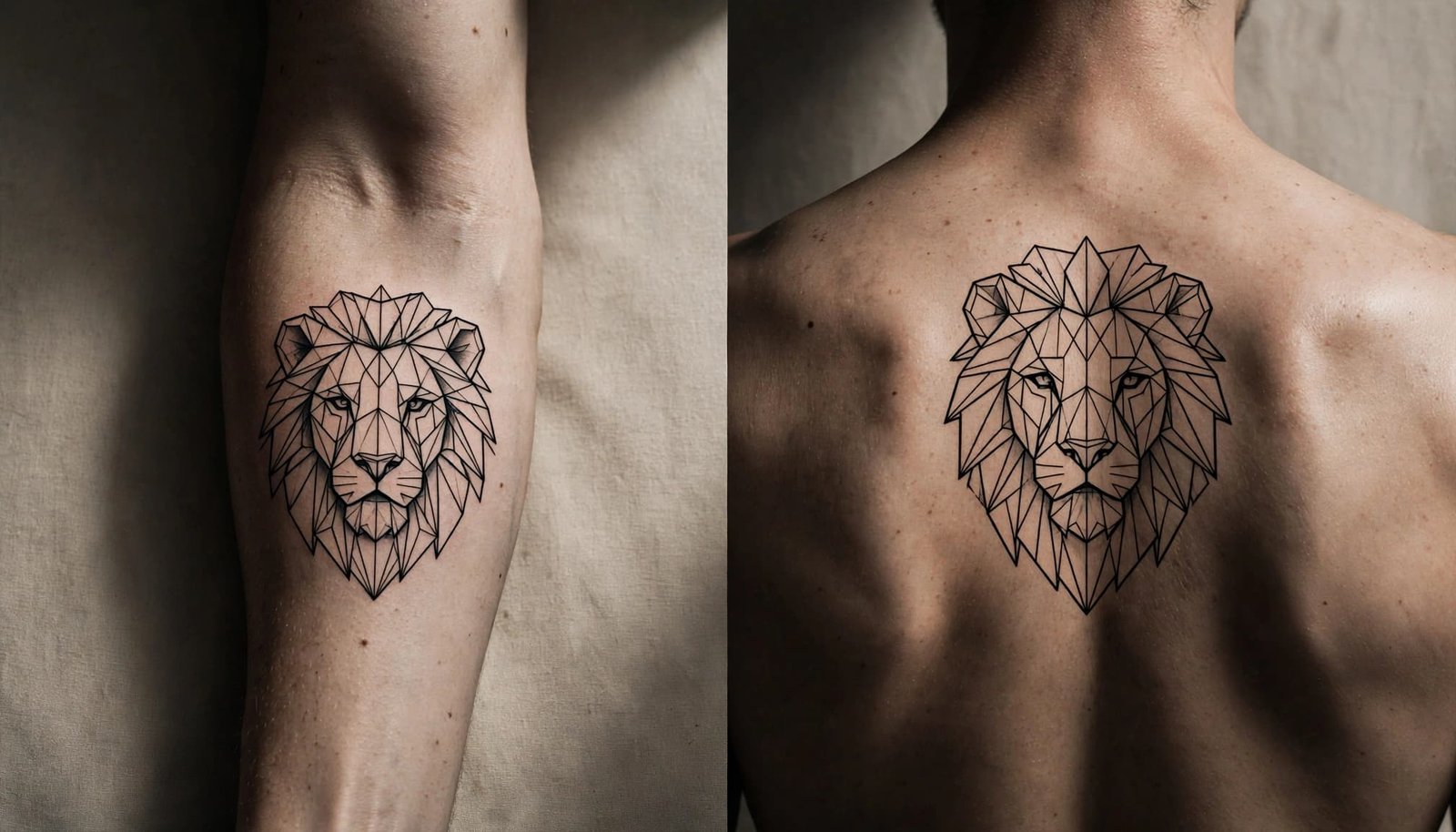
A minimalist geometric lion uses a few continuous lines to outline the face, ears, and mane. Your artist might create the nose with two angled strokes, form the cheeks with mirrored polygons, and leave much of the skin untouched. This approach works well on the forearm, wrist, upper arm, or shoulder when you want a refined tattoo with a quieter mood.
It may suit someone who values courage but doesn’t want a large statement piece. Ask your artist to avoid overly tiny gaps and fragile details, especially if the tattoo will be small. A slightly stronger line weight can help the design stay readable while preserving its elegant simplicity.
What Your Geometric Lion Tattoo Can Symbolize
A geometric lion tattoo can carry a familiar meaning, but its details give that meaning a personal direction. The lion may speak to courage after a difficult chapter, while the precise shapes suggest discipline, balance, or control. Your tattoo doesn’t need to follow a standard interpretation. Choose the message that feels honest to your life.
Courage and Personal Strength
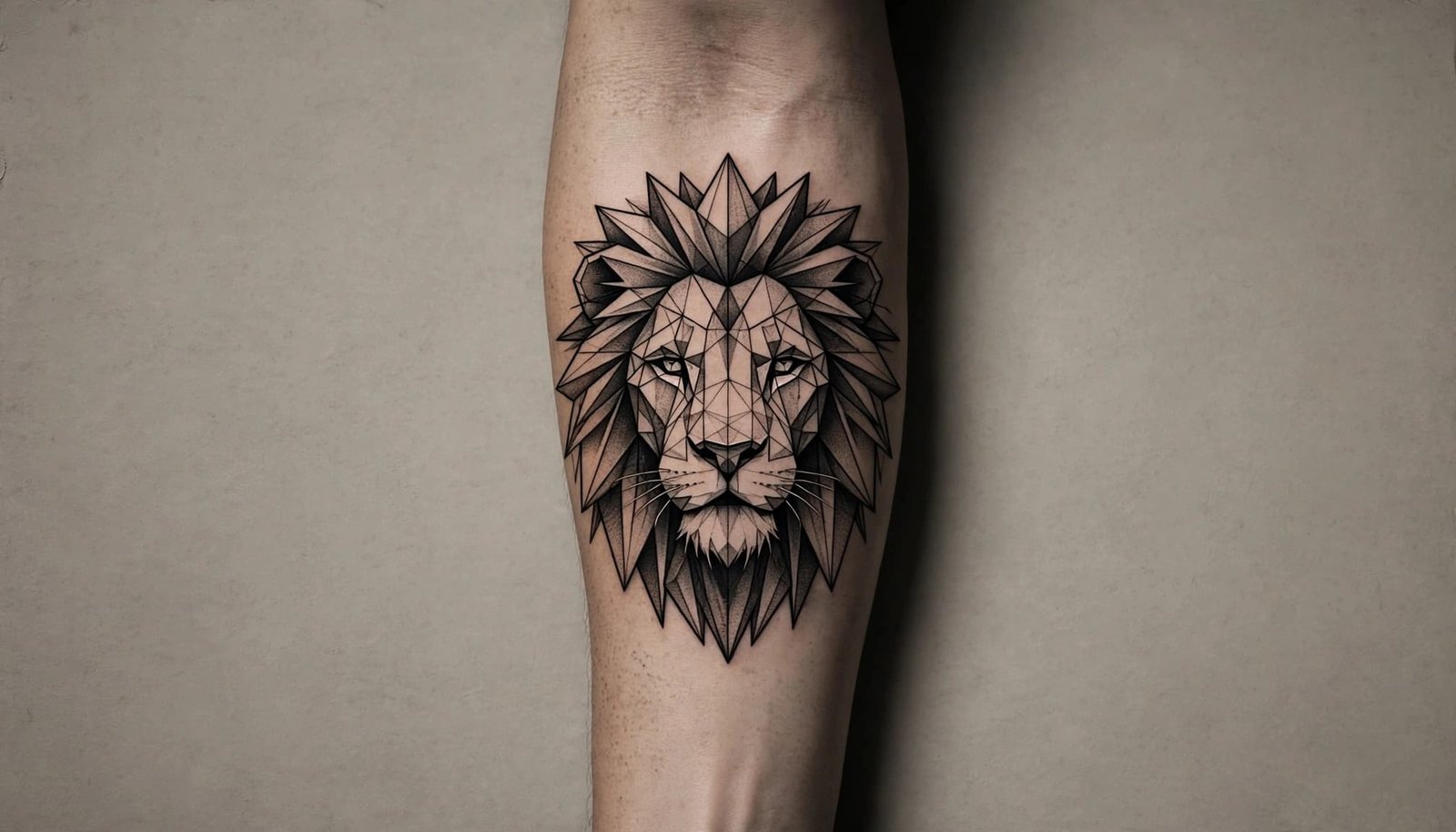
Many people choose a lion to honor bravery, especially after facing loss, illness, major change, or personal setbacks. A calm lion can show that strength doesn’t always need a roar. Its steady eyes and balanced face may speak of self-control, endurance, and the decision to keep moving.
Design choices can shape this message:
- A forward-facing lion can suggest confidence and readiness.
- A roaring lion may express visible defiance or active protection.
- Heavy blackwork can create a bold reminder of strength.
- Open skin and delicate lines can show power held with restraint.
If you survived a difficult period, consider adding a small detail with private meaning. A sun, birth flower, date, or single colored section can turn a popular symbol into a record of your own experience.
Leadership, Protection, and Family
The lion often connects with leadership, but that doesn’t have to mean dominance. For you, it might describe taking responsibility, guiding others, or learning to trust your judgment. A crown can emphasize authority, while a simple, composed expression can communicate leadership without showiness.
A geometric lion also suits protective meanings. The angular mane can form a visual shield around the face, suggesting watchfulness and care for the people you love. Pairing the lion with a smaller lion, cub, or pride can point toward family loyalty and shared strength.
Lions have carried varied meanings across cultures, so research matters before borrowing a sacred or traditional motif. The cultural history of lion imagery offers useful context when your concept includes royal, religious, or heritage-based symbols.
Balance and Your Own Story
Geometry adds another layer. Symmetry may represent inner balance, while broken lines can reflect healing, change, or a life that no longer follows a straight path. A lion enclosed in a circle can suggest wholeness; an open frame may express independence and room for growth.
Before choosing a design, write one sentence describing what the lion means to you. Share that sentence with your tattoo artist, then let the expression, spacing, and surrounding shapes grow from your story rather than a copied trend.
Find the Best Placement for Crisp Geometric Lines
Placement can decide whether your geometric lion looks balanced and clear or cramped and distorted. Flat, stable skin usually supports symmetrical faces, straight borders, and precise polygon shapes better than areas that bend, stretch, or rub against clothing.
Ask your tattoo artist to size the lion for your chosen body area. A design that looks perfect on a digital template may need wider lines, fewer details, or a different angle on real skin.
Choose a Stable Area for Clean Geometry
The outer upper arm, shoulder blade, upper back, thigh, and calf give geometric tattoos a steady surface. These areas have enough room for the lion’s face, mane, frame, and surrounding negative space. They also make it easier for your artist to keep both sides of a symmetrical design aligned.
The upper arm offers a balanced mix of privacy and visibility. A forearm tattoo feels more immediate because you see it throughout the day, but frequent sun exposure can affect exposed ink over time. The upper back provides a broader canvas for a large lion, especially when the mane spreads outward in a circular or angular shape.
Your clothing and routine matter, too. Waistbands, bra straps, shoes, socks, and work equipment can rub against fresh ink. Hands, feet, ankles, elbows, knees, and inner thighs also experience more movement or friction, which can make healing less comfortable and cause fine details to lose clarity sooner.
Balance Pain, Movement, and Visibility
Areas with more muscle or soft tissue, such as the outer upper arm, thigh, and calf, are often easier to tolerate than bony locations. Ribs, sternum, spine, knees, elbows, ankles, and hands tend to feel more intense because the skin sits closer to bone or moves constantly.
Visibility should match your lifestyle. Choose the forearm or outer upper arm if you want to see your lion easily. Select the back, shoulder blade, or upper thigh when you prefer a design that stays private under everyday clothing.
A smaller tattoo may suit the wrist, but geometric lines need enough room to breathe. Crowded triangles and tiny gaps can blur as ink settles and skin changes. Before committing, ask your artist to test the design at its actual size and check how it follows your natural posture.
Flat skin protects symmetry. Proper scale protects detail.
Finally, consider aging and sun exposure. A design with moderate line weight, open spacing, and limited micro-detail usually remains easier to read than an overcrowded one. After healing, protect exposed areas with sunscreen and clothing so your lion’s crisp edges have a better chance of staying sharp.
Choose the Right Linework, Color, and Size
Your inspiration image is a starting point, not a stencil. Before booking, decide what you want people to notice first: the lion’s expression, its angular mane, the surrounding geometry, or a small personal detail. Then ask your artist to rebuild the concept for your skin, placement, and preferred level of impact.
Match Linework to the Design’s Detail
Bold geometric lion tattoos depend on clean edges and clear spacing. Thick structural lines can define the jaw, eyes, nose, and outer mane, while thinner lines add secondary facets without competing with the face. Fine-line work creates a softer, more delicate mood, but tightly packed details may blur as the ink settles.
A useful plan includes:
- Choose bold outlines when you want the lion to read clearly from across a room.
- Use medium-weight lines for a balanced design with visible geometric planes.
- Reserve fine lines for open areas, small accents, or details that don’t carry the main shape.
- Remove tiny polygons when they force lines too close together.
Geometric and blackwork designs often need outlines around 1.5 to 2.5 millimeters, depending on the tattoo’s size and placement. Your artist may adjust that range after checking your skin and the design at its final scale.
Use Color and Contrast With Intention
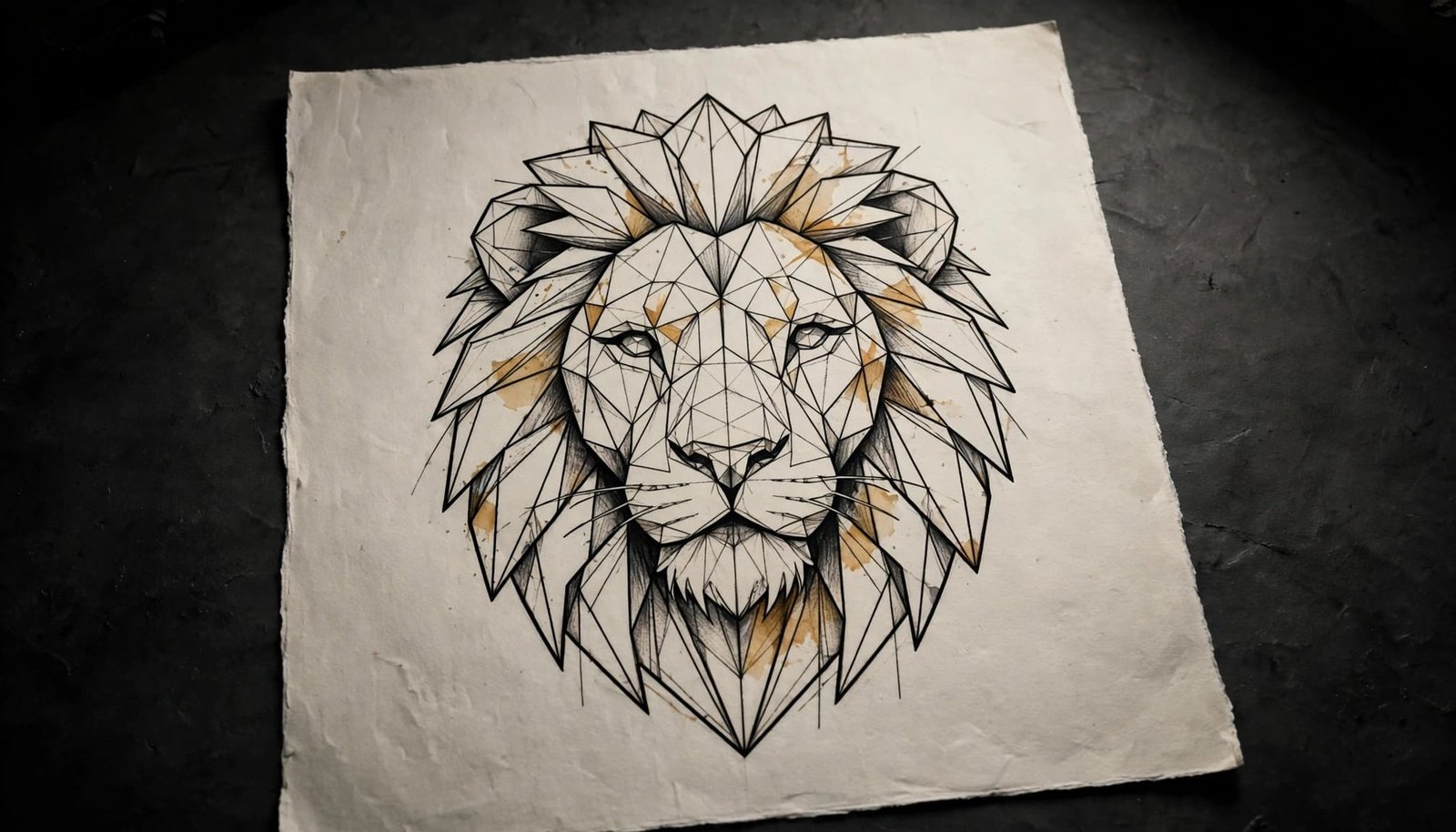
Black ink gives a geometric lion the strongest foundation, especially when the design uses open skin between shapes. Gray shading can soften the portrait, while saturated red, ochre, orange, deep blue, or forest green can add emphasis to the eyes, mane, or sun behind the head. Pastel colors often create less contrast, particularly after healing on darker skin tones.
Skin tone changes how every pigment appears. An experienced tattoo artist will adapt ink selection, saturation, line weight, and negative space rather than copying the same design across every person. For more background on matching pigments to tattoo styles, review this tattoo color selection guide.
Size the Lion for Long-Term Clarity
A small lion can look refined on the wrist, but its face may lose definition when too many angles share limited space. Larger designs allow wider gaps, stronger contrast, and more recognizable features. If you want major visual impact, scale the lion up and let the mane spread across the available area.
Show your artist the inspiration image, then discuss:
- The smallest detail you want to keep.
- How far away the tattoo should remain readable.
- Whether you prefer bold contrast or a lighter, more understated finish.
- How the design should follow your body’s natural curve.
A larger, simpler lion usually ages better than a tiny portrait crowded with fragile geometry.
Plan a Geometric Lion Tattoo That Ages Well
A geometric lion tattoo should look clear at its original size and still make sense years later. Good planning starts before you book the appointment, because line spacing, artist technique, placement, and aftercare all shape the finished result.
Prepare Before Booking
Start by collecting two or three references that show the mood, scale, and geometry you prefer. Then write down the details you want to keep, such as a calm expression, open mane, sacred circle, or limited color. Your artist can create a stronger custom design when they understand your priorities instead of copying one image.
Before paying a deposit, ask for:
- A portfolio with healed geometric or blackwork tattoos, not only fresh work.
- The artist’s recommended size and line weight for your chosen placement.
- A clear estimate of the session time and total cost.
- Their policy for touch-ups and design changes.
- Written aftercare instructions.
Check that the studio follows local licensing and body-art rules. During your consultation, the artist should be comfortable explaining glove changes, sealed needles, single-use ink cups, and sterilization for reusable equipment. The FDA’s tattoo safety guidance also explains why ink reactions can appear soon after tattooing or years later.
Build for Long-Term Clarity
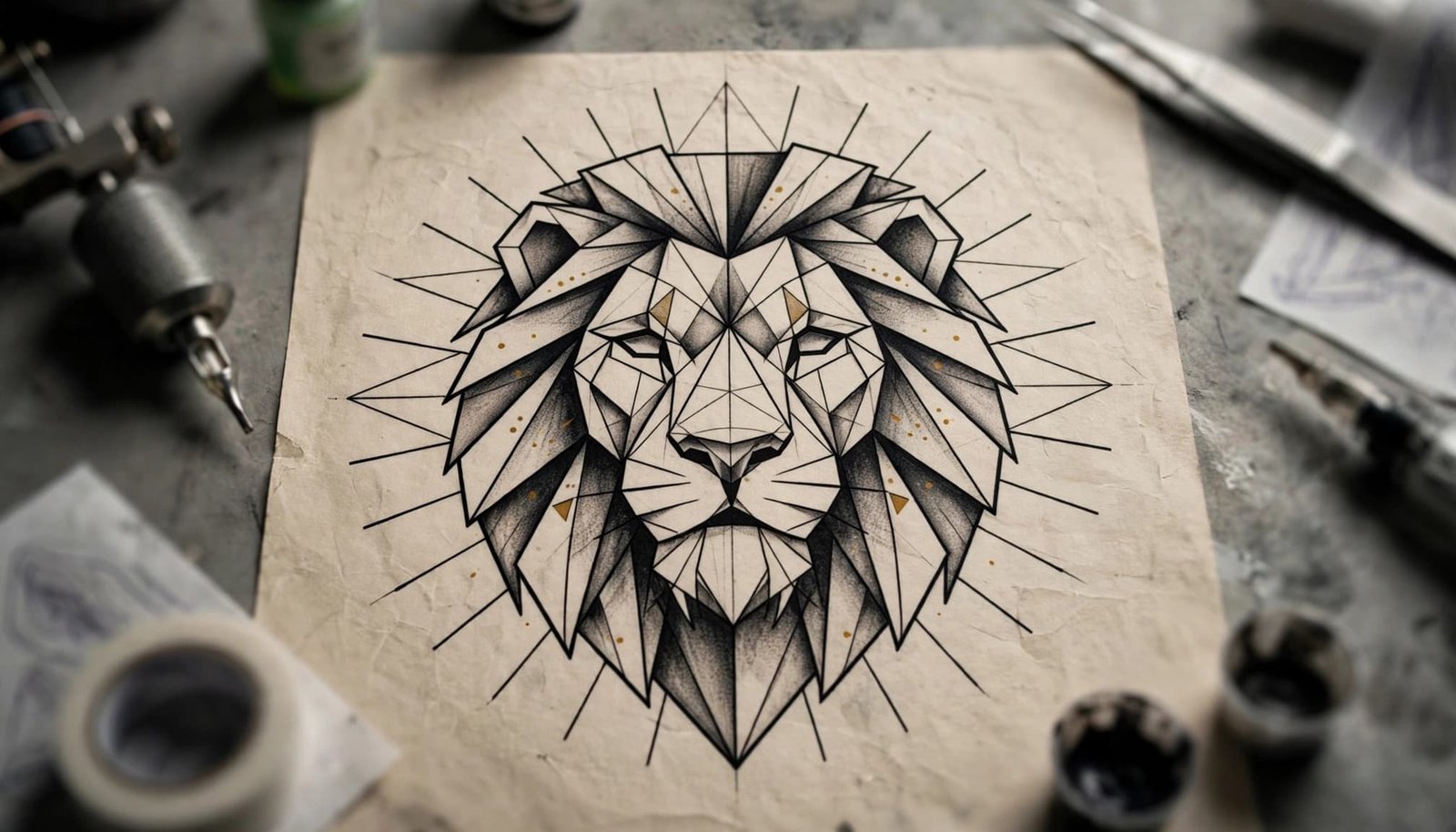
Skin changes with age, sun exposure, weight changes, and normal movement. No tattoo stays perfectly unchanged forever, but you can give the design more room to remain readable. Choose strong structural lines, open negative space, and larger geometric sections instead of packing every part of the mane with tiny polygons.
Ask your artist to test the lion at its final size on a stencil or digital mockup. Look at the eyes, nose, jaw, and smallest gaps first. If those features already appear crowded, remove detail before the needle touches your skin.
After healing, protect exposed ink from prolonged sun exposure with clothing or sunscreen. The American Academy of Dermatology advises paying attention to unusual redness, bumps, or other skin changes around tattoos, since ink can make some skin changes harder to notice.
Follow Healing Instructions Carefully
Wash the area gently as directed, pat it dry, and avoid scratching, picking, swimming, and unnecessary sun exposure while it heals. Wear loose clothing if fabric rubs against the tattoo.
Your artist’s aftercare directions should take priority because wrapping methods, healing products, and timing can differ. Contact the artist and a health care professional if the tattoo develops worsening redness, drainage, severe swelling, a spreading rash, or fever.
Conclusion
A geometric lion tattoo can be fierce and thoughtful at once, combining the animal’s wild presence with carefully shaped lines, balanced angles, and open space. Whether you choose a calm portrait, abstract polygons, sacred geometry, or minimalist linework, the strongest design begins with a meaning that feels personal.
Before booking, consider how the tattoo will fit your body, how clearly its details will read, and whether the artist has proven skill with geometric work and healed tattoos. A trend may catch your eye, but a clear visual plan gives the design lasting strength.
Choose a lion that tells a story you will still value years from now. When personal meaning guides the style, placement, spacing, and artist choice, your tattoo becomes more than a striking image. It becomes a lasting expression of who you are.
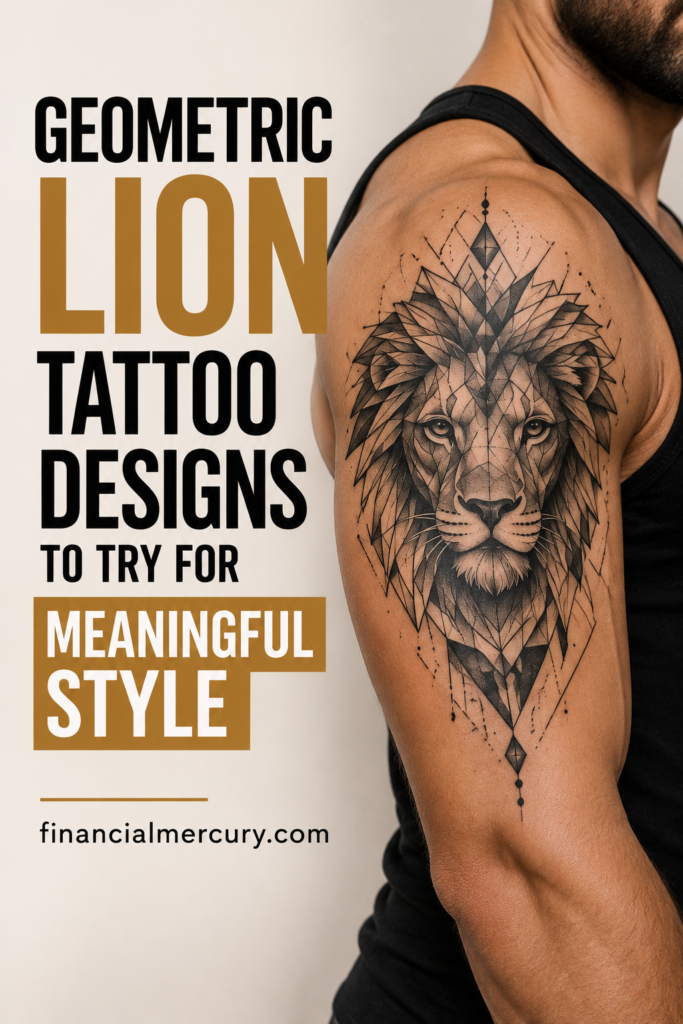
Save the pin for later

- 30 Trendy Tattoo Ideas for 2026: Styles and Placement - September 27, 2026
- 30 Gorgeous Fine Line Tattoo Ideas to Try - September 27, 2026
- 25 Fine Line Tattoo Ideas for Women With Meaning - September 22, 2026
Leave a Reply