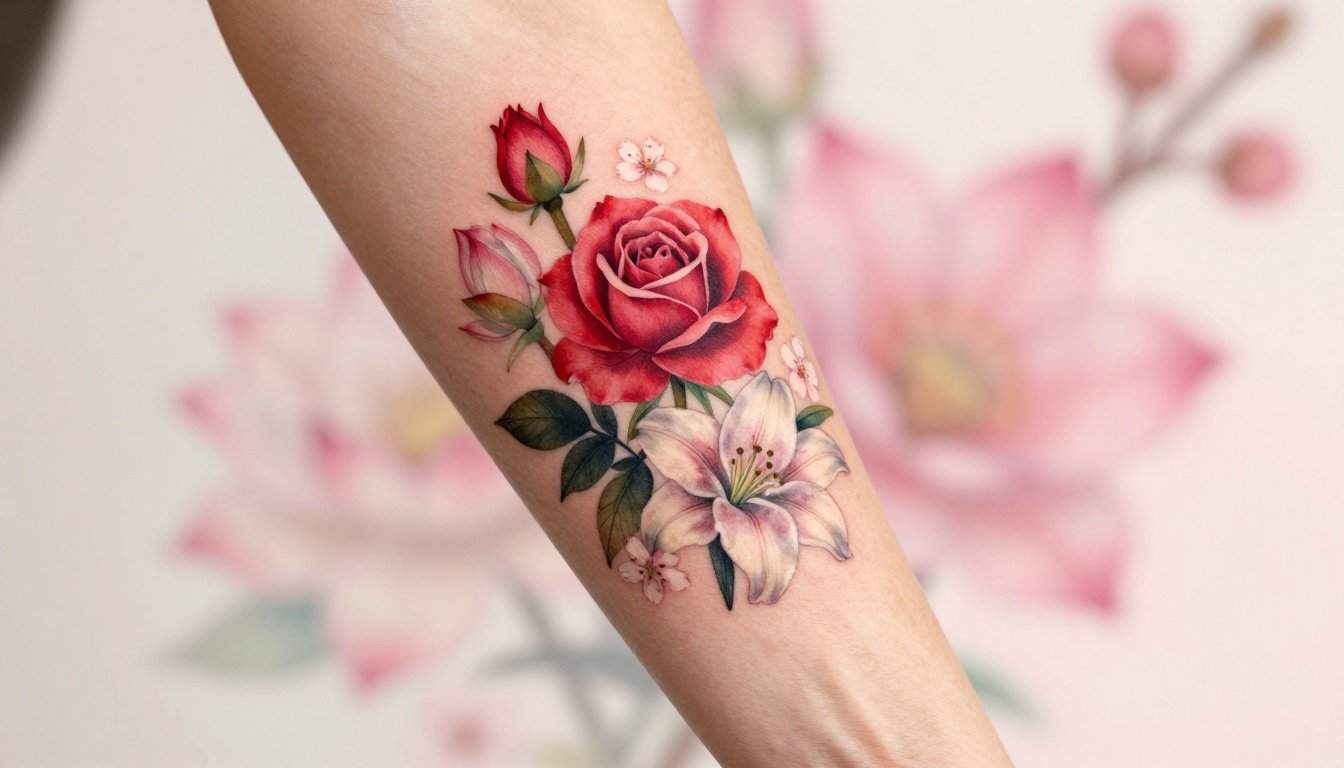
25 Gorgeous Floral Tattoo Ideas With Meaning and Style
Flowers can bloom on your skin as reminders of love, personal growth, family, beauty, or a new beginning. A rose may hold the warmth of passion, while a lotus, lily, or cherry blossom can carry a meaning that feels tied to healing, renewal, or the passing of time.
Choosing among floral tattoo ideas can feel exciting, but the right design should fit your story as much as your style. Flower symbolism changes across cultures and personal experiences, so consider the species, color, size, and placement before settling on a concept. A memorial bloom might feel right on your wrist, while a detailed botanical piece could suit your shoulder, ribs, or thigh.
The 25 ideas ahead pair flower meanings with tattoo styles, placement suggestions, personalization tips, and practical aftercare advice, so you can find inspiration that still feels like your own. Start with the designs below, then choose the bloom that speaks most clearly to what you want to carry with you.
25 Gorgeous Floral Tattoo Ideas to Inspire Your Next Design
This inspiration gallery pairs each flower with common symbolism, a fitting tattoo style, and a placement that lets the design breathe. Meanings are personal, so use these ideas as starting points. You can combine concepts, change the scale, or ask your artist to create an original version based on your story.
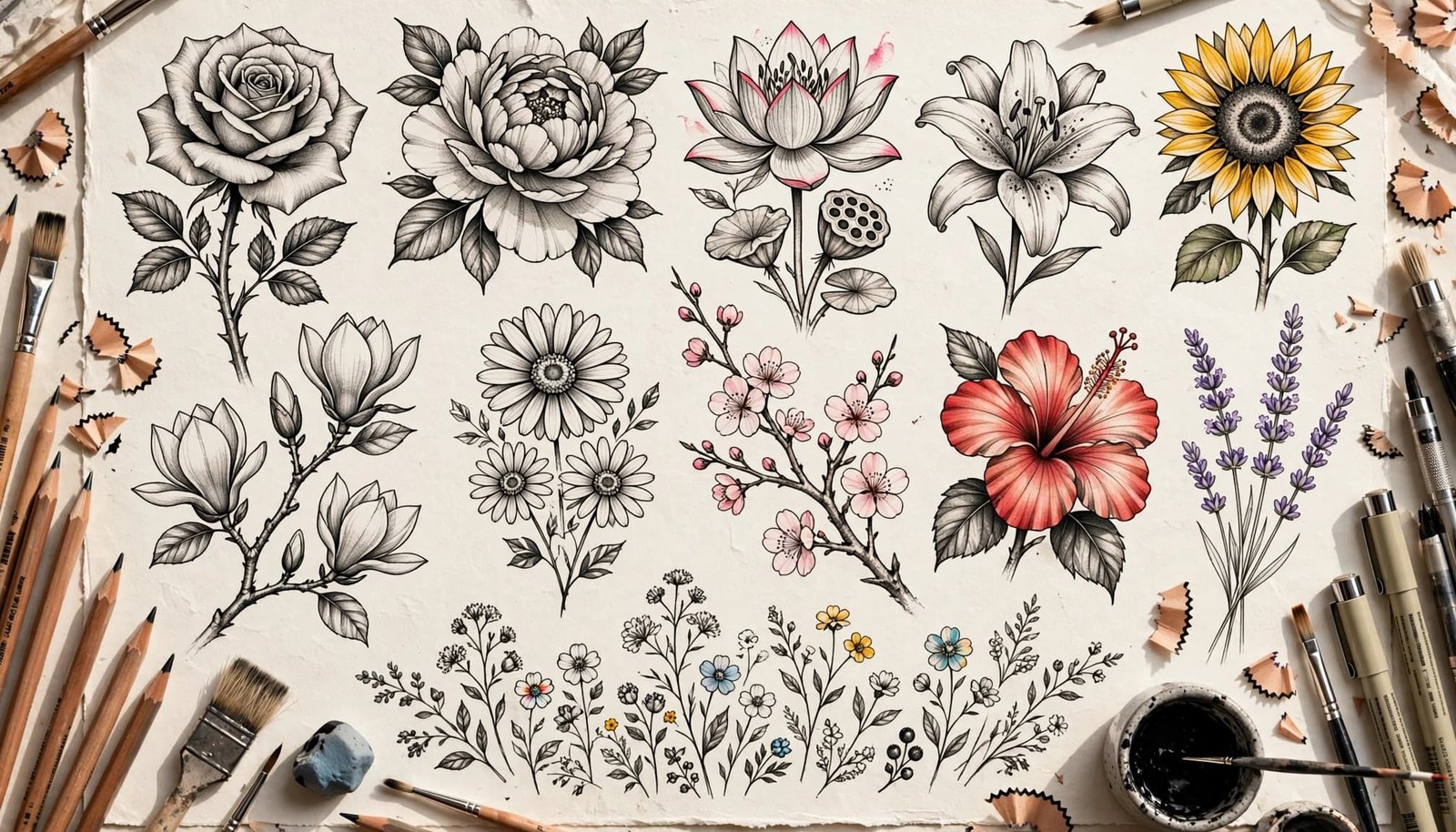
Romantic Rose, Peony, and Magnolia Tattoo Ideas
- A fine-line rose with a meaningful date suits the forearm or collarbone. The date can sit beneath the stem in small script, while the rose suggests love, remembrance, or a personal turning point.
- A black-and-gray rose makes a thoughtful memorial tattoo. Place it on the ribs, shoulder, or upper arm, using soft shading and a name, initial, or small date only if the design needs one.
- A colorful peony bouquet brings rich volume to the thigh or shoulder. Pink, coral, and red petals often suggest beauty, prosperity, courage, or affection, but your color choices can create a more private meaning.
- A single magnolia on the upper arm has a calm, elegant presence. Its broad petals can suggest beauty, dignity, renewal, and quiet strength.
- A rose with thorns or a ribbon adds emotional contrast. Thorns can point to courage and survival, while a ribbon may carry a memorial phrase or loved one’s name. Larger blooms allow more shading and detail; tiny roses need simple outlines to stay readable over time. Common flower meanings remain flexible across cultures and colors, as The Old Farmer’s Almanac explains.
Lotus, Lily, and Water Lily Designs for Growth
- A minimalist lotus with open linework makes a clean sternum, wrist, or upper-arm tattoo. Lotus imagery is often associated with resilience, rebirth, and spiritual growth.
- A lotus mandala suits the back, sternum, or upper arm because its symmetry needs balanced space. Use fine geometry around the petals, and treat spiritual imagery thoughtfully rather than choosing it only for its trend appeal.
- A lily along the spine creates a long, graceful composition. Its stem can also follow the ribs, calf, or forearm, where the vertical shape feels natural.
- A water lily with gentle ripples adds movement without making the tattoo busy. Blue-gray ink can suggest calm, while a small reflection gives the design a softer mood.
- A lotus rising from dark shading offers a visual story of recovery. The contrast between shadow and open petals can suggest growth after hardship, although lotus meanings differ across traditions and personal experiences.
Sunflower, Daisy, and Wildflower Tattoos Full of Light
- A bright sunflower on the shoulder brings warmth and visibility to the skin. Sunflowers are commonly linked with joy, loyalty, optimism, and devotion.
- A tiny daisy behind the ear keeps the design discreet. Its simple petals can suggest innocence, remembrance, new beginnings, or a private connection to someone you love.
- A wildflower meadow on the ankle or outer thigh creates a relaxed botanical scene. Mix a few open stems with generous spacing so the tattoo stays clear as it ages.
- A daisy chain around the wrist feels delicate and personal. Black ink gives it a classic look, while small touches of color can highlight selected blooms.
- A sunflower with a bee or butterfly adds a natural focal point to the forearm, calf, or shoulder. The insect can symbolize change, work, freedom, or a loved one’s memory. Simple stems and open spacing usually age more clearly than crowded details.
Cherry Blossom, Hibiscus, and Tropical Floral Ideas
- A drifting cherry blossom branch can follow the shoulder, collarbone, ribs, or back. Sakura is often associated with fleeting beauty, seasonal change, and renewal.
- Scattered sakura petals create a lighter design for the collarbone or shoulder blade. If you use Japanese-inspired imagery, describe the cultural reference accurately rather than calling it a generic Asian symbol. The Library of Congress history of cherry blossoms offers useful context.
- A tropical hibiscus on the upper arm or hip brings bold petals and confident color. Hibiscus can suggest passion, confidence, warmth, or a connection to a treasured place.
- Pairing a hibiscus with ocean waves creates a strong coastal composition for the thigh or ribs. Blue waves can balance the flower’s saturated red, orange, or pink petals.
- A botanical sleeve with hibiscus and layered leaves gives your artist room to build texture. Use varied leaf sizes to connect the upper arm, forearm, and shoulder without overcrowding the blooms.
Birth Flowers, Lavender, and Meaningful Floral Combinations
- A birth-flower bouquet can honor birthdays, children, anniversaries, or several loved ones in one design. Place it on the forearm, shoulder blade, or upper thigh, and choose an airy arrangement rather than forcing every detail together.
- Lavender with an initial suits the ribs, wrist, or forearm. Lavender often suggests calm, devotion, healing, or remembrance, while one small letter keeps the design personal.
- A memorial flower with a date can sit over the heart, along the ribs, or on the sternum. Keep the lettering clear and let the bloom remain the main focus.
- A floral heart made from curved stems offers a subtle alternative to a solid heart shape. Add two small leaves or a butterfly if they carry genuine meaning.
- A mixed bouquet for family members can combine each person’s birth flower in one shoulder or upper-thigh composition. Stars, bees, script, or birth dates can add context, but too many extras may hide the flowers. Choose the details that tell the story best.
Choose a Floral Tattoo Style That Matches Your Personality
The flower you choose matters, but the tattoo style shapes how that flower feels on your skin. A rose can look soft and personal in fine-line ink, bold and timeless in traditional color, or almost scientific as a botanical illustration. Consider your clothing, existing tattoos, preferred colors, and tolerance for detail before choosing a design.
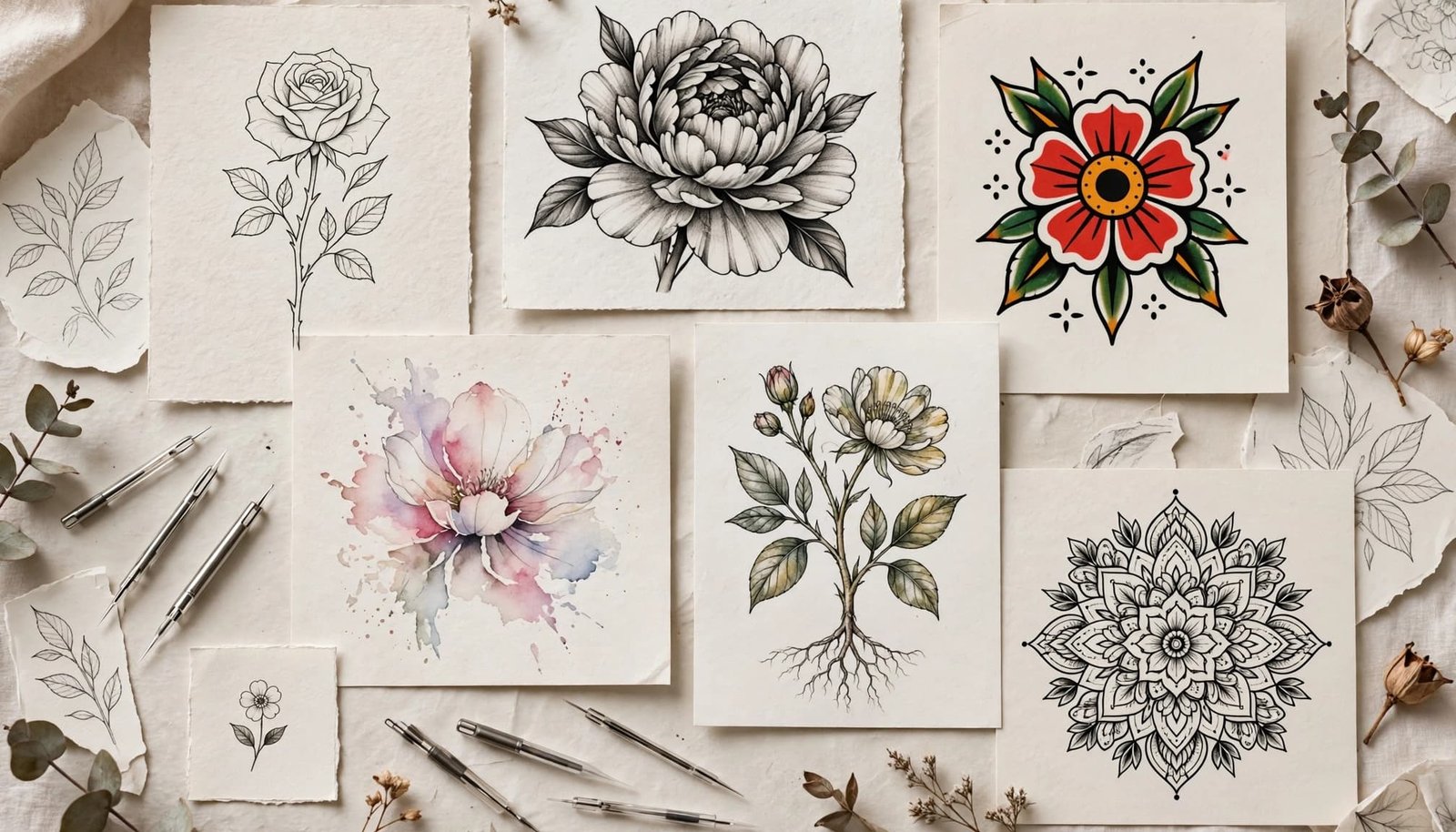
Fine-Line and Single-Needle Florals
Fine-line and single-needle tattoos use delicate strokes to create an airy, understated effect. They suit small roses, lavender stems, tiny daisies, and minimalist birth flowers, especially on the wrist, forearm, collarbone, ankle, or ribs.
These designs usually rely on black or dark gray ink, with little or no shading. The result feels intimate rather than dramatic, like a pencil sketch preserved on the skin. However, extremely pale lines and crowded details can soften as the tattoo ages. Give each element enough breathing room, and avoid shrinking a complex bouquet to a size smaller than a few inches.
Black-and-Gray Realism and Botanical Illustration
Black-and-gray realism uses layered shading, contrast, and careful texture to make petals look dimensional. A realistic peony, wilted rose, or magnolia can feel romantic, thoughtful, or memorial-like. Larger placements, including the upper arm, shoulder, thigh, back, and ribs, give the artist room to build believable depth.
Botanical illustration takes a more structured approach. It may show the flower, leaves, stem, and seed details with the precision of a vintage plant study. This style suits readers who love nature, science, gardens, or antique artwork. Both styles need adequate size and spacing, because fine veins and overlapping petals can merge when packed too closely.
Traditional, Neo-Traditional, and Watercolor Flowers
Traditional floral tattoos use strong outlines, solid color, and recognizable shapes. Red roses, sunflowers, chrysanthemums, and lilies remain readable at many sizes, making this style a strong choice for long-term clarity. Neo-traditional designs add richer shading, unusual color combinations, and more decorative detail while keeping a clear silhouette.
Watercolor tattoos create a softer effect with blended color, loose edges, and minimal outlining. They can make cherry blossoms, wildflowers, and tropical blooms look bright and painterly. Since very light pigment may lose contrast sooner, ask your artist how they will preserve the flower’s shape after healing. A darker outline or selective black detail can help.
Minimalist Micro Tattoos and Ornamental Florals
Minimalist micro tattoos keep the design small and visually simple. A single petal, tiny daisy, or miniature stem can work well when you want something discreet. Choose one clear shape instead of forcing several flowers into a space too small for them.
Ornamental and mandala florals offer symmetry, geometry, and decorative balance. They work beautifully on the sternum, spine, upper back, or thigh, where the composition can expand evenly. Repeated petals and fine geometry need careful spacing, so a slightly larger design often ages better than a tightly compressed one.
Fresh tattoo photos show the first impression. Healed photos show the artist’s actual control.
Before booking, study an artist’s healed floral work in natural light, ideally after one to three years. Look for crisp silhouettes, clean spacing, controlled contrast, and minimal spreading. Discussions in the aged tattoo community also show why fresh fine-line photos aren’t enough. Choose someone experienced in the exact style you want, not simply someone with attractive floral images in a general portfolio.
Find the Best Placement for Your Flower Tattoo
Placement changes how your flower tattoo looks, feels, and fits into daily life. Before choosing a spot, consider the flower’s shape, your preferred visibility, workplace expectations, movement, and available space. A long lily needs a different canvas than a compact daisy, and a trailing vine should follow the body’s natural lines.
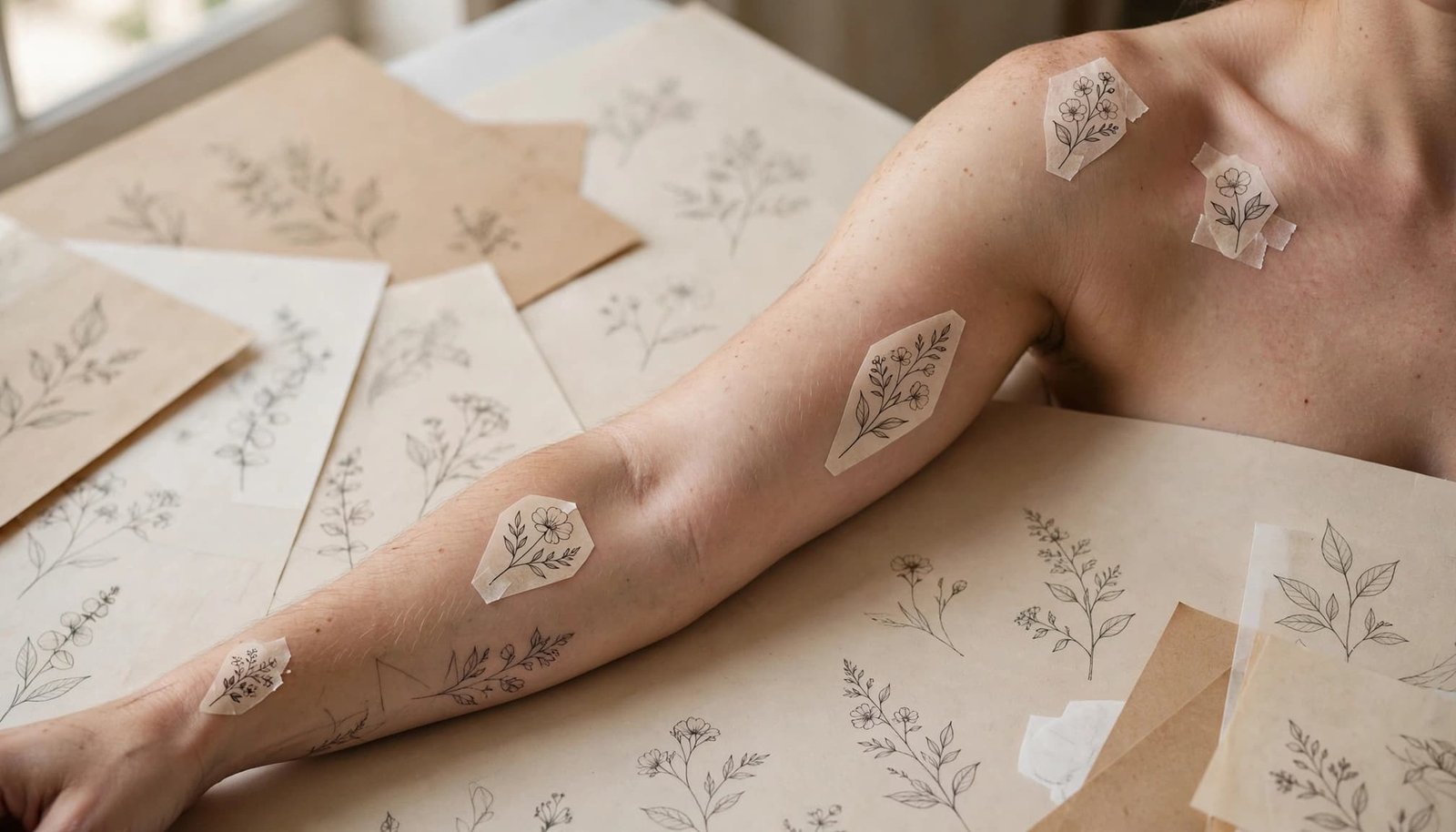
Match the Flower Shape to the Body Area
Long stems and narrow leaves suit vertical placements. The forearm, upper arm, spine, calf, and ribs give a stem room to travel without compressing the design. A lily down the spine or lavender along the forearm can look graceful because the tattoo follows the body’s natural length.
Round blooms need wider, more stable space. Peonies, sunflowers, roses, and magnolias often fit the shoulder, upper arm, outer thigh, or hip. These areas let the petals spread outward, so the flower keeps its shape instead of looking crowded.
Trailing vines work best when they curve with the body. A fine vine can sweep across the collarbone, wrap gently around the wrist, or follow the ankle. Ask your artist to place the stencil while your body rests naturally. A design that looks balanced on a flat drawing may feel awkward when it crosses a joint or bends around a curve.
Compare Visibility and Everyday Practicality
Your lifestyle should guide the final choice. The wrist, forearm, collarbone, ankle, and behind the ear are easy to show, so they suit people who want their floral tattoo to remain part of their everyday appearance. They may require more thought if your workplace has rules about visible tattoos.
The upper arm, shoulder, ribs, thigh, and spine offer more control over visibility. Clothing can cover these areas in most professional settings, while sleeveless outfits, swimwear, or shorter tops can reveal the design when you choose. Behind the ear is discreet under loose hair but remains visible with short hairstyles or an updo.
Available space also affects detail. A tiny flower can fit behind the ear or on the wrist, but a birth-flower bouquet needs the thigh, shoulder blade, upper arm, or ribs. Give overlapping petals and fine leaves enough room to remain clear as the tattoo ages.
Think About Pain, Movement, and Healing
Pain varies from person to person, but placement still matters. Areas with more muscle or padding, such as the outer forearm, outer upper arm, shoulder, and outer thigh, are often easier choices. In contrast, ribs, sternum, spine, ankle, and other areas close to bone can feel sharper or more intense. Healthline’s tattoo pain guide explains why thin skin, bone, and nerve density affect comfort.
Movement matters during healing, too. The ribs expand with each breath, the wrist bends throughout the day, and the ankle moves with every step. Tattoos placed across creases or joints may face more friction and stretching, so loose clothing and reduced rubbing can help during early healing.
Before your appointment, discuss your work routine, exercise habits, clothing, and pain concerns with the artist. Then review the stencil while standing, sitting, and moving your arm or torso. The best placement is the one that lets the flower follow your body instead of fighting it.
Personalize Your Floral Tattoo Without Losing Its Beauty
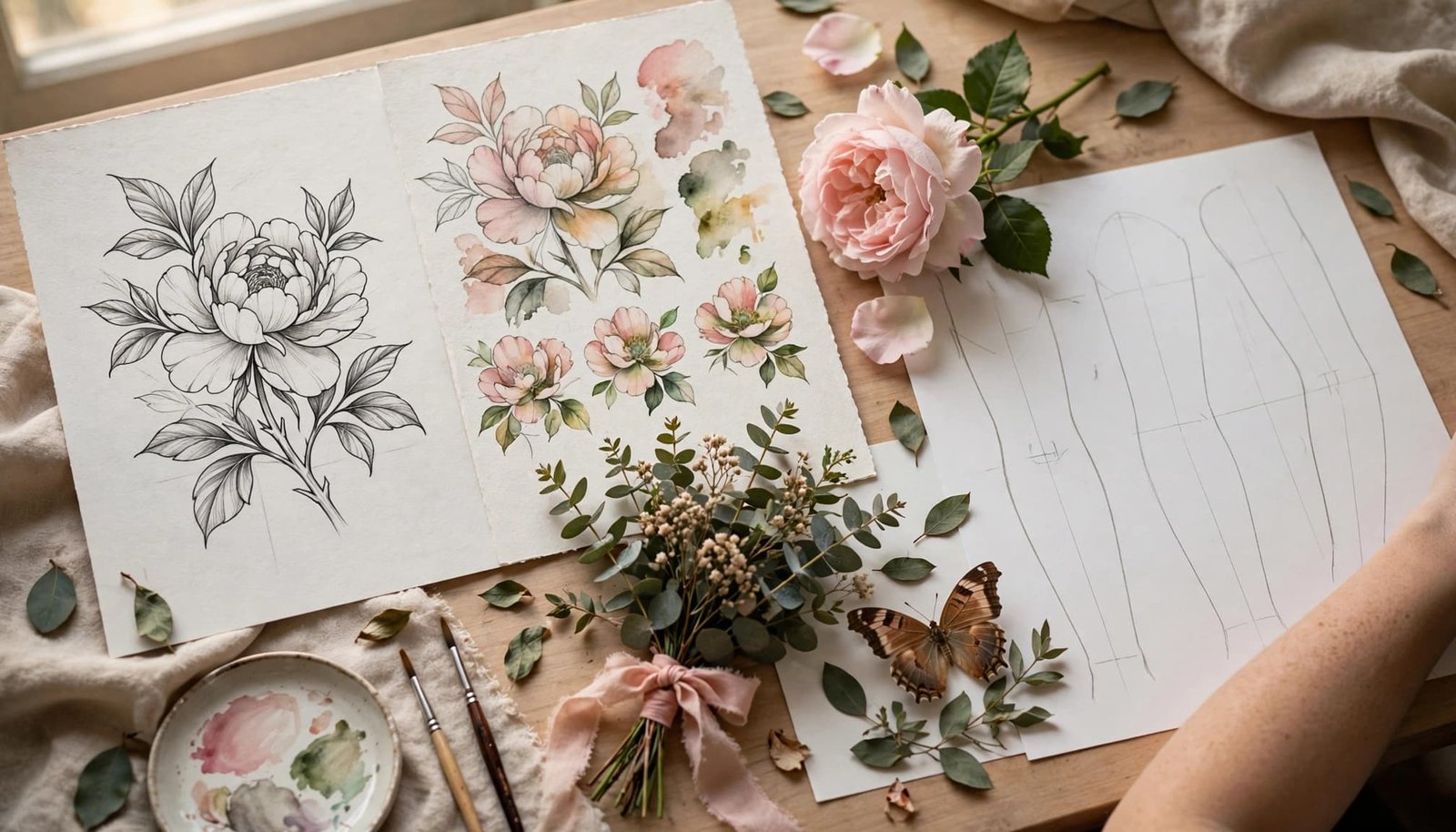
A beautiful floral tattoo starts with a meaning that feels true to you. Before choosing a flower, write down the memory, person, season, or change you want the design to hold. That answer gives you a clearer direction than choosing a popular image first.
Start With One Main Flower
Choose one bloom as the visual focus. A rose may carry love or remembrance, while a lotus can speak to healing and renewal. Birth flowers can honor family members, children, or important dates, but combining too many can make the design difficult to read.
A single bloom creates a clean, confident tattoo. A bouquet offers more storytelling space, especially when each flower has a clear connection. If you choose several birth flowers, vary their sizes and positions so one remains the focal point. Your artist can arrange the stems into a natural curve instead of placing every bloom at the same height.
Reference images help communicate mood, petal shape, shading, and composition. Bring several examples, but don’t copy another person’s tattoo. A professional artist should redraw the concept, adjust it to your body, and create an original design with its own structure.
Add Details That Support the Story
Small details can add meaning, but each one should earn its place. An initial or date may personalize a memorial flower, while a butterfly can suggest change, freedom, or a new chapter. Bees can connect the design to nature, work, community, or a personal memory. Leaves often fill space naturally, and a ribbon can hold a short name or phrase.
Script needs extra care because tiny lettering can blur over time. Keep words brief and choose a font with open shapes. If the flower already tells the story, you may not need text at all. A date hidden along the stem or one discreet initial can feel more personal than a crowded quote.
The strongest floral tattoos usually have one clear focal point and only a few supporting details.
Plan Size, Color, and Long-Term Readability
Size affects every design decision. A small flower needs simplified petals, fewer veins, and a clear outline. Larger tattoos can hold layered shading, several blooms, insects, ribbons, or delicate botanical details without looking cramped.
Line weight matters, too. Extremely fine lines may soften as the tattoo ages, especially when details sit close together. Ask your artist to preserve open skin between petals and leaves. Stronger outlines and controlled contrast can help the image remain readable.
Black ink offers clear structure and often suits fine-line, botanical, and black-and-gray designs. Color adds warmth and personality, but choose shades that contrast with your skin tone. Your artist can test how pink, red, orange, yellow, blue, or purple will appear on your skin rather than relying on a screen image. Red ink is also more often linked with allergic reactions than many other colors, so discuss pigment choices and studio practices beforehand. The American Academy of Dermatology’s tattoo guidance offers useful safety information for prospective clients.
Finally, ask the artist how the design will heal and age. A tattoo should look graceful after the fresh brightness fades, with enough contrast to preserve its shape. Choose a reputable professional who uses tattoo-specific, sterile supplies and can show healed examples of personalized floral work.
Respect Flower Symbolism and Choose a Safe Tattoo Studio
A floral tattoo can carry more than personal style. Lotus, chrysanthemum, hibiscus, and cherry blossom imagery can connect to specific cultures, religions, ceremonies, and family traditions. Before choosing one, learn where the motif comes from and how people within that tradition understand it.
Research the Flower’s Cultural Meaning
The lotus may carry Buddhist or Hindu religious meaning, while the chrysanthemum has important associations in Japanese culture. Cherry blossoms connect with Japanese history, seasonal beauty, and remembrance. Hibiscus symbolism also changes by region, with meanings tied to beauty, hospitality, femininity, or celebration.
These meanings aren’t universal design labels. A lotus mandala, sacred symbol, or traditional floral arrangement may have significance beyond its appearance. Avoid combining religious imagery, ceremonial patterns, or culturally specific objects simply because they look attractive together.
Take time to ask:
- Where did this flower or motif originate?
- Is it connected to a religion, ceremony, or community?
- Does the arrangement, color, or number of petals change its meaning?
- Am I using the design with understanding rather than treating it as decoration?
Your tattoo artist may know the visual details, but you should still do your own research. Ask about culturally specific elements during the consultation, especially if you want a Japanese, South Asian, Polynesian, or religious-inspired design. A respectful artist should welcome those questions and explain which parts they can draw accurately.
Use a Practical Tattoo Studio Safety Checklist
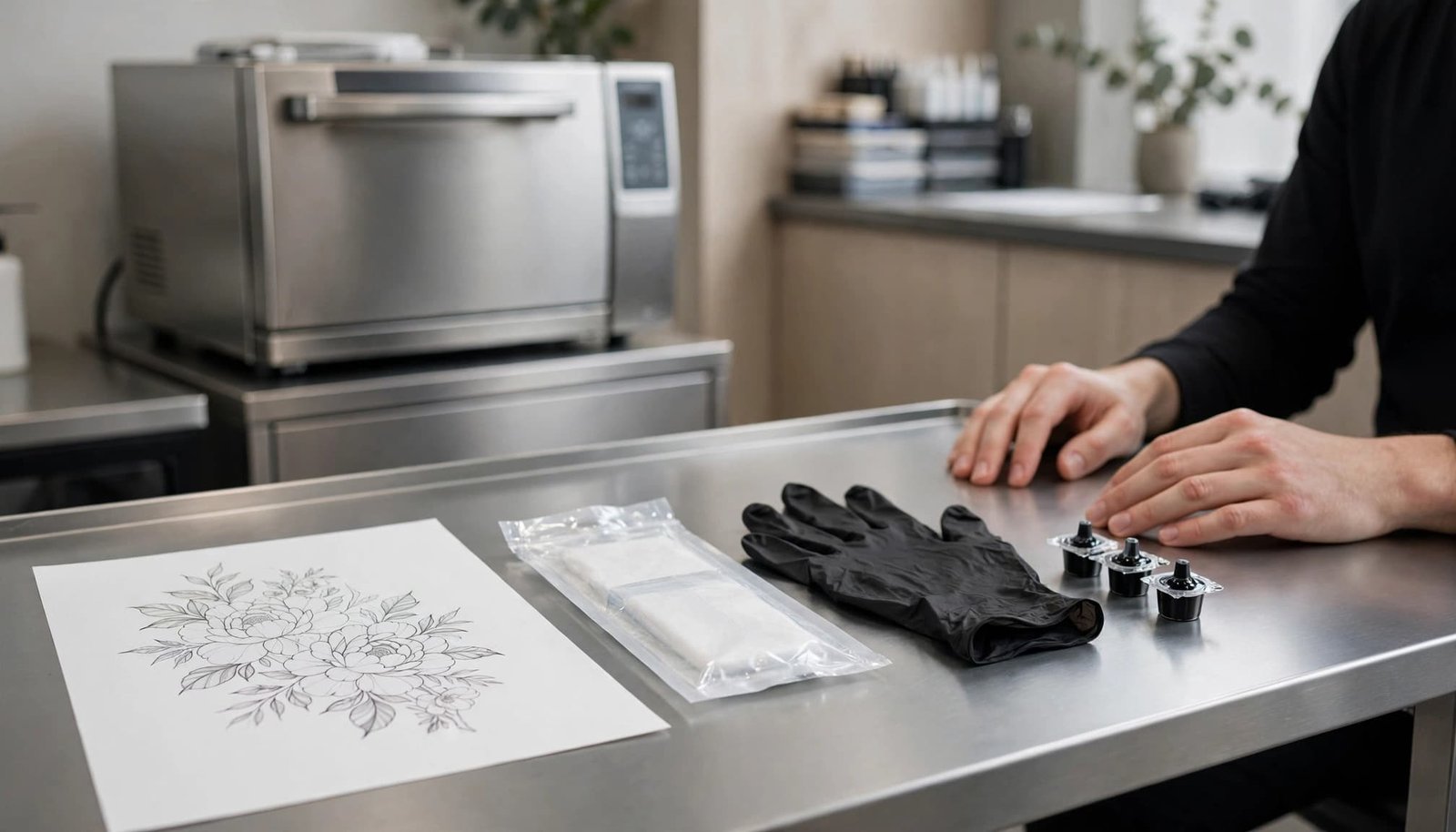
A fresh tattoo is an open wound, not simply a beauty treatment. Needles pierce the skin, so poor hygiene can expose you to bacterial infections and bloodborne pathogens. Visit the studio before booking, watch the setup, and ask direct questions without feeling awkward.
A reputable studio should provide:
- A new, sterile, single-use needle or cartridge for your appointment.
- Fresh disposable gloves, with replacements if the gloves tear or become contaminated.
- Clean, disinfected work surfaces and a fresh barrier over equipment that may be touched.
- Sealed, single-use supplies opened in front of you when appropriate.
- A puncture-resistant sharps container for immediate needle disposal.
- An autoclave for reusable equipment, along with proper sterilization procedures.
- Clear local or state licensing, where those rules apply.
Reusable tools should never move from one client to another without proper cleaning and autoclave sterilization. Used needles also belong in an approved sharps container immediately. The New York City tattoo safety manual outlines these infection-control practices in detail.
Ask, “How do you sterilize reusable equipment?” and “Will I see a new needle opened for my appointment?” You can also ask whether the artist holds the required license and whether the studio follows local health regulations. If staff become defensive, hide supplies, reuse gloves, or work around visible clutter, leave.
Clean technique protects the meaning behind your design. Choose an artist who respects both the flower’s cultural roots and your body’s health.
Protect Your New Floral Tattoo During Healing
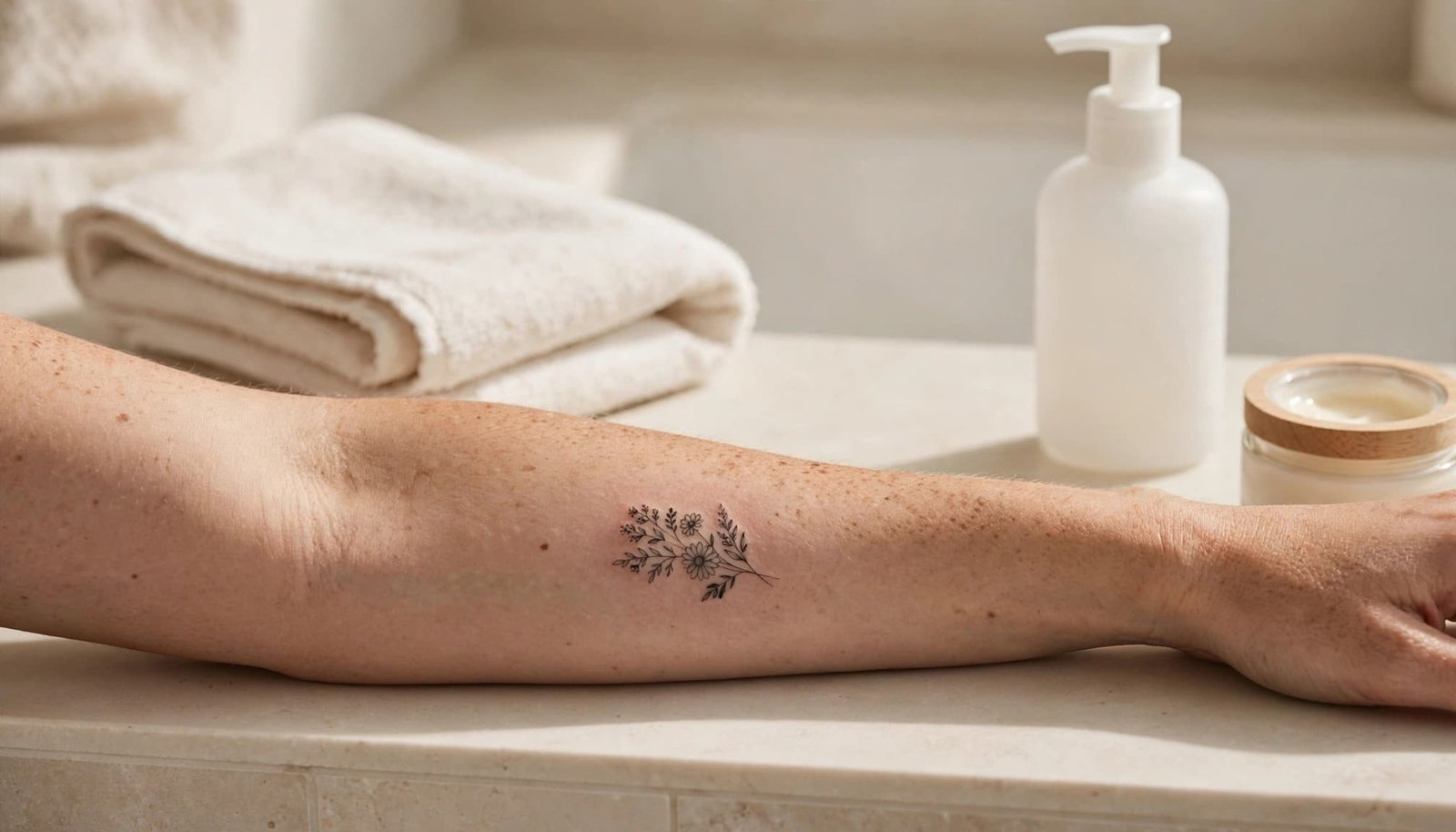
A fresh floral tattoo needs gentle care while the skin closes and settles. Your tattoo artist’s written instructions should come first, especially if they used an adhesive film dressing. Follow their guidance for bandage removal, washing, moisturizing, and follow-up care.
Follow a Simple Aftercare Routine
Keep the first few days clean and calm. When your artist says it’s time, remove the bandage with clean hands. Depending on the dressing, that may mean a few hours, 24 hours, or longer. If the bandage leaks, lifts, or causes irritation, contact the artist for advice instead of guessing.
After removal, follow these steps:
- Wash your hands thoroughly before touching the tattoo.
- Rinse the area with lukewarm water and a gentle, fragrance-free cleanser.
- Use only your clean fingertips. Washcloths, loofahs, and rough sponges can irritate the skin.
- Pat the tattoo dry with a clean paper towel or lint-free towel. Never rub it.
- Apply a thin layer of suitable fragrance-free moisturizer once the skin is dry.
A heavy layer of ointment can trap moisture and irritate the tattoo, so use less than you think you need. A plain, water-based lotion is often appropriate once the artist’s initial ointment period ends. The American Academy of Dermatology’s tattoo care guidance also advises choosing a water-based lotion or cream for dry tattooed skin.
Wash the tattoo gently once or twice daily, or follow the schedule your artist provides. After each wash, let the area breathe beneath loose, clean clothing.
Know What Normal Healing Looks Like
During the first days, your skin may feel tender, tight, warm, or similar to a mild sunburn. Small amounts of clear fluid can appear at first. Later, the tattoo may itch, peel, or form light scabs as the outer skin repairs itself. Many tattoos heal in about two weeks, although larger, more detailed, or heavily shaded pieces can take longer.
Resist the urge to scratch, pick, scrub, or pull away peeling skin. Those actions can remove pigment, reopen the skin, and increase the chance of irritation. Let flakes fall away naturally, even when the itch feels distracting.
Avoid tight sleeves, rough fabric, direct sun, swimming, hot tubs, lakes, oceans, and baths until the tattoo has fully healed. Showers are fine when you keep the tattoo clean and avoid soaking it. Once healed, protect the floral design with sunscreen because ultraviolet light can fade ink over time.
Watch for Signs That Need Medical Care
Healing irritation should gradually improve. Worsening pain, spreading redness, increasing warmth, pus, foul drainage, fever, or significant swelling can point to infection. A rash that persists, spreads, or develops around the tattoo also deserves medical attention.
Contact a doctor or dermatologist promptly if these symptoms appear. The American Academy of Dermatology’s guidance on tattoo reactions recommends medical care when infection symptoms or unusual skin reactions develop. Your artist can explain normal healing, but a medical professional should assess symptoms that keep getting worse.
Conclusion
The right floral tattoo begins with a flower that connects to your story, whether it speaks of love, healing, family, change, or strength. Let that meaning guide the design, then choose a style, size, and placement that suit your body and daily life. A delicate daisy, detailed peony, or symbolic lotus can each become personal when the choices behind it feel intentional.
Save a few floral tattoo ideas that catch your eye, then give yourself time to reflect on what you want the design to hold. During your consultation, discuss your preferred style, placement, cultural meaning, healed examples, studio safety, and aftercare plan with a qualified artist. Taking these steps helps you avoid rushing into a copy and gives the final artwork room to feel like your own.
The best floral tattoo is not simply the prettiest design. It is the bloom that still feels meaningful years later, carrying a lasting reminder of love, change, strength, or self-expression wherever you go.
Save the pin for later

- 30 Delicate Fine Line Tattoo Ideas to Copy - September 15, 2026
- 25 Gorgeous Floral Tattoo Ideas With Meaning and Style - September 15, 2026
- 30 Lotus Flower Tattoo Ideas With Meaning and Symbolism - September 14, 2026
Leave a Reply