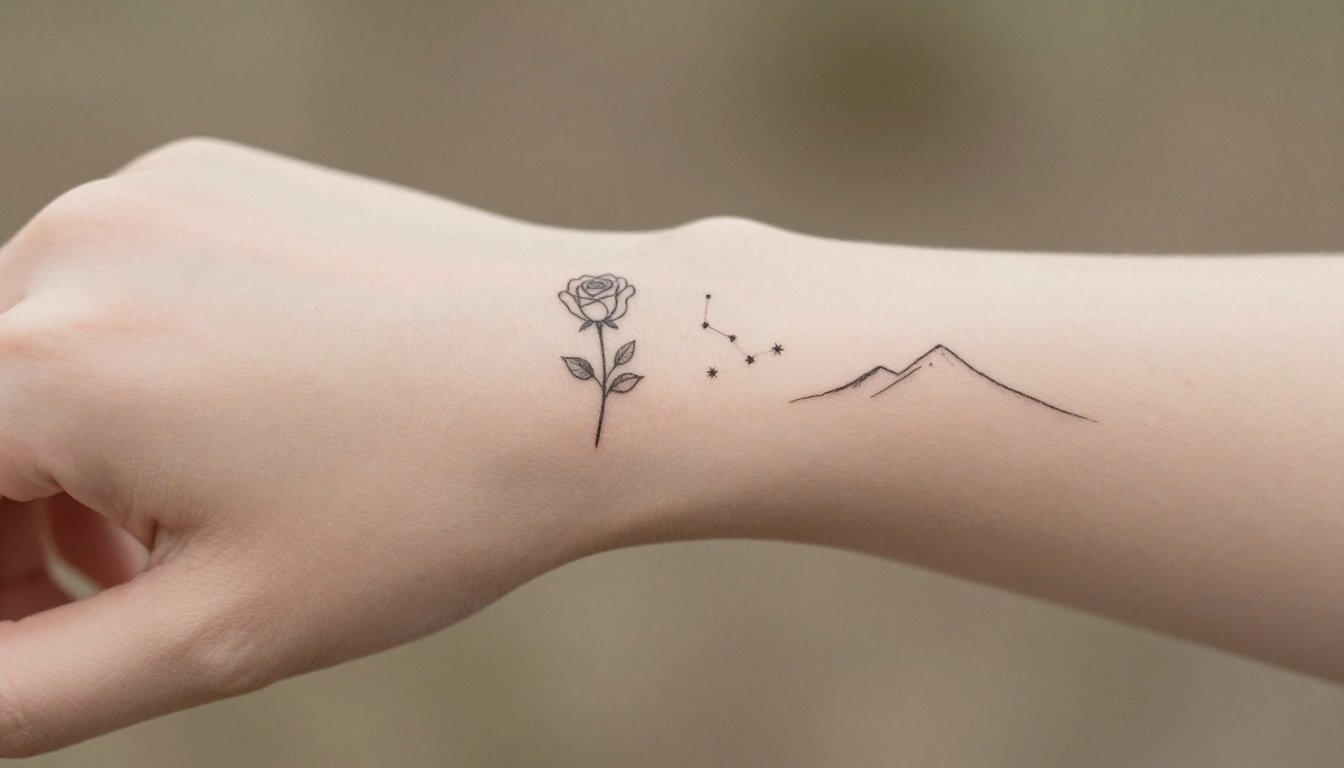
30 Delicate Fine Line Tattoo Ideas to Copy
Fine line tattoos have a quiet appeal: they’re light, personal, and easy to style without ever feeling plain. A single-needle flower, tiny constellation, or graceful outline can hold plenty of meaning while leaving your skin with an airy, understated design.
Still, delicate ink needs thoughtful planning. Design details, placement, an experienced tattoo artist, and careful aftercare all affect how your tattoo heals and ages. Fine lines can soften or fade faster in areas exposed to sunlight, friction, and frequent movement, such as fingers, feet, and joints. Once healed, protect exposed ink with broad-spectrum SPF 30 or higher, and follow your artist’s instructions during those first weeks.
The 30 ideas ahead include floral, celestial, nature-inspired, personal, and abstract styles. Use them as starting points for your own story rather than exact copies, then explore the first delicate fine line designs for inspiration.
30 Delicate Fine Line Tattoos You’ll Want to Copy
Delicate fine line tattoos look best when each mark has room to breathe. Use these ideas as creative starting points, then ask your artist to adjust the scale, spacing, and detail for your skin and chosen placement.
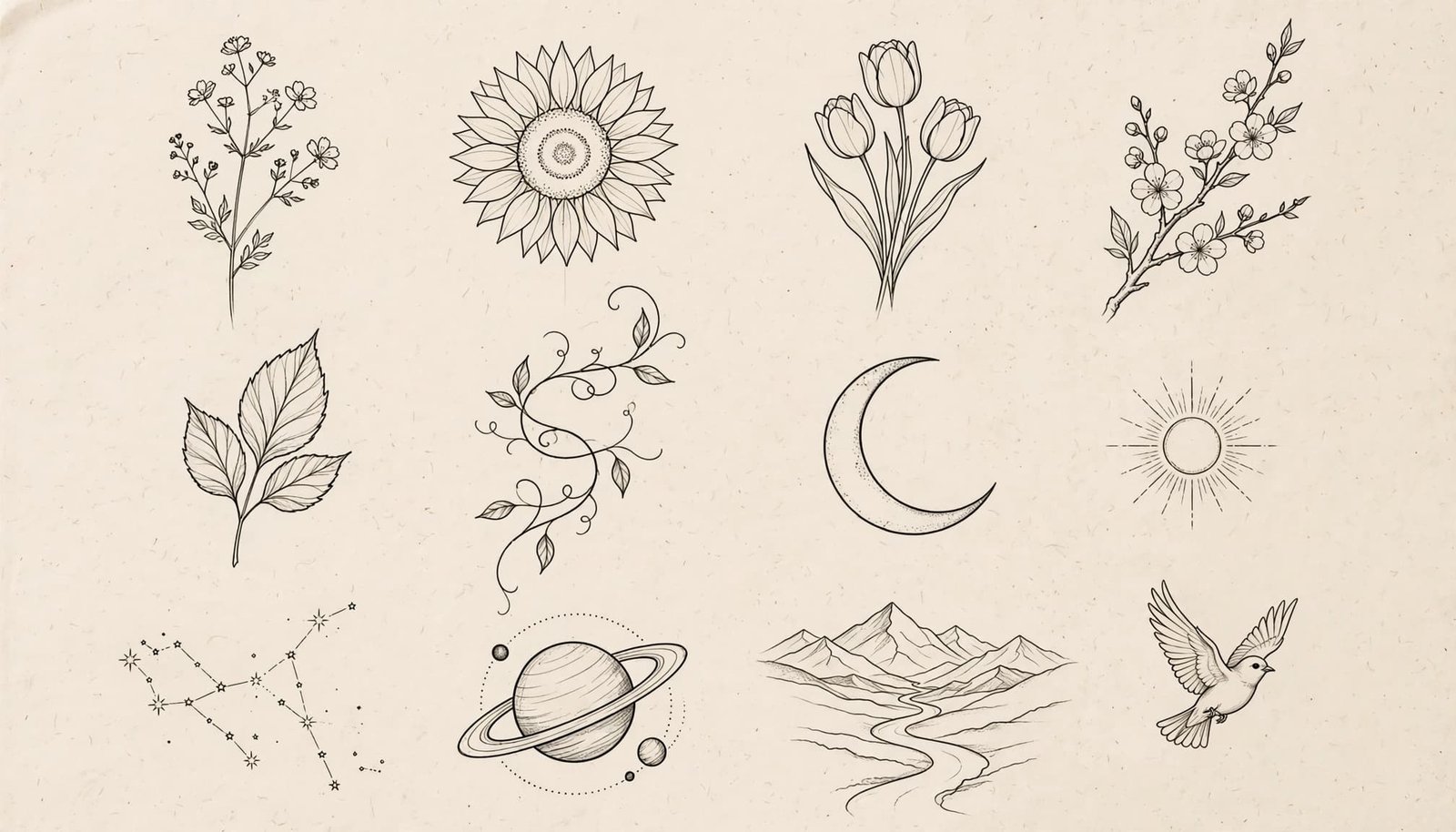
Soft floral and botanical designs with lasting charm
Flowers can feel romantic, cheerful, calm, or connected to a love of nature. Keep the petals and leaves open rather than crowded, especially when choosing a very small tattoo. Tiny details may merge as the ink ages, so a skilled artist may simplify the design without losing its character.
- A single wildflower stem has a relaxed, romantic look. Personalize it with your favorite meadow flower or a bloom linked to a meaningful month. The inner forearm gives the stem enough length to look graceful.
- A tiny sunflower outline brings cheerful energy through its round center and open petals. Add a small date beneath it or use a flower with fewer petals for a cleaner finish. The ankle suits this sunny design.
- A tulip trio creates a gentle springtime scene without needing heavy shading. Choose three different heights to symbolize family members, close friends, or a new beginning. Place the trio along the collarbone for a soft, visible accent.
- A cherry blossom branch feels delicate and sentimental, with blossoms that can suggest change, memory, or affection. You might add only the blossoms from a favorite season. The shoulder offers enough curve for the branch to follow the body.
- A fine botanical leaf has a calm, understated mood. Choose an olive, eucalyptus, fern, or houseplant leaf that reminds you of home. The upper arm provides a comfortable area where the veins can remain clear.
- A winding single-line vine moves naturally across the skin with a light, flowing rhythm. Add one small flower, thorn, or initial to make the concept personal. The inner forearm works well because its long shape supports the vine’s movement.
Sun exposure can fade tattoo ink, so protect healed designs with broad-spectrum, water-resistant SPF 30 or higher, as recommended by the American Academy of Dermatology’s tattoo care guidance.
Celestial and nature-inspired lines that feel personal
Celestial tattoos can hold private meaning without looking overly literal. Use a birth constellation, favorite landscape, travel memory, or freedom symbol to guide the design. The wrist and nape suit smaller concepts, while the ribs, inner forearm, and upper arm give larger lines more space.
- A crescent moon can symbolize renewal, intuition, or a personal connection to nighttime. Add three tiny stars or use the moon phase from an important date. The wrist keeps this design easy to see.
- A tiny sun feels warm and cheerful, especially with short rays and an open center. Personalize it with uneven rays inspired by a sunrise you remember. The nape creates a discreet placement.
- A constellation map turns a meaningful star pattern into a delicate point-and-line design. Use your birth constellation or the sky from a memorable trip. The ribs provide space for accurate connections without crowding the stars.
- A minimal planet with orbit lines has a playful, curious mood. Choose a ringed planet, a favorite planet, or a tiny dot representing someone important. The inner forearm allows the orbit to remain readable.
- A mountain and river scene can preserve a favorite hiking route, hometown view, or travel memory. Keep the peaks and waterline simple so the landscape stays crisp. The upper arm gives the lines room to breathe.
- A flying bird outline carries an immediate sense of movement and freedom. Personalize it with a species connected to your family, travels, or a fresh start. The ribs or shoulder can accommodate a slightly larger silhouette without crowding the wings.
Meaningful Fine Line Tattoos for Words, Memories, and Identity
The most personal fine line tattoos often use only a few marks. A familiar handwriting style, a private date, or a small symbol can hold a memory without explaining it to everyone who sees it. For ideas 13 through 20, let the meaning guide the design, then keep the details clean enough to age well.
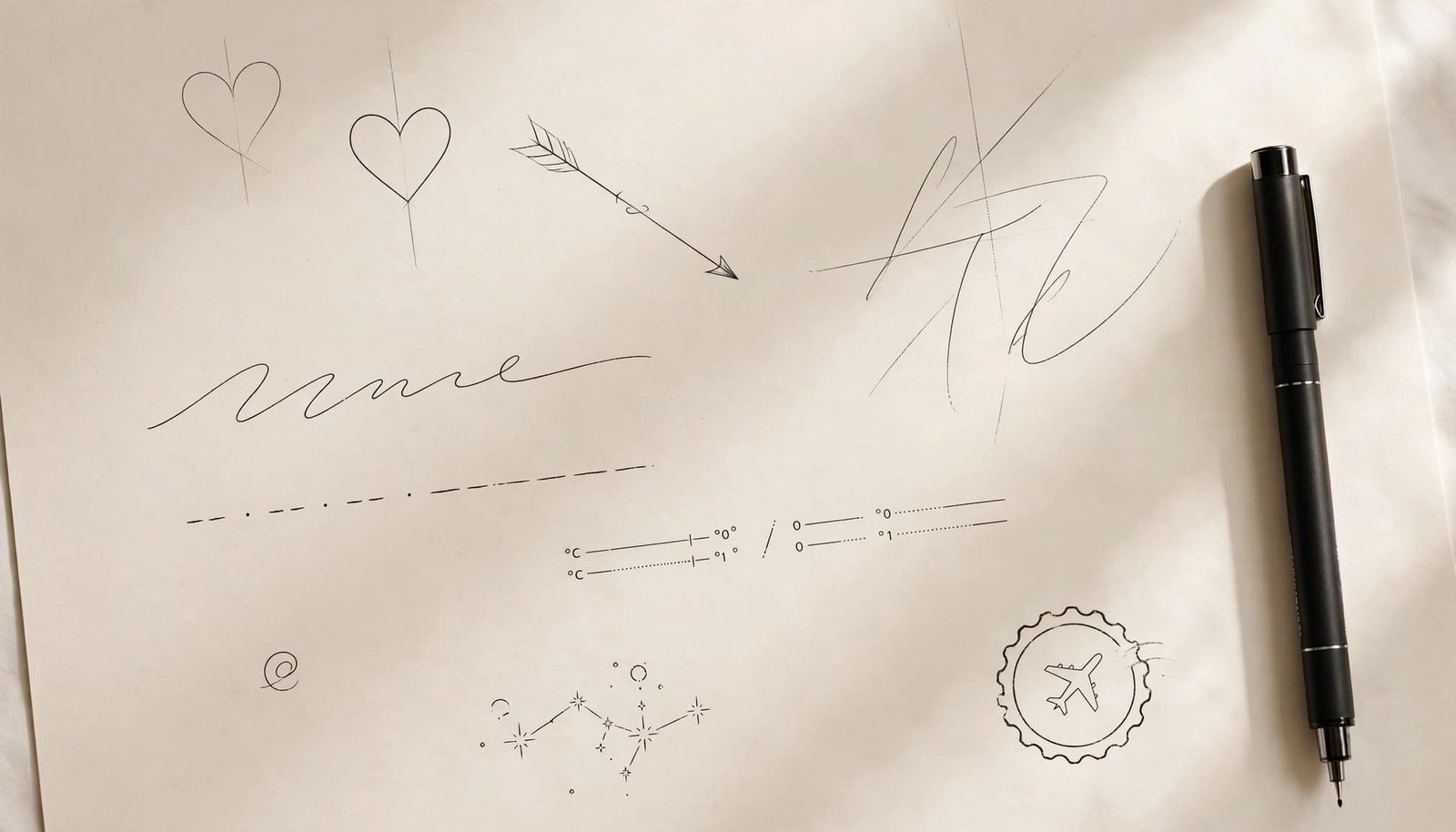
Tiny words and symbols with a story behind them
- A handwritten word can preserve a loved one’s penmanship, a phrase from your journal, or a single word connected to healing, hope, home, or courage. Ask your tattoo artist to work from an actual handwritten sample rather than a decorative font. The inner wrist or inner forearm gives a short word enough visibility without making it feel oversized.
- A meaningful date in delicate numbers can honor a birthday, anniversary, turning point, or day connected to a personal achievement. Use the format that feels natural to you, whether that’s simple numerals, Roman numerals, or a date separated by small dots. Check every number before your appointment, especially if the design includes a date that carries emotional importance.
- Coordinates of a special place can point to a hometown, favorite travel destination, family home, or location where an important chapter began. They have a private quality because most people won’t understand them at a glance. Keep the coordinate string short and evenly spaced, then place it along the ribs, collarbone, or inner forearm.
- A tiny initial offers a subtle way to honor yourself, a family member, a partner, or someone you carry in memory. One carefully drawn letter usually stays clearer than a full name in a very small design. Try a fine serif, simple script, or handwritten initial, but confirm the letter’s shape in the stencil before the needle touches skin.
Short text generally ages better than long quotes in a fine line style. As ink softens over time, tight gaps can close and thin strokes can lose definition. Choose simple lettering, adequate spacing, and a size that suits the body area instead of forcing a long sentence into a tiny space.
Ask your artist to print the final wording and create a stencil at the intended size. Read every letter, number, punctuation mark, and space on your skin before the tattoo begins.
Minimal icons that say a lot with very little ink
- A minimalist heart can honor love, friendship, family, self-acceptance, or a season of emotional recovery. Add a birth star, one tiny dot, or a custom break in the outline to make the familiar shape feel like yours. Behind the ear keeps it discreet, while the collarbone gives the heart a graceful, visible position.
- A small arrow can suggest direction, travel, persistence, or a decision to keep moving. Customize it with an unusual fletching detail, a short line from a favorite map, or a tiny star at the tip. The ankle and inner wrist work well for a compact arrow with a clear silhouette.
- A travel stamp outline can recall a favorite destination without copying a detailed postcard image. Use the outer shape of a passport stamp, then add one simple landmark outline or destination-inspired detail. Keep the interior mostly open, especially when placing it behind the ear or near the ankle.
- An astrology-inspired symbol might feature a zodiac glyph, moon phase, birth star, or simple planetary mark. Personalize it with the star connected to your birth date or a custom line detail drawn by your artist. The nape of the neck, ribs, and collarbone provide balanced placements for these airy designs.
Before choosing a religious or traditional symbol, research its meaning and cultural context. A respectful starting point is this guide to tattoos and religious symbolism, especially when the design comes from a tradition outside your own.
Animals, Abstract Lines, and Delicate Designs With Movement
The final ten ideas bring fine line tattoos to life through open silhouettes, flowing curves, and shapes that invite interpretation. Compact symbols can fit neatly on the inner forearm or ankle, while longer designs need room to stretch across the shoulder, ribs, thigh, or collarbone.
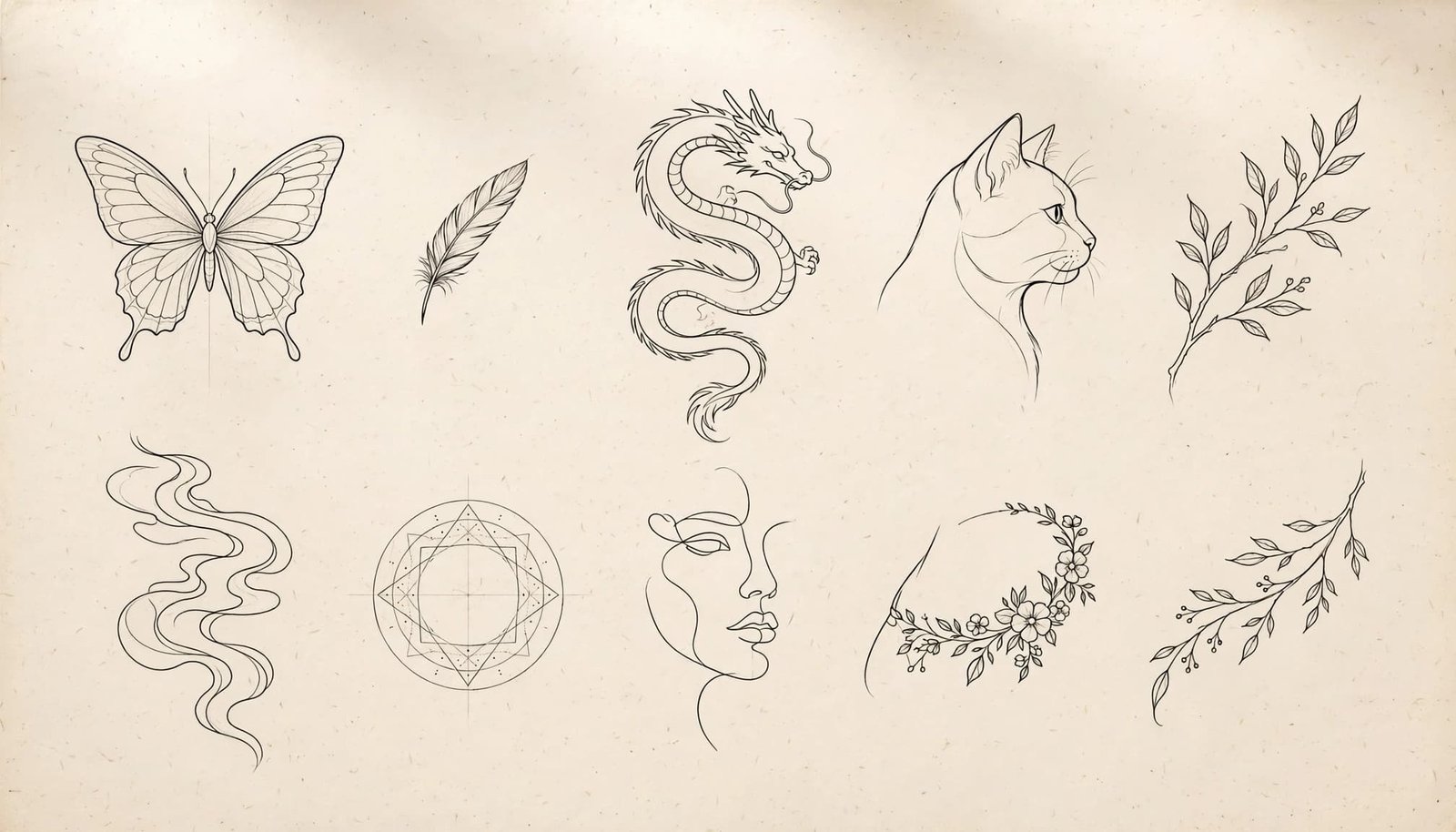
Animal outlines that capture character without heavy shading
- A butterfly outline feels light and recognizable through its wing shape alone. Let the upper wings curve outward and keep the interior sections open, with only a few balanced lines for structure. The inner forearm or shoulder gives this compact design enough visibility without making it feel crowded.
- A tiny feather relies on its long central shaft and gently angled barbs. Leave small gaps between the lines so the feather stays airy as the tattoo ages. The rib area or inner ankle can suit this narrow shape, especially if you want a design that follows the body’s natural length.
- A fine line dragon can look graceful rather than fierce when you use one curved silhouette, a pointed snout, a wing shape, or a few carefully placed scale marks. Avoid packing every feature into a tiny space. A dragon usually needs the upper arm, thigh, ribs, or shoulder if you want its body, wings, and face to remain clear.
- A cat or dog profile can capture a beloved pet with surprisingly few strokes. The angle of the muzzle, the shape of one ear, or a familiar forehead curve may be enough to make the outline recognizable. Use a reference photo with a clean side view, then place the portrait on the upper arm or inner forearm where its details have room to breathe.
Small tattoos still need spacing and restraint. The NIH-hosted tattoo aftercare review notes that friction can irritate healing skin, so avoid tight clothing and rubbing while the tattoo heals. Fingers, hands, and the tops of the feet often need more frequent touch-ups because they experience constant movement, washing, and contact.
Flowing and abstract linework made for the body’s natural shape
- A flowing branch can begin near the shoulder and taper toward the collarbone, or curve along the outer thigh like a stem caught in a breeze. Keep the leaves uneven in size to create a natural rhythm. One small blossom can add focus without turning the branch into a dense botanical piece.
- A river-like line uses bends, pauses, and changing width to suggest water, a winding trail, or a personal path. Its meaning stays open, which lets you attach your own memory to the shape. Try it along the ribs or forearm, where a longer line can travel without abrupt breaks.
- A geometric circle offers a clean contrast to organic designs. Leave the circle open in one place, add a small orbiting dot, or interrupt the edge with a short angled line. The shoulder, ankle, or inner forearm can hold this compact symbol with a balanced amount of negative space.
- A single-line face turns one continuous curve into a profile, closed eye, nose, and lips. Place the face along the collarbone or upper arm so its long sweep follows the body instead of sitting stiffly on the skin. Ask your artist to test the direction carefully, since a small change can alter the expression.
- A delicate floral ankle wrap can circle the ankle with thin stems, tiny leaves, and one or two open blooms. Keep the flowers separated enough to remain legible, and plan the meeting point so it looks intentional from every side. Wraparound tattoos should be checked from the front, back, and both profiles, not only from the mirror-facing angle.
- A collarbone branch extension can start as a small floral tattoo near the chest and continue toward the shoulder. The branch should follow the collarbone’s gentle slope, with leaves placed to echo its natural curve. This longer design needs more space than a compact butterfly or feather, but the result can feel personal and fluid without heavy shading. After healing, protect exposed ink with broad-spectrum SPF 30 or higher to help reduce fading.
How to Choose the Right Placement for a Delicate Tattoo
Placement shapes how your fine line tattoo looks, feels, and ages. Before choosing a spot, consider the design’s direction, your daily movement, workplace preferences, pain tolerance, and how often the area sees sunlight or friction.
Match the design to movement, visibility, and skin space
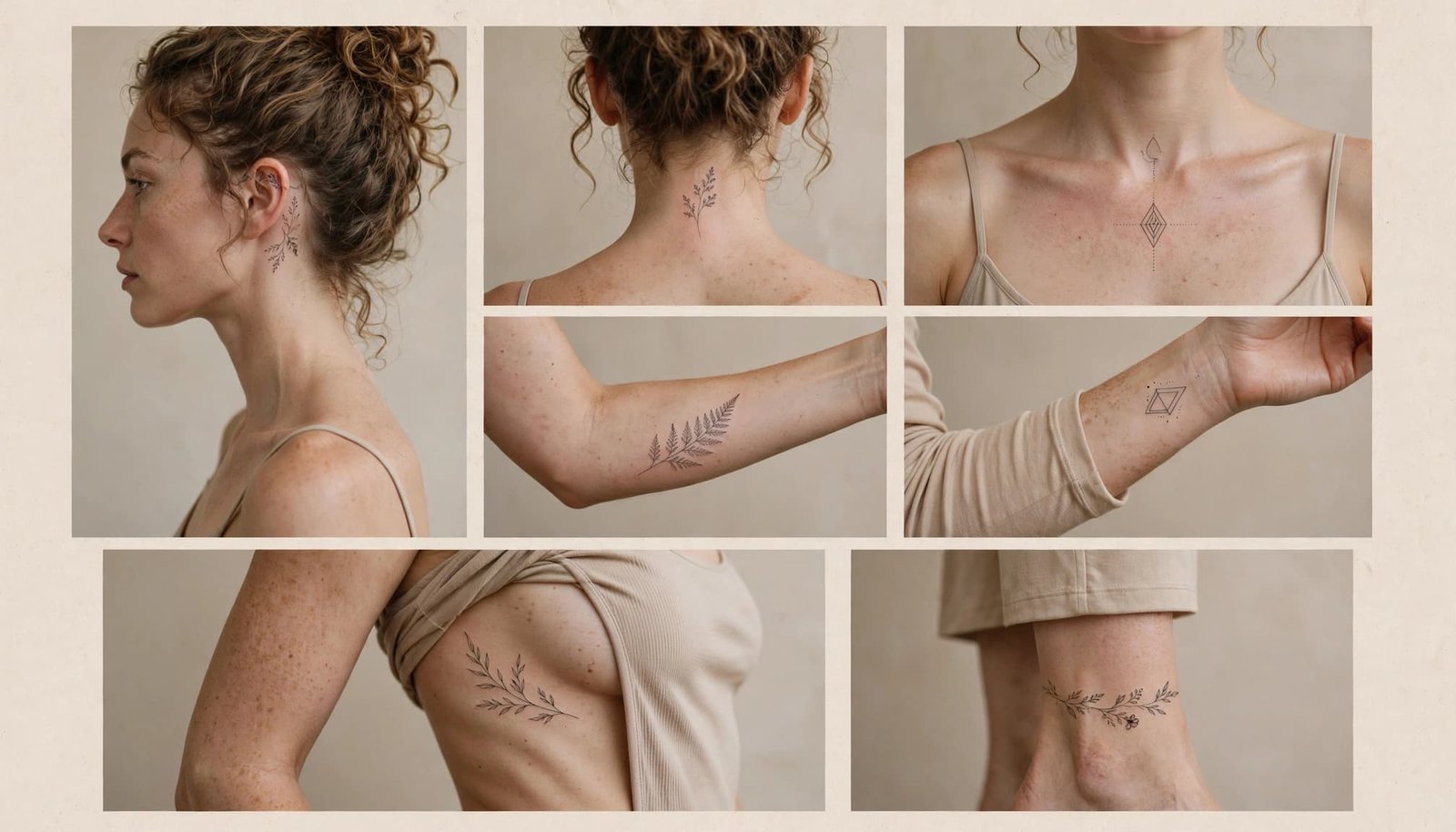
Vertical designs suit the inner forearm, upper arm, and ankle because these areas give a narrow shape room to stretch. The inner forearm and upper arm also offer relatively flat skin, which helps an artist keep long lines clean and evenly spaced. Horizontal designs can follow the collarbone, ribs, or shoulder, while wraparound vines need enough space to look balanced from the front, side, and back.
Compact designs, such as tiny hearts, stars, initials, or symbols, work well on the wrist and behind the ear. The wrist keeps a small reminder within your view, while behind the ear offers a discreet symbol that you can cover with your hair when needed. A longer phrase or fine botanical line can look elegant along the ribs, where the design remains more private. Meanwhile, the collarbone creates a graceful statement that shows with open-neck clothing.
Use this quick guide when comparing placements:
- Choose the inner forearm for readable words, dates, and longer designs.
- Choose the wrist for a tiny symbol or personal reminder.
- Choose the ribs for private text or a longer flowing tattoo.
- Choose the collarbone for an elegant, visible statement.
- Choose behind the ear for a discreet symbol.
- Choose the ankle for a small vine, feather, arrow, or botanical shape.
Your artist should evaluate your actual skin, not rely only on a reference photo. Muscle shape, scars, freckles, bone structure, and natural creases can change how the stencil sits. Test the design with a temporary tattoo or ask to see the stencil from several angles before committing.
Where fine line tattoos age fastest
Fingers, palms, hands, feet, and some ankle placements often need more maintenance. Frequent washing, gripping, rubbing, sock pressure, and constant movement can cause delicate lines to fade or blur sooner. High-friction areas may also heal unevenly, especially when clothing or footwear repeatedly touches fresh ink. Common tattoo fading causes include both sun exposure and repeated friction.
No placement guarantees perfect lines forever. Skin type, ink depth, artist technique, sun exposure, healing, and aftercare all affect the final result. Ask your artist how the tattoo may soften as it heals, then protect healed exposed ink with broad-spectrum SPF 30 or higher. Fresh ink needs your artist’s aftercare instructions, especially regarding sunlight, rubbing, and soaking.
Fine Line Tattoo Healing, Aftercare, and Long-Term Upkeep
Fine line tattoo aftercare protects the light, precise marks that make these designs so appealing. During healing, your tattoo may look darker, duller, patchy, or less even than expected. Give the skin time before judging the finished design.
What to expect during the first three months
During the first 24 to 48 hours, mild redness, swelling, tenderness, and a small amount of clear fluid can occur. The area may feel warm, similar to a shallow scrape. Follow your artist’s instructions for removing the bandage or wrap, since breathable film, adhesive coverings, and traditional dressings each require different timing.
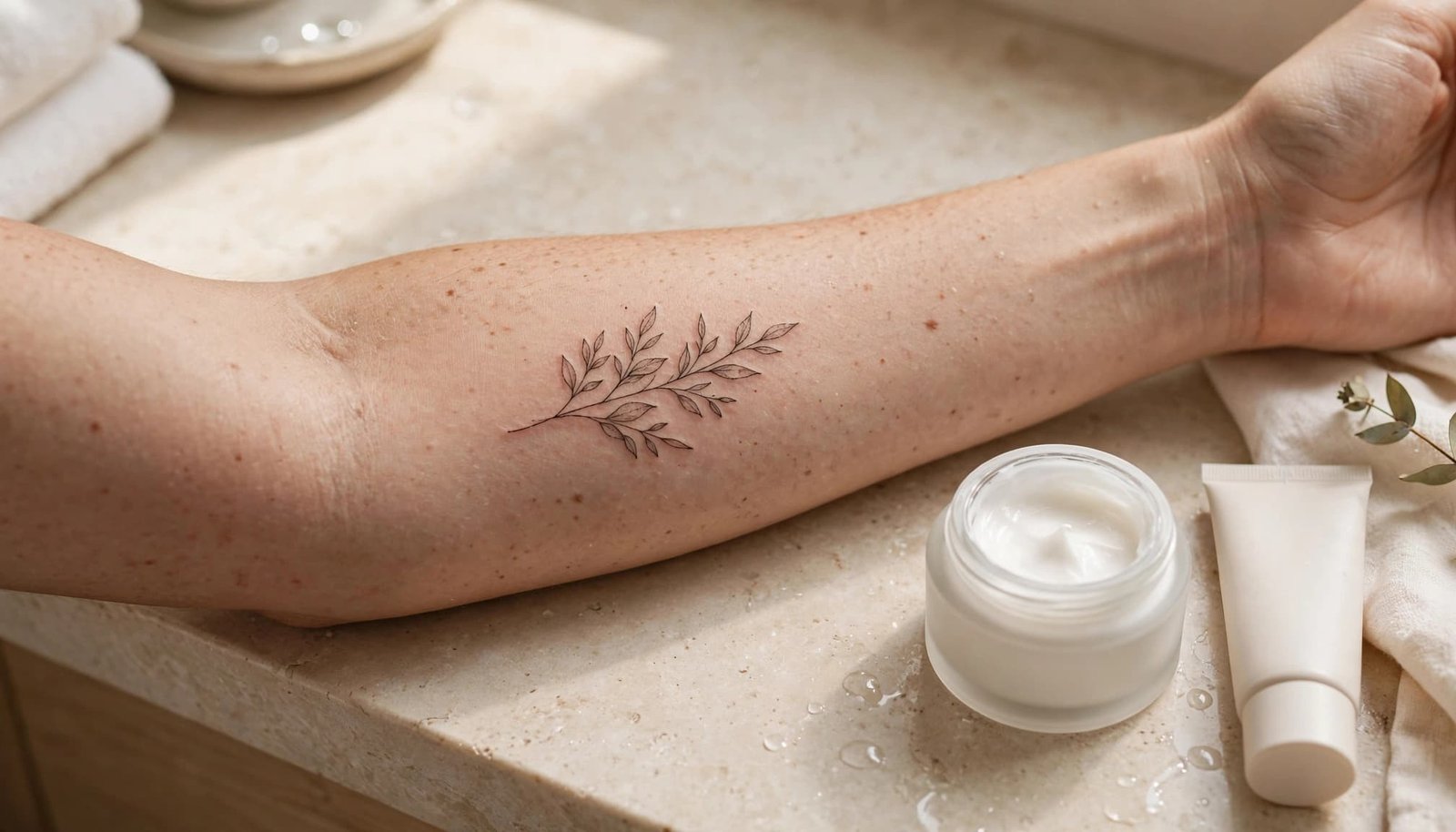
After the wrap comes off, wash your hands first. Then clean the tattoo with lukewarm water and mild, fragrance-free soap. Pat it dry with a clean paper towel or soft towel, and apply a thin layer of fragrance-free moisturizer. Too much product can leave the skin overly wet and interfere with normal healing.
Peeling, flaking, itching, and light scabbing often appear over the next several days and may continue for about two weeks. Don’t pick scabs or scratch peeling skin, even when the itch feels persistent. Avoid soaking, swimming, hot tubs, and heavy sweating until the tattoo has healed. Loose clothing can also reduce rubbing against fresh ink.
A healing fine line tattoo can look uneven before it settles. Wait until the skin feels smooth and fully healed before deciding whether the design needs attention.
The deeper healing process continues beneath the surface for several weeks and may take several months to settle completely. Fine lines can look lighter, softer, or slightly blurred once the outer layer of skin recovers. Follow your artist’s product and bandage directions throughout the process, because aftercare methods vary by tattoo size, placement, ink, and covering.
How to help delicate lines stay clear for years
Once the skin has healed, protect exposed ink with broad-spectrum sunscreen. The American Academy of Dermatology recommends water-resistant SPF 30 or higher, applied before sun exposure and reapplied regularly. SPF 50 or higher is a practical choice for tattoos that spend long periods outdoors. See the AAD’s guidance on protecting tattooed skin for additional sun-care details.
Gentle skincare and less friction also help. Avoid harsh scrubs, repeated rubbing, and tight clothing over the tattoo. Many fine line tattoos stay attractive for years, but ink naturally softens and fades with time. Placement, sun exposure, skin changes, and daily wear all affect that process.
Wait until the tattoo has fully healed before assessing its final appearance. If a line looks faint or uneven afterward, schedule a professional review with your artist instead of adding ink too quickly. Touch-ups may help, but unnecessary reworking can irritate the skin and make delicate areas look heavier.
Choose a licensed, hygienic studio from the beginning. Seek medical advice if redness spreads, pain becomes severe, pus appears, fever develops, or the tattoo seems to worsen instead of healing.
Conclusion
Fine line tattoos feel most special when a simple outline carries a memory, belief, or personal detail. The strongest design is not always the smallest one. Giving delicate lines enough space can help them stay readable and graceful as the tattoo heals and ages.
Save a few ideas that catch your eye, then refine the meaning, placement, size, and spacing with an experienced fine line artist. Review the stencil carefully before your appointment, follow proper aftercare while the skin heals, and use broad-spectrum SPF 30 or higher on exposed tattooed skin once it has fully healed.
Your tattoo doesn’t need to copy a reference exactly to feel delicate or personal. The most beautiful fine line tattoos fit the body naturally, carry a detail that belongs to you, and come together with patience.
Save the pin for later

- 30 Delicate Fine Line Tattoo Ideas to Copy - September 15, 2026
- 25 Gorgeous Floral Tattoo Ideas With Meaning and Style - September 15, 2026
- 30 Lotus Flower Tattoo Ideas With Meaning and Symbolism - September 14, 2026
Leave a Reply