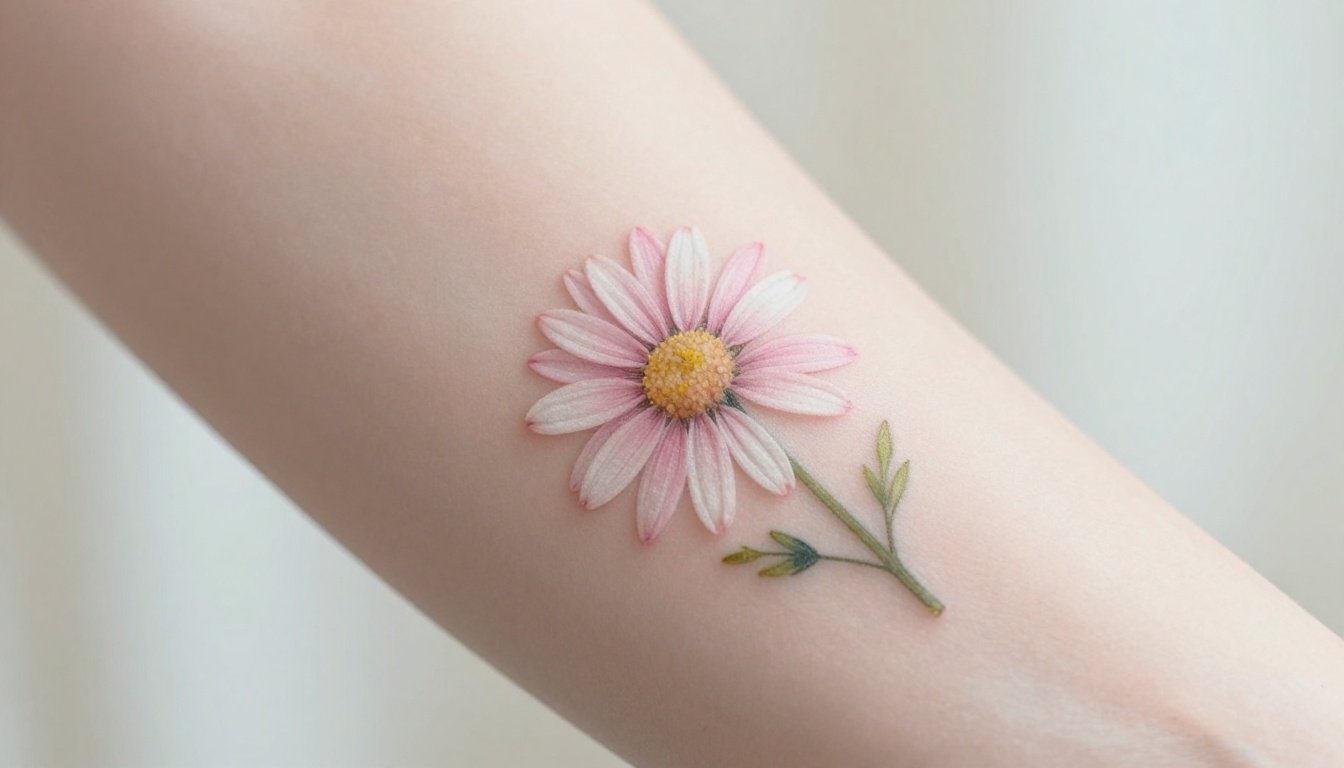
15 Pretty Daisy Tattoo Ideas for a Soft, Personal Look
Daisies make beautiful tattoos because they feel gentle and bright without carrying a message that’s too serious. Their simple petals are easy to personalize, whether you prefer a tiny minimalist bloom, a soft splash of color, or a detailed floral design with leaves and other meaningful elements.
These flowers often symbolize innocence, purity, hope, loyal love, and new beginnings. A daisy can honor a fresh start, celebrate a cherished relationship, or add a small reminder of joy to your everyday life. Its clean shape also gives you plenty of freedom with size, color, linework, and placement.
This collection of 15 pretty daisy tattoo ideas includes designs for wrists, ankles, shoulders, ribs, and more. As you compare each concept, you’ll also find practical guidance on tattoo style, color choices, placement, size, longevity, and basic aftercare, so you can choose a design that still feels right years from now. Start with these thoughtful daisy tattoo ideas and see which one fits your story.
15 Pretty Daisy Tattoo Ideas for a Soft, Personal Look
The first five daisy tattoo ideas range from barely-there linework to a cheerful color design. Each one can stay delicate while carrying a personal detail, such as a meaningful initial, a favorite placement, or a symbol of a new beginning.
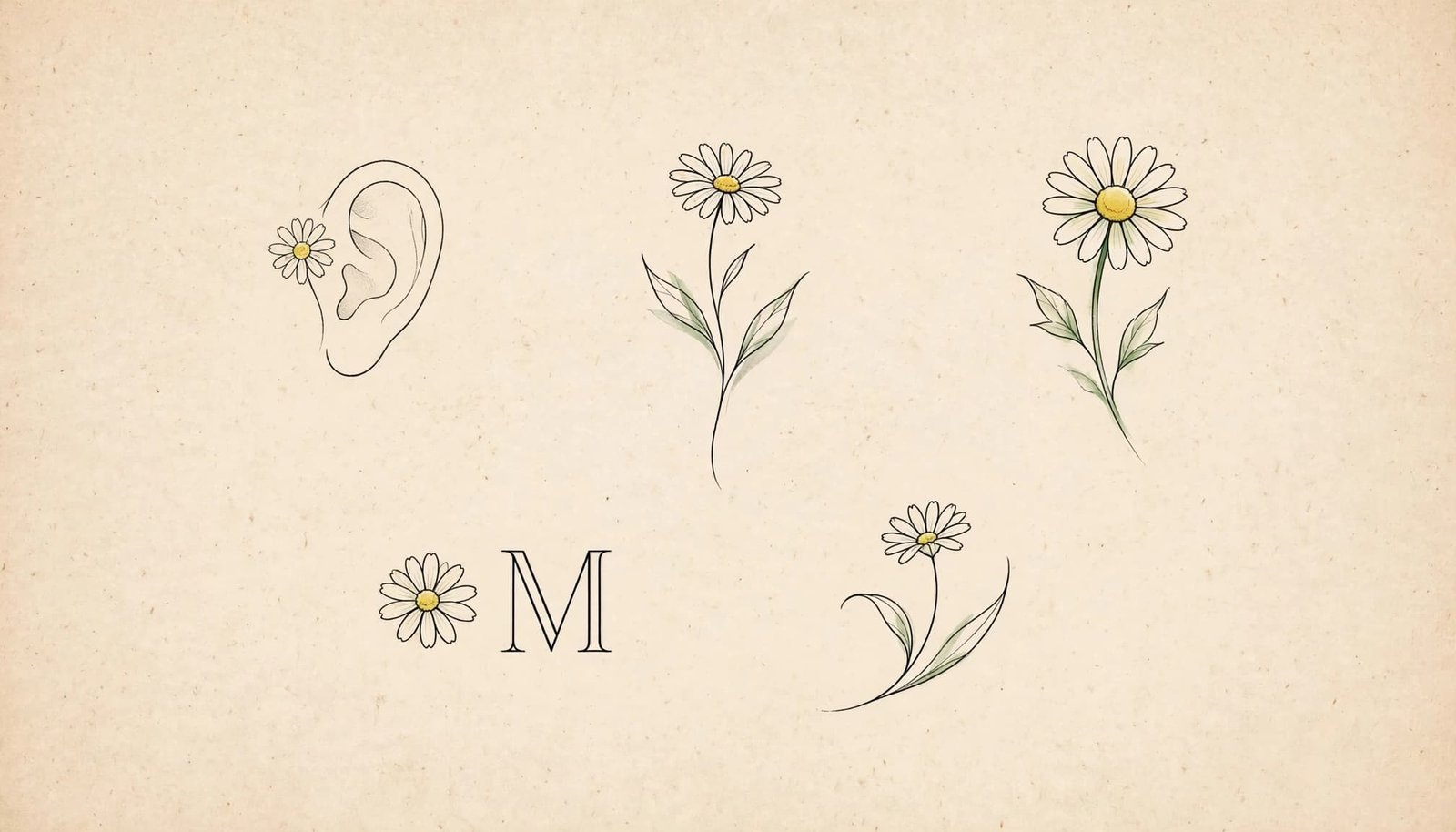
A Tiny Single Daisy Behind the Ear
A tiny daisy measuring about 0.5 to 1 inch has a clean outline, a few open petals, and a small center. Its petite scale gives the flower a private quality, although you can reveal it by tucking your hair behind your ear. This makes it a sweet choice for someone who wants a tattoo that feels personal without becoming the first thing people notice.
Ask your artist to simplify the petals rather than squeeze in fine shading. Tiny details can blur as ink settles, so clear spacing helps the flower remain recognizable over time. Behind-the-ear tattoos can also feel more sensitive than tattoos on the arm because the skin is thin and close to bone. Choose an artist who can work carefully at this small scale.
A Fine-Line Daisy With a Graceful Stem
A single black or black-and-gray daisy looks graceful with a thin stem and one or two narrow leaves. The stem can suggest growth, staying rooted, or continuing forward after a difficult season. Because the design is vertical, it can follow the body’s natural lines instead of sitting like a separate sticker.
The inner forearm, wrist, collarbone, and rib area all suit this style. A 2- to 4-inch design gives the stem enough room to remain delicate without crowding the petals. Fine-line tattoos require control and thoughtful spacing, so choose an artist with a strong portfolio of healed fine-line work, not only fresh photographs.
A Classic White Daisy With a Golden Center
White petals, a yellow center, and an optional green stem create the most recognizable daisy tattoo. The combination feels sunny and natural, with associations of purity, optimism, and fresh starts. It can look especially lovely on the shoulder, upper arm, ankle, or outer forearm, where the flower has enough space to breathe.
Soft gray shading or a fine outline can separate the white petals from your skin and help the bloom stay readable. Color can fade with sun exposure, especially in a small design. After the tattoo heals, the American Academy of Dermatology’s sun-care guidance recommends broad-spectrum, water-resistant SPF 30 or higher.
A Small Daisy With a Meaningful Initial
Add one discreet initial beside the stem, inside a leaf, or beneath the bloom for a personal touch. The letter might honor someone you love, remember a milestone, or represent your own name. A tiny daisy paired with one character can tell a full story without making the design feel crowded.
The wrist, side of the forearm, and collarbone offer enough visibility for this idea. Keep the lettering simple, with clean strokes and enough space around it. Your initial must be large enough to stay legible, especially if the flower measures less than 2 inches. Ask your artist to show the complete design at its intended size before the appointment.
A Minimalist Daisy With a Single Curved Leaf
One curved leaf gives a basic daisy a more organic shape without making the tattoo busy. Minimalist blackwork, open space, and a balanced outline create a calm, feminine look for anyone who prefers understated body art over heavy detail.
Try this design on the wrist, ankle, upper arm, or side of the forearm. A size between 1 and 2.5 inches usually gives the petals and leaf enough separation. Keep the center simple, and let the curved leaf provide most of the movement. That small gesture can make the flower feel drawn from nature rather than copied from a symbol.
Daisy Tattoo Ideas That Turn Simple Blooms Into a Story
A daisy becomes more personal when you pair it with a second image, another flower, or a shape that carries private meaning. These compositions can honor relationships, change, memory, or hope while keeping the daisy soft and recognizable. For more floral meaning ideas, browse this daisy symbolism guide before choosing your added details.
A Daisy Chain Bracelet or Anklet
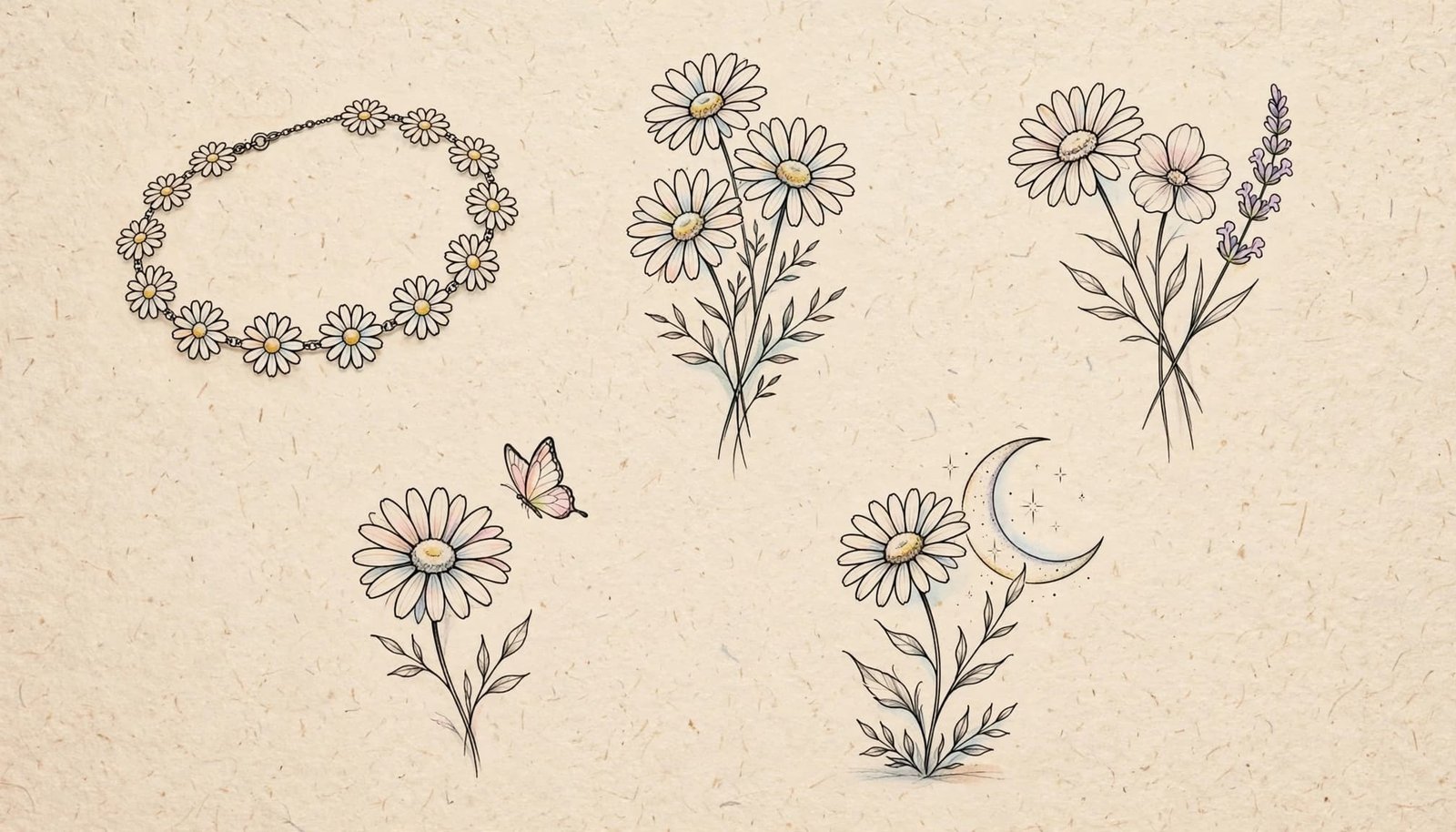
A row of connected daisies can wrap around your wrist or ankle like a soft botanical band. Each flower may symbolize a person you love, while the linked stems suggest friendship, family, or a continuous season of growth. You can also add one bloom for every important chapter in your life.
A delicate single-line chain feels light and understated. For a fuller look, choose alternating daisies and small leaves, with slightly varied flower sizes to create a more natural rhythm. Before the appointment, ask your artist to plan the wraparound design from every angle. A tattoo that looks balanced from the front may feel uneven when the wrist or ankle turns.
A Small Cluster of Three Daisies
Three daisies in different sizes create a sweet, balanced composition. Overlapping stems and leaves can make the cluster feel gathered by nature instead of arranged like separate stickers. The flowers might honor three loved ones, show different stages of life, or hold the meaning of past, present, and future.
This idea works well on the forearm, shoulder, upper arm, or thigh. Leave a little extra space between the petals, stems, and leaves, especially if the tattoo will be small. Tight details can soften together as the ink settles, while open spacing helps each bloom stay clear for years.
A Daisy and Birth Flower Bouquet
Pair a daisy with a rose, violet, marigold, or a loved one’s birth flower for a bouquet with a personal history. The two flowers might stand for two people, two identities, or different parts of one story. A daisy could honor your own birth month while the companion bloom represents a partner, child, parent, or close friend.
Research the companion flower’s symbolism before settling on the design. Meanings can vary across cultures and traditions, so your own connection matters most. Ask the artist to give the daisy enough open space around its petals and center. The second flower should add meaning without making the main bloom difficult to recognize.
A Daisy With a Butterfly or Bee
A small butterfly near a daisy adds movement and can suggest transformation, freedom, or a new stage of life. A bee brings a different mood, with possible connections to community, effort, sweetness, or a busy season that shaped you. These meanings are personal, so choose the insect because it fits your experience, not because of a fixed definition.
Place the design on the shoulder, forearm, calf, or upper back. Keep the insect slightly smaller than the flower, and use its flight path to guide the eye through the composition. Fine wings or stripes need enough room to remain readable, so avoid squeezing both elements into a tiny space.
A Daisy Growing From a Crescent Moon
A daisy emerging from or resting beside a crescent moon blends bright daytime imagery with a dreamy night symbol. This pairing may suit someone who connects the flower with hope, healing, intuition, or a new beginning after a difficult period. The moon can frame the daisy without competing with its open petals.
Fine-line blackwork keeps the design airy, while subtle gray shading gives the moon gentle depth. You could also add one small touch of color to the flower’s center or petals. Leave clear separation between the moon and bloom, because crowded outlines can turn both shapes into one dark patch as the tattoo ages.
Pretty Daisy Tattoo Designs With More Detail and Personality
Once you move beyond a single small bloom, a daisy tattoo can feel more like a scene than a symbol. These larger concepts leave room for graceful stems, airy spacing, soft color, and details that connect the flower to your own story.
A Loose Daisy Bouquet With Wildflower Details
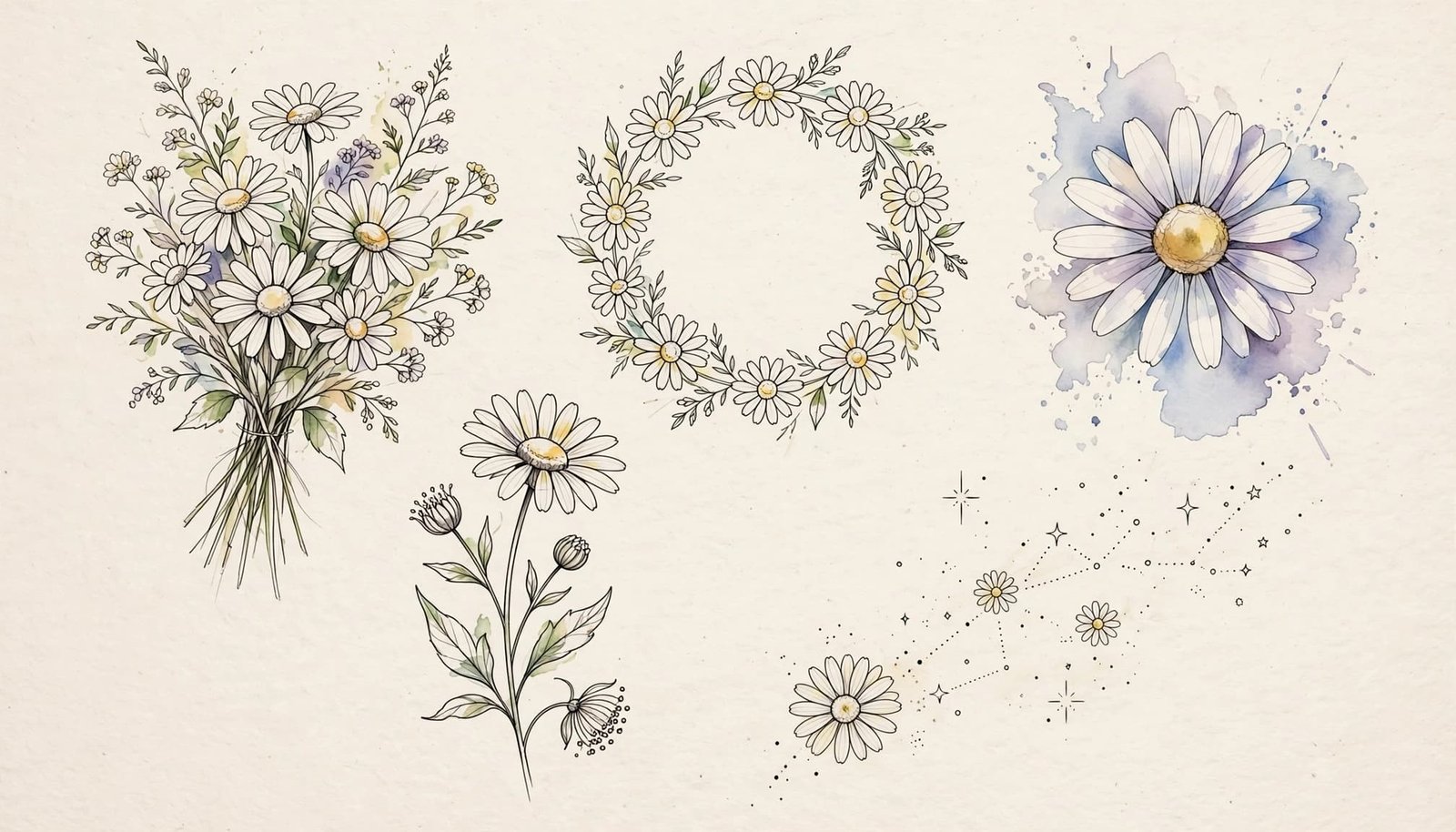
A relaxed bouquet can include several daisies, slender stems, small leaves, and a few supporting wildflowers. Let the blooms sit at slightly different angles instead of lining them up evenly. That organic arrangement feels softer and less formal than a perfectly symmetrical bouquet, as though you gathered the flowers during a walk.
The shoulder blade, outer upper arm, thigh, and forearm provide enough room for the stems and smaller details. Bring reference images that show the mood, flowers, and linework you like, but ask your artist to create an original arrangement. Your tattoo should feel inspired by your references without copying another person’s design.
A Fine-Line Daisy Wreath
A circular wreath made from small daisies, narrow leaves, and open sections can frame a meaningful space on the body. The shape may symbolize wholeness, remembrance, protection, or a chapter that has come full circle. You could leave the center empty, add a small initial, or place a simple symbol inside.
Choose the upper arm, chest, back, or thigh based on the scale you want. A larger wreath allows more breathing room between the petals and leaves. Open space is essential, because tightly packed flowers can turn into a dark, crowded ring as the ink settles. Ask to see the design at its actual tattoo size before approving it.
A Watercolor-Style Daisy With Soft Color
Loose washes of white, yellow, green, lavender, or blue can give a daisy tattoo a light, airy mood. Color may extend slightly beyond the petals or leaves, creating the impression of paint brushed across paper. A thin outline or clear flower structure helps the design remain readable when the color softens over time.
Watercolor tattoos require careful planning, especially when pale shades form the main structure. Look for an artist whose portfolio includes healed color tattoos, not only fresh work photographed immediately after the appointment. You can also ask how the artist balances soft washes with enough contrast to keep the daisy recognizable.
A Botanical Daisy Illustration With Leaves and Seeds
For a more naturalistic design, show the entire flower, including the stem, leaves, flower head, a few loose seeds, or tiny unopened buds. These details can suggest a full life cycle, with growth, change, and the beauty found in imperfect stages. A bent stem or uneven petal shape may make the tattoo feel more personal than a flawless, graphic bloom.
The forearm, calf, thigh, and shoulder blade suit this vertical illustration. Larger placement gives the artist room to draw delicate veins, seed shapes, and fine botanical texture without forcing every detail into a tiny space. Black ink with light gray shading keeps the image gentle while preserving its natural character.
A Personalized Daisy Constellation
Several small daisies arranged with dots, tiny stars, or a subtle constellation pattern can honor family members, a meaningful date, or your personal sense of direction. Each flower might stand for someone important, while the connecting points create a quiet map of your relationships or milestones.
Keep the celestial details sparse so the daisy remains the focus. Black ink creates a clean, timeless look, while one restrained accent color in each flower center adds warmth without making the design busy. The upper back, collarbone, outer forearm, ribs, or thigh can hold this composition comfortably, depending on whether you want it visible or more private.
How to Choose the Right Daisy Tattoo Style, Color, and Size
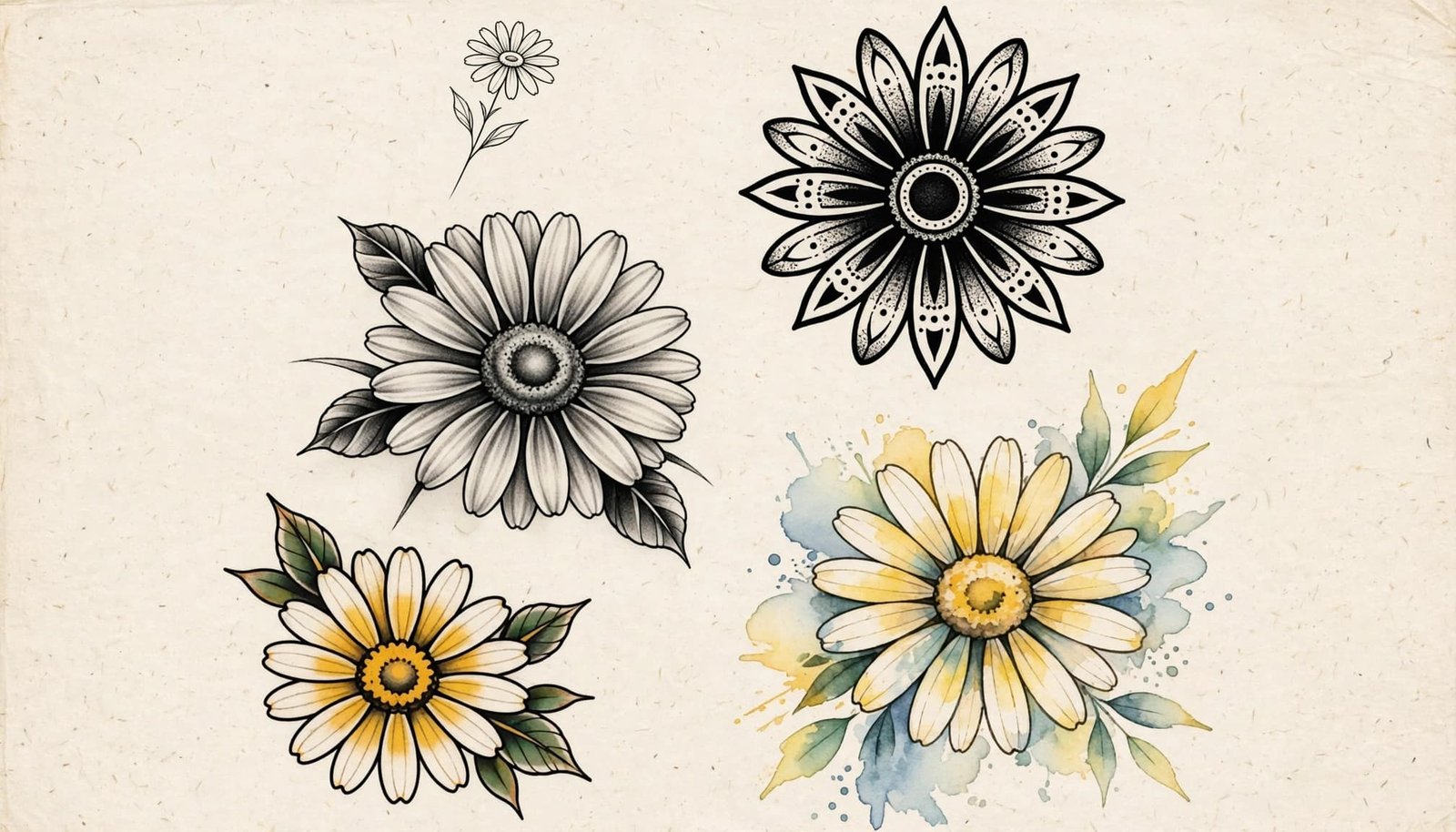
The prettiest daisy tattoo is one that matches both your personality and your plans for wearing it. Before choosing a reference image, decide whether you want a barely-there bloom, a bold botanical piece, or a soft color design with more visual presence.
Match the Design to the Meaning You Want to Carry
Daisies often suggest innocence, loyal love, friendship, healing, hope, remembrance, or a new beginning. Those meanings can help you choose a direction, but they aren’t rules. A daisy from your grandmother’s garden may carry more meaning than any traditional flower dictionary.
Start by writing down the feeling, person, or story you want the tattoo to hold. Then choose an arrangement that supports it. A single open bloom can express hope or innocence, while linked stems may suit friendship or family. A daisy growing beside a moon, birth flower, or small initial can speak to healing, remembrance, or a fresh chapter.
Your story should guide the symbolism, not the other way around. Ask yourself:
- Do you want the tattoo to feel private, cheerful, romantic, or reflective?
- Should the flower honor someone, celebrate change, or remind you of your own strength?
- Would one daisy feel honest, or would a small cluster better show the people or memories involved?
Fine-line and black-and-gray designs create a quiet, graceful mood. Blackwork offers stronger contrast, while traditional color makes the flower feel sunny and immediate. Watercolor-inspired shading can feel soft and artistic, although pale color may need more care and touch-ups over time.
Choose Details That Will Age Well
Size affects nearly every design decision. A tiny daisy usually needs fewer petals, minimal shading, and very simple lettering. At 2 to 4 inches, the artist has more room for leaves, curved stems, companion flowers, or small symbolic details without forcing them together.
Very tiny gaps, crowded petals, ultra-thin lines, and miniature lettering can soften as ink settles. Sun exposure, friction, normal skin changes, and gradual ink migration can reduce sharp edges over the years. A slightly larger, simpler tattoo often stays clearer than an overly detailed micro tattoo.
Color brings a different tradeoff. The classic white-and-yellow palette is instantly recognizable, but white and pale yellow can fade faster than black outlines or darker accents. Muted lavender, dusty blue, sage green, and warm ochre create a gentler look, while richer colors give the flower more contrast. If you want color to last with stronger definition, ask about a dark outline or deeper center.
Ask to see healed tattoos at a similar size and style. Fresh ink shows the artist’s technique, but healed work shows how spacing, color, and line weight actually hold up.
Finally, choose an artist for more than a beautiful social media feed. Look for healed examples, clean studio practices, and clear experience with your preferred style. The Mayo Clinic’s tattoo safety guidance also recommends considering infection risks and proper precautions before booking. Ask whether the studio uses sterile, single-use needles, fresh gloves, clean surfaces, and single-use ink caps. A careful consultation should include how the design may look after several years, not only how it will appear on appointment day.
Best Daisy Tattoo Placements for Tiny Blooms and Larger Bouquets
The best daisy tattoo placement depends on more than appearance. Consider how often you want to see it, whether clothing or jewelry will rub against it, and how much room your design needs. A single flower can feel delicate on a small area, while a bouquet needs enough space for every stem, leaf, and petal to remain clear.
Small Visible Placements for a Quiet Everyday Reminder
The inner wrist keeps a tiny daisy in easy view, making it a fitting choice for a personal reminder you want to notice throughout the day. A 1- to 2-inch flower works well here, especially with a simple center and clean, open petals. Bracelets and watchbands can rub against the area, so consider how your usual jewelry fits before booking.
The ankle offers a little more room than the wrist. A 1.5- to 2.5-inch daisy can include a short stem or one curved leaf without looking crowded. Socks, boots, and shoe edges may create friction during healing, while the placement itself stays easy to cover with pants. An outer ankle design is usually more visible with shorts or sandals than one placed higher on the leg.
Behind the ear, a 0.5- to 1-inch daisy feels private and subtle. Hair can conceal it, yet tucking your hair back reveals the flower in an instant. Because the space is small and the skin is close to bone, simplified artwork is essential. Skip tiny lettering, dense shading, and numerous petals that could blur together over time. This area may also feel more sensitive, although tattoo experiences vary from person to person.
The collarbone gives a small daisy graceful visibility beneath an open neckline. A 1- to 2-inch bloom can sit beside the bone or follow its gentle curve. Necklines, bra straps, and necklaces may touch the area, so choose clothing that won’t press against fresh ink.
Sun-exposed placements need long-term protection. Once the tattoo has fully healed, the American Academy of Dermatology recommends broad-spectrum SPF 30 sunscreen, along with shade or protective clothing.
Roomier Placements for Clusters and Stems
The inner forearm is a strong choice for a 2- to 4-inch bouquet, botanical illustration, or daisy with a companion symbol. It offers good visibility and a relatively smooth canvas, while sleeves can cover the tattoo when needed. Curved stems can follow the arm’s length, and the design remains easy to view during the consultation and afterward.
For a more discreet bouquet, choose the outer upper arm. A 2- to 3-inch cluster can sit beneath short sleeves or become visible when you wear a tank top. This area gives rounded compositions room to follow the muscle, with less daily contact from watches, cuffs, and shoes.
The shoulder blade, thigh, and back suit larger wreaths, layered bouquets, and detailed botanical work. These broad areas allow petals, leaves, companion flowers, and curved stems to remain distinct. The thigh is simple to cover and offers a smooth canvas, while the shoulder blade can support a design that follows the body’s natural angle. A back tattoo provides the most space, but visibility depends on your clothing and whether you can easily check the healing skin.
Ask your artist to shape the design around your body rather than placing a flat image on top of it. A stem that follows the forearm, a wreath that curves with the shoulder, or a bouquet angled along the thigh will look more natural as you move.
Daisy Tattoo Aftercare for Clear Lines and Lasting Color
A fresh daisy tattoo needs gentle care while the skin closes and settles. Good aftercare protects fine petals, crisp stems, and pale color during the first weeks, when friction, sunlight, and bacteria can cause problems.
Your tattoo artist’s instructions should come first because bandage types, healing methods, and recommended products vary. Follow the directions for removing the covering, then use a simple routine that keeps the area clean without overhandling it.
Clean and Moisturize the Tattoo Gently
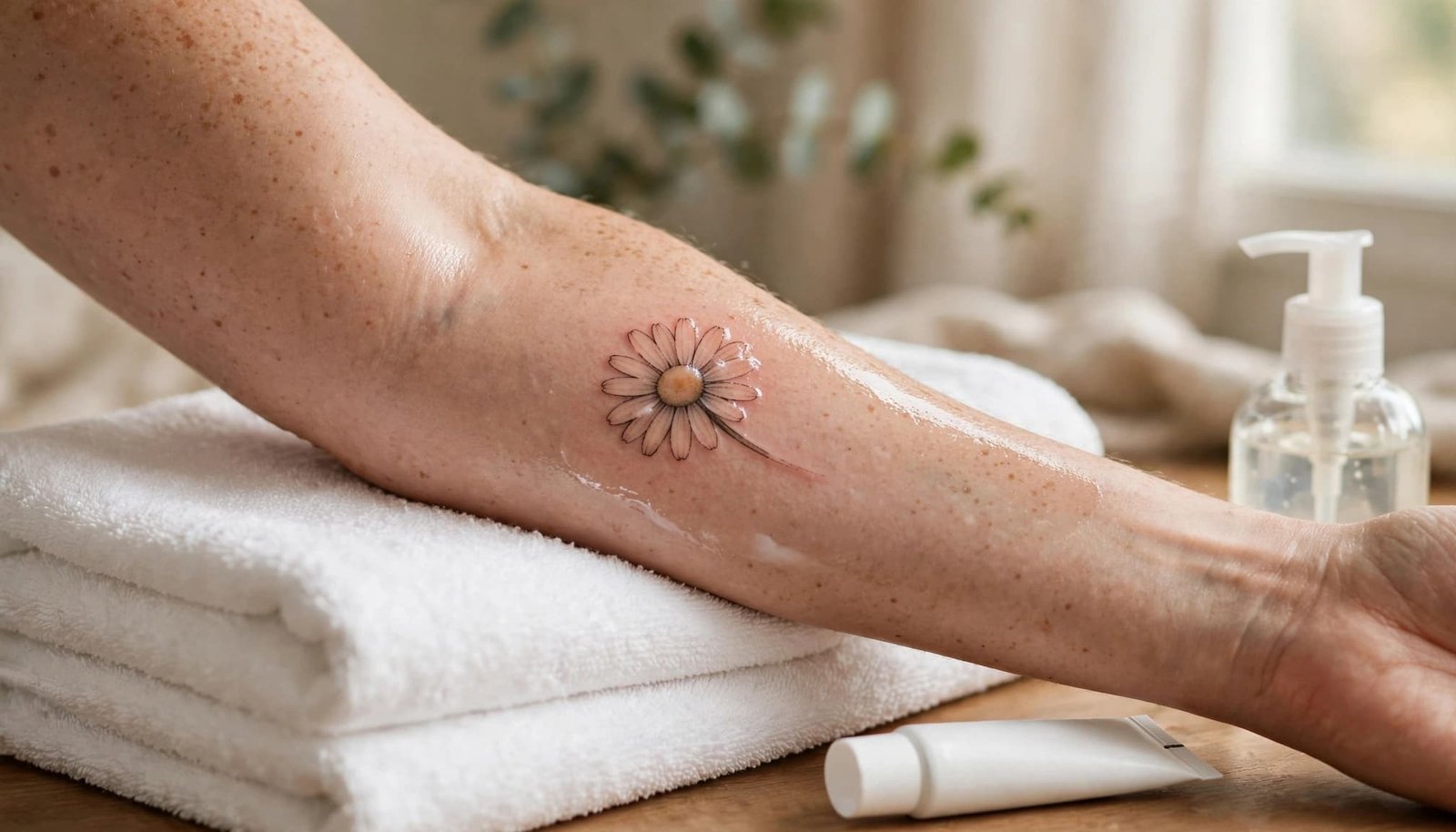
Always wash your hands before touching the tattoo. Once your artist says it’s time to remove the bandage, rinse the area with lukewarm water and gently clean it with mild, fragrance-free soap. Avoid scrubbing, exfoliating products, brushes, and rough washcloths, since friction can irritate the skin and disturb peeling areas.
Pat the tattoo dry with a clean paper towel or a fresh, soft towel. Rubbing can pull at fragile skin, so use light pressure instead. Afterward, apply only a thin layer of the moisturizer or ointment your artist recommends. Too much product can trap moisture and leave the tattoo feeling sticky or irritated.
For additional medical guidance, the Cleveland Clinic’s tattoo aftercare instructions also advises gentle cleansing and fragrance-free products. If your skin reacts to a product, stop using it and contact your artist or a healthcare professional for advice.
Protect the Design While It Heals
Loose, breathable clothing helps prevent rubbing against the fresh tattoo. Avoid tight sleeves, waistbands, socks, or straps that press against the area. You should also skip swimming, baths, hot tubs, and open water until the tattoo has healed. Water can expose healing skin to bacteria, while soaking may soften scabs and affect the ink.
Heavy sweating can also irritate a new tattoo. Pause strenuous exercise and activities that create repeated friction until the surface has closed. Don’t pick at flakes or scabs, even when the peeling feels itchy. Let the skin shed naturally so the daisy’s lines and color have the best chance to settle evenly.
Keep direct sunlight off the tattoo during healing. Don’t apply sunscreen to open or peeling skin. Once the tattoo is fully healed, protect exposed ink with a broad-spectrum, water-resistant SPF 30 or higher, and reapply it as directed during extended outdoor exposure. Sun protection helps slow fading, especially in designs with white petals, yellow centers, or other pale colors.
Know When to Seek Medical Care
Surface healing often takes several weeks, but the exact timing depends on the tattoo’s size, placement, ink, and your skin. Mild tenderness, redness, swelling, peeling, and clear fluid can occur early in the process. These symptoms should gradually improve rather than become stronger.
Contact a healthcare professional if you notice worsening redness, swelling, pain, heat, rash, pus, foul-smelling discharge, red streaks, or fever. The Cleveland Clinic lists increasing pain, swelling, redness, and fever among possible signs of tattoo infection. Prompt medical advice is safer than trying to treat a suspected infection at home.
Conclusion
A daisy tattoo can be tiny and understated or detailed enough to become a full botanical portrait. The strongest choice balances personal meaning, readable design, suitable placement, and an artist’s skill. Whether you prefer fine-line petals, soft color, a meaningful initial, or a larger bouquet, give each detail enough room to stay clear as the tattoo ages.
Save a few reference images that capture the feeling you want, then decide what the flower should represent in your own story. During your consultation, discuss the size, color, placement, line weight, and how the design may change over time. A trusted tattoo artist can help simplify crowded details and shape the daisy to fit your body naturally.
The right design will feel personal without needing to explain itself. Choose a daisy tattoo that still feels fresh, graceful, and meaningful long after the appointment.
Save the pin for later


- 40 Butterfly Tattoo Ideas for Women - September 6, 2026
- 15 Pretty Daisy Tattoo Ideas for a Soft, Personal Look - September 6, 2026
- 30 Mermaid Sleeve Tattoo Ideas for Every Style - September 6, 2026
Leave a Reply