20 Classy Tattoo Ideas for Women That Feel Timeless
A classy tattoo doesn’t need to be large, colorful, or bold to make an impact. The most refined designs often rely on clean lines, thoughtful symbols, soft placement, and enough negative space to stay readable as they heal and age.
If you’re choosing your first tattoo, finding the right balance between personal meaning and everyday style can feel overwhelming. These 20 classy tattoo ideas for women include botanical, celestial, meaningful, and minimalist designs, with options that can look delicate, discreet, or distinctly personal. Like curating a more cohesive wardrobe, choosing one intentional detail often creates a stronger look than following every trend.
Use these ideas as inspiration, then work with a professional tattoo artist to adjust the size, line weight, placement, and details for your body, skin, and lifestyle. Let’s start with the design choices that help a tattoo look polished and timeless.
20 Classy Tattoo Ideas for Women That Feel Timeless
The most polished tattoo ideas rely on restraint. Fine linework, balanced proportions, open space, limited shading, and personal meaning help a design feel elegant years after the trend has passed. Scale and customization also matter, so each idea can feel personal without being overly ornate.
Soft Botanical Tattoos With Natural Detail
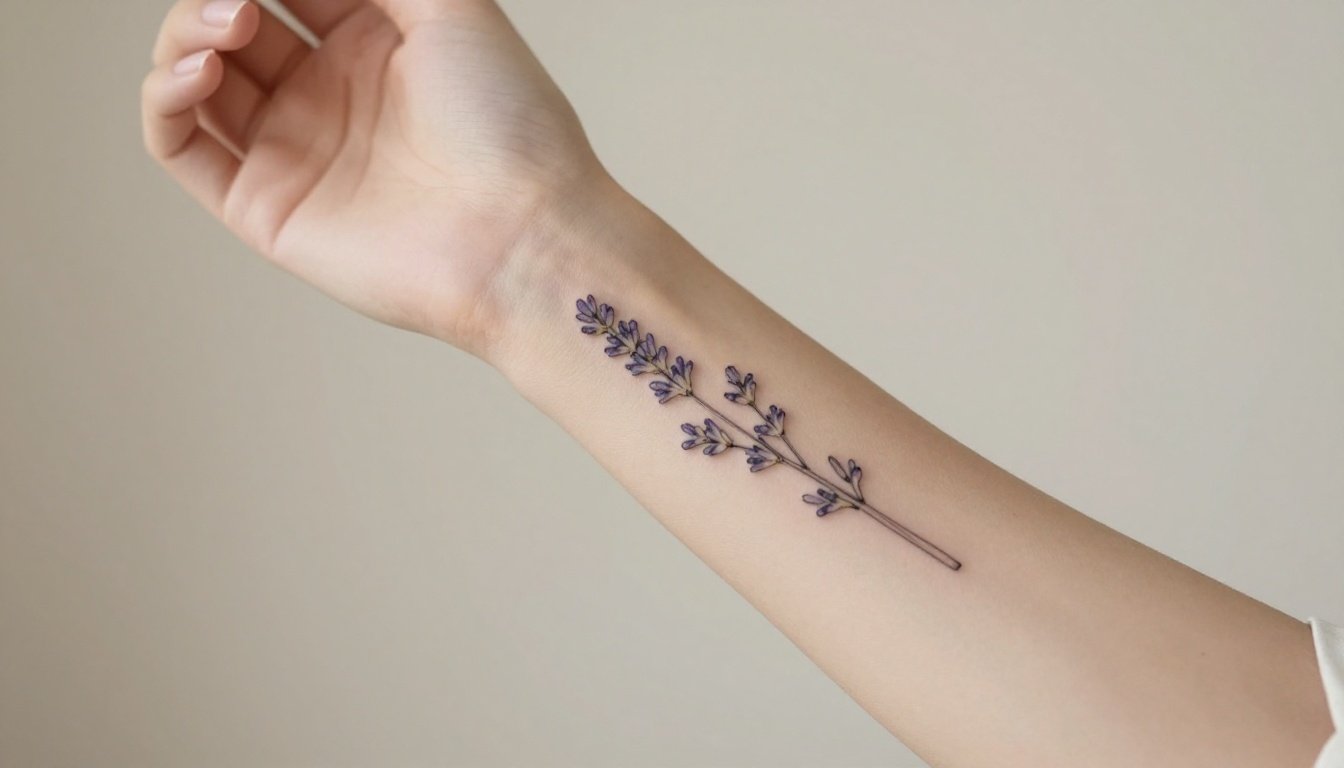
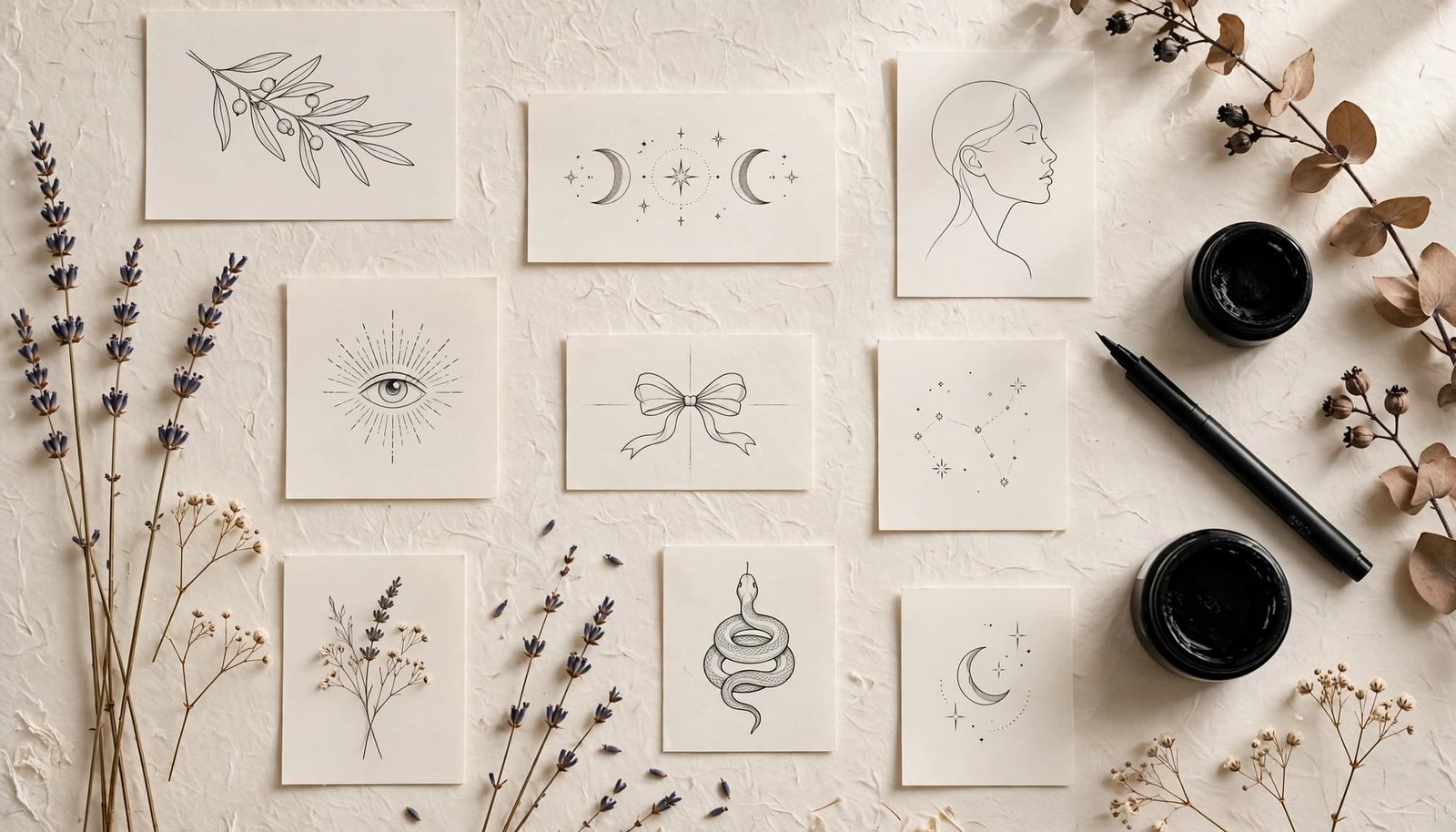
Botanical tattoos suit nearly any style because their shapes already feel graceful and organic. A single-stem rose can suggest love or self-respect, while a lavender sprig may symbolize calm, healing, or a favorite place. A delicate olive branch has a clean silhouette and can represent peace, family, or resilience.
For something more personal, choose a small wildflower cluster based on flowers from a meaningful memory. An old botanical illustration of a favorite plant can also create a classic, almost archival feel. Ask your artist to use slender stems, open space, and light black or gray shading rather than heavy outlines.
The collarbone, inner forearm, ribs, ankle, shoulder blade, and upper back all work well for botanical designs. Add a birth flower, a tiny set of initials, or a small date near the stem, but leave enough breathing room around each detail. A tattoo should read as one composed image, not a collection of additions.
Celestial Designs That Stay Simple and Refined
Celestial tattoos feel personal without needing a dense cosmic background. Moon phases can symbolize growth and change, while a tiny crescent moon with a few stars may express hope or curiosity. A fine-line sun can suggest warmth and direction, and a small planet with one orbit ring can suit someone drawn to exploration.
A constellation based on a zodiac sign or meaningful date offers another discreet option. Keep the design refined with clean outlines, restrained dotwork, and negative space. Suitable placements include the wrist, back of the neck, collarbone, shoulder, and ankle.
Very small stars and dots need enough spacing to remain clear as the tattoo ages. Your artist can simplify a constellation or enlarge it slightly if the original version feels crowded. For long-term care, protect healed ink from frequent sun exposure because UV rays can fade tattoos faster, according to Cleveland Clinic’s tattoo aftercare guidance.
Meaningful Symbols and Minimalist Line Art
Familiar symbols become more distinctive when you adjust their proportions and add one personal detail. A tiny heart outline can honor love or self-acceptance, while an infinity symbol can include a birthstone color, initial, or meaningful date. A graceful butterfly may suggest change, and a simple wave can recall the ocean, travel, or emotional steadiness.
A small key or lock design can represent trust, privacy, or a new chapter. Keep these concepts in fine black ink with clean composition and limited detail. A single word, a short date, or a subtle leaf can personalize the image without taking over its shape.
Minimalist tattoos need room to stay readable. Packing too many tiny marks into a small design can cause lines to blur together over time. When choosing a tattoo artist, review healed examples, not only fresh photographs, and confirm that the studio follows the FDA’s tattoo safety guidance.
Elegant Script and Personal Tattoo Concepts
A single meaningful word can look beautiful along the ribs, wrist, collarbone, or inner arm. A short handwritten phrase feels more intimate, especially when you use a loved one’s handwriting or a sample from a family member. Before booking, test the lettering at its actual tattoo size so every letter remains legible.
Choose words and phrases that will still matter as your life changes. Check spelling, accents, punctuation, and the artist’s stencil before the needle touches your skin. A delicate bow offers a soft, decorative option, while a minimalist portrait or profile outline can honor someone important without creating a highly realistic image.
Portrait line art requires a skilled artist, a strong reference photo, and enough space for facial or hair details. A tiny version may lose its likeness, so enlarging the design can create a cleaner result. Finally, review your design alongside your existing style, much as you would when choosing high-quality garments that last.
Fine-Line, Dainty, or Black-and-Gray: Which Style Looks Classiest?
The classiest tattoo style depends on more than the design itself. Line weight, spacing, shading, color, size, and placement all affect how polished the tattoo looks now and years from now. A good choice should fit your personal style while leaving enough room for the ink to age clearly.
Fine-Line Versus Minimalist Tattoos
Fine-line tattoos use thin, delicate strokes to create outlines, lettering, botanical details, and subtle illustrations. They work well for small flowers, constellations, profile drawings, and single-needle designs. Their light appearance can feel graceful and understated, especially on the collarbone, inner forearm, ribs, or upper back.
Minimalist tattoos focus on simple shapes and limited detail. They don’t always use extremely thin lines. A minimalist heart, wave, sun, or bow may have a slightly heavier outline so the image stays readable. In other words, fine-line describes the way the artist draws, while minimalist describes the overall design approach.
That difference matters when you choose a tiny tattoo. A detailed fine-line design may look beautiful when fresh, but tightly packed lines can soften and merge as the skin changes. A minimalist design with fewer marks usually has a better chance of staying clear.
The smallest tattoo isn’t always the most timeless. A little extra space often protects the design’s readability.
Why Black-and-Gray Looks So Refined
Black-and-gray tattoos add depth without the stronger contrast of solid blackwork or the maintenance of several colors. Soft gray shading can give a moon, rose, portrait, or ornamental design a gentle finish. The result often feels classic because the palette resembles pencil, charcoal, or an old botanical illustration.
Black ink usually keeps its definition longer than many color pigments, although every tattoo changes with time, placement, sun exposure, and the artist’s technique. When the tattoo heals, gray areas may become lighter and black lines may soften. That gradual change can make the design look less stark without making it difficult to recognize.
If you want a color detail, keep it intentional. A muted blue in a small star, dusty pink in a flower, or soft green in a leaf can add personality without overwhelming the design. Use color as an accent rather than filling every section. For long-term care, the American Academy of Dermatology recommends protecting healed tattoos from UV exposure with broad-spectrum, water-resistant sunscreen, since sunlight can fade some tattoo inks. Read its guidance on caring for tattooed skin.
Micro Tattoos or a Slightly Larger Design?
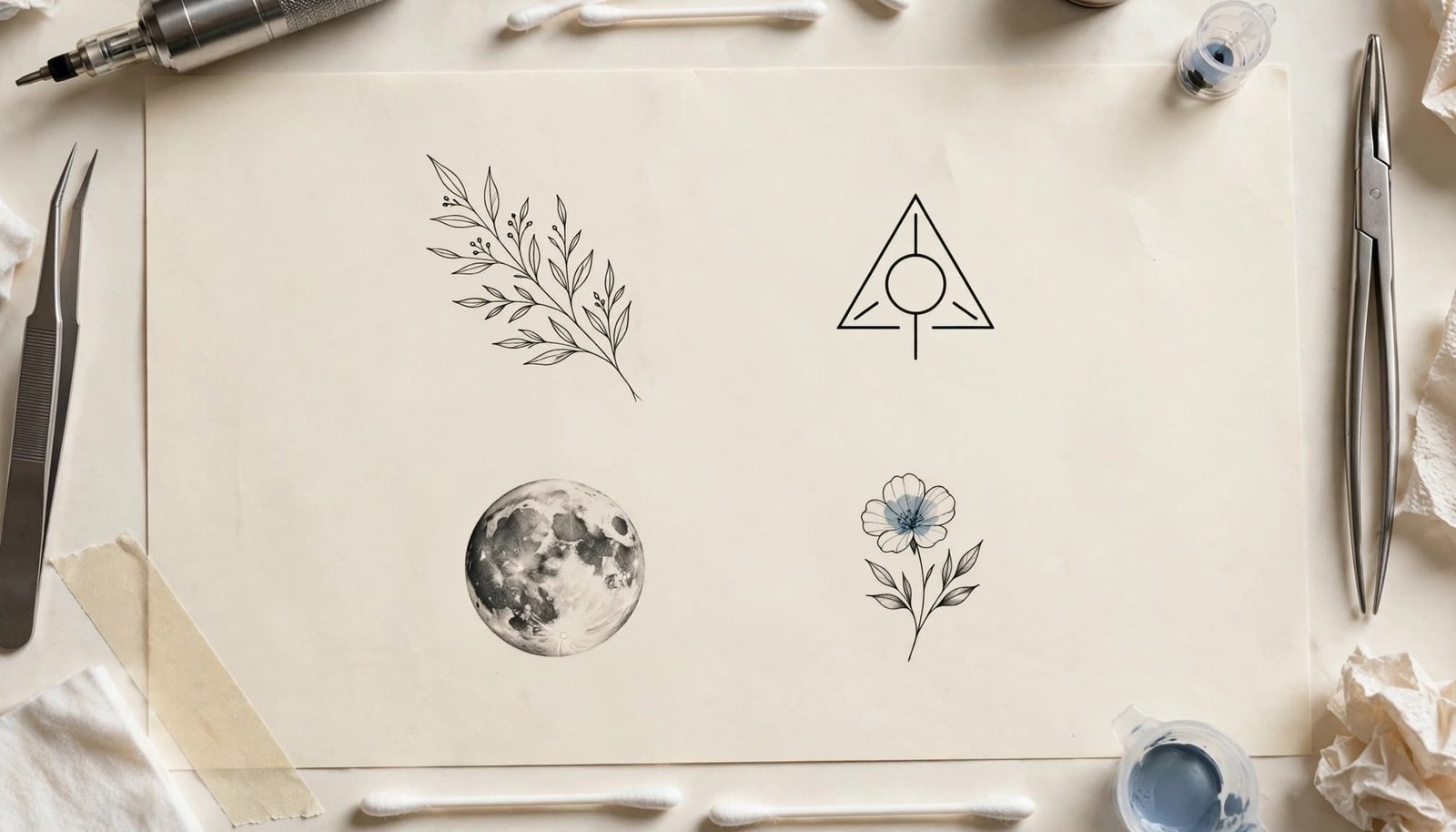
Micro tattoos suit people who want a discreet detail. A tiny crescent, initial, or flower can fit behind the ear, on the ankle, or along the wrist. However, shrinking a design also shrinks the space between its lines. That can make fine details harder to preserve as the ink settles.
A design that is only slightly larger may age more cleanly. Extra scale allows the artist to leave more negative space, separate nearby lines, and use a stronger line weight where needed. The tattoo can still look delicate without becoming cramped.
Before choosing the smallest possible version, ask your artist to show the design at its actual tattoo size. Look at it from a normal distance, not only as a close-up on your phone. If the details already look crowded on paper, they will likely feel crowded on skin.
Judge the Artist’s Healed Work
Fresh tattoos show sharp lines, rich contrast, and bright color. They don’t show how the design looks after healing. Before booking, ask to see healed examples from at least several months earlier, preferably in the same style and body placement you want.
Pay attention to whether fine lines remain separate, gray shading stays smooth, and color still looks even. Also ask how the artist adjusts spacing and line weight for small designs. An artist with a strong healed portfolio can explain those choices clearly.
For the most timeless result, choose a style you genuinely like, simplify the design, give it enough breathing room, and select an artist whose healed work matches your expectations.
The Best Placements for a Classy Women’s Tattoo
Tattoo placement changes more than visibility. It affects the design’s mood, how comfortable the area feels during healing, and how much care the tattoo needs later. Before choosing a spot, consider your clothing, daily movement, sun exposure, and whether you want the tattoo to feel private or easy to see.
A graceful design may look completely different on the collarbone than on the ankle. The same fine-line flower can feel romantic, personal, understated, or bold depending on where it sits.
Collarbone and Upper Chest for Graceful Designs
The collarbone and upper chest suit horizontal tattoos with an elegant flow. A slim branch, crescent moon, script phrase, or line of tiny stars can follow the natural shape of the body without looking crowded. These placements feel feminine and polished, especially when the design stays narrow and leaves generous space around the details.
The collarbone is fairly visible with tank tops, open collars, and dresses, yet a crewneck can cover it. That flexibility makes it a practical choice if you want control over when people see your tattoo. The upper chest offers a little more room for a botanical stem, celestial arrangement, or meaningful phrase.
Sun exposure matters here because the area may remain uncovered during warmer months. After the tattoo heals, protect exposed ink with broad-spectrum, water-resistant SPF 30 or higher, as recommended by the American Academy of Dermatology’s tattoo care guidance. During healing, use clothing and shade instead of sunscreen on open skin.
Wrist and Forearm Tattoos as Visible Reminders
The wrist and forearm work well when you want to see your tattoo throughout the day. A small symbol, short word, delicate flower, or fine-line sun can become a personal reminder without requiring a large design. The forearm also gives an artist more room to create a longer botanical or celestial piece.
Because these areas stay visible, think about your workplace and the clothing you wear most often. Some offices have relaxed tattoo policies, while others may prefer visible body art to remain covered. Test the design with a temporary tattoo or paper stencil for several days. Notice how it looks with watches, bracelets, sleeves, and your usual work clothes.
The wrist bends often and can experience rubbing from cuffs or accessories. Loose clothing helps reduce irritation while the tattoo heals. Cleveland Clinic also recommends avoiding tight clothing and unnecessary rubbing during the healing period, when the tattooed skin needs gentle care.

Ankle, Foot, and Back of the Neck
The ankle and foot suit small symbols, tiny flowers, initials, and simple celestial marks. These placements can feel discreet and personal, but shoes and socks create an important practical concern. Friction from a shoe collar, strap, or tight sock can irritate a fresh tattoo, so schedule the appointment when you can wear loose footwear.
Foot tattoos also receive regular sun exposure in sandals and may fade faster without protection after healing. They can experience more wear than tattoos on the torso, especially if you walk often or wear restrictive shoes. A slightly larger, simpler design usually ages more clearly than tightly packed micro-detail.
The back of the neck offers a discreet location for a small moon, star, botanical sprig, or single symbol. Hair can cover it, while a ponytail or short haircut can reveal it. Since the neck moves frequently and may rub against collars, choose breathable clothing during healing and avoid repeated contact with necklaces or straps.
Ribs, Side Body, Spine, Shoulder Blade, and Upper Arm
The ribs and side body provide a graceful vertical canvas for longer designs. A winding stem, moon phase sequence, or fine-line celestial arrangement can follow the body’s natural length. These areas are often easy to cover, which suits people who want a meaningful tattoo without daily visibility.
The spine creates a strong center line for narrow botanical or celestial artwork. A design placed beside the spine can feel softer and less formal than one placed directly down the middle. The shoulder blade and upper arm offer more stable space for larger line art, while a sleeve or blouse can conceal them when needed.
Movement and clothing should guide the final choice. Waistbands, bra bands, backpack straps, and repeated bending can create friction around the ribs and side body. The shoulder blade may rub against chair backs or athletic clothing, and the upper arm can experience contact from sleeves. Plan around these details instead of judging the placement by appearance alone.
A beautiful placement still needs to fit your routine. The best spot is one you can protect while it heals and comfortably live with afterward.
Before booking, place a stencil on the area and wear your normal clothes over it. Check how the tattoo looks while sitting, walking, bending, and moving your arms. This small test can reveal pressure points, visibility concerns, or workplace issues before the design becomes permanent.
How to Choose a Classy Tattoo You Will Still Love
Choosing a timeless tattoo starts with your life, not a saved image. Before you think about fonts, flowers, or placement, decide what the tattoo should mean, how visible you want it to be, and what you can comfortably spend. A refined design usually comes from a clear idea and a few thoughtful limits.
Start With Meaning, Size, Visibility, and Budget
Write down the reason you want the tattoo in one sentence. It might honor a person, remind you of a personal change, celebrate a place, or simply capture an image you have always loved. Personal meaning usually gives a tattoo more staying power than a trend, even when the original inspiration comes from popular styles such as delicate botanicals or celestial linework.
Next, choose a general size instead of forcing the smallest possible version. Tiny tattoos can look graceful, but they leave less room between lines and details. A medium-sized design often gives the artist better control over spacing, shading, and readability.
Visibility deserves the same attention. A forearm tattoo becomes part of your daily appearance, while a rib, shoulder blade, or upper-arm tattoo can stay private under ordinary clothing. Consider your workplace, family preferences, clothing habits, and whether you want to see the design every day.
Your budget should include more than the tattoo itself. Artist experience, size, detail, color, placement, and the number of sessions can all affect the price. Set a realistic range before booking, then leave room for a consultation or design revision. Planning purchases more intentionally can help you avoid choosing a cheaper studio when safety and quality should come first.
| Choice | Best for | Main consideration |
|---|---|---|
| Visible placement | A daily reminder or personal style detail | Workplace rules and sun exposure |
| Discreet placement | Private meaning and flexible coverage | Clothing friction during healing |
| Tiny tattoo | A simple symbol or small initial | Limited space for detail |
| Medium tattoo | Botanical, celestial, or line-art designs | Higher cost and longer appointment |
The right choice is the one that fits both your identity and your routine. A beautiful design becomes frustrating if you cannot protect it while it heals or feel comfortable showing it.
Build an Original Concept From References
Collect reference images to identify patterns in your taste, not to copy someone else’s tattoo. Save examples that show the line weight, proportions, shading, placement, or mood you prefer. A botanical tattoo may inspire you through its curved stem, while another image may show the amount of negative space you want.
After collecting several references, separate the elements you like. You might combine the open shape of one flower, the fine shading of another design, and the placement of a third. Then explain the idea in your own words and ask your artist to redraw it for your body.
Avoid bringing one person’s tattoo to the appointment and requesting an exact replica. Original details make the final design more personal, and your artist can adjust the image so it suits your skin, scale, and existing tattoos. Keep a written note of what each reference contributes so the concept stays focused.
Test the Stencil Before You Commit
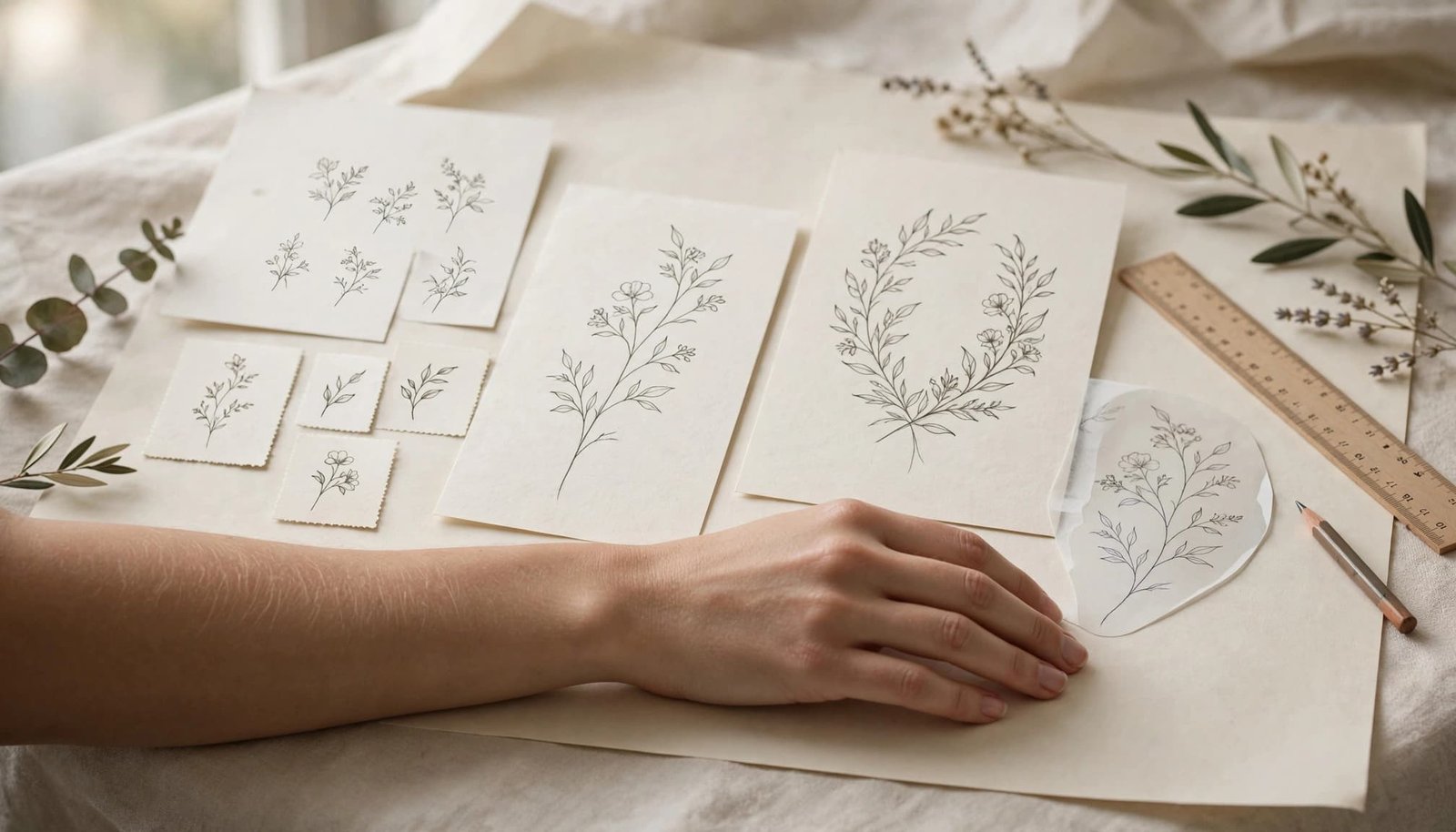
Ask your artist to place the stencil at the proposed size, then view it while standing, sitting, bending, and moving your arm. Check it from the front, side, and a mirror view. A design that looks balanced on a flat screen may feel too crowded when it follows a shoulder, wrist, rib, or ankle.
Pay attention to the body’s natural lines. A branch can follow the length of an arm, while a crescent may look better when it curves with the collarbone. If the image fights the body’s shape, the artist can rotate it, widen the spacing, simplify details, or increase the scale.
Bring your reference images, but stay open to professional adjustments. A skilled artist may recommend thicker lines, more negative space, or a slightly larger design so the tattoo heals clearly. Before the appointment, also review FDA tattoo safety guidance and confirm that the studio uses sealed equipment, fresh disposable ink cups, and proper sterilization practices.
Give yourself time to sit with the stencil. If you keep noticing one detail that feels wrong, revise it before the tattoo becomes permanent.
Tattoo Safety and Aftercare for Delicate Linework
Delicate linework needs careful aftercare because thin strokes can become irritated by friction, soaking, sun, or heavy products. Before you focus on healing, choose a licensed, reputable tattoo artist who follows local health rules and uses sterile, single-use needles. Ask how the studio sterilizes reusable equipment, handles ink, and prepares the workstation.
The U.S. Food and Drug Administration warns that unsterile equipment and contaminated ink can cause infections, even when a studio appears clean. Review the FDA’s tattoo safety guidance before your appointment, and don’t feel pressured to proceed if the artist avoids basic safety questions.
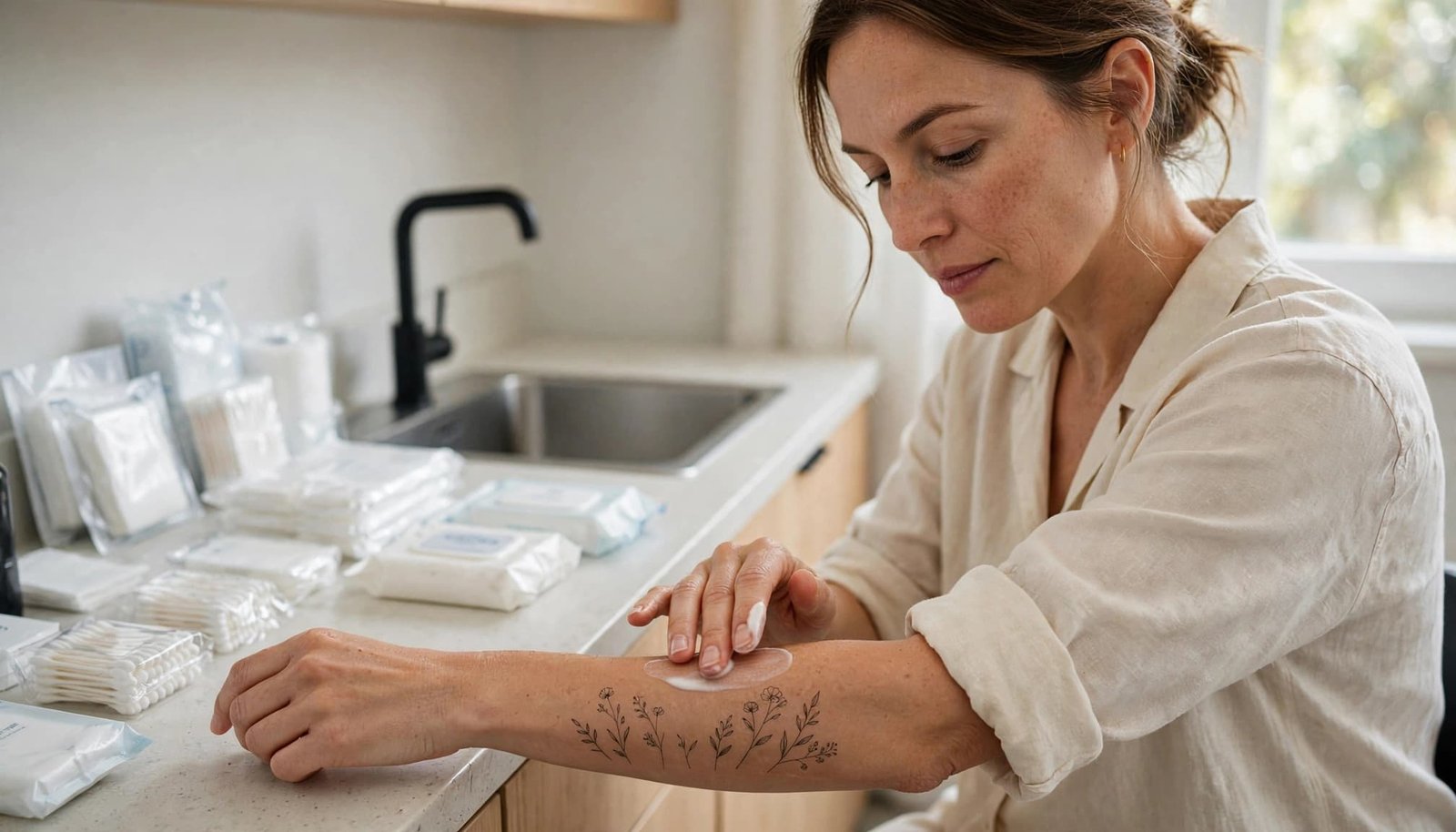
Follow a Simple Healing Routine
Your artist should provide instructions based on the dressing and technique used. In general, keep the area clean and handle it gently while the skin heals.
- Wash your hands before touching the tattoo.
- Clean the area with lukewarm water and a small amount of fragrance-free soap.
- Rinse away all soap, then pat the tattoo dry with a clean paper towel.
- Apply only a thin layer of the moisturizer recommended by your artist.
- Leave the tattoo alone between cleanings.
Avoid rubbing, scratching, peeling, or picking at flakes and scabs. Scratching can irritate the skin, pull at healing areas, and raise the risk of infection. Don’t cover the tattoo with tight clothing unless your artist gives you different instructions, since friction can make delicate lines more uncomfortable.
Your tattoo may feel tender, warm, tight, or mildly itchy during normal healing. Light peeling and small scabs can also occur. These changes should gradually improve rather than become more severe.
Keep Water, Sun, and Friction Away
Don’t submerge a fresh tattoo in a pool, hot tub, bath, lake, or ocean. Skip saunas as well, and wait until your artist confirms the tattoo has healed before returning to these activities. A quick shower is usually easier to manage than a long soak, but avoid directing strong water pressure at the tattoo.
Direct sunlight can irritate fresh skin and cause delicate ink to fade. During healing, cover the tattoo with clean, loose clothing and stay in the shade when possible. Don’t apply sunscreen to an open or peeling tattoo unless a medical professional tells you to do so.
Once the skin has fully healed, protect the design with a broad-spectrum, water-resistant SPF 30 or higher. The American Academy of Dermatology recommends applying sunscreen before sun exposure and reapplying it regularly. Its guide to caring for tattooed skin also advises avoiding tanning beds and sunlamps, which can fade ink and trigger reactions in some people.
Know When to Call a Medical Professional
Mild redness, tenderness, swelling, itching, peeling, and clear fluid can occur during the first part of healing. The skin should improve over time, however. Contact a medical professional if redness spreads beyond the tattoo, pain worsens, swelling increases, or the area produces pus.
Fever, chills, red streaks, a rash, raised bumps, or skin that fails to heal also need medical attention. These symptoms can point to an infection or allergic reaction. If you notice a reaction, ask your artist for the ink brand, color, and lot number, then share that information with your healthcare professional.
When in doubt, get medical advice instead of waiting for the problem to resolve. Early care protects your skin and gives you the best chance of preserving the fine lines you chose.
Conclusion
The strongest classy tattoo ideas match the mood you want to carry. Choose botanical designs for a natural feel, celestial imagery for symbolism and change, minimalist icons for quiet meaning, or script for personal words and memories.
A refined tattoo comes from thoughtful design, balanced placement, skilled linework, and proper aftercare, not size alone. Save a few references, consult an experienced artist, and customize one idea until it feels personal and lasting. Like choosing quality over quantity, one well-planned tattoo can say more than several rushed designs.
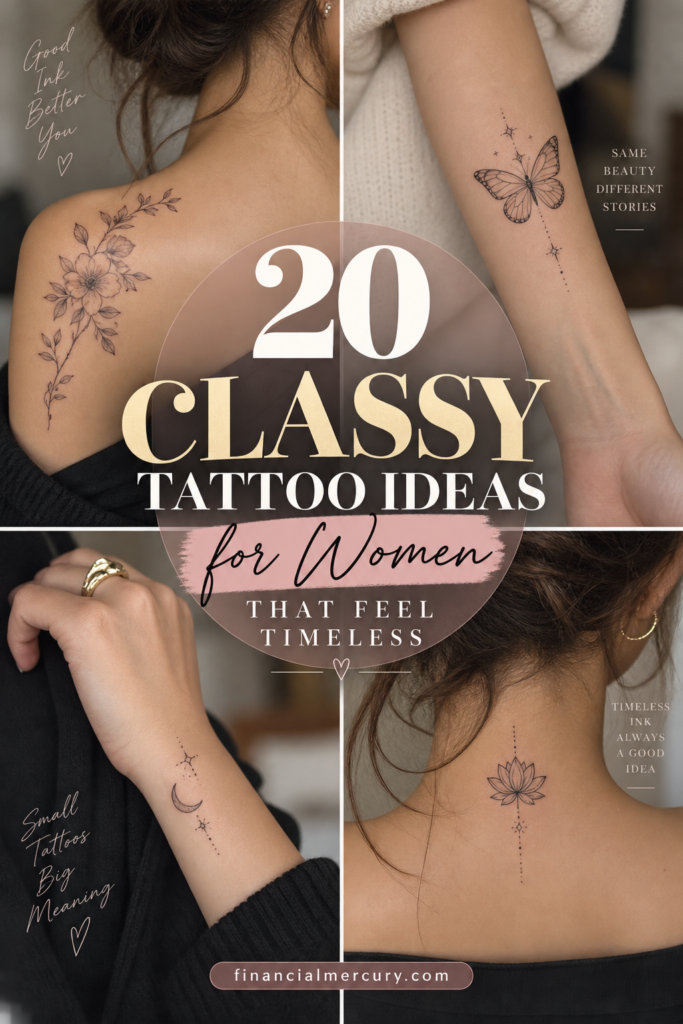
Save the pin for later

- 34 Botanical Tattoo Ideas for Nature Lovers - September 10, 2026
- 22 Rose Tattoo Ideas for Women With Personal Meaning - September 10, 2026
- 25 Magical Mushroom Tattoo Ideas for a Whimsical Design - September 10, 2026
Leave a Reply