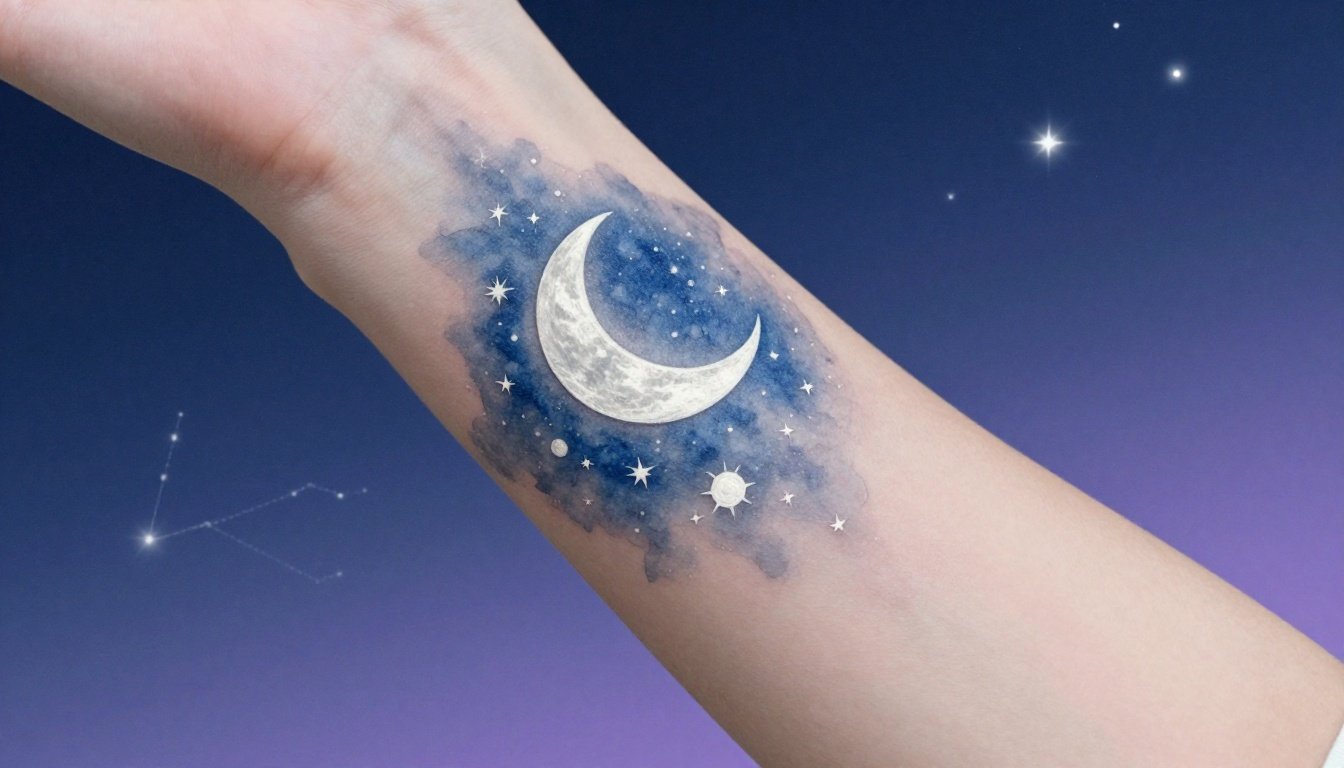
35 Celestial Tattoo Ideas for Women With Meaning
Moonlight spills across the sky, stars gather like tiny secrets, and a crescent can hold a meaning only you understand. A celestial tattoo can capture a season of change, a love that guides you, a personal belief, or the comfort of looking upward when life feels uncertain.
These designs can be delicate and fine-line, bold and illustrative, mystical, romantic, or deeply personal. A small moon behind the ear may feel private and subtle, while a detailed sun and constellation piece can become a confident statement across the shoulder, back, or ribs. The right choice depends on more than appearance, since size, detail, placement, color, and your artist’s style all affect how the tattoo will look and age.
This collection of 35 celestial tattoo ideas for women includes symbolism, placement suggestions, size and style guidance, color options, artist selection tips, cost factors, and healing advice. The best design won’t only look beautiful in a saved photo; it will also feel comfortable to live with for years. Start by finding the celestial image and meaning that feel closest to your story.
Celestial Tattoo Ideas for Women That Capture Light and Wonder
Celestial tattoos can hold a private story in a small symbol or unfold into an entire night sky. These 12 ideas include gentle fine-line pieces, textured dotwork, and black-and-gray designs with enough detail to feel personal without becoming overly heavy.
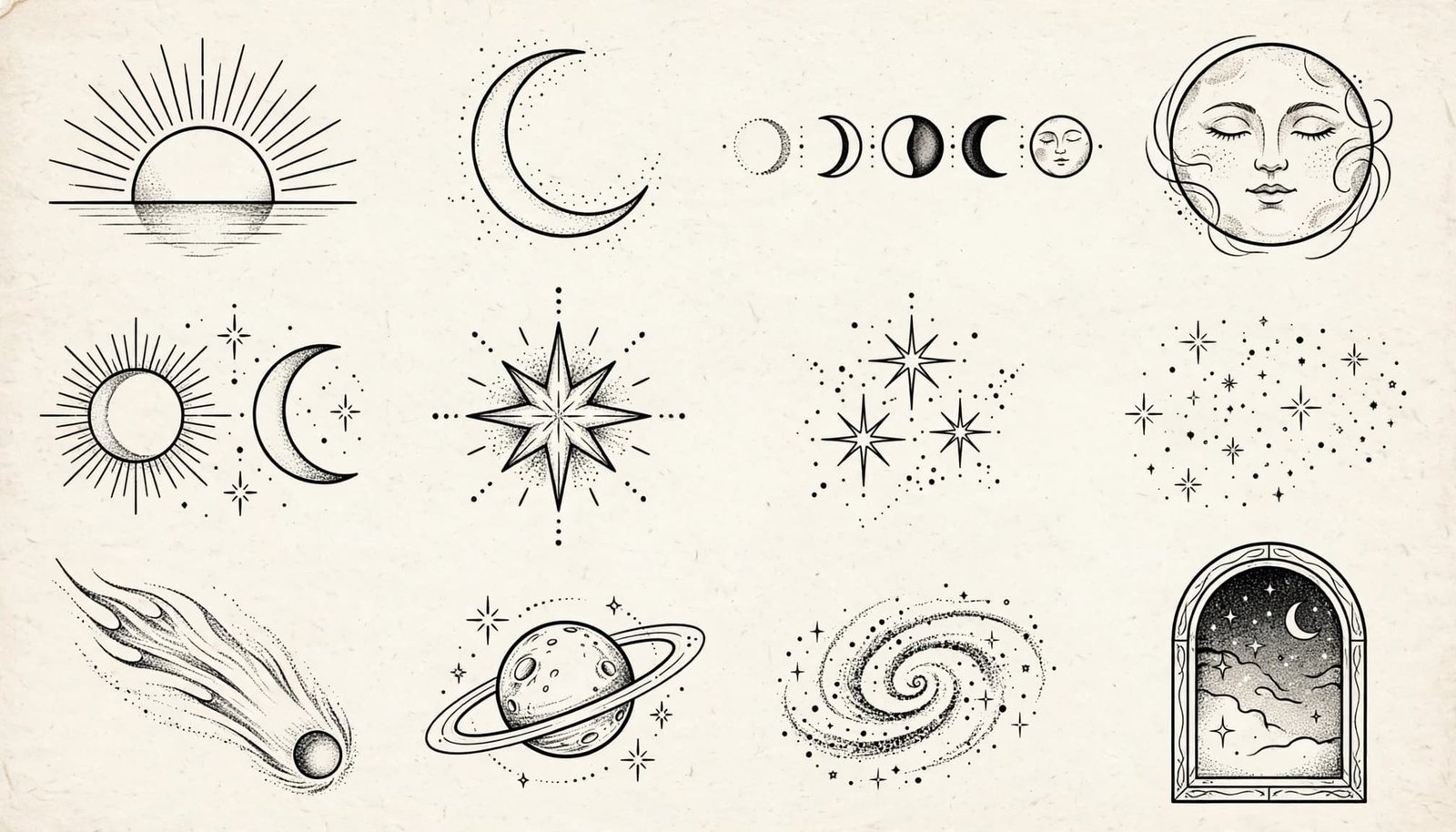
Sun and Moon Designs for Balance, Growth, and Inner Light
Sun and moon tattoos connect opposite forces, such as action and rest, confidence and reflection, or change and stability. Their meanings can shift with your story, which makes them a lasting choice for women who want symbolism without a fixed definition.
- Minimalist rising sun: Use a half-sun with three or four clean rays rising above a fine horizon line. It can symbolize renewal, personal power, or a fresh beginning. Place it on the inner wrist for a small daily reminder.
- Fine-line crescent moon: A slim crescent with tiny dots beside it feels delicate and private. It can represent intuition, emotional growth, or trust in unseen guidance. The behind-the-ear area keeps the design subtle.
- Moon phase strip: Arrange the phases in a neat horizontal line, moving from a thin crescent to a full moon and back again. This design reflects changing seasons, personal growth, and emotional cycles. The collarbone gives the strip enough room to stay balanced.
- Full moon with a face: Add soft eyes, a calm expression, or delicate floral details inside a full moon. The design can suggest self-knowledge, feminine strength, and the comfort of seeing yourself clearly. Choose the shoulder or upper arm for enough space.
- Sun and moon balance design: Pair a geometric sun with a curved crescent, either side by side or enclosed in one circular composition. Their contrast can express balance between opposite forces, such as brightness and shadow. The sternum creates a centered, symmetrical placement.
A geometric sun feels crisp and modern, while floral rays, vines, and softer curves create a more romantic feminine mood. Fine-line work keeps small designs airy, but moon phases and facial details need enough space to remain clear as the tattoo ages. Once healed, protect exposed ink with broad-spectrum SPF 30 or higher, since ultraviolet light can fade tattoo pigment, according to the American Academy of Dermatology’s tattooed-skin guidance.
Stars, Planets, and Cosmic Scenes That Feel Personal
Stars and planets can turn a tattoo into a small map of hope, dreams, and direction. A single symbol feels clean and minimalist, while a larger scene can tell a fuller story about exploration or finding your way.
- North Star: Draw one bright central star with four longer points and a few tiny surrounding dots. It can symbolize guidance, purpose, or staying true to yourself. The forearm makes it easy to see.
- Three-star cluster: Place three uneven stars in a compact grouping for a simple design with a sense of connection. It may honor three important people, milestones, or hopes. Try the ankle for a discreet accent.
- Scattered micro stars: Use varied tiny stars across the collarbone or upper back, leaving generous skin between them. This arrangement feels spontaneous and can suggest wonder, freedom, or a sky full of possibilities.
- Comet with a flowing tail: Give a small comet a curved tail that sweeps downward or across the ribs. It can represent a memorable turning point, ambition, or a dream in motion. Dotwork along the tail adds soft stardust.
- Planet with orbit rings: Choose one small planet with two thin rings, perhaps adding a few dots around its path. The image can reflect curiosity, independence, and a personal universe. The forearm or upper arm suits its rounded shape.
- Tiny galaxy swirl: Build a miniature spiral from fine lines, stippled stars, and restrained black-and-gray shading. It feels more mysterious and story-like than a single star. Place it on the ribs or upper back, where a slightly larger design can breathe.
- Night-sky window: Frame a crescent moon, stars, or a small galaxy inside an open window outline. This scene can symbolize hope during a difficult season or the comfort of looking beyond the present. The upper back gives the image room for architectural details.
Fine-line outlines work best for small stars and planets. Dotwork creates a powdery stardust effect, while black-and-gray shading gives a galaxy or window scene more depth. Keep selective color, such as muted blue or violet, for one focal area so the design stays elegant rather than crowded.
Zodiac and Constellation Tattoos With a Personal Story
Zodiac tattoos can honor identity, birth, family, or a meaningful life chapter. The design may connect you to your birth month, a loved one, or a period when you learned to trust your own direction. Constellations add another layer because their dots can become a private map of where your story began or changed.
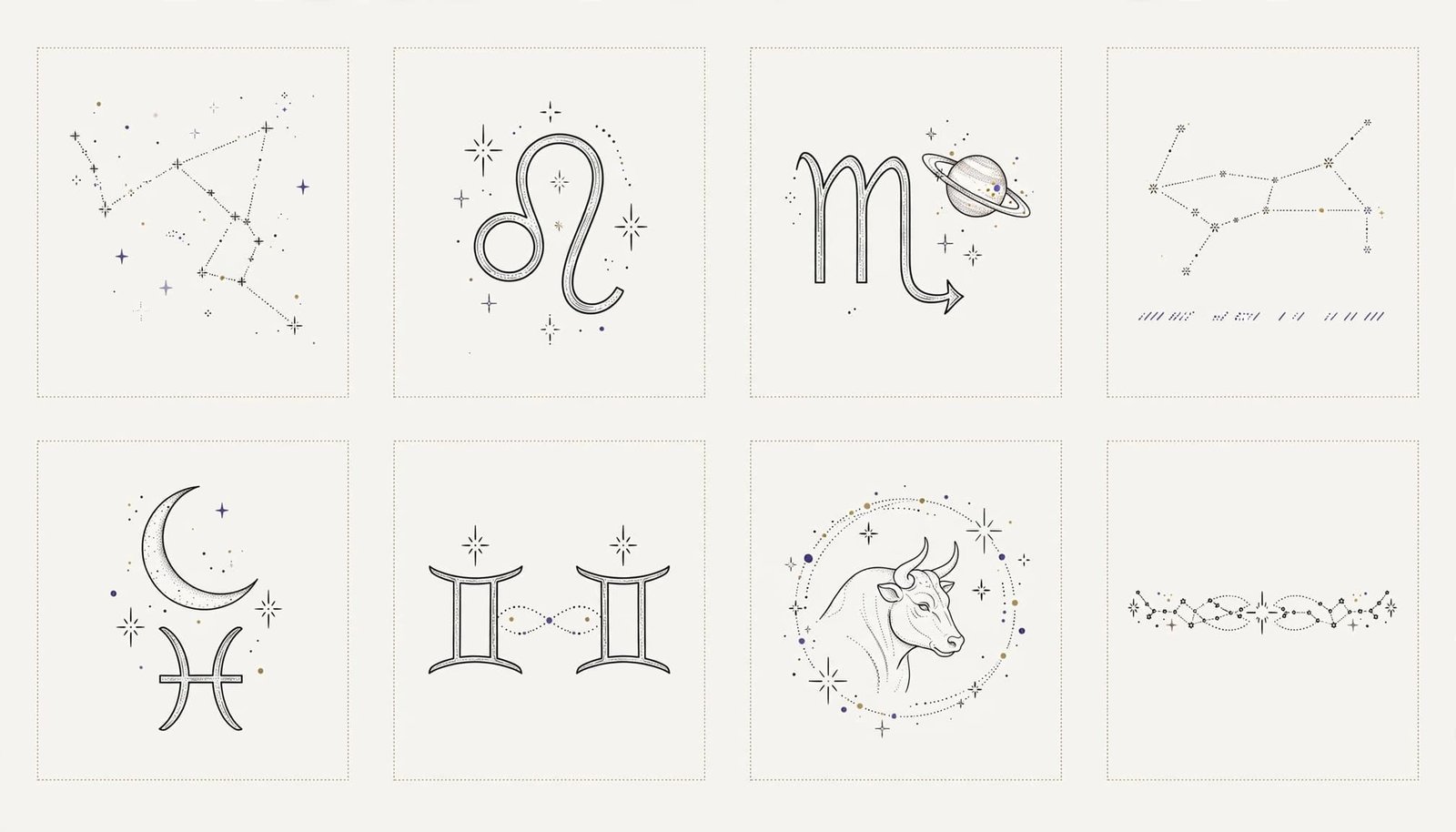
Ways to Make a Zodiac Tattoo Feel More Unique
Start with the zodiac element that feels most personal, then add only one or two supporting details. These eight approaches can help you shape a meaningful zodiac tattoo without making the design feel crowded.
- Fine-dot constellation: Build your sign from tiny dots and delicate connecting lines. This style suits a minimalist tattoo and leaves room for a small flower, birthstone color, or meaningful date near the edge.
- Zodiac glyph surrounded by stars: Place the sign’s glyph at the center, then use a few uneven stars around it. Your initials can sit beneath the symbol in a small, clean font, provided the lettering remains readable at the final size.
- Zodiac sign with its ruling planet: Pair the glyph with the planet traditionally associated with that sign. Keep the planet small and use line weight to separate it from the constellation, rather than adding several extra celestial objects.
- Constellation with a birth date: Add a birth date, anniversary, or turning point below the star pattern. Roman numerals can create a classic look, while simple numbers usually remain easier to read as the tattoo ages.
- Moon and zodiac combination: Nestle the glyph inside a crescent moon or place the constellation beside one. A favorite planet or a single birthstone color can personalize the design without competing with the main shape.
- Matching zodiac tattoos for sisters or friends: Choose the same sign, split one constellation between two tattoos, or use two related glyphs. Matching designs feel more personal when each person adds a tiny difference, such as a flower or initial.
- Zodiac animal or symbol in a celestial frame: Place the animal or traditional symbol inside a circle of stars, a moon shape, or a simple orbit. Keep the frame open if the central image already has fine details.
- Constellation band around the arm or ankle: Arrange the stars in a narrow band that follows the body’s curve. Leave generous space between dots and lines so movement doesn’t turn the design into a dark, blurred strip.
Before choosing the details, decide whether you want a realistic star map or a simplified decorative constellation. An accurate map should connect to a specific date, time, and location. The International Astronomical Union’s constellation charts can help you check recognized constellation boundaries, while an artistic version can simplify stars for better balance on the skin.
A star map can be meaningful without being scientifically exact, but you should know which type you are choosing.
Ask your tattoo artist to check the design at its intended size before tattooing. A pattern that looks clear on a phone may lose its spacing when reduced to a small wrist or ankle piece. For a crowded constellation, remove extra symbols before shrinking the artwork. One meaningful date, initial, flower, word, or color usually tells your story better than every symbol you love placed together.
Mystical and Feminine Celestial Tattoo Ideas With Meaning
Mystical celestial tattoos bring together moonlight, stars, sacred shapes, and symbols that feel personal. Their meaning can center on intuition, protection, transformation, healing, femininity, or self-trust, but no symbol has one permanent definition. Your experiences give the design its strongest meaning.
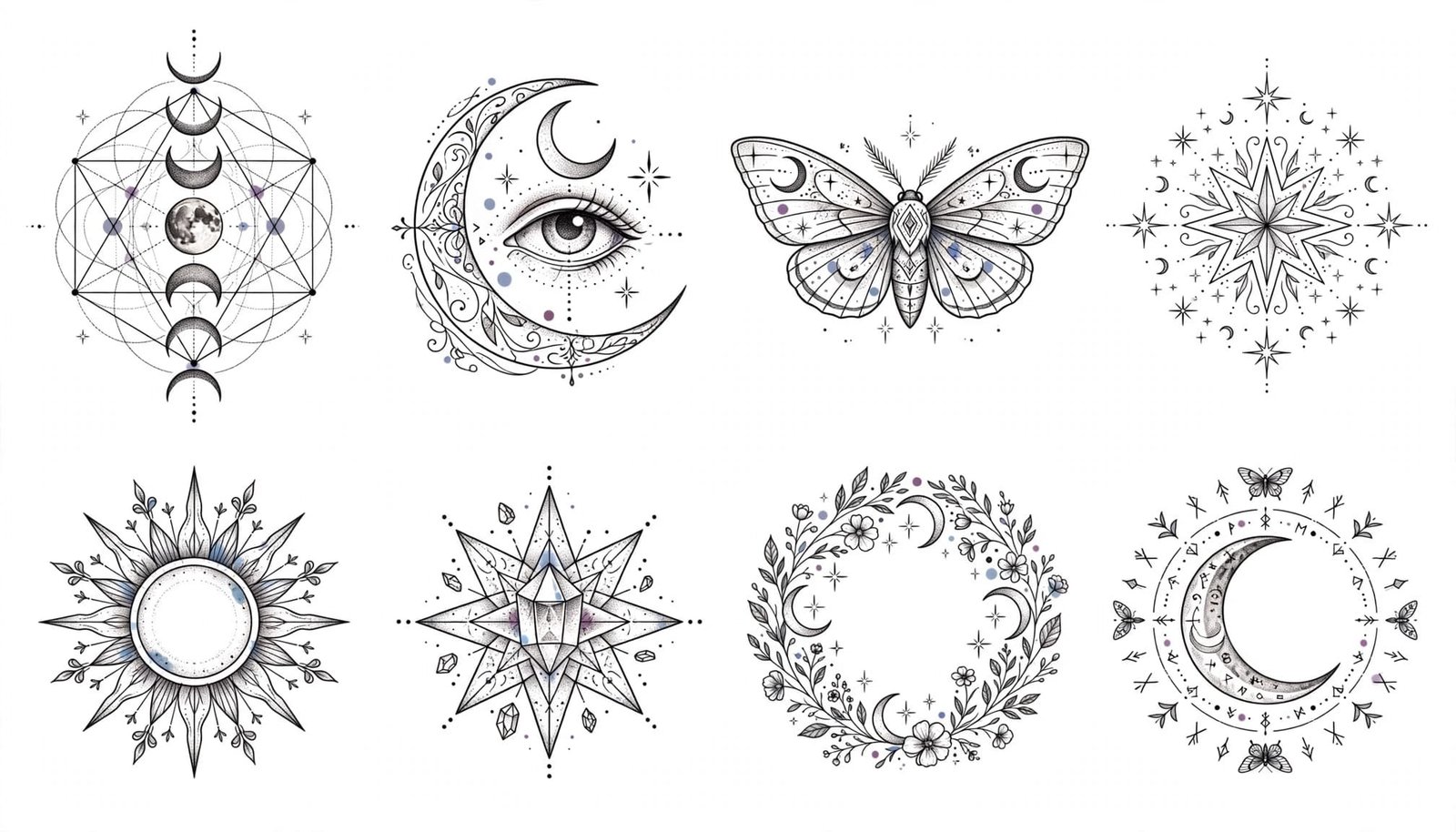
Eight Mystical Celestial Tattoo Designs to Consider
These ideas can feel witchy, spiritual, or ornamental without becoming overly dark. Choose the image that matches your story, then let your artist adjust the details for your body and preferred style.
- Moon phases with sacred geometry: Place changing moon phases above a fine geometric shape, such as a triangle, circle, or flower of life-inspired pattern. The design can suggest cycles, balance, and personal growth. Before using a sacred geometric motif, learn its cultural and religious context rather than choosing it only for appearance.
- Eye inside a crescent moon: A watchful eye nestled within a crescent can express intuition, awareness, and self-trust. Fine lashes and soft dotwork create a feminine mood, while blackwork gives the image a stronger protective quality. Try the inner forearm, upper arm, or sternum.
- Celestial moth: Give the moth moon-shaped markings, tiny stars, or a small sun between its wings. Moths can suggest transformation, healing, and movement toward light, although your personal story should guide the meaning. Ornamental linework keeps the wings elegant without making them look heavy.
- Woman’s profile surrounded by stars: A side-profile portrait with flowing hair, stars, and a slim crescent can honor femininity, intuition, or a growing sense of identity. Keep facial features simple at smaller sizes, since crowded details can blur over time. The upper arm, thigh, or shoulder blade offers more room.
- Sun with ornamental rays: Replace plain rays with curved leaves, dots, or filigree lines for a sun that feels warm and decorative. It may symbolize confidence, renewal, healing, or the light you carry through difficult seasons. Muted gold, terracotta, or dusty blue can soften a black design.
- Star and crystal composition: Pair one bright star with a hanging crystal, tiny orbit, or few scattered dots. The image can represent clarity, hope, protection, or a wish you continue to carry. A simple outline works well on the wrist, while shaded facets need more space on the forearm.
- Celestial floral wreath: Surround a crescent, star, or small planet with an open wreath of wildflowers. Leave a small gap in the flowers so the design can breathe. The wreath may suggest healing, feminine strength, or a life chapter that continues to unfold.
- Moon with protective symbols: Add a crescent moon with a key, protective eye, lock, or carefully researched spiritual motif. If you draw from a living religious tradition, check its meaning, placement rules, and community context first. Guidance on respectful tattoo symbolism can help you avoid treating sacred imagery as decoration.
Soft Feminine Details That Still Feel Modern
Curved lines follow the collarbone, wrist, ankle, and upper arm naturally, so they make celestial tattoos feel delicate without filling every space. Tiny flowers, fine dots, open borders, and selective negative space can soften a moon or star while preserving a clean modern shape.
A slim ankle chain with one moon may feel more refined than a fully shaded band. Behind the ear, a small crescent with two dots stays private and easy to wear. On the upper arm, an open floral border can frame the main motif without competing with it.
Choose details that support the central image. When every gap contains a flower, star, or swirl, the design loses its quiet focus. Blackwork creates contrast, ornamental linework adds jewelry-like detail, soft dotwork brings a powdery mood, and muted color gives one feature gentle emphasis. Your tattoo should have room to breathe, just as a night sky needs darkness around its stars.
How to Choose the Right Celestial Tattoo Style, Size, and Placement
Choosing a celestial tattoo involves more than picking a beautiful moon or star from a reference photo. Your lifestyle, skin, comfort level, preferred detail, and long-term care routine should guide the final design. A tiny crescent may suit one person, while another may need a larger shoulder piece for moon phases, stars, and layered shading to remain clear.
Match the Design to Your Lifestyle and Comfort Level
Start with visibility. The wrist, forearm, collarbone, and outer upper arm are easy to show, while the ribs, back, ankle, finger, and area behind the ear offer more privacy. Workplace preferences may influence your choice, especially if you want the tattoo covered during meetings or formal events.
Skin movement also affects the design. The ribs and collarbone can look elegant, but these areas may feel more sensitive during tattooing. The forearm and outer upper arm are often easier areas for showing, protecting, and checking your tattoo as it heals. Shoulder and back designs provide more room for an illustrative night sky, while the wrist and ankle suit compact symbols.
Hands, fingers, feet, and joints experience more friction and movement. As a result, tattoos in these areas may fade faster or need touch-ups sooner. Finger tattoos can look delicate and discreet, but frequent handwashing, sun exposure, and daily wear can affect their appearance. Behind-the-ear tattoos offer privacy, although hair, headphones, and skin movement can make aftercare less convenient.
Your size choice should match the amount of detail you want:
- A tiny design around 0.5 to 1 inch usually works best as one simple symbol, such as a crescent, star, planet, or small sun.
- A medium design around 1.5 to 3 inches can support a constellation, moon phases, a few stars, or light dotwork.
- A larger tattoo can include layered scenes, shading, several motifs, and more complex illustrative details.
Allow a new tattoo to heal fully before applying sunscreen, then protect exposed ink with broad-spectrum, water-resistant SPF 30 or higher. The American Academy of Dermatology’s tattoo care guidance recommends applying sunscreen before outdoor exposure and reapplying it regularly.
When to Choose Black Ink, Gray Shading, or Color
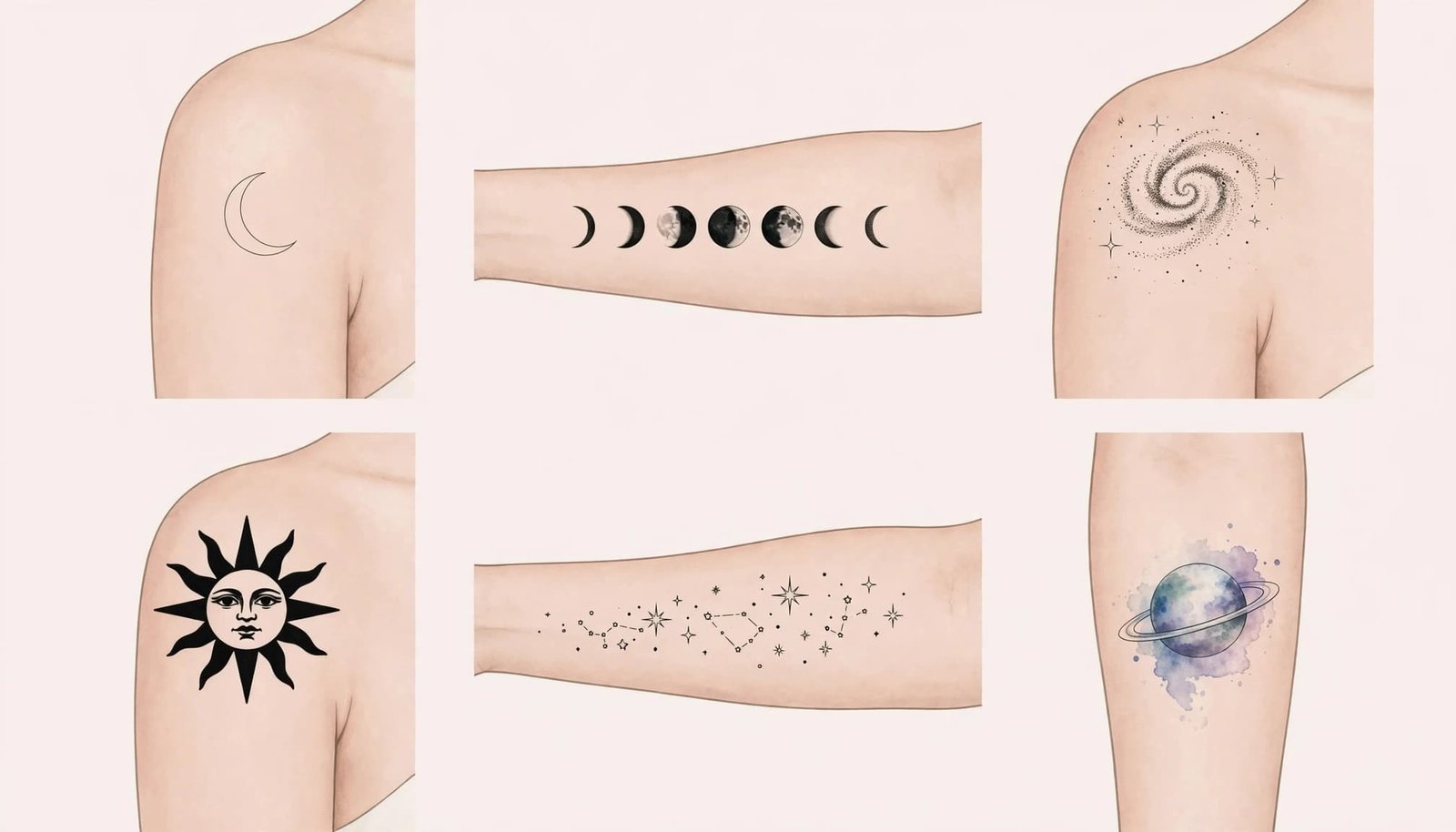
Each style creates a different mood. Minimalist fine-line work suits crisp symbols and quiet details, while dotwork creates a soft, powdered effect around stars, planets, and galaxy swirls. Black-and-gray shading gives moons and night skies gentle depth without making the design feel too bold.
Blackwork uses solid, high-contrast shapes. Choose it for a graphic sun, bold crescent, or striking constellation frame. Illustrative tattoos allow more texture and storytelling, so they work well for celestial moths, womanly profiles, or detailed moon scenes. Watercolor-inspired work adds dreamy washes of blue, violet, pink, or gold, but it needs careful planning because pale color and fine details may soften over time.
Small tattoos usually benefit from limited color and strong contrast. One blue planet or violet star can add personality without crowding a 1-inch design. Larger pieces have more room for sunsets, birthstones, and layered galaxy colors.
Before booking, ask the artist to show healed examples, especially for pale colors, fine lines, and watercolor-style tattoos. Fresh ink can look sharper and brighter than healed work, so healed photos give you a more honest idea of how the artist’s choices age. No ink color is guaranteed to stay unchanged, and your sun exposure, placement, skin, and aftercare all affect the result.
Plan a Celestial Tattoo That Will Age Well
A beautiful celestial tattoo starts with a realistic plan. Before you book, match your moon, stars, or constellation idea with an artist who creates that style at the size and placement you want. Fine lines can look airy and elegant, but overly detailed micro tattoos may blur or lose readability as the ink settles and the skin changes.
Find an Artist With the Right Experience
Start by reviewing an artist’s portfolio, then look for healed photos, not only fresh tattoos. Fresh ink often appears darker and sharper than it will after healing. Pay attention to consistent line weight, clean curves, even dot placement, and the spacing between tiny stars.
Look for work similar to your planned design. An artist who creates large illustrative moons may not have the same skill with a one-inch constellation. Likewise, someone known for delicate wrist tattoos may not have much experience placing celestial artwork across ribs, shoulders, or the sternum.
Ask these questions before you schedule:
- Can I see healed examples of fine-line celestial tattoos?
- What size do you recommend for the details I want?
- Will a slightly thicker line help the design stay readable?
- Have you worked on this placement before?
- How might movement, friction, or sun exposure affect the design?
- Do you charge by the hour, by size, or by the design?
- What is your touch-up policy, and how long is the free touch-up window?
- Which aftercare products should I buy, and what should I avoid during healing?
- How do you clean and prepare the station between clients?
- Do you use single-use needles, fresh gloves, disposable barriers, and sterilized equipment?
- Will you place the stencil on my skin so I can preview it before tattooing?
- Can we adjust the angle, size, spacing, or position after I see the stencil?
A licensed, sanitary studio should take hygiene questions seriously. You can also review this tattoo regulation and public health guide to understand why studio standards matter.

Bring reference images that show the mood, composition, line quality, and color you like. Use them as conversation starters rather than asking the artist to copy another person’s exact tattoo. Your artist can combine those influences into a design that fits your body and story.
Budget for the Tattoo and Aftercare
Tattoo pricing varies by location, artist demand, size, color, detail, and session length. Established US studios often have minimum charges around $80 to $150, while experienced artists may charge $150 to $300 or more per hour. A small celestial tattoo can cost less than a larger shaded scene, but a high-demand artist may still apply the studio minimum.
Ask for a written estimate before paying your deposit. Confirm whether the price includes design time, color, a second session, and touch-ups. Also ask whether your deposit is refundable, transferable, or lost if you reschedule outside the studio’s notice period.
Set aside roughly $35 to $60 for basic aftercare supplies, separate from the tattoo price. That budget may cover gentle fragrance-free cleanser, healing lotion or balm, and protective film if your artist recommends it. A clear estimate helps you choose a design that feels exciting now and remains practical years after the appointment.
Celestial Tattoo Aftercare for Clear Lines and Healthy Healing
Fresh ink needs a gentle routine while the skin closes and settles. Follow your tattoo artist’s specific instructions first, especially if they applied a healing film or recommended a particular ointment.
Small Habits That Protect Fine-Line Celestial Tattoos
Wash your tattoo with lukewarm water and fragrance-free soap two or three times daily. Use clean hands and gentle movements, never a rough cloth or scrub. Afterward, pat the area dry with a clean paper towel, then apply only a thin layer of your artist’s recommended balm or ointment. The skin should look lightly moisturized, not greasy or glossy. Too much product can trap moisture and irritate the healing skin.
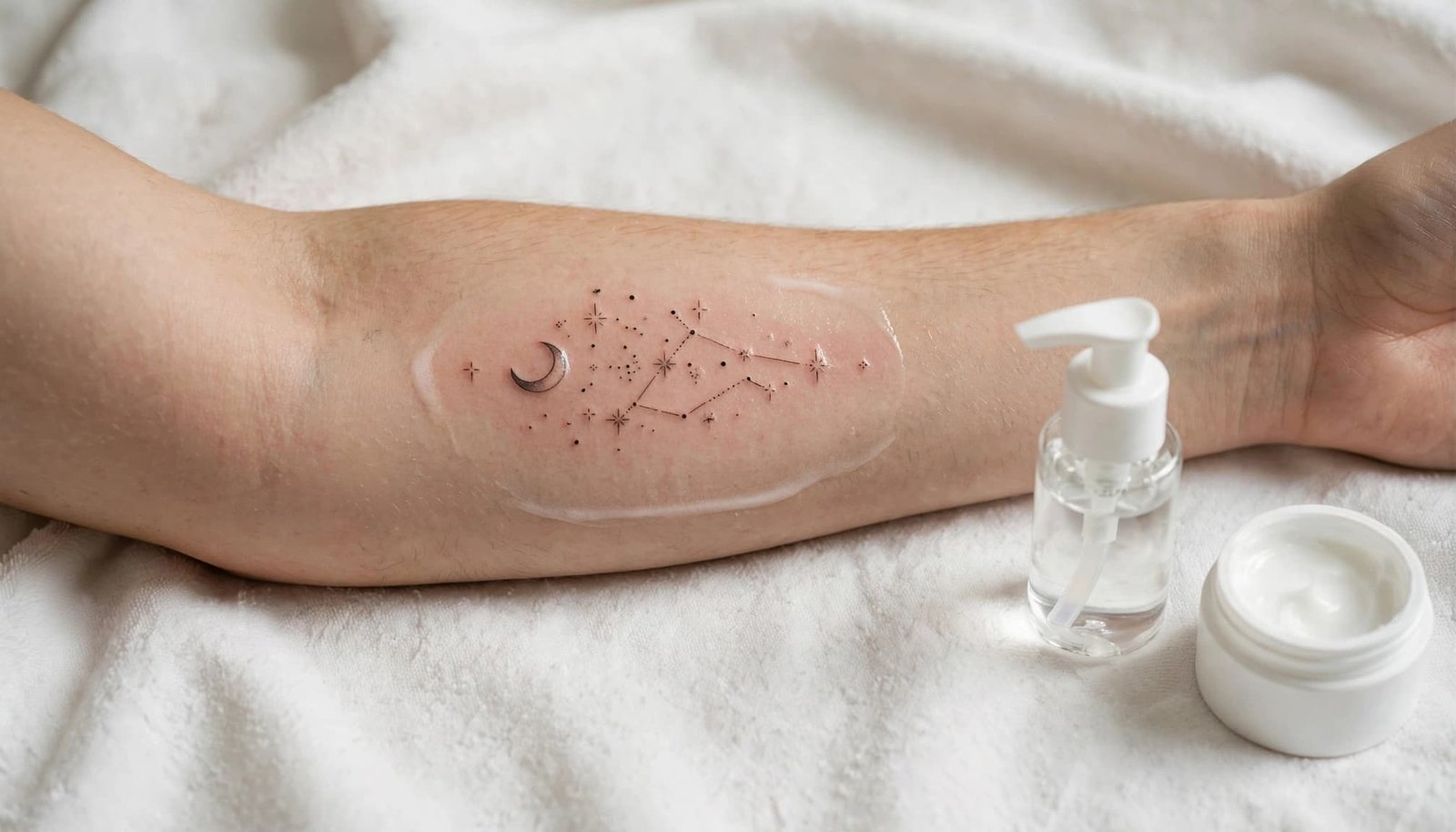
During the first couple of weeks, protect the tattoo from the habits that disturb fragile skin:
- Don’t pick flakes or scabs, even when they itch. Let them fall away on their own, or you may pull out pigment and leave uneven lines.
- Don’t re-wrap the tattoo with household plastic. Use only the covering and replacement method your artist recommends.
- Avoid pools, baths, hot tubs, and lakes for about two weeks. Gentle showers are safer than soaking while the skin heals.
- Wear loose, breathable clothing over the area. Tight waistbands, sleeves, socks, or straps can rub a fine-line moon or constellation and hold sweat against it.
Many tattoos pass the most fragile stage around week three, but healing times vary. Hands, feet, fingers, elbows, knees, and other joints often take longer because movement and friction continue throughout the day. Keep washing and moisturizing until the surface feels smooth and no flakes remain.
After healing, use a fragrance-free moisturizer when the skin feels dry. Apply mineral SPF 30 to 50 whenever exposed ink meets sunlight, and reapply as directed during extended outdoor time. Sun exposure can fade delicate stars, soften thin outlines, and reduce contrast in black-and-gray shading. Healed tattoos still need sunscreen, even when the design is small or covered most of the year.
Picking and friction aren’t the only threats to a clean result. Excess moisture can cause irritation, while overly dry skin can crack and shed unevenly. If a tiny celestial tattoo fades or a high-friction placement loses clarity, an occasional touch-up is normal. Let the tattoo heal fully before discussing any correction with your artist.
Some redness and tenderness are expected at first, but symptoms that worsen need medical attention. Contact a medical professional if you notice spreading redness, increasing pain, unusual warmth, pus, red streaks, or fever. These signs can point to infection and shouldn’t be treated with extra ointment alone.
Conclusion
A celestial tattoo can commemorate a new beginning, honor a relationship, reflect your zodiac identity, or simply celebrate the beauty of the night sky. Across these 35 ideas, moons, suns, stars, planets, and constellations offer plenty of room for personal meaning without losing their delicate visual appeal.
Before choosing your favorite design, narrow the options by selecting one meaningful motif, a placement that feels comfortable, and a size that keeps every line and detail readable over time. Then, find an artist with proven healed work in the style you want. Their experience can help you adjust spacing, line weight, color, and scale for your skin and placement.
Give your final choice the same care you would give any lasting piece of art. Protect the tattoo while it heals, use sun protection once the skin has closed, and choose details that still feel true beyond the moment of inspiration. With the right design and thoughtful planning, you can carry a small piece of the sky with confidence wherever life leads.
Save the pin for later


- 80 Moon Tattoo Ideas for Women, With Meanings and Placements - September 9, 2026
- 50 Wildflower Tattoo Ideas for a Feminine Look - September 9, 2026
- 100 Gorgeous Sun Tattoo Ideas for Every Style - September 9, 2026
Leave a Reply