34 Botanical Tattoo Ideas for Nature Lovers
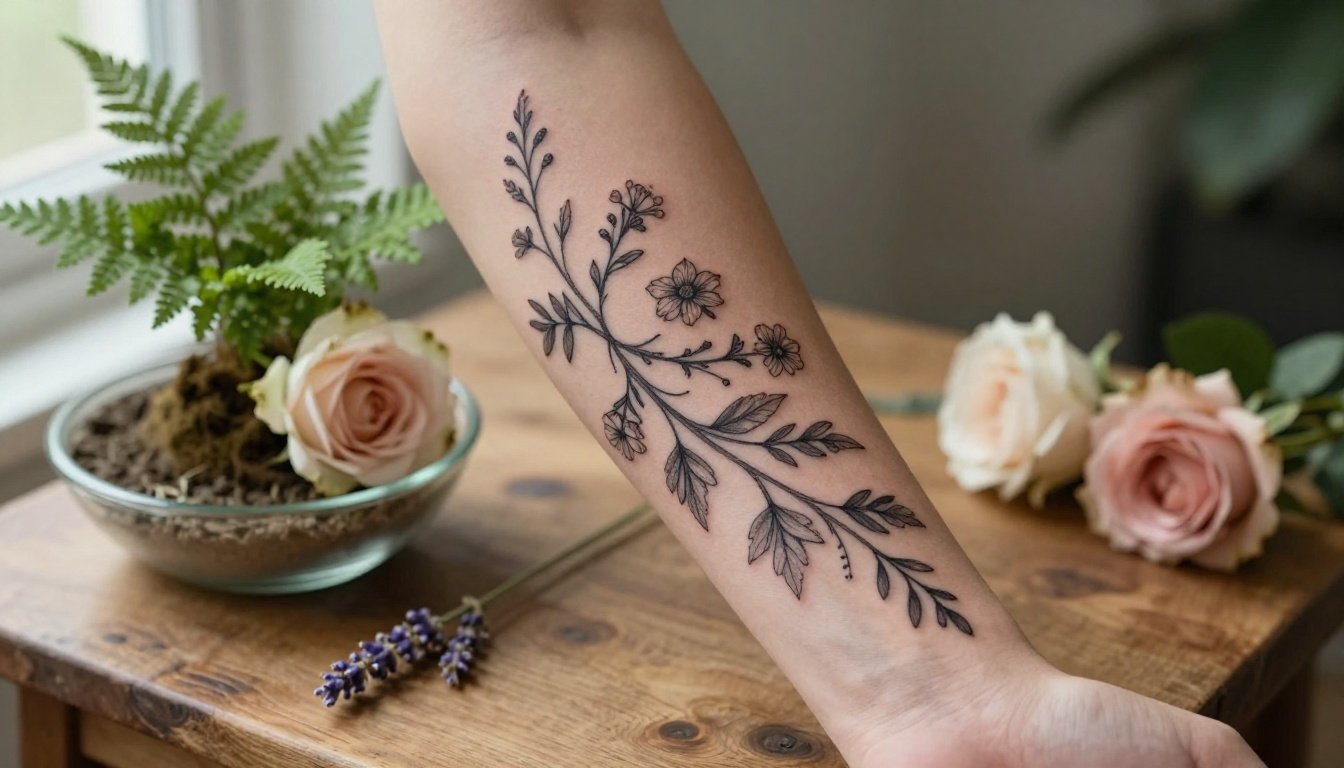
Leaves, petals, winding vines, and wildflowers can grow into body art that feels as personal as a garden you’ve carried with you. Botanical tattoos appeal to nature lovers because they combine beauty with symbolism, giving you a way to honor a favorite season, a meaningful place, a loved one, or a memory that still feels alive.
The right design can be delicate and tiny, richly shaded, scientific in detail, or bold enough to follow the curves of your arm, ribs, back, or leg. These 34 ideas include tiny sprigs, birth flowers, wildflower bouquets, botanical illustrations, dark florals, and larger garden-inspired pieces, along with guidance on choosing a style, placement, artist, budget, and aftercare plan. Start with the botanical tattoo ideas below, then find the details that make one feel like yours.
34 Botanical Tattoo Ideas for Nature Lovers
Botanical tattoos can be tiny and airy, richly detailed, or bold enough to follow an entire limb. Customize any idea through flower choice, line weight, scale, color, placement, and added natural elements such as roots, insects, stones, or stars.
Tiny Botanical Sprigs and Simple Leaf Tattoos
Fine lines and open space give small botanical tattoos a wearable, understated look. Keep leaves and stems separated enough to remain readable as the tattoo ages, especially in high-friction areas.
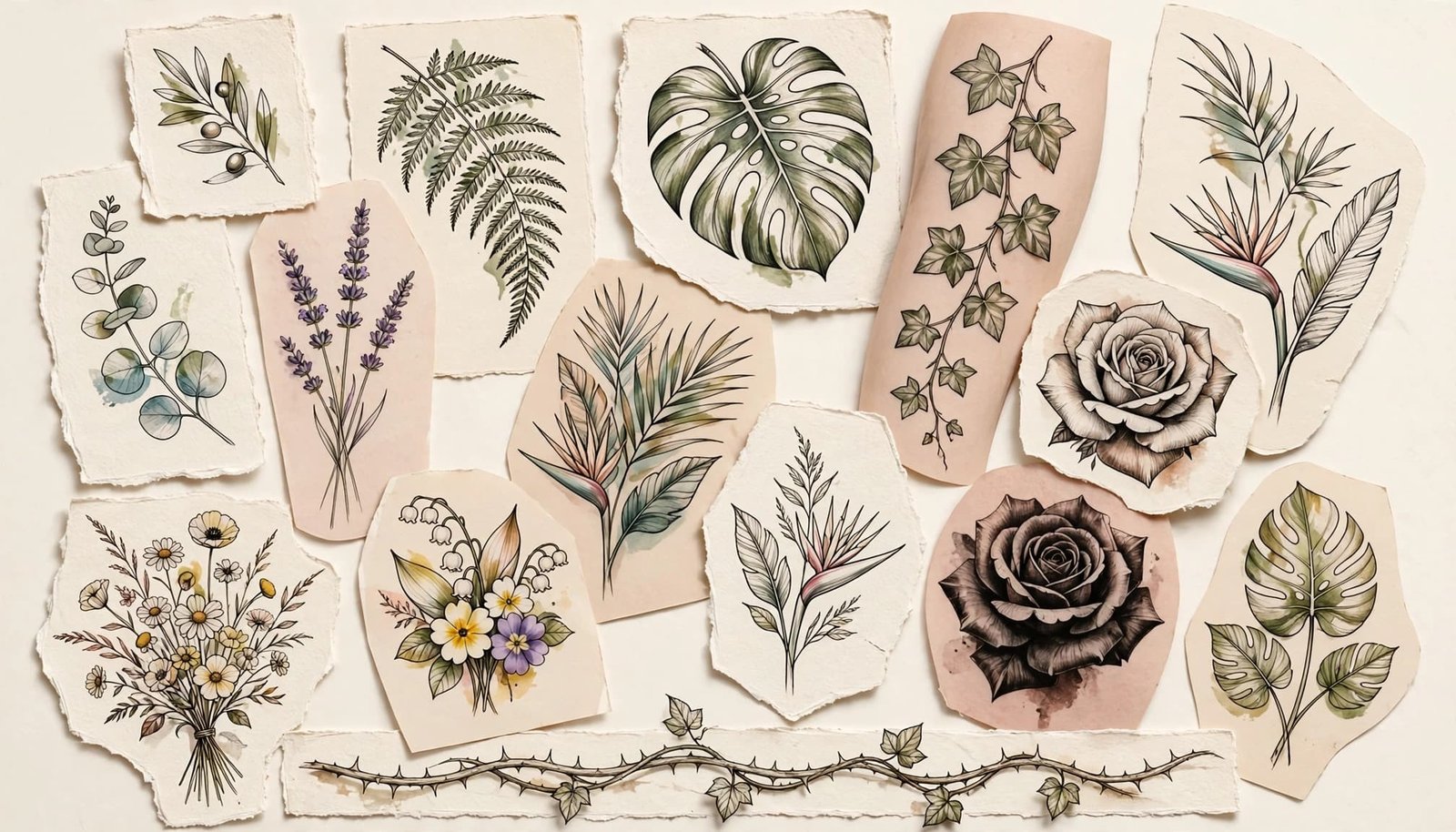
- Single olive branch: A slim branch with sparse leaves feels peaceful and timeless on the inner wrist or collarbone.
- Delicate fern frond: Curved leaflets create a soft woodland mood along the forearm or ankle.
- Eucalyptus sprig: Rounded leaves and a clean stem suit the behind-the-ear area or inner arm.
- Tiny lavender stem: A narrow purple wash adds gentle color without overwhelming a small design near the ankle.
- Minimalist monstera leaf: One outlined leaf makes a modern statement on the forearm or shoulder.
- Curved ivy vine: Let the vine follow the collarbone, ankle, or ribs for a natural trailing effect.
- Small rosemary branch: A fine, aromatic-looking sprig works well behind the ear or along the inner wrist.
Tiny designs need room between parallel lines and separate leaves. Ask your artist whether the planned scale will preserve the details after healing and normal skin changes.
Wildflowers, Meadows, and Free-Spirited Floral Pieces
Wildflower tattoos feel gathered rather than arranged. Their loose spacing and uneven stems can recall childhood gardens, road trips, open fields, or a favorite season.
- Loose wildflower bouquet: Combine several delicate stems with varied heights for a spontaneous forearm piece.
- Cottagecore meadow: Layer grasses, small blooms, and a few imperfect leaves across the upper arm or thigh.
- Daisy chain: A simple chain can wrap the wrist, ankle, or upper arm with a playful, youthful rhythm.
- Poppy stem: One bright bloom creates a graceful vertical tattoo for the ribs, calf, or back of the arm.
- Baby’s-breath bundle: Fine branches and tiny blossoms suit black ink or a pale, airy color palette.
- Pressed-flower arrangement: Flattened blooms and precise outlines create a keepsake feel on the shoulder blade.
- Hand-picked field bouquet: Mix flowers with different shapes and heights to suggest a walk through an open meadow.
Black ink keeps these designs crisp, while muted reds, dusty yellows, sage greens, and soft earth tones add warmth. For historical inspiration, Kew’s overview of botanical illustration history shows how plant studies can carry both artistic and personal stories.
Birth Flowers and Botanical Tattoos With Personal Meaning
Birth-flower tattoos can tell a family story without requiring a large design. Check the flower assigned to your birth month carefully, since some traditions offer multiple choices.
- Single birth flower: Choose one bloom and let its shape carry the focus on the wrist, shoulder, or rib.
- Family birth-flower bouquet: Place several flowers on connected stems, using size and spacing to keep the design open.
- Mother-and-child pairing: Two related blooms can honor a close bond on the forearm or upper chest.
- Birth-month garden: Arrange flowers from several months into a small garden scene with varied heights.
- Memorial flower stem: A favorite flower can become a restrained remembrance piece with one stem and minimal shading.
- Flower with a hidden date: Tuck meaningful numbers into leaf veins, stem marks, or subtle negative space.
Choose fewer flowers when the tattoo is small. Personal meaning matters more than collecting every symbol, and a simple composition often tells the story more clearly.
Detailed Flowers and Scientific Botanical Illustrations
Detailed botanical tattoos suit readers who love visible veins, layered petals, roots, seeds, and plant structure. A soft natural illustration feels different from a precise vintage field-guide study, so review both styles before booking.
- Realistic rose: Layered petals and controlled shading create a romantic focal point on the upper arm or thigh.
- Peony study: Broad petals and heavy flower volume make this a strong shoulder or hip design.
- Lotus with roots: Show the flower above water and its roots below for a balanced vertical composition.
- Sunflower with visible seeds: Emphasize the central seed pattern for texture on the calf or outer forearm.
- Botanical cross-section: Reveal the inside of a flower, fruit, or seed for an unusual scientific design.
- Herbarium-style pressed plant: Flattened leaves, fine outlines, and restrained shading create an archival look.
- Plant anatomy illustration: Include roots, stems, leaves, and small scientific details for a naturalist-inspired piece.
These designs need an artist who understands proportion, line hierarchy, shading, and botanical structure. Fine outlines should support the main form instead of competing with it.
Dark Botanicals, Vines, and Garden-Inspired Statement Pieces
Larger botanical tattoos can use heavy blackwork, dramatic shadows, and limited color for a moodier effect. Stems and leaves should follow the body’s curves, while negative space keeps dense work from becoming a solid block.
- Dark rose composition: Black petals and deep shadows create a gothic focal point on the upper arm or chest.
- Victorian herbarium plate: Combine specimens, ornamental borders, and restrained labels for an antique-inspired sleeve panel.
- Thorny vine: Let sharp thorns wind around the forearm, calf, or ribs with deliberate open gaps.
- Botanical snake and leaves: Pair a curling snake with broad foliage for contrast between smooth movement and sharp detail.
- Tropical plant cluster: Layer palms, monstera leaves, and bold flowers across the shoulder or thigh.
- Wraparound garden sleeve: Connect stems and leaves around the arm, leaving skin breaks between major forms.
- Seasonal garden: Blend spring blossoms, summer greenery, and autumn leaves into one changing garden scene.
Before choosing a large piece, ask to see healed work in a similar style. A thoughtful artist can adjust scale, line weight, and negative space so the garden follows your body rather than fighting it.
Choose a Botanical Tattoo Style That Matches Your Personality
The same flower can look completely different on skin. A rose may feel airy with a single unbroken line, romantic with soft shading, antique in a herbarium layout, or dramatic with dense blackwork. Before booking, compare line weight, color, detail, and composition against your personal style and the placement you have in mind.
Fine-Line and Minimalist Botanicals for a Soft, Airy Look
Fine-line tattoos suit small sprigs, single stems, leaves, and simple floral outlines because they keep the design visually light. The open skin around each mark gives tiny botanicals room to breathe, while delicate details can suggest leaf veins or petal edges without making the tattoo feel crowded.
This style works well if you prefer jewelry-like body art that stays subtle under everyday clothing. A single olive branch, lavender stem, or fern can feel personal without becoming the first thing people notice.
However, fine lines can soften or spread over time. Friction from waistbands, shoes, or watchbands can affect exposed areas, while sunlight may fade delicate pigment faster. Ask to see an artist’s healed fine-line tattoos, not only fresh photographs taken immediately after an appointment. Healed examples reveal how clearly the lines settle after swelling and peeling end.
Color-Washed Florals and Earthy Botanical Palettes
Muted greens, dusty pinks, ochre, terracotta, lavender, and soft blue add dimension without making a botanical tattoo look overly bright. A limited palette can keep a flower grounded in nature, especially when the artist leaves parts of the design in black or soft gray.
For example, dusty pink petals can give a rose a worn-garden feeling, while sage leaves and terracotta accents can make a bouquet feel warm and autumnal. Soft blue suits forget-me-nots, hydrangeas, and wildflowers when you want color that remains gentle.
Color can change as a tattoo heals, so ask how the artist expects each pigment to settle on your skin tone. Saturated shades also need more attention to sun protection after healing. The American Academy of Dermatology’s tattooed-skin guidance recommends broad-spectrum, water-resistant SPF 30 or higher on healed tattooed skin.
Blackwork, Dark Botanical, and Vintage Herbarium Styles
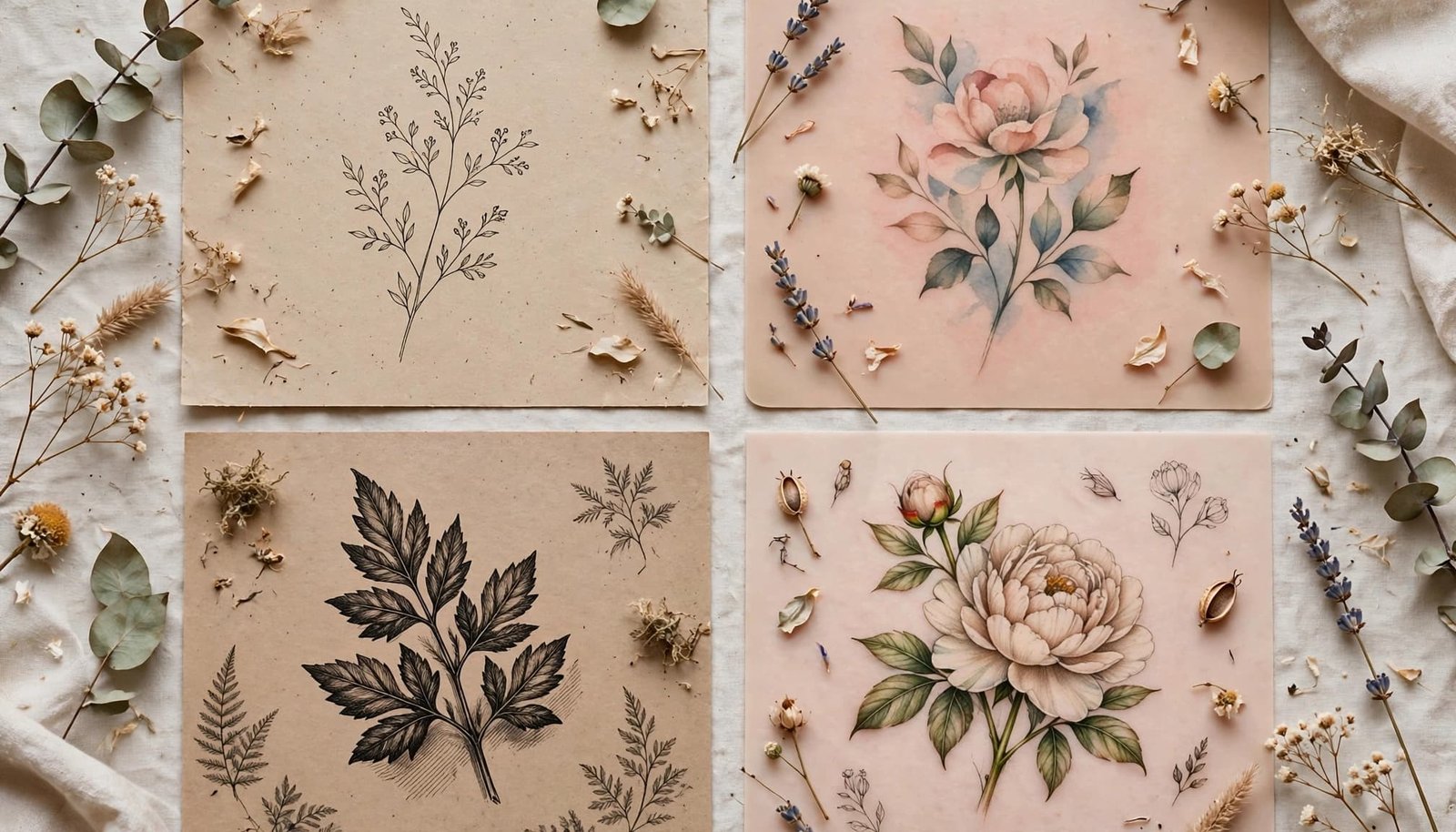
Blackwork uses bold outlines, dense shadows, stippling, and crosshatching to create a stronger visual presence. With the right composition, a dark botanical tattoo can feel mysterious, romantic, gothic, or scholarly, much like a Victorian naturalist’s study lifted from an old field journal.
Heavy ink needs open skin around it. Without enough breathing room, individual leaves and petals can merge into one dark shape, especially as the tattoo ages. Ask the artist to create a clear line hierarchy, with the main flower receiving the strongest outline and smaller details staying lighter.
Large blackwork designs also need careful planning. Placement affects how stems follow the body’s curves, while scale determines whether the shading has enough space to remain readable. Review the full stencil before the session, particularly for sleeves, ribs, thighs, and wraparound compositions.
Realistic, Illustrated, and Micro-Realism Plant Designs
Realistic flowers focus on natural texture, layered petals, visible veins, and accurate light. Illustrated botanical plates often look cleaner and more structured, with controlled outlines and shading inspired by vintage plant studies. Micro-realism compresses lifelike detail into a smaller design, but that smaller scale demands careful editing.
A realistic rose, peony, or sunflower requires more time and specialist skill than a simple outline. Bring references that show the flower’s actual shape, leaves, stem, and growth pattern rather than only cropped images of other tattoos. Those details help the artist build a design that looks like a real plant.
Very small realistic features may need simplification. Fine petal folds and tiny leaf veins can blur after healing if they sit too close together. A skilled artist will preserve the flower’s identity while removing details that cannot hold at the chosen size.
Give Your Nature Tattoo a Meaning That Feels Like You
A beautiful flower can catch your eye, but a personal story gives a botanical tattoo its staying power. Instead of copying a design because it looks good online, ask what you want the plant to remember about you, your family, or a place that shaped you.
The same flower can mean love to one person, grief to another, and independence to someone else. There is no single correct dictionary for plant symbolism. Your connection matters most.
Use Flowers, Leaves, and Roots to Tell a Personal Story
Flowers can stand for people, seasons of life, or memories you want to keep close. A rose might remind you of someone who cared for a garden, while a daisy could bring back childhood summers. You might choose a birth flower for yourself, then add a second bloom for a parent, partner, sibling, or friend.
Leaves suggest movement and change because they grow, shift color, and return in new seasons. A fresh green leaf may suit a new beginning, while autumn leaves can honor a chapter that ended. Roots add another layer, expressing family, home, ancestry, or the quiet support beneath your life. Winding vines can show connection between people, places, or versions of yourself. They can also suggest persistence when they climb around stone, walls, or other plants.
Build the design from details that belong to you:
- Combine plants from a meaningful garden, hometown, hiking trail, or vacation.
- Choose flowers that bloom during a wedding, birthday, recovery, or important goodbye.
- Add a favorite insect, such as a moth, bee, or butterfly, if it belongs naturally in the scene.
- Hide a small initial in the stem or use leaf spacing to suggest a meaningful number.
- Place a simple mountain, shoreline, field, or tree line behind the plant to recall a favorite landscape.
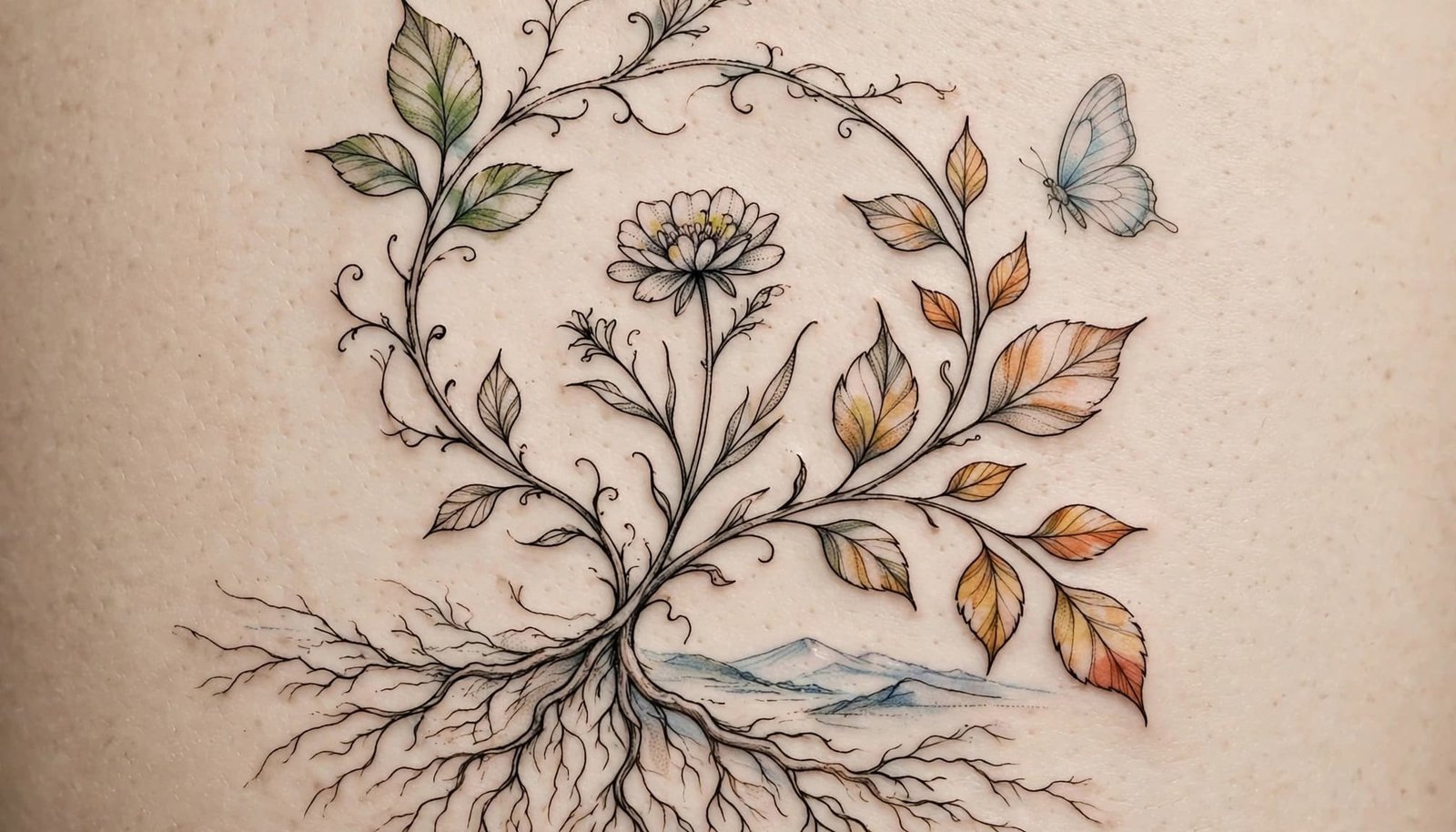
Keep these details restrained. One unusual insect or a small landscape can add a private layer, while five unrelated symbols may make the tattoo difficult to read.
Combine Botanical Motifs With Other Meaningful Symbols
A botanical subject pairs well with symbols that share its mood or story. A crescent moon with night-blooming flowers can suggest solitude, intuition, or peaceful evenings. A bird among branches may recall freedom, migration, or a loved one who moved far away. A butterfly near wildflowers can speak to personal change, while a book with pressed plants suits someone whose memories live in journals, poems, or old field guides.
For a larger design, let a landscape grow from the roots of a tree or flower. The roots might hold a house, coastline, or mountain range instead of sitting beneath the plant as a separate decoration. This approach gives every part of the tattoo a reason to exist.
Keep the botanical element visually important. Choose one main plant, then use supporting symbols to guide the eye toward it. A skilled artist can adjust scale, spacing, and line weight so the flower remains clear after the tattoo heals.
Cultural respect matters when you choose a sacred plant, ceremonial image, or symbol tied to a living tradition. Research its meaning through reliable community or institutional sources, rather than treating it as an exotic design detail. Some plants connect to ceremony, medicine, identity, or tattoo practices that belong to specific communities. If the symbol isn’t part of your own story, choose a different image or discuss an appropriate adaptation with a knowledgeable artist.
Make a Custom Design Without Losing Its Natural Feel
A custom botanical tattoo still needs structure. Start with this simple planning process:
- Choose the main plant and learn its real shape, leaves, flowers, and growth pattern.
- Decide what feeling or memory the design should carry.
- Collect accurate references from living plants, botanical gardens, herbarium images, or field guides.
- Select the scale and decide how much detail your skin can hold clearly.
- Identify the body area so the artist can follow its curves and movement.
Accurate references help when you want a recognizable species. Use more than one image, especially for plants with unusual leaves, seed pods, roots, or flower structures. Botanical illustration standards favor specimen-based references, clear proportions, and visible features rather than a decorative image that only looks plant-like.
Share the personal meaning with your artist, but leave room for professional judgment. Your artist can improve the flow, spacing, anatomy, and readability without removing the story. A stem may need to bend with your forearm, or a cluster of leaves may need more open skin between each form.
The best custom design feels personal at first glance and meaningful over time. Give the artist the story, the plant, and the feeling, then let the final composition grow naturally from those foundations.
Find the Best Placement for a Botanical Tattoo
Body placement affects more than how often people see your tattoo. It determines the design’s scale, direction, comfort, movement, sun exposure, and ability to hold detail over time. A single stem may look graceful along the forearm, while a full garden composition needs the broad canvas of a thigh or back.
Before choosing a flower, study the body’s natural lines. Ask your tattoo artist to show the design as a stencil so you can see how it moves when your arm bends, your shoulder turns, or your hip shifts.
Forearm, Upper Arm, and Shoulder Designs That Flow Naturally
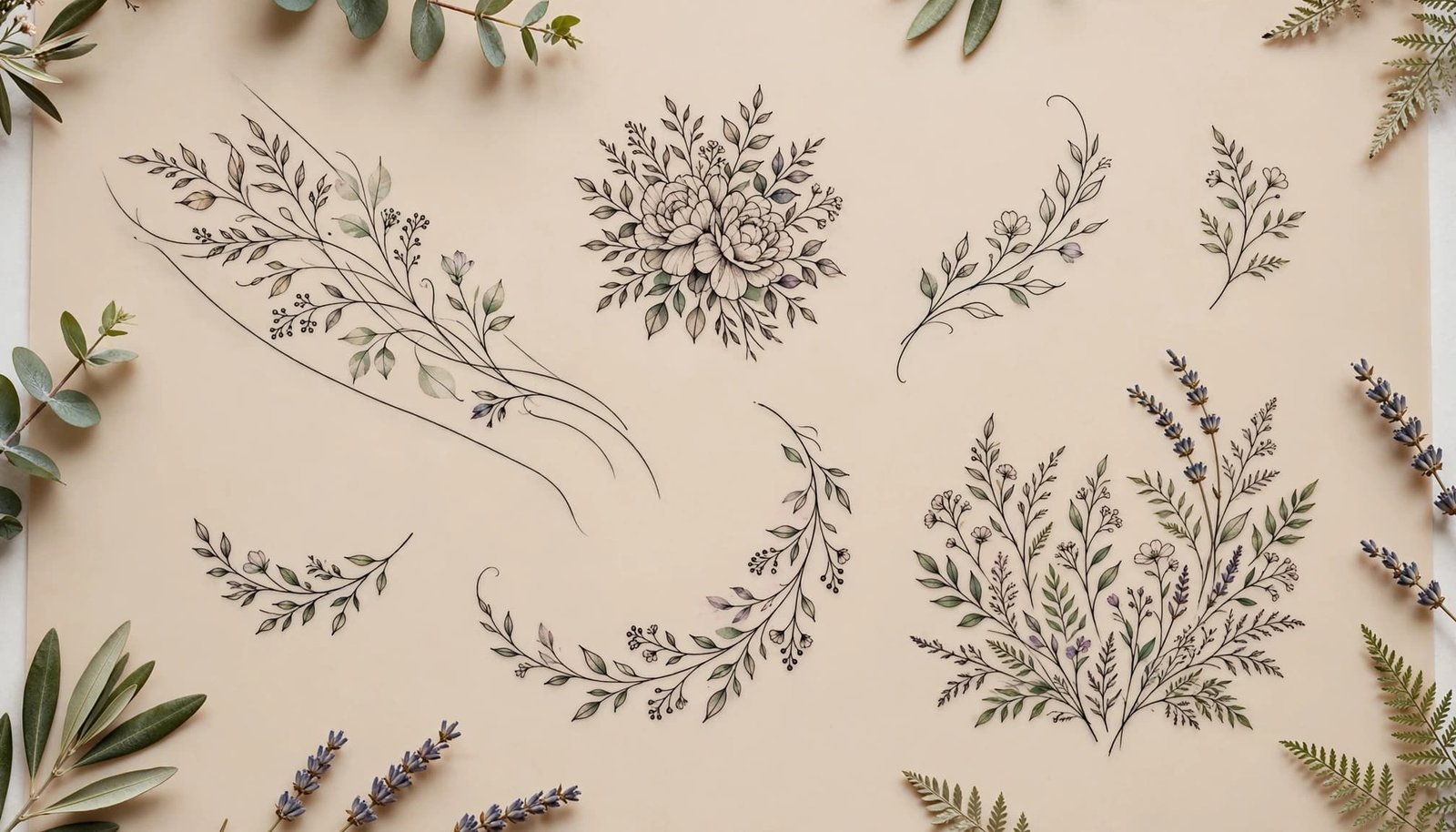
The forearm and upper arm suit stems, leafy branches, wildflower bouquets, and medium-sized botanical illustrations. Their length gives a vertical design room to breathe, while the surrounding skin makes it easier to separate leaves, petals, and fine veins.
An inner-forearm tattoo offers a more personal view and stays visible to you throughout the day. The outer forearm receives more attention from other people, so it works well for a statement sprig or recognizable flower. An artist can angle the stem toward the wrist or elbow so the design reads clearly when your arm rests naturally and when you turn it.
Shoulder tattoos benefit from the rounded shape of the deltoid. A bouquet can spread across the curve, while a vine can travel toward the collarbone, upper back, or upper arm. Medium-sized pieces often work well here because the artist can use the shoulder’s movement without forcing the design into a flat rectangle.
These areas are often easier to protect than hands or feet, especially during the healing period. However, exposed skin still needs sun protection after healing. The American Academy of Dermatology recommends broad-spectrum, water-resistant SPF 30 or higher on healed tattooed skin, with reapplication at least every two hours during sun exposure.
Ribs, Back, Thigh, and Hip Pieces With More Room to Grow
The back and thigh give larger botanical tattoos space for layered bouquets, scientific plant studies, garden scenes, and vines that travel across several curves. A peony with visible petals, roots, leaves, and seed pods needs more room than a small wrist sprig. These broad areas let your artist preserve detail without crowding each form.
A back piece can follow the spine or spread across one shoulder blade. Meanwhile, the thigh provides a wide, stable canvas for a wildflower meadow, tropical plant cluster, or seasonal garden. The hip and ribs feel more private, which makes them fitting choices for memorial flowers, family plants, or designs you want to keep mostly covered.
Rib tattoos can feel more uncomfortable for some people because the skin sits close to bone and moves with breathing. Clothing friction may also affect healing, especially with tight waistbands, bras, or rough fabrics. Choose loose, clean clothing while the tattoo heals, and follow your artist’s instructions rather than applying sunscreen to peeling or open skin. A practical tattoo aftercare guide also advises avoiding direct sun and friction during healing.
Wrists, Ankles, Collarbone, and Behind-the-Ear Botanicals
Small placements create a jewelry-like effect. A lavender stem can follow the collarbone, a tiny leaf cluster can sit on the wrist, and a short vine can curve around the ankle. Behind the ear, a small flower or eucalyptus sprig can remain discreet beneath the hair.
These areas also receive more movement, sun, or friction than many people expect. Watchbands can rub wrist tattoos, socks and shoes can irritate ankle designs, and collars may brush the collarbone. Behind-the-ear tattoos can feel sensitive, while hair, shampoo, and styling products may complicate early aftercare.
Choose a design with enough open space for long-term clarity. A simple sprig usually ages better than a crowded cluster of tiny leaves and miniature petals, particularly when the tattoo sits on a narrow or high-contact area.
High-Wear Areas to Consider Carefully
Fingers, hands, feet, and skin that rubs against shoes, jewelry, or clothing need extra thought. Frequent washing, gripping, walking, sweat, and friction can cause tattoos in these areas to fade or blur sooner than designs in more protected locations. Touch-ups may become part of long-term maintenance.
Results vary with the artist’s technique, ink, your skin, lifestyle, sun exposure, and healing process. For high-wear placements, choose simpler botanical shapes with stronger outlines and wider spacing. A bold olive leaf, single daisy, or compact stem usually holds its identity better than a tiny bouquet packed with delicate detail.
Plan the Cost, Artist, and Long-Term Care Before You Book
A botanical tattoo deserves planning beyond choosing a beautiful flower. Size, detail, placement, artist demand, healing time, and future maintenance all affect the experience. Before you pay a deposit, confirm the design, cost, studio standards, and aftercare plan so your tattoo feels like a thoughtful choice rather than an impulse.
How Size, Detail, Color, and Sessions Affect the Price
A tiny single-stem tattoo usually takes much less time than a custom bouquet, detailed plant study, or botanical sleeve. However, size is only one part of the quote. Artists may price by the hour, use a studio minimum, or offer a set rate for smaller designs. Rates also vary widely by location, experience, demand, and the complexity of the work.
Custom drawing takes time before the needle touches your skin. A realistic peony with layered petals, accurate leaves, and soft shading requires more preparation than a simple outline. Color, realism, dense blackwork, fine-line detail, and large areas of coverage can also raise the total. A sleeve or full back piece may require several sessions, with each appointment priced separately.
Request a clear estimate before booking. Ask whether the price includes:
- The consultation and custom drawing time.
- A deposit, and whether it applies to the final balance.
- The tattoo session, color supplies, and adjustments to the stencil.
- Touch-ups, including whether they are free within a set period.
- Additional sessions if the design needs more time than expected.
A written estimate won’t remove every variable, but it gives you a practical budget. If the artist cannot explain what the quote covers, pause before sending a deposit.
Choose an Artist Who Understands Botanical Detail
Start with portfolios that show the kind of work you want. Search for healed botanical tattoos, fine-line florals, botanical illustrations, or realism pieces rather than judging an artist by one impressive fresh tattoo. Healed photos reveal whether lines remain clean, color stays readable, and small details settle well after the initial swelling fades.
Look for natural plant structure, controlled line weight, balanced composition, and enough negative space between leaves and petals. A flower should still look like the species you chose, not like a generic floral shape. Ask how the artist would adapt the design to your body area, especially if the tattoo will wrap around a shoulder, follow your ribs, or fit a narrow ankle.
You can also ask whether the artist would simplify certain details at your chosen size. Removing a few tiny veins may protect the design’s clarity for years. During your consultation, confirm the studio follows local licensing requirements and uses proper hygiene practices, including fresh needles and clean, well-maintained equipment. Clear communication matters just as much. You should feel comfortable discussing changes, skin concerns, timing, and the artist’s honest opinion about placement.
Protect Fine Lines and Color as the Tattoo Heals
Follow your artist’s written aftercare instructions because products and bandage methods can differ. In general, wash the tattoo gently with clean hands, lukewarm water, and mild fragrance-free soap. Pat it dry with a clean towel or paper towel, then apply a thin layer of the recommended fragrance-free moisturizer. Scrubbing, heavy ointment, picking, and scratching can irritate healing skin.
Keep the tattoo out of pools, hot tubs, lakes, and baths until it has fully healed. Showers are usually easier to manage, but avoid soaking the area or trapping it beneath tight, dirty clothing. Fresh tattoos are open, healing skin, so don’t apply sunscreen to them. Clothing and shade offer better protection during those first weeks.
Once the tattoo has healed completely, apply broad-spectrum, water-resistant SPF 30 or higher whenever it is exposed to sunlight. Regular fragrance-free moisturizer can also reduce dryness and keep the skin comfortable. Even with careful aftercare, fine lines may soften and color may fade over time, so a professional touch-up can restore areas that have lost clarity.
Conclusion
The strongest botanical tattoos combine natural beauty with personal meaning. Choose a plant whose symbolism feels true to your story, then consider whether fine-line, colorful, realistic, illustrated, or dark botanical work best expresses that connection. Placement should suit the design’s size, your daily life, and the way the body moves.
Before booking, review the artist’s healed work and confirm the cost, design details, studio standards, and aftercare instructions. A thoughtful tattoo begins with one plant or memory, then grows through careful choices about style, placement, budget, and long-term care.
Whether you choose a tiny lavender stem or a full seasonal garden, the finished piece can feel like carrying a small garden, a favorite season, or a piece of home wherever you go.
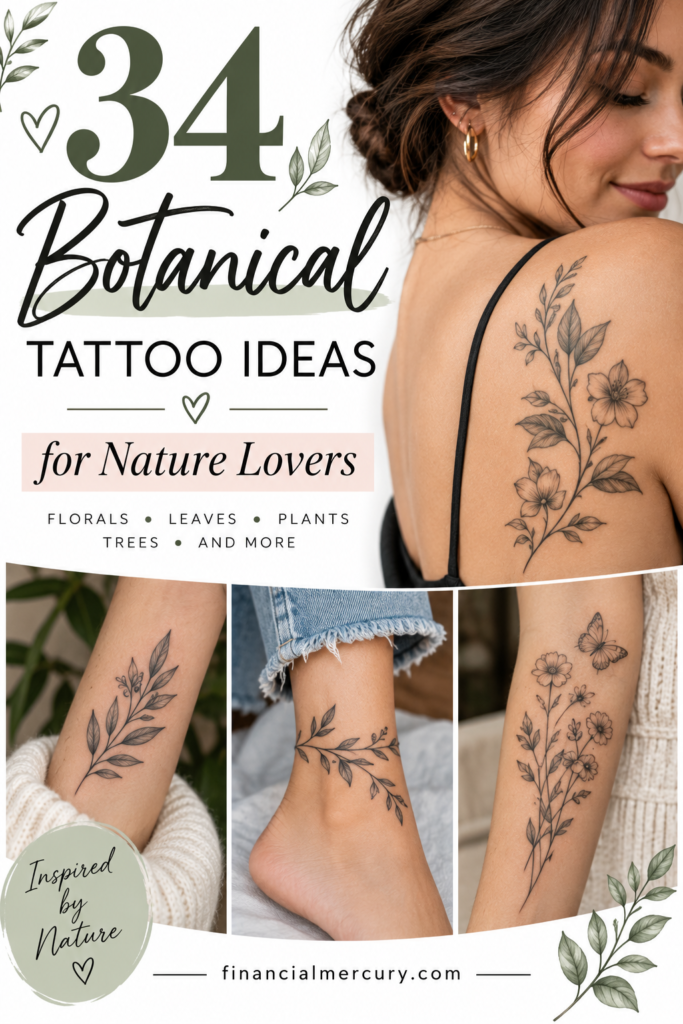
Save the pin for later

- 34 Botanical Tattoo Ideas for Nature Lovers - September 10, 2026
- 22 Rose Tattoo Ideas for Women With Personal Meaning - September 10, 2026
- 25 Magical Mushroom Tattoo Ideas for a Whimsical Design - September 10, 2026
Leave a Reply