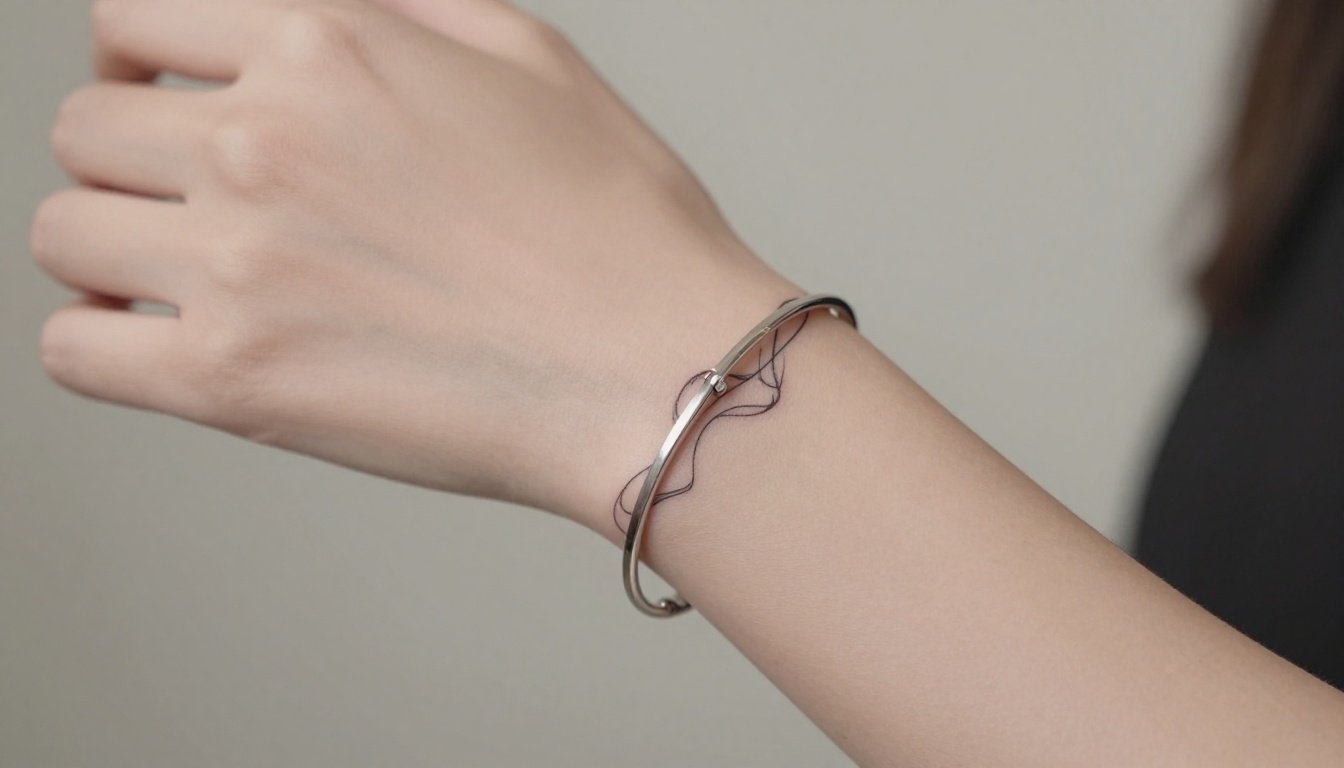
25 Beautiful Wrist Tattoo Ideas for Every Style
Wrist tattoos are easy to show when you want them noticed and simple to cover with a watch, bracelet, or sleeve. The area works well for tiny symbols, delicate linework, and detailed wrap-around designs, but its limited space and constant movement make placement and scale important.
In this guide, you’ll find 25 beautiful wrist tattoo ideas for different styles, along with practical advice on choosing the right placement, sizing your design, preparing for varying levels of pain, and caring for your tattoo while it heals. You’ll also learn what to look for in a tattoo artist, since clean technique and experience matter as much as the design itself.
Start with these wrist tattoo ideas, then narrow your favorites by considering how visible, detailed, and personal you want the finished piece to be.
25 Beautiful Wrist Tattoo Ideas for Every Personal Style
Your wrist can hold a nearly hidden design on the inner wrist, a visible piece above the hand, or a band that follows its natural curve. The best choice balances personal meaning with enough space for the details to stay clear.
Delicate floral and nature-inspired wrist tattoos
Fine-line tattoos look delicate, but they need a skilled artist and thoughtful sizing for long-term clarity.
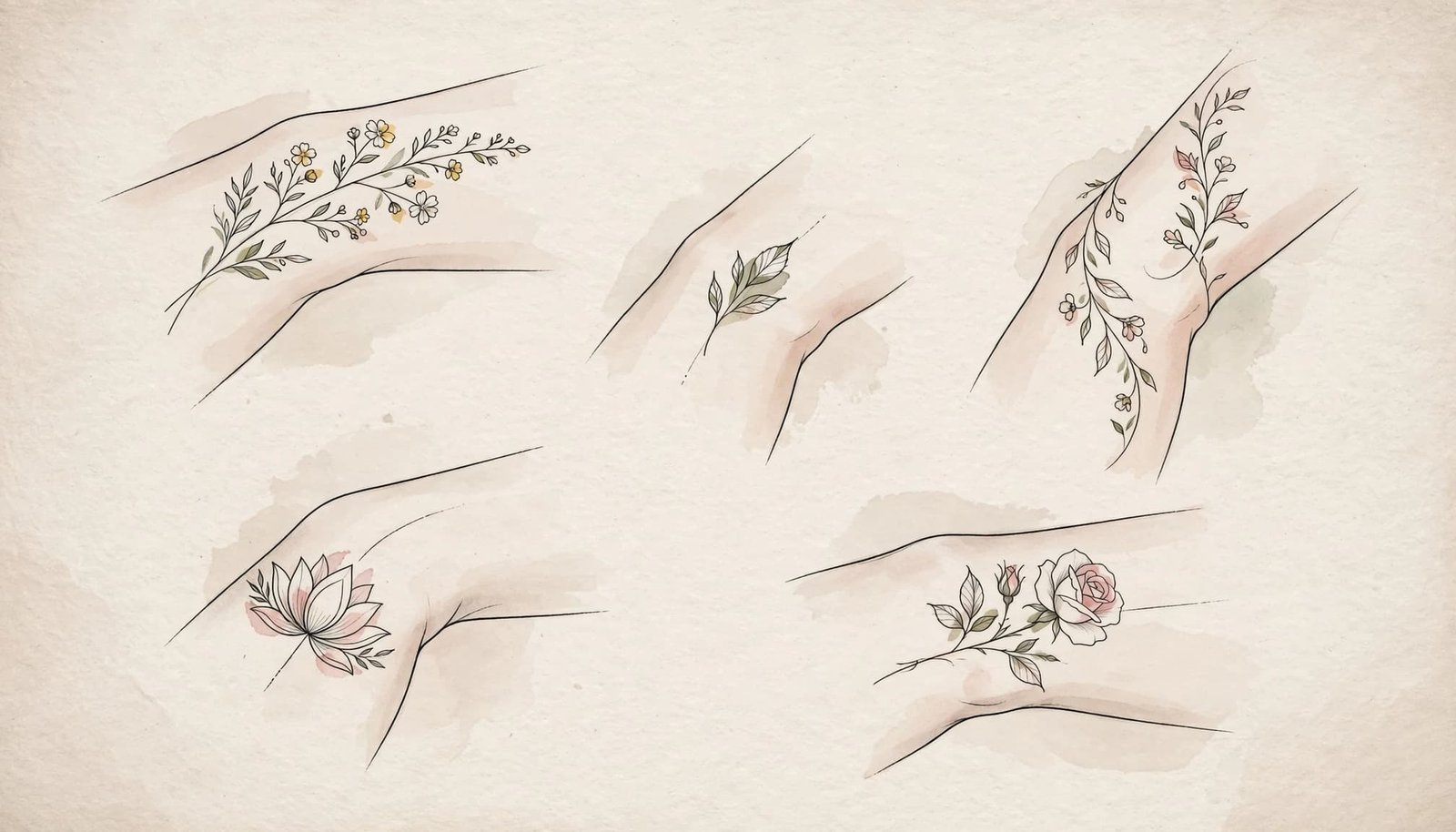
- A fine-line wildflower sprig can follow the wrist bone, with a birth flower added for personal meaning.
- A tiny botanical leaf suits the inner wrist and can use black ink, soft green color, or a hidden date along its stem.
- A winding floral vine curves toward the hand, creating a gentle, organic mood with leaves that wrap slightly around the wrist.
- A small lotus looks balanced on the inner wrist, while dotwork or one muted color can add depth without crowding it.
- A single rose creates a romantic focal point above the hand, with the stem angled toward the fingers or paired with a meaningful initial.
Very fine petals and dense shading may blur when squeezed into a tiny design, so ask your artist to simplify small details.
Minimalist symbols with a personal meaning
Small symbols suit the wrist because they remain readable while fitting neatly beside a watch or bracelet. Line weight, spacing, and placement determine whether a simple design stays crisp.
- A tiny heart on the inner wrist can feel intimate, with an initial or single accent color inside the outline.
- An infinity loop works well horizontally along the wrist, and a short trail or tiny star can make its meaning more personal.
- A simple mountain range points toward the hand and may recall a favorite hike, place, or personal achievement.
- A paper airplane looks light and playful near the wrist crease, with a dotted flight path showing a memorable journey.
- An understated evil eye fits above the hand, where a small blue accent can add contrast without overpowering the fine lines.
Leave enough space between tiny elements. Crowded symbols can merge as ink softens over time.
Celestial and spiritual wrist tattoo designs
Celestial tattoos can sit vertically along the wrist, run horizontally across it, or wrap around like a slim band. Choose a symbol because it connects with you, not only because it is trending.
- A crescent moon creates a calm, reflective mood on the inner wrist, with a few dotwork stars tucked inside its curve.
- A sun and moon pairing can sit side by side horizontally, with one small star separating the two faces or outlines.
- A moon-phase band wraps around the wrist and uses fine lines or dotwork to keep each phase visually distinct.
- A tiny constellation looks precise along the wrist bone, with custom stars arranged from a meaningful date or location.
- A sunburst points toward the hand and feels bold despite its small size; use a single center symbol for added meaning.
Words, dates, and lettering that feel truly yours
Short lettering usually ages better than a long quote on the wrist. Script feels personal, typewriter lettering looks clean, and every character must remain large enough to read.
- A meaningful name in exact handwritten script can sit on the inner wrist, using a loved one’s real penmanship.
- A short handwritten word, such as “steady,” can follow the wrist bone and carry a reminder that feels personal.
- A significant date looks clear in small typewriter lettering above the hand, with careful attention to capitalization and accents.
- A two-word reminder can run horizontally across the inner wrist, provided the letters have enough breathing room.
- Tiny coordinates can identify a meaningful location, with a discreet dot or small compass point as the customization.
Check spelling, capitalization, accents, numbers, and the exact handwriting before your appointment. Ask for a stencil in the intended size.
Ornamental, geometric, and bracelet-style ideas
Geometric wrist tattoos depend on symmetry, negative space, and consistent line weight. Since the wrist moves constantly, a band should be tested while the hand bends and relaxes.
- A delicate bracelet tattoo wraps around the wrist with fine ornamental links, while one meaningful center symbol breaks the pattern.
- A geometric band uses repeated triangles or arcs and can be rendered as clean blackwork or soft dotwork.
- A small mandala sits on the inner wrist, with open negative space preventing its ornamental details from becoming muddy.
- A compass points toward the hand and suggests direction, with a favorite place or single accent color added to its center.
- A fine-line geometric gemstone looks crisp above the hand, while symmetrical facets create sparkle without heavy shading.
Have the artist check the design from several angles before tattooing, especially if the pattern wraps around the joint.
How to Choose the Right Wrist Tattoo Design and Placement
Choosing a wrist tattoo starts with more than picking a pretty reference image. Consider what the design means to you, which tattoo style fits your personality, and how much space the idea needs to remain clear. You should also decide how visible you want the tattoo to be in daily life.
Start with meaning, style, and size
Save several wrist tattoo references before choosing one. Look for patterns in your collection. Do you keep favoring fine-line flowers, bold symbols, celestial details, lettering, or geometric shapes? Those repeated choices can help you identify the style that feels most natural.
Next, choose one main concept instead of combining every favorite element. A tiny moon may work beautifully alone, while a floral vine might need more room to show its leaves and curves. Small lettering, detailed shading, and tightly packed symbols can lose clarity when reduced too far.
Your tattoo artist can simplify the design without removing its meaning. Ask for a version with enough negative space and line weight for the wrist’s limited surface.
Compare the main wrist placements
Each area changes the tattoo’s visibility, orientation, and relationship with watches or jewelry.
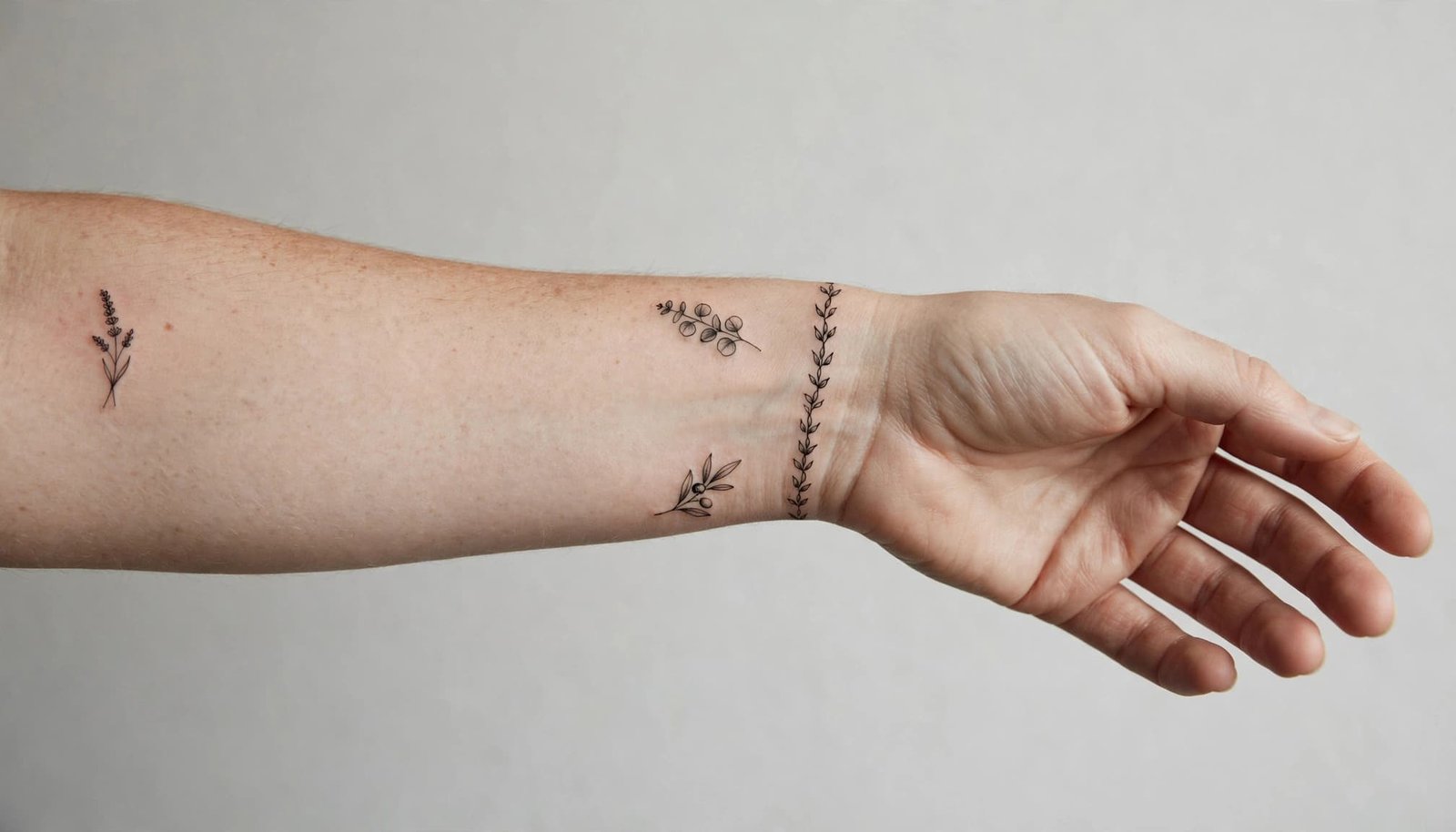
- The inner wrist often feels more personal because you see it throughout the day. It suits short words, dates, tiny symbols, and designs you want to keep somewhat private.
- The outer wrist is easier for other people to see, especially when your hands rest on a table or hang naturally at your sides. Bold linework and recognizable symbols work well here.
- The side of the wrist creates a narrow vertical space. A small leaf, constellation, arrow, or short word can follow the natural line toward the hand.
- A wrap-around tattoo can look like a bracelet, but the artist must account for movement and changing angles. Test the stencil with your wrist relaxed, bent, and rotated before approving it.
Think about whether the design should face you or other people. Lettering placed for your view may appear upside down to someone across from you, while an outward-facing symbol reads more clearly in photos and conversation.
Factor in everyday visibility
Your dominant hand gets more movement and attention, so a tattoo there may feel more noticeable during work, writing, and daily tasks. The nondominant wrist may offer a slightly less distracting placement, especially for people who use their hands constantly.
Workplace policies also matter. A watch or bracelet can cover a small tattoo, but a wrap-around band may remain visible above and below the jewelry. Before booking, check how the design looks beside the accessories you wear most often.
The American Academy of Dermatology’s tattoo guidance also recommends considering how ink may affect the appearance of skin changes, so avoid tattooing over unusual moles or areas you may need to monitor.
Test the design before your appointment
Print the design at its intended size, cut it out, and place it on your wrist with removable tape. Wear it for a full day, then check it under different lighting and with your usual watch or bracelets.
A temporary tattoo can help you judge visibility, but avoid black henna as a test. It can contain PPD, which may cause serious skin reactions. Finally, show your preferred mockup to the artist and ask them to adjust the shape, angle, and spacing for your body’s natural curve.
Wrist Tattoo Styles That Look Beautiful Over Time
A beautiful wrist tattoo should suit your taste today and remain readable after years of movement, sunlight, and natural ink spread. The wrist bends constantly, receives regular sun exposure, and offers limited room for spacing, so design simplicity often supports better longevity.
Your tattoo artist may recommend a slightly larger design or stronger line weight than you first imagined. That adjustment can protect the tattoo’s main shape without taking away its delicate character.
How popular tattoo styles age on the wrist
Each tattoo style has strengths and tradeoffs when placed on this small, active area.
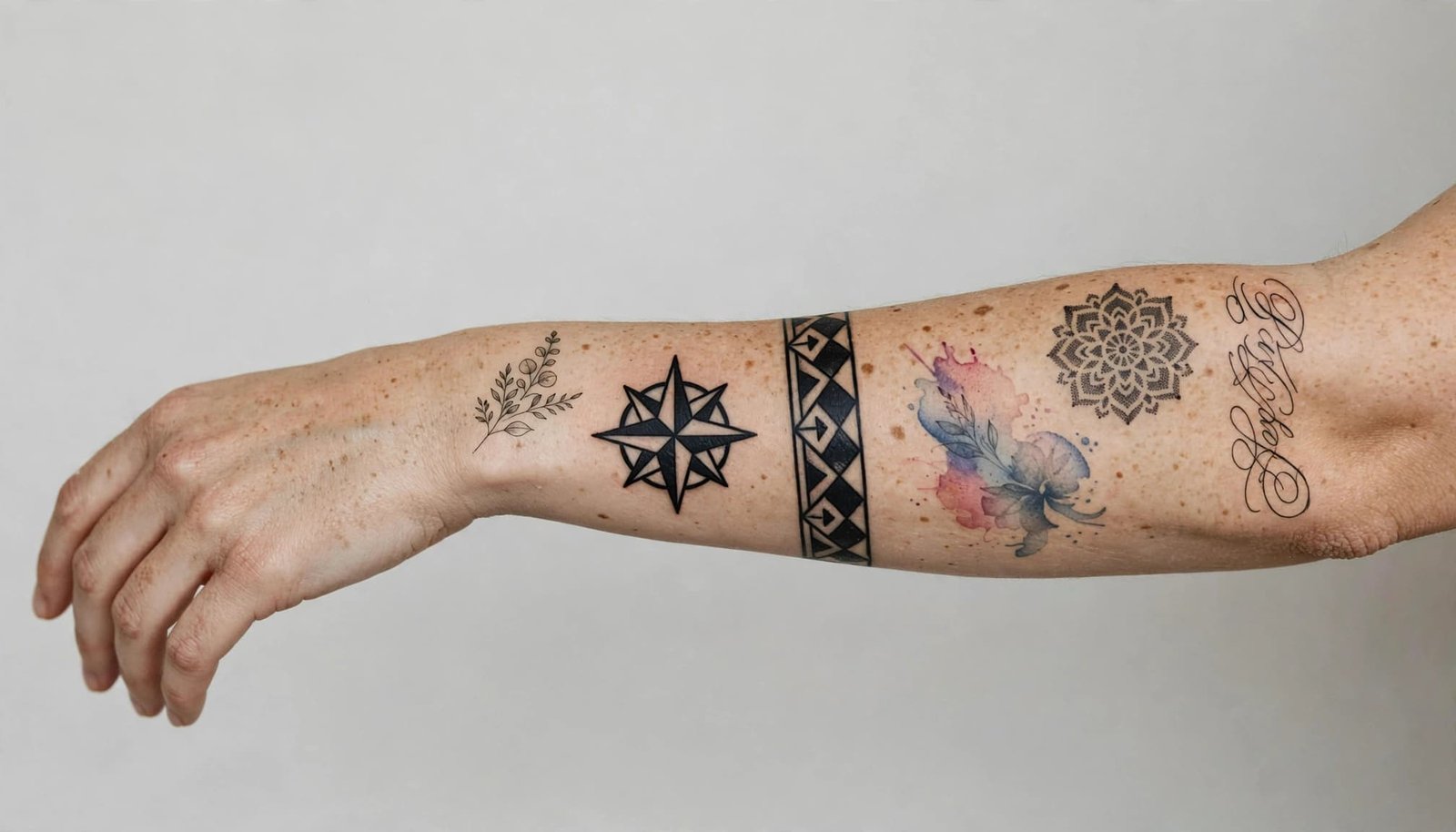
- Fine-line tattoos look light and elegant, especially with small flowers, stars, or simple outlines. However, very thin lines can fade or become harder to distinguish when the design includes too much detail. Read more about fine-line tattoo longevity before choosing an ultra-delicate piece.
- Traditional tattoos use bold outlines and solid color, so they usually remain recognizable as the ink softens. A small rose, heart, bird, or dagger can keep its shape well, although heavy designs may look less subtle.
- Blackwork relies on strong black ink, filled areas, and clear contrast. It suits graphic symbols and compact geometric designs, but large solid sections can overpower a narrow wrist.
- Watercolor tattoos create a soft effect with blended colors and limited outlining. They can look beautiful when fresh, yet pale pigments often lose contrast sooner than solid black ink, especially with frequent sun exposure.
- Dotwork uses clusters of small dots for shading and texture. Open spacing helps the pattern stay clear, while tightly packed dots may merge as the tattoo ages.
- Geometric tattoos depend on symmetry and clean spacing. Simple arcs, bands, and shapes tend to age better than tiny patterns with many intersecting lines, because wrist skin shifts as you bend and rotate your hand.
- Script tattoos can feel personal and timeless, but small lettering needs enough height and spacing to remain legible. A short word usually holds up better than a long quote squeezed across the wrist.
Balance delicate detail with stronger structure
Small tattoos can lose clarity when every part of a larger design gets reduced. Tiny leaves may merge, lettering may blur, and fine geometric sections may lose their separation. Ask your artist which details should stay, which should be removed, and whether the design needs more breathing room.
A simple tattoo with confident lines often looks better healed than a crowded tattoo with impressive detail.
Sun protection also matters. Once the tattoo has healed, use broad-spectrum, water-resistant SPF 30 or higher on exposed skin, and reapply it during extended outdoor time. Covering the area with clothing and avoiding tanning beds can also reduce fading.
Finally, judge an artist by healed tattoo photos, not only fresh work. Fresh ink looks crisp on nearly everyone. Healed examples show the artist’s actual line control, saturation, spacing, and ability to create wrist tattoos that stay attractive over time.
What Wrist Tattoos Feel Like and How Long They Take to Heal
Wrist tattoos often feel sharper than tattoos placed on fleshier areas because the skin is thin and the bones sit close to the surface. The experience still varies widely, so your exact placement, design size, line weight, appointment length, and personal pain tolerance all matter.
How much does a wrist tattoo hurt?
Most people describe the sensation as a steady scratching, stinging, or vibrating burn. The inner wrist can feel especially sensitive, while the outer wrist may feel more manageable when the tattoo sits over slightly thicker skin. Areas close to the wrist bone can produce a sharper sensation because there is less padding between the needle and bone.
A small minimalist symbol may take only a few minutes, which limits the discomfort. A wrap-around bracelet, dense blackwork design, or detailed floral tattoo can feel more tiring because the artist works over more skin. Your wrist may also become more tender as the appointment continues.
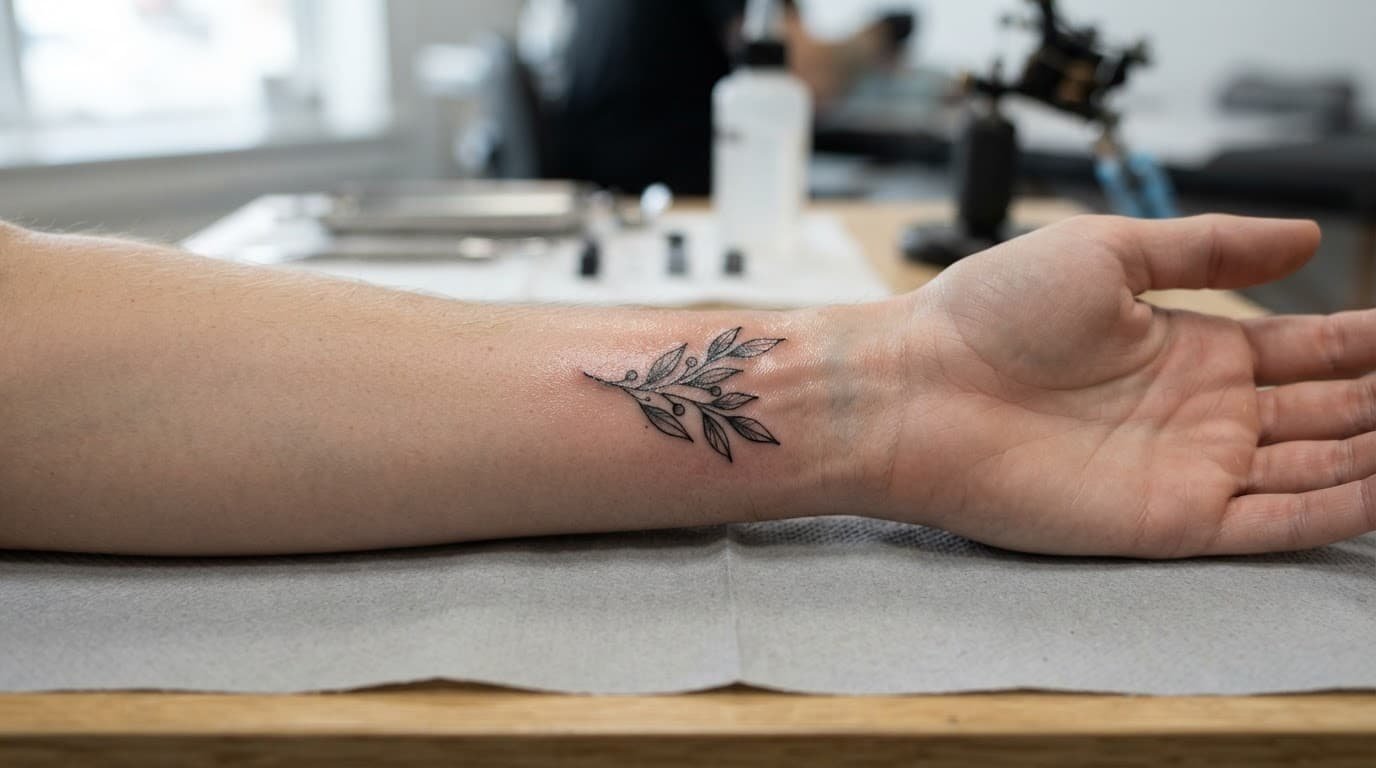
Avoid judging your expected pain by someone else’s experience. Hydration, sleep, stress, recent sun exposure, and whether you have eaten can affect how your body handles the session. Tell your artist if the sensation becomes difficult, and follow their advice instead of applying a numbing product without discussing it first.
What wrist tattoo healing feels like
After the appointment, mild redness, swelling, tenderness, warmth, and discomfort can be normal for the first several days. You may also notice a small amount of clear fluid. As the tattoo heals, the skin can itch, peel, flake, or form light scabs. The American Academy of Dermatology explains more about normal tattoo skin reactions.
Surface healing commonly takes about 14 to 21 days, although deeper layers of skin can continue settling after the surface looks better. During this period, treat the tattoo as healing skin rather than a finished decoration. Follow these basic steps:
- Keep the original dressing on for the time your artist recommends, since bandage instructions vary by product and tattoo size.
- Wash your hands before touching the tattoo, then clean it gently with fragrance-free soap and lukewarm water.
- Pat the area dry with a clean paper towel or fresh towel. Avoid rubbing the skin.
- Apply only a thin layer of the recommended aftercare product. Heavy layers can trap moisture and irritate the area.
- Leave peeling skin and scabs alone. Picking can remove pigment and increase the risk of scarring.
- Avoid pools, hot tubs, lakes, baths, and prolonged soaking until the skin has sealed.
Once the tattoo has healed, protect it with broad-spectrum SPF 30 to 50 when it is exposed to sunlight. Contact a medical professional if redness, swelling, pain, warmth, or fluid worsens instead of improving, especially if you notice pus, fever, chills, or red streaks.
How to Prepare for a Wrist Tattoo Appointment
Good preparation helps you choose the right artist, avoid preventable discomfort, and arrive ready to make clear decisions. Before booking, check the studio’s reputation and hygiene practices. Before the session, focus on food, water, comfortable clothing, and honest communication with your artist.
Research the studio and artist before booking
Start by looking for a licensed or reputable tattoo studio with strong reviews and clear safety standards. Licensing rules vary by location, so check your local health department if you’re unsure what credentials a studio should have.
Read recent reviews, but also look for photos of the artist’s healed tattoos. Fresh tattoos can hide problems that become clearer after the skin settles. Pay attention to healed linework, consistent shading, clean lettering, and how well small designs remain readable.
During a consultation or studio visit, check whether the space looks organized and hygienic. The artist should wash their hands, use fresh disposable gloves, clean the tattoo area, and open sterile packaged needles or instruments in front of you. Work surfaces should have clean barriers or be disinfected between clients.
The FDA’s tattoo safety guidance also recommends considering infection risks and contacting a medical professional if your tattoo develops unusual healing problems.
Bring the right information to your consultation
Bring several reference images, but avoid expecting an artist to copy another person’s tattoo exactly. Your references should show the style, line weight, composition, or mood you like. The artist can then adapt those details to your wrist’s shape and available space.
Write down the details that must be accurate before you arrive. This is especially important for lettering and numbers. Bring:
- The exact text, spelling, capitalization, punctuation, or date you want.
- Your preferred size, measured or shown in a printed example.
- Your preferred placement, such as the inner, outer, or side wrist.
- A clear idea of whether the design should face you or other people.
- Any work, dress-code, sports, jewelry, or lifestyle concerns that affect visibility.
Ask to see the stencil in the intended size and position. Bend, rotate, and relax your wrist before approving it, especially for lettering or a wrap-around design. You can also review the site’s tattoo placement guidance when deciding whether the area is suitable.

Prepare your body on appointment day
Drink water regularly before your appointment and bring a bottle with you. Eat a proper meal beforehand, ideally one that includes protein and carbohydrates, rather than arriving hungry. A small snack can also help during a longer session.
Wear short sleeves or loose clothing that gives the artist easy access to your wrist. Avoid clothing that rubs tightly against the area after the appointment. Also, skip alcohol before your session. It can affect how you feel during the appointment and may increase bleeding.
Numbing products require extra care. Ask your artist before applying any cream, and never use high-strength lidocaine products without medical guidance. Don’t apply over-the-counter lidocaine to broken or irritated skin, cover it with plastic wrap, or use more than 4% lidocaine. Follow the product label and your artist’s instructions carefully.
Wrist Tattoo Cost, Touch-Ups, and Smart Budget Planning
The cost of a wrist tattoo depends on more than its small size. Studio pricing, artist experience, location, design detail, ink color, and appointment time all affect the final amount. A clear budget should also include the deposit, aftercare supplies, tip, and any future touch-up.
What affects wrist tattoo pricing?
Many tattoo studios charge a minimum fee, often around $100 to $250 in larger U.S. cities. That means a tiny heart or star may still cost the shop minimum, even if the tattoo takes only a few minutes. Smaller studios and less expensive markets may charge less, while established artists in cities such as Los Angeles, New York, or San Francisco often charge higher hourly rates.
Artist experience is another major factor. A highly booked artist with strong healed-work photos may charge $150 to $300 per hour, or more for sought-after custom work. You are paying for design judgment, clean technique, and consistency, not only the time the needle touches your skin.
Size and detail also change the price. A simple black outline usually takes less time than a shaded floral design, colorful artwork, or precise geometric pattern. A custom wristband may cost more because the artist must position and tattoo the design around the joint. Color can add time through extra passes and ink changes, while intricate details require careful spacing to prevent the tattoo from looking crowded.
How to plan the full tattoo budget
Ask the studio for a total estimate, not just an hourly rate. Before you book, clarify whether the quote includes design time, the consultation, and aftercare products. Confirm the deposit amount, when it is due, and whether you lose it if you reschedule outside the studio’s notice period.
You can build a personal spending plan that treats the tattoo as a discretionary expense rather than taking money from rent, bills, savings, or debt payments. Set aside a small extra amount for aftercare, transportation, and a tip. A lower price should never outweigh proper hygiene and an artist whose healed work you trust.
When wrist tattoo touch-ups may be needed
A touch-up can restore small areas where ink healed unevenly. Very fine lines, pale colors, sun exposure, watch friction, and frequent wrist movement can make touch-ups more likely. However, don’t judge the final tattoo during the first few days, when redness and peeling can change its appearance.
Wait until the skin is fully healed before discussing corrections. Many artists prefer to assess the tattoo after several weeks or months, depending on the design and healing process. Follow your artist’s timing advice and review the studio’s touch-up policy before your appointment. Some artists include one minor healing-related touch-up, while others charge a minimum fee or their regular hourly rate.
Follow professional aftercare instructions closely, and contact a healthcare professional if you develop signs of infection or an unusual reaction. The FDA’s tattoo safety guidance explains when a healing problem needs medical attention.
Conclusion
The best wrist tattoo combines personal meaning with a clear design, suitable sizing, and careful placement. Whether you prefer a fine-line flower, a meaningful word, a celestial symbol, or a bracelet-style pattern, the 25 ideas in this guide can help you define the style and mood you want. Use them as starting points, then work with a trusted tattoo artist to create an original version that suits your wrist.
Before the needle touches your skin, check the stencil from different angles and with your wrist relaxed, bent, and rotated. Confirm every spelling, number, symbol, and design direction. After your appointment, follow your artist’s aftercare instructions, avoid picking at peeling skin, and give the tattoo time to heal before judging its final appearance.
A thoughtful wrist tattoo should feel comfortable in your daily life and remain readable as it ages. Choose a design that feels like a natural part of you, not simply a passing trend.
Save the pin for later

- 20 Tattoo Ideas for Women on the Foot - September 19, 2026
- 5 Beautiful Tattoo Ideas for Women on Fingers - September 19, 2026
- 16 Cute Tattoo Ideas for Women on the Stomach - September 19, 2026
Leave a Reply