 Vivien Robert
Credit card debt can feel like a heavy backpack that gets one stone heavier every month. The balance grows, the interest keeps biting, and even good intentions can slip under the weight. The good news is that credit card debt can be handled with a clear plan, steady habits, and a few small wins that start adding up fast.
You don’t need a perfect paycheck or a lucky break to make progress. What you do need is a simple roadmap that stops the balance from climbing and puts your money back to work for you. A solid budget can help you find that room, and budgeting for debt repayment is often the first step that makes the rest feel possible.
The fastest progress usually comes from paying more than the minimum, then aiming every extra dollar at one card at a time.
If you’re ready to stop feeling stuck and start moving, the next steps will show you how to choose a payoff method, free up cash, and keep your momentum going. Helpful watch: Brutally Honest Guide to Pay Off Debt in 6 Months
See the full picture before you make a move
Before you start throwing extra money at one card, stop and map the whole field. Credit card debt feels lighter when it’s vague, but vague debt is harder to beat. Once the numbers are in front of you, the pressure gets a shape, and that makes a plan possible.
 ### List every card and every cost
Gather every credit card statement and write down the basics for each one. You only need a simple list on paper or in a spreadsheet. That alone can turn a messy pile of bills into something you can actually work with.
Include these details for every card:
- Balance: the total amount you owe
- Interest rate: the APR on the card
- Minimum payment: the least you must pay each month
- Due date: when the payment is due
- Credit limit: the most the card will allow
- Fees: late fees, annual fees, cash advance fees, and any penalty rate
Keep the list where you can see it. Put it on your desk, tape it inside a notebook, or keep it open in a spreadsheet. When the debt stays visible, it feels less like a cloud hanging over you and more like a set of tasks you can handle one by one.
A clear snapshot also shows which cards have the most room to breathe and which ones are close to the edge. If you want a simple structure for the rest of the process, debt payoff strategies can help you build on this list without losing focus.
Find the cards that are costing you the most
Next, look at the APR on each card. High interest can eat through your progress even when you make payments on time. A small balance with a high rate can cost more over time than a larger balance with a lower rate.
That is why the most expensive card deserves your attention first. The interest keeps working in the background, day after day, so your payment goes further when it attacks the costliest debt. The California DFPI debt guide also recommends lining up debts so you can see where the biggest drain is coming from.
A simple way to sort the cards is by the amount of interest they charge, then by balance if two rates look similar. Pay close attention to cards with:
- Higher APRs
- Penalty rates
- High balances near the credit limit
- Late fees that have already started to stack up
That list tells you where your extra money can do the most good. Once you know which card is costing you the most, the rest of the plan gets much clearer.
Stop the debt from growing while you pay it down
Paying off credit card debt gets harder every time new charges land on the balance. Interest keeps stacking, and even a solid payment can feel like bailing water from a boat with a hole in it. The goal now is simple, slow the leak so your payoff plan can actually work.
 ### Put the cards away for now
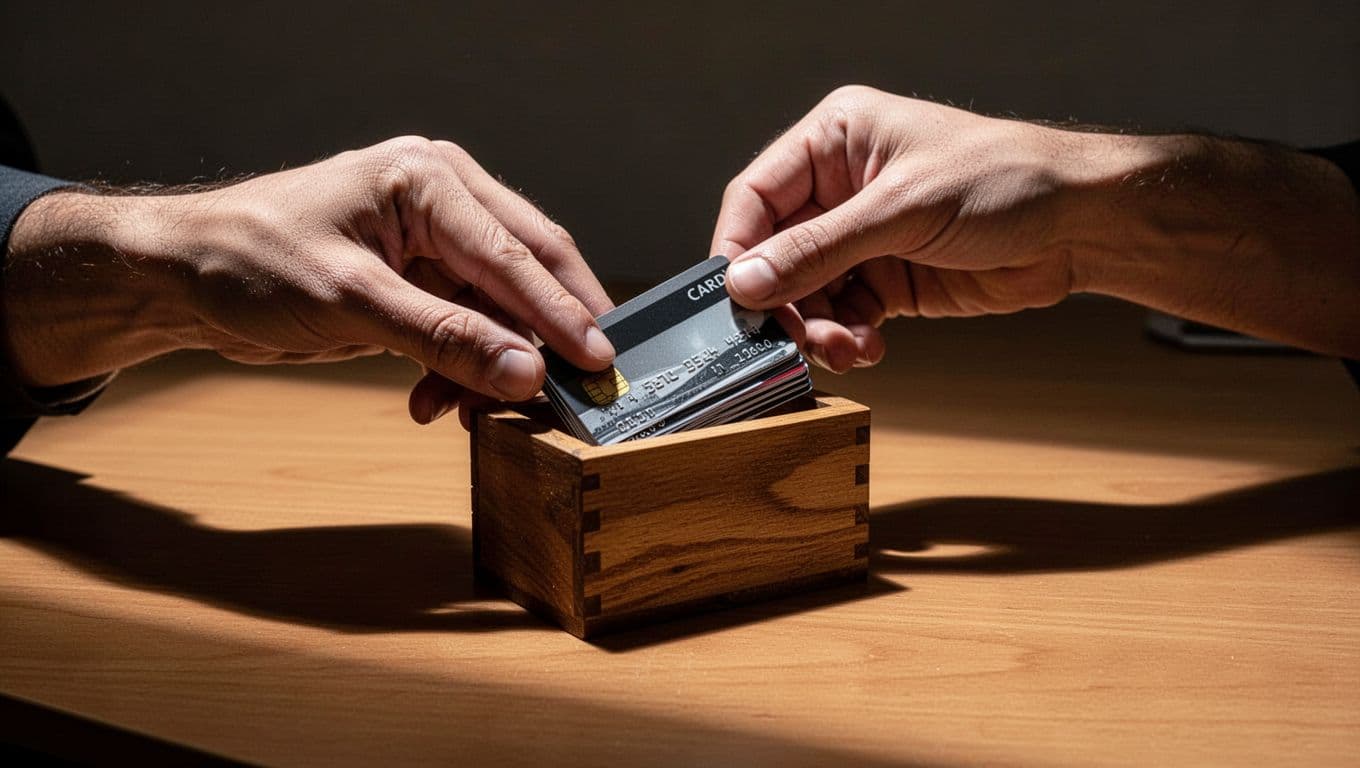
If you keep swiping while trying to pay down debt, your progress keeps getting pushed back. A short break from using credit cards gives your payments room to chip away at the balance instead of chasing new charges.
Make it harder to spend on impulse. Remove saved card details from online stores, take the cards out of your wallet, and keep them in a drawer or box you do not open often. If needed, use debit or cash for daily purchases so every buy feels more real.
That small friction helps more than people expect. A simple spending plan works better when your card is not within easy reach. If you need another guardrail, set a 24-hour pause before any nonessential purchase, which UNFCU recommends for impulsive spending.
If the card stays active in your routine, the debt stays active too.
Free up small amounts of cash in everyday spending
You do not need a dramatic lifestyle reset to make progress. A few quiet changes can free up money each week and send it straight to the balance.
Start with the easiest wins:
- Pack lunch a few days a week instead of buying it
- Cook at home more often, especially on busy nights
- Cut subscriptions you barely notice
- Downgrade a phone, streaming, or gym plan if the cheaper option still works
- Skip takeout a couple of nights a week and use that money for debt
These changes work best when they feel livable. You are not trying to build a perfect budget, you are making room for one more payment. Even small savings can help you stay on track when paired with practical debt payoff habits.
Keep the cuts realistic, then move the extra cash the same day you save it. That is how a loose $20 here and $40 there turns into real momentum.
Choose a payoff method you can actually stick with
Once your cards are mapped out and your spending is under control, the next step is picking a repayment style that fits how you work. Both main methods ask for the same basic habit, pay the minimum on every card, then send every extra dollar to one target card. The difference is which card gets hit first.
 ### Use the debt avalanche if you want to save the most on interest
The debt avalanche puts the highest-interest card at the front of the line. You keep every account current with minimum payments, then throw your extra money at the card charging you the most.
When that card disappears, you roll its old payment into the next most expensive one. That pattern keeps repeating until the last balance is gone. Because you attack the priciest debt first, less money gets swallowed by interest over time.
This method works well if you like a clean, numbers-first plan. It can feel slower at the start, but it is efficient and steady. If you want a simple guide for sorting your cards by priority, choosing the right debt payoff method can help you compare your options.
A trusted breakdown from Fidelity’s debt payoff guide shows why this approach often costs less in the long run.
Use the debt snowball if you need quick wins to stay motivated
The debt snowball starts with the smallest balance first, no matter the interest rate. You still pay the minimum on everything else, but your extra cash goes to the smallest card until it is wiped out.
That first paid-off card matters more than people expect. It gives you a clean win, a lighter mental load, and proof that your plan is working. After that, you move the same payment to the next smallest balance and keep the momentum going.
For a lot of people, debt payoff is a long climb. Visible progress keeps the climb from feeling endless. If you like checking things off a list and seeing cards vanish one by one, this method can keep you moving when motivation gets thin.
Pick the method that matches your personality
The best plan is the one you will keep using next month, not just this week. Some people stay focused when they save the most money on paper. Others need a few fast wins to stay calm and consistent.
A simple way to choose:
- Pick avalanche if you like logic, savings, and long-term math.
- Pick snowball if you need visible progress to stay encouraged.
- Switch the style only if you stop following it, because consistency beats a perfect plan you abandon.
If you’re still unsure, ask yourself one question: do you need the cheapest path, or do you need the easiest path to stick with? The right answer is the one that keeps you paying down debt without burning out.
Make your budget do more of the heavy lifting
A budget is not a punishment. It is a flashlight. Once you point it at your money, you can see where the leaks are and where extra cash hides.
That matters when you are trying to get out of credit card debt. Even a small shift in spending can free up money for another payment, and that extra payment can cut months off your payoff timeline. The goal is not perfection. The goal is to make your money work harder than it does now.
 ### Track where your money goes each month
Start with a simple spending review. Look at the last month or two of bank and card statements, then sort every expense into broad groups like housing, food, transportation, bills, and fun. You do not need a perfect system. You need a clear one.
A few categories are enough to spot patterns:
- Housing: rent or mortgage, insurance, repairs
- Food: groceries, takeout, coffee runs
- Transportation: gas, transit, parking, car costs
- Bills: utilities, phone, internet, subscriptions
- Fun: eating out, hobbies, streaming, shopping
Watch for repeat leaks. Maybe food spending climbs every Friday. Maybe subscriptions stack up in the background. Maybe transportation costs keep drifting higher. Patterns matter more than perfect labels, because patterns show where your next payment can come from.
The 50/30/20 budget rule can also make this easier. In its simplest form, about half your income goes to needs, 30% goes to wants, and 20% goes to savings and debt payoff. If your debt is heavy, you may need to trim wants even more so the debt slice grows.
Look for leaks, not reasons to feel bad.
Redirect the savings straight to your cards
Once you find money in the budget, move it fast. Do not let it sit around in your checking account like loose change on a table. If it stays available, it gets spent.
Send the savings to your card as soon as you free it up. Cancel a subscription, then apply that same amount to your debt payment. Spend less on groceries this week, then move the difference before it disappears. Every extra dollar gives your balance less room to grow and more room to shrink.
You can treat this like a standing rule:
- Find the savings.
- Move it to the target card.
- Repeat next month.
That habit matters because small extra payments stack up. A $25 cut here and a $50 cut there can turn into a real chunk of debt payment by the end of the month. The Consumer Financial Protection Bureau also encourages steady, organized repayment habits when debt starts to feel unmanageable.
If you want a simple picture, think of your budget as a funnel. Money flows in, small leaks get sealed, and the rest pours straight toward the debt that needs to disappear first.
Use support when the debt feels too big to handle alone
Credit card debt can shrink under the right plan, but some balances need more than willpower and a budget. If high interest, late fees, or tight monthly cash keep knocking you off track, extra support can give you room to breathe. The goal is not to escape responsibility. The goal is to use every tool that can make repayment steadier and less punishing.
 ### Call the card company before you fall behind
If you know a payment is going to be late, call the card company sooner rather than later. That one conversation can open the door to hardship help, a lower interest rate, or a temporary payment plan. Silence usually makes the account harder to manage, while a direct call can create a little breathing room.
Be clear about what you need, then ask what options are available. Some issuers will reduce the rate for a set time, waive a fee, or move a due date. Others may offer a structured plan that lowers the monthly payment for a few months. For a plain-language look at hardship programs, NerdWallet’s guide to credit card hardship programs explains how these conversations usually work.
Keep notes during the call and ask for written confirmation before you agree to anything. That matters because phone promises can get lost, but a written agreement gives you proof of the new terms. Read every detail, especially the rate, the payment amount, and how long the change lasts.
Never assume a hardship offer is automatic. Ask, compare, and get the terms in writing.
Look at balance transfers, consolidation, and credit counseling
When debt feels too spread out, a different structure can make it easier to manage. A balance transfer moves one or more card balances to a new card, often with a lower intro rate. That can help if you qualify and if you can pay the balance down before the promo period ends. Watch for transfer fees, which can eat into the savings if the balance is small or the payoff takes too long.
A debt consolidation loan rolls several debts into one new loan with one monthly payment. That can simplify your budget, and sometimes it lowers the rate too. Still, the new loan terms matter. Check the APR, fees, and repayment term, because a lower payment can sometimes mean a longer payoff period.
A nonprofit credit counseling agency can also help you build a debt management plan. Counselors often review your budget, contact creditors, and set up one monthly payment that you can actually handle. The Consumer Financial Protection Bureau explains the difference between counseling, consolidation, and debt settlement, which is useful before you sign anything. For a broader look at financial hardship support, USAGov’s hardship resources can also point you toward help.
These tools work best as part of a plan, not as a shortcut. Compare the fees, read the fine print, and make sure the monthly payment fits your real budget. If the new setup only pushes the problem down the road, it will cost more later.
Stay out of credit card debt after you pay it off
Getting out of credit card debt is a big win, but keeping it gone is the real finish line. One surprise bill, one loose spending habit, and the balance can creep back in before you notice. The goal now is to protect your progress with a few steady habits that keep your cash flow calm and your spending grounded.
 ### Build a small emergency cushion
A small emergency fund can keep a car repair, medical bill, or broken phone from landing back on a credit card. Even a few hundred dollars gives you breathing room, and that matters when life throws something ordinary but expensive at you.
Start with a tiny goal that feels doable. A starter cushion of $500 can already cover many nuisance costs, and from there you can build toward a larger safety net. If you want a simple framework for setting aside money, how to use the 50 30 20 budget rule can help you make room for savings without overcomplicating the process.
Keep the money in a separate savings account so it stays easy to find and hard to spend. That little buffer works like a spare tire. You hope you will not need it, but when you do, it keeps the whole plan from spinning out.
Check your progress every month
Set one day each month to review your balances, payments, and budget. Look for changes in spending, new fees, or any category that starts to drift. A monthly check-in keeps small problems small.
Use that moment to ask a few simple questions:
- Did I pay the full balance on time?
- Did any spending category run hot?
- Do I need to move money around next month?
This does not need to feel like a chore. It is more like resetting a compass before a long walk. A quick review helps you stay aligned, and if you need a reminder of the habits that keep debt from returning, credit card payoff tips from UMCU also reinforce the value of steady tracking and disciplined spending.
When you keep checking in, your plan stays alive. Debt freedom starts to feel lighter, and your money has more room to breathe.
Conclusion
Getting out of credit card debt starts with a clear view of the numbers, then moves one careful step at a time. List every balance, stop new charges, choose the payoff method you can stick with, and keep your budget tight enough to send extra money where it matters most.
If the debt feels too heavy, ask for help early. A lower rate, a hardship plan, or credit counseling can give you room to breathe while you keep paying down the balance. The strongest move is rarely one big swing, it is a steady pattern of smart choices that keeps repeating.
Keep your reason in front of you, track the balance as it falls, and notice each small win. Progress may feel slow at first, but every payment cuts the load a little more and brings more peace of mind with it.
Save pin for later

- How to Find Long-Tail Keywords for Your Blog - June 29, 2026
- Pinterest SEO for Bloggers - June 27, 2026
- How to Do Keyword Research for Beginners - June 27, 2026