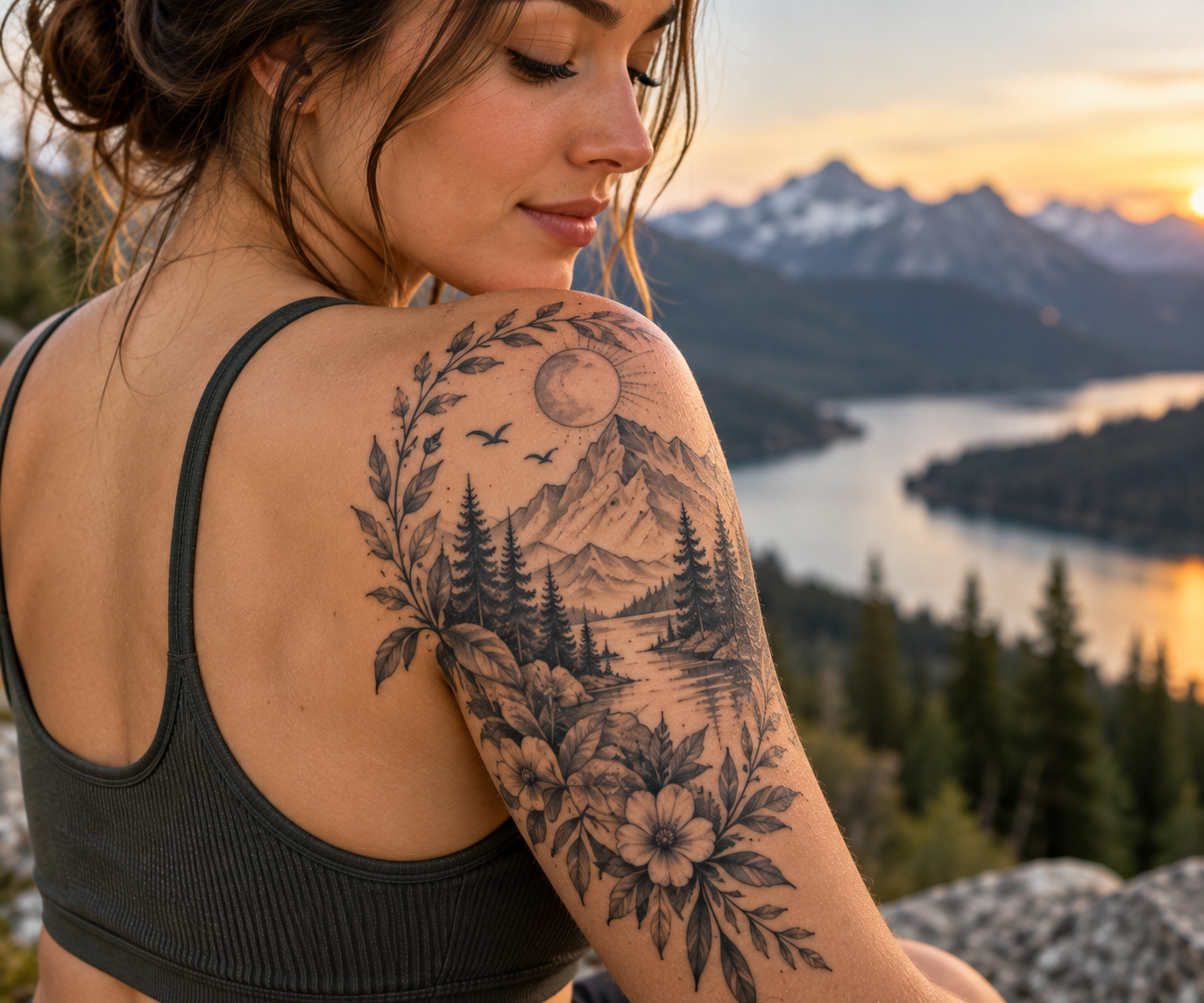
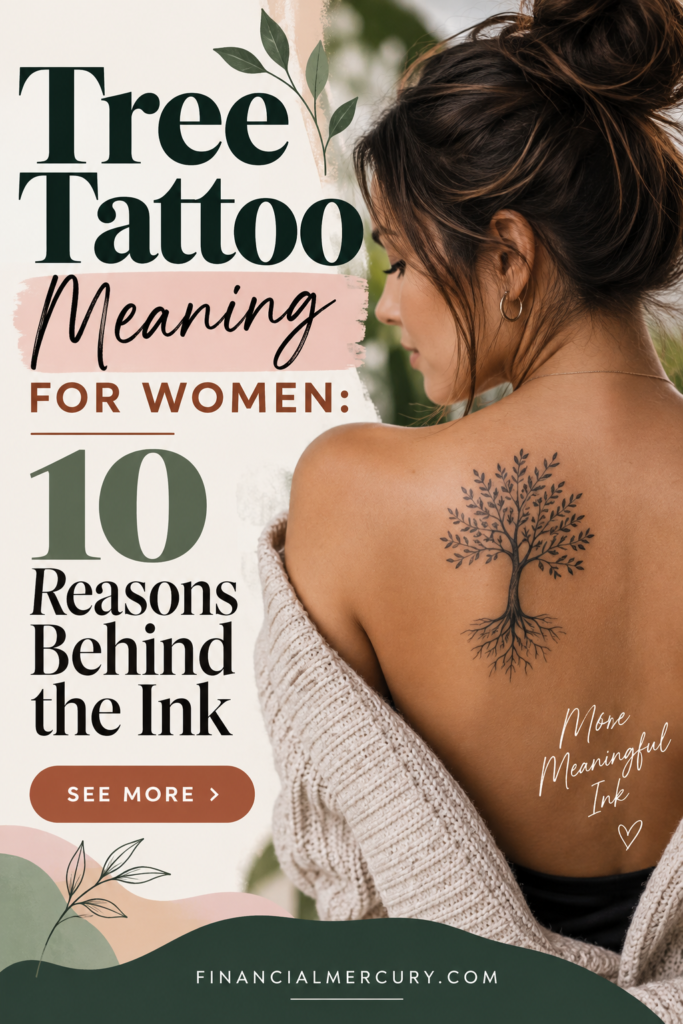
Tree Tattoo Meaning for Women: 10 Reasons Behind the Ink
A tree tattoo might look simple at first glance, but it’s one of the most personal tattoos a woman can get. Trees carry stories: deep roots, steady growth, seasons of change, and branches that keep reaching upward no matter what.
That’s why so many women choose them. A tree isn’t just pretty artwork on the skin. It can honor family, mark a fresh start, or symbolize strength you’ve built through hard years. Two women can wear nearly identical tree designs and mean completely different things by them.
If you’re thinking about getting one (or you’re just curious what they mean), you’re in the right place. Below, you’ll find the symbolic meaning behind tree tattoos for women, plus 10 specific reasons women choose this design, so you can figure out what your own tree would say about you.
Let’s start with what trees have meant to people across cultures and centuries.
What Does a Tree Tattoo Symbolize for Women?
At its core, a tree tattoo carries a handful of shared meanings, and understanding them once will help everything else in this article click into place. The big five are roots and grounding, growth through hard seasons, strength, family ties, and the cycle of life and rebirth. Trees anchor themselves in soil before they grow a single branch. They weather storms, shed leaves, and come back fuller each spring. And their family structure is built right into the word we use for it: a family tree, with branches that split and spread from one shared trunk.
So why do these themes land especially hard for women? Many women see themselves in the tree’s story. It’s a symbol of carrying others while still growing, of holding steady through change, and of putting down roots in new places after loss, motherhood, divorce, illness, or a move across the country. A tree doesn’t rush. It simply keeps growing, and that quiet persistence is something a lot of women want inked on their skin as a daily reminder.
Roots, Growth, and Rebirth: The Life Cycle Meaning
Here’s where the tree tattoo gets its emotional weight. Every year, a tree loses its leaves. Every year, it grows them back. That rhythm makes it one of the oldest symbols of starting over that humans have ever used.
For women, this meaning often ties to a specific chapter. Someone in recovery might choose a tree to mark her sobriety date. A woman healing after heartbreak or the loss of a parent might pick a bare tree with a single new bud, showing life returning after a cold season. Others choose it after beating an illness, leaving a bad marriage, or rebuilding from scratch in a new city.
The beauty is in the honesty of the symbol. A tree tattoo doesn’t pretend the hard season didn’t happen. The falling leaves are part of the design. The message is simply that growth follows loss, and you’re the proof.
A tree tattoo after loss says something specific: the season changed, and so did I, and I’m still here.
How Different Trees Change the Meaning
Once you pick the broad symbolism, the species you choose narrows the message. Each tree brings its own personality to the design, and the differences matter more than most people expect.
- Willow: bends without breaking, a classic pick for grief and the resilience it takes to survive it
- Cherry blossom: celebrates fleeting beauty, chosen by women who want to remember to live in the moment
- Oak: the heavyweight of strength and endurance, often honoring family roots or a hard-won foundation
- Olive: peace, reconciliation, and healing after conflict
- Pine: quiet endurance through long, cold seasons, a favorite for women who made it through years of difficulty
- Birch: new beginnings, with pale bark that visually suggests a clean page
Think of the species as the accent on the sentence. A willow and an oak can share the same trunk-and-branch layout, yet one whispers “I survived grief” while the other declares “nothing knocks me down.” Before you commit, ask what you actually want the tattoo to say, then let the tree species finish the thought for you.
10 Reasons Women Choose Tree Tattoos
Now for the part you came here for. Every tree tattoo has a story behind it, and after talking through the symbolism, ten reasons show up again and again. Some are about healing, some about family, and a few are purely practical. See which one sounds like you.
1. Marking Personal Growth After a Hard Season
Ask any tattoo artist and they’ll tell you: the tree is the unofficial badge of survival. A woman who made it through grief, anxiety, or years of struggle often wants proof on her skin that she kept going. The design usually tells the truth about it, too. A bare branch with one new leaf says more than a full canopy ever could. One woman described hers as “receipts,” the way a tree trunk holds every ring of every year it lived through, including the hard ones. That’s the point. Growth isn’t erased by what came before it.
2. Honoring Family and Ancestry
The phrase “family tree” exists for a reason. For plenty of women, the tattoo is literal: roots for grandparents, a trunk for parents, branches for the kids. Some add initials or birthstones as small details. Others choose a tree native to their heritage, like an olive tree for Greek roots or a cedar for Lebanon. It works the other way, too. A woman who moved far from home might ink a tree just to carry a piece of where she came from. Roots in the ground mean nobody has to wonder where she stands.
3. Remembering a Loved One Who Passed Away
Memorial tattoos need a symbol that keeps living, and a tree fits that better than a date or a name alone. Families often plant a real tree in someone’s memory; the inked version works the same way. A willow is a common pick here, since it’s long been tied to mourning and grief. Some women add a small date, a signature, or an acorn for a grandfather who loved the outdoors. The tattoo doesn’t try to close the wound. It just says the person is still growing somewhere in the story.
4. Celebrating Motherhood and New Life
Trees have symbolized fertility and nurturing for thousands of years, so it makes sense that motherhood is one of the most common reasons behind this ink. The most popular version is a growing design: a leaf, a bird, or a ring added for each child. Many moms get the base tattoo after their first baby and return to the same artist for every addition after. It turns the piece into a living record of the family. One addition at a time, the tattoo grows the way her family does.
5. Showing Quiet Strength and Independence
Not every strength announces itself. The willow bends in a storm and stands back up; the oak holds ground without moving an inch. Women who built their lives on their own terms, after a divorce, a move, or simply years of doing it alone, often pick one of these two trees. The message is understated but clear: I can flex without breaking. It’s a favorite for placement on the forearm or spine, somewhere visible to the woman wearing it more than to anyone else.
6. Expressing Faith or Spiritual Connection
The Tree of Life shows up in more traditions than almost any other symbol. In Celtic belief, trees connected the earth to the sky. In Norse mythology, Yggdrasil held the nine worlds together on its branches. In the Bible, the tree of life appears in the very first and very last chapters. A woman raised on any of these stories can wear the same design and mean something personal to her. That range is exactly why the symbol has lasted so long, and why it still shows up in studios every week.
7. Loving Nature and Environmental Values
Some women just feel most themselves outdoors. For hikers, gardeners, and anyone who recharges under a canopy instead of under fluorescent lights, a tree tattoo is a straightforward declaration of values. Some choose a species from a trail that changed their life, like a redwood from a California trip or an aspen from Colorado. Others see it as a daily reminder to stay grounded and keep protecting the natural world. The tattoo becomes a small piece of the landscape she never wants to lose.
8. Recovering From Illness or Starting Over
Survivors of cancer, addiction, or a long illness often reach for the tree for the same reason: rings don’t lie. Every year a tree lives, good and bad, becomes part of the trunk. One popular design shows a scarred or storm-damaged tree still standing, sometimes with a fresh ring highlighted on purpose. Women rebuilding after divorce or leaving a bad chapter pick a sapling instead, small and new. Either way, the tattoo marks the line between the chapter that ended and the one that started.
9. A Design That Ages Beautifully
Here’s a practical reason that matters more than people admit. Tattoos age, and fine details can blur over the years. Trees hold up well because their natural lines are already organic, slightly imperfect, and forgiving. The same tree works in fine line, blackwork, watercolor, heavy black shading, or a tiny minimalist outline, so there’s a version for every budget and pain tolerance. Even better, the design welcomes additions. Leaves, birds, names, and rings can be added years later without the piece looking patched together.
10. A Meaningful First Tattoo
For a first tattoo, the tree checks every box. It’s flexible on placement, working at two inches on the wrist or a full back piece. It hides easily under clothing for women with conservative workplaces, yet shows well when she wants it to. And the meaning is personal without being risky, so it rarely becomes a tattoo she regrets at 40. Most importantly, it grows with her. A first tattoo that can gain a leaf for every new chapter of her life is a first tattoo worth choosing.
If one of these reasons felt like it was written about you, that’s your answer. Pick the species that matches your story, find an artist whose line work you trust, and let the ink do the talking.
Popular Tree Tattoo Designs and Placement Ideas for Women
Once you know what your tree means, the next step is deciding how it should look and where it should live on your body. The same design reads completely differently in fine line than it does in heavy blackwork, and a tree on the wrist tells a different story than one across the spine. Here’s how to picture the piece before you sit down in the artist’s chair.
Style options worth considering:
- Fine line: delicate, thin strokes that suit smaller pieces like a single branch or sapling. Elegant and subtle, though it needs a skilled artist to age well.
- Minimalist: a simple outlined trunk with sparse branches, often under two inches. Perfect for a first tattoo or a discreet spot.
- Watercolor: soft splashes of color behind or within the tree, popular with cherry blossom and autumn leaf designs. Beautiful, but the color fades faster than black ink.
- Geometric: the tree enclosed in a circle, triangle, or frame of dots. It gives the organic shape structure and works well for Tree of Life designs.
- Blackwork: bold, solid black shading with strong contrast. This style holds up best over decades and suits larger pieces like a full oak.
If you’re torn between two styles, ask your artist to sketch the same tree both ways. Seeing the options side by side usually settles the question faster than scrolling portfolios.
Placement changes everything. The wrist suits small, simple trees you’ll see every day, which makes it a favorite for memorial and recovery tattoos. The forearm offers more room for detail and lets you choose visibility on your own terms. Ribs give you a private canvas for a larger, more personal piece, though the pain level runs higher there. The spine is made for vertical designs, since a tree growing along the spine mirrors the natural line of the body. The ankle works for tiny trees and hides easily under socks or boots. The shoulder or upper back is the roomiest option, ideal for a full tree with roots, branches, and added details like birds or names.
A quick rule of thumb: the bigger the design, the more flesh-friendly the placement. Fine detail on the wrist or ankle will blur sooner than the same work on the shoulder or thigh, simply because those areas see more sun and movement.
Before booking, look at healed photos of your artist’s tree tattoos, not just fresh ones. Fresh ink always looks sharp; healed ink shows you what the piece will actually look like five years from now. Pick the style and spot that fit your daily life, and your tree will grow with you the way you planned.
How to Choose the Right Tree Tattoo for You
You know the meaning you want. Now comes the part where the tattoo either stays meaningful for decades or quietly becomes “that tree I got at 25.” The difference comes down to a few decisions made before the needle touches skin.
Match the Tree to Your Story
Start with a simple question: what season of life am I honoring right now? If you’re celebrating a fresh start, a birch sapling with bare branches says “clean page” better than a full oak does. If you’re marking survival, an oak with deep roots or a willow bending in wind carries that weight. The species should match the emotion, not just look pretty on a Pinterest board.
Then decide on added elements. Birds work well for freedom or a loved one who passed. Roots emphasize family and grounding, and they’re a natural pick for ancestry pieces. A crescent moon adds a spiritual or feminine layer, while falling leaves lean into the letting-go meaning. Each addition should earn its place. One or two details make a design feel intentional; five make it feel cluttered.
Season matters more than people expect. Spring branches with new buds fit rebirth stories. Bare winter trees honor endurance and grief. Autumn colors suit a piece about accepting change.
Questions to Ask Before You Get Inked
Walk into the studio with answers ready. These four cover most of it:
- Has the artist done trees before? Check their portfolio for healed tree work specifically. A great realism artist can still fumble organic branch lines.
- Will I want additions later? If you plan to add leaves per child or rings per milestone, tell the artist now so the base design leaves room to grow.
- Where does it hurt? Ribs, spine, and ankle run painful; forearm, thigh, and shoulder are gentler. Match placement to your tolerance, not just aesthetics.
- How do I care for it? Wash gently with unscented soap, keep it moisturized, and skip swimming for two to three weeks while it heals. Sun exposure after healing is the fastest way to fade fine line detail.
One last check before you commit: write down what the tree means to you in a single sentence. If you can’t say it clearly, the design isn’t finished yet. When the sentence is easy, you’ve found your tree.
Conclusion
A tree tattoo is rarely just decoration. It’s a story rooted in skin, whether that story is survival, motherhood, grief, faith, or a love of the outdoors. The symbolism behind the ten reasons we covered all points back to the same idea: roots hold you, and branches keep growing anyway.
That’s what makes this design so enduring for women. The meaning comes from you, and the tree simply carries it. Pick the species that matches your chapter, choose the details that earn their place, and the piece will age right along with your life.
Already have a tree tattoo, or planning your first? Tell us what your tree means in the comments, or share this post with someone whose story deserves a branch or two.
Save pin for later

- How to Design Your Own Tattoo Without Regret: A Step-by-Step Guide - September 23, 2026
- 20 Daisy Tattoo Design Ideas With Meanings, Placements, and Style Tips - September 23, 2026
- 20 First Tattoo Ideas for Women: Beginner-Friendly Designs You’ll Still Love in 10 Years - September 23, 2026
Leave a Reply