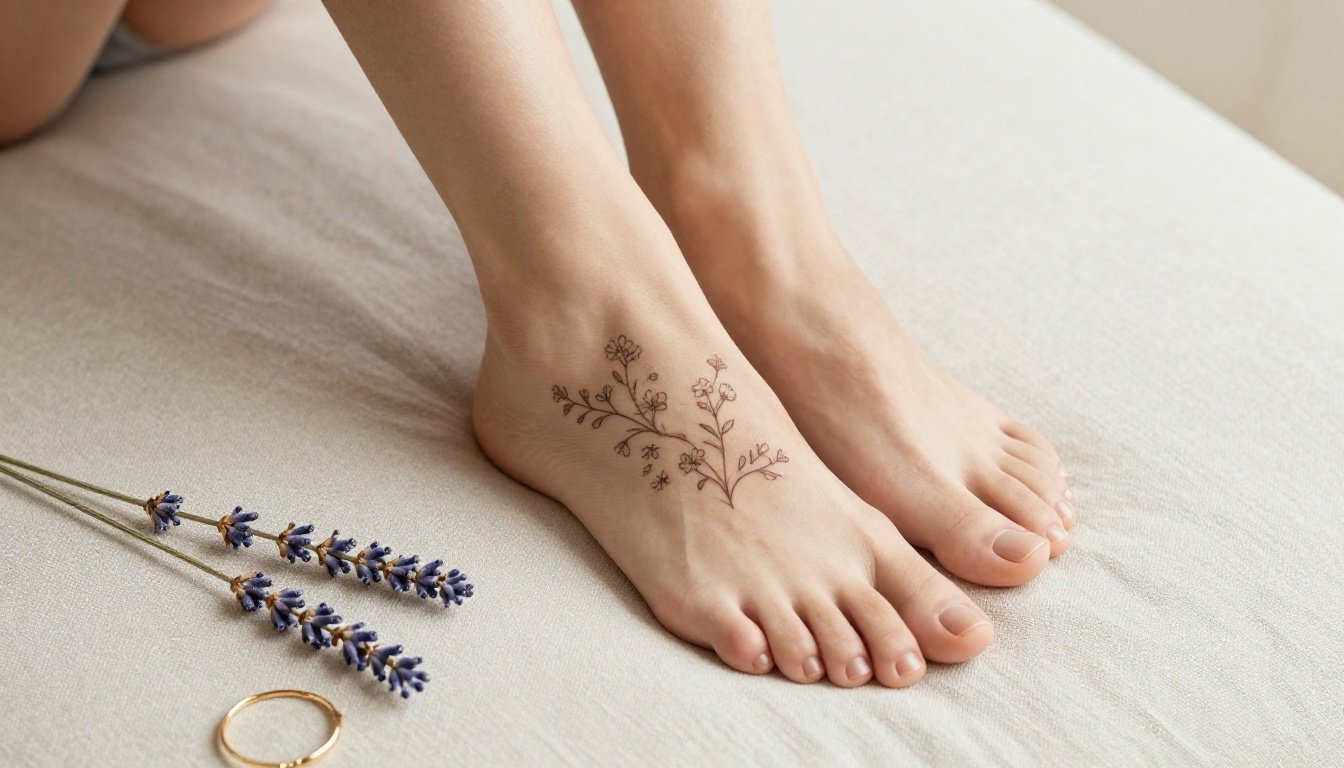
20 Tattoo Ideas for Women on the Foot
Foot tattoos can feel personal and stylish while staying easy to show off or cover when you want a more discreet look. The placement gives you plenty of room for a design that matches your personality, whether you prefer a tiny symbol or a detailed piece across the top of your foot.
In these 20 tattoo ideas for women on the foot, you’ll find floral, celestial, symbolic, ornamental, and nature-inspired designs. You can take inspiration from delicate flowers, stars, vines, moons, waves, meaningful dates, and bolder patterns, then adjust the size and placement to suit your style.
Before choosing a design, keep in mind that foot tattoos can hurt more than tattoos in fleshier areas. They may also heal slowly because walking, socks, and footwear create pressure and friction, so thoughtful placement matters. Plan for surface healing to take about two to four weeks, follow your artist’s aftercare instructions, and avoid pools, prolonged water exposure, and direct sun while the tattoo heals. Start with these creative design ideas, then use the placement and aftercare tips to plan a tattoo you’ll feel confident wearing.
Tattoo Ideas for Women on Foot: Delicate Designs With Personal Meaning
Delicate foot tattoos can feel intimate without disappearing completely. The right design depends on your preferred style, the amount of space available, and how much detail you want to maintain over time. Fine lines create an airy look, while black ink, soft color, and careful spacing can change the same idea from barely there to more noticeable.
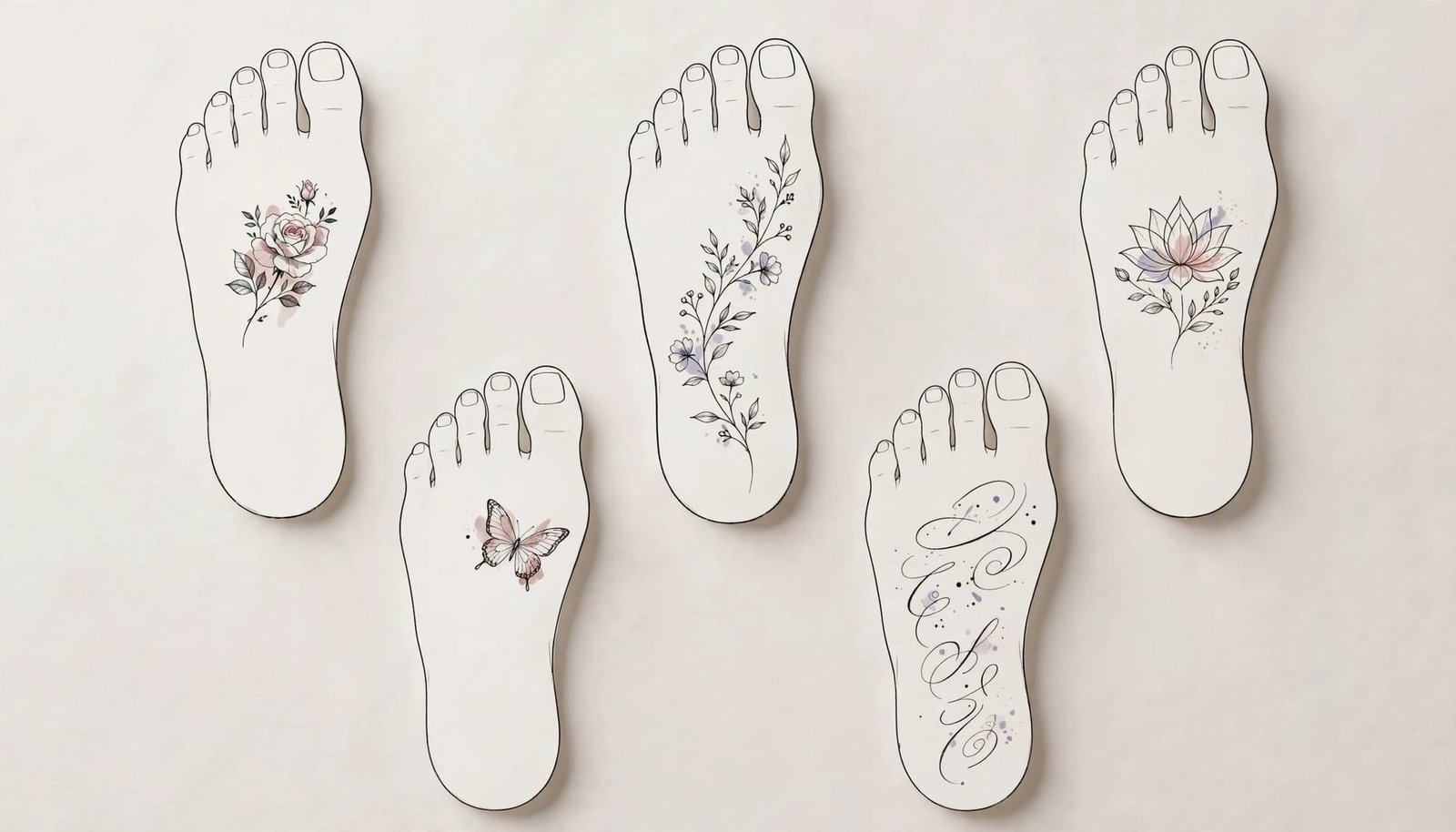
A fine-line rose on the side of the foot
A small rose with a thin stem and two or three leaves is a classic choice for women who want a floral tattoo with personal meaning. The flower may suggest love, self-respect, remembrance, or a connection to someone important, but you can give the symbol your own interpretation.
The outer foot or side of the arch works well because its narrow shape suits a slim stem and compact bloom. Ask your artist to angle the rose so it follows the foot instead of sitting stiffly across it. A black-and-gray rose has a timeless appearance, while a small touch of red in the petals adds color without making the tattoo feel bold.
Fine-line roses need thoughtful spacing. If the petals are packed too closely together, very tiny details may blur as the tattoo ages. Leaving clear gaps between the lines gives the design room to soften while remaining recognizable.
A graceful floral vine across the top of the foot
A floral vine can combine slender leaves, lavender sprigs, tiny blossoms, or several flower types in one flowing design. The line can follow the natural length of the foot, creating a soft, feminine look that feels connected to the body’s shape rather than placed on top of it.
A short vine near the toes suits someone who wants a small tattoo that stays easy to conceal. For more visual movement, extend the design across the instep toward the ankle. Black ink keeps the details crisp, while muted lavender, pale pink, or soft green can give the flowers a gentler finish.
The artist should size the vine around the bones and tendons instead of crowding them. A little extra space between leaves and blossoms helps the tattoo stay readable, especially if you choose several small elements.
A fine-line lotus for a calm, meaningful look
A fine-line lotus can sit in the center of the instep or near the inner foot, where its balanced shape has enough room to stand out. People often connect lotus imagery with growth, peace, resilience, or a fresh start. Those meanings are common, but the tattoo can also reflect a personal chapter, recovery, or a simple appreciation for the flower.
A clean outline lotus feels light and understated. Adding gentle shading creates more depth, while geometric petals give the design a structured, modern appearance. Your artist can adjust the number of petals and overall scale to suit the available space.
This idea may appeal to someone who prefers symbolism without a highly literal image. Keep the smallest interior details limited if you want the lotus to remain clear as the fine lines soften over time.
A tiny butterfly near the ankle or outer foot
A small butterfly can suggest change, freedom, confidence, or a new stage in life. One butterfly creates a simple focal point, while two smaller butterflies can symbolize companionship or personal growth. A subtle trail of dots adds movement without filling the entire area with ink.
The outer foot or ankle is a practical placement when you want the design to stay visible but don’t want to cover the whole top of your foot. Black outlines provide a clean finish, while pale blue, pink, or purple wings add a softer look.
Fine details and light colors need extra care. Protect the healed tattoo from prolonged sun exposure, and ask your artist whether the smallest wing markings need slightly stronger lines. Touch-ups may help restore clarity if delicate details fade.
A short script phrase that follows the foot
Short lettering can turn the side of your foot into a private reminder. Phrases such as “One Step at a Time” and “Love Yourself” work well, as does one meaningful word connected to your family, faith, or personal history.
Brief text is easier to read and usually ages better than a long quote. Place it along the side of the foot, near the arch, or above the toes, depending on how the letters follow your natural foot shape. A simple black script offers the clearest result, while a small serif or handwritten font creates a different mood.
Before booking the tattoo, check the spelling, font size, and exact letter spacing. Ask to see the words on your foot while it bends, since lettering can look different when the skin stretches or folds.
Nature-Inspired Foot Tattoos That Feel Light and Feminine
Nature-inspired foot tattoos can stay delicate or become bolder through line weight, shading, and color. Choose a design that follows the foot’s natural curves, since a tattoo that moves with the arch or instep usually looks more graceful than one forced into a rigid shape.
A leafy branch along the arch
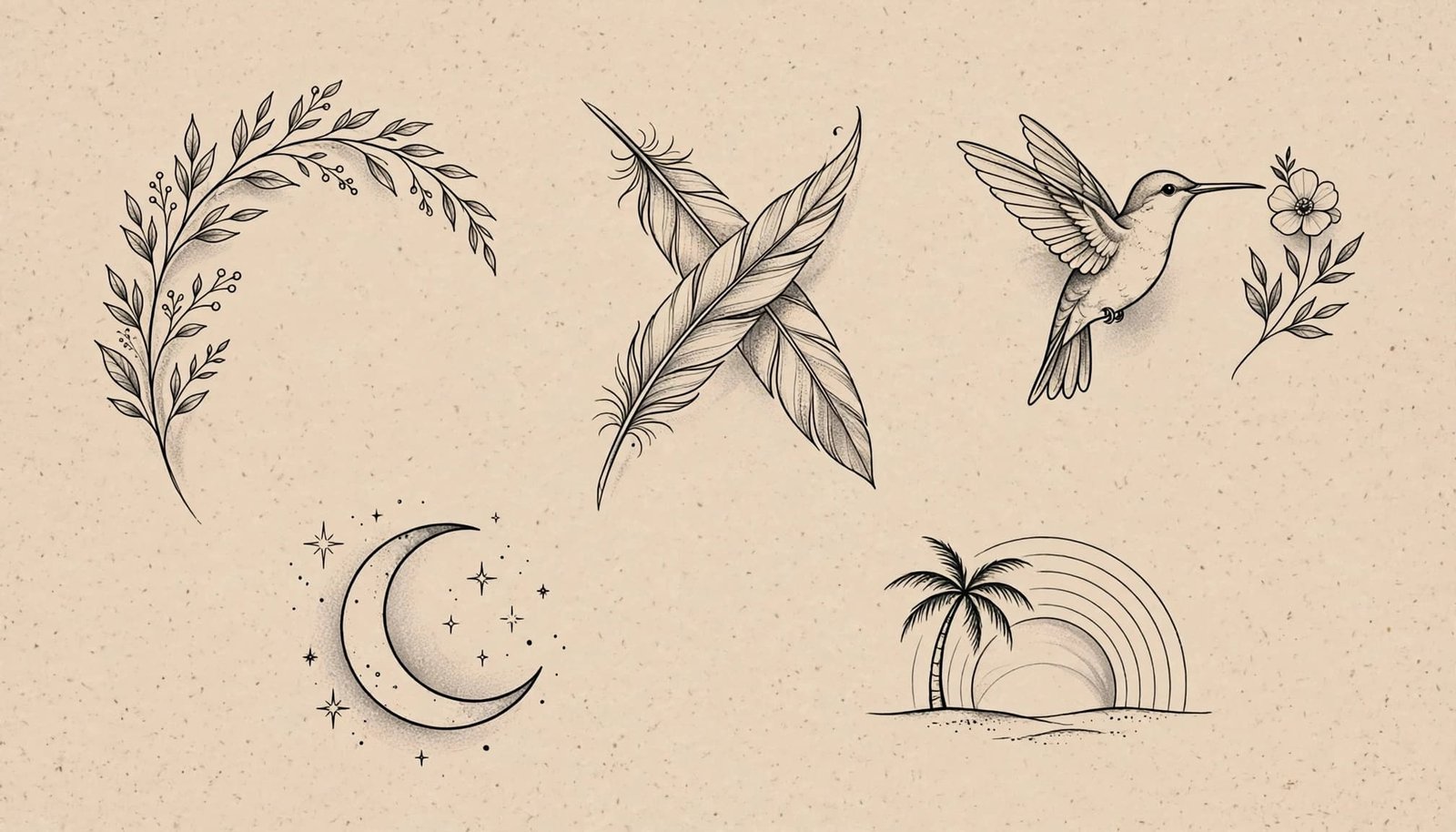
A slim branch can trace the curve of your arch with olive leaves, eucalyptus, fern fronds, or another plant you love. The arch gives the design a natural path, so the stem can sweep gently along the foot instead of sitting as a straight line across it.
A clean black outline creates an airy, feminine look and keeps the leaves easy to recognize. Soft gray shading adds depth without making the tattoo feel heavy. You can also make the branch more personal by choosing a plant linked to your birth month, a family memory, or a favorite place.
Keep the leaves spaced enough to remain clear as the tattoo ages. A slightly larger branch with stronger lines can feel bold, while a short sprig looks subtle near the inner arch.
A feather stretching across the instep
A feather placed diagonally across the top of the foot can follow the instep’s natural length. You could also position it along the outer edge for a narrower design that feels more discreet. Its meaning may connect to freedom, hope, remembrance, or a love of travel.
The feather’s direction changes its mood. A tip pointing toward the toes creates forward movement, while one angled toward the ankle feels more relaxed and balanced. A larger feather allows clearer barbs and soft shading, while a smaller version looks best with a simplified center shaft and fewer lines.
Ask your artist to keep the barbs clear and well spaced. Overly fine feather lines can blend together, especially in a small foot tattoo.
A hummingbird with a small flower
A compact hummingbird paired with a flower brings energy to a nature-inspired foot tattoo. The image can suggest joy, curiosity, appreciation for nature, or the habit of finding beauty in small moments. Fine-line black ink keeps it understated, while soft color gives the bird and flower more life.
The top of the foot provides enough room for the hummingbird’s body, wings, and beak. For a smaller tattoo, the side of the foot can hold a simplified version near the arch or ankle. If the design is very small, a skilled artist should reduce the wing details and shorten the beak so the silhouette stays readable.
A tiny flower beneath the bird gives the composition a clear focal point without crowding the skin. Choose a bloom with a simple shape, especially if you want the tattoo to remain delicate.
A delicate crescent moon with stars
A crescent moon can sit near the ankle, along the outer foot, or above the toes with a few tiny stars around it. A minimalist outline feels clean and modern, while dotwork adds texture without requiring heavy shading. You might also fill the moon with subtle gray shading for a softer, more dimensional finish.
This design often connects with intuition, change, dreams, and nighttime calm. Placement affects the overall feeling, too. Near the ankle, the moon can look like a small personal emblem; above the toes, it becomes a more visible accent.
Leave breathing room between the stars. When small dots and shapes sit too close together, they can blur into one dark patch over time.
A small palm tree for a travel memory
A simple palm tree on the side or top of the foot can preserve the feeling of a favorite beach, meaningful trip, or relaxed state of mind. Add a sunset circle, one wave, or a tiny island if you want more context without making the tattoo crowded.
Clean silhouettes usually work better than highly detailed scenery in a small foot tattoo. A bold black palm can look graphic and confident, while fine lines and muted color create a softer vacation-inspired style. If you choose color, protect the healed tattoo with broad-spectrum SPF 30 sunscreen to help reduce fading from sun exposure.
Ornamental Foot Tattoo Designs That Look Like Jewelry
Ornamental foot tattoos borrow the visual language of anklets, charms, rings, and fine jewelry. Curved lines follow the ankle, while symmetry and open skin keep detailed patterns from looking crowded. You can choose a tiny accent for a barely-there effect or combine several elements into a larger piece that feels more decorative.
An anklet-style floral wrap
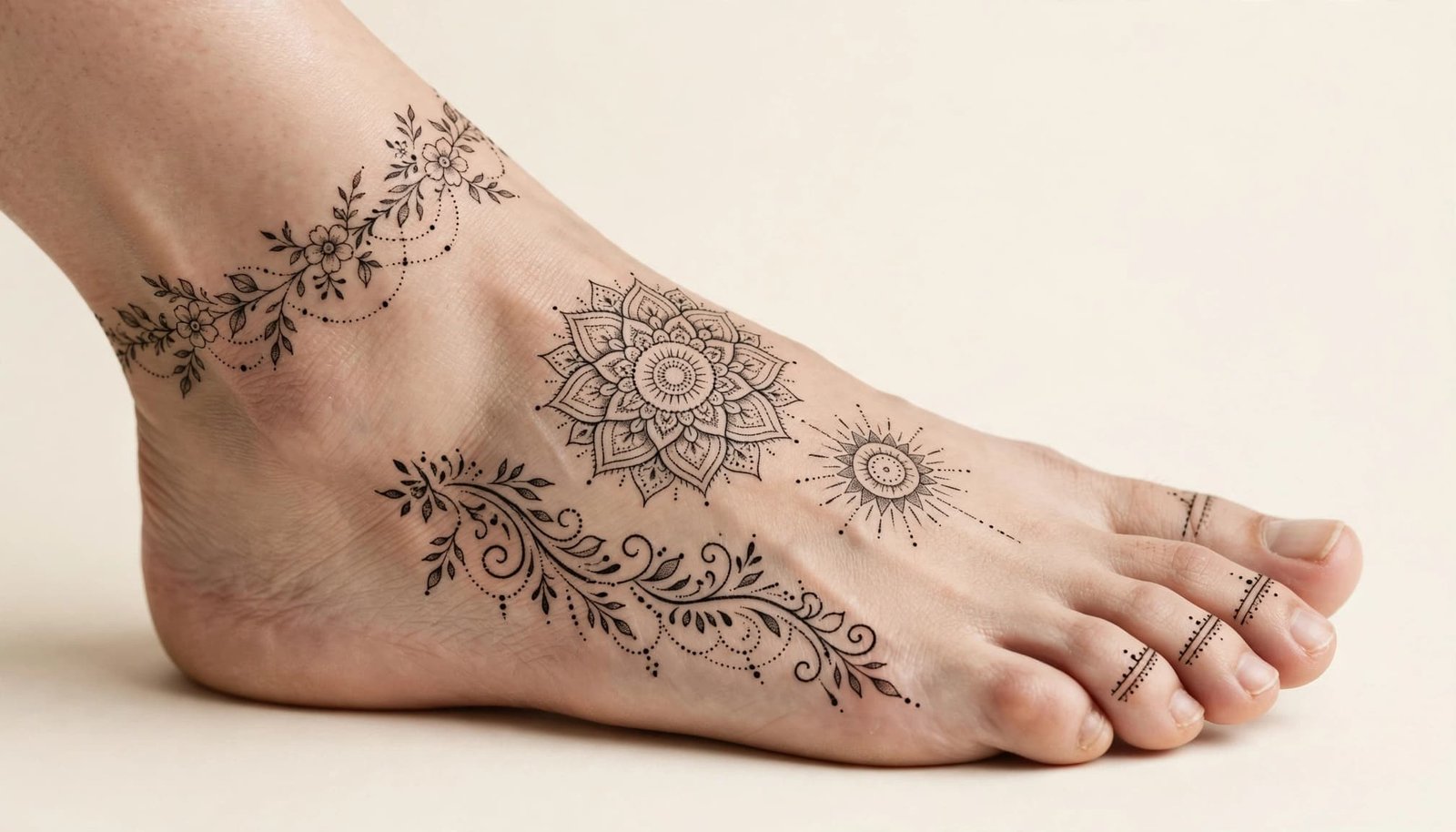
An anklet-style tattoo can circle the ankle and extend slightly onto the top or sides of the foot. Small flowers, leaves, beads, and fine chain links can make the design look like delicate jewelry without the weight or movement of a physical anklet.
An open-ended wrap often feels lighter than a fully closed band. The gap creates breathing room and gives the artist space to adjust the design around the ankle’s natural shape. You might finish one end with a flower and the other with a tiny bead, leaf, or dangling charm.
Because the ankle bends constantly, the artist should account for movement before applying the stencil. Dense ink also shouldn’t sit directly where socks, shoes, or straps rub most. A more detailed wrap may need more than one session, especially if it extends across the foot.
A mandala centered on the instep
The center of the instep suits a mandala because it offers a balanced area for a design built around symmetry. A small outline mandala can look airy and jewelry-like, while a larger version can include dotwork, geometric petals, and soft shading for a more decorative finish.
The pattern needs enough space for each section to remain readable. If the mandala is too small, closely packed lines may blur together over time. On the other hand, a larger design can use stronger spacing between circles, triangles, and repeated shapes.
Mandalas can suggest balance, focus, or inner calm, depending on your personal meaning. Ask the artist to check the symmetry while your foot rests naturally, since the instep changes shape when you point or flex your toes.
A henna-inspired pattern along the side
A henna-inspired tattoo can follow the long, narrow canvas created by the side of the foot and ankle. Curved lines, paisley shapes, leaves, and small dots can flow upward in a pattern that resembles an ornamental anklet or delicate body jewelry.
Permanent tattoo designs should be original pieces created with your artist, rather than direct copies of temporary henna artwork. Share the mood and elements you like, then let the artist build a design that suits your foot’s proportions.
Leave open skin between the details so the pattern stays clear as it ages. A little negative space also keeps the tattoo from looking too heavy against the narrow side of the foot. Fine dots and thin curves can provide detail, but overly tight spacing may turn them into a solid patch later.
A geometric sun on the top of the foot
A geometric sun can sit at the center of the top of the foot, where the design remains easy to see and naturally framed by the instep. Clean rays, triangles, circles, and subtle dotwork can create anything from a simple symbolic accent to a bold ornamental centerpiece.
A black outline sun feels crisp and minimal. A larger version can use thicker rays, repeated geometry, and shaded sections for a stronger statement. Straight lines need careful placement, however, because the foot bends and shifts as you walk.
The artist should stencil the design while your foot is relaxed. This helps the rays stay balanced when your foot returns to its natural position. If the sun includes many geometric sections, plan for a larger footprint and possibly more than one tattoo session.
A minimalist toe-line or arch accent
A slim line near the toes or arch can create the look of a tiny anklet extension without covering much skin. Small dots, tiny stars, a simple band, or one curved ornamental line work well for someone who wants a quiet tattoo instead of a large image.
The arch gives a line room to follow the foot’s natural curve. Toe tattoos can look charming, but footwear and movement expose them to frequent rubbing. For that reason, a simple design with enough spacing is often more practical than tightly packed detail.
Keep the accent slightly away from areas that press against shoe edges or straps. A few well-placed marks can look more polished than a crowded arrangement, especially when the design is meant to resemble fine jewelry.
Bold Symbol and Animal Tattoos for a Distinctive Foot Design
When you want more personality than a tiny flower or star, symbolic and animal tattoos give your foot a stronger focal point. Bold doesn’t have to mean oversized. A clear outline, thoughtful placement, and enough open skin can make a compact design feel confident without covering the entire foot.
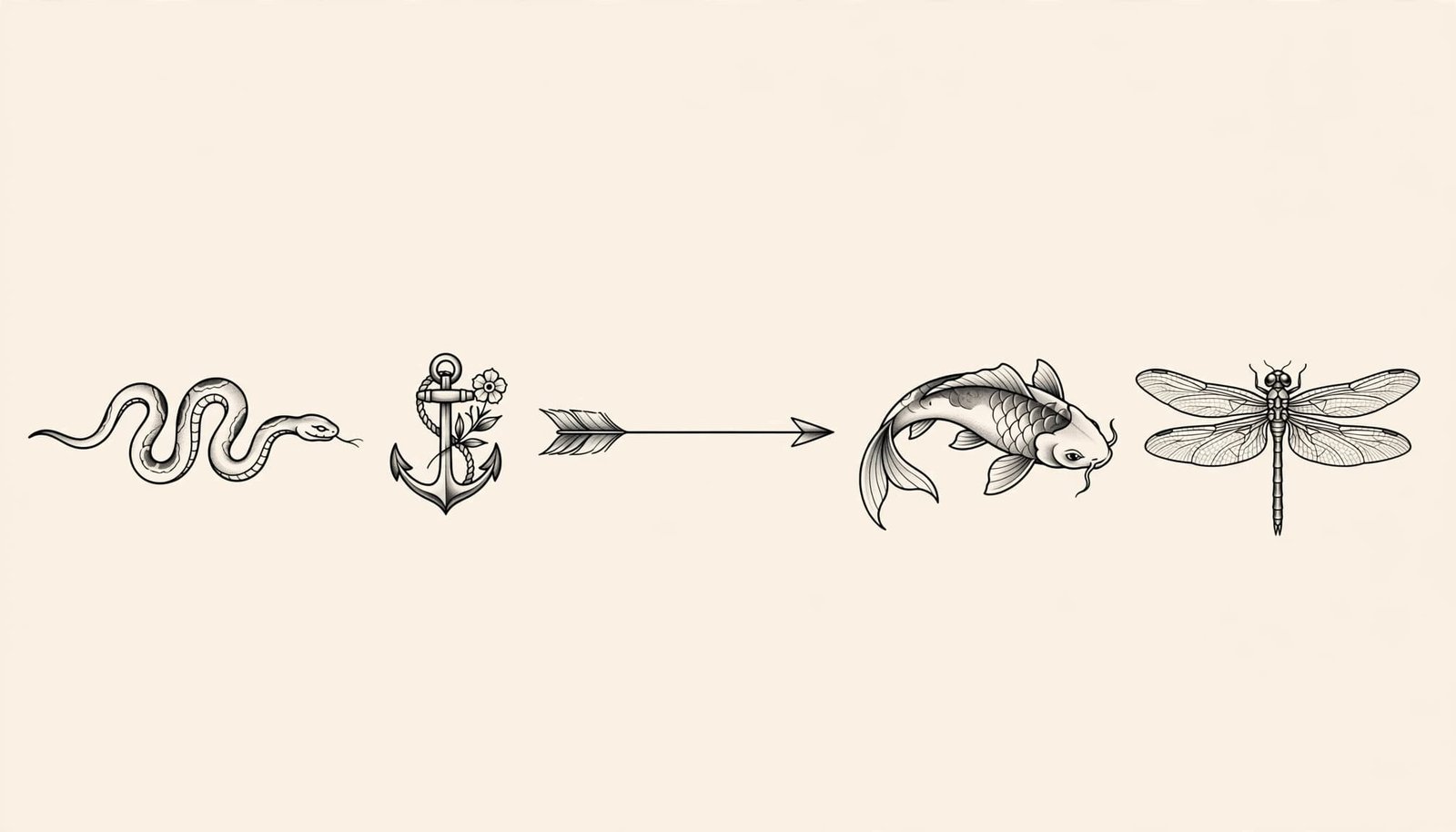
A graceful snake wrapping toward the toes
A slim snake can curve across the top of the foot, follow the arch, or reach toward the toe line. Its long shape naturally suits the foot’s narrow length, especially when the body bends gently instead of cutting straight across the instep.
Choose a minimalist outline for a clean look, or add a few small scales along the head and neck. A tiny flower near the snake’s curve can soften the design and create a contrast between strength and delicacy. The image may suggest transformation, protection, renewal, or a personal period of change.
Keep the snake large enough for its silhouette to remain clear. Excessive scale detail in a narrow design can blur as the tattoo ages, particularly in an area exposed to shoe friction.
A tiny anchor with a soft floral detail
An anchor can symbolize steadiness, home, strength, or a lasting connection to the sea. Place a compact version on the outer foot or top of the foot, where its shape can remain visible without competing with the ankle or toe joints.
A small rose can sit beside the anchor, while a short rope detail gives the design a traditional finish. You could also add one initial inside the center if the tattoo honors a person, place, or family connection. Keep the anchor and rope shape clear, though. Too many miniature elements will make the design look crowded.
A strong outline can help this small tattoo stay readable. Size it around the width of the instep or outer foot rather than shrinking it until the rope becomes a dense knot.
An arrow pointing along the foot
A clean arrow looks striking when placed lengthwise along the top, side, or arch. Its direction can suggest progress, courage, purpose, or moving forward, which makes it a simple design with plenty of room for personal meaning.
A plain arrow offers the most minimalist finish. Small feathers can make it softer, while an initial or short date can connect it to a specific goal or milestone. Keep any added detail secondary so the arrowhead and shaft remain easy to recognize.
Before tattooing, align the stencil with the foot’s natural direction. Check it while your foot rests, flexes, and turns from side to side. A line that looks straight from one angle may appear tilted when you walk, so the artist should assess the design in several positions.
A koi fish flowing across the instep
A koi fish is a more detailed choice for the top of the foot or lower ankle. Its curved body can follow the instep, creating movement without forcing the design into a rigid shape. Waves, lotus petals, or gentle gray shading can frame the fish while keeping the composition connected.
Koi imagery often carries traditional associations with perseverance and strength. Still, your design can refer to any personal experience involving endurance, growth, family, or a major life change. Choose the meaning that feels true to you rather than relying on symbolism alone.
This tattoo needs more space than a tiny fish outline. A larger koi preserves the shape of its fins and scales, and the design may require more than one appointment. Keep fine details limited if you want the fish to remain readable in this high-friction area.
A dragonfly with airy linework
A dragonfly can bring a lighter shape to a bold tattoo collection. Fine lines or restrained dotwork can give the wings a transparent appearance, while a darker body keeps the silhouette visible. Place it near the ankle, on the outer foot, or across the top of the foot.
The design can suggest change, resilience, freedom, or a lighter outlook after a difficult period. To preserve the wing pattern, give the dragonfly enough space for each section to remain separate. A very small version may need simplified wings and fewer interior lines.
Foot tattoos face repeated rubbing from socks and shoes, so after healing, protect the ink with broad-spectrum SPF 30 sunscreen. During healing, follow your artist’s instructions and avoid tight footwear that presses against fresh ink.
How to Choose the Right Foot Tattoo Design and Placement
The best foot tattoo design should fit your anatomy, daily routine, and comfort with visibility. Before choosing an image, consider how much space you want to use, which shoes you wear most often, and whether your work dress code requires covered feet.
Match the design to the shape of your foot
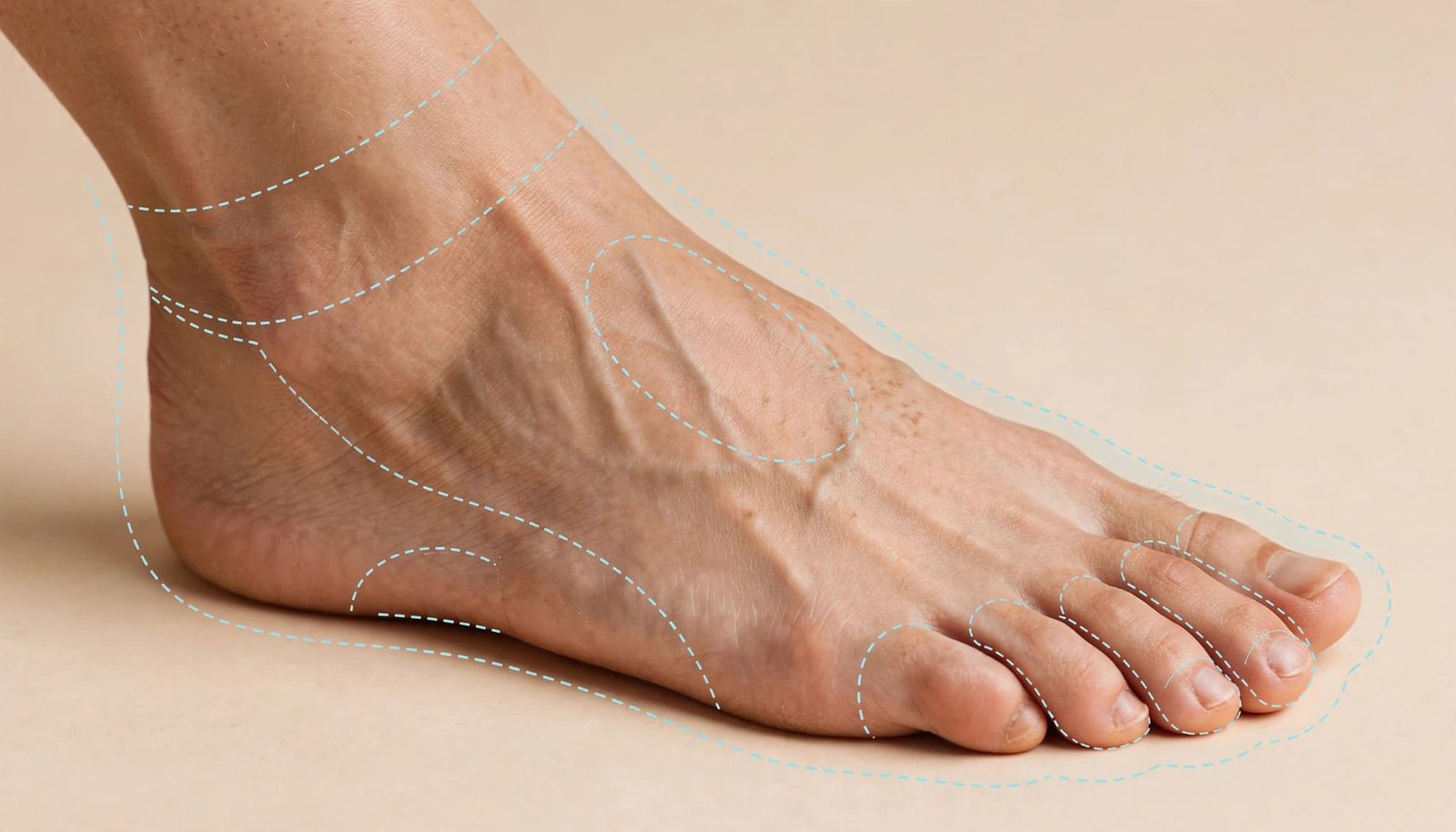
Long designs suit the arch or side of the foot because these areas create a natural vertical path. A centered design, such as a mandala or geometric symbol, usually works best on the instep, where the shape has room to stay balanced. Wraparound designs fit the ankle and upper foot, although the artist must account for constant movement.
Toes and joints can change how a tattoo appears. Tendons may split a fine line visually, while bending the toes can make lettering or straight geometry look uneven. Ask your artist to place the stencil while you’re both standing and sitting, then check it with your foot relaxed and flexed.
A reference image is a starting point, not a template. Your artist may need to adjust the scale, spacing, and line weight so the design suits your foot. A slightly larger flower with open spacing may age better than a tiny copy packed with detail.
Think about pain, visibility, and daily footwear
Foot tattoos can feel more painful because the skin is thin, the area has limited padding, and many nerves sit close to the surface. The top of the foot, ankle, toes, and bony areas may feel sharper than the softer arch. Pain varies from person to person, so choose a smaller design if you have a low pain tolerance or limited tattoo experience.
Your shoe habits matter just as much. Sneakers, boots, socks, work shoes, and sandal straps can rub different parts of the foot. Frequent walking or standing may also make healing less convenient. During the early healing period, avoid tight footwear and repeated friction where possible. The American Academy of Dermatology’s tattoo care guidance also recommends protecting healed tattoos from sun exposure with broad-spectrum SPF 30 or higher.
For discreet placement, consider the side, arch, or a small ankle design. The top of the foot offers more visibility, while a larger full-foot tattoo creates a stronger statement and may require more planning around shoes and workplace rules.
Choose an experienced tattoo artist
Review healed tattoo examples, not only fresh work photographed immediately after an appointment. Look for an artist who regularly tattoos feet and has experience with fine details, curved surfaces, and designs that must remain readable as they age.
Before booking, ask about hygiene practices, licensing requirements in your area, expected fading, touch-ups, and color choices. A good consultation should include questions about your footwear, walking routine, pain tolerance, and preferred size.
Your artist should explain how movement and friction may affect the design. They should also suggest practical adjustments instead of agreeing to copy a reference image exactly. Use this short checklist before committing:
- The design has personal meaning or a style you’ll still enjoy later.
- The size leaves enough space for lines and details to age well.
- The artist has healed foot tattoo examples.
- The placement fits your shoes, work clothes, and daily walking habits.
- The tattoo still looks balanced when your foot is relaxed, flexed, and moving.
Foot Tattoo Healing and Aftercare Basics
A foot tattoo needs more planning than many other placements because walking, socks, and shoes create constant friction. Expect redness, swelling, tenderness, and sensitivity during the first few days, followed by itching, peeling, and gradual settling as the skin repairs itself.
Your artist’s instructions should guide your routine because bandage types, healing methods, and recommended products vary. If their directions differ from general advice, ask them to explain the reason before changing your aftercare plan.
Plan the appointment around your shoes and schedule
Book the session when you can limit walking, running, travel, long work shifts, and events that require tight shoes. A fresh tattoo needs less pressure and rubbing, so a busy week on your feet can make healing more uncomfortable.
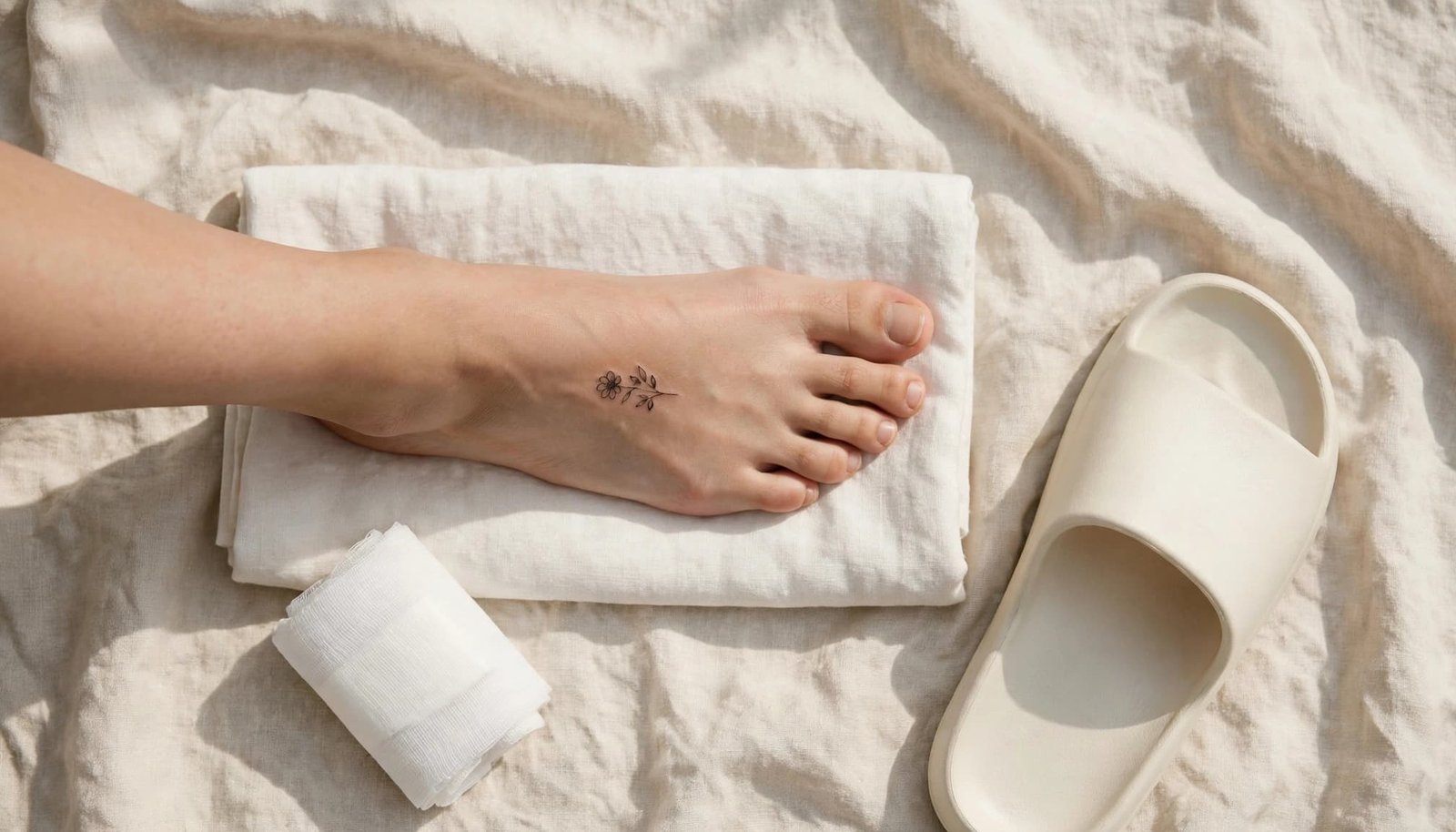
Have clean slides, sandals, or another loose option ready before your appointment. Closed-toe shoes and socks can rub against fresh ink, trap moisture, and press on swollen skin. Loose, open footwear often gives the tattoo more airflow and space during the early healing period, provided it doesn’t expose the area to dirt or accidental contact.
Follow your artist’s instructions for removing the initial covering. After washing your hands, gently clean the tattoo with lukewarm water and mild, fragrance-free soap. Use your fingertips rather than a washcloth or scrubber, then pat the area dry with a clean paper towel. Apply only a thin layer of the approved aftercare product. Heavy ointment can trap moisture and leave the skin feeling overly soft.
During healing, avoid:
- Scratching, picking, or peeling flakes from the tattoo.
- Swimming, hot tubs, baths, beaches, and other soaking.
- Strenuous exercise that causes heavy sweating or repeated rubbing.
- Prolonged standing when your foot feels swollen or sore.
- Direct sunlight and tanning beds.
Showers are usually easier to manage than baths, but don’t let the tattoo soak. Healing time varies, so wait until the skin has closed and stopped peeling before returning to these activities.
Some redness, swelling, tenderness, clear fluid, itching, and peeling can occur as the tattoo heals. These symptoms should gradually improve rather than become more intense. Spreading redness, worsening pain, increasing warmth, pus, fever, chills, or unusual swelling can indicate a complication. Contact a medical professional if these signs appear. The American Academy of Dermatology’s guidance on tattoo skin reactions explains which changes need medical attention.
Protect the tattoo after it has healed
Once the skin has fully closed, regular moisturizing can help the area look smooth and comfortable. Use a gentle, fragrance-free moisturizer if the skin feels dry, then apply broad-spectrum sunscreen whenever the tattoo is exposed. The AAD’s tattoo care recommendations advise protecting tattooed skin from ultraviolet exposure because sunlight can fade the ink.
Foot tattoos also face repeated contact with socks, sandals, sneakers, and boots. That friction can soften fine details over time, especially around toes, straps, and shoe edges. Fine lines and pale colors may need touch-ups sooner than bold black designs, although results vary with your skin, lifestyle, placement, ink, and artist.
Ask your tattoo artist for long-term care advice before leaving the appointment. They can explain how your chosen design may age and when a touch-up would make sense.
Conclusion
A foot tattoo can be easy to show off or keep private, but the best choice balances personal meaning with a design that stays readable in a small, curved space. Whether you prefer a delicate flower, a meaningful phrase, a celestial symbol, an ornamental wrap, or a bold animal, consider how the size and placement will work with your foot, shoes, and daily routine.
Save a few reference images, then discuss the details with a skilled tattoo artist who can adjust the scale, spacing, and line weight for your anatomy. Plan for a realistic healing period, follow the aftercare instructions, and avoid choosing a design only because it’s trending. With thoughtful planning, even a small tattoo can become a beautiful personal detail that feels right every time you see it.
Save the pin for later

- 20 Tattoo Ideas for Women on the Foot - September 19, 2026
- 5 Beautiful Tattoo Ideas for Women on Fingers - September 19, 2026
- 16 Cute Tattoo Ideas for Women on the Stomach - September 19, 2026
Leave a Reply