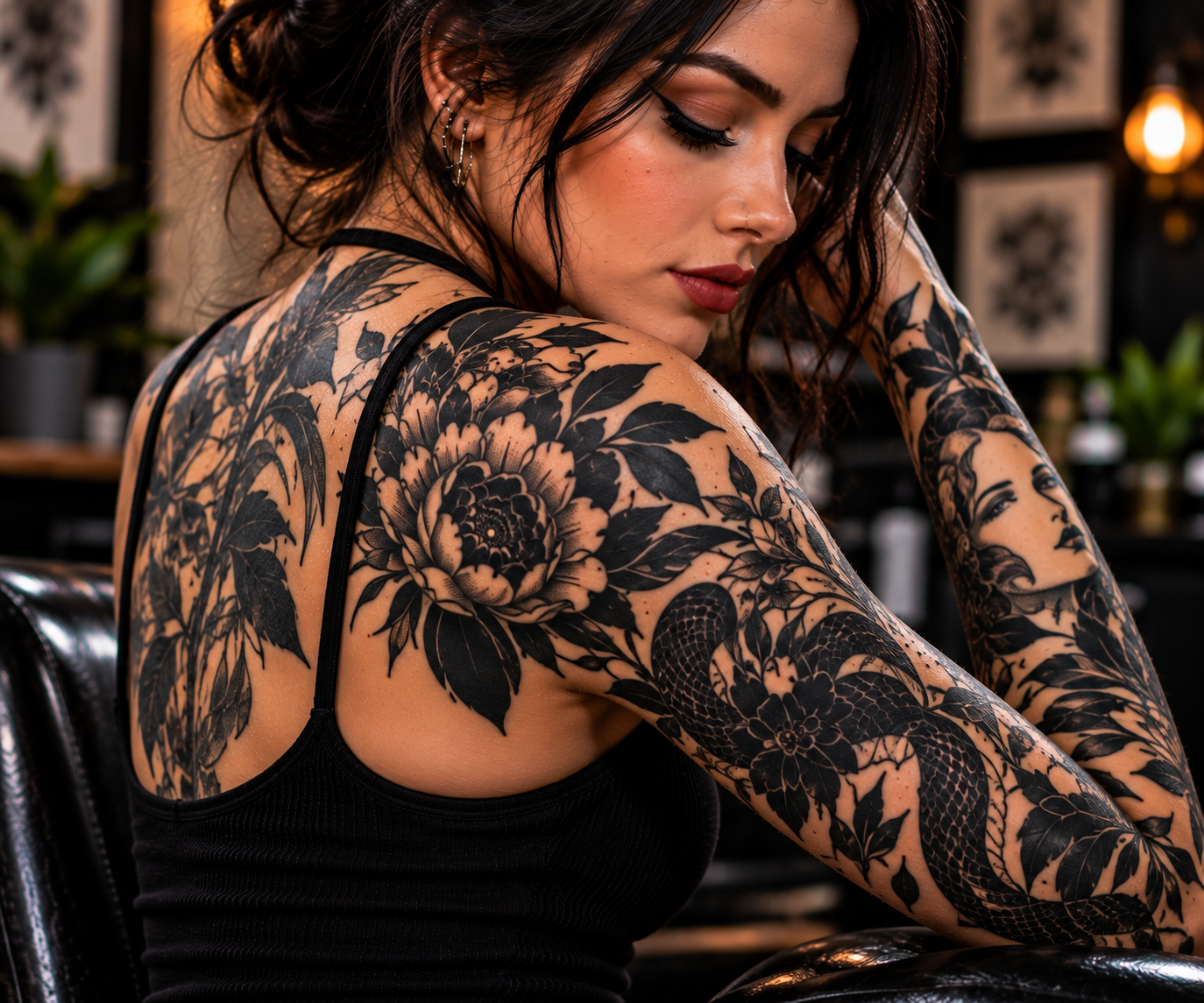
Graphic Blackwork Tattoos for Women: Design, Placement, and Care
Bold black ink catches the eye through sharp contrast, while a graphic design can feel personal and expressive without relying on delicate detail. If you’re considering a tattoo, the right composition should suit your taste and feel at home on your body.
This guide explores design ideas, placement, choosing an artist, cost, and healing, so you can make informed decisions before booking. Start by looking at what gives graphic blackwork its distinctive visual impact.
What Makes Graphic Blackwork Tattoos Stand Out?
Graphic blackwork uses black ink, bold shapes, crisp outlines, and a deliberate balance between inked areas and bare skin. The result can look like a print, symbol, or striking pattern, with each shape easy to read at a glance. The style depends on composition more than fine shading, so the placement of every black area and skin break matters.
How contrast and negative space shape the design
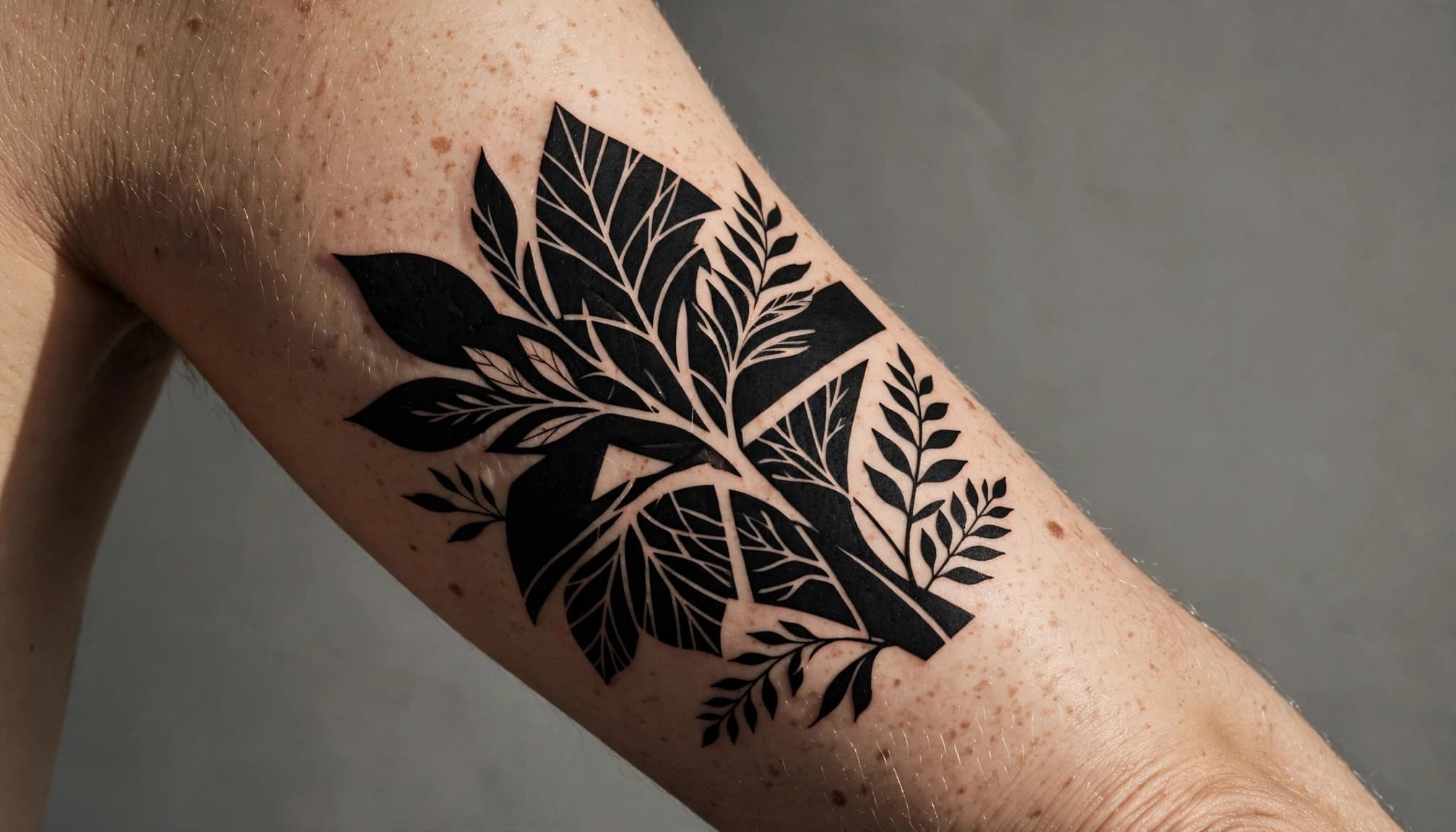
Solid black areas give a tattoo its visual weight. They create bold silhouettes and clear edges, while untouched skin acts as negative space. An artist can use those open areas to form fine lines, separate shapes, or create highlights without adding ink. In a leaf motif, for example, a narrow strip of skin can define a vein against a dark fill.
That contrast makes the design readable, but more black does not always make a tattoo stronger. If shapes crowd together, smaller details may blur into the dark areas over time. A well-planned design leaves enough open skin for each element to remain distinct as the tattoo heals and ages. The role of negative space in tattoo design offers a useful visual reference for how bare skin can function as part of the composition.
Graphic blackwork compared with illustrative styles
Graphic blackwork often reads like a printed image, emblem, or repeating pattern. Its appeal comes from the arrangement of shapes and contrast, rather than a detailed scene. Some pieces use abstract forms; others suggest a recognizable subject through a simplified silhouette or a few crisp lines.
Illustrative blackwork, by comparison, more often centers on a figure, animal, plant, or scene. It may use hatching, etched textures, and varied linework to make the subject feel detailed or narrative. The styles can overlap, but the distinction is useful: graphic work foregrounds the overall composition, while illustrative work puts the depicted subject first.
Ornamental, geometric, and dotwork influences can all appear in blackwork. Ornamental designs favor decorative motifs and symmetry, geometric work emphasizes measured shapes and structure, and dotwork builds tone from individual dots. Each can use black ink, yet each has its own visual language. Looking through tattoo ideas and body art inspiration can help you identify which qualities appeal to you before discussing a custom design with an artist.
Graphic Blackwork Tattoo for Women: Ideas With Personal Meaning
A graphic blackwork tattoo doesn’t need to look traditionally feminine to suit a woman. It can be delicate, severe, playful, or unapologetically bold, depending on what feels like you. Start with a motif you’re drawn to, then consider what it might say about your history, values, or outlook.
Ornamental patterns, geometry, and abstract shapes
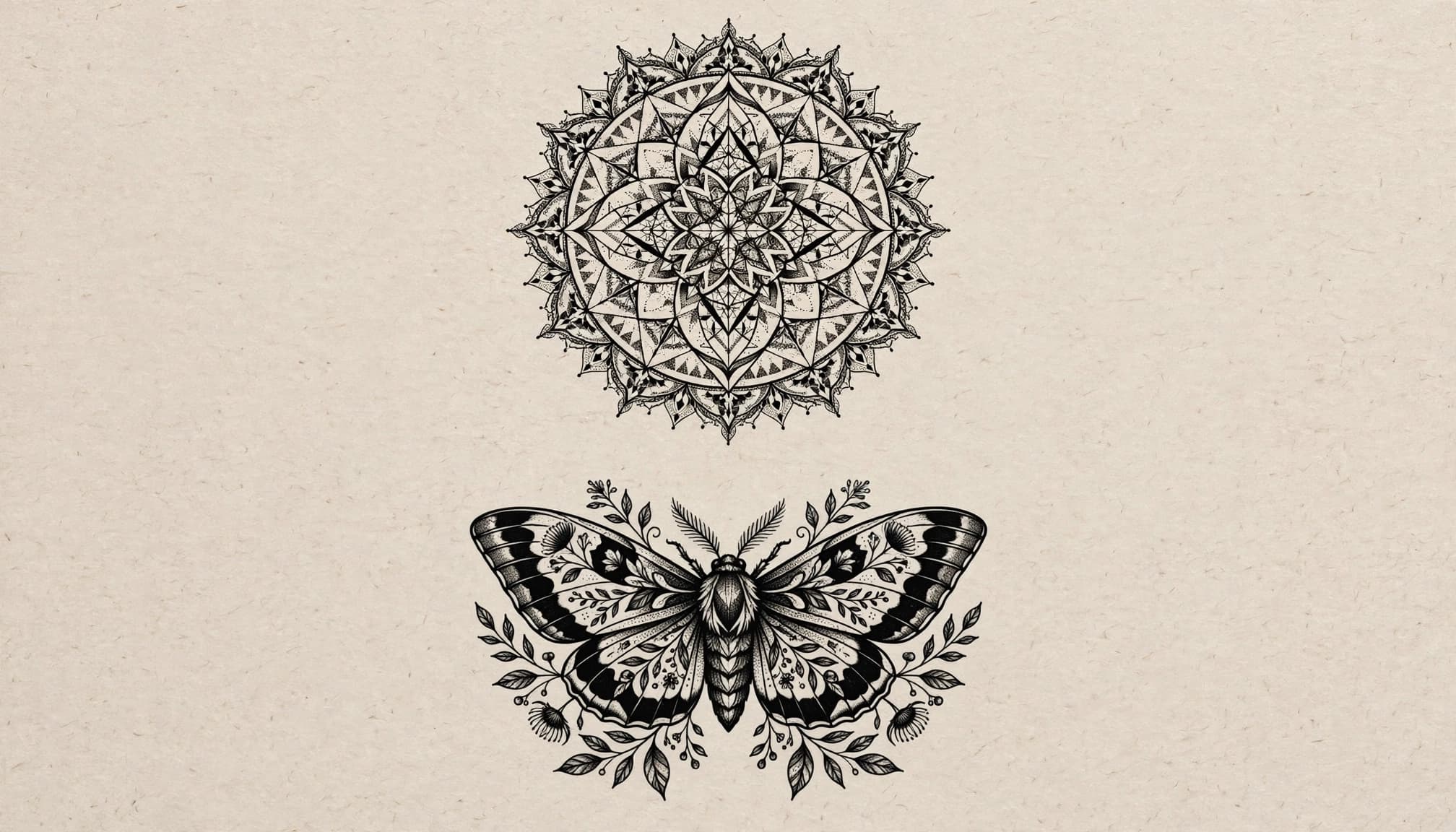
Lace-like blackwork can bring a decorative feel to a wrist, shoulder, or sternum, while mandala-inspired forms create a centered design with radial balance. Repeating geometry, such as arcs, grids, or interlocking shapes, can feel precise and structured. For a more expressive look, bold abstract shapes can follow the body’s contours without depicting a specific object.
These motifs can stay compact and clean, like a small, personal mark, or expand into a sleeve or larger back piece. In either case, discuss scale with your tattoo artist. Fine gaps and tiny details may be harder to read when a design is very small, while a larger composition gives its shapes more room.
Some ornamental forms also carry cultural or spiritual meaning. Mandalas, for example, have religious contexts in Hindu and Buddhist traditions, so learn about a symbol’s history before choosing it as decoration. The same care applies to Indigenous tattoo traditions. Māori tā moko and Polynesian tatau carry meanings tied to identity, ancestry, and community, as National Geographic’s overview of Polynesian tattoo traditions explains. Avoid copying specific traditional motifs without understanding their context.
Botanical, animal, and symbolic designs in black ink
A dark flower can suggest grief, renewal, or affection; a thorny stem might reflect hard-won boundaries. A moth can evoke change or attraction to the unknown, while a bird may connect to a place, memory, or sense of freedom. Personal symbols, such as an object linked to a loved one, can also become striking blackwork when simplified into a clear silhouette.
The mood depends on shape and ink density, not color. Broad black fills and sharp edges can make a flower feel dramatic, while open skin breaks and rounded outlines soften the same subject. A small, uncluttered symbol can feel minimal; a denser composition creates more visual weight. Bring your artist a few references, then explain why the subject matters to you. That gives them room to create a design that feels personal rather than generic.
How to Choose a Placement and Scale That Work for You
A graphic blackwork tattoo should fit the body as well as the idea behind it. Curves, movement, visibility, and clothing all affect how bold shapes read, so choose a placement and scale together. A design that looks balanced on paper may need a different shape or orientation on skin.
Forearm, upper arm, shoulder, and back placements
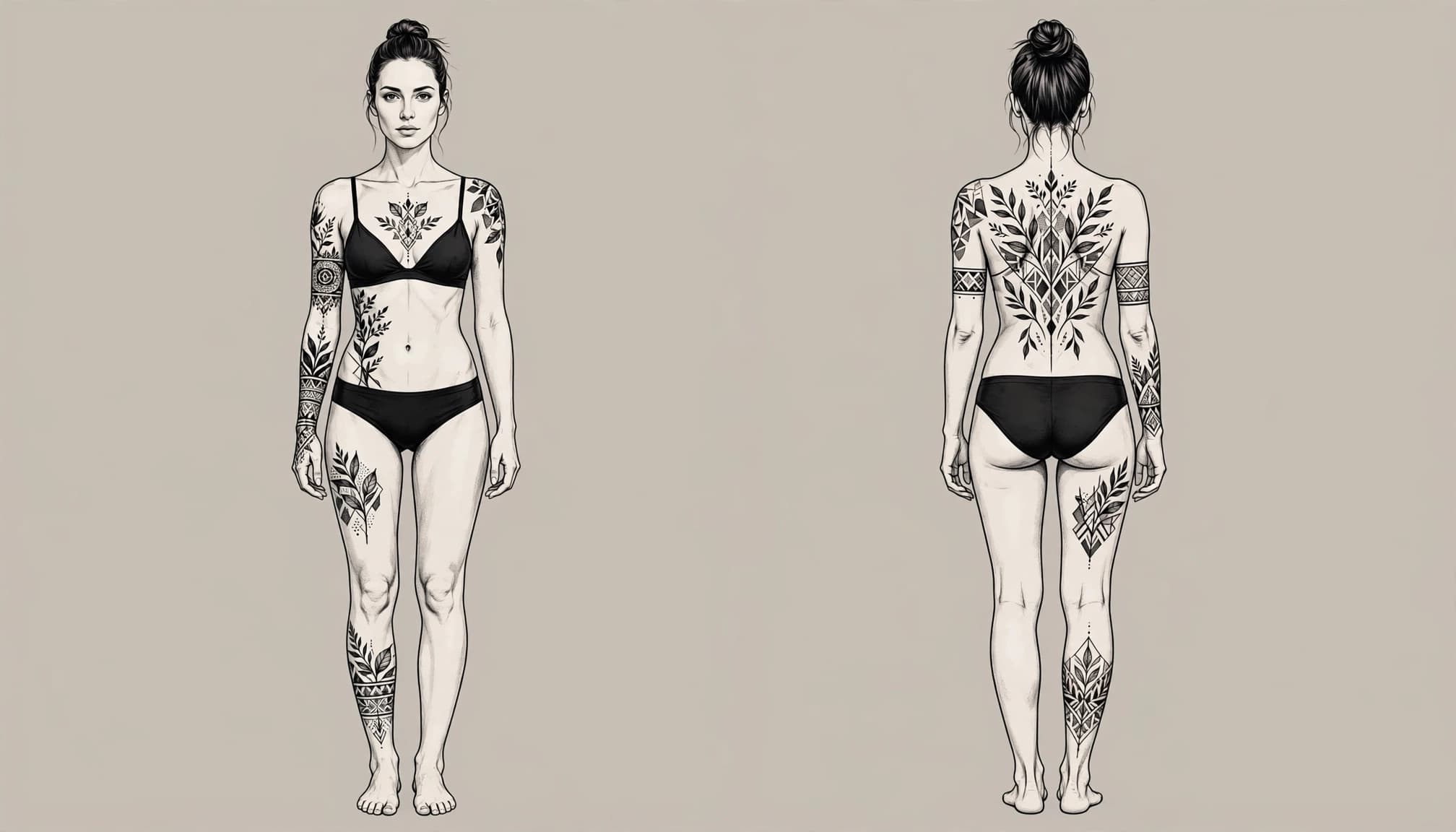
A forearm panel is easy to see and show, making it a natural choice for a design you want to view often. Its relatively open surface can suit graphic motifs with strong vertical lines, though the tattoo will remain visible in many outfits.
By contrast, the upper arm and shoulder have rounded contours that can help curved motifs feel integrated with the body. A design may wrap partly around the arm, so ask your artist to show how it looks from the front, side, and back. The back offers more room for a larger composition, but shoulder blades and posture affect how the design shifts across different angles.
Thigh, calf, ribs, and sternum designs
Thighs and calves can accommodate taller panels or larger designs, with clothing providing more control over visibility. Ribs and sternum areas can support flowing shapes that follow the torso, although sensitivity varies from person to person. Consider how waistbands, bras, and fitted tops may sit against these locations.
Before committing, ask your artist to apply a stencil that follows your body’s contours. View it while standing, sitting, and moving your arms or torso; a motif should still feel balanced beyond a single pose. Check how clothing covers or rubs the area, too. Friction from tight garments can irritate a fresh tattoo, so plan for loose, breathable clothing during healing. The American Academy of Dermatology’s advice on tattoo skin reactions can help you recognize when a skin response needs medical attention.
Scale matters as much as location. Fine gaps and small shapes need enough room to remain distinct, while broader black areas can carry well across larger surfaces. Ask your artist to adjust the stencil before the session, rather than forcing a favorite design into a spot where its proportions feel cramped.
How to Find an Artist and Plan the Cost
The right artist should understand how black shapes, open skin, and body contours work together. Before you book, review healed tattoos, confirm the artist follows local licensing and safety requirements, and get a clear estimate based on your design and placement.
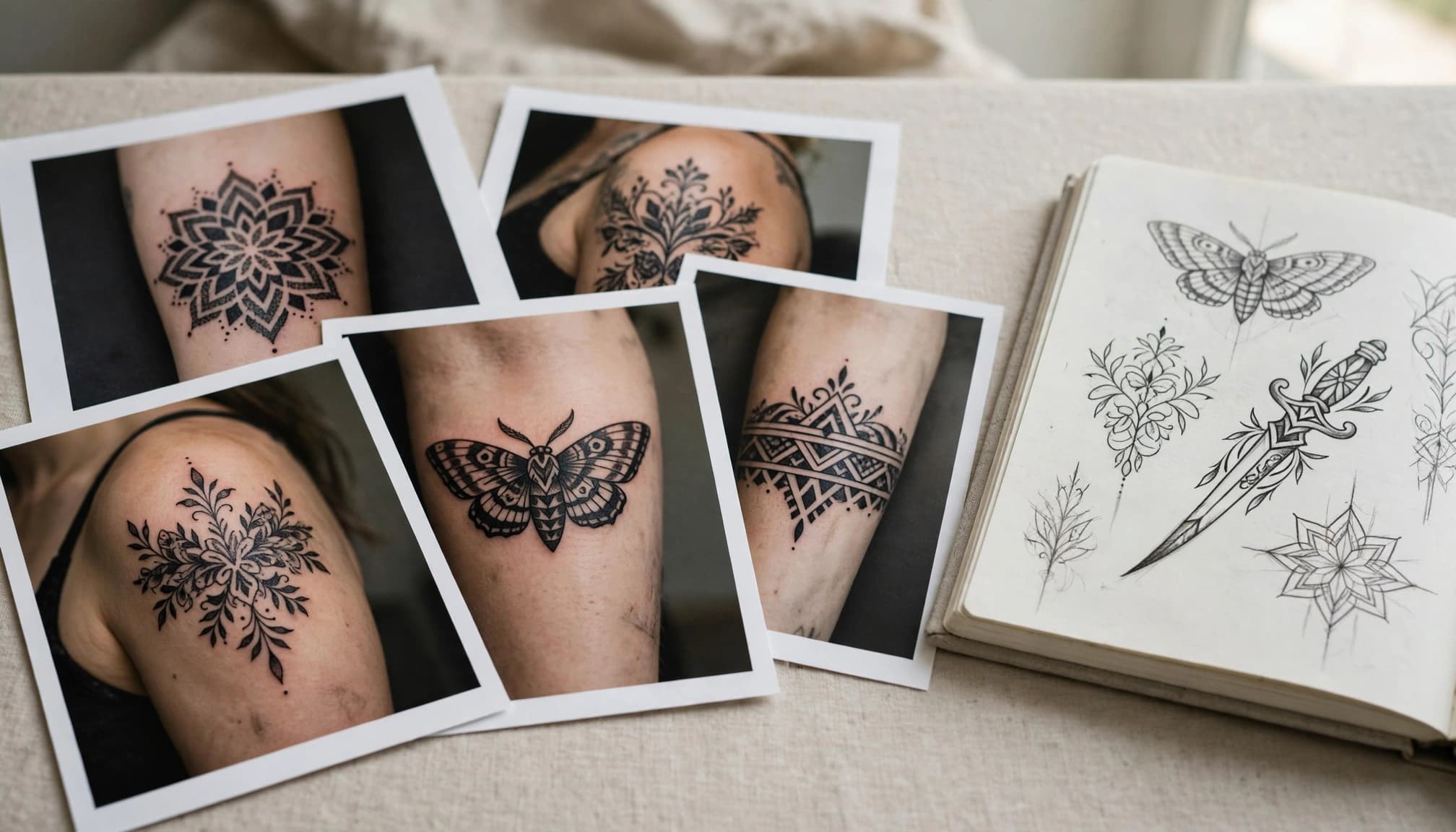
What to look for in a blackwork portfolio
A fresh tattoo can look crisp in a photo, but healed work shows how the artist’s technique holds up. Look for even black saturation, clean edges, and consistent line weight across multiple examples. Also check whether designs follow the body’s shape rather than looking like flat images placed on skin.
Choose someone whose portfolio includes work similar in scale and style to your idea. A small graphic motif and a large, densely filled piece require different planning. During the consultation, ask how the artist will preserve negative space, manage broad solid-black areas, and divide the tattoo across sessions if needed. Their answers should be clear and specific to your design.
Safety matters alongside style. Licensing rules differ by location, so check your state or local health department’s requirements and ask the studio about sterile needles, single-use gloves, and safe disposal. For example, New York City’s tattoo safety manual outlines local licensing and hygiene practices.
Questions to ask before booking and budgeting
Ask how the design process works, how long each session may take, and how many visits the tattoo is likely to need. Confirm the deposit amount, payment schedule, cancellation terms, and whether the artist charges separately for custom drawing or substantial design changes. Also ask about the touch-up policy and request written aftercare instructions before your appointment.
Tattoo pricing depends on size, detail, placement, artist experience, and session count. A simple black palette doesn’t necessarily mean a quick session: dense fills take time, and large pieces may need multiple appointments to complete evenly. Cover-ups can require extra planning because the new composition must work with the existing tattoo’s shape and darkness.
Rather than relying on a universal price or a vague size category, request an estimate tied to your body location and approximate dimensions. Ask what the quote includes, whether it is fixed or hourly, and what could change the final cost. A clear estimate helps you compare artists on more than price alone, while giving you a realistic budget before you commit.
What to Expect From Tattoo Pain, Healing, and Long-Term Care
Tattoo discomfort varies by person and placement. Dense graphic blackwork can also take longer to complete than simple linework, and larger filled areas may make the session and healing period more demanding. Your artist can explain the plan for your design, but your own experience will depend on your body and the tattoo’s size and location.
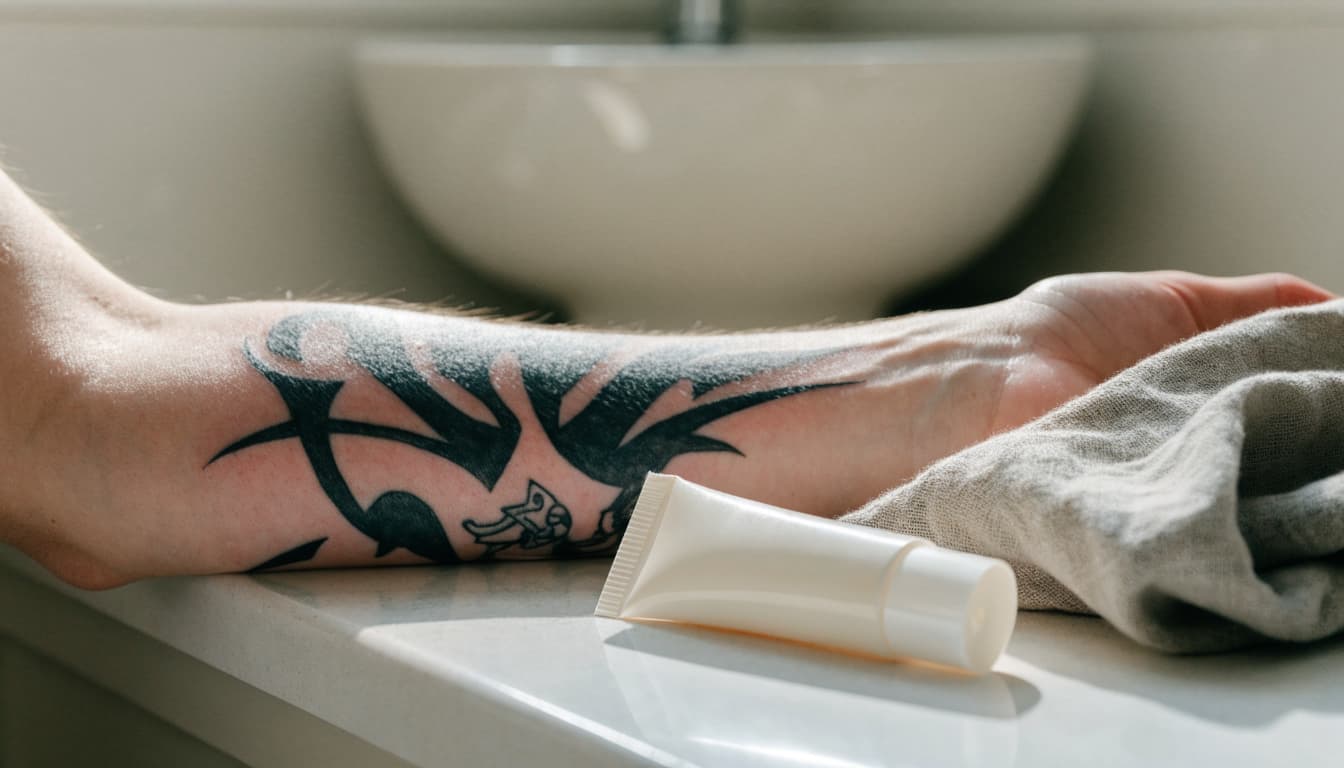
Healing dense black fills and protecting the tattoo
Follow your artist’s written aftercare directions, since products and bandage instructions can differ. In general, wash your hands before touching the tattoo, keep the area clean, and apply only a light layer of the moisturizer your artist recommends. Avoid picking flakes or scratching, even if the skin feels itchy as it heals.
Skip swimming, baths, and other soaking until the tattoo has healed. Loose, breathable clothing can reduce rubbing against a fresh design, while keeping it out of direct sun helps limit irritation. Once healed, protect exposed blackwork with broad-spectrum, water-resistant sunscreen rated SPF 30 or higher. The American Academy of Dermatology’s tattoo care guidance covers sun protection and skin reactions.
Recognizing concerns and caring for the design over time
Some irritation can occur after tattooing, but symptoms that worsen deserve attention. Contact a health professional if you notice increasing redness, swelling, warmth, unusual discharge, fever, or a possible allergic reaction. Black ink can cause an allergic reaction, too, so don’t dismiss a persistent rash or raised, itchy skin because the tattoo has no color.
After healing, bold black shapes may soften or blur slightly over time. Sun exposure can affect how clearly the design reads, so keep using sunscreen on exposed skin. A reputable artist also helps preserve clarity by planning adequate space between shapes and using techniques suited to the design. If the tattoo changes unexpectedly or a skin reaction persists, ask a health professional to assess it.
Conclusion
Graphic blackwork pairs bold black shapes with negative space to create designs that can feel personal, ornamental, or abstract. Choose a motif and placement that suit your taste, and review an artist’s healed work before booking.
Plan for both the cost and healing time, then follow your artist’s aftercare instructions. With thoughtful choices, your tattoo can feel distinctly yours and read clearly on your body.
Save pin for later


- Blackwork Tattoo Ideas for Men: Designs, Placement, and Planning - September 26, 2026
- 20 Tattoo Designs and Where to Place Them for the Best Fit - September 26, 2026
- 10 Line Tattoo Designs and What They Can Symbolize - September 26, 2026
Leave a Reply