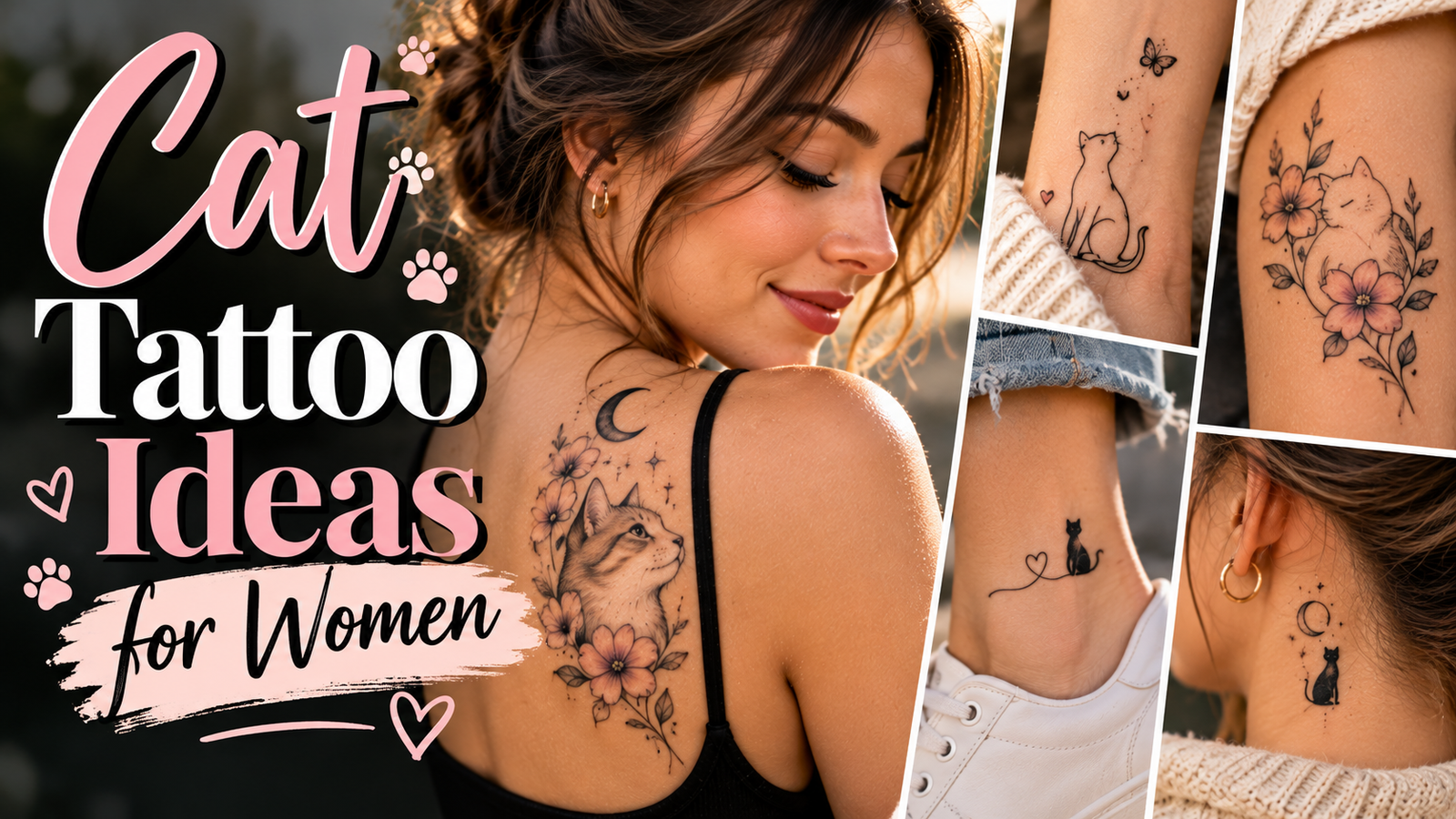
Cat Tattoo Ideas for Women: 15 Styles, Placements, and Meanings in 2026
A cat tattoo is one of the most requested feminine designs in 2026, and it’s easy to see why. Cats carry a rare mix of meanings: independence, intuition, grace, and a little mystery. Whether you want a tiny minimalist outline on your wrist or a detailed fine-line portrait, there’s a cat design that fits your style and story.
The challenge isn’t finding inspiration; it’s narrowing it down. Blackwork, watercolor, geometric, Egyptian-inspired, single-line drawings… the options multiply fast, and so do questions about where to place the tattoo and how it’ll age.
This guide breaks it all down. You’ll find 15 standout cat tattoo styles, the meanings behind them, the best placements for each, and practical tips for choosing a design you’ll still love years from now. Start with the styles below and see which one feels like you.
What a Cat Tattoo Really Means for Women
A cat tattoo is rarely just a cat. For most women who wear one, it’s a small statement about who they are, or who they want to be. The symbolism runs deep in history, but it also comes down to something personal, like the pet curled up on your couch right now.
Independence is the meaning women mention most often. Cats answer to no one, yet they choose to stay. A tattoo can capture that same spirit: soft, but never owned.
Femininity and mystery come next. A cat moves with quiet confidence and keeps its secrets, which is exactly the energy many women want inked on their skin. Then there’s intuition and protection. Ancient cultures saw cats as guardians who could see what humans couldn’t, watchful protectors against bad luck and ill intentions.
That protective role has divine roots. The Egyptian goddess Bastet, often shown as a cat or cat-headed woman, guarded homes, fertility, and family. Norse legend honors Freyja, goddess of love and beauty, who rode a chariot pulled by two large cats. Both goddesses blend grace with real power, and both still inspire tattoo designs today.
And sometimes? The meaning is simple. It’s a portrait of the tabby who was there through the breakup, the move, the hard year. Plenty of women get a cat tattoo as a memorial or a daily reminder of a bond that shaped them.
If you’re weighing whether the symbolism fits you, our guide to choosing a meaningful tattoo design walks through turning personal stories into ink you won’t regret.
Best Cat Tattoo Ideas for Women in 2026
The right cat tattoo comes down to style. Two women can both want “a cat tattoo” and end up with completely different pieces: one a whisper-thin outline, the other a burst of watercolor flowers. These five style families cover what women are asking for most this year, so start here and see which direction pulls you in.
Minimalist and Fine Line Cat Tattoos
Fine line work dominates in 2026, and cats suit it perfectly. A single continuous line can trace an entire cat: the arch of the back, the curl of the tail, the point of an ear. Some designs add just one detail, like a closed eye or a tiny heart, and stop there.
Tiny outline cats are equally popular. Think a silhouette no bigger than a coin, placed on the wrist, ankle, or behind the ear. Whisker-only designs work too; three thin lines on the inner arm look subtle and a little playful.
There’s a practical reason these designs suit first tattoos. Fine line pieces heal quickly, take less than an hour in most cases, and hide easily under clothing if you need to. They also age gracefully, since thin linework blurs less visibly than heavy shading when it fades.
Black Cat Tattoos and Their Meaning
Black cat designs carry the most symbolism. A full silhouette in solid black ink makes a bold, graphic statement, while a sitting pose with an arched tail feels watchful and calm. Some designs add glowing eyes, usually small dots of white or negative space, which give the cat an otherworldly look.
The old superstition about black cats being unlucky has mostly flipped. Many women now choose them precisely for that history, claiming luck, mystery, and protection as their own. Sailors once kept black cats aboard ships as guardians, and that protective symbolism still sticks.
If superstition is what’s holding you back, consider this: in Japanese and UK tradition, black cats are considered good omens. You get to pick which meaning you carry.
Watercolor and Floral Cat Designs
Watercolor cat tattoos look like paint splashed across the skin. The cat itself might be a simple outline or silhouette, and color blooms around it: blues, pinks, violets, all blended without hard edges. Because the style mimics wet pigment, every piece looks slightly different on the body.
Pairings matter here. Popular combinations include:
- A cat curled with lavender stems, for calm and serenity
- A cat framed by roses, balancing softness with edge
- A cat sitting beneath a crescent moon, often with a few scattered stars
Botanical frames are another favorite. Ferns, wildflowers, or eucalyptus branches arch around the cat and give a small tattoo a larger, more composed feel without adding heaviness.
Celestial and Mystical Cat Tattoos
Cats and the cosmos belong together in tattoo culture. The classic version shows a cat perched on a crescent moon, sometimes ringed by stars or orbit lines. Moon phases arranged in a vertical line alongside a cat silhouette are another common layout, especially on the spine or forearm.
The witchy end of this style runs deeper. Designs featuring a third eye on the cat’s forehead, small crystals, or a cat framed by a moon halo tie straight into the intuition symbolism from earlier in this guide. A cat sees in the dark; a celestial cat sees beyond it. That’s the appeal.
Matching and Memorial Cat Tattoos
Some of the most meaningful cat tattoos honor a real animal. Portrait-style pieces capture your actual pet, and a skilled artist can work from a clear photo. Simpler options include a paw print (many owners ink their pet’s actual paw print), a name with important dates, or a small outline of the pet’s distinctive markings or pose.
Matching cat tattoos work beautifully between sisters, best friends, or partners. Two cats facing each other, one on each person, is a classic version. So is a pair of tiny silhouettes that “meet” when you stand side by side.
Before committing to any memorial piece, it helps to see how personal details translate into design, and the earlier guide on turning a personal story into tattoo art covers that process step by step.
Where to Place Your Cat Tattoo
Placement changes everything about a cat tattoo. The same design reads delicate on the wrist and dramatic across a shoulder blade, and the spot you choose also decides how much the needle hurts and who gets to see it. Match the design to the body area first, then think about visibility.
Small, Visible Spots
Tiny designs (under two inches) thrive on the wrist, ankle, and behind the ear. A coin-sized silhouette or single-line cat fits these areas without crowding them. Wrist tattoos stay on display daily, so choose a design you’re happy to explain to strangers. Behind-the-ear pieces hide easily under hair, which makes them a favorite for first-timers and anyone with a conservative workplace.
The collarbone suits slim horizontal designs, like a cat stretched along the bone or a line of moon phases with a small feline at the end. Skin here is thin, so expect a sharper sting than the forearm delivers.
Medium Placement Options
The forearm is the workhorse of cat tattoos. It offers flat, relatively painless real estate for designs up to five inches, and fine-line cats look especially clean on the outer forearm. The shoulder blade gives slightly more room and curves nicely with arched-back designs, plus it’s easy to cover.
Thigh placements suit medium-to-large pieces (four to seven inches). Skin here is thicker and the area is private, so many women start their tattoo collection with a thigh piece. Curved designs, like a lounging cat, follow the leg’s natural shape well.
Larger and Higher-Pain Areas
The ribcage is the boldest choice. It accommodates long, vertical compositions (a cat climbing along the ribs, or a full moon scene) that would never fit elsewhere. The trade-off is pain: ribs rank among the most sensitive spots because skin sits directly over bone and breathing moves the area constantly.
Here’s a quick comparison before you decide:
| Placement | Best size | Pain level | Visibility |
|---|---|---|---|
| Wrist | Tiny | Low to medium | High |
| Behind the ear | Tiny | Medium | Easy to hide |
| Forearm | Small to medium | Low | High |
| Shoulder blade | Medium | Low to medium | Easy to hide |
| Thigh | Medium to large | Low | Easy to hide |
| Ribcage | Medium to large | High | Private |
Practical Tips Before You Commit
Size and spot need to agree with each other. A detailed portrait squeezed onto a wrist will blur within a few years, while a minimalist outline floating on a wide thigh can look lost. As a rule, keep fine detail on fleshier, larger areas and save simple shapes for small spots.
Pain tolerance varies, but placement matters more than size. If you’re nervous, start on the outer forearm or thigh and save bony areas for later. It also helps to read up on tattoo pain by body placement so you know exactly what you’re signing up for.
How to Choose the Right Cat Tattoo Design for You
Inspiration is the easy part; the hard part is picking one design and committing to it. A cat tattoo lives on your skin for decades, so the decision deserves more thought than a quick scroll through saved posts. Two questions do most of the work here: does the style fit who you are, and is the artist right for the job?
Match the Style to Your Personality
The best tattoo feels like an extension of you, not a trend you borrowed. Start by being honest about how you dress, decorate, and present yourself.
- Understated style? A minimalist single-line cat or tiny silhouette suits you. These designs whisper instead of shout, and they pair well with simple jewelry and clean aesthetics.
- Expressive and bold? Neo-traditional pieces with rich color, heavy outlines, and decorative florals match a personality that likes being noticed. Watercolor fits this group too.
- Devoted pet lover? A realistic portrait of your own cat says more than any symbolic design could. Bring clear, well-lit photos to your artist and expect to pay more for the detail involved.
A quick test: picture the design on your body in ten years, next to your usual outfits. If it still feels like you, that’s your answer.
Finding and Working With a Tattoo Artist
The artist matters as much as the design. A fine-line cat done by a realism specialist can heal blurry or uneven, because each artist trains in specific styles.
- Search portfolios on Instagram. Look up hashtags like #finelinetattoo or #blackworktattoo plus your city. Check whether the artist’s existing cat pieces look crisp and consistent.
- Shortlist two or three specialists. Fine line and blackwork are their own disciplines, so prioritize artists who post that style regularly rather than occasionally.
- Book a consultation. Most artists offer free or low-cost chats where you can discuss size, placement, and pricing. Bring your reference images and ask how they’d adapt the design to your skin tone and body area.
- Ask about pricing up front. In the US, small tattoos typically start around $80 to $150, while custom or detailed pieces often run $150 to $300 per hour. Larger pieces usually get quoted hourly, so ask for an estimate before booking.
A good artist will also flag problems you haven’t considered, like detail that won’t survive on a wrist or a design that needs resizing. Listen to that feedback. Once you’ve picked your artist and style, the last step is simple: book the appointment and stop second-guessing.
Cat Tattoo Aftercare and What to Expect
Your cat tattoo is done, but the work isn’t over. The first few weeks decide how crisp those fine lines look for the next decade, so treat aftercare like part of the appointment itself. The good news: healing a small tattoo is simple once you know the routine.
The First Few Days
Your artist will wrap the fresh tattoo, either with plastic wrap or a breathable second-skin bandage like Saniderm. Keep that covering on for the time they recommend, usually two to six hours for wrap, or up to several days for adhesive bandages. Once it’s off, wash gently with fragrance-free soap and lukewarm water, pat dry with a clean paper towel, and apply a thin layer of unscented ointment like Aquaphor.
Repeat that cleaning routine two to three times a day for the first week. Less ointment is better; the skin needs to breathe, so aim for a light sheen rather than a thick coat.
Peeling and Itching
Around day four or five, expect the tattoo to peel like a mild sunburn. This is normal, and it means healing is on track. Don’t pick, scratch, or pull the flaking skin, even when it itches. Tap or slap the area lightly instead, and keep moisturizing. Peeling usually finishes within a week, and the tattoo may look slightly cloudy or dull during this stage before settling.
What to Avoid While Healing
A few habits can wreck an otherwise perfect heal, so follow these for at least two to four weeks:
- Skip swimming pools, hot tubs, lakes, and baths; showers are fine
- Stay out of direct sun, and once healed, always use SPF 30 or higher
- Avoid tight clothing that rubs the area, especially for thigh or ribcage pieces
- Don’t soak the tattoo or let it dry out completely
Sun exposure is the biggest long-term threat. UV light fades fine line work faster than anything else, so a daily SPF habit protects your cat’s whiskers for years.
Touch-Ups and Fine Line Realities
Fine line tattoos sometimes need a touch-up. Thin, delicate lines can heal slightly lighter or patchier than bold work, especially on areas with lots of movement like the wrist. Most artists offer a free touch-up within the first few months, so ask about their policy before you leave the studio. If your tattoo still looks faint after it fully heals (give it a full month), book that follow-up and enjoy your cat for good.
Conclusion
A cat tattoo works best when it means something to you. The minimalist fine-line cat suits quiet personalities, black cat silhouettes carry luck and protection, watercolor and celestial designs add color and mystery, and a portrait or paw print honors the pet that changed your life.
Pick the style that matches who you are, choose placement you can live with, and trust a specialist artist to bring it to life. A design chosen for yourself, not for a trend, is the one you’ll still love in twenty years.
Which cat tattoo idea is your favorite? Share it in the comments below; your pick might inspire someone else’s next piece.
Save pin for later


- How to Design Your Own Tattoo Without Regret: A Step-by-Step Guide - September 23, 2026
- 20 Daisy Tattoo Design Ideas With Meanings, Placements, and Style Tips - September 23, 2026
- 20 First Tattoo Ideas for Women: Beginner-Friendly Designs You’ll Still Love in 10 Years - September 23, 2026
Leave a Reply