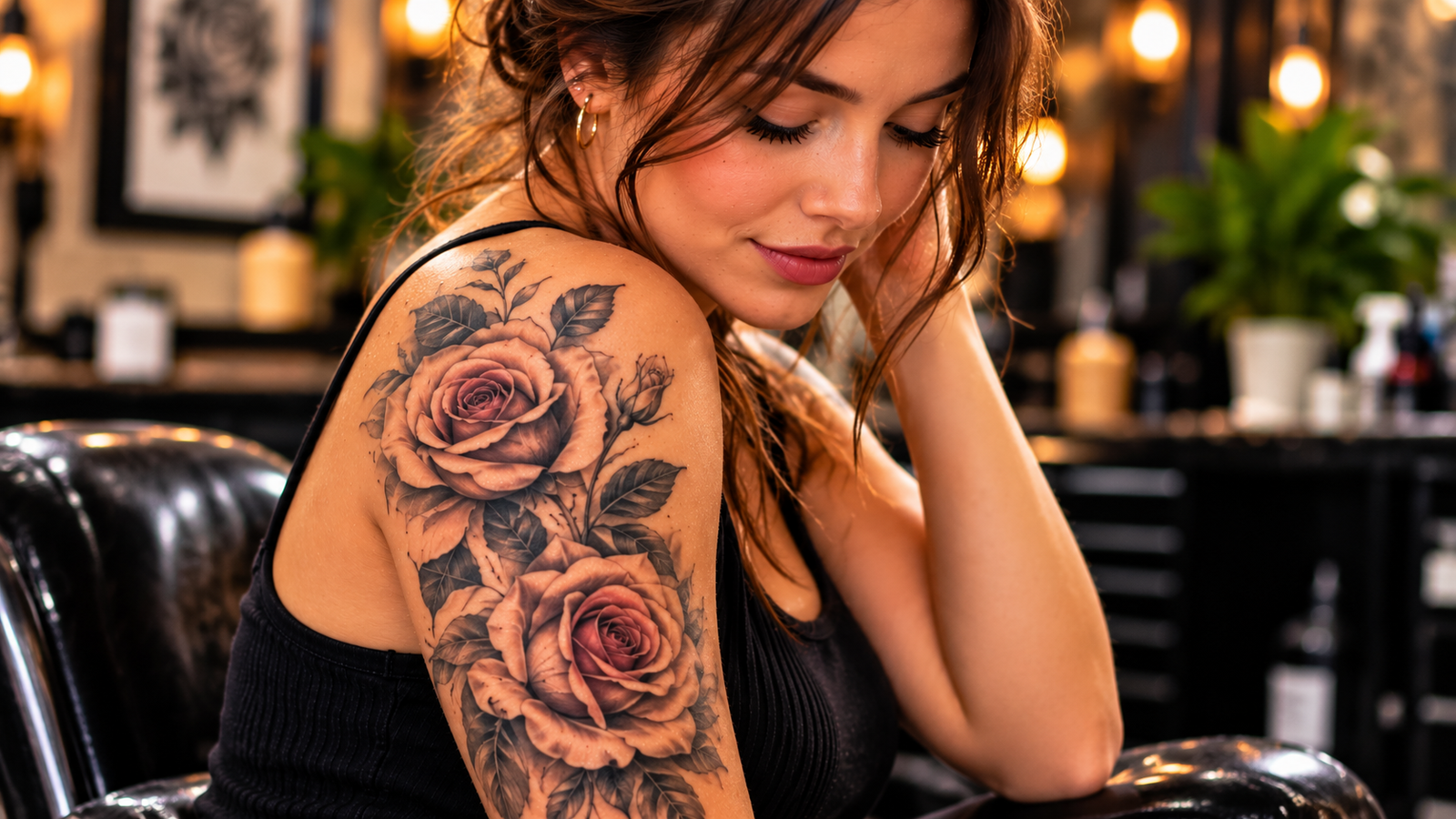
Rose Tattoo Meaning for Women: Symbolism, Colors, and Design Choices
A rose tattoo can express love, loss, strength, or a new beginning, depending on its details. There’s no single meaning that applies to every woman, so the design’s symbolism is personal rather than fixed.
Color, bloom stage, added symbols, and placement can all shape how a rose tattoo feels and what it says. As you consider your design, these details can help you choose a rose that reflects your own story.
Watch a video about rose tattoo symbolism and color meanings.
Symbolic Meaning of Rose Tattoo: What Women Should Know
A rose tattoo often brings together love, beauty, passion, and memory. Its meaning depends on the person wearing it, the design, and the cultural context. A red rose might honor a romantic bond, while another rose could commemorate someone who has died. These interpretations have appeared across art and traditions, but none is universal. The history of rose symbolism in art shows how meanings shift across time and context.
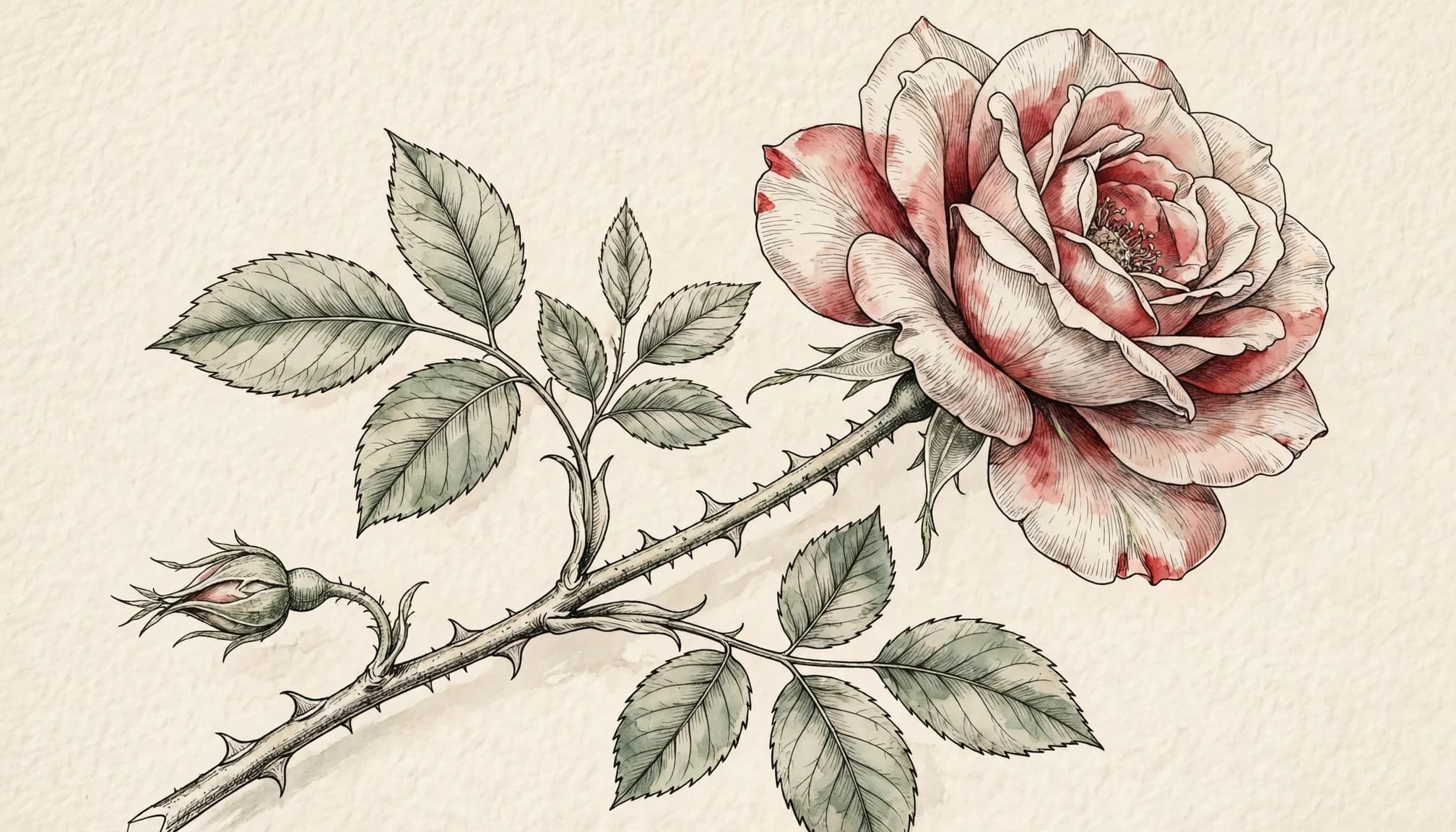
Why a rose can represent both love and hardship
A rose’s soft petals can suggest tenderness, romance, or beauty. Its thorns add another layer: they may stand for protection, pain, or the strength it takes to keep going. Together, these details can capture the truth that love and hardship sometimes exist side by side.
For example, a woman who left a difficult relationship might choose a rose with visible thorns to remember how she protected herself and began again. Someone else may choose the same design to honor a loved one whose life included both joy and struggle. Neither interpretation is more correct. The tattoo’s personal meaning matters more than a fixed definition.
Rose imagery has also carried different meanings in religious and cultural traditions, including associations with love, secrecy, or spirituality. So if a symbol connects to your heritage or beliefs, consider that context before settling on a design. A closer look at rose meanings in mourning traditions can also help when you’re planning a memorial tattoo.
How the bloom stage changes the message
The rose’s stage of growth can shift the feeling of a tattoo, even when its color stays the same. A bud may suggest personal growth, hope, or a fresh start. It can suit someone entering a new chapter or honoring potential that is still unfolding.
A full bloom often feels confident and expressive. It may celebrate achievement, self-acceptance, or a moment when you feel comfortable taking up space. By contrast, a wilting rose can point to grief, a relationship that has ended, or the passage of time. It can also honor a memory without suggesting that the love behind it has disappeared.
Before choosing, ask what moment or feeling you want the image to hold. Then use the bloom, thorns, and other details to make that meaning personal.
Rose Tattoo Color Meanings, From Red to Black
Color can change the mood of the same rose design. A fine-line bloom may feel romantic in red, tender in pink, or more somber in black. These associations can help you choose a direction, but your own reason for wearing the tattoo matters most.
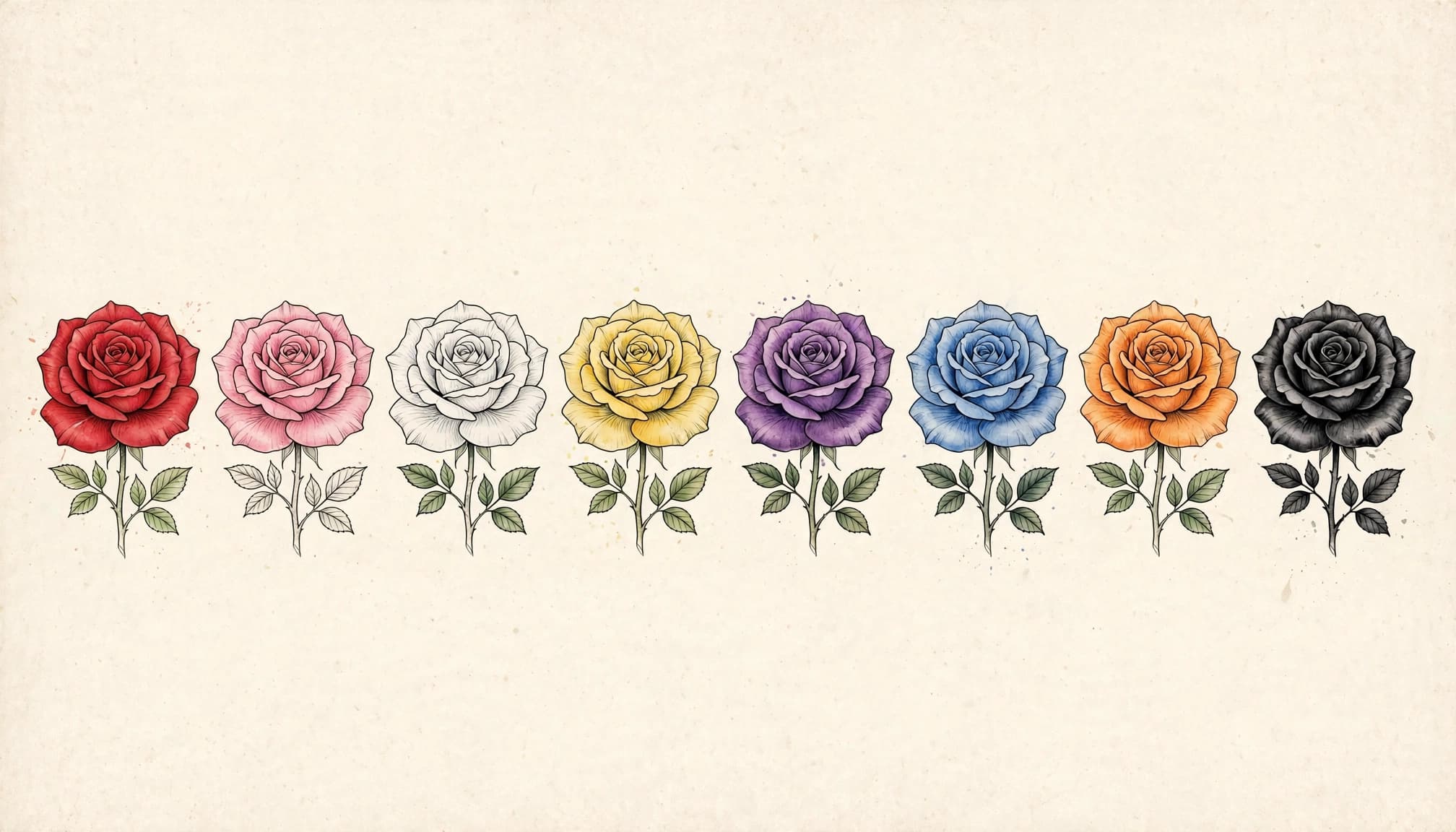
Red, pink, and white roses for love and remembrance
A red rose often symbolizes romantic love, passion, or devotion. It can honor a partner, celebrate a lasting bond, or express a love that remains important to you. The same rose with darker shading or prominent thorns may feel more intense than a soft, open bloom.
Pink roses often symbolize gratitude, affection, or admiration. Their gentler color can suit a tribute to a friend, family member, or mentor, as well as a reminder to value yourself. Meanwhile, a white rose often suggests purity, remembrance, or a new beginning. Some people choose one for a memorial tattoo, though the wearer’s reason gives the design its personal meaning.
Yellow, purple, blue, and orange roses for a personal statement
Yellow roses often symbolize friendship and joy, making them a bright choice for celebrating a close bond or a happier chapter. Purple can suggest mystery or individuality, especially when paired with unusual shading or a less traditional design. Orange roses often carry a sense of energy and can mark a fresh start, a new goal, or a change you chose for yourself.
Blue roses have a different appeal: they often symbolize the rare or unattainable. Roses don’t produce the pigment needed for a true blue bloom naturally, so blue flowers are commonly dyed or created through genetic engineering. Research into engineered blue roses has also produced shades closer to violet or mauve; Suntory’s account of its blue rose project explains the work behind those blooms. In a tattoo, the color’s unusual look can make the design feel like a symbol of longing, imagination, or pursuing something unlikely.
What a black rose tattoo can mean
A black rose tattoo often connects with grief, mourning, or an ending. It may honor someone who has died or preserve the memory of a relationship or period of life that has passed. Still, black doesn’t have to mean sadness. Some wearers choose it to express rebellion or to mark a turning point after a difficult experience.
Design details can sharpen that meaning. A black rose with a new bud may suggest growth after loss, while a fully open bloom can express strength and self-possession. If you want the tattoo to tell a particular story, consider how the color, bloom stage, and thorns work together.
Rose Tattoo Details That Add a More Personal Meaning
Small design choices can make a rose feel connected to your life rather than like a familiar floral motif. Consider what each detail means to you, then share that story with your tattoo artist so the composition feels intentional.
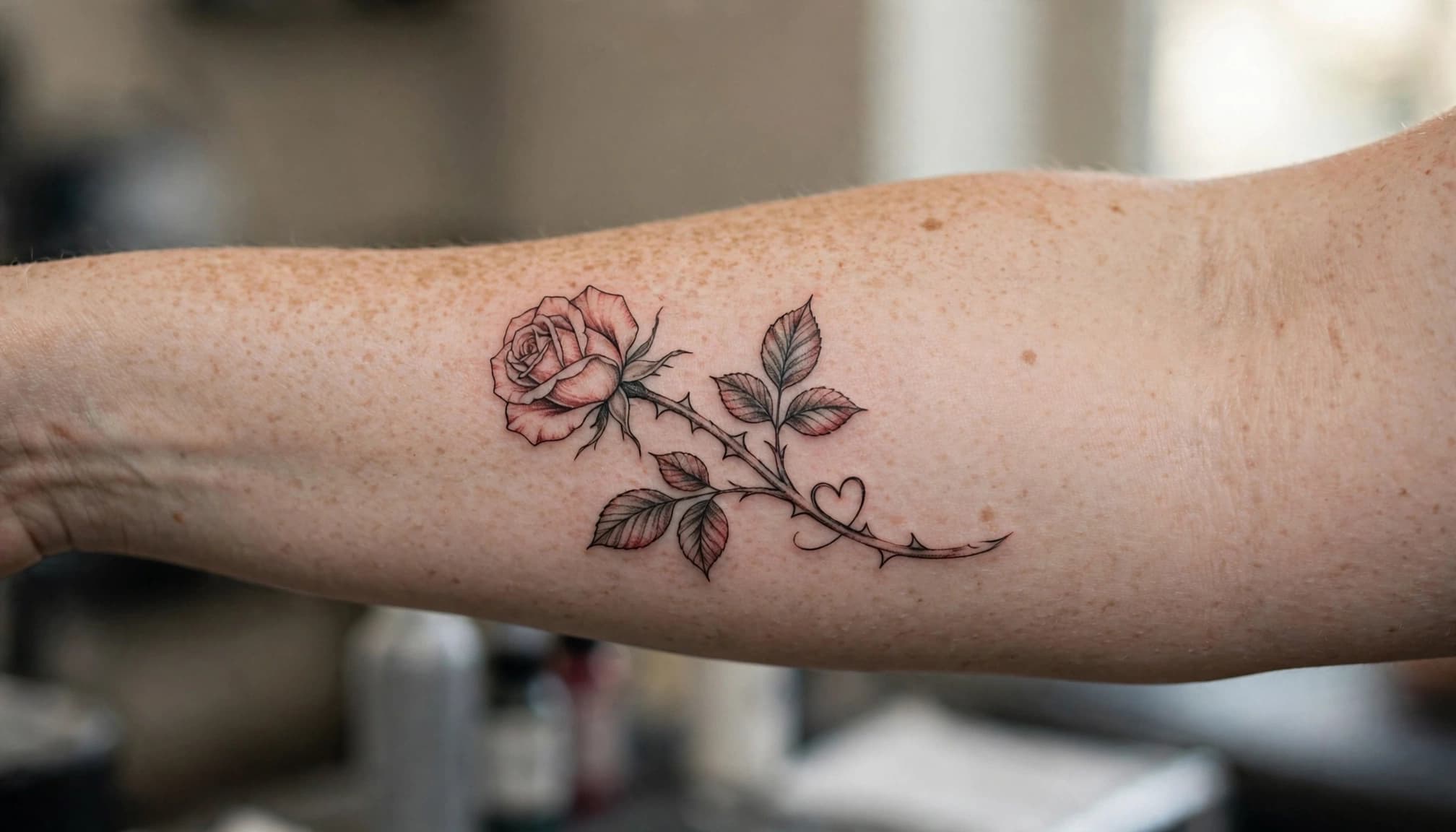
Thorns, leaves, and stems can tell a fuller story
Thorns can suggest boundaries, protection, or hardship, especially when they stand out against soft petals. You might choose them to remember how you protected yourself during a difficult chapter. A few delicate thorns, meanwhile, can acknowledge struggle without making it the focus.
Leaves and stems add their own possibilities. New leaves may suggest growth, while a long, winding stem can bring to mind connection or a path that continues. Their shape also affects the tattoo’s flow, making a design feel graceful, bold, or more botanical.
There’s no single correct combination. A rose with a bent stem could recall a turning point; a healthy branch with fresh leaves might fit a period of renewal. Choose details that connect to your experience, not just a standard list of symbolic meanings.
Pair a rose with symbols tied to love or memory
A rose can stand alongside a small heart, a meaningful date, initials, or a portrait. Each addition can honor a relationship, remember someone important, or preserve a moment you want to carry with you. For instance, initials tucked near the stem may feel private, while a date beneath the bloom can point to a wedding, birth, or personal milestone.
Portraits and names can make a tribute unmistakable, but they also deserve extra thought. Relationships and circumstances can change, while a tattoo remains; the FDA notes that tattoos are not easily removed. Before adding a name or date, consider whether the person or event will still matter to you even if your life takes an unexpected turn.
You can also make a memorial design personal without spelling everything out. A small heart, a particular number of leaves, or a flower paired with a rose may carry a meaning only you understand. If you want more ideas for tattoo designs inspired by personal meaning, start with the memory or connection you want to honor, then choose a symbol that feels true to it.
Rose Tattoo Styles and Designs That Fit Your Meaning
The style of a rose tattoo shapes more than its appearance. Line weight, detail, and color affect whether the design feels romantic, bold, delicate, or dramatic, and how clearly it may read over time.
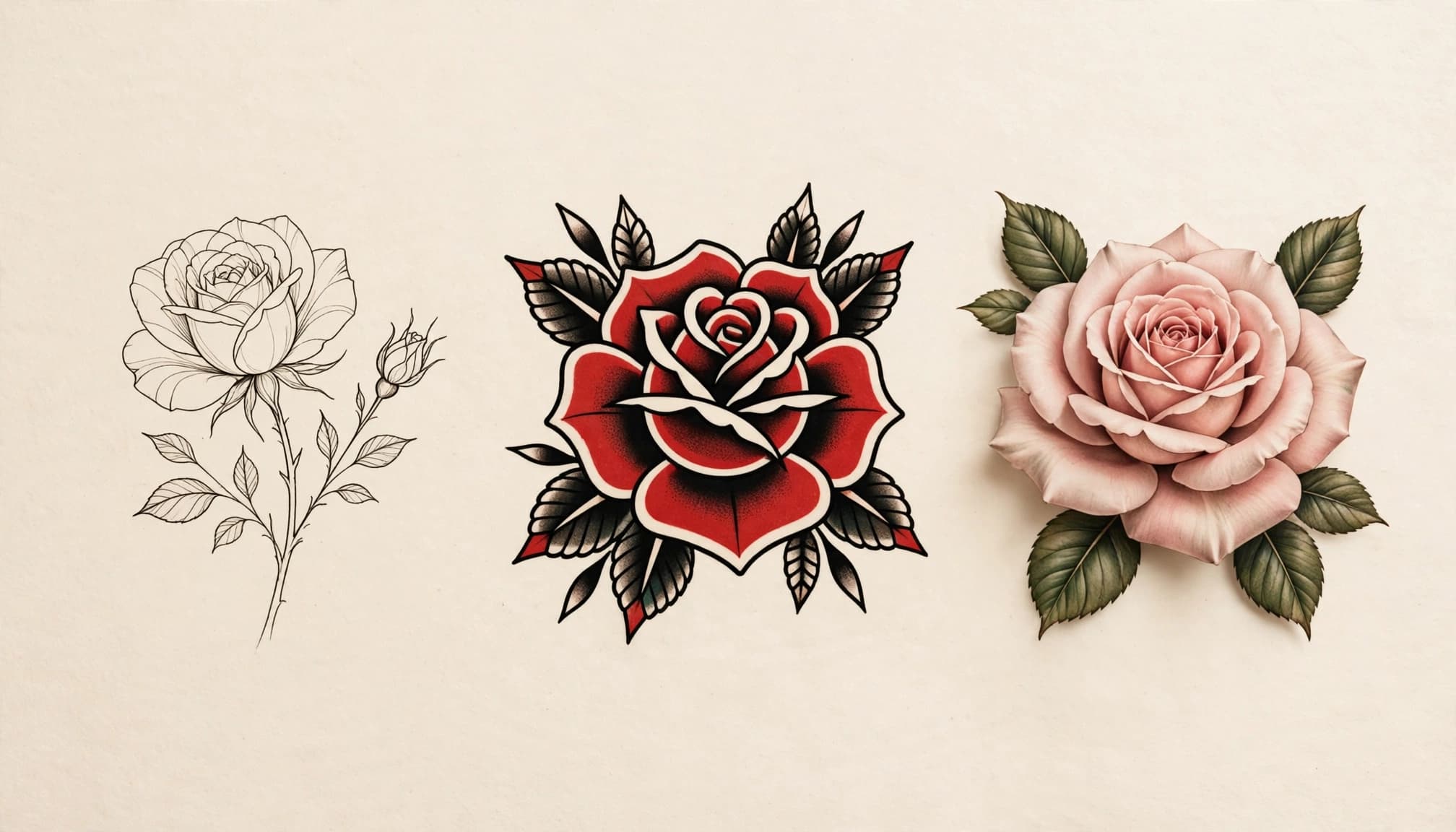
Choose between fine-line, traditional, and realistic roses
A fine-line rose uses thin outlines and restrained shading, giving it a delicate, understated look. That light touch can suit a private tribute or a small reminder of personal growth. However, fine lines and tightly packed details are more vulnerable to fading or blurring, especially in a very small design. Leaving open space between petals can help preserve the image’s clarity.
Traditional roses take a bolder approach, with strong outlines and clear shapes. Their high contrast often makes them easy to recognize, even from a distance, and the style can give a tattoo a confident, classic feel. A realistic rose focuses on natural-looking petals, layered shading, and botanical detail. It can make a bloom feel lifelike, but it needs enough space for those details to remain distinct.
Your artist can advise how much detail will hold up at the size and placement you have in mind. A rose that looks crisp on a large reference image may need simpler petals when scaled down. Bring the artist your priorities, whether that’s a subtle mark, a traditional silhouette, or lifelike texture, and ask how the design may age.
Use color, blackwork, or watercolor to set the mood
Black-and-gray shading or blackwork can give a rose strong contrast and a lasting, graphic look. A dark outline may suit a tattoo about strength, remembrance, or boundaries, while softer gray shading can make the same flower feel quieter. These approaches also avoid relying on pale color to define the petals.
Color can make the rose feel more personal or emotionally expressive. Red may reinforce romance, while pink can soften the design; watercolor-style washes can create an airy, painterly effect. That softness often comes with a trade-off: pale pigments may lose their vividness sooner and need more care than darker, high-contrast details.
Choose a palette that supports the meaning you want to carry, rather than adding color simply for decoration. Once the tattoo has healed, protect exposed skin from the sun; the American Academy of Dermatology’s tattoo care guidance recommends broad-spectrum, water-resistant sunscreen with SPF 30 or higher.
How Women Can Choose Rose Tattoo Placement and Care
Placement shapes how often you see your rose, how easily you can cover it, and how much care it may need. Think about your daily routines, comfort, and the size and detail of the design before booking. A small, private tattoo may suit your preferences, while a bold, visible piece can make the rose a prominent part of your style.
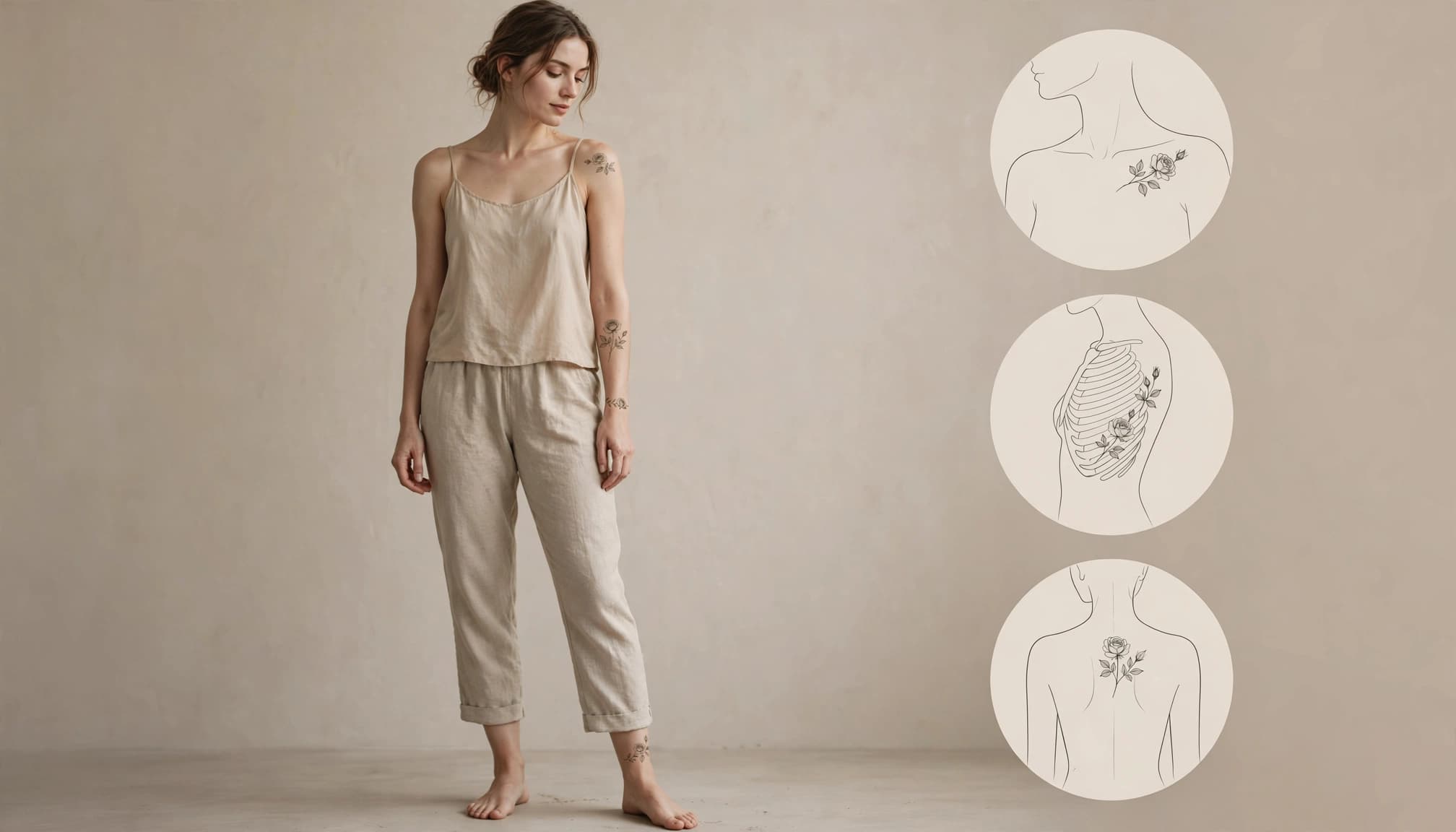
Match the placement to visibility, comfort, and design size
The forearm, shoulder, collarbone, wrist, ankle, ribcage, and back all offer different amounts of space and visibility. A forearm rose is easy to see and share, while a back or ribcage tattoo stays more private under clothing. The collarbone and shoulder can showcase a larger bloom, and a wrist or ankle may suit a compact design.
Consider work dress codes and how much you want the tattoo exposed in everyday settings. Also think about whether the area gets regular contact from clothing, shoes, or accessories. Pain and healing vary by location and person, so discuss your concerns with an experienced artist. A ribcage tattoo may feel very different from a forearm piece, and individual pain tolerance matters.
Think about fading, friction, and future touch-ups
Hands, feet, wrists, and ankles often face more friction from washing, shoes, sleeves, or daily movement. As a result, tattoos in these areas may need closer upkeep or touch-ups. Sun exposure can also fade tattoo color over time, especially on areas that stay uncovered.
Before you book, ask your artist how the rose’s size, line weight, and placement may affect clarity as it ages. Fine details may need more room, while a bolder design can remain legible at a smaller scale. Discuss likely touch-ups, too, so you understand the long-term care involved.
Protect the tattoo while it heals
Follow your tattoo artist’s aftercare instructions, since they can account for the specific tattoo and bandage they used. In general, wash gently with mild soap and water, then apply a thin layer of fragrance-free moisturizer if your artist recommends it. Avoid direct sun and swimming or soaking until the skin has healed, and don’t pick at scabs or peeling skin.
For additional guidance, WebMD’s tattoo aftercare advice covers keeping a new tattoo clean and avoiding swimming while it heals. Contact a health professional if you notice worsening redness, swelling, pain, pus, fever, or other signs of infection or poor healing.
Conclusion
A rose tattoo’s meaning comes from the combination of its color, bloom stage, details, and style, as well as the experience you want it to hold. Common symbolism can guide your choices, but your own story gives the design its meaning.
Take time to choose a rose that still feels right beyond the initial inspiration. Then discuss size, placement, and detail with a skilled tattoo artist so the image fits your preferences and remains clear.
Save pin for later

- 12 Bold Men’s Tattoo Ideas That Stand Out, With Placement Tips - September 26, 2026
- 10 Cover-Up Tattoo Styles for Faded or Unwanted Ink - September 26, 2026
- Rose Tattoo Meaning for Women: Symbolism, Colors, and Design Choices - September 26, 2026
Leave a Reply