
19 Tattoo Ideas for Women on the Leg, From Delicate to Bold
Leg tattoos are a popular choice because the leg gives you a flexible canvas with plenty of room for personal style. You can choose a visible design on the calf or ankle, keep a piece more private on the thigh, or select a placement that’s easy to cover with everyday clothing. From the thigh to the ankle, each area offers a different shape, amount of space, and level of comfort.
This collection features 19 tattoo ideas for women on the leg, including floral, nature-inspired, meaningful, minimalist, and bold styles. You’ll find delicate ankle details, flowing vines, statement thigh pieces, and designs that follow the calf, knee, or shin. The right choice depends on what the tattoo means to you, your pain tolerance, the clothes you wear most often, and the size you want.
A design also looks more natural when it follows the leg’s shape instead of sitting like a flat image on the skin. As you browse these ideas, consider how each concept fits your preferred placement, visibility, and style. Start with these leg tattoo ideas to find inspiration for a piece that feels personal and suits your everyday life.
Key Takeaways
- Choose a leg tattoo placement that matches your lifestyle, clothing habits, pain tolerance, and preferred level of visibility.
- Delicate ankle tattoos, botanical calf designs, and fine-line thigh pieces create a softer, more understated look.
- Bold florals, snakes, celestial designs, and geometric artwork make a stronger statement across larger areas.
- Let the design follow the leg’s natural shape, especially around the calf, shin, knee, and thigh.
- Before booking, choose a reputable studio, ask about ink safety, and follow proper aftercare while the tattoo heals.
Soft Botanical Tattoo Ideas for Women on the Leg
Botanical tattoos bring a graceful, organic feel to the leg. Their stems can follow the calf, curve around the ankle, or stretch across the thigh, so the artwork feels connected to the body’s shape rather than placed on top of it. These designs can stay understated, but stronger line work, richer color, and larger scale create a bolder look.
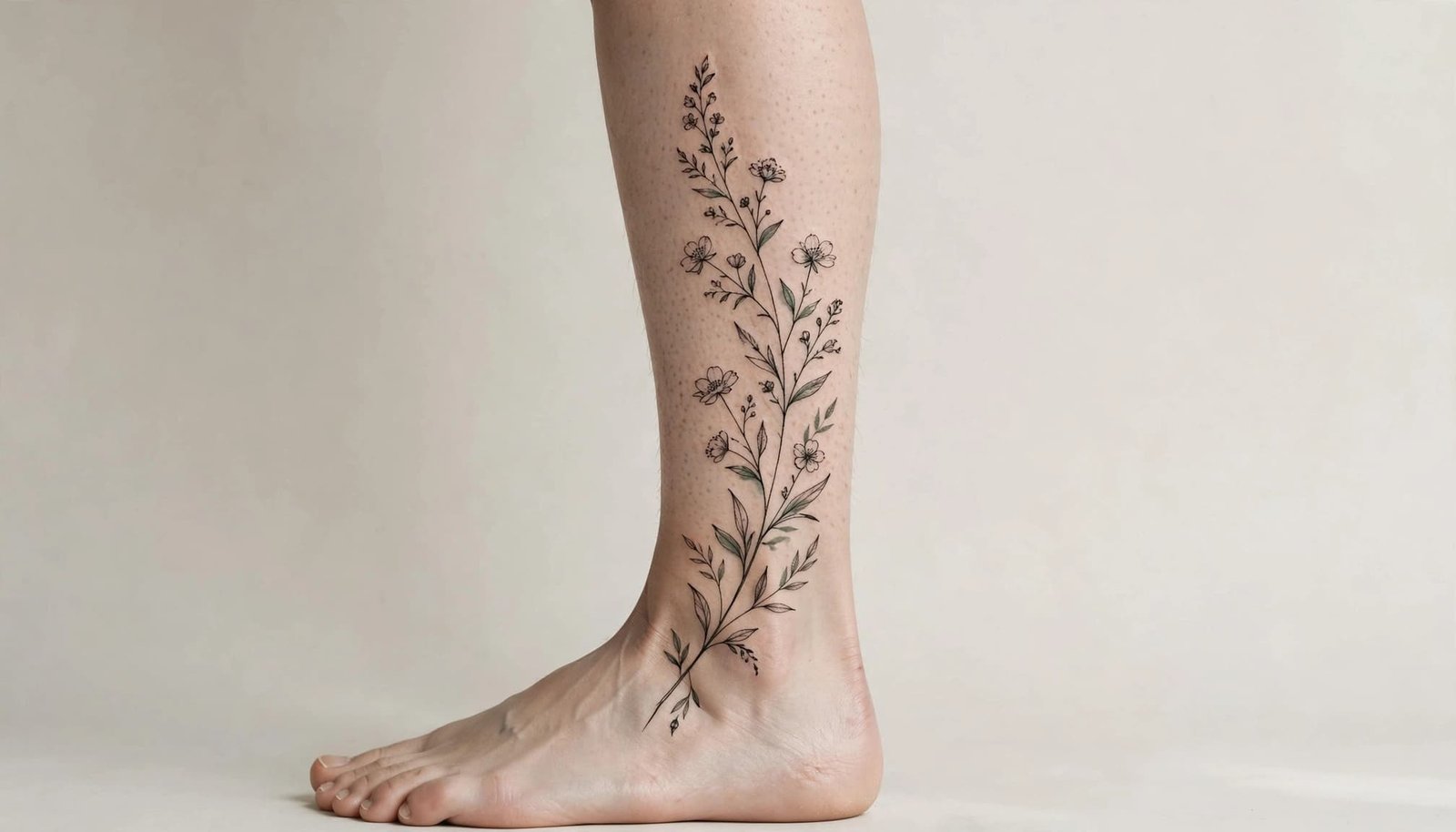
1. Wildflower Stem on the Calf
A single wildflower stem is a classic choice for a delicate leg tattoo. The design might feature small petals, narrow leaves, and a slightly curved stem that follows the calf toward the ankle. It can symbolize freedom, growth, or a connection to a favorite season.
The calf gives this idea enough space for detail without making the tattoo feel oversized. Ask your artist for fine lines and soft shading if you prefer a subtle result, or choose a thicker stem with muted green leaves for more visual weight. You could also add a tiny date or initial near the base, as long as the lettering remains easy to read at a small size.
2. Curving Botanical Vine
A leafy vine works especially well when you want the tattoo to move with your leg. It can wind around the ankle, climb the shin, or trail along the outer thigh. The flowing shape often suggests persistence, personal growth, or a life path that continues to unfold.
Keep the leaves small and spaced apart for an airy look. For a bolder version, use wider leaves, darker outlines, and a longer design that wraps partly around the leg. A few small flowers can personalize the vine without making it look crowded.
3. Lavender Sprig Near the Ankle
Lavender makes a gentle ankle tattoo with a recognizable shape and a calm, romantic feel. One or two sprigs can sit above the ankle bone, angle toward the foot, or extend slightly up the lower shin. Many people associate lavender with peace, healing, and treasured memories.
Purple ink can bring the flowers to life, although black and gray shading creates a more timeless style. A short stem with fine detailing suits a discreet tattoo, while three or four connected sprigs create a fuller composition. Leave enough space between the blossoms so the design stays clear as it ages.
4. Fern Frond Along the Shin
A fern frond offers a more natural, woodland-inspired alternative to flowers. Its repeating leaflets create texture and direction, making it a strong choice for the long, narrow shape of the shin. The design can suggest renewal, protection, or a love of the outdoors.
Place the frond vertically for a streamlined look, or angle it slightly across the lower leg for a more relaxed composition. Fine black lines keep the tattoo delicate, while heavier outlines and soft green accents make each leaflet stand out. A curved frond can also soften the straight appearance of the shin.
5. Rose or Peony on the Thigh
A rose or peony gives botanical tattoo ideas a fuller, more romantic appearance. The thigh offers enough room for layered petals, leaves, and gentle shading, so the design can feel detailed without crowding the skin. Roses often suggest love or remembrance, while peonies can symbolize beauty, confidence, and prosperity.
Choose a small black-and-gray bloom for a refined style, or build a larger piece with saturated red, pink, or burgundy petals. Ask your artist to angle the flower toward the natural curve of the thigh. After healing, protect exposed ink with broad-spectrum SPF 30 or higher, as recommended in the American Academy of Dermatology’s tattoo care guidance.
Whimsical Nature Tattoos That Follow the Shape of the Leg
Nature and fantasy tattoos can feel feminine without relying on heavy detail or oversized artwork. The best designs use the leg’s natural direction, allowing stems, wings, leaves, and celestial accents to guide the eye from one point to another. Open skin also gives small details room to breathe, so the tattoo stays graceful instead of looking crowded.
Whether you prefer a subtle ankle tattoo or a larger thigh piece, ask your artist to sketch the design directly around your leg’s shape. A gentle curve can soften the shin, while vertical flow can make a calf or thigh tattoo feel longer and more balanced.
6. Moonlit Vine With Tiny Moths
A slender vine winding from the outer calf toward the ankle creates a delicate fantasy tattoo with plenty of movement. Add one or two small moths near the leaves, along with tiny stars or a crescent moon, to create a dreamy woodland feel.
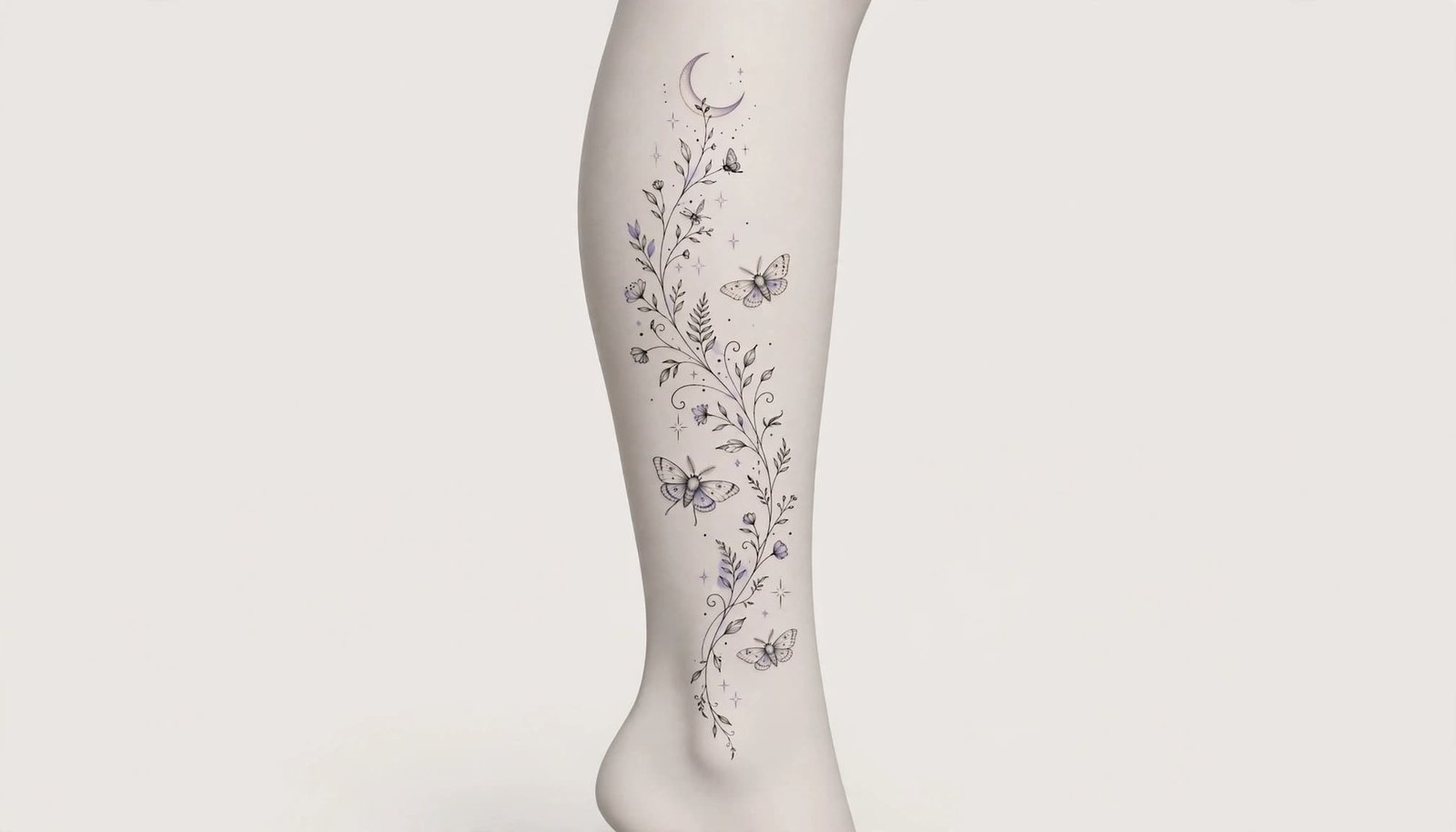
Keep the vine narrow and leave open space between each leaf for a subtle result. Fine black lines work well on the ankle and lower calf, where a crowded design can lose clarity. For more color, muted lavender, dusty blue, or soft green can highlight the fantasy details without overpowering the shape.
7. Fairy Door Hidden in Thigh Foliage
A tiny fairy door surrounded by curved leaves, mushrooms, or delicate ferns makes a personal tattoo for the upper thigh. The design can suggest an imagined secret garden, a private place, or a sense of wonder that belongs only to you.
The thigh gives your artist more room to build a scene, but the composition doesn’t need to cover a large area. Place the door slightly off-center, then let the foliage curve upward and outward. Small dots, fine wood grain, and a few rounded mushroom caps can add charm while preserving plenty of open skin.
8. Dragonfly and Reeds Along the Calf
A dragonfly surrounded by slender reeds creates a light, flowing tattoo for the back or side of the calf. The reeds can rise vertically, while the dragonfly sits at a slight angle to follow the calf’s natural taper.
This idea works in several styles. A tiny black dragonfly above the ankle feels understated, while a larger design with pale blue wings and soft gray shading creates more presence. Keep the reed stems thin and slightly uneven so the tattoo feels organic rather than rigid.
9. Crescent Moon With Wild Herbs
A crescent moon framed by small herbs and trailing stems can fit neatly on the outer ankle, shin, or upper thigh. Instead of filling the moon with heavy shading, use fine lines, small stars, and a few leaves to create a lighter, more feminine look.
On the shin, arrange the herbs in a vertical line beneath the moon. On the thigh, let the stems arc around the crescent and follow the curve of the leg. A black-and-gray version stays timeless, while a touch of pale gold or muted blue can give the design a soft celestial accent.
10. Enchanted Butterfly Garden
A larger butterfly surrounded by winding stems and tiny flowers makes a graceful thigh tattoo with a clear focal point. Place the butterfly near the center, then use curved foliage to guide the design toward the hip or knee. This layout keeps the artwork connected to the leg instead of making it look like a separate square image.
For a more discreet version, reduce the composition to one butterfly and two small leaves near the ankle. Fine wing patterns add personality, but too many tiny marks may blur over time. Your artist can preserve the details by enlarging the wings slightly and leaving clean space between each section.
Because leg tattoos often receive sun exposure, protect healed ink with broad-spectrum, water-resistant SPF 30 or higher. The American Academy of Dermatology’s tattoo care guidance recommends applying sunscreen before outdoor exposure and reapplying it regularly. Fresh tattoos need physical protection from direct sun until the skin heals.
Meaningful Minimalist Leg Tattoo Ideas With Personal Detail
Minimalist tattoos can carry a lot of meaning without taking up much space. A small symbol, date, or phrase may remind you of someone important, a personal milestone, or a place that shaped you. The key is to keep the design simple while giving each line enough room to stay clear as the tattoo ages.
Personal details work best when they feel intentional rather than crowded. Before booking, consider how the tattoo will look with your everyday clothing and whether you want the meaning to remain private or easy for others to notice. These ideas pair clean artwork with details that make the design yours.
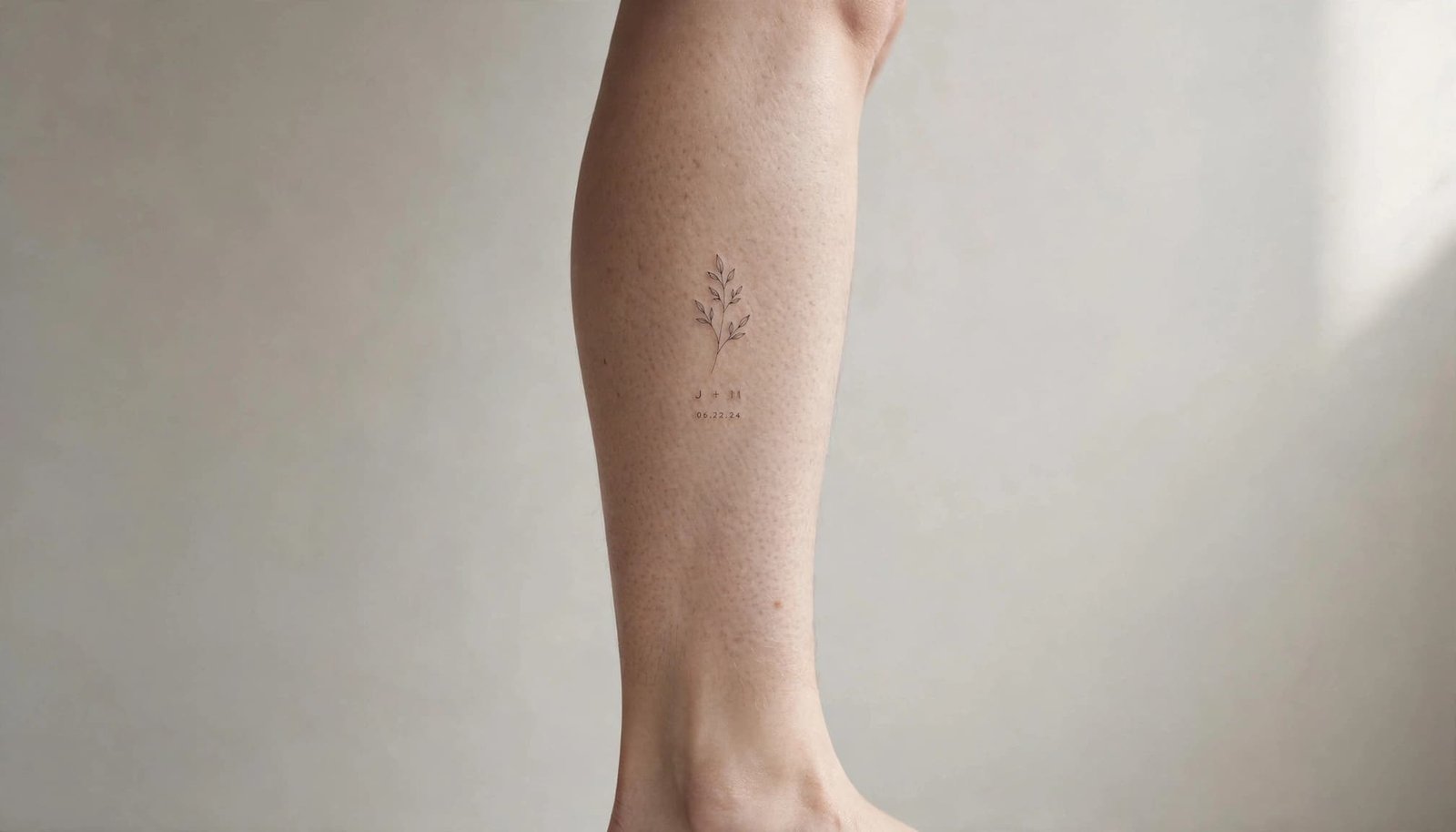
11. Initials Inside a Small Botanical Sprig
A tiny sprig with one or two initials can honor a partner, child, family member, or even your own name. Place it along the outer calf, above the ankle, or on the side of the thigh for a simple design that remains easy to cover.
Ask your artist to use a clean sans-serif or lightly handwritten font rather than highly ornate lettering. At a small scale, thin flourishes can merge into nearby leaves and become difficult to read. Leave visible space between each letter, the stem, and any surrounding dots.
12. Roman Numerals for a Meaningful Date
Roman numerals offer a discreet way to remember a birthday, anniversary, graduation, or important turning point. A short date can sit vertically along the shin or horizontally above the ankle, depending on how visible you want it to be.
Choose a font with distinct letter shapes and avoid compressing the numerals too tightly. The tattoo should be large enough for each character to remain separate after the ink settles. Ask your artist to show the design at its actual size before the appointment, since lettering that looks readable on a phone may be too small on skin.
13. Tiny Coordinates With a Simple Landmark
Coordinates can point to a hometown, favorite travel destination, or place where an important memory began. Pair the numbers with a small outline of a mountain, wave, house, or star rather than adding several decorative elements.
The outer thigh gives you more room for readable numbers, while the ankle suits a shorter coordinate design. Use a straightforward typewriter-style or geometric font, with generous spacing between number groups. Because fine details can soften over time, keep the lines comfortably separated instead of shrinking everything into a single narrow strip.
For more ideas centered on intentional choices and less visual clutter, explore these simple living principles.
14. A Single Word With a Personal Symbol
One meaningful word, such as “steady,” “breathe,” or “always,” can create a quiet reminder on the inner calf or upper thigh. Add a tiny heart, star, leaf, or wave only if it supports the word’s meaning.
A small lowercase serif font feels refined, while neat handwritten lettering creates a softer appearance. Keep the phrase short, because longer text needs more width and may force the letters too close together. Your artist can recommend a larger scale if the tattoo includes several narrow letters or delicate curves.
Fine-line tattoos need negative space. Crowded details may look crisp on appointment day but become harder to read after healing and natural fading.
During healing, protect the area from friction and direct sunlight. After the skin fully closes, regular broad-spectrum SPF 30 or higher helps preserve fine details, as outlined in this NIH review of tattoo aftercare. A minimalist tattoo stays understated when you plan for its future appearance, not just its first photograph.
Statement Leg Tattoos for Women Who Want More Detail
Large leg tattoos give you room to use stronger outlines, layered shading, and intricate details. The thigh provides the widest canvas, while the calf and shin work best for designs with a clear vertical direction. Before choosing an idea, consider how the artwork will look when you stand, sit, and move.
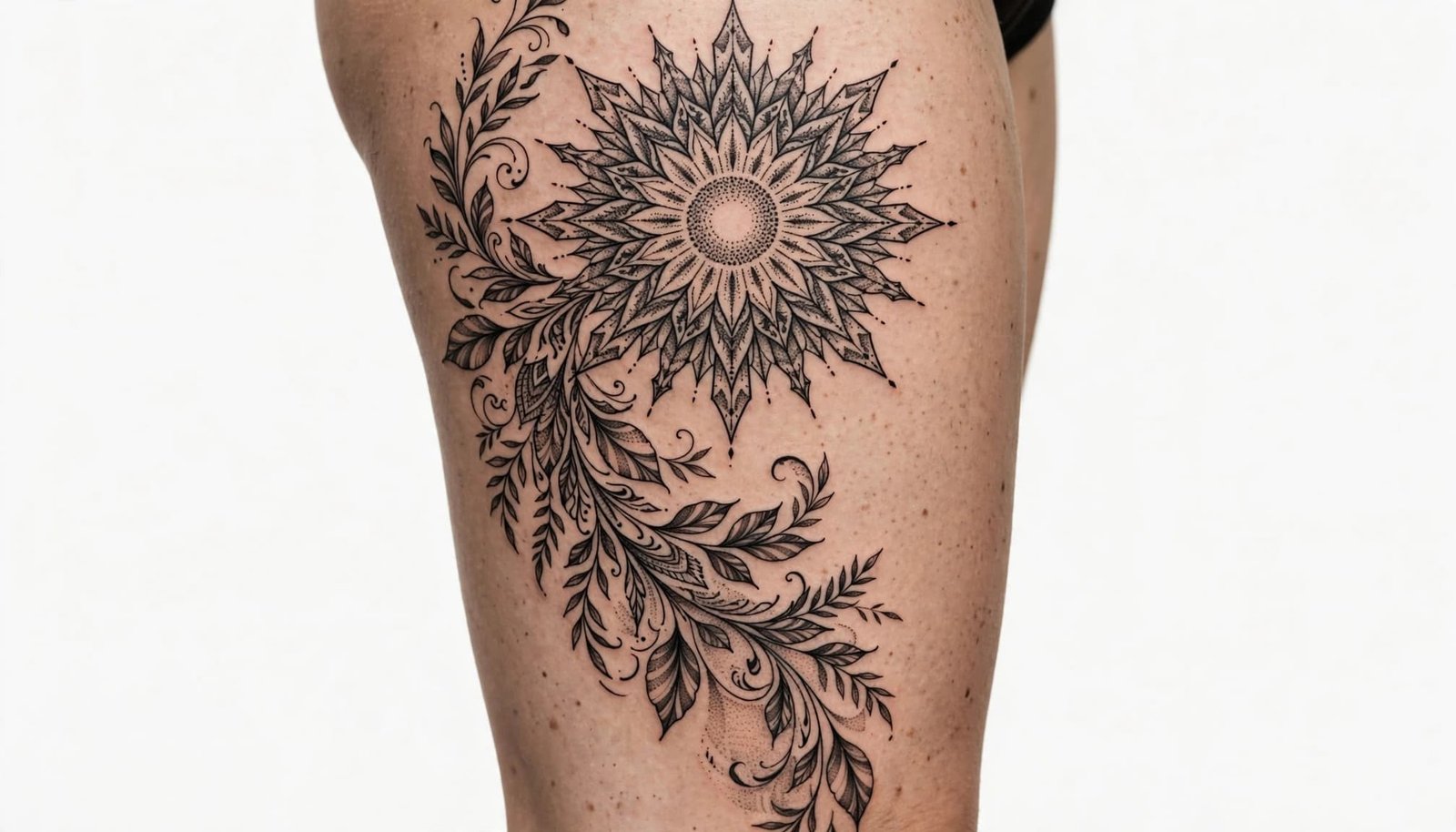
15. Ornamental Sunburst on the Outer Thigh
An ornamental sunburst creates a bold statement without needing bright color. Place the central sun slightly above the middle of the outer thigh, then build outward with rays, filigree, dots, and curved leaves. This layout follows the thigh’s width and gives the artist space to create balanced detail.
Black-and-gray ink works well for a refined, dramatic look. A larger design can extend toward the hip and outer knee, while a medium-sized version keeps the artwork easier to cover with shorts or a dress. Ask your artist to angle the rays with the leg’s natural curve instead of using a perfectly flat circle.
16. Detailed Snake Winding Down the Calf
A snake is naturally suited to the calf because its body creates a strong vertical line. Let it begin below the knee and curve toward the ankle, or reverse the direction so the head becomes the focal point near the upper calf. The body can follow the calf’s widest area, while the tail tapers toward the lower leg.
Add scales, flowers, leaves, or small ornamental accents for extra detail. A realistic snake needs enough space for the scales to remain clear, so avoid making the design too narrow. Blackwork creates a powerful result, while muted green, brown, or red adds a more lifelike finish.
17. Dramatic Floral Thigh Sleeve
A floral thigh sleeve can combine roses, peonies, dahlias, or wild foliage into one flowing composition. The thigh offers the most room for layered petals, realistic shading, and overlapping stems, making it the strongest placement for a highly detailed botanical piece.
Start with one large flower as the focal point, then let smaller blooms and leaves travel toward the hip or knee. A vertical arrangement creates length, while a diagonal composition feels more dynamic. Full color gives the tattoo a vibrant appearance, but black-and-gray shading can make the petals look sculptural and timeless.
18. Mythical Bird Across the Shin
A phoenix, raven, or hawk can turn the shin into a dramatic vertical canvas. Position the head near the knee and allow the wings or tail feathers to travel downward. This orientation keeps the artwork readable from the front and gives the design a strong sense of movement.
Detailed feathers need room, especially if you want fine lines and soft gradients. Consider a medium-to-large tattoo that leaves a narrow border of open skin around the design. Black and gray suits a realistic bird, while red, gold, or blue accents can draw attention to the eyes, feathers, or flames.
19. Geometric Mandala Knee and Calf Piece
A geometric mandala can center on the knee and extend onto the upper calf or lower thigh. The circular structure works well around the knee’s shape, although your artist may need to adjust the pattern so it remains balanced when the leg bends.
Use bold outlines for the main shapes, then add dotwork and fine geometry in the surrounding sections. A mandala that is too small may lose its detail, so discuss the healed size before choosing the final design. Keep the pattern symmetrical if you want a polished look, or combine it with leaves and ornamental lines for a softer style.
Large tattoos need careful aftercare because longer sessions cover more healing skin. During healing, keep fresh ink out of direct sun and avoid sunscreen until the tattoo has fully closed. Once healed, apply a broad-spectrum, water-resistant SPF 30 or higher 15 minutes before going outdoors, then reapply at least every two hours, following the American Academy of Dermatology’s tattoo care guidance. Long pants and shade also help protect detailed work from fading.
How to Choose the Right Placement, Size, and Tattoo Style
The best leg tattoo balances personal meaning with your daily routine. Before choosing a design, consider how visible you want it to be, how much room it needs, and whether clothing or exercise could irritate the area while it heals.
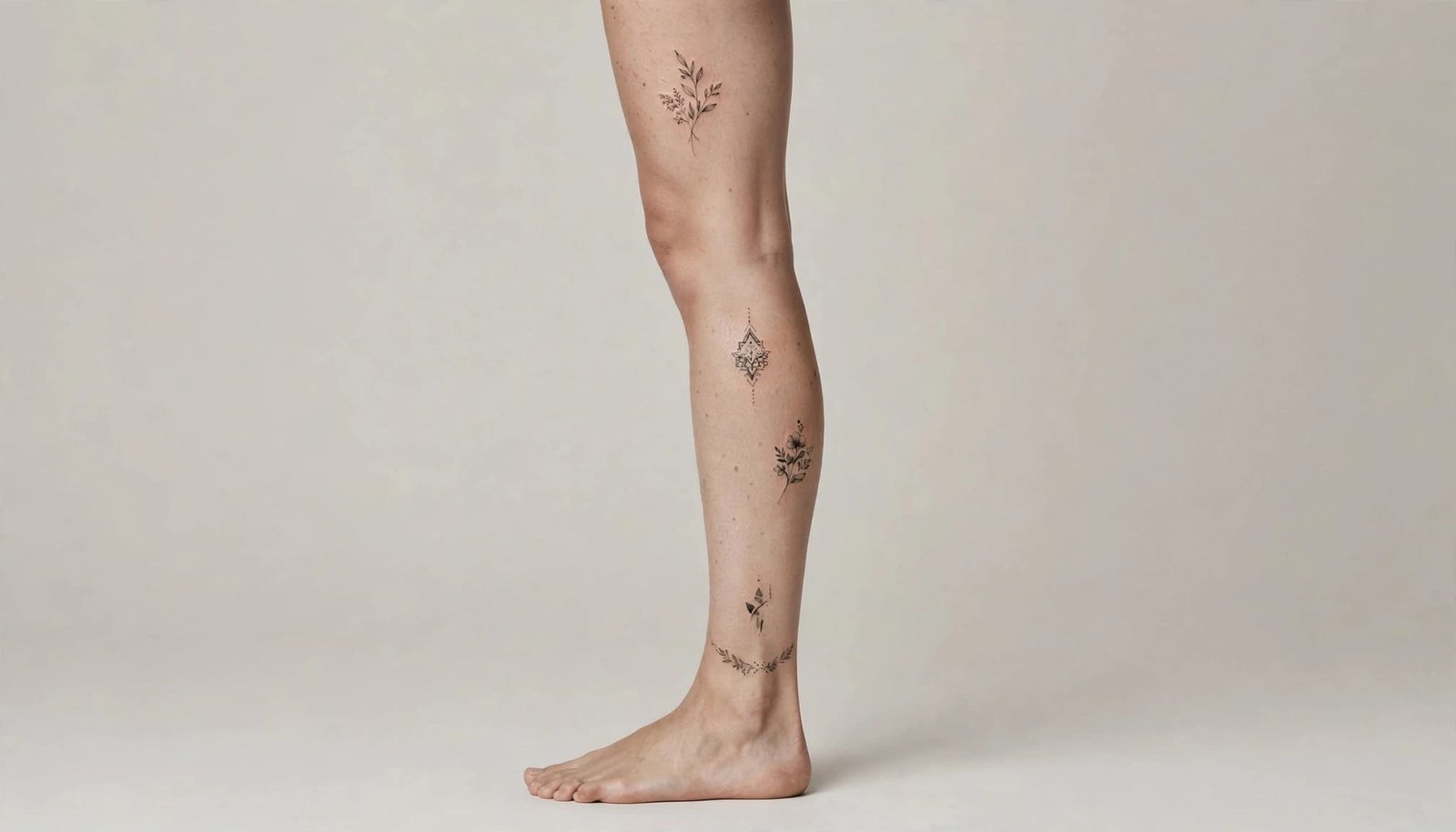
Compare Each Leg Tattoo Placement
Each part of the leg creates a different balance of space, comfort, visibility, and flexibility.
- The thigh offers the most room, especially on the outer or upper thigh. It’s a practical choice for large florals, portraits, ornamental pieces, and detailed scenes. Shorts and pants can cover it easily, which also makes it useful if you want privacy at work.
- The calf suits vertical designs that follow the muscle, such as snakes, vines, birds, and flowers. It remains visible with skirts, shorts, and cropped pants, but full-length pants can hide it when needed.
- The shin creates a clear front-facing display for bold artwork. However, the skin sits close to the bone, so this area can feel more sensitive and may not suit tiny, fragile details.
- The ankle works best for small symbols, sprigs, dates, and other compact designs. It is easy to show with sandals or low-cut shoes, although socks and footwear may rub against a healing tattoo.
- The side of the leg gives a design a natural vertical flow. It works well for artwork that should visually lengthen the leg without covering the entire front or back.
- A wraparound tattoo can move from the outer thigh to the back of the leg or curve around the calf. This approach creates more movement, but your artist must account for how the design looks from every angle.
The outer thigh usually offers the easiest combination of space, privacy, and manageable healing. The shin and ankle create more visibility but demand greater care with pain, friction, and detail.
Your work clothes matter, too. Tight jeans, leggings, compression sleeves, and boots can press against fresh ink. If you exercise often, plan for a few days without friction or heavy sweating, and avoid swimming until the skin has healed. For long-term care, the American Academy of Dermatology’s tattoo guidance also recommends watching tattooed skin for changes and protecting healed ink from the sun.
Use a Simple Four-Step Selection Method
Start by choosing the meaning behind the tattoo. A memorial flower, favorite animal, travel symbol, or personal phrase will guide the subject before you worry about decoration.
Next, select the visual style. Fine-line and minimalist designs need open space and careful sizing. Blackwork, realism, geometric patterns, and colorful florals usually need more room to remain readable.
Then, test the placement. Print or sketch the design at several sizes and tape it to your thigh, calf, shin, or ankle. Walk, sit, bend your knee, and wear the clothes you normally choose. This quick test can reveal whether the tattoo feels too exposed, cramped, or awkward when your leg moves.
Finally, discuss scale with your artist. Show your preferred placement and explain how visible you want the piece to be. A skilled artist can adjust line thickness, spacing, direction, and detail so the design fits your leg instead of looking like a flat image placed on it.
Leg Tattoo Aftercare and Sun Protection Basics
A fresh leg tattoo needs gentle care while the skin repairs itself. Follow your artist’s written instructions first, since ink type, placement, bandage choice, and tattoo size can change the recommended routine.
Caring for a Fresh Leg Tattoo
Initial healing commonly takes about one to three weeks, although the skin may continue settling beneath the surface for longer. Mild redness, tenderness, flaking, and light scabbing can happen during this period. The area should gradually feel better, not more painful, as each day passes.
Wash your hands before touching the tattoo, then clean the area gently with lukewarm water and a mild, fragrance-free cleanser if your artist recommends washing it. Pat the skin dry with a clean paper towel or allow it to air-dry. Apply only the moisturizer or aftercare product your artist recommends, and use a thin layer rather than leaving the tattoo greasy or covered in heavy product.
During healing, choose loose clothing that won’t rub against the artwork. Tight jeans, leggings, socks, boots, and compression garments can irritate a tattoo on the ankle, calf, or shin. Also avoid swimming, hot tubs, baths, and natural bodies of water until the skin has fully closed. Picking scabs or peeling skin can remove pigment and increase the risk of irritation.
Treat the healing tattoo as damaged skin. Clean hands, gentle washing, low friction, and patience protect both your skin and the final design.

Protecting Leg Tattoos From the Sun
Keep a fresh tattoo out of direct sunlight while it heals. If you need to go outside, cover it with loose, breathable clothing instead of applying sunscreen to broken or peeling skin. The NIH review of tattoo aftercare also advises avoiding sunscreen until the tattoo has fully healed.
Once the skin is smooth and closed, protect the tattoo with a broad-spectrum, water-resistant SPF 30 or higher. Apply it 15 minutes before sun exposure, then reapply at least every two hours, or sooner after swimming or heavy sweating. The American Academy of Dermatology’s tattoo care guidance supports this routine for reducing sun-related fading and protecting tattooed skin.
Long pants, shade, and a cover-up add extra protection during extended outdoor time. However, don’t cover a healing tattoo with tight fabric or plastic unless your artist specifically tells you to do so.
Contact a medical professional if redness spreads or worsens, pain increases instead of improving, the skin feels hot, or you notice pus, foul-smelling drainage, red streaks, fever, or other flu-like symptoms. These signs can indicate an infection and need prompt medical attention.
Conclusion
The best leg tattoo balances personal meaning, visual style, placement, size, and long-term care. Floral, butterfly, celestial, script, ornamental, and bold designs can all look beautiful when they follow the leg’s natural shape and suit the amount of space available. Your lifestyle, clothing, preferred visibility, and healing routine should guide the final choice.
Save a few favorite concepts, then compare their scale and placement before booking. If you’re unsure, test the design with a temporary version so you can see how it looks while standing, sitting, and moving. Next, schedule a consultation with a reputable tattoo artist, review healed work, discuss line weight and sizing, and ask for clear aftercare instructions.
The right design should feel personal today and still be something you enjoy seeing for years.
Save pin for later


- 30 Trendy Tattoo Ideas for 2026: Styles and Placement - September 27, 2026
- 30 Gorgeous Fine Line Tattoo Ideas to Try - September 27, 2026
- 25 Fine Line Tattoo Ideas for Women With Meaning - September 22, 2026
Leave a Reply