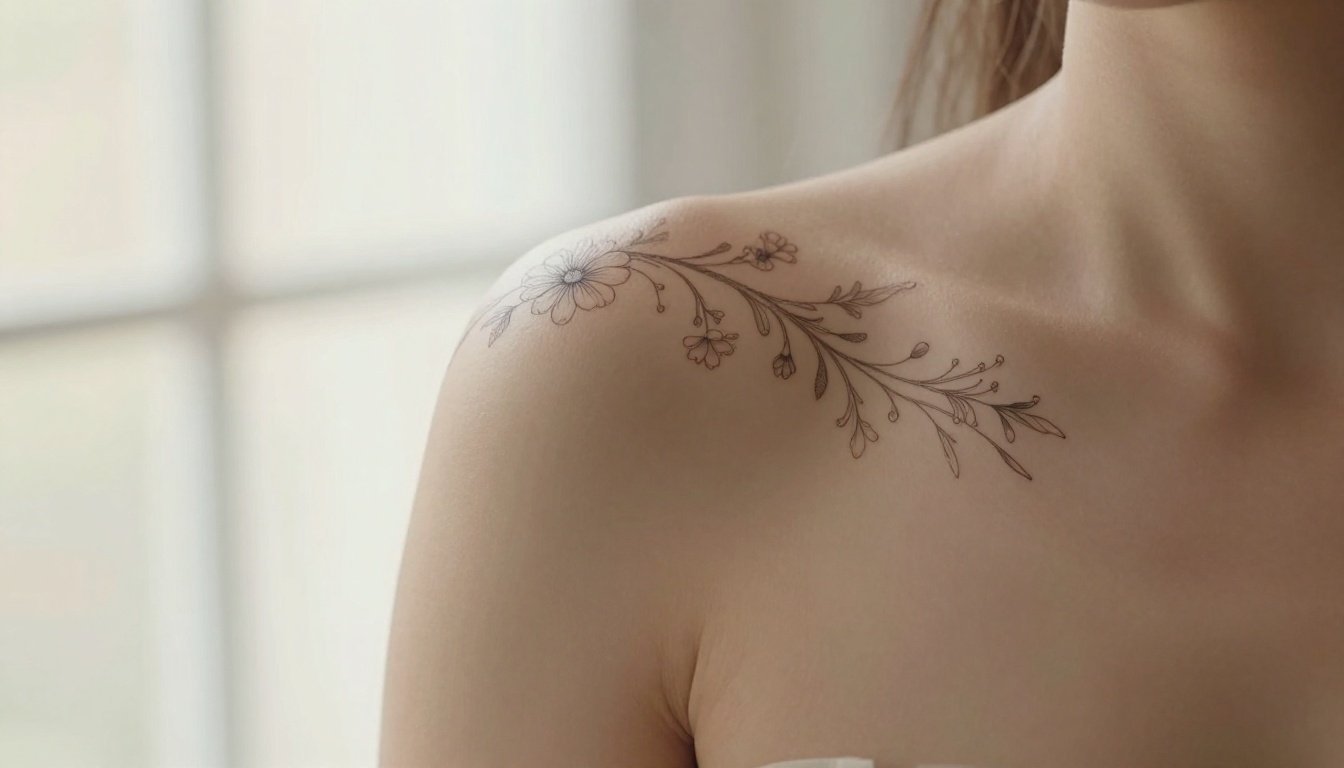
5 Tattoo Ideas for Women on the Shoulder That Feel Personal and Stylish
Shoulder tattoos are a popular choice because they’re easy to show or cover, suit delicate and bold styles, and follow the body’s natural curve. Whether you prefer fine-line florals, celestial symbols, meaningful script, or a detailed shoulder cap, the right design should match your personal style, meaning, and comfort level.
This guide shares five tattoo ideas for women on the shoulder, along with practical advice on placement, sizing, pain, cost, and basic healing care. Start with these design ideas to find a piece that feels personal and fits the way you want to wear it.
Tattoo Ideas for Women on the Shoulder That Feel Personal and Stylish
The shoulder gives you room to choose nearly any tattoo style. Each idea below can become a small, medium, fine-line, blackwork, or color tattoo, depending on your taste and the space available. Your design can look soft, bold, minimalist, ornate, or completely unexpected.
A Floral Shoulder Tattoo With Soft, Natural Movement
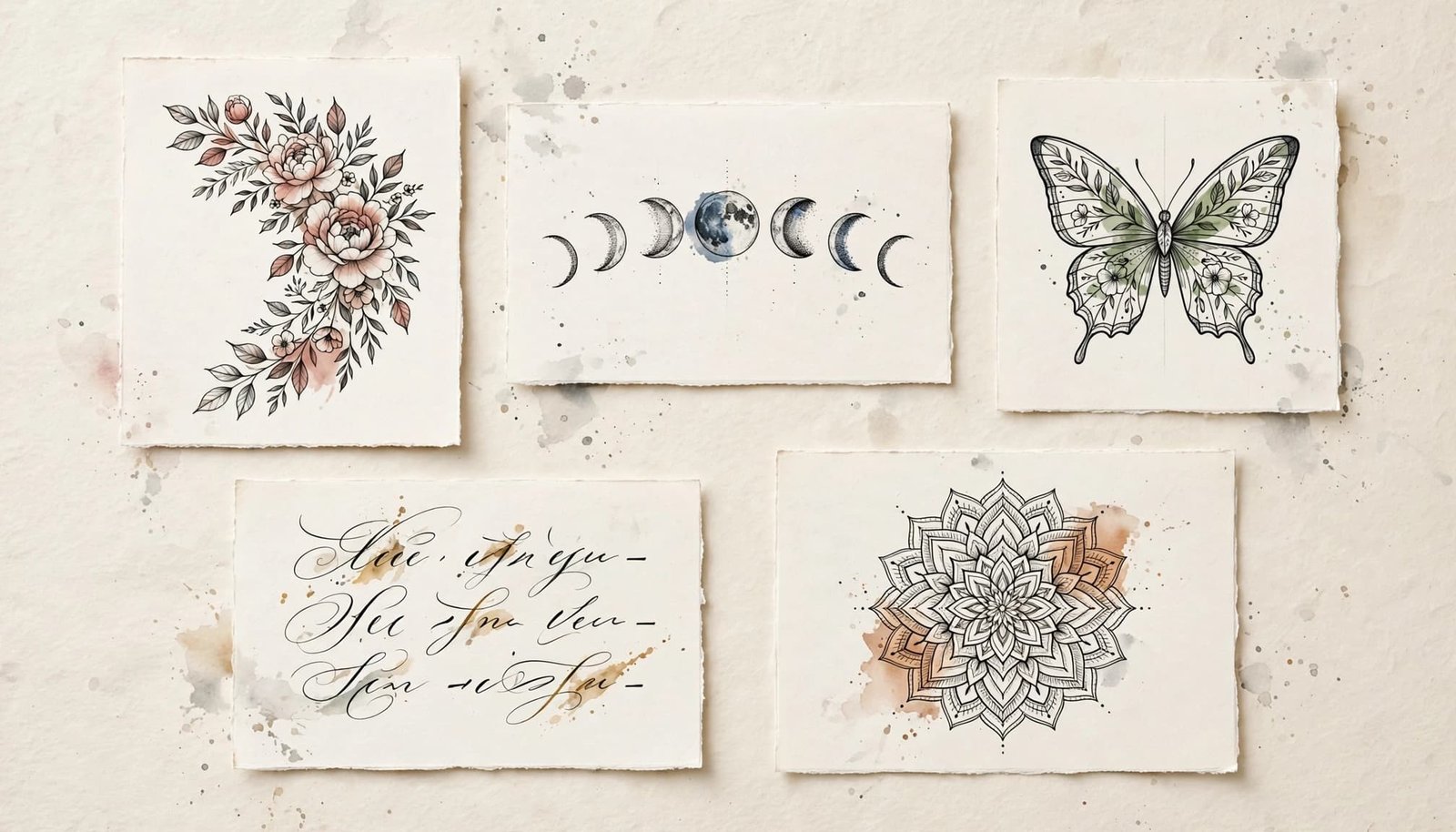
Flowers work beautifully on the shoulder because their shapes can follow the body’s curves. A single rose, peony, wildflower, cherry blossom, or lotus can sit neatly on the shoulder cap. For more movement, choose a bouquet or leafy vine that trails toward your back, collarbone, or upper arm.
Fine-line flowers create a light, graceful look with minimal shading. Bold traditional petals offer stronger contrast, while watercolor-style color gives the design a softer, painted appearance. Roses may suggest love, peonies can reflect beauty or strength, and lotus flowers often connect with growth. Still, choose a meaning that belongs to you, whether it recalls a favorite place, a loved one, or a personal change.
A Moon and Stars Design for a Dreamy Celestial Look
Moon phases can follow the curve of your collarbone or shoulder, while a circular full moon fits naturally on the shoulder cap. You might add a few stars, a small constellation, a sun and moon pairing, or subtle galaxy details without making the tattoo oversized.
Black ink and gentle shading keep celestial tattoos refined and easy to wear. A small amount of blue, purple, or gold-inspired color adds interest without overwhelming the design. Moon and star tattoos can suggest change, independence, hope, intuition, or a love of the night sky. Even a simple crescent moon can carry personal meaning.
A Butterfly or Bird Tattoo That Represents Change
Butterflies, birds, dragonflies, and feathers all suit the shoulder because their shapes suggest movement. A small butterfly can sit alone near the shoulder cap, while paired butterflies or a group of birds can travel across the shoulder in a loose flight path.
Realistic wings need enough space for their patterns to remain clear. Fine-line work looks delicate, but extremely small wing details may blur over time. A silhouette creates a cleaner result, especially for a small tattoo. These designs often connect with freedom, transformation, resilience, or a new beginning, although your tattoo doesn’t need to follow a traditional meaning.
A Short Script Tattoo With a Meaningful Message
A brief word, name, date, initials, or personal motto can make a shoulder tattoo feel intimate. The flatter back shoulder usually gives text better support than the most curved part of the shoulder cap. Delicate cursive feels romantic, typewriter lettering looks clean, and handwritten lettering can resemble a note from someone important.
Keep the wording short, then check every spelling, date, and translation before your appointment. Your tattoo artist can also adjust the spacing and size so the letters remain readable as the ink settles. Avoid packing too much detail into very tiny lettering. Before choosing color, review AAD tattoo care guidance, since any ink color can cause a skin reaction.
A Mandala or Ornamental Shoulder Piece With Detailed Symmetry
Mandalas, lace-inspired patterns, geometric shapes, and ornamental petals can form a decorative shoulder medallion. Centered symmetry suits the shoulder cap, while a half-mandala can wrap toward your back or extend along the collarbone.
Blackwork creates strong contrast, and dotwork adds texture without heavy solid shading. Limited shading can soften the design while preserving its structure. Because fine details need room to stay clear, a medium or larger tattoo may age better than an overly tiny version. Ask your artist to design the piece around your shoulder’s natural shape, rather than placing a flat image on a curved surface.
Choose the Shoulder Placement That Fits Your Design and Wardrobe
The shoulder offers several placement options, and each one changes how your tattoo moves, reads, and fits beneath clothing. Before choosing a design, consider whether you want a small hidden accent, a visible statement piece, or artwork that flows across more than one body area.
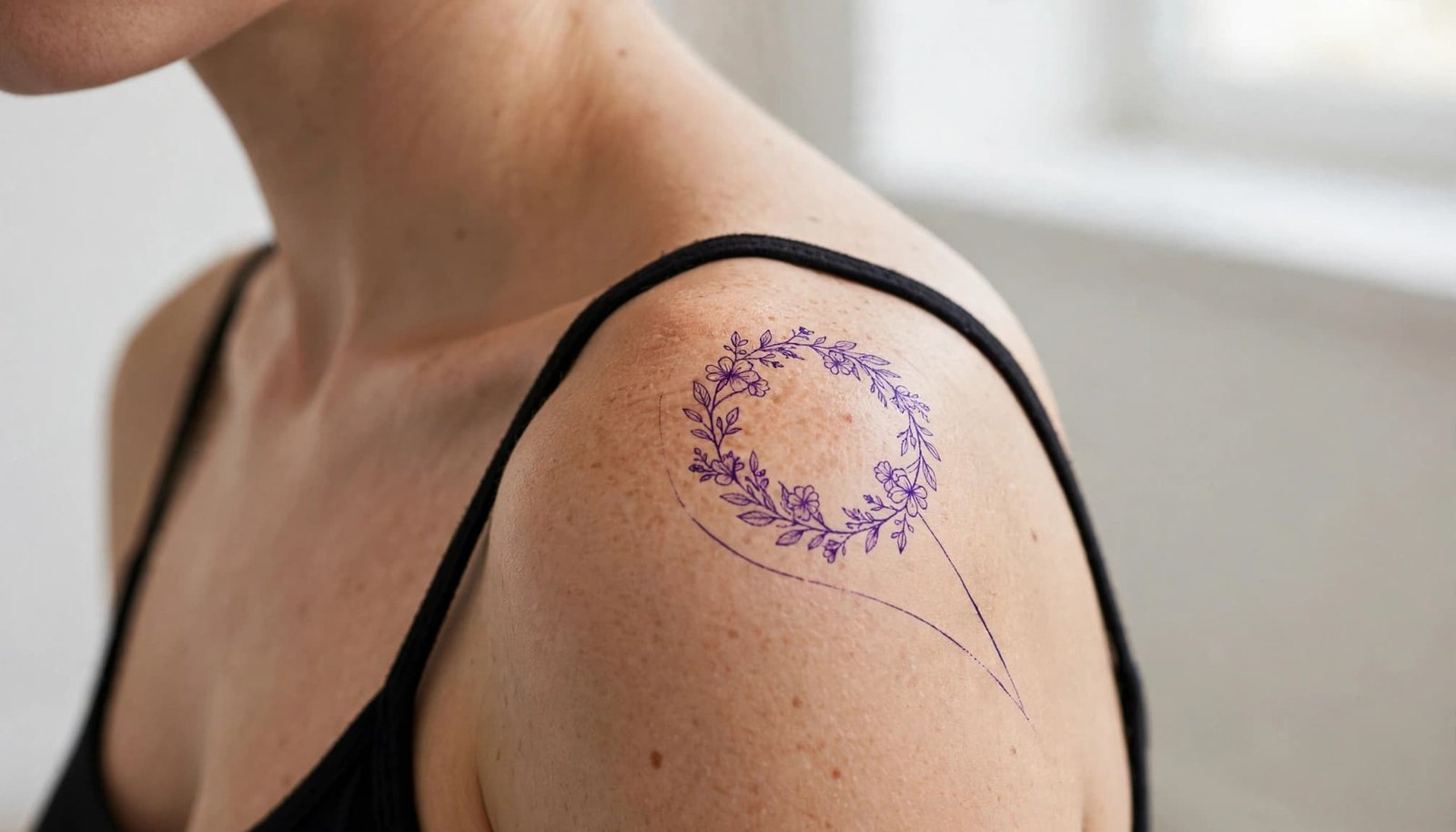
A temporary tattoo or paper stencil can help you compare sizes and positions before your appointment. Wear it for a full day, move your arms normally, and check it with work shirts, tank tops, dresses, and jackets. You may notice that a design looks centered when your arm rests but shifts when you lift it.
Shoulder Cap Tattoos Create a Balanced Focal Point
The rounded top of the shoulder works well for flowers, mandalas, moons, butterflies, and compact symbols. A circular or centered layout follows the shoulder’s curve, so the tattoo looks balanced when viewed from the front, side, or back.
This placement suits medium-sized designs that need a clear focal point without covering the entire upper arm. It also gives you flexibility with clothing because a sleeve, blouse, or jacket can hide the tattoo when needed. However, the shoulder cap moves as you raise and rotate your arm, which can slightly change how the design appears.
Highly detailed script and perfectly straight lines may distort on this rounded surface. Ask your artist to adjust the design to your body’s shape instead of transferring a flat image unchanged. Curved lettering, radial patterns, and organic shapes usually sit more naturally than rigid lines.
Back Shoulder Tattoos Leave Room for Larger, Flowing Designs
The shoulder blade and rear shoulder provide a flatter canvas for text, florals, birds, and designs with more detail. A tattoo can sit entirely on the back shoulder or extend toward the upper back, spine, or upper arm for a longer composition.
Because this area has more usable surface space, it can support larger lettering, layered shading, and fine details that may feel crowded on the shoulder cap. Visibility depends heavily on your clothes. A tank top may reveal the tattoo, while a standard T-shirt or work shirt can keep it mostly private.
Healing requires some planning because bra straps, backpack straps, and tight shirts may rub against the area. Choose loose, breathable clothing during the early healing period, and ask your artist how to protect the tattoo based on the bandage method they use. Once healed, protect exposed ink with AAD-recommended tattoo sunscreen, including broad-spectrum SPF 30 or higher.
Collarbone and Front Shoulder Tattoos Add a Delicate Sweep
A design that travels from the collarbone toward the shoulder creates a longer, more elegant shape. Vines, stars, fine-line ornaments, and small words can follow this path without needing the size of a full shoulder piece.
The front shoulder and collarbone are more visible with open-neck shirts, camisoles, and strapless clothing. That visibility can be a benefit if you want to enjoy the tattoo often, but it may matter if your workplace expects conservative clothing. Consider where shirt collars, bra straps, and necklaces will sit before finalizing the placement.
Narrow designs also need careful planning because the skin shifts as you lift, reach, and turn your neck. Discuss body movement, line spacing, and future readability with your artist. A stencil can show whether the design still looks graceful when your arm is raised, not only when you stand still.
How to Choose the Right Feminine Shoulder Tattoo
Choosing a feminine shoulder tattoo starts with more than finding a pretty reference image. The best design fits your personality, carries a meaning you won’t outgrow, and works with the space, movement, and visibility of your shoulder. Use your mood, lifestyle, and preferred tattoo style to narrow your choices before discussing the final concept with an artist.
Match the Design to Your Style, Meaning, and Daily Life
Begin by deciding how you want the tattoo to feel. Romantic designs may include roses, ribbons, or delicate script, while minimalist tattoos often use simple outlines and plenty of open skin. Mystical symbols, bold blackwork, expressive abstract art, and nature-inspired plants each create a different impression.
Personal meaning can make the choice easier. Consider a favorite plant, an animal connected to your family, a meaningful date, or a cultural reference that has a real place in your life. You can also combine elements, such as a birth flower with a date or a moon with a symbol from your heritage. The result should feel personal rather than assembled from random decorations.
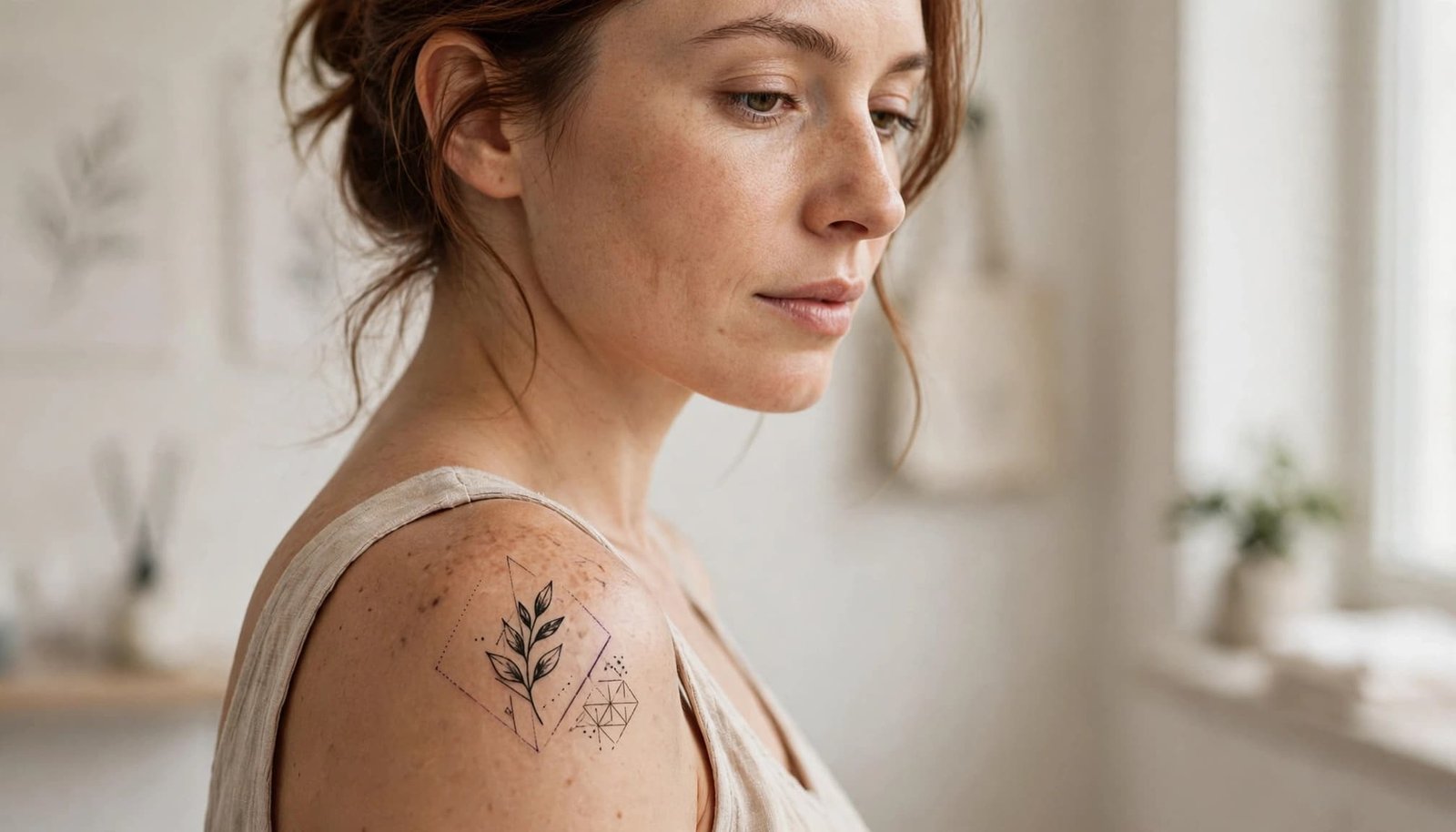
Collect a few references to show your artist, but avoid copying another person’s tattoo exactly. Instead, point out the line style, composition, mood, and details you like. Ask for an original arrangement designed around your shoulder’s shape. Reviewing healed examples in the artist’s portfolio can also show how their lines, shading, and color look after recovery, not only when the tattoo is fresh.
Your daily life matters, too. Check how the tattoo will look with work clothing, swimwear, jewelry, and favorite necklines. A collarbone design may be highly visible, while a back-shoulder tattoo offers more privacy. Ask yourself whether the idea still feels right if today’s trend fades.
Use Size, Line Weight, and Color to Protect the Design
Small tattoos can look elegant, but tiny details may blur or lose clarity as the ink ages. Fine-line work needs enough space between petals, letters, stars, or ornamental shapes. On the other hand, very thick outlines can appear heavier than expected, especially on a compact shoulder design.
Choose a size that gives the artwork room to breathe. A small symbol may need only a few clean lines, while a detailed flower, portrait, or mandala may need a medium size to remain readable. Your artist can adapt the composition to the shoulder’s curve, skin tone, and natural movement instead of shrinking every detail into one crowded area.
Black ink usually offers strong contrast and a timeless appearance. Color can add softness or make certain details stand out, but lighter shades often show fading sooner with sun exposure. The FDA explains that no color additives are approved for injection into skin, so discuss ink quality and studio safety with your artist rather than assuming a color is automatically risk-free. After the tattoo fully heals, protect exposed ink with broad-spectrum SPF 30 sunscreen guidance.
Before booking, compare two or three versions of the same idea: small versus medium, fine-line versus bold, and black ink versus limited color. The strongest choice is the one that preserves the design’s meaning while remaining clear and comfortable in your everyday life.
Know the Cost, Pain, and Healing Needs Before You Book
A shoulder tattoo involves more than choosing a beautiful design. Before booking, consider the artist’s rate, the tattoo’s size and detail, your pain tolerance, and the care required while your skin heals. Planning these details first can help you avoid rushed decisions and protect the finished artwork.
Plan a Budget Based on Time, Detail, and Artist Skill
A small symbol with a few clean lines may take far less time than a detailed floral design, mandala, or shoulder-to-back piece. Size, shading, color, line density, and whether the design wraps around the shoulder all affect the work involved. Your location, the artist’s experience, and the studio’s minimum charge also influence the final cost.
Ask for a clear estimate before you schedule the appointment. Find out whether the studio charges by the hour or prices tattoos by the piece. Also ask whether the quote includes design time, touch-ups, deposits, or separate fees. Since rates vary widely, there isn’t one universal price that applies to every shoulder tattoo.
Cost matters, but the lowest quote shouldn’t make the decision for you. Review the artist’s portfolio for the style you want, then look for healed examples rather than only fresh tattoos. Clean linework, consistent shading, strong composition, and experience with curved shoulder placement all matter. The studio should also explain its hygiene practices and use clean, sanitary equipment.
If the tattoo is a planned expense, setting money aside in advance can help you avoid choosing based on price alone. A small emergency fund for unexpected medical bills can also keep an unrelated health expense from disrupting your budget.
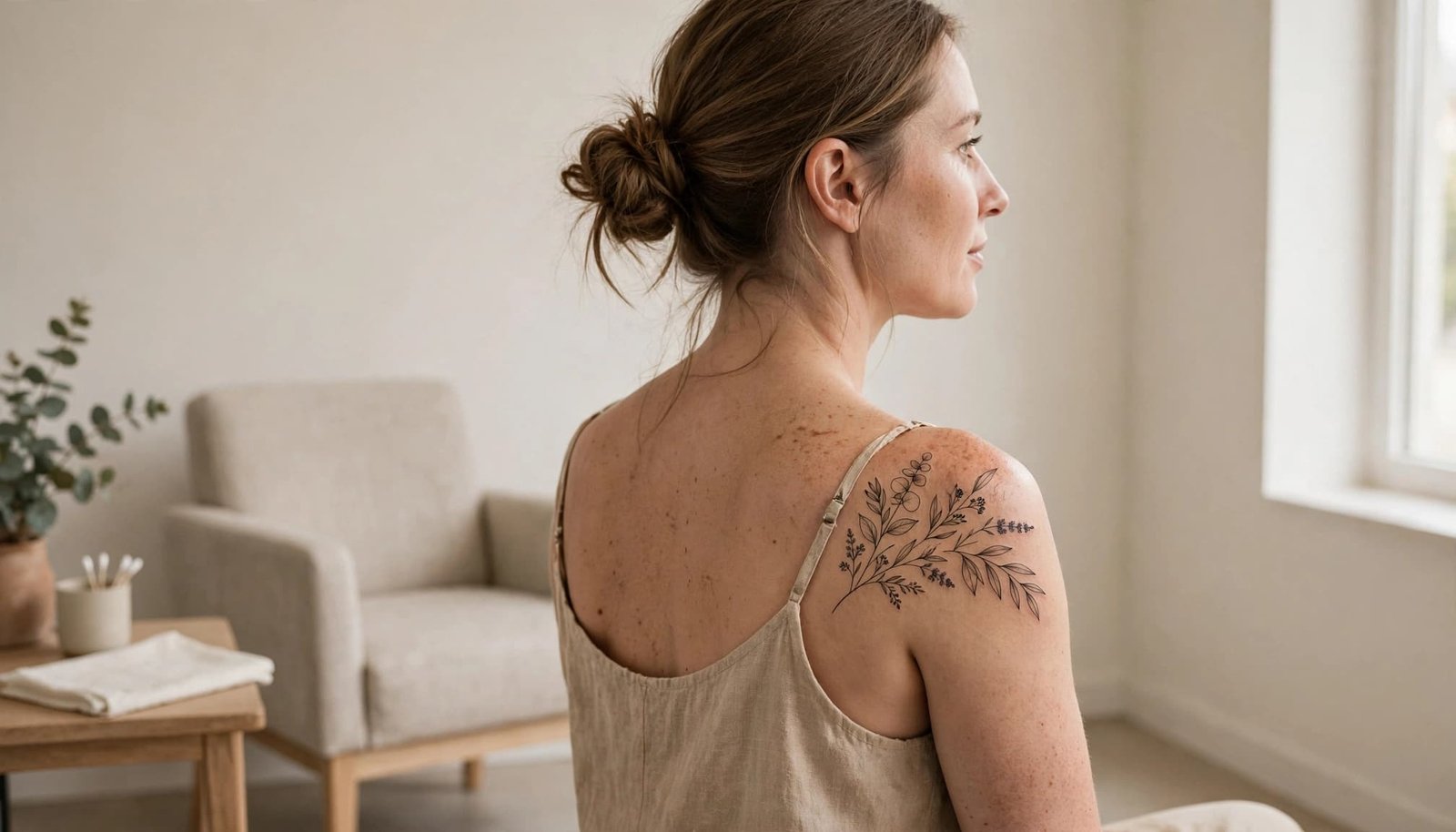
Pain varies from person to person, so prepare for a range of sensations rather than a fixed experience. The rounded shoulder often feels manageable, while areas closer to bone, the collarbone, or the shoulder blade may feel sharper. Longer sessions can also become more uncomfortable as the skin grows tender.
Protect the Tattoo During the First Weeks of Healing
Follow your artist’s exact bandage instructions because aftercare can differ by covering type and tattoo size. When you’re allowed to remove or wash the bandage, clean the area gently with mild soap and water, then pat it dry. Apply only the moisturizer your artist recommends, using a light layer rather than covering the skin with heavy product.
Avoid picking, scratching, peeling flakes, or removing scabs. Rubbing from bra straps, backpack straps, seat belts, and tight sleeves can irritate a shoulder tattoo, so choose loose clothing that won’t stick to the skin. Careful sleep positioning may help too, especially if you usually lie on the tattooed side.
Skip swimming, hot tubs, baths, and other soaking until the skin has healed. Keep the fresh tattoo out of direct sun, and use sun protection after healing to reduce fading. Mayo Clinic also recommends gentle washing, light moisturizing, and avoiding swimming while a tattoo recovers in its tattoo safety guidance.
Some redness, tenderness, peeling, or mild swelling can occur during healing. However, contact a health care professional if pain or swelling worsens, redness spreads, bumps or pus appear, the area fails to heal, or you develop a fever, chills, or an unusual rash. The FDA also recommends choosing a reputable studio, confirming that equipment is clean and sanitary, and keeping the ink brand, color, and batch information when possible.
Conclusion
The right shoulder tattoo can feel soft, meaningful, bold, or artistic. Floral designs bring natural movement, while moon and star tattoos create a celestial look. Butterflies and birds suggest change, short script keeps a personal message close, and mandalas add balanced ornamental detail.
Your final choice should follow more than appearance. Consider the placement, scale, line style, visibility, and personal meaning before settling on a design. A shoulder cap may suit a centered motif, while the back shoulder or collarbone can give lettering and flowing artwork more room.
Bring a few references to a trusted tattoo artist, then request an original design shaped to your body. Choose a size that gives every detail enough space to remain clear, comfortable, and wearable over time.
Save pin for later

- 30 Trendy Tattoo Ideas for 2026: Styles and Placement - September 27, 2026
- 30 Gorgeous Fine Line Tattoo Ideas to Try - September 27, 2026
- 25 Fine Line Tattoo Ideas for Women With Meaning - September 22, 2026
Leave a Reply