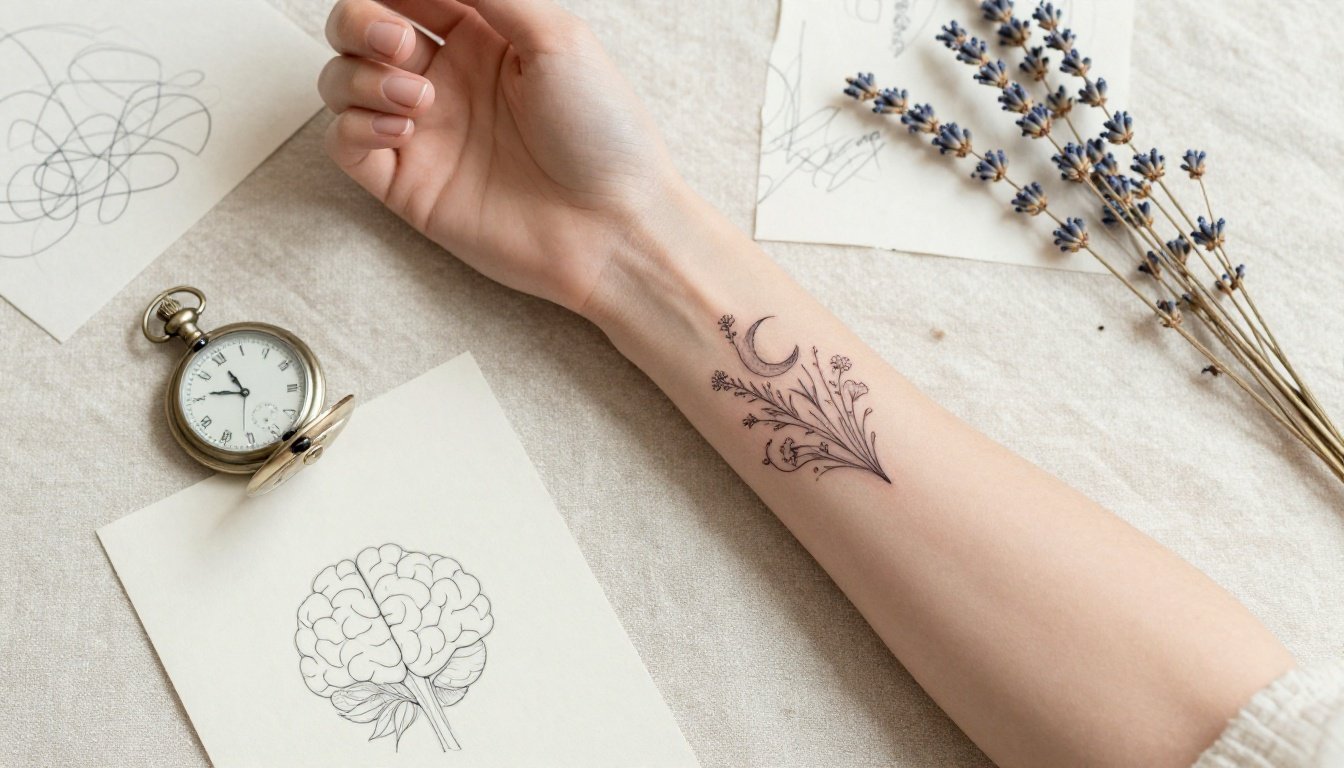
30 Overthinker Tattoo Ideas for Women, Meaningful Designs
An overthinker tattoo can turn busy thoughts into a personal reminder to pause, breathe, and trust yourself. Your design might reflect anxiety, self-awareness, growth, or the decision to slow down when your mind won’t stop racing, without assigning you a diagnosis or fixed identity.
This collection of 30 overthinker tattoo ideas for women includes tiny brain designs, tangled lines, clocks, clouds, meaningful lettering, flowers, and celestial details. You’ll also find inspiration for choosing a style, size, placement, and personal meaning, plus guidance on selecting an artist, planning your budget, and caring for new ink. Taking time to reflect before booking can also support self-care practices that support personal growth.
A tattoo can honor your experience, but it isn’t a replacement for therapy, medical advice, or mental health care. Start with these thoughtful ideas, then choose the symbol that feels honest to your story.
Key Takeaways
- Choose a meaningful symbol that reflects your thoughts, growth, self-awareness, or need for calm.
- Tiny brains, tangled lines, clocks, clouds, flowers, and celestial details can become personal overthinker tattoo ideas.
- Fine-line designs suit subtle tattoos, while bolder styles create stronger visual impact and lasting detail.
- Consider size, placement, pain tolerance, visibility, budget, and the artist’s experience before booking.
- A tattoo can honor your experience, but it should complement professional mental health support, not replace it.
Overthinker Tattoo Ideas for Women With Brain and Mind Imagery
Brain imagery can show analysis, mental overload, self-awareness, or the effort to understand your own thoughts. These designs can feel personal without defining you by anxiety or overthinking. Choose fine lines, soft curves, botanical accents, or a delicate placement if you want a feminine touch.
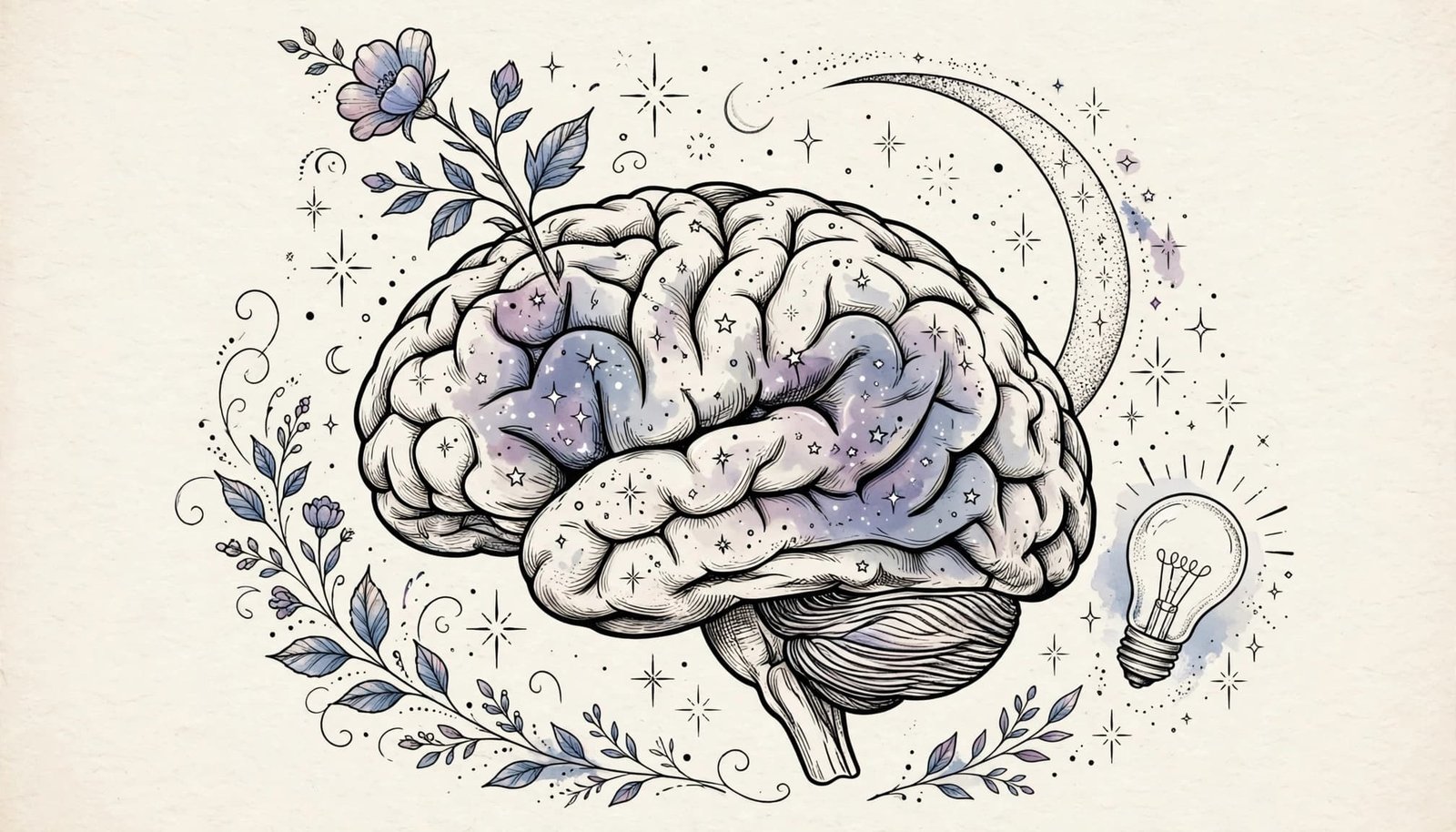
A delicate brain filled with stars
A simple brain with tiny stars can represent imagination and a mind that is always generating ideas. Keep it small, around 1 to 2 inches, and personalize it with stars drawn from a favorite constellation. A brain paired with a crescent moon suggests nighttime thoughts, intuition, or finding calm during restless hours. A slightly larger design gives the moon enough space to stay clear.
For a lighter look, surround the brain with small sparkles to show wonder within mental noise. A small lightbulb above the brain can symbolize insight or a solution that finally arrives. You might personalize it with a tiny colored glow. A single flower growing from the brain offers a softer meaning, showing beauty, healing, or creativity within a busy mind. Fine detail needs enough space to remain clear as the tattoo ages.
A brain caught in chains, thread, or a ribbon
A brain wrapped in a thin chain can express feeling trapped by recurring thoughts. A 2- to 3-inch version works well on the forearm or upper arm, where the links can remain readable. A brain tied with a loose ribbon suggests learning to release control rather than staying tightly wound. Add a meaningful ribbon color or a small bow based on your personal style.
Two hands holding a brain can symbolize self-compassion and support, while one broken chain link can show mental freedom after a difficult period. A brain connected to a small key offers another clear message: you hold the ability to unlock a calmer relationship with your thoughts. Black ink keeps these ideas subtle; muted color or one red accent adds emphasis.
A split brain showing logic and emotion
One half made of geometric lines and one half filled with flowers can show the balance between analysis and feeling. A 3-inch tattoo gives both textures room to breathe. A brain split into sun and moon sections can symbolize changing energy, intuition, and emotional balance. Personalize it with a sunrise or moon phase tied to an important date.
A calm ocean line dividing the brain suggests emotional regulation, while one realistic half beside one abstract half captures the difference between facts and imagination. A heart at the center brings the message back to emotional intelligence. Choose a symbol meaningful to your relationships, values, or healing process.
A brain transforming into something lighter
A brain becoming butterflies can represent release, healing, or personal change. A brain turning into birds suggests freedom from thoughts that once felt confining. Opening the brain into clouds offers a softer image of rest and mental space, while a brain dissolving into stars can connect overthinking with imagination and hope.
A brain changing into a flowing wave reflects learning to let thoughts pass instead of fighting each one. Larger placements, such as the thigh, shoulder blade, or outer forearm, show these transformations more clearly. Add one butterfly, bird, or star with a color connected to a private memory.
A tiny brain with a grounding word
A small brain beside “breathe” can become a private coping reminder. “Pause” encourages you to interrupt automatic worry, while “let go” speaks to releasing control. “One thing at a time” works best as a larger design because the phrase needs breathing room. A handwritten initial or date creates the most discreet option and can honor a person, place, or turning point.
Place short lettering near a wrist, rib, or collarbone, depending on how visible you want the reminder to be. Ask an experienced fine-line artist to test the size first, because very small text can blur and become difficult to read over time.
Tangled, Abstract, and Maze-Inspired Overthinker Tattoo Designs
Abstract tattoos can show mental spirals without using a literal brain or labeling anxiety. Curves, gaps, clouds, and shifting lines leave room for personal meaning. A simple design often ages better than one packed with tiny details, especially on the wrist, ankle, or fingers.
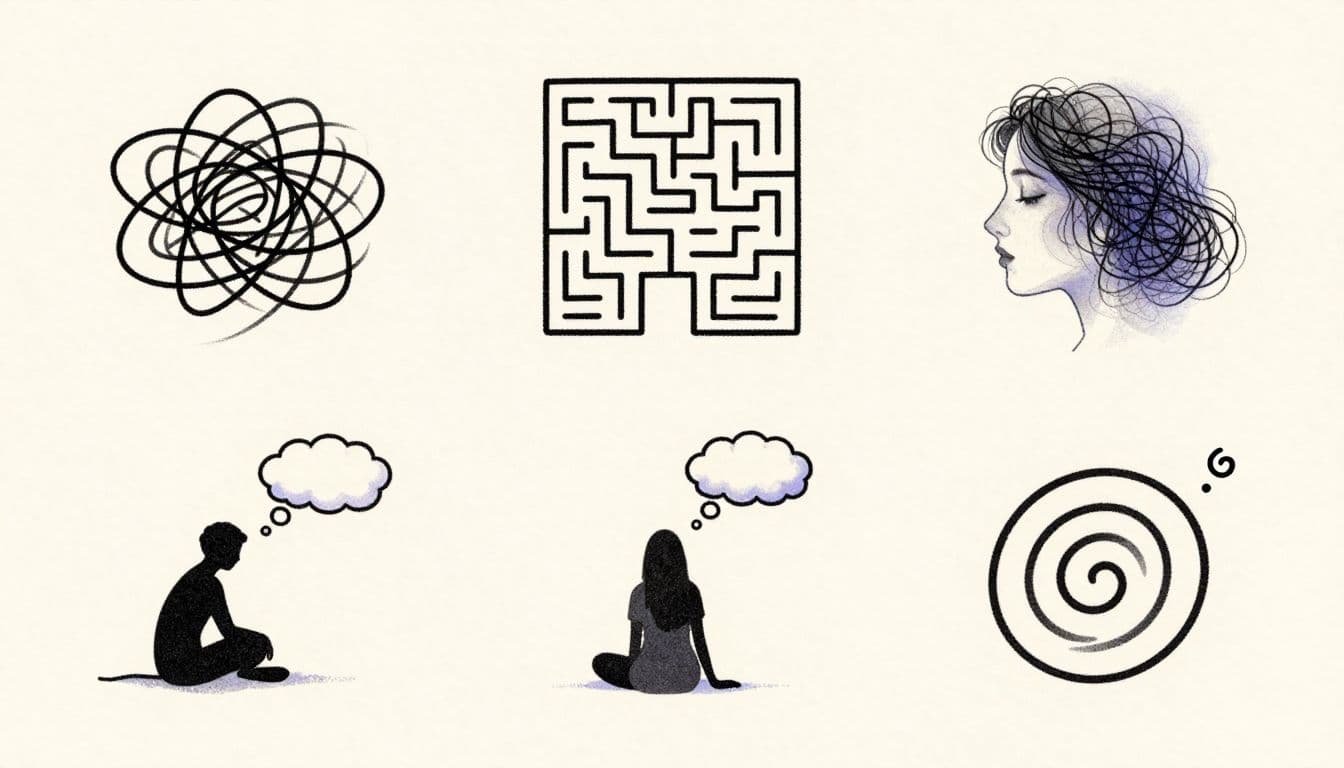
A tangled line that slowly becomes calm
A dense scribble fading into one smooth line can show progress without suggesting that overthinking disappears forever. A loose knot opening at one end offers a similar meaning, with the small opening representing space to pause or choose differently.
For a softer design, let the tangled line form a heart before it continues outward. Another option has the scribble ending in a tiny flower, showing that something meaningful can grow alongside difficult thoughts. A chaotic line becoming a wave adds movement and suggests learning to let thoughts pass without fighting each one.
Fine-line black ink works well for these designs, but keep the scribble open enough to remain clear. The best placement depends on the length of the line, with the forearm, shoulder, or upper arm offering more room than a small wrist tattoo.
A maze with a clear way out
A small circular maze can represent searching for clarity when every decision feels complicated. A heart-shaped maze adds emotional meaning, while a maze with a star at the center gives you a destination to work toward.
You could also choose a maze with one open path, making the exit easy to see without making the journey look effortless. Pairing a maze with the word “breathe” creates a direct reminder to slow down when your thoughts begin looping. Medium-size placement is best because maze details need enough space to stay crisp as the tattoo ages. Consider the outer forearm, upper arm, shoulder blade, or thigh.
An abstract head filled with mental noise
A side-profile head filled with scribbles can show a busy mind without using a medical symbol. A woman’s silhouette filled with clouds offers a softer image, while flowers growing from the top can suggest creativity, self-knowledge, or ideas that continue to develop.
For a darker mood, choose a profile releasing a storm cloud. A face made from one continuous line creates a quieter, more surreal option. You can control the feeling through line weight, shading, color, and facial expression. Avoid making women’s mental health look decorative only; the design should reflect your actual experience, not just an aesthetic.
A thought cloud that feels visible but temporary
A small cloud above a head can represent heavy thoughts or emotional fog. Raindrops turning into stars shift the mood toward hope, while a cloud tied to a balloon suggests that thoughts can rise instead of staying attached to you.
A break through the middle of a cloud creates a visual pause. You might also show a cloud drifting away from a seated figure, reminding you that thoughts change over time. Upper-arm, shoulder, and rib placements suit medium designs and give the cloud enough space for clean outlines.
A knot, spiral, or whirlpool with a personal detail
A simple Celtic-style knot can represent repetitive thoughts, while a spiral with a tiny exit line adds the idea of choice. A whirlpool containing your initials makes the design personal without adding many extra elements.
You could wrap a knot around your birth flower or finish a spiral with a moon, star, heart, or other meaningful symbol. Ask an artist to keep every curve clean and balanced, especially when the design includes overlapping lines. Before booking, review the FDA’s tattoo safety guidance, then choose a studio that follows careful hygiene practices.
Clock, Hourglass, and Time-Based Tattoos for Busy Minds
Time imagery fits overthinkers because it captures hours spent replaying conversations, fear of making the wrong choice, and the patience required to feel steady again. A clock can show pressure, while an hourglass can remind you to return to the present instead of controlling every possible outcome.
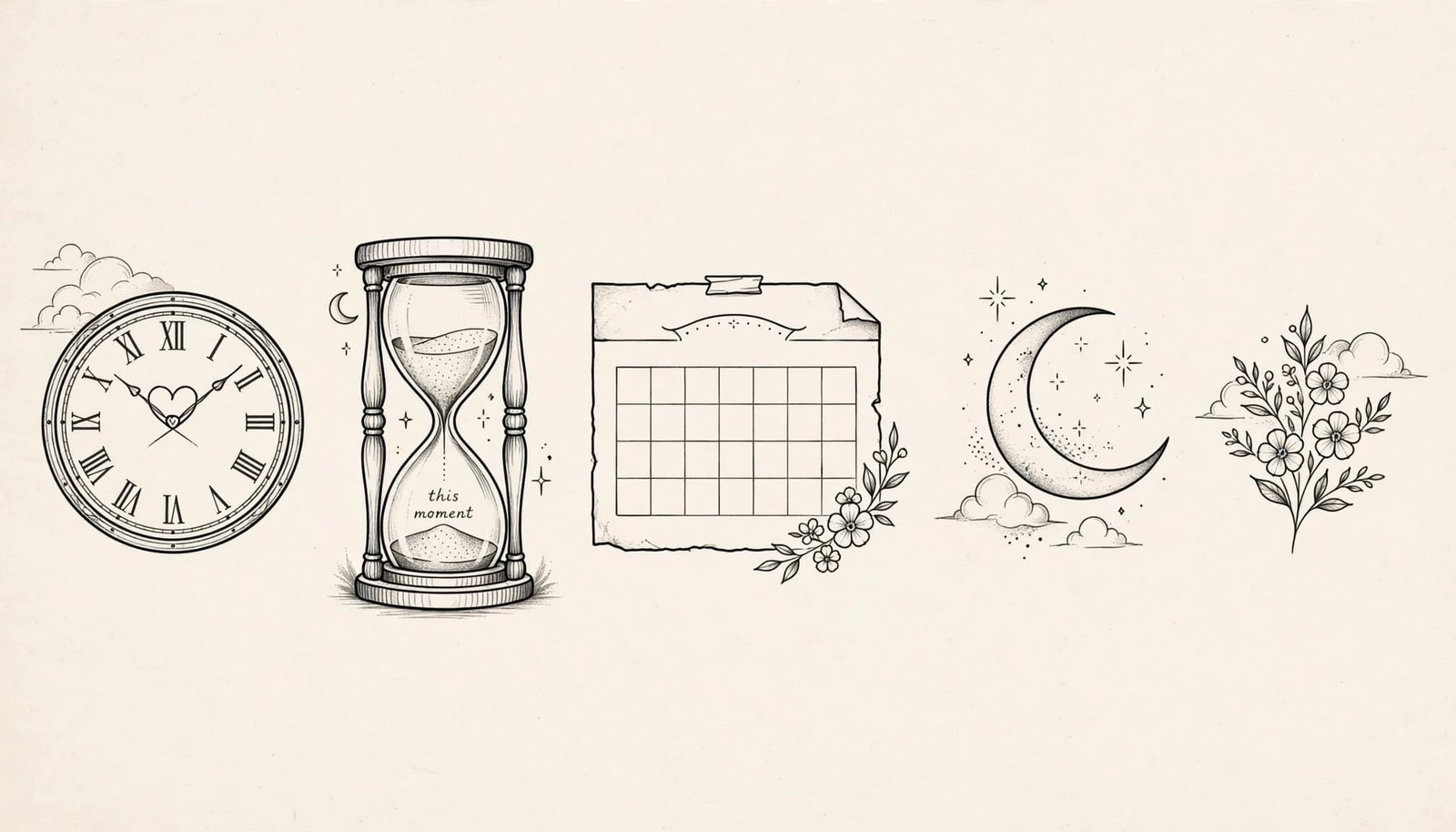
A clock with a tangled face
Replace the numbers with loose scribbles to show thoughts that keep circling. Thought lines around the clock make mental noise visible, while hands pointing in different directions suggest indecision and fear of choosing incorrectly.
A cracked clock face can represent time pressure or a period that changed how you see life. For a gentler message, shape the hands into a heart. That small detail shifts the design toward emotional reflection and self-compassion. Keep the clock face large enough for the hands and fine numbers to remain readable as the tattoo ages.
An hourglass filled with thoughts instead of sand
Tiny clouds inside an hourglass can represent thoughts drifting through your mind. Stars falling through the glass suggest hope, imagination, or trusting that difficult moments will pass. Flowers create a softer image of patience and personal growth.
A small brain at the top shows how much energy you spend thinking ahead. Pairing the hourglass with the phrase “this moment” turns it into a grounding reminder. The image encourages you to experience the present instead of trying to predict every outcome. A short breathing practice or other mindful alternative to shopping can reinforce that message in daily life.
A broken or melting clock with a softer meaning
A clock melting into a wave can show freedom from rigid schedules and the need to control every detail. Flowers repairing a broken clock shift the design toward recovery. A clock opening into birds suggests release, while one stopped hand can honor a moment that changed your direction.
For a calmer mood, surround the clock with a moon and a few stars. Black and gray ink usually keeps these details clear, although one restrained color can highlight a flower or wave. Avoid heavy shadows and sharp fragments if you want freedom from pressure rather than hopelessness.
A calendar page for a meaningful turning point
A small date with a scribble above it can honor the day your thoughts began to change. A page marked “today” keeps the focus on the present, while stars around a date can celebrate recovery or a new beginning.
A torn calendar page becoming a butterfly suggests leaving an old chapter behind. Pair a private date with a short phrase such as “keep going” or “choose peace.” Use a date connected to a personal promise, important life change, or moment of healing rather than a number chosen only for appearance.
A clock paired with a calm reminder
Words can shift a clock from anxiety toward self-care. Consider “breathe,” “pause,” or “not everything needs an answer.” A short quote fragment keeps the design readable, while a meaningful time can honor a person, memory, or fresh start.
Keep lettering brief and give it enough space around the clock. Before booking, review the FDA tattoo safety fact sheet, then choose a reputable artist who can balance delicate detail with long-term clarity.
Short Words and Feminine Details That Make Mental Health Tattoos Personal
The most meaningful overthinker tattoo may look like a small private reminder rather than an obvious statement. Short words, flowers, stars, and hidden symbols can support your story without explaining it to everyone who sees them.
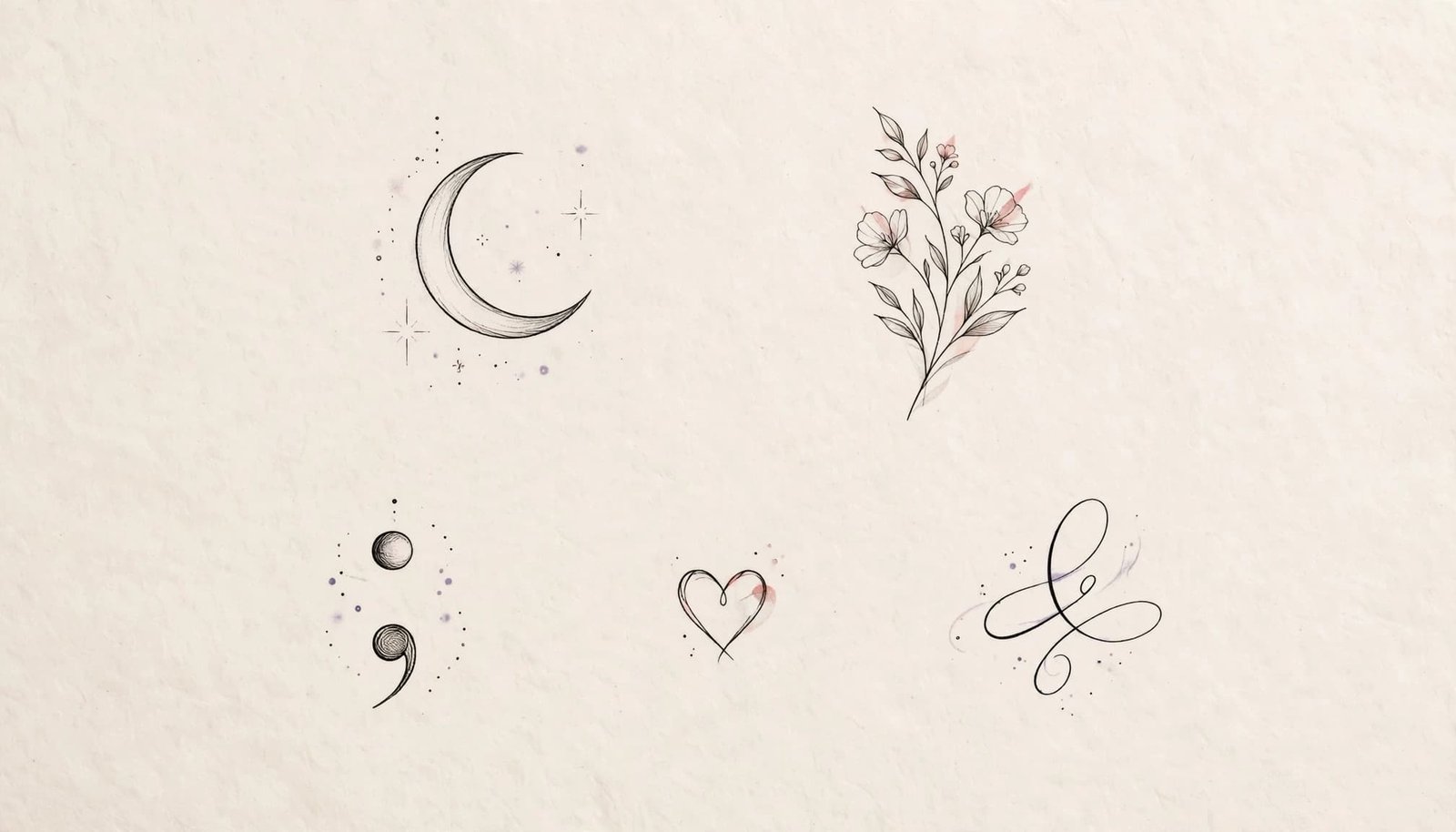
Simple words that interrupt an overthinking spiral
Words work best when they sound natural in your own voice. Choose breathe for a gentle reset, pause for a direct interruption, let go for releasing control, slow down for easing pressure, or you are safe for a steady personal reassurance.
Short lettering fits well on the wrist, inner arm, ribs, or collarbone. A wrist tattoo keeps the reminder visible, while ribs or the inner arm make it more private. Decide whether the phrase is meant for you to read or to invite conversation. Then test the lettering at its actual tattoo size on paper or a temporary transfer before booking. Tiny text can lose clarity, so give each letter enough room.
Flowers growing through complicated thoughts
Floral details can add softness, growth, memory, or resilience to an overthinker tattoo. Consider a rose growing from a scribble, a daisy beside a brain, or a birth flower tucked inside a thought cloud. A wildflower breaking through a maze suggests strength in an uncertain period, while a stem wrapping around a clock connects growth with patience.
Choose a real birth flower or a plant you already love instead of adding flowers only for decoration. That detail gives the design a personal anchor. A single stem may feel more honest than a crowded bouquet, especially when the tattoo includes fine lines or lettering.
Moon, stars, and celestial reminders to zoom out
Celestial imagery can suggest perspective, changing cycles, wonder, and the temporary nature of difficult thoughts. A crescent moon inside a cloud creates a soft image of calm. A constellation shaped like a brain connects curiosity with mental noise, while stars escaping a tangled head suggest thoughts opening into possibility.
You could pair a small moon with the words one day at a time. Another idea places a tiny galaxy inside a silhouette, creating a private reminder that your inner world is larger than one difficult moment. These designs work well on the shoulder, upper arm, ribs, or back of the neck.
A semicolon-inspired design with a personal twist
A semicolon with a flower, stars, a brain, or a heart can create a gentle mental health tattoo. You might also connect the punctuation to a short personal phrase. Many people associate semicolon imagery with recovery, survival, or mental health support, but its meaning is personal and shouldn’t be assumed.
Some wearers choose it as a private symbol, while others see it as a public statement of solidarity. Consider how visible you want that association to be before choosing the wrist or forearm. A smaller placement, such as the ribs or ankle, can keep the meaning more personal.
Handwriting, initials, and private symbols
Private details often make a tattoo feel more lasting than a trend. Use a loved one’s handwriting, your own script for a personal mantra, initials hidden inside a maze, or a meaningful number placed within a clock. A tiny symbol known only to you can carry just as much meaning as a detailed design.
Before the appointment, check spelling, translation, capitalization, punctuation, and lettering accuracy. Ask the artist to confirm the stencil placement and orientation before the needle starts. A few careful checks protect the meaning you want to keep.
How to Choose the Right Size, Style, and Placement
Choosing an overthinker tattoo takes more than picking a favorite sketch. The design should determine the size, not the other way around. A detailed brain or surreal scene needs room, while a tiny symbol can stay clear and meaningful in a smaller space.
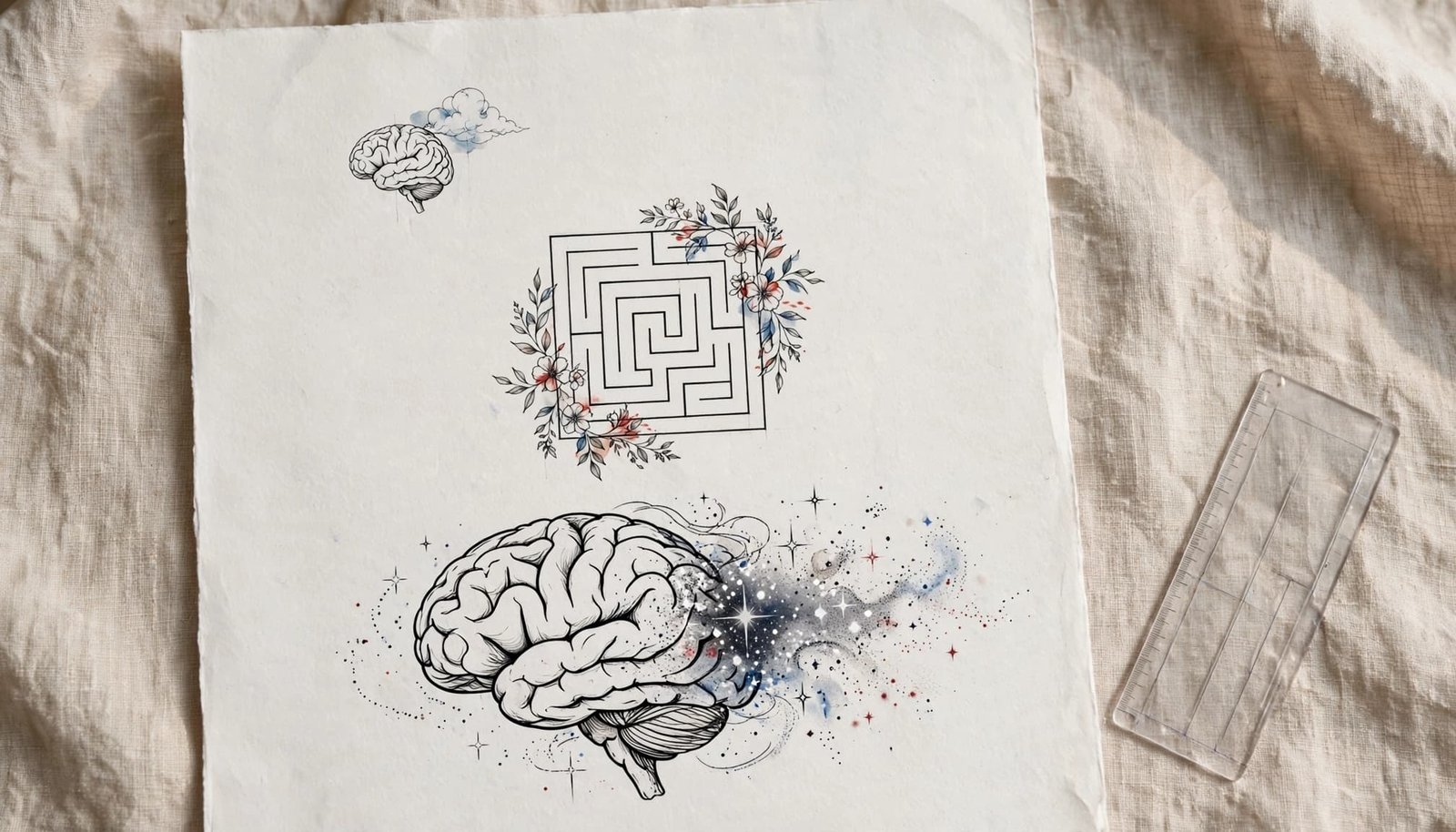
Match the tattoo size to the amount of detail
Small tattoos suit one brain, a cloud, a clean symbol, a simple scribble, or a short word such as breathe or pause. These designs work well when you want a subtle reminder that doesn’t compete with your clothing or other tattoos.
Medium tattoos give clocks, mazes, floral combinations, and split designs enough space to remain balanced. Large tattoos allow realistic brains, detailed scenes, surreal compositions, and readable text. Forcing a complex image into an extremely small space can cause lines and letters to crowd together, making the design harder to read as it ages.
Ask your artist to show the stencil at its actual size before you commit. A slightly larger, simpler tattoo often looks cleaner than a miniature version packed with detail.
Choose a style that fits the mood you want
Fine-line and minimalist work suit delicate designs with plenty of open space. Black-and-gray shading adds depth and works well for realistic brains, clocks, clouds, and thoughtful scenes. Abstract linework captures mental chaos through tangled curves, spirals, and unfinished forms.
Surrealism gives you room for unusual metaphors, such as a brain turning into birds or a head opening into stars. Limited color can highlight one meaningful detail without overwhelming the design. Try a red thread, a blue cloud, a colored flower, or a single bright star.
A feminine result doesn’t depend on a fixed tattoo style. Line weight, curved shapes, balanced composition, and personal details can create softness in almost any approach. Choose the mood first, then let the technique support it. Planning a tattoo can also become part of investing in your personal growth, especially when the symbol reflects a promise you want to keep.
Find a placement that feels visible or private
The wrist and forearm keep a reminder within view during the day. Behind the ear and at the nape suit discreet designs, while the upper arm, shoulder, ribs, ankle, and collarbone offer different levels of privacy.
Visible placements may invite questions at work, with family, or from strangers. Hidden placements can feel more personal, especially when the tattoo relates to anxiety, recovery, or a private turning point. Before choosing, consider workplace rules, family preferences, clothing, sun exposure, and daily friction from shoes, waistbands, or jewelry.
Think about pain, aging, and everyday movement
Pain varies by person and placement, so discuss the area honestly with your tattoo artist. Fingers, hands, wrists, and ankles experience more movement and friction, which can affect healing and may mean touch-ups later.
Fine lines and tiny text can soften over time. Sun exposure can also fade tattoo ink, so the American Academy of Dermatology recommends protecting healed tattoos with broad-spectrum, water-resistant SPF 30 or higher. Cover fresh ink with clothing and follow your artist’s aftercare instructions while it heals.
Choose a size and design that leave the lines room to breathe. Your tattoo won’t stay frozen in its first-day appearance, but thoughtful scale, sensible placement, and consistent sun protection can help it remain clear.
Personalize Your Overthinker Tattoo Before Booking
A saved tattoo reference can show you what catches your eye, but it shouldn’t become a design you copy line for line. Use it as a starting point, then connect the idea to your own memories, habits, and hopes. That extra step can turn a familiar image into a tattoo that feels personal years after your appointment.
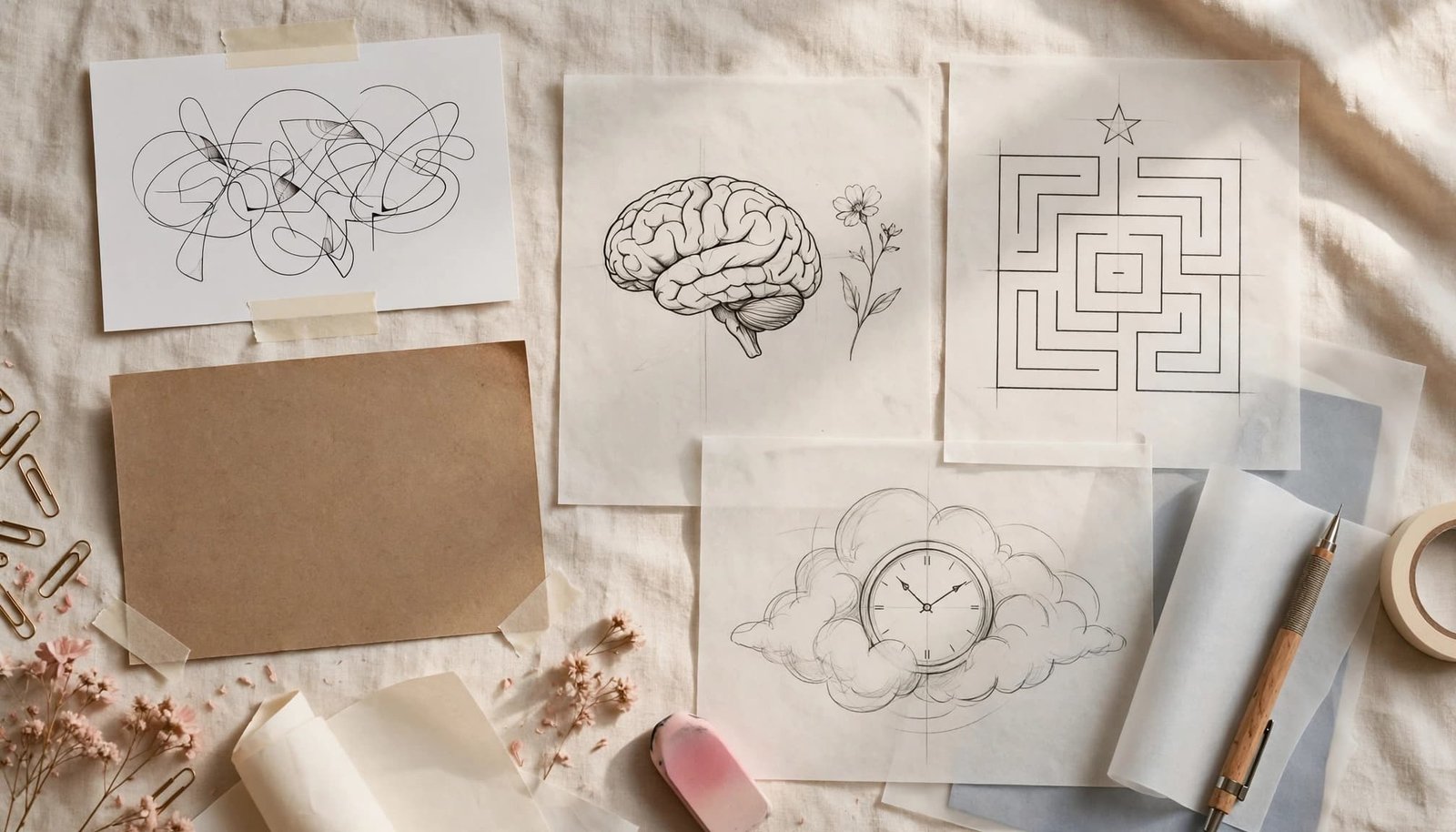
Start with the thought or memory behind the design
Before choosing imagery, write one sentence that explains what the tattoo should mean. Does it reflect mental noise, a difficult period, recovery, self-acceptance, patience, or a reminder to stay present?
For example, you might write, “This tattoo reminds me that I can pause without solving every thought.” That sentence points toward a clock, cloud, flower, or short phrase. If you write, “I found a way through a confusing time,” a maze with a star may fit better than a literal brain.
Ask yourself:
- What experience do I want to remember?
- Should the design show struggle, healing, or both?
- Do I want other people to understand its meaning?
- Which symbol feels natural instead of trendy?
Combine two symbols without overcrowding the design
Pair one main symbol with one supporting detail so the tattoo stays readable. A brain with a flower can show growth, while a maze with a star can suggest finding direction. A clock and cloud create a softer reminder to stay present, and a scribble beside one word can show mental noise without filling the entire design.
A meaningful personal detail can make a familiar concept feel original. Add a birth flower, favorite constellation, important date, initial, or handwriting sample. Keep the extra element small enough to support the main image rather than compete with it.
Copying another person’s exact tattoo may give you a pleasing picture, but a custom version carries your story. Even changing the flower, line shape, phrase, or symbol placement can make the design yours.
Prepare a clear artist brief and reference board
Bring your preferred concept, approximate size, placement, mood, lettering sample, and examples of line weight. Show references for style and technique, but ask the artist to create an original composition instead of copying one tattoo.
Before consenting, review the stencil in a mirror and check its orientation, spelling, punctuation, and proportions. Ask how the design may age, whether fine details need more space, and if the placement will distort with movement. A careful conversation now can prevent an impulsive decision later.
Safe Tattoo Planning and Simple Aftercare for Fine-Line Designs
A thoughtful tattoo plan includes more than choosing a pretty reference image. Artist experience, studio hygiene, clear consent, and realistic healing expectations all matter, especially for fine-line designs with small lettering or delicate details. Tattoos are symbolic reminders, not medical treatment, so choose a design that supports your story without treating it as a substitute for therapy or health care.

Choose an artist who matches the design
An artist’s portfolio shows more than personal style. Look for clear examples of the work you want, including micro lettering, clean linework, realistic brains, geometric mazes, or delicate botanical details. An artist who creates bold traditional tattoos may not have the same experience with tiny text or precise fine-line compositions.
When possible, ask to see healed tattoos, not only fresh work. Healed photos show how the lines settle, whether small details remain readable, and how the artist handles skin over time. Read recent reviews, ask whether the studio and artist meet local licensing requirements, and check that the workspace uses proper hygiene practices, such as handwashing, gloves, sterile supplies, and single-use needles.
A consultation gives you space to discuss placement, size, skin tone and texture, daily friction, and expected aging. You can also confirm that the artist regularly creates your chosen style before paying a deposit. For practical planning, simple living for greater peace of mind can also mean waiting for the right artist instead of choosing the cheapest appointment.
Know what to expect while the tattoo heals
Follow your artist’s written aftercare instructions because bandages and healing methods can vary. In general, wash the tattoo gently with clean hands, keep it protected as directed, and avoid soaking, baths, hot tubs, and swimming while the skin heals. Don’t pick peeling skin or scabs, even when the area feels itchy. Limit sun exposure and avoid tight clothing that rubs against the design.
Mild redness, tenderness, clear fluid, itching, peeling, and light scabbing can occur during normal healing. However, worsening pain, spreading redness, yellow or green drainage, pus, fever, a persistent rash, or skin that doesn’t seem to heal needs medical attention. The American Academy of Dermatology’s tattoo guidance explains common healing changes and warning signs. Contact your artist and a health care professional if you notice an unusual reaction or possible infection.
Protect the design after it has healed
Once the tattoo has fully healed, apply broad-spectrum sunscreen when the area is exposed. Sun protection helps preserve fine linework and color, while regular moisturizer can support the appearance of healthy-looking skin. Avoid assuming that one specific product works for everyone, especially if you have sensitive skin.
Fingers, wrists, and ankles face frequent washing, movement, footwear, jewelry, and friction. Fine-line tattoos in these areas may fade or soften sooner than tattoos in lower-friction locations. A touch-up may be part of normal long-term care, not a sign that you made the wrong choice. Wait until the tattoo has fully healed, then ask a trusted artist to assess it before scheduling any changes.
Conclusion
The best overthinker tattoo isn’t always the most detailed or dramatic design. A brain, tangled line, clock, hourglass, meaningful word, flower, or celestial symbol can all work when it reflects your experience and gives you a useful reminder to pause, breathe, or trust yourself.
Before booking, consider the style, size, placement, and level of detail you can live with over time. Choose an artist with relevant portfolio experience, review the stencil carefully, and follow proper aftercare while the tattoo heals. Taking time before making a permanent choice is part of making more intentional shopping decisions, especially when emotions feel intense.
You can revise the wording, simplify the imagery, change the placement, or combine symbols until the idea feels personal. The right tattoo is the one that carries your meaning clearly and continues to feel like your own.
save pi for later

- 30 Trendy Tattoo Ideas for 2026: Styles and Placement - September 27, 2026
- 30 Gorgeous Fine Line Tattoo Ideas to Try - September 27, 2026
- 25 Fine Line Tattoo Ideas for Women With Meaning - September 22, 2026
Leave a Reply