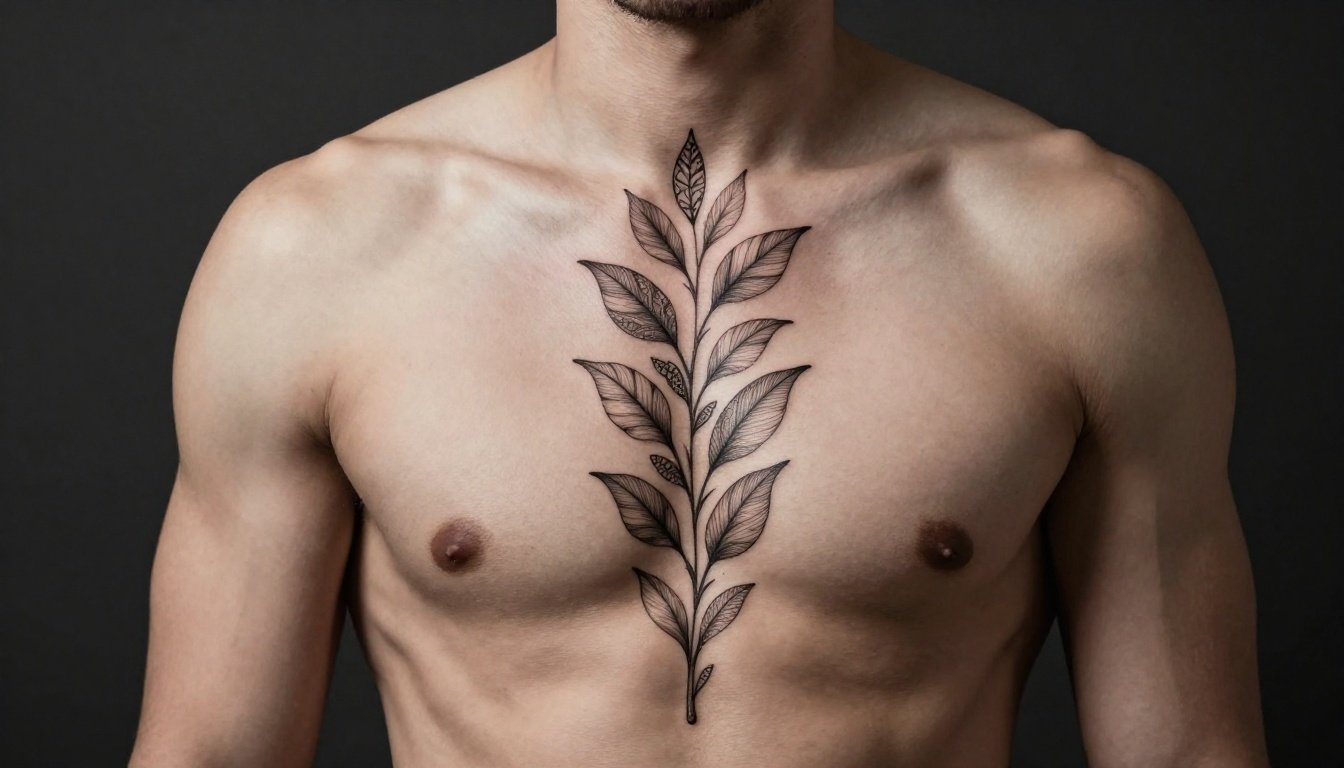
Elegant Spine Tattoo Ideas for Men: Designs With Meaning and Style
The spine works especially well for elegant tattoos because it offers a long, centered canvas where a design can follow the body’s natural line. That balance gives elegant spine tattoo ideas for men a bold yet personal look, whether the piece is visible in an open-back style or kept private beneath clothing.
Your options can range from delicate fine-line designs and meaningful script to botanical columns, geometric mandalas, celestial symbols, swords, and Japanese-inspired artwork. Each style creates a different mood, so the best choice should match your personality, clothing preferences, and the message you want the tattoo to carry.
Before booking, consider your pain tolerance, budget, desired size, and the artist’s experience with symmetry, straight lines, and detailed central-back work. A small minimalist piece may suit a first tattoo, while a full-spine composition can require more time, money, and multiple sessions. Start with the design styles that work best along the spine.
Elegant Spine Tattoo Ideas for Men With Meaning and Style
A refined spine tattoo depends on more than the subject. Clean lines, careful spacing, limited color, and a shape that follows the body’s center can make almost any concept look polished. The best design should also suit your personality, wardrobe, and the amount of attention you want it to receive.
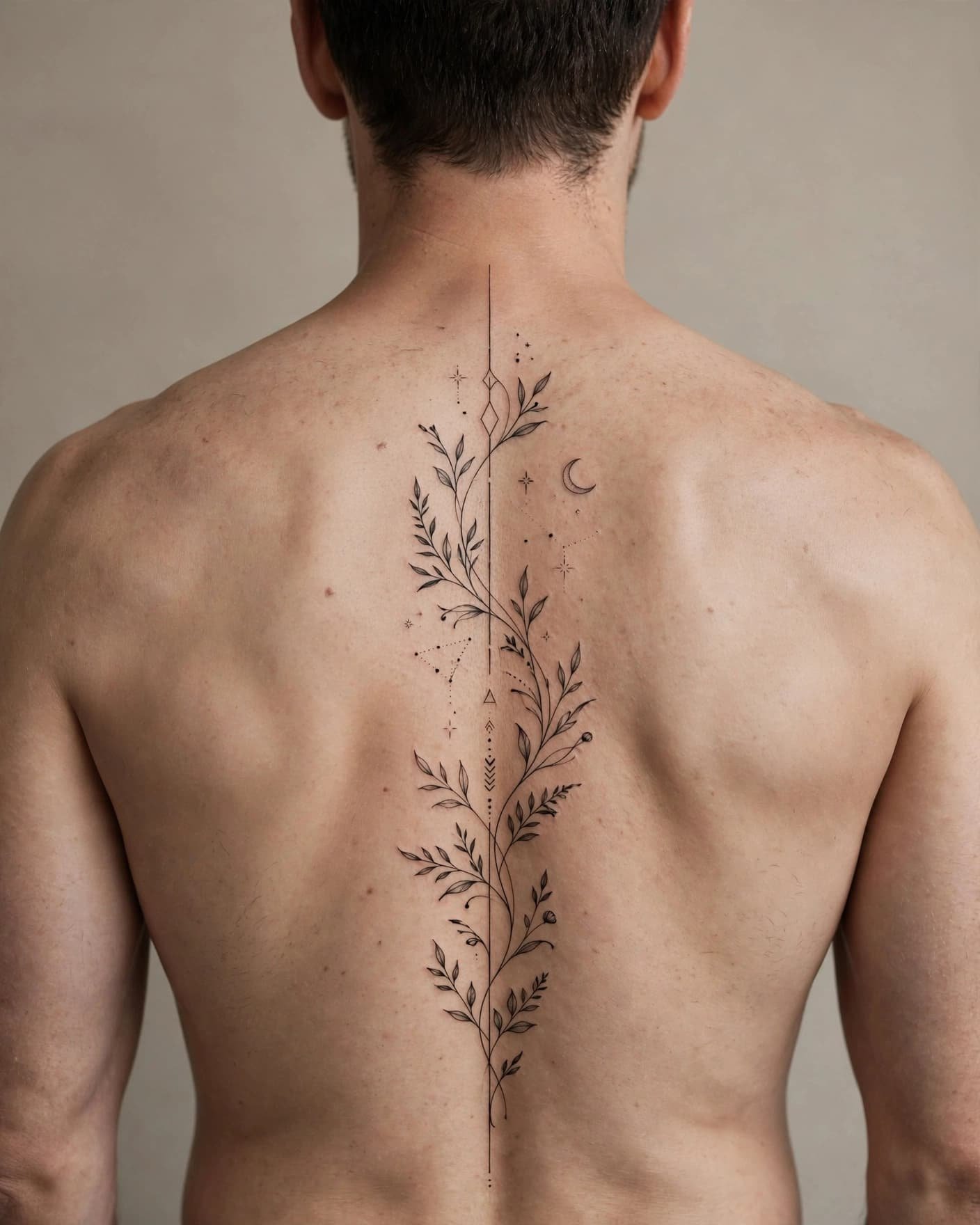
Fine-line energy flow designs for a clean, modern look
Slim vertical lines can trace the spine with small breaks, dots, arcs, or abstract energy marks. Add subtle geometric details, such as circles, triangles, or short angled strokes, to create movement without making the piece look busy. A tiny sun, eye, arrow, or constellation can give the design a personal meaning.
This style suits men who prefer a refined tattoo that stays easy to hide beneath a shirt. Black ink and generous negative space keep the composition crisp, while a narrow design follows the body’s natural center instead of spreading across the back. However, very thin lines can soften or blur over time. An experienced artist and suitable sizing matter, especially when the design includes tiny symbols or close spacing.
Botanical columns that represent growth and resilience
Vines, olive branches, leaves, thorns, and bamboo can create a natural column from the neck toward the lower back. A Tree of Life offers a fuller option, with roots near the lumbar area and branches extending toward the shoulders. These designs can symbolize growth, endurance, renewal, or a personal life journey.
Natural curves follow the spine well, so botanical tattoos often feel elegant without looking delicate. Choose sharp leaves, controlled shading, and a narrow layout for a more masculine appearance. An olive branch may suit someone who values peace and endurance, while bamboo can suggest flexibility and strength. Keep the details spaced apart if you want the tattoo to remain understated.
Script, quotes, and names placed along the spine
Vertical lettering can feature a short motto, meaningful date, family name, or phrase in another language. Short text usually stays more readable than a long quote, particularly when the letters run down a narrow area. A simple serif, clean typewriter style, or restrained handwritten font can change the mood without adding extra decoration.
Check the spelling, translation, language, and letter spacing before the appointment. Ask the artist to create a stencil and place it along your back first. That preview lets you judge the flow, size, and alignment before any ink reaches your skin.
Ornamental mandalas and symmetrical geometric patterns
A centered mandala can sit across the upper or middle spine, with smaller ornamental dividers extending above and below it. Sacred geometry and mirror-image patterns create a polished statement without relying on a realistic image. The design may suggest balance, order, focus, or spiritual discipline.
Alignment matters more with symmetrical tattoos because small errors are easy to notice. Your artist should check the spinal line, negative space, and repeated shapes from several angles. Limited black and gray shading often gives the pattern enough depth while preserving a clean appearance.
Swords, serpents, and celestial symbols with a refined edge
An elegant sword can symbolize strength, protection, ambition, or personal resolve. A serpent may suggest transformation, healing, or renewal, while wings can express freedom and spiritual purpose. Moon phases, stars, and stacked sun symbols add ideas of balance, time, guidance, and inner direction.
These bold subjects can still look sophisticated when the artist uses fine detail, controlled black and gray shading, and a restrained composition. For example, a narrow blade can run down the spine with small stars around its hilt, or a serpent can curve around a simple vertical line. The result feels intentional rather than aggressive, especially when the design leaves open skin around each major element.
Choosing the Right Spine Tattoo Style for Your Body and Personality
The best spine tattoo fits your body, clothing, personality, and long-term tattoo plans. A design that looks balanced on a flat reference image may shift, stretch, or lose its impact when placed on a moving back. Before choosing a style, decide how much space you want to use and how visible the tattoo should be.
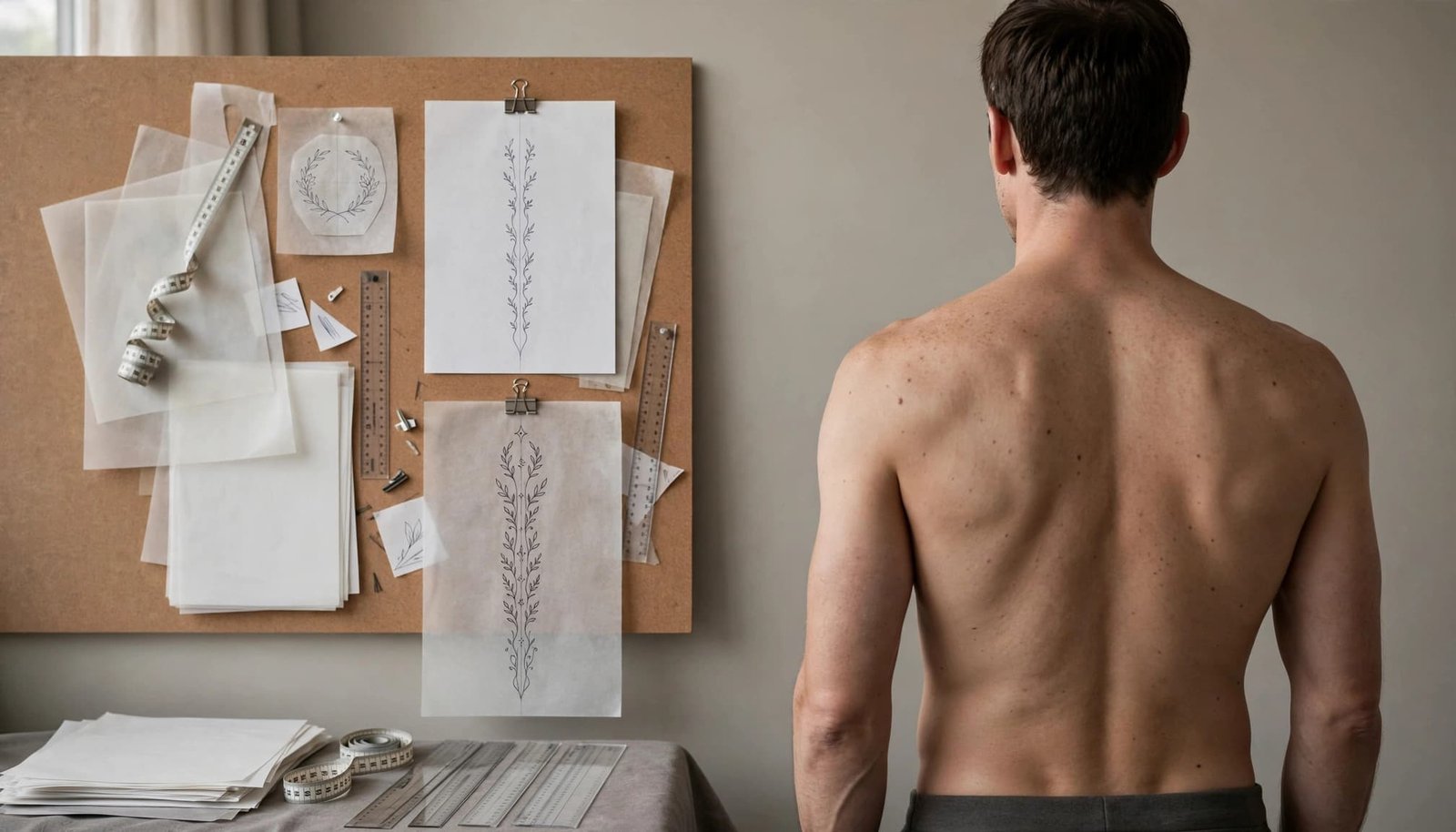
Full-length, upper-spine, and mid-back placement options
A neck-to-lower-back composition gives you the most room for a continuous story. A sword, serpent, botanical column, or ornamental pattern can follow the entire spine, but the larger canvas usually requires longer sessions, a higher budget, and more commitment during healing. It also becomes harder to conceal at the neckline or when wearing low-back clothing.
A shorter tattoo near the nape offers a more discreet starting point. It can feature a small symbol, fine-line ornament, initials, or a compact geometric design that remains hidden under most shirts. Because the area is smaller, appointments may be shorter and the design may feel easier to live with. A mid-spine column sits between these choices, giving a vertical tattoo enough height to create presence without covering the entire back.
You can expand a shorter design later if the first piece leaves enough open space. Ask the artist to plan future additions before tattooing begins, so new elements can connect naturally instead of looking attached afterward. Height, shoulder width, posture, and work requirements should all influence the placement.
How size, spacing, and body movement affect the design
The back has a natural curve, and the skin shifts when you bend, twist, raise your arms, or change posture. Your tattoo should follow that movement rather than forcing a perfectly flat image onto a rounded surface. Ask to see the stencil while standing, sitting, and turning slightly.
Negative space helps each symbol remain readable. Strong line weight gives a design structure, while overly delicate details can disappear when placed too close together. A focal point, such as a mandala, blade, flower, or central symbol, should remain clear from several feet away.
A tattoo should work as a silhouette first and reveal its smaller details up close.
Matching the design to your style and future tattoo plans
Minimalist and ornamental designs suit men who want clean structure with limited visual weight. Symbolic tattoos offer personal meaning, while realistic portraits or animals need more width and shading to remain recognizable. Japanese-inspired work and botanical designs can create stronger movement across the back, especially when planned as part of a larger composition.
A spine tattoo can stand alone, or it can become the center of a full back piece. If you may add shoulder, rib, or lower-back work later, choose one clear visual language. Matching line weight, shading, and contrast will help future tattoos support the main design instead of competing with it.
Pain, Cost, and Healing: What to Know Before Getting a Spine Tattoo
A spine tattoo can look elegant and understated, but placement affects comfort, cost, and recovery. Plan for the practical side before choosing a design, especially if you want a large piece or several sessions.
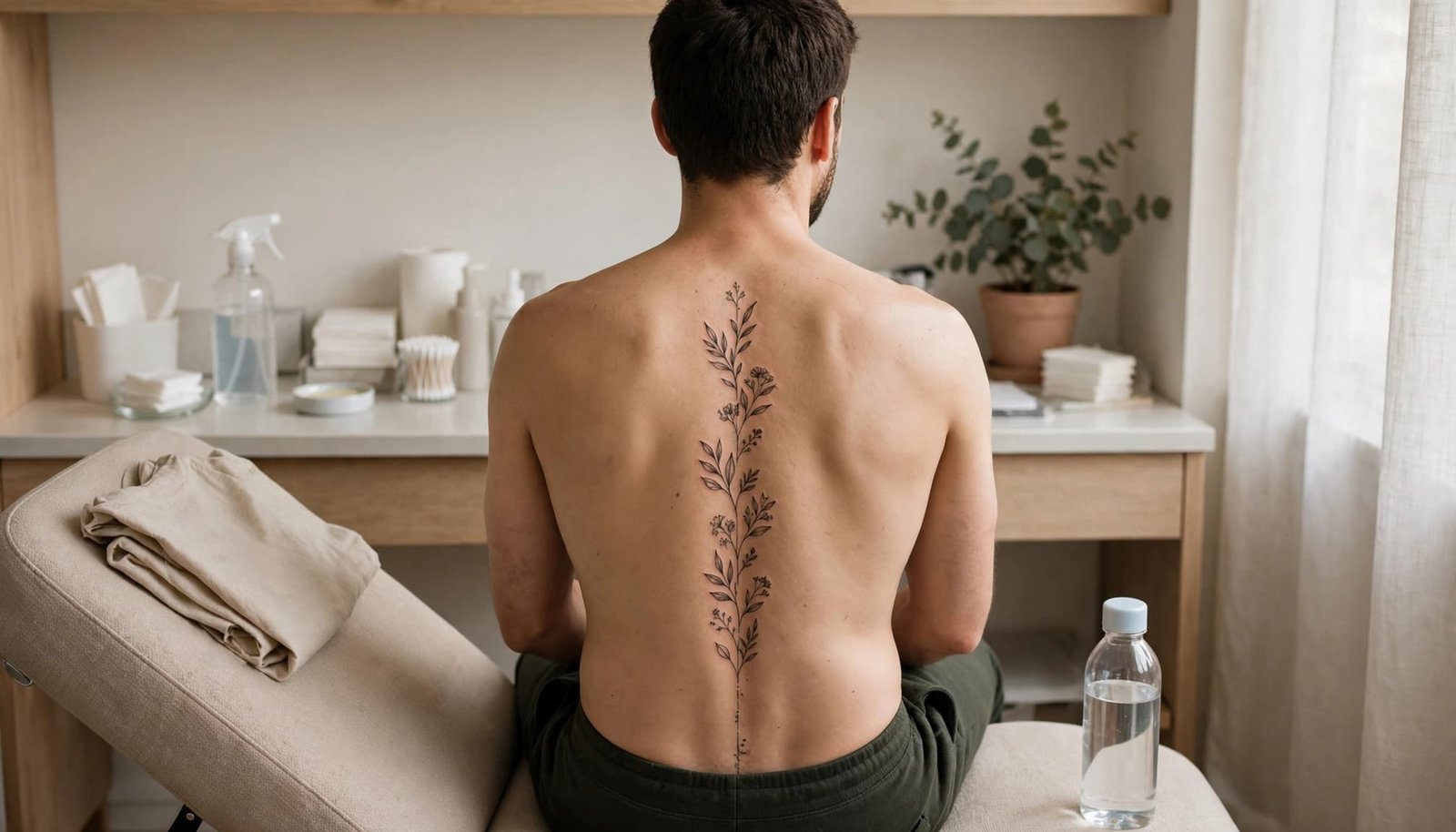
How painful is a spine tattoo compared with other placements?
The spine is often considered a high-pain placement because the skin is thin and sits close to bone. Ink directly over the central vertebrae may feel sharper and more intense than work on areas with more muscle or padding. Still, pain varies with your tolerance, the tattoo’s linework and shading, and how long you stay in the chair.
Ribs, shoulder blades, and the lower back can also feel uncomfortable. During a long session, soreness often increases as your skin becomes irritated and your body gets tired. A design that looks simple may still take hours if it includes fine detail, dense shading, or careful symmetry.
Before your appointment, eat a proper meal and drink enough water. Wear clothing that gives the artist easy access without creating unnecessary exposure or pressure on your back. Ask for breaks when you need them, and discuss pain concerns before the session begins. If you’re considering any pain medication or topical product, speak with a qualified medical professional first and follow your artist’s safety guidance.
Typical spine tattoo prices and what changes the quote
Tattoo prices vary by region, artist, studio, and design complexity, so treat these figures as planning estimates rather than guarantees:
- A small, simple spine tattoo may cost about $50 to $200.
- A medium design often falls near $250 to $500.
- A large, detailed piece may cost $500 to $1,000 or more.
- Full-spine or complex Japanese-style work can reach $2,000 to $5,000 and may require multiple appointments.
Size affects the time needed, while fine detail, heavy shading, color, and intricate backgrounds add labor. An artist with extensive experience may charge a higher hourly rate, but that skill can matter when the design requires straight alignment and balanced spacing. Ask whether the quote includes a deposit, hourly minimum, design time, and touch-ups.
If the project needs several sessions, plan each payment instead of treating the tattoo as a single expense. A step-by-step budgeting guide can help you set aside the money without disrupting essential bills.
Healing and aftercare for a tattoo on the back
The outer layer may look healed in roughly two to three weeks, but deeper skin healing can continue for months. Follow your artist’s cleaning and moisturizing instructions rather than adding products or changing the routine on your own. Mayo Clinic guidance also recommends gentle washing, patting the area dry, moisturizing, and avoiding sun exposure and swimming while the tattoo heals. Read its tattoo aftercare guidance for medical background.
Wear loose, clean clothing that won’t stick to the tattoo. Limit friction from tight shirts, backpacks, workouts, or bedding, and never scratch or pick at peeling skin. Contact a qualified medical professional if redness or swelling spreads, pain worsens, pus appears, or you develop fever, chills, or other concerning symptoms.
How to Find an Artist Who Can Create a Precise Spine Tattoo
A spine tattoo requires more than general tattooing ability. The artist must control alignment, symmetry, lettering, fine lines, spacing, and a long vertical composition while working on skin that curves and moves. Review the artist’s healed work, ask detailed questions during the consultation, and confirm studio standards before you leave a deposit.
Check the artist’s portfolio for vertical and central-back work
Start by looking for healed spine tattoos, not only fresh pieces photographed immediately after an appointment. Healed examples show whether fine lines remain clear, lettering stays readable, and shading keeps its intended shape after the skin settles.
Look for work that matches your goal, such as:
- Fine-line vertical designs with clean spacing.
- Script that follows the centerline without awkward gaps.
- Ornamental tattoos with balanced symmetry.
- Botanical columns that flow naturally with the body’s curves.
- Japanese-inspired work with controlled movement and consistent detail.
A portfolio full of unrelated tattoos does not prove the artist can handle precise spinal alignment. A skilled portrait artist may still lack experience with narrow central-back compositions, while a lettering specialist may not create the botanical or ornamental style you want. Ask to see several examples that resemble your planned size, placement, and level of detail.
Pay attention to the design from a distance as well as up close. The lines should remain controlled, the major elements should feel centered, and the composition should follow the back instead of fighting its shape.
Use the consultation to test alignment, scale, and readability
Bring reference images, but ask the artist to create a custom stencil for your body. During the consultation, discuss the tattoo’s total length, centerline, width, font size, color choices, and whether the design will need session breaks. Also ask how the details may soften or spread as the tattoo ages.
View the stencil while standing, turning slightly, and moving naturally. A design that looks centered while you sit may shift when your shoulders relax or your posture changes. Check whether script remains readable and whether symbols have enough space around them.
You can request changes before tattooing begins. Ask about revisions, design approval, touch-ups, and the point at which the deposit becomes nonrefundable. Never feel pressured to accept a stencil you don’t trust. A reputable artist should explain the choices clearly and give you enough time to make an informed decision.
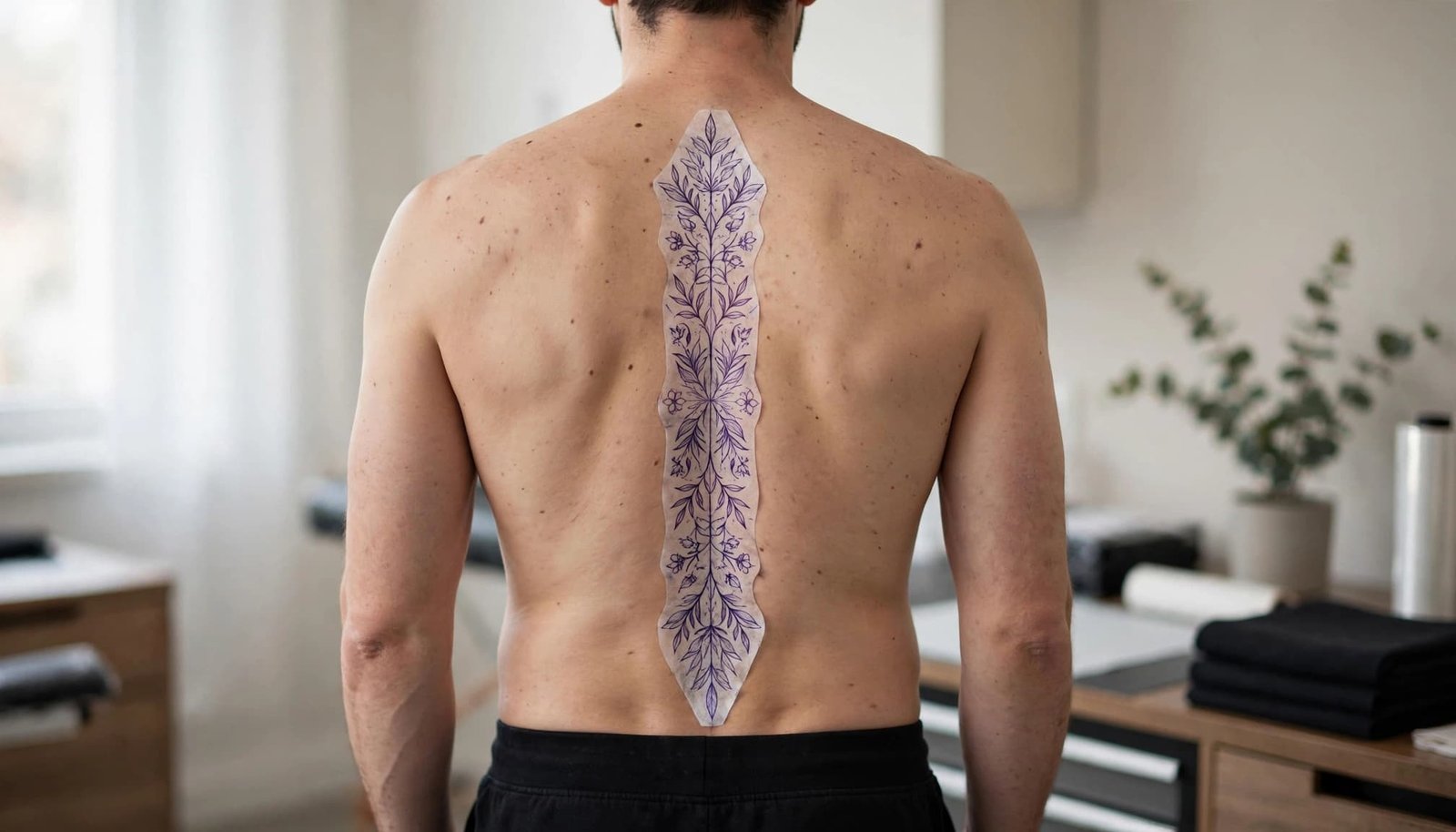
Confirm hygiene, licensing, deposits, and session planning
Before booking, inspect the studio and ask how the artist prevents cross-contamination. You should see sealed needles opened for your session, fresh disposable gloves, clean work surfaces, and a proper sharps container. New York City health guidance for tattoo artists also emphasizes single-use sterile gloves and proper hand hygiene.
Confirm the artist’s license or local registration, plus any studio permit required in your area. Get the total estimate, payment schedule, deposit policy, cancellation terms, touch-up policy, and aftercare instructions in writing. Large spine tattoos often require several appointments, so setting aside money for a tattoo session can make the cost easier to manage.
Design Mistakes to Avoid When Planning an Elegant Spine Tattoo
An elegant spine tattoo depends on restraint, planning, and a design that can withstand daily life. Before approving the stencil, check whether the artwork will stay readable, suit your body, and fit your future needs.
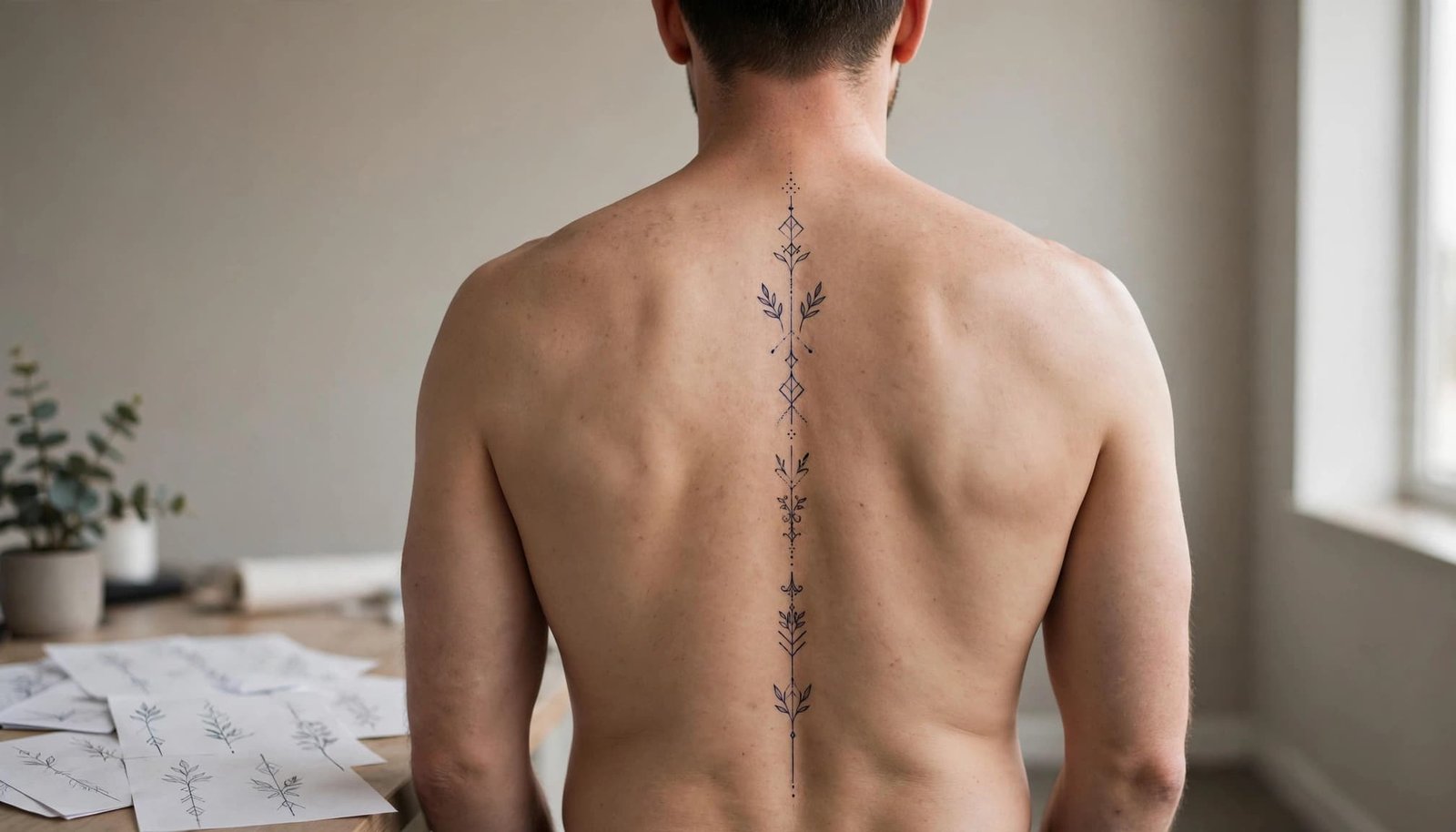
Avoid designs that are too small, crowded, or detailed
Tiny lettering, dense shading, and tightly packed symbols can lose clarity as the tattoo ages. Fine lines may soften, while nearby details can merge into dark patches. This problem becomes more noticeable when a narrow spine design includes too many separate elements.
Ask your artist to simplify the artwork, increase the spacing, or enlarge the placement. A short phrase usually works better than a long quote, and one strong symbol often looks more polished than several small ones. Elegant tattoos depend more on proportion and restraint than on adding every detail you like.
Before approving the stencil, view it from several feet away. If the main shape disappears at a distance, the design may need more width, stronger lines, or additional negative space.
Do not copy a reference image without adapting it to your back
A tattoo that looks balanced on another person’s body may not suit your height, posture, shoulder width, or natural curves. Existing tattoos can also change how much open space remains around the spine.
Use reference images to show your preferred mood, subject, line weight, and level of detail. Then ask the artist to create a custom composition for your back. Check copied names, dates, symbols, and foreign-language text carefully before the appointment. A spelling or translation mistake can turn a meaningful tattoo into a permanent source of regret.
Plan for visibility, aging, and changes in the body
A spine tattoo may stay hidden under a work shirt but appear in swimwear, open-back clothing, or during workouts. Consider those situations before choosing a full-length design or a placement near the neck.
Sun exposure, weight changes, muscle growth, friction, and natural aging can affect how the tattoo looks. Choose a strong structure that can still appear balanced if your body changes. After the tattoo fully heals, protect exposed ink with broad-spectrum, water-resistant SPF 30 or higher, as recommended by the American Academy of Dermatology’s tattoo care guidance. During healing, follow your artist’s instructions and avoid sunlight, soaking, scratching, and tight clothing.
Conclusion
The most elegant spine tattoos for men bring together a clear idea, balanced placement, suitable size, and skilled execution. Fine-line work, botanical columns, script, mandalas, celestial stacks, swords, and Japanese-inspired designs can all look refined when the composition follows the spine and leaves enough space for each detail to remain readable.
The right tattoo should also fit your body, lifestyle, budget, and long-term plans. Review the stencil while standing and moving, follow proper aftercare, and protect healed ink from sun exposure. If you need time to fund a quality piece, a savings plan for tattoo sessions can help you prepare without rushing the decision.
Choose an experienced artist, inspect healed examples of similar work, and approve the design only when the alignment feels right. The best spine tattoo is artwork that looks polished today and still feels meaningful years from now.
Save pin for later


- 30 Trendy Tattoo Ideas for 2026: Styles and Placement - September 27, 2026
- 30 Gorgeous Fine Line Tattoo Ideas to Try - September 27, 2026
- 25 Fine Line Tattoo Ideas for Women With Meaning - September 22, 2026
Leave a Reply