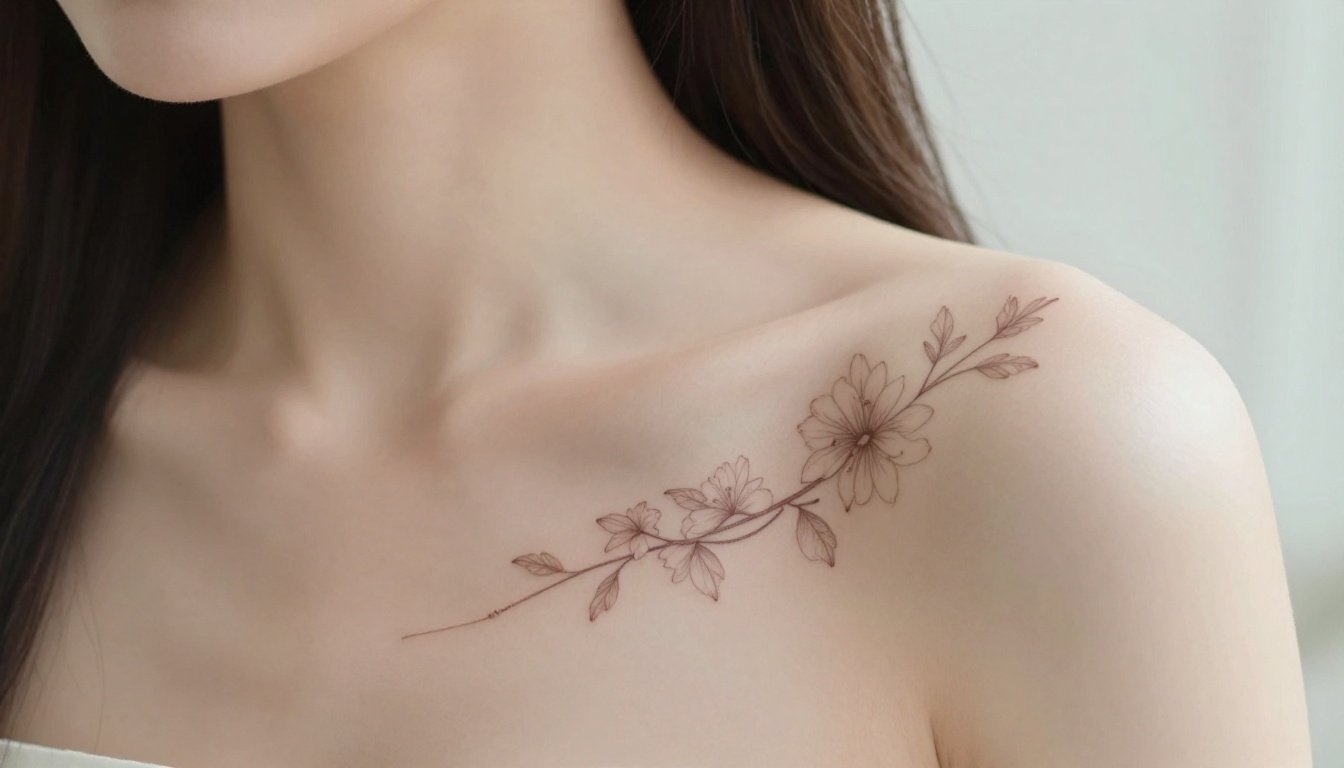
30 Elegant Collarbone Tattoo Ideas for Every Personal Style
Collarbone tattoos have a graceful appeal because they can look delicate, personal, and easy to show or cover. The narrow placement follows the natural line of the bone, giving even a small design a polished look, though the visible bone and thinner skin can make the area more sensitive than fleshy parts of the body.
These 30 elegant collarbone tattoo ideas include fine-line flowers, graceful script, stars, symbols, and matching designs to suit different personal styles. You’ll also find practical guidance on sizing, placement, pain, choosing an experienced tattoo artist, clothing friction, healing, and aftercare, so you can choose an idea that looks beautiful and works well for your body. Start with these design inspirations, then consider the details that can make your tattoo comfortable and lasting.
30 Elegant Collarbone Tattoo Ideas for Every Personal Style
The best collarbone tattoos usually follow the bone’s natural curve while leaving enough open skin around the artwork. That balance keeps even meaningful designs light, graceful, and easy to personalize.
Delicate floral and botanical collarbone tattoos
Botanical tattoos suit this placement because thin stems and airy spacing echo the collarbone’s long, delicate shape. Soft shading keeps the artwork gentle, while black ink, muted color, or a mix of meaningful flowers can create a more personal result.
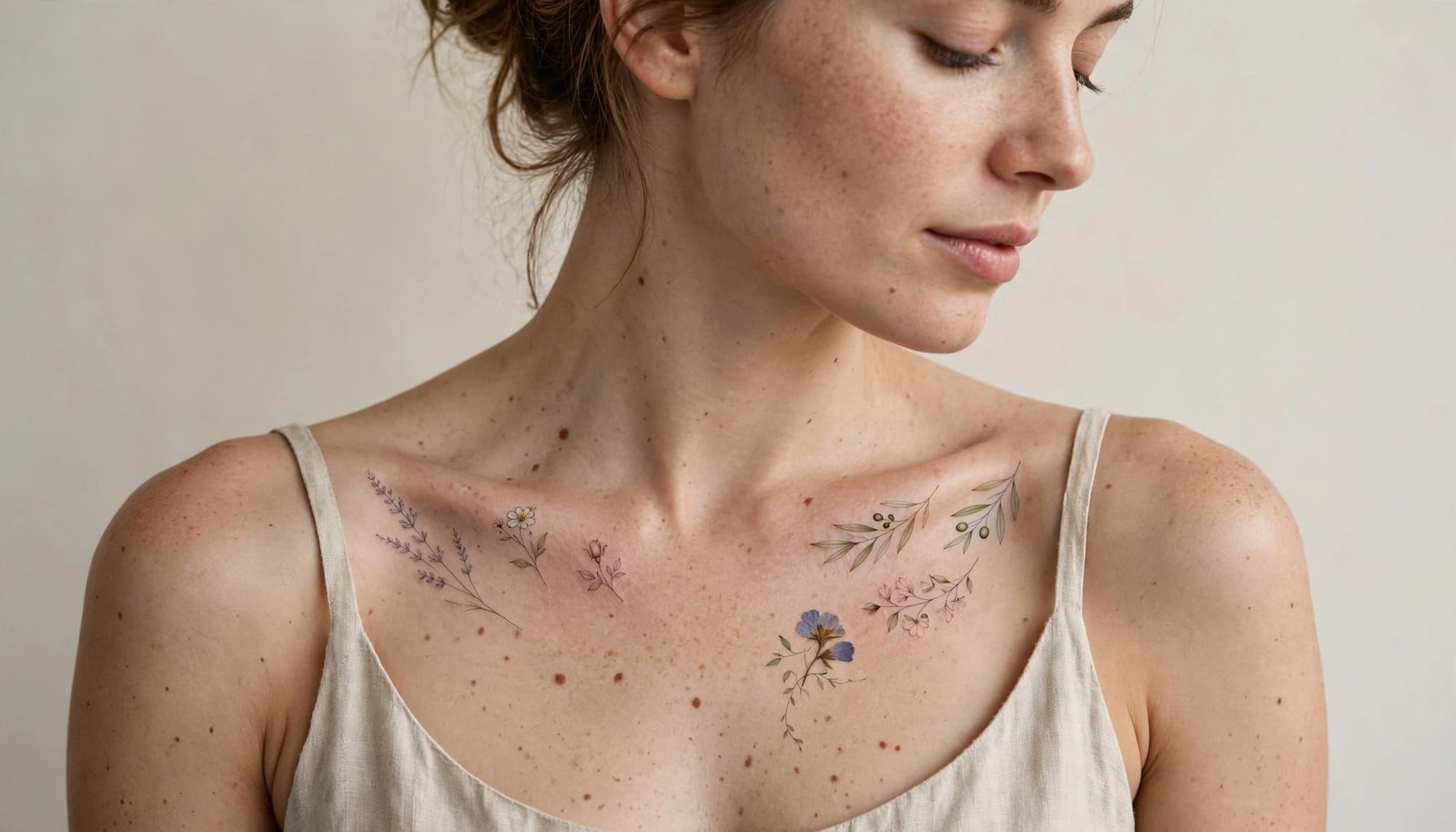
- A single fine-line wildflower looks elegant below the bone. Ask for a tiny bloom in black ink or add one muted color to the petals.
- A small lavender sprig creates a slim vertical accent near the center of the chest. A slightly longer stem can point toward the shoulder.
- A curved flower branch follows the collarbone naturally. Choose a delicate cherry blossom, daisy, or dogwood branch with soft gray shading.
- Your birth flower adds personal meaning without needing a large design. Place it under one collarbone or angle it toward the shoulder.
- An olive branch gives a clean, understated look. Sparse leaves and a fine stem keep it airy rather than crowded.
- A tiny rose works well near the center of the chest or beneath one side of the bone. A muted blush tone can soften the classic black outline.
- A vine following the collarbone creates a graceful line across the skin. Keep the leaves widely spaced so the design remains light as it curves.
- A pressed-flower style design resembles a botanical specimen preserved on paper. Combine several meaningful flowers in black ink with subtle, imperfect outlines.
Script, words, and meaningful symbols
Short lettering stays clearer than a long sentence in this narrow area. Before choosing a design, consider the font, letter spacing, and size, then ask your artist to check the spelling and stencil placement while your body is relaxed.
- A short handwritten word can sit directly along the bone. Choose a personal word and a simple script that won’t become crowded.
- A fine-line quote works best when reduced to a few words. Place it below the collarbone and leave generous space between letters.
- A date in small numerals offers a subtle reminder of a meaningful day. Roman numerals or clean modern numbers create different moods.
- A loved one’s initials fit neatly near the shoulder or center chest. Add a tiny dot, heart, or flower without overwhelming the letters.
- A tiny heart looks polished beneath the bone. An open outline feels airy, while a small muted-red heart adds contrast.
- An infinity symbol creates a smooth horizontal shape that follows the collarbone. Keep the loops open and thin for better long-term clarity.
- A minimalist cross can sit near the center or one shoulder. Choose a petite black design or add a single fine decorative detail.
- A semicolon or personal symbol gives the tattoo private meaning. Its small size works well below the bone, especially in crisp black ink.
Choose words that will still matter years from now, rather than selecting a phrase only because it is trending.
Celestial, ocean, and nature-inspired designs
Nature motifs can sit in the center, lean toward one shoulder, or stretch in a gentle arc. Crisp geometric lines suit constellations and moons, while soft shading works better for feathers, waves, and wings. Tiny details need enough room to age well, since overly small dots and lines may blur over time.
- A crescent moon with stars fits beautifully beneath one collarbone. Vary the star sizes or use muted blue-gray ink for a softer finish.
- A sun and moon pairing can balance both sides of the chest. Keep one motif smaller if you want an intentionally asymmetrical look.
- A tiny constellation connects the tattoo to a zodiac sign, family member, or favorite night sky. Use slightly larger dots if clarity matters most.
- A line-art wave follows the collarbone’s horizontal shape. Add a small curl or muted blue wash to recall a favorite coastline or trip.
- A mountain outline suits someone who connects the tattoo with travel, home, or personal growth. Place it near one shoulder for a more compact composition.
- A feather can point inward toward the chest or outward toward the shoulder. Light gray shading gives it softness without filling the area.
- A small butterfly or moth adds movement and symbolism. Choose clean symmetrical lines for a modern look, or gentle shading for a more natural style.
Ornamental, matching, and modern minimalist ideas
Balanced collarbone designs need careful stencil placement because the two sides of the body are rarely perfectly even. Keep ornamental details light, avoid crowded patterns, and decide whether your tattoo should be centered, one-sided, or mirrored.
- A delicate ornamental pendant can hang from the center of the chest. A tiny gemstone shape or floral detail offers an easy customization.
- A fine-line chain effect follows the bone like understated jewelry. Use small links with open spacing instead of a dense decorative band.
- A symmetrical design across both collarbones creates a formal, balanced look. Ask the artist to place the stencil while you stand naturally.
- A matching tattoo with a partner or friend can use identical stars, initials, or symbols. Each person can choose a slightly different size or ink color.
- A tiny bow looks sweet near the center or beneath one collarbone. Fine loops keep it elegant, while a muted color makes it more distinctive.
- An abstract single-line design can trace a wave, face, or folded shape. Let the line follow your anatomy instead of forcing perfect symmetry.
- A small geometric diamond or sunburst suits a crisp minimalist style. Keep the angles open and the line weight consistent so the design stays readable.
For general safety questions, the FDA’s tattoo safety guidance is a useful reference before booking an appointment.
How to Choose a Collarbone Tattoo That Fits Your Body and Style
A beautiful collarbone tattoo should work with your body, daily habits, and personal taste. Before choosing a final image, consider your natural collarbone curve, how often your clothing touches the area, your work setting, and how visible you want the tattoo to be.
Start by making a short list of favorite motifs, such as flowers, script, stars, waves, or meaningful symbols. Then narrow that list by asking which shapes can follow your anatomy without looking forced. A design may look perfect online yet need different spacing, direction, or scale on your body.
Choose the right placement, shape, and size
Elongated artwork usually suits the collarbone better than a bulky square design. A slim branch, small wave, fine-line phrase, or gently arched symbol can follow the bone’s natural line. In contrast, a dense square may sit heavily on the narrow area and compete with the body’s shape.
The exact placement also changes the mood and comfort of the tattoo.
| Placement | Visual effect | Best for |
|---|---|---|
| Centered across the chest | Balanced and noticeable | Symmetrical symbols, short script, and ornamental designs |
| On one side | Personal and understated | Flowers, initials, moons, and small nature motifs |
| Directed toward the shoulder | Longer and more dynamic | Branches, feathers, vines, and flowing line work |
| Slightly below the bone | Softer and easier to expand | Script, delicate symbols, and designs needing extra space |
| Directly on the ridge | Crisp and highly visible | Slim artwork that follows the bone closely |
A tattoo placed directly on the collarbone ridge can look striking, but the area may feel more sensitive because the bone sits close to the skin. Positioning artwork slightly above or below the ridge often creates a softer appearance and gives your artist more room to space the details.
Small to medium artwork is usually a practical choice. Leave enough space between letters, leaves, dots, or other elements so the design remains readable instead of turning into one dark shape over time. Sun exposure can fade tattoo ink, so protecting healed skin with broad-spectrum SPF 30 or higher also helps preserve contrast. The American Academy of Dermatology’s tattoo guidance covers important skin and safety considerations.
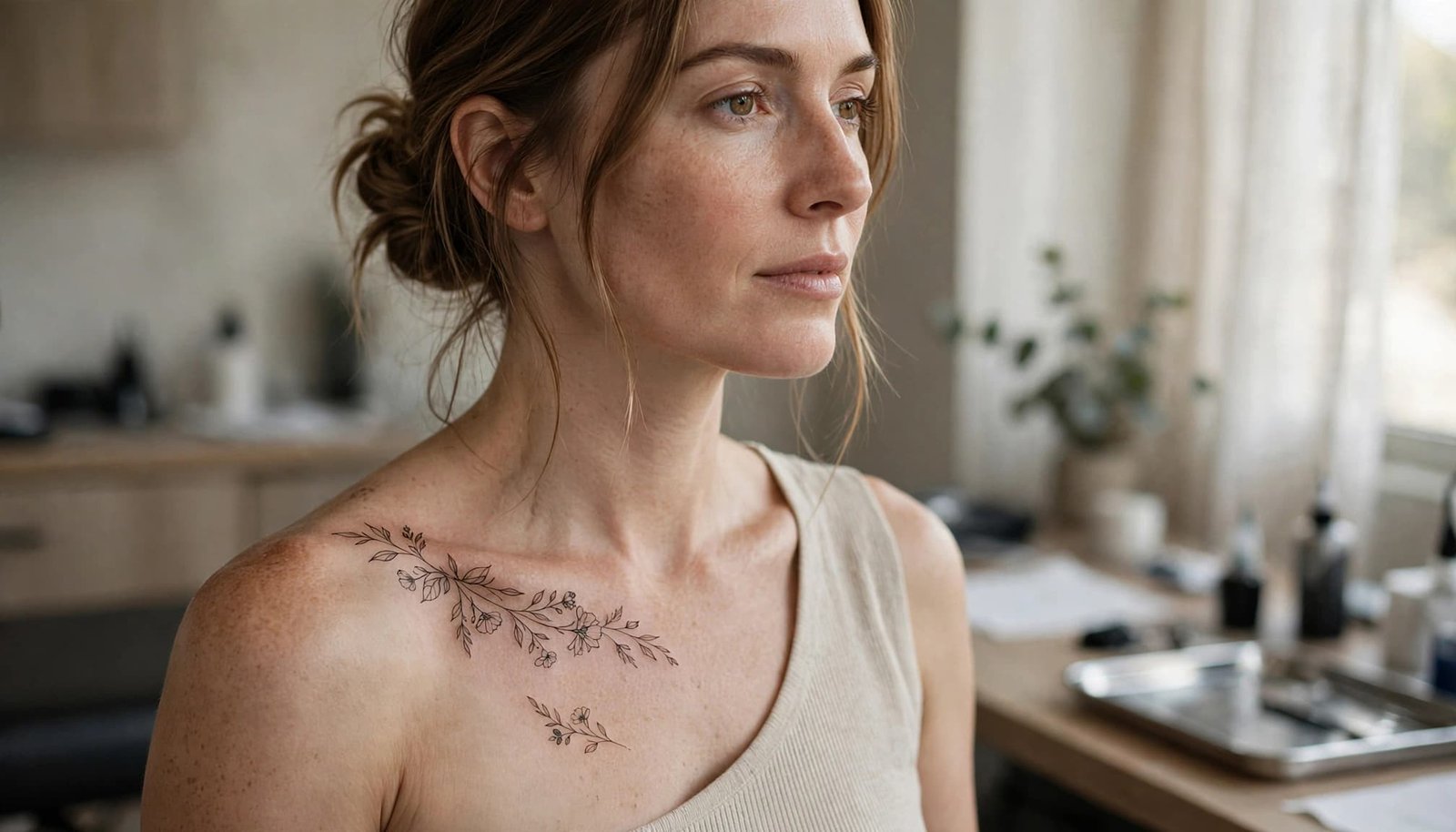
Ask your tattoo artist to apply the stencil while you’re standing and moving normally, not only while lying down. Lift your arms, turn your shoulders, and check the design with the posture you use in everyday life. A collarbone tattoo can shift visually when your shoulders relax, your arm rises, or your chest expands with movement.
Your clothing habits matter as well. If you often wear high-neck tops, work uniforms, shoulder bags, or straps that rub the area, a placement just below the bone may heal more comfortably. If you need to cover the tattoo at work, choose a location that clothing can conceal without constant friction.
Match the tattoo style to the level of detail you want
Each tattoo style creates a different visual weight. Fine-line tattoos use thin outlines for an airy, delicate result. Minimalist designs reduce the image to its simplest shape, while script depends on clean lettering and enough space between characters.
Light shading can add depth without making the tattoo look heavy. Stippling creates texture with small dots, which works well for moons, leaves, and soft geometric designs. Watercolor tattoos add gentle color, but the artist must place each color carefully so it doesn’t overpower the narrow area.
Bold blackwork creates the strongest contrast. It can suit a graphic symbol or larger ornamental design, yet dense color packing may compete with the collarbone’s slim shape. Fine-line and light shading often look more natural there because they follow the bone without covering too much skin.
Very small details may soften as the tattoo ages. Tiny dots, tight lettering, and closely packed lines need enough room to remain readable after normal fading and skin changes. Therefore, choose a size that protects the design’s main features rather than forcing every detail into a miniature tattoo.
Your artist’s experience matters as much as the reference image. Look for someone who regularly performs the style you want, whether that’s fine-line botanical work, script, stippling, or blackwork. A design from an online gallery shows inspiration, but your artist’s healed examples reveal how their lines and shading actually hold up.
Your personal style should guide the final choice, too. If you prefer a curated wardrobe and understated accessories, a small one-sided tattoo may feel more natural than a dramatic symmetrical piece. Browsing budget-friendly style ideas can even help you notice which shapes, colors, and visual details already appear in your clothing and jewelry choices.
What Collarbone Tattoo Pain and Healing Are Really Like
A collarbone tattoo can look delicate, but the experience depends on more than the design itself. Pain varies with your sensitivity, the exact placement, the length of the tattoo, the amount of shading, your sleep and stress levels, and whether the needle passes directly over the bone.
Healing also takes patience. A fresh tattoo is an intentional skin injury, so tenderness, dryness, itching, and flaking are normal parts of recovery. Use your artist’s aftercare instructions as the main guide, since products and bandaging methods can differ. The advice below is general information, not a substitute for medical care.
Understand pain around the collarbone
The collarbone has little padding, so the bony ridge can feel sharper or more intense than nearby skin. A needle working directly over the bone may feel more noticeable than one placed on the softer skin above or below it. Areas closer to the sternum can also feel more sensitive.
Placement makes a difference. Moving the design slightly above or below the ridge may feel more comfortable while still keeping the elegant collarbone effect. A longer tattoo, dense shading, or repeated passes over one area can add to the overall discomfort.
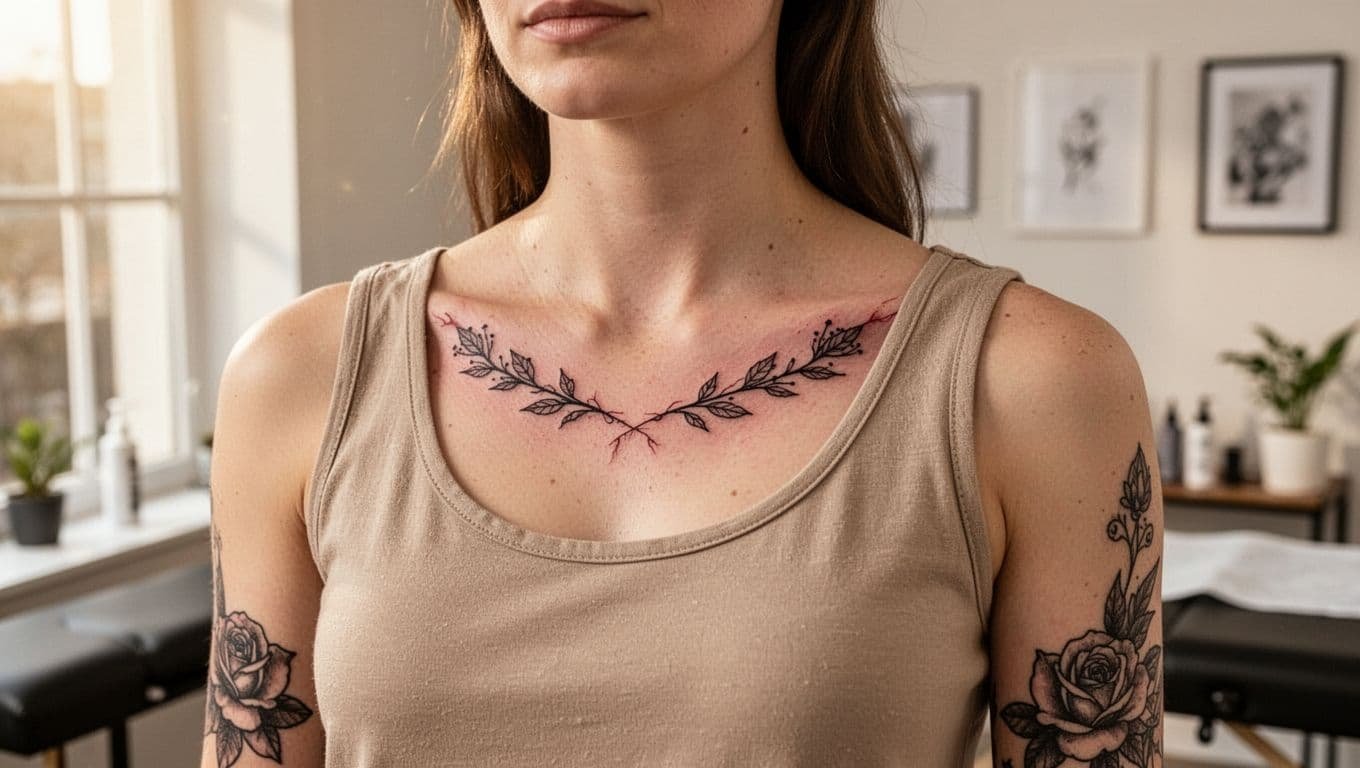
Everyone experiences tattoo pain differently, so a specific pain score would be misleading. You can make the appointment easier by taking a few simple steps:
- Eat a normal meal beforehand, rather than arriving hungry.
- Drink water and get a good night’s sleep.
- Wear loose clothing that doesn’t press against the stencil or fresh tattoo.
- Tell your artist when you need a short break. Clear communication helps you stay relaxed and still.
Stress and fatigue can make the appointment feel harder, so schedule it when you don’t need to rush afterward.
Follow a simple healing routine
First, wash your hands before touching the tattoo. Then clean the area gently with lukewarm water and mild, fragrance-free soap. Avoid scrubbing, washcloths, and strong scented products because fresh skin can react easily.
Pat the tattoo dry with a clean paper towel or soft, clean cloth. Once the area is dry, apply only a thin layer of the aftercare product your artist recommends. Too much ointment can trap moisture and make the skin feel overly wet.
Tenderness often comes first. During the next several days, you may notice itching, dryness, light peeling, or small flakes. Surface healing commonly takes about two to three weeks, although deeper layers of skin can continue settling for longer.
Don’t pick scabs or scratch peeling skin. Doing so can remove pigment, irritate the area, and slow healing. Until the tattoo heals, avoid pools, hot tubs, baths, lakes, saunas, heavy sweating, and direct sun. Gentle showers are usually fine, but soaking the tattoo is not.
Protect the tattoo from straps, clothing, and friction
Collarbone tattoos face more daily rubbing than tattoos in many other locations. Bra straps, tight shirt collars, necklaces, backpack straps, seat belts, and rough fabric can all irritate fresh skin. Choose loose, soft clothing during the first days, and remove jewelry that rests over the tattoo.
When possible, sleep on the opposite side during the early healing period. Clean bedding also helps limit contact with dirt, sweat, and fabric fibers. If a seat belt crosses the tattoo, adjust your clothing or position carefully so it doesn’t drag across the area.
Wait until the tattoo is fully healed before applying sunscreen. After that, use a broad-spectrum SPF 30 or higher on exposed skin to help reduce fading. Sun protection matters because ultraviolet light can weaken tattoo color over time.
Contact a health professional if redness spreads, pain gets worse instead of better, pus appears, or you develop a fever. Tattoo infections can require treatment, and published medical research has documented bacterial complications after tattooing. When in doubt, seek care rather than trying to manage worsening symptoms at home.
How to Prepare for an Elegant Collarbone Tattoo
A good collarbone tattoo starts before you sit in the chair. Gather clear references, choose an artist who understands delicate work, and discuss placement, scale, healing, and cost during your consultation. The goal is to turn a general idea into a design that suits your anatomy and remains readable as it ages.
Find an artist who understands fine-line and small work
Start by reviewing an artist’s portfolio, but don’t judge their work by fresh tattoos alone. Fresh ink often looks darker and sharper than healed ink. Ask to see healed examples of fine-line tattoos, script, delicate flowers, and other small designs that resemble your idea.
Pay attention to more than the subject matter. Look for steady line weight, clean spacing, readable lettering, and consistent healing across several clients. If every portfolio image uses heavy filters, tight crops, or dramatic lighting, ask for natural, healed photos before booking.
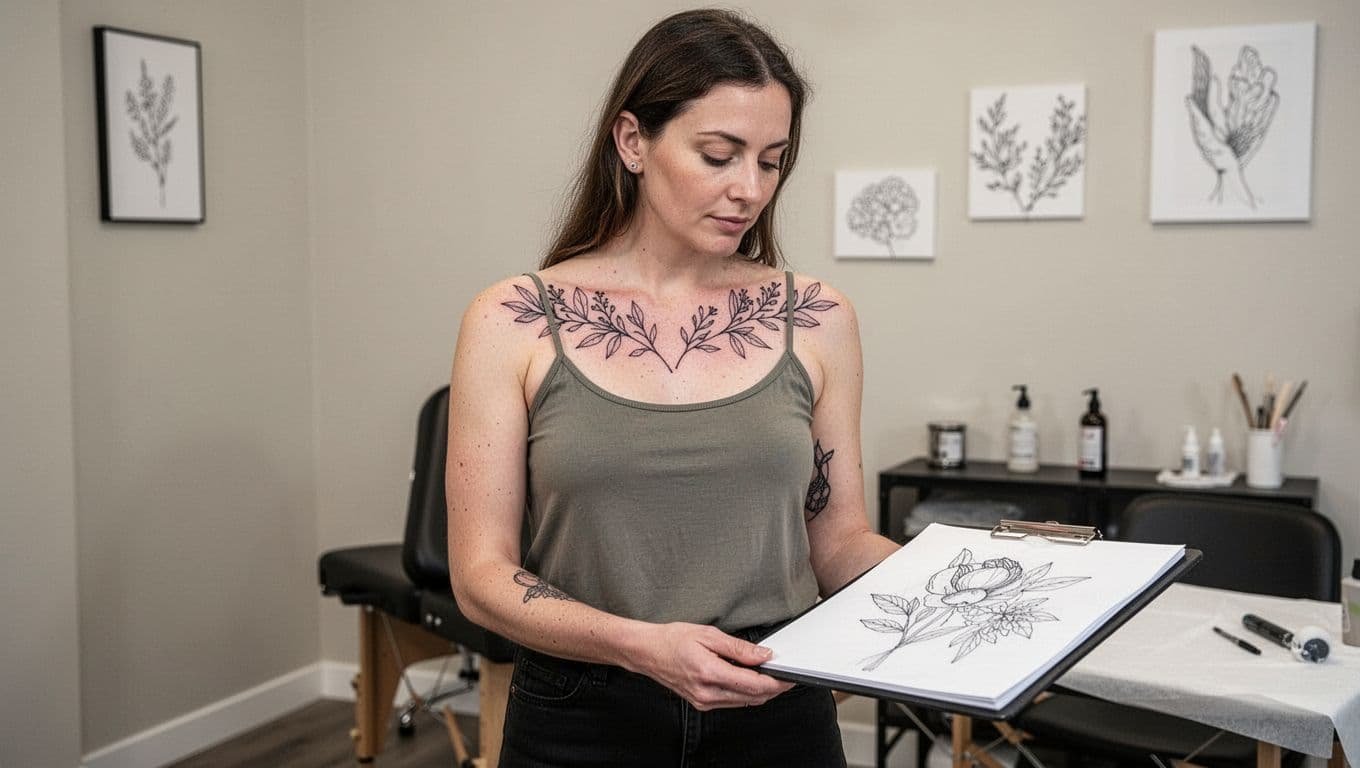
Because tattoo regulations vary by state and city, check whether the artist and studio hold the licenses or permits required in your area. You can also ask how the studio handles single-use needles, fresh gloves, surface barriers, and cleanup between appointments. A clean workspace should look organized and dedicated to tattooing, not improvised in a crowded room.
Reviews can reveal useful details about communication, punctuality, cleanliness, and how an artist handles adjustments. Still, reviews should support your own questions rather than replace them. During the consultation, ask:
- How would you adapt this design to my collarbone’s curve?
- Should it sit directly on the ridge or slightly above or below it?
- What size and line weight will help it age well?
- Can I see healed work in this style?
- What should I expect during healing?
- If the tattoo needs a touch-up, when should I contact you?
A careful artist should explain how your posture, shoulder movement, and skin shape affect the stencil. Ask to see the placement while standing naturally, then raise your arms and relax your shoulders before approving it. Small changes in angle or scale can make the design look far more balanced.
A portfolio shows what an artist can create, but healed work shows how that work holds up.
Know what to bring and what affects the price
Bring a small collection of reference images, not one picture you expect the artist to copy exactly. Save examples that show different qualities, such as the flower shape, lettering style, spacing, or overall mood you prefer. This gives your artist room to create an original design instead of reproducing another person’s tattoo.
Write a short explanation of what the tattoo means to you. Mention your preferred placement, approximate size, color choices, and any required text. For script, provide the exact spelling and punctuation, then review the stencil carefully before the needle touches your skin.
Price depends on several factors, including:
- The artist’s minimum charge or hourly rate.
- The design’s size, detail, and amount of custom drawing.
- Black ink compared with color or shading.
- Collarbone placement, especially when it requires careful stencil adjustments.
- The time needed for consultation, drawing, tattooing, and cleanup.
Ask for the full estimated price, not only the deposit amount. Confirm whether the deposit applies to the final balance, whether it is refundable, and how much notice you need to give when canceling or rescheduling. Also ask whether the artist includes a touch-up, how long that offer lasts, and whether aftercare problems or high-friction placement affect eligibility.
If the appointment cost feels high, plan a tattoo budget before you reserve the date. A lower price isn’t a bargain if the artist’s hygiene practices, experience, or healed results are unclear. Give yourself time to save, compare portfolios, and choose work you can trust rather than rushing toward the cheapest appointment.
Avoid These Common Collarbone Tattoo Mistakes
A collarbone tattoo needs more planning than its delicate appearance suggests. The narrow placement, visible bone, shoulder movement, clothing friction, and sun exposure can all affect how the design looks and heals. Before approving the stencil, check both its appearance and its fit with your daily routine.
Do not overcrowd a narrow placement
Too many tiny details can make a collarbone tattoo look cramped. Dense leaves, heavy shading, tightly packed stars, or long text may blur together instead of appearing delicate. Fine-line artwork still needs breathing room between its elements.
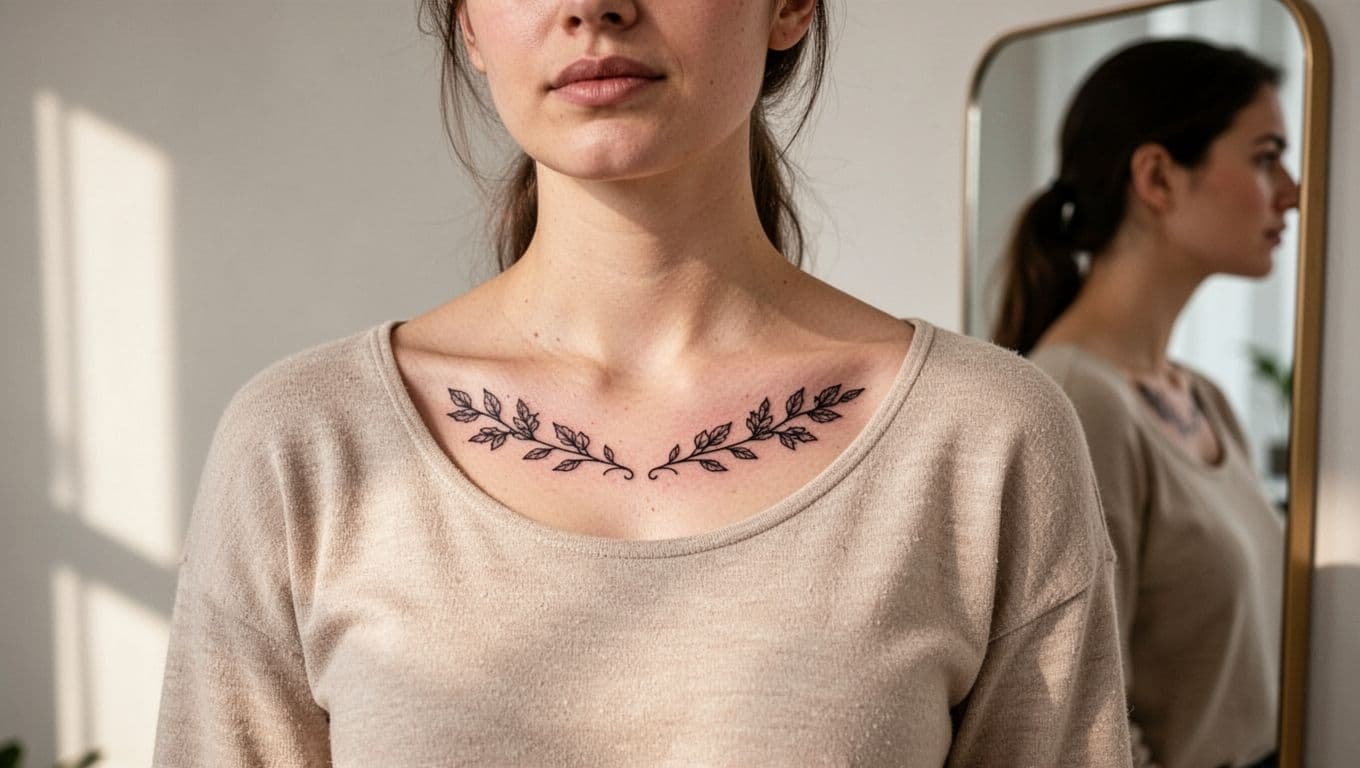
Ask your artist to remove anything that doesn’t support the main design. You could also increase the size slightly, simplify the lettering, or leave more open skin around the artwork. A smaller number of clear details usually looks more elegant than a miniature design packed with decoration.
The collarbone’s natural curve should guide the tattoo. Forcing a perfectly straight layout can make the design look stiff or uneven when your shoulders relax. A branch, wave, ornament, or short phrase may need a gentle angle to follow your anatomy.
Before approving the stencil, view it while standing naturally. Then raise your arms, turn your shoulders, and look at it from the front and both sides. Check how the design sits when you move, since a placement that looks balanced while lying down may shift when you stand.
If you need to squint to understand the stencil, the finished tattoo probably needs more space or fewer details.
Plan for movement, sun, and future touch-ups
Your shoulder is rarely still, so movement can change the way a collarbone tattoo appears. Clothing collars, bra straps, necklaces, seat belts, and bag straps may also rub the area during healing. Mention these habits during your consultation so your artist can suggest a placement with less daily friction.
Ask how the design may age and whether its line weight leaves room for natural softening. Very fine lines and pale colors can lose contrast sooner, especially when the tattoo receives regular sun exposure. After the skin fully heals, protect exposed ink with broad-spectrum SPF 30 or higher, as recommended in the American Academy of Dermatology’s guidance on caring for tattooed skin.
Don’t apply sunscreen to a fresh or peeling tattoo. Until the skin closes, use your artist’s recommended aftercare and cover the area with loose clothing when you must be outdoors. Sunscreen becomes part of long-term care after healing, not a substitute for protecting an open wound.
Fine-line tattoos may need a touch-up if small sections heal lighter than expected. Wait until the tattoo has fully settled before judging the final result, often around eight weeks or according to your artist’s instructions. Early redness, swelling, peeling, and dull-looking ink can make a new tattoo appear uneven before the skin finishes healing. A patient review gives you a more accurate view of the design’s lasting appearance.
Conclusion
The most elegant collarbone tattoos balance a meaningful design with open space, the right scale, and thoughtful placement. Flowers, script, symbols, celestial shapes, and minimalist art can all suit this area when the artwork follows your body’s natural line instead of forcing a rigid shape.
Before booking, consider how the tattoo will look when you stand, move, and wear your usual clothing. Choose an experienced artist who can adapt the stencil to your anatomy, explain the expected healing process, and show healed examples of similar work.
Save three favorite ideas, decide which style feels most personal, and bring those references to a consultation. With careful planning, your collarbone tattoo can stay delicate, readable, and meaningful for years to come.
Save the pin for later


- 30 Trendy Tattoo Ideas for 2026: Styles and Placement - September 27, 2026
- 30 Gorgeous Fine Line Tattoo Ideas to Try - September 27, 2026
- 25 Fine Line Tattoo Ideas for Women With Meaning - September 22, 2026
Leave a Reply