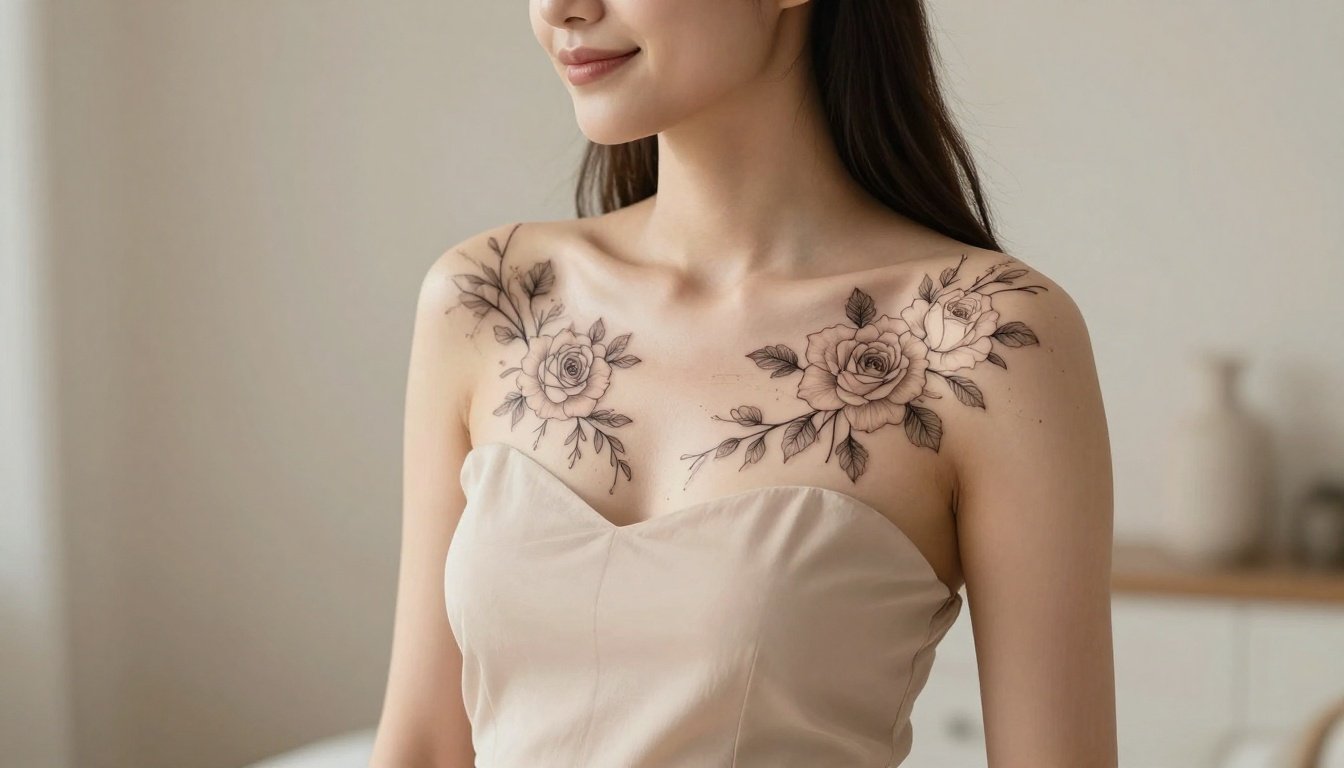
25 Chest Tattoo Ideas for Women With Personal Meaning
Chest tattoos can frame the body in striking ways, whether you choose a fine design along the collarbone, a centered piece over the sternum, or an underbust tattoo that follows your natural curves. These placements work well for both delicate details and bold artwork, but each area has its own look, feel, and clothing considerations.
This collection of 25 chest tattoo ideas for women includes fine-line florals, birth flowers, ornamental designs, celestial symbols, script, and microrealist styles. The right choice should fit your personal style, pain comfort, body placement, usual clothing, and long-term goals.
Current tattoo trends favor artwork that follows the body’s natural lines instead of simply filling the chest, so pay attention to flow, spacing, and symmetry before settling on a design.
Start with these ideas to find a chest tattoo that feels personal, wearable, and thoughtfully placed.
25 Chest Tattoo Ideas for Women That Feel Personal and Beautiful
These chest tattoo ideas are starting points, not designs you need to copy exactly. Placement, line weight, scale, and spacing can turn the same concept into something subtle, romantic, bold, or entirely personal.
Fine-Line Florals and Botanical Chest Tattoos
Fine-line botanical tattoos suit the chest because their shapes can follow the sternum, collarbones, or natural curve beneath the bust. Negative space and light shading keep the artwork soft instead of making it look crowded.
- A sternum rose with a long stem can run vertically from the upper chest toward the ribcage. Choose a single bloom for a clean look, or add a small date along the stem to mark a personal milestone. A rose can suggest love, strength, remembrance, or renewal.
- Mirrored peonies beneath the collarbones create a balanced design without filling the center of the chest. Fine petals and gentle gray shading give the flowers a romantic mood, while black outlines create a stronger graphic effect. Use peonies to honor family, prosperity, or a meaningful season of life.
- A wildflower bouquet across one side of the chest feels more relaxed and natural than a symmetrical piece. Include flowers connected to a favorite hike, hometown, or memorable trip. Keep the stems delicate and leave open skin between each bloom so the arrangement stays light.
- A fern or leafy branch following the collarbone can look elegant at a small or medium scale. The branch may symbolize healing, growth, or a place that feels like home. A tattoo artist can angle the leaves to follow your anatomy rather than forcing the design into a straight line.
- A birth-flower arrangement at the center of the chest brings several personal details into one design. Combine your birth flower with flowers linked to children, parents, or important months. If the petals and leaves are very small, ask the artist to simplify them so the tattoo remains readable as it ages.
Celestial and Symbolic Designs With a Feminine Feel
Celestial tattoos add detail without requiring heavy coverage. Stars, dots, and thin ornamental lines can create a delicate finish, but small designs still need enough breathing room to stay clear over time.
- A crescent moon over the sternum works well as a centered tattoo measuring roughly two to four inches. Add small dots beneath it for a softer finish, or use clean black shading for a more dramatic look. The moon can connect to intuition, change, rest, or a meaningful life chapter.
- A sun and moon pairing creates contrast across the upper chest or sternum. One side can use warm color while the other stays black and gray, or both can remain simple linework. Personalize the design with symbols connected to two people, opposing traits, or a balance you value.
- A small zodiac constellation near the collarbone offers a discreet way to include your birth sign. Keep the stars slightly separated and use fine connecting lines only where the design remains readable. Initials or a meaningful date can hide within the arrangement without overwhelming it.
- A celestial eye with ornamental rays can sit at the center of the chest like a small emblem. Fine rays and dotwork add detail around the eye, while soft shading gives the design more depth. Choose symbols that reflect protection, awareness, or personal spirituality.
- A moon phase design beneath the chest can curve along the underbust or lower rib area. Select the moon phase from a birth date, anniversary, or another important night. Leave enough space between each phase so the shapes do not merge as the tattoo settles.
Ornamental, Lace, and Mandala-Inspired Pieces
Ornamental tattoos need careful planning because the chest curves and moves with breathing. Symmetry matters most for a sternum tattoo, so your artist should place the stencil while you stand naturally with your body relaxed.
- A symmetrical sternum mandala can sit between the breasts or extend slightly toward the ribs. Repeated shapes create a balanced look, while black ink gives the design a sharper mood. Soft gray shading makes it gentler and less graphic.
- Lace-like filigree beneath the bust can follow the body’s natural curve. Thin lines and open sections keep the piece airy, while denser blackwork creates a more dramatic effect. Ask for spacing that allows each curve to remain distinct.
- An ornamental pendant design can hang from the sternum like jewelry. Add a small gemstone shape, flower, or personal symbol at the bottom. Black ink feels classic, while a restrained touch of burgundy, blue, or gold-toned color changes the mood.
- A delicate chain following the collarbones offers a lighter alternative to a large chest piece. Tiny links, charms, or botanical details can reference a family tradition, favorite jewelry, or a protective object. Keep the links large enough to avoid becoming a solid line.
- A jewel-inspired centerpiece can combine fine rays, dotwork, and a small color accent. Place it over the sternum for a centered design, or shift it slightly for an intentionally organic look. Choose an artist experienced with curved chest anatomy and ornate spacing.
Meaningful Script, Names, and Minimalist Chest Tattoos
Text tattoos depend on precision. Typography, letter spacing, and ink thickness all affect readability, especially on thin skin and curved placements.
- A short word along the collarbone can be subtle and easy to conceal. Choose a word tied to your values, a place, or a private reminder. Simple lettering usually ages better than highly decorative script at a small size.
- A family member’s name in their handwriting adds a personal touch that a standard font cannot provide. Use a clear scan of the original writing, then verify every letter before the appointment. Keep the name large enough for the loops and spacing to remain visible.
- A vertical phrase on the sternum creates a strong central line. A short sentence, lyric, or translated phrase can follow the body from the chest downward. Confirm the spelling, punctuation, translation, and line breaks with a trusted source before tattooing.
- A tiny heart or symbol near the upper chest works well for a minimalist tattoo. Place it near the collarbone, above the breast, or slightly off-center. A birth initial, small flower, or personal icon can add meaning without needing text.
- A paired symbol design on both sides of the chest can show connection, balance, or two sides of your identity. Use matching stars, initials, hearts, or small botanical marks. Keep the symbols similar in scale, but allow slight differences if you prefer a handmade feel.
Very small lettering can blur over time, so your artist may recommend a larger size than you first expect. For general tattoo safety and signs of ink-related reactions, review the FDA’s tattoo safety guidance before your appointment.
Bold, Artistic, and One-of-a-Kind Chest Tattoo Concepts
These designs can stay understated or become dramatic through scale, shading, and color. Your favorite animal, hometown, plant, or personal color palette can make a familiar concept feel original.
- A microrealist butterfly or moth can rest near the sternum or collarbone. Fine shading brings out the wings, while muted color adds softness. Choose a species connected to transformation, a loved one, or a place you remember.
- A fine-line snake winding around a flower creates movement across the chest. The snake may represent change, protection, or renewal, while the flower adds a personal layer. Use black linework for a clean look, or add one controlled color to the bloom.
- A small bird in flight works well near the collarbone or upper chest. Pick a bird associated with freedom, family, migration, or a favorite landscape. Keep the silhouette simple if you want the tattoo to remain clear at a smaller scale.
- A framed miniature landscape can preserve a view from your hometown, a childhood trip, or a place you hope to revisit. A narrow frame suits the sternum, while a wider rectangle can sit beneath the collarbone. Simplify distant details so the image does not become muddy.
- An abstract flowing shape can follow the sternum or underbust in one continuous movement. Use solid black, soft gray, or a personal color palette to control its mood. Microrealist and detailed designs need realistic sizing, an experienced artist, and careful aftercare to preserve their smallest details.
Find the Right Chest Tattoo Placement for Your Design
Placement affects much more than how a chest tattoo looks in photos. It also influences pain, clothing friction, visibility, healing, and how the design may age as your body changes. Before choosing artwork, consider how your breasts, collarbones, ribs, and natural movement will shape the final result.
A skilled tattoo artist should help you compare the design at different heights and angles. Ask to see the stencil while you are standing, sitting, and relaxing your shoulders. A placement that looks centered when you stand may shift visually when you sit or change your posture.
Sternum Tattoos for Symmetry and a Strong Center Point
The sternum is a natural location for mandalas, vertical florals, ornamental pendants, moon designs, and short script. A centered piece can draw the eye inward and give the chest a clear focal point without covering the entire area.
However, the sternum often has less cushioning than the upper chest, so many people find tattooing there more sensitive. The skin also moves with breathing, which makes careful positioning important. Your artist should measure the design and place the stencil while your body rests in its usual posture.
Symmetrical work needs more than a perfectly mirrored stencil. Breasts may sit at slightly different heights, and the sternum may not create a mathematically straight line across the body. The final tattoo should feel balanced with your natural center rather than forced into rigid geometric symmetry.
A well-placed sternum tattoo follows your body’s center line without pretending every part of the chest is perfectly identical.
Collarbone Tattoos That Frame the Upper Chest
Collarbone-following designs work well for branches, script, chains, vines, birds, and small symbols. Their horizontal or gently angled shape can frame the upper chest without filling the center. A thin branch may look delicate, while heavier linework creates a stronger graphic effect.
One-sided placement usually feels more organic and relaxed. For example, a bird can move toward the shoulder, or a vine can follow one collarbone with uneven leaves. Mirrored designs create more balance and formality, especially when you choose matching symbols or related botanical shapes.
Collarbone tattoos can become more visible with open-neck shirts, tank tops, and low-cut clothing. That visibility may suit you, but think about your workplace and personal comfort before choosing the exact height. During healing, bra straps, backpack straps, shirt seams, and seat belts can rub the area. Loose, breathable clothing can reduce irritation, and aftercare guidance also recommends avoiding garments that stick to a fresh tattoo, as outlined in this tattoo aftercare guide.
Underbust and Side-Chest Designs That Follow Natural Curves
Underbust, rib-side, and one-sided upper-chest placements suit filigree, lace, florals, snakes, and elongated ornamental designs. These areas allow curved artwork to follow the body’s movement instead of cutting across it. A long floral stem can trace the ribs, while a snake or ornamental pendant can create a natural vertical flow.
The underbust and ribs may feel more sensitive because the skin is close to bone and receives frequent movement. Clothing also deserves careful thought. Bras, underwire, sportswear, fitted tops, and elastic bands can create friction while the tattoo heals.
Consider your usual wardrobe and activity level before booking this placement. If you wear supportive sports bras every day or train often, a collarbone or upper-chest location may be easier to protect during healing. No placement is best for everyone. The right choice gives the design enough room, works with your routine, and still looks balanced when your body is standing, sitting, breathing, and moving naturally.
How to Choose a Chest Tattoo That Will Age Well
A chest tattoo should fit your meaning, personal style, body, and daily life. Before narrowing down the 25 ideas above, decide what you want the tattoo to say and how visible you want that message to be.
A design can feel feminine without being tiny, pink, or covered in delicate details. Bold blackwork, a large botanical piece, a geometric symbol, or a strong animal design can all look feminine when they suit your taste and body.
Match the Design to Your Meaning and Personal Style
Start by identifying the role you want the tattoo to play. It might honor someone you love, express your personality, connect you to nature, reflect your spirituality, complement your fashion style, or act as a private reminder of something only you understand.
The same motif can create very different impressions. A rose with soft gray shading may feel romantic or memorial, while a rose with heavy black lines can look bold and graphic. A moon can appear mystical in a detailed sternum design, minimalist in a small collarbone tattoo, or ornamental when surrounded by decorative rays.
As you compare ideas, pay attention to these choices:
- Line style: Fine lines feel light and delicate, while bold outlines create more visual strength.
- Scale: A larger design gives important details room to breathe and remain clear.
- Placement: The collarbone, sternum, underbust, and side chest each create a different mood.
- Movement: Curved stems, chains, snakes, and vines can follow your natural shape.
- Spacing: Open skin can make a detailed design look cleaner and less crowded.
Save five or six reference images, then write down what attracts you about each one. You might like the shape of one tattoo, the shading of another, or the spacing in a third. Bring those observations to your artist instead of asking them to copy another person’s work. A professional can combine the qualities you like into a design that fits your anatomy and feels original.
Choose a Size, Line Weight, and Color Palette With Care
Micro tattoos are discreet and easy to hide, but their small details have little room to remain distinct as ink settles and skin changes. A small-to-medium fine-line tattoo gives you more space for flowers, symbols, or lettering without covering much of the chest.
Larger shaded pieces usually offer the strongest visual presence and give an artist room to build contrast. Heavier lines and clear spacing may also remain easier to read over time, especially if the tattoo receives regular sun exposure. However, a bold design requires more commitment because it is harder to conceal and may take longer to complete.
For color, consider both your style and your routine. Black and gray create a classic look and pair well with botanical, ornamental, and symbolic designs. Muted colors feel softer, while bold color creates a stronger focal point. Your skin tone, natural undertones, sun exposure, and clothing choices can all affect how the palette looks after healing.
Ultraviolet light can fade tattoo ink, so regular chest exposure matters. The American Academy of Dermatology’s tattooed-skin guidance recommends protecting healed tattoos with broad-spectrum, water-resistant SPF 30 or higher. During healing, use clothing and shade instead of sunscreen until the skin has fully recovered.
Ask your artist to adjust the design for long-term readability. They may enlarge tiny elements, simplify crowded details, strengthen contrast, or leave more space between lines.
Review the Artist’s Portfolio Before Booking
Choose an artist who regularly works in your preferred style and understands chest anatomy. Look for relevant examples in fine-line botanical work, ornamental tattoos, lettering, color tattoos, or microrealism, depending on your idea.
Fresh tattoo photos show clean edges and bright ink, but healed photos reveal much more. Ask to see healed chest pieces or healed tattoos with similar line density and detail. The FDA’s tattoo safety information also recommends thinking carefully about possible ink reactions and choosing a reputable professional.
During your consultation, ask:
- Can I see healed examples of similar chest tattoos?
- Would you change the stencil to follow my natural anatomy?
- How would you simplify this design so it stays readable?
- What line weight and color choices suit my placement?
- How should I protect the tattoo while it heals?
- When would a touch-up be appropriate?
- How do you keep the studio and equipment clean?
Discuss sensitive areas openly, especially near the sternum, ribs, underbust, and breast tissue. A lower price should never outweigh cleanliness, safety, communication, and proven skill. The right artist will explain the design’s limits and recommend changes that help it age with clarity.
What Chest Tattoo Pain and Healing Are Really Like
Chest tattoo pain varies by person, placement, session length, skin sensitivity, and artist technique. The experience may feel manageable in one area and much sharper a few inches away, so knowing the differences can help you plan without guessing.
Expect More Sensitivity Over the Sternum and Ribs
Tattooing over the pectoral muscle often feels like steady pressure, scratching, or a warm vibrating sensation. The collarbone, sternum, ribs, and underbust can feel different because the skin sits closer to bone and moves with breathing.
You may notice:
- Pressure when the artist stretches the skin or works over a more cushioned area.
- Scratching during lighter linework, especially as the needle passes repeatedly over one section.
- Heat when shading builds up or the skin becomes irritated during a longer session.
- Sharp sensations over the sternum, ribs, and collarbone, where there is less cushioning.
The first few minutes can feel intense because your body is adjusting. Many people find the sensation easier once they settle into a steady breathing rhythm. Pain can also increase during a detailed session because the skin becomes more tender as the appointment continues.
Arrive rested, hydrated, and fed. Wear clean clothing that gives your artist easy access without requiring you to change repeatedly. For a large or detailed chest tattoo, plan breaks so you can stretch, drink water, and reset your posture. Don’t assume numbing cream or spray is right for every tattoo. Ask your artist before using any product, since it can affect the skin, stencil, or tattooing process.
Plan Around Bras, Clothing, Sleep, and Exercise
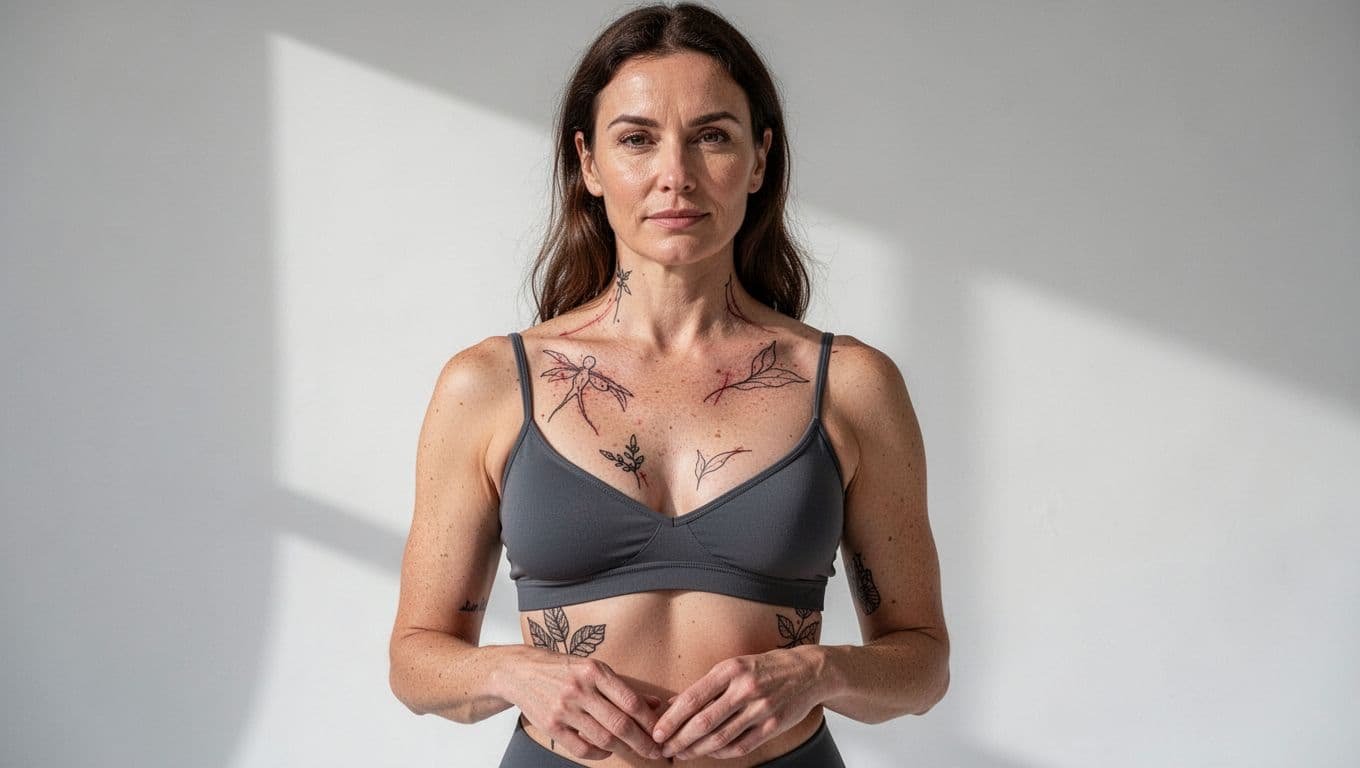
A fresh chest tattoo needs protection from rubbing and pressure. Underwire, tight bras, straps, rough fabric, backpack bands, and bedding can irritate the area, especially when the tattoo sits along the collarbone, underbust, or ribs.
Choose loose, clean clothing for the appointment and the first few days. If you need support, a soft, clean, non-underwire option may feel more comfortable than a structured bra. Follow your artist’s instructions about dressings, since some tattoos need different care depending on the covering used.
Sleeping can take planning too. Lying on your stomach may press directly against the tattoo, while side sleeping can rub an underbust or rib design against bedding. Use clean sheets and choose a position that avoids pressure when possible.
During early healing, reduce heavy sweating, chest workouts, swimming, and activities that stretch or rub the tattoo. Follow your artist’s specific timeline because a small collarbone tattoo may settle differently than a large piece across the sternum and ribs.
Know What Normal Healing Looks Like
During the first few days, mild redness, tenderness, warmth, and slight swelling are common. A small amount of clear or blood-tinged fluid may also appear. Follow your artist’s dressing and cleaning instructions rather than adding products or scrubbing the skin.
After several days, itching, peeling, and light flaking may begin. The tattoo can look dull, cloudy, or uneven while the surface sheds. That temporary change doesn’t show the final result. The surface often becomes more stable within roughly two to three weeks, but deeper skin healing can continue for several more weeks or months, especially with a large or heavily shaded tattoo.
Seek medical advice if redness spreads, swelling becomes severe, the area feels excessively hot, or blisters, pus, fever, or worsening pain develop. A red streak or ring moving away from the tattoo also needs prompt attention. The American Academy of Dermatology’s tattoo reaction guidance and Cleveland Clinic’s tattoo infection overview explain these warning signs in more detail.
Chest Tattoo Aftercare and Safety Steps That Protect Your Results
Aftercare protects both your skin and the tattoo’s final appearance. Your artist’s instructions should take priority because dressings, ink types, tattoo size, and healing methods can differ. Follow a simple routine, avoid unnecessary irritation, and contact a healthcare professional if healing looks abnormal.
Follow the Artist’s Dressing and Cleaning Instructions
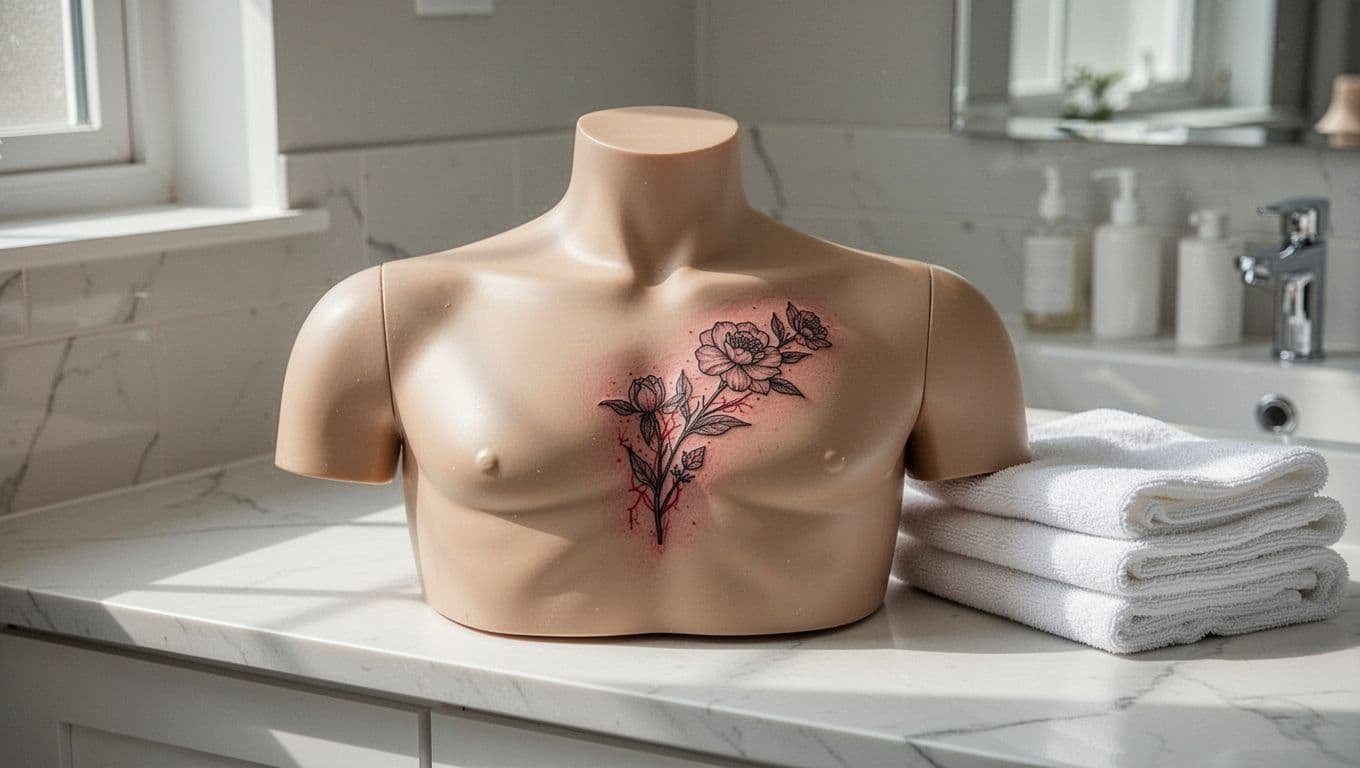
Some artists cover a fresh tattoo with a transparent protective film, such as Saniderm or Tegaderm. Others use a different dressing or recommend leaving the tattoo uncovered after a set period. Don’t remove or replace the covering early unless your artist tells you to do so.
Ask what to do if the film leaks, peels away, becomes loose, or causes burning and irritation. If fluid escapes around the edges, the dressing no longer protects the tattoo properly. Your artist can tell you whether to remove it, replace it, or arrange a follow-up.
When it’s time to clean the tattoo, wash your hands first. Then use lukewarm water and a mild, fragrance-free cleanser. Move your fingertips gently across the skin without scrubbing, using a washcloth, brush, or exfoliating product. Rinse away all cleanser, then pat the area dry with a clean paper towel.
Apply only a thin layer of the recommended aftercare product. Thick ointment can trap moisture, clog the area, and make the skin feel more irritated. You don’t need to keep adding product whenever the tattoo looks shiny. Follow the schedule your artist provides, and never pick peeling skin or scabs.
For general aftercare guidance, the European Academy of Dermatology and Venereology’s tattoo advice also recommends gentle showering while avoiding activities that soak the tattoo.
Protect the Tattoo From Friction, Water, and Sun
Clean, loose clothing reduces rubbing while the skin heals. Depending on the placement, you may need to limit underwire bras, tight sports bras, straps, fitted tops, and rough seams. An underbust tattoo may need more protection from bra bands, while a collarbone tattoo can rub against shoulder straps.
Keep the tattoo out of pools, lakes, oceans, hot tubs, baths, and other standing water until it has fully healed. Showering is usually fine, but don’t let strong water pressure hit the tattoo for a long time. You should also avoid saunas, steam rooms, and intense workouts that cause heavy sweating during the early healing period.
Sweat, heat, and repeated movement can irritate fresh ink. Chest exercises may stretch the skin, while running or sports can create friction from clothing. Your artist’s timeline matters most because a small collarbone tattoo may heal differently than a large shaded piece across the sternum.
Direct sunlight can irritate freshly tattooed skin and may affect the ink as it settles. Cover the area with clean clothing and seek shade instead of applying sunscreen to an open wound. After the tattoo has completely healed, use a broad-spectrum, water-resistant sunscreen with SPF 30 or higher, applying it before sun exposure and reapplying as directed.
Use a Safe Studio and Plan for Future Touch-Ups
Before booking, choose a licensed or properly regulated studio that follows local health requirements. The artist should use fresh, sterile, single-use needles, new gloves, clean work surfaces, and safe ink-handling practices. Don’t hesitate to ask how equipment is opened, discarded, and cleaned.
Some chest tattoos may need a touch-up later. Fine-line work, small lettering, and designs exposed to frequent sun or clothing friction can lose clarity over time. Still, wait until the tattoo is fully healed before judging the final color, line quality, or any uneven areas.
Keep your artist’s contact information after the appointment. Ask when they want to see the healed tattoo, whether touch-ups are included, and which symptoms require medical care. Spreading redness, worsening pain, pus, fever, or a rash near the tattoo needs prompt attention rather than another layer of ointment.
Conclusion
The best chest tattoo is one that fits your meaning, preferred style, anatomy, clothing habits, and comfort level. Botanical flowers, celestial symbols, ornamental details, script, minimalist marks, and artistic designs can all work beautifully when the placement and scale support the artwork.
Save a few reference images, then identify the details you like instead of copying one design exactly. Test the placement with a stencil while standing and sitting, and consult a skilled tattoo artist about line weight, spacing, visibility, and long-term readability. Make studio safety, clothing friction, sun protection, and aftercare part of the decision before you book.
A thoughtful choice will feel more personal than a design selected on impulse. Take your time, trust the process, and turn one of these chest tattoo ideas into artwork that feels like your own.
Save the pin for later


- 20 Tattoo Ideas for Women on the Foot - September 19, 2026
- 5 Beautiful Tattoo Ideas for Women on Fingers - September 19, 2026
- 16 Cute Tattoo Ideas for Women on the Stomach - September 19, 2026
Leave a Reply