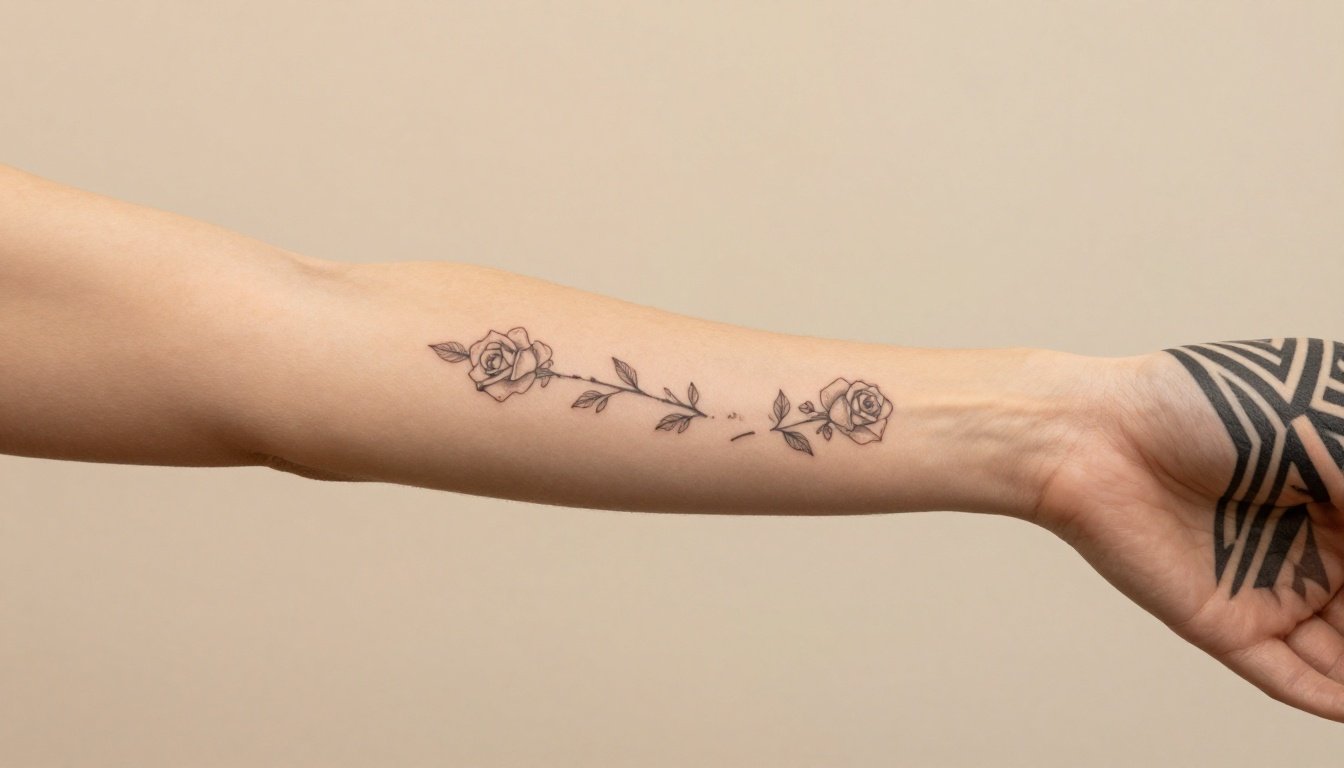
20+Beautiful Arm Tattoo Ideas for Women
An arm tattoo can be a beautiful way to keep something meaningful close while choosing a design that fits your personal style. With visible placement, flexible sizing, and room for nearly any artistic approach, the arm gives you plenty of options for a tattoo that feels subtle, expressive, or bold.
These arm tattoo ideas for women include delicate florals, meaningful symbols, fine-line pieces, striking artwork, and nature-inspired designs. Some are small enough for the inner wrist or forearm, while others can fill the upper arm or extend into a larger composition. You’ll also find inspiration to help you think through size, placement, style, and the kind of tattoo artist who can bring your favorite design to life.
Take a look at these 25 gorgeous ideas, then use the guidance alongside them to find an arm tattoo that feels right for you.
25 Gorgeous Arm Tattoo Ideas for Women
Your arm gives you room to choose a tattoo that feels subtle, symbolic, or impossible to miss. Consider the design’s line weight, size, placement, and how much detail you want before booking an appointment.
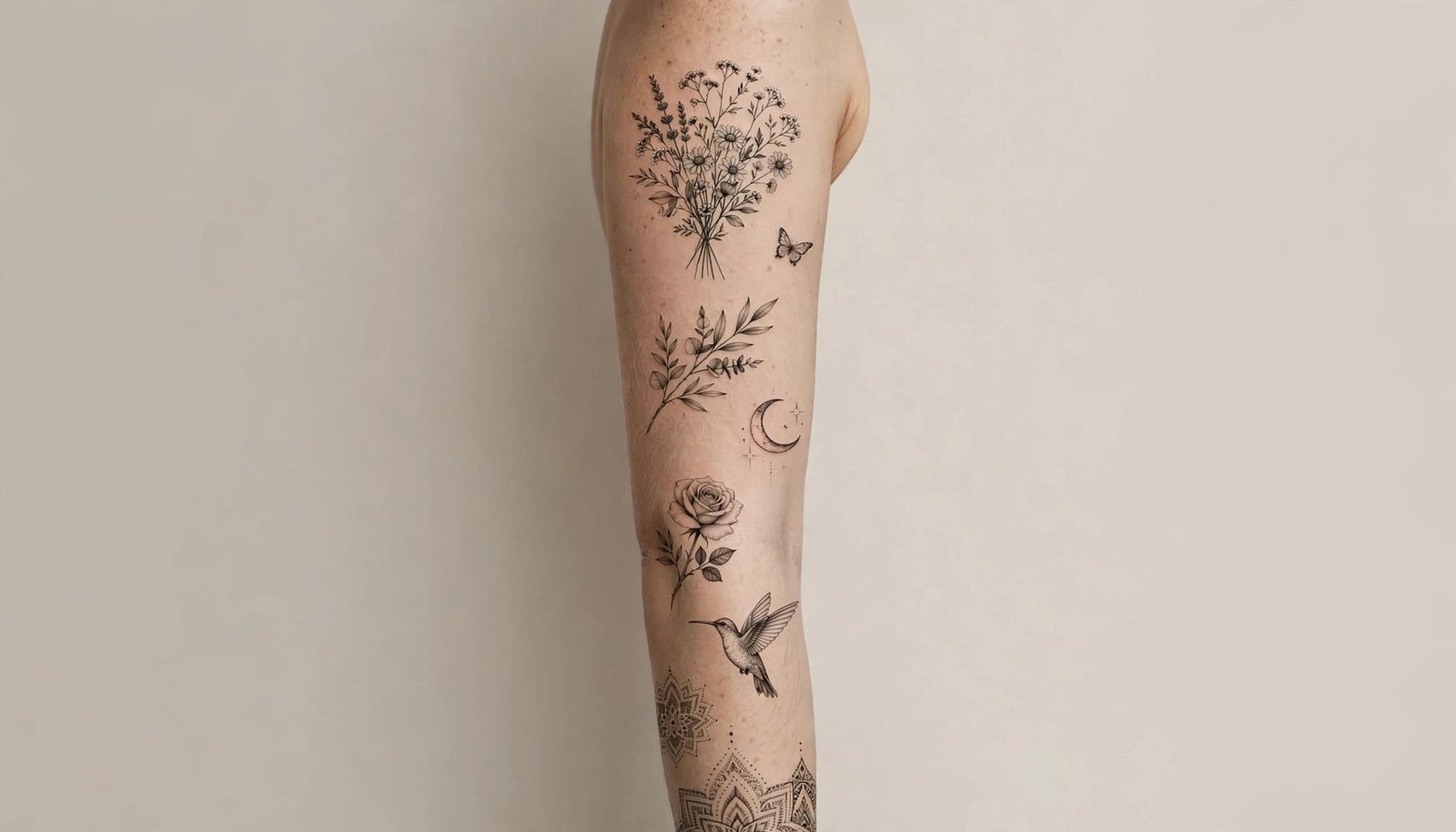
Delicate and Feminine Arm Tattoo Designs
Fine lines, open space, and carefully chosen details create an elegant look without making the tattoo feel crowded. These designs suit the inner forearm, wrist, upper arm, or outer forearm.
- Fine-Line Wildflower Bouquet: Combine tiny daisies, poppies, and forget-me-nots in a loose bouquet. Keep it palm-sized on the inner forearm, then personalize it with one meaningful flower or a birth bloom.
- Tiny Butterfly: A small butterfly with airy wings feels graceful and light. Place it on the wrist or outer forearm, adding subtle dotwork or a single muted color for a personal touch.
- Minimalist Sun and Moon: Pair a slim crescent with a simple sun to suggest balance and changing seasons. The upper arm or inner forearm offers enough space for clean, uncluttered shapes.
- Graceful Botanical Branch: A slender eucalyptus, fern, or olive branch follows the natural length of the arm. Place it vertically along the outer forearm, using one fine detail such as a meaningful leaf.
- Delicate Ribbon or Bow: A flowing ribbon can symbolize remembrance, support, or a treasured occasion. Keep the design small near the wrist or upper arm, with one initial or date worked into the shape.
Nature-Inspired Tattoos Full of Meaning
Nature tattoos can carry personal symbolism while giving your artist strong shapes to work with. Vertical layouts suit the forearm, while wraparound designs add movement around the arm.
- Serpentine Growth: A fine-line or realistic snake winding around the forearm can suggest transformation and growth. Black and gray suits detailed scales, while a medium vertical design keeps the composition readable.
- Mountain Moon Scene: Layer distant peaks beneath a moon and a few stars for a design linked to adventure, solitude, or favorite travels. Black and gray works well on the outer forearm.
- Hummingbird in Motion: A colorful hummingbird brings energy and freedom to the upper arm. Choose jewel-toned wings for visual impact, or use fine black lines for a lighter, smaller wrist tattoo.
- Lavender Sprig: A narrow lavender stem suggests peace and calm without needing much space. It works beautifully along the inner forearm, with soft purple accents or simple black-and-gray shading.
- Crescent Moon and Stars: A crescent surrounded by varied star sizes creates a quiet celestial composition. Place it on the wrist or upper arm, or extend it into a graceful wraparound design.
Elegant Floral and Botanical Arm Tattoos
Flowers offer endless ways to balance meaning with style. Choose one connected to your birth month, a loved one, a favorite memory, or simply the shape you want to wear.
- Classic Rose: A shaded rose can express love, remembrance, or strength. Use fine gray shading for a refined single bloom, or choose saturated red on the upper arm for a more noticeable piece.
- Golden Sunflower: A sunflower brings warmth and optimism through its broad petals and dark center. A medium color design suits the upper arm, while a blackwork stem fits the outer forearm.
- Lotus in Bloom: A lotus with clean symmetrical petals can suggest renewal and inner calm. Place a small bloom near the wrist, or build a larger shaded composition along the inner forearm.
- Cherry Blossom Branch: A sweeping branch creates movement across the upper arm or shoulder. Soft pink petals add color, while black-and-gray linework gives the design a delicate, storybook quality.
- Olive Branch: An olive branch offers a restrained alternative to a full floral tattoo, with associations of peace and lasting connection. Its long stem works well vertically along the forearm or around the wrist.
Small Symbolic Tattoos for a Personal Touch
Small tattoos work best when every detail has enough room to remain clear. Choose simple shapes, readable lettering, and placement that gives the design space to age well.
- Meaningful Fine-Script Quote: Choose a short phrase that still matters outside its original moment. Size the lettering for readability on the inner forearm or upper arm instead of squeezing too many words onto the wrist.
- Roman Numeral Date: Convert a birthday, anniversary, or private milestone into a clean Roman numeral line. The inner wrist suits a compact version, while the forearm allows more generous spacing.
- Tiny Heart: A simple outline heart feels personal without looking busy. Place it near the wrist or inside forearm, and add one small detail, such as a star, initial, or filled section.
- Guiding Compass: A compass can symbolize direction, independence, or a meaningful journey. Use a small black design on the outer forearm, or enlarge it slightly for clearer points and finer geographic details.
- Birth Constellation: Connect a few stars from your zodiac constellation with delicate lines. The upper arm gives the pattern breathing room, while the forearm works well for a narrow vertical arrangement.
Bold and Artistic Arm Tattoo Ideas
Larger tattoos create stronger visual impact and give your artist space for shading, texture, and movement. Before choosing one, find an artist who specializes in the technique you want.
- Watercolor Splash: A colorful watercolor flower, bird, or abstract shape suits someone who enjoys expressive artwork. Place it on the upper arm and leave room to expand it into a half sleeve.
- Celestial Sleeve Section: Combine planets, stars, moons, and orbit lines across the upper arm. Deep blues, purples, and black shading create drama, while separate elements can grow into a full sleeve.
- Ornamental Portrait: A portrait framed with filigree, flowers, or decorative arches creates a highly personal centerpiece. Choose an artist known for portraits, realistic shading, and careful facial proportions.
- Geometric Mandala: Repeated circles, petals, and precise symmetry create a balanced statement piece. A mandala fits the upper arm or elbow area, then can expand through geometric connecting shapes.
- Blackwork Ornamental Armband: Dense black patterns can form a striking band around the upper or lower arm. This style suits bold tastes and can grow into a larger sleeve with negative-space ornament.
Large pieces require more planning than small symbols, especially when color blending, geometric precision, portrait detail, or heavy blackwork is involved. Aftercare also matters, so follow professional guidance and review the American Academy of Dermatology’s tattoo care advice as your tattoo heals.
How to Choose the Right Arm Tattoo Design for You
Choosing among 25 arm tattoo ideas takes more than picking the prettiest image. Start with the reason you want the tattoo, then consider your daily routine, pain tolerance, workplace expectations, and future tattoo plans. A design chosen for symbolism may need personal details, while one chosen for visual style should focus on shape, balance, and how it complements your arm.
Save several references instead of copying one person’s exact tattoo. A simple mood board can include preferred flowers, line weights, color palettes, placement examples, and artwork you like. Your tattoo artist can then create something original that fits your body and remains appealing after the initial excitement fades.
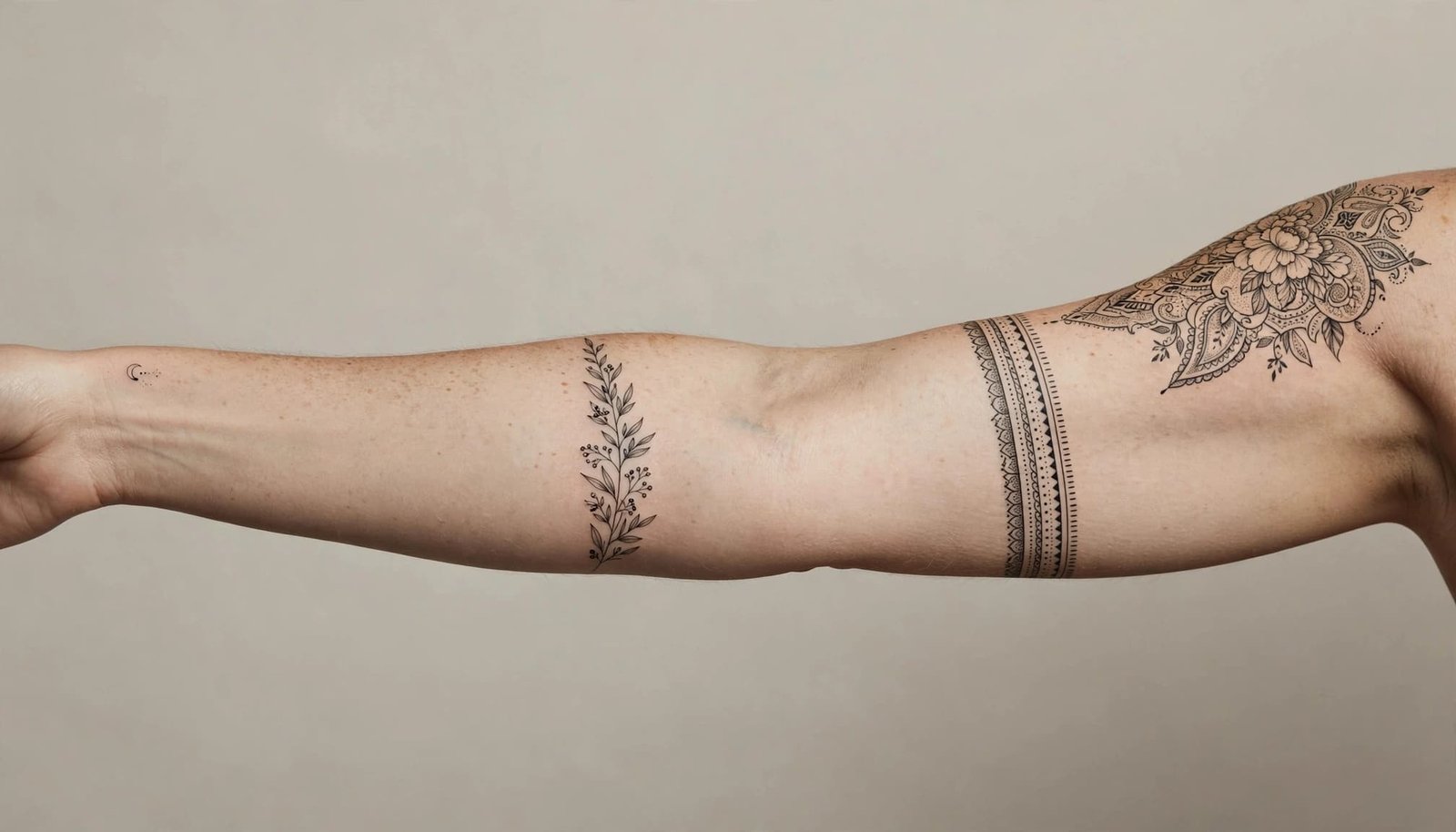
Match the Design to Your Arm Placement
Placement changes how visible, comfortable, and balanced your tattoo feels. It also affects the shape your artist can use.
- Inner forearm: This area offers a smooth, visible surface for vertical designs, script, botanical stems, and meaningful symbols. It usually provides enough space for detail, although the skin can feel sensitive.
- Outer forearm: The outer forearm is easy to show or cover and suits geometric designs, animals, flowers, and narrow compositions. It often works well for a first tattoo because you can monitor the healing process.
- Wrist: The wrist suits tiny symbols, initials, small hearts, and simple linework. Space is limited, so avoid squeezing in complex details or long text. The area has less padding and may feel more uncomfortable than the forearm.
- Upper arm and bicep: These areas offer more room for portraits, floral compositions, watercolor artwork, and future additions. The outer upper arm often feels more manageable for many clients, while the inner bicep can be more sensitive.
- Elbow area: The elbow works best as part of a larger composition, such as a mandala, ornamental design, or wraparound piece. Its movement and uneven surface can distort straight lines, and the bony center is often uncomfortable.
- Shoulder: The shoulder gives larger designs a rounded canvas. It suits sunbursts, florals, winged designs, and pieces that may eventually extend toward the chest or upper arm.
Curved areas can change how a tattoo looks when your arm bends or rotates. Ask your artist to place a stencil on your skin and view it from several angles before the session begins.
A tattoo that looks perfect in a saved photo may need a different shape once it follows the natural curve of your arm.
Think about visibility before choosing a location. If you need to cover the tattoo at work, the upper arm usually offers more flexibility than the wrist or forearm. Also consider future plans. A small inner-forearm symbol may work alone, but a large upper-arm design needs enough space for nearby tattoos later.
Choose the Right Size, Color, and Line Style
Your preferred style should match the space available and the amount of upkeep you’re willing to accept. Fine-line tattoos look delicate and refined, but tiny details can blur or fade when the design is too small. Minimalist tattoos use fewer elements, which helps small symbols stay readable over time.
Traditional tattoos use strong outlines and clear color blocks, so they remain recognizable from a distance. Blackwork creates a heavier look with dense black ink, patterns, or solid shapes. Realism needs more room for shading and texture, while watercolor tattoos use blended color and softer edges for an airy appearance.
Black ink is often the practical choice for a first tattoo because it creates contrast and pairs easily with future pieces. Color adds value when it separates overlapping elements or gives a flower, bird, or celestial design its intended mood. However, colored tattoos may need extra sun protection, and bright shades can change as the tattoo ages. Follow professional healing guidance, including keeping fresh ink moisturized and protected from sunlight, as recommended in dermatologist tattoo aftercare guidance.
For placement-specific discomfort, areas with thin skin, many nerve endings, or little padding often feel more sensitive. The tattoo pain location guide can help you compare the wrist, elbow, bicep, and forearm before booking.
Before choosing a final design, ask your artist to scale it for your arm rather than simply shrinking a reference image. Give fine details room to breathe, keep lettering large enough to read, and choose a style you can still appreciate without relying on its original symbolism. A tattoo can honor a memory, suit your personal style, or do both, but the strongest choice fits your body and your everyday life.
What to Know Before Getting an Arm Tattoo
Getting an arm tattoo takes more preparation than choosing a design from a saved photo. Before booking, research the artist’s style, inspect healed work, confirm the studio follows local rules, and understand the likely cost. A thoughtful consultation should leave you informed and comfortable, never rushed into a decision.
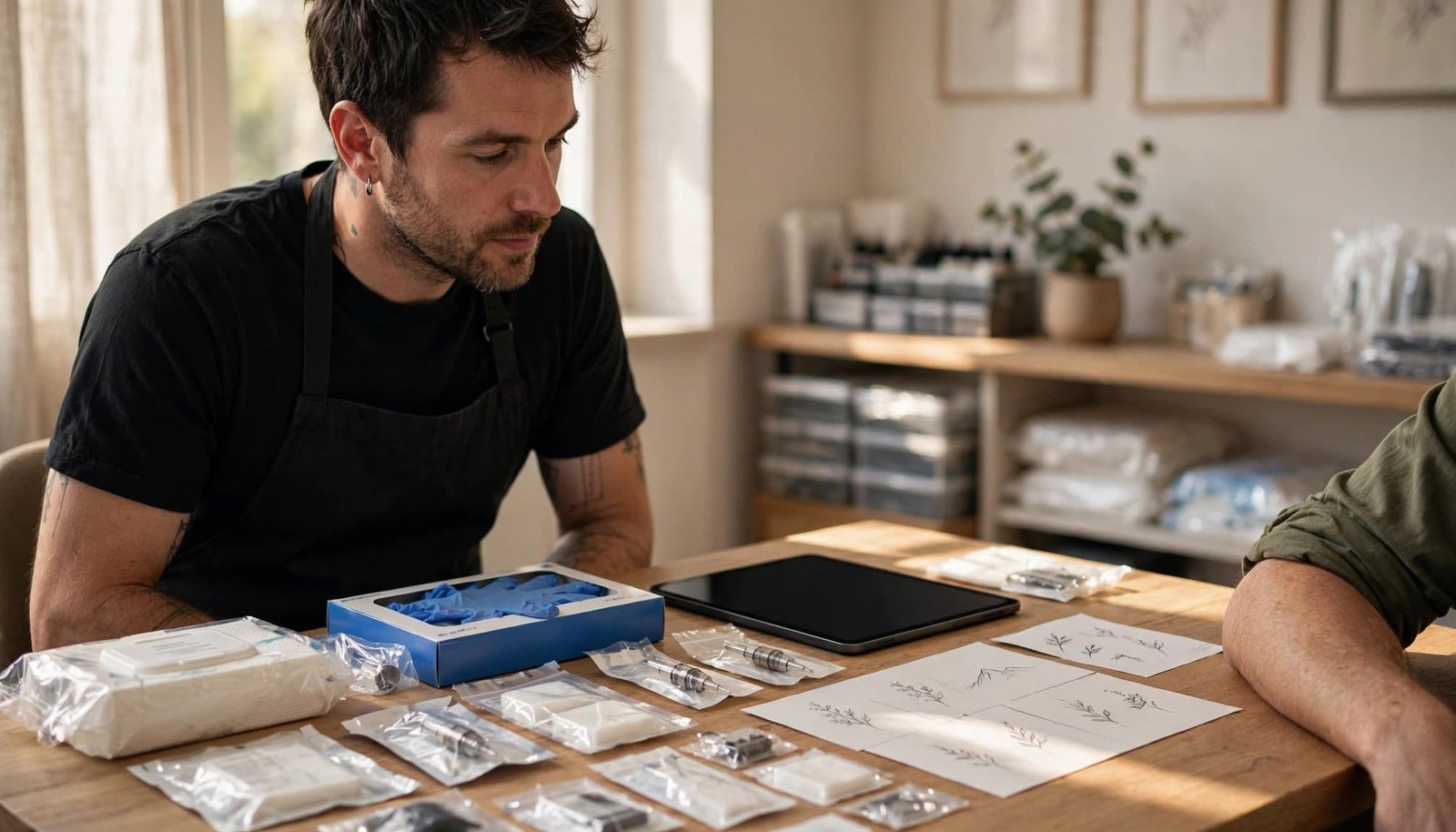
Questions to Ask Your Tattoo Artist
Start by reviewing portfolios that include healed tattoos, not only fresh work photographed immediately after a session. Healed images show how the artist’s line weight, shading, and color settle over time. Look for someone who regularly creates the style you want, whether that’s fine-line botanicals, realistic portraits, ornamental blackwork, or colorful watercolor designs.
Request a consultation before paying a deposit. Bring reference images, your preferred placement, approximate size, and any details that must stay in the design. Your artist should explain what will work on your arm and suggest changes when a reference needs better spacing or scale.
Ask these questions during the conversation:
- How often do you create this tattoo style, and can I see healed examples?
- What design changes would you recommend for my arm and chosen placement?
- How large should the tattoo be so the details remain clear as it ages?
- How long will the appointment take, and will the design require more than one session?
- Do you charge by the hour or quote a flat project price?
- What deposit is required, and under what conditions is it refundable?
- Do you offer touch-ups, and are they included in the original price?
- What healing timeline and aftercare routine do you recommend?
- Which aftercare products should I buy, and which ingredients should I avoid?
- Are you licensed, and does the studio meet the sanitation rules required in my area?
Local requirements differ, so check your state, county, or city regulations. For example, Texas licensing guidance discusses handwashing, single-use gloves, protective equipment, and properly processed instruments. A clean studio should also use fresh needles, disposable barriers where appropriate, and clearly organized supplies.
A good consultation feels clear and pressure-free. You should have time to ask questions, consider the price, and leave without booking if the artist dismisses your concerns.
How Much an Arm Tattoo May Cost
Tattoo prices vary because each arm tattoo requires a different amount of time and technical skill. Size, detail, color, placement, and session length all affect the quote. A small black symbol on the outer forearm usually takes less time than a shaded floral piece that wraps around the upper arm.
Artist demand and location also influence pricing. An established artist with a long waiting list may charge more, while studios in major cities often have higher rates than studios in smaller towns. Sensitive or awkward placements can take additional time because the artist must work carefully around curves, movement, or thin skin.
Some artists charge an hourly rate, while others offer a flat price for the complete project. Hourly pricing can work well when the final scope may change. Flat pricing gives you a clearer total for a defined design, but ask what happens if the session runs longer than expected.
Budget for more than the quoted tattoo price. You may need to cover:
- A nonrefundable booking deposit.
- A second session if the design is large or highly detailed.
- A professional touch-up after healing.
- Recommended aftercare products.
- Travel, time off work, or clothing that keeps the area comfortable.
Before booking, build a personal spending plan that includes the deposit and possible follow-up costs. The cheapest quote should not decide where you get tattooed. Proper sanitation, strong healed work, and an artist who understands your chosen style matter more than saving a small amount upfront.
Arm Tattoo Pain, Healing, and Long-Term Care
Arm tattoo pain varies by placement, size, line style, and your personal sensitivity. The wrist and inner arm often feel sharper because the skin is thinner and has less padding. Areas close to bone, such as the elbow and parts of the wrist, may also feel more intense or uncomfortable.
The outer upper arm and fuller areas of the forearm are often easier to tolerate, although no tattoo placement is completely painless. Sessions with heavy shading, saturated color, or repeated passes over the same area can feel more tiring than a small fine-line design. Ask your artist about breaks before the appointment begins.
Fresh tattoos commonly look red, swollen, or slightly irritated at first. During the early healing period, the skin may feel tender, tight, itchy, or warm. Peeling and light flaking can follow as the surface settles. Healing speed differs, so use your artist’s instructions instead of comparing your tattoo with someone else’s.
Simple Aftercare Steps for a Fresh Tattoo
Wash your hands before touching the tattoo or applying any product. Follow your artist’s instructions for removing the covering, then wash the area gently with lukewarm water and a mild, fragrance-free cleanser. Don’t scrub, use a washcloth, or hold the tattoo under strong water pressure.
Pat the skin dry with a clean paper towel or let it air-dry briefly. Apply only the recommended amount of aftercare product. A thin layer is usually easier for the skin to tolerate than a heavy coating that leaves the area greasy.
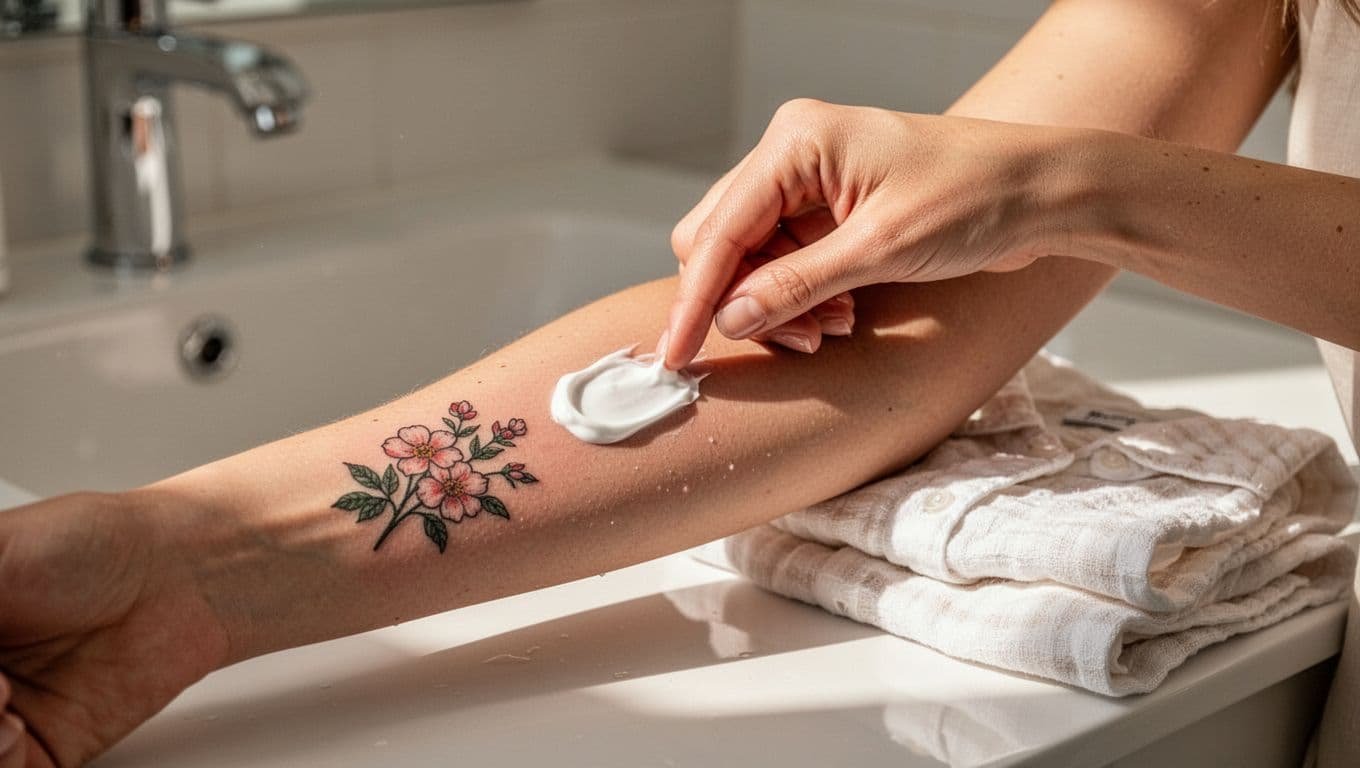
Keep the tattoo away from soaking while it heals. That means avoiding baths, pools, hot tubs, and open-water swimming until your artist says those activities are safe. Loose, clean clothing can also reduce rubbing, especially when the tattoo sits near the elbow, inner arm, or wrist.
Although peeling and itching can be frustrating, don’t scratch, pick, or pull away loose skin. Removing flakes before the skin is ready can irritate the area and interfere with the tattoo’s finished appearance. Contact a qualified health professional if you notice symptoms that concern you, such as worsening pain, spreading redness, significant swelling, or unusual discharge.
How to Keep Your Arm Tattoo Looking Beautiful
After the tattoo has fully healed, protect it from regular sun exposure with broad-spectrum sunscreen. Ask your artist when sunscreen and your usual skin products are safe to use, since fresh tattooed skin needs different care during healing. Once cleared, regular moisturizing can help the surrounding skin stay comfortable and make the artwork look brighter.
Avoid unnecessary irritation from tight sleeves, harsh scrubs, and picking at dry skin. Over time, color can soften and fine details may become less crisp, especially with frequent sun exposure. A professional touch-up may restore parts of the design when needed, so keep your artist’s contact information and ask about the right timing rather than scheduling one too soon.
Final Tips for Creating a Tattoo You Will Love
The best arm tattoo balances your personal style, the artist’s strengths, and the natural shape of your arm. Before committing, use this practical checklist to slow down the process and confirm that the design still feels right.

Use This Checklist Before Booking
- Choose a design with personal meaning or lasting visual appeal. A meaningful detail can make the tattoo feel more personal, but you don’t need a dramatic story behind every piece. The shape, scale, and style should still appeal to you years from now.
- Save a small collection of references instead of copying one tattoo exactly. Show your artist the line weight, spacing, color, and overall mood you prefer, then let them adapt those elements to your arm.
- Test the placement with a temporary version or stencil. Wear it for a few days, view it with your usual clothing, and check how it looks when your arm rests, bends, and turns. If you use a temporary product, choose one intended for skin and review FDA tattoo safety guidance first.
- Check how the tattoo could connect with future pieces. Leave enough breathing room around a standalone design, or discuss a larger composition if you may eventually add more artwork.
- Match the project to your artist’s strengths. Review healed examples of the style you want, not only fresh tattoos posted soon after a session.
- Give yourself time before making the final decision. If you still like the design, placement, and size after several weeks, you are less likely to choose based on a passing trend.
- Set a realistic budget that includes the deposit, aftercare supplies, possible additional sessions, and a touch-up. A 50/30/20 budgeting rule can help you plan discretionary spending without neglecting essential expenses.
When each point feels settled, book a consultation and ask your artist to adjust the design for your arm’s natural curves. A few extra weeks of planning can help you choose artwork that feels personal, wearable, and genuinely yours.
Conclusion
The best arm tattoo is the one that fits your personal style and feels right on your body. These ideas cover a wide range of options, including tiny meaningful symbols, fine-line florals, botanical designs, celestial details, bold sleeves, and artistic blackwork. Each style creates a different look, so consider how the design will work with your preferred placement, daily routine, and comfort level.
There is no single best arm tattoo for every woman. A delicate wrist symbol may suit someone who prefers subtle artwork, while another person may feel more at home with a detailed upper-arm composition or a bold ornamental piece. Size, line style, color, and future tattoo plans should all guide your choice.
Save the ideas that catch your eye, then bring your favorites to a skilled tattoo artist for a thoughtful consultation. Choose artwork that feels personal and lasting rather than simply trendy.
Save the pin for later

- 20 Tattoo Ideas for Women on the Foot - September 19, 2026
- 5 Beautiful Tattoo Ideas for Women on Fingers - September 19, 2026
- 16 Cute Tattoo Ideas for Women on the Stomach - September 19, 2026
Leave a Reply