10 Sexy Tattoo Ideas for Women That Feel Personal
A sexy tattoo can be a personal style choice, a confidence boost, and a form of self-expression, not simply body decoration. The right design can highlight your favorite features, carry private meaning, or add a bold detail to an otherwise simple look.
These sexy tattoo ideas for women include delicate florals, bold symbols, romantic artwork, meaningful phrases, and subtle designs for places like the collarbone, ribs, spine, thigh, or behind the ear. Your best choice depends on more than how a tattoo looks in a photo, so consider the size, placement, pain tolerance, lifestyle, visibility, and how the ink may age with sun exposure and friction.
Sexy is personal, and every body can wear ink with confidence. Start with these ten feminine tattoo ideas, then narrow down the design and placement that feel most like you.
10 Sexy Tattoo Ideas for Women That Feel Stylish and Personal
The best sexy tattoo ideas for women balance visual appeal with personal meaning. A delicate design can draw attention to the collarbone or hip, while a larger piece can follow the body’s natural curves. Before booking, consider how the design will age, how visible you want it to be, and whether the studio follows safe tattooing practices recommended by the FDA’s tattoo safety guidance.
Fine-Line Flowers and Botanical Sprigs
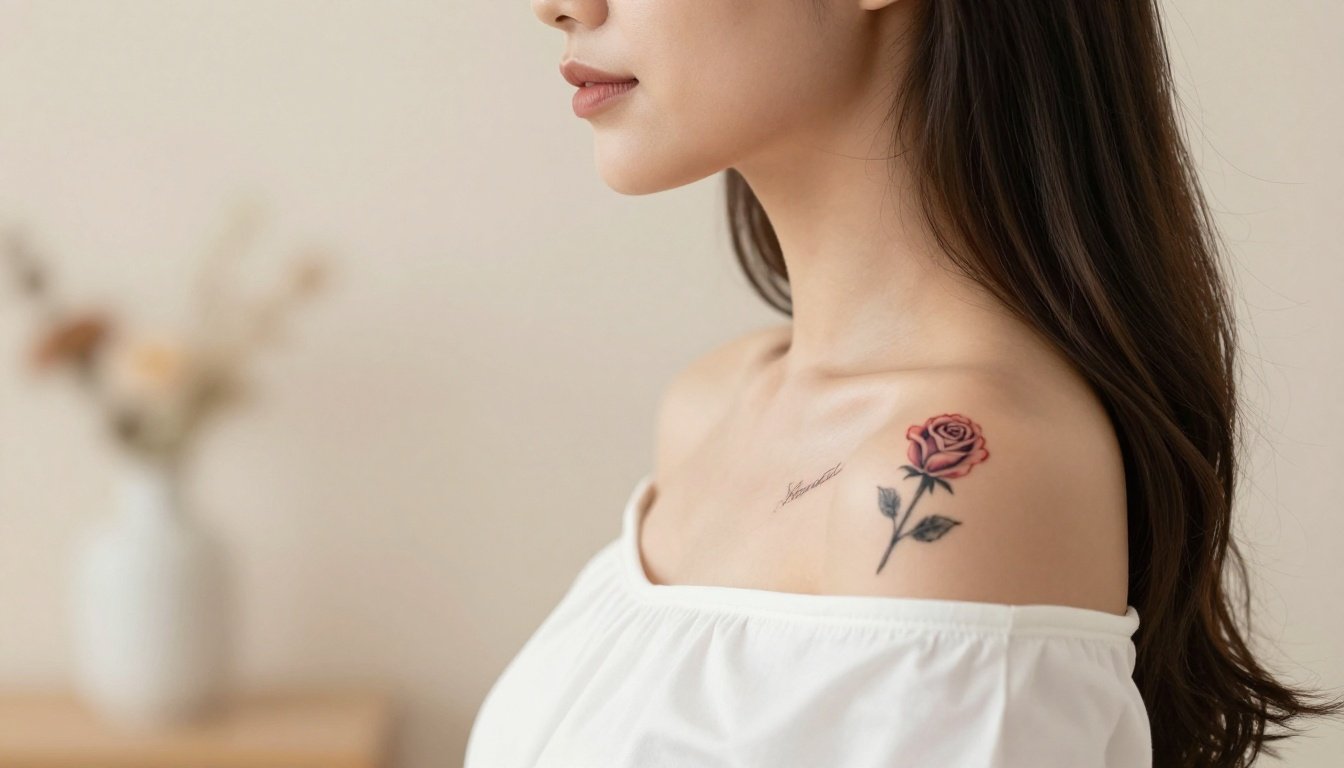
1. A fine-line rose can feel romantic, confident, and timeless without taking up much space. Place a single bloom along the collarbone, shoulder, forearm, hip, or thigh for a subtle accent. A stem with one thorn adds a sharper, more personal edge.
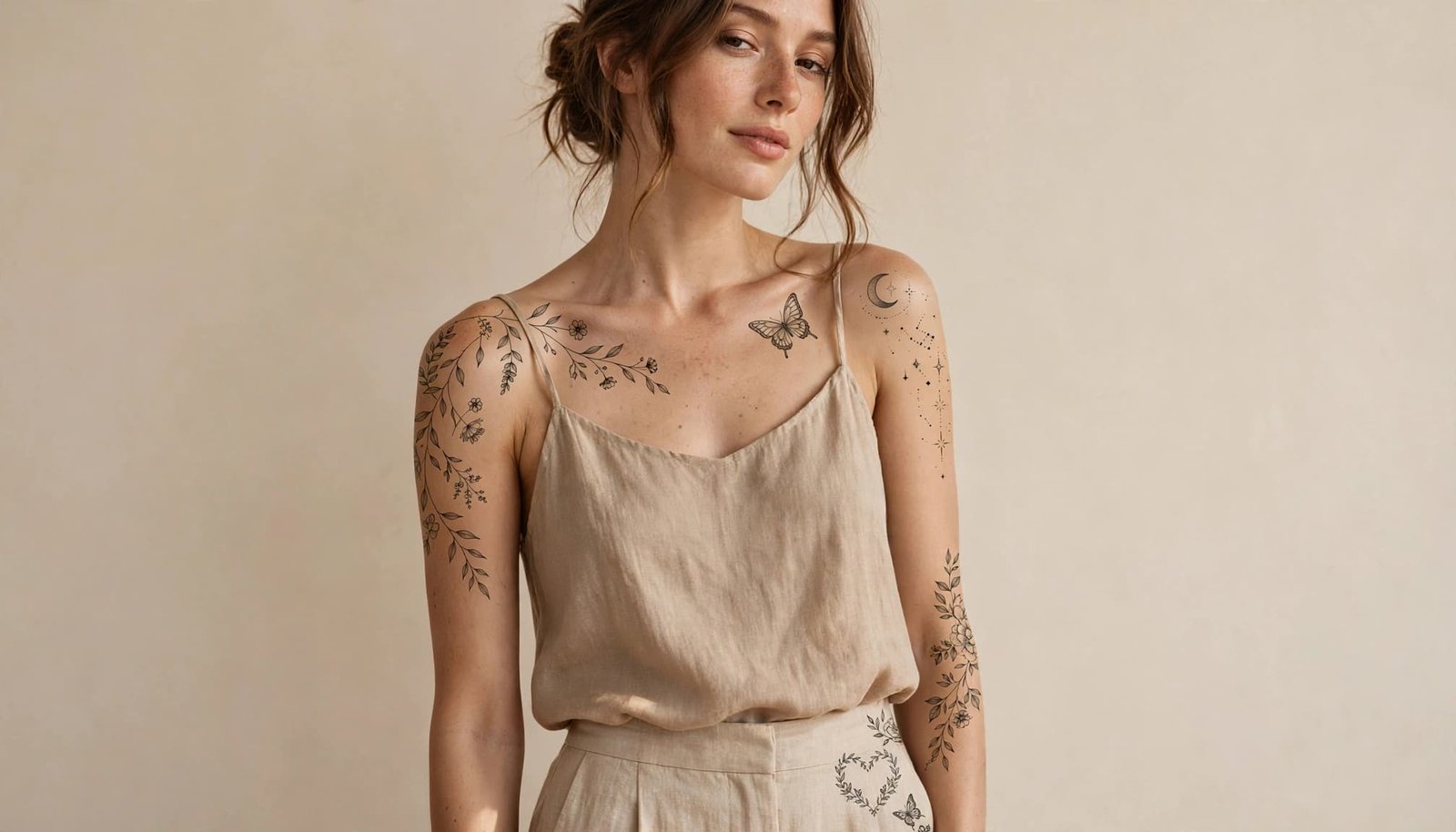
2. A wildflower or lavender sprig creates a softer, more natural look. A trailing vine can follow the ribs, side torso, or hip, while a small lavender stem works beautifully on the wrist or inner arm. The curved line gives the tattoo movement instead of making it look static.
Fine-line tattoos need thoughtful sizing. Very small petals and leaves may soften over time, especially in areas exposed to sun or friction. Ask the artist to enlarge tiny details enough to preserve their shape and clarity.
Butterflies and Delicate Moths
3. A butterfly outline offers a feminine, airy design for the ankle, wrist, hip, or shoulder blade. It can symbolize freedom, confidence, transformation, or a new chapter in your life. A simple outline keeps the result discreet, while soft shading gives the wings more depth.
4. A detailed moth creates a moodier and more unusual alternative. Jewel-like color, ornamental wing patterns, or gentle gray shading can make it feel luxurious without becoming overly bold. The thigh, lower back, or shoulder blade gives complex wings enough room to remain readable.
Small moths and butterflies suit minimalist styles, but intricate wings need space. Crowding the design may blur the pattern and reduce its impact.
Constellations, Stars, and Angel Numbers
5. A zodiac constellation can combine tiny stars with a fine connecting line. The upper back, collarbone, rib, and inner arm all work well for a discreet celestial tattoo.
6. A moon with meaningful angel numbers adds symbolism without requiring a large design. Choose numbers tied to a date, personal belief, or life milestone that you expect to value years from now.
Spacing, dot size, and line weight affect readability. When every star sits too close together, the design can become a dark patch as it ages. Your artist can adjust the scale while keeping the tattoo delicate.
Romantic Hearts, Script, and Meaningful Words
7. A small heart or lock-and-key design can represent love, self-worth, or a private promise. The rib, hip, sternum, or under-bust area gives these symbols an intimate placement.
8. A short handwritten phrase or initial feels personal because the lettering can come from your own handwriting or someone meaningful to you. Keep the wording brief and choose a font that matches the mood, whether soft, playful, or bold.
Before the appointment, check the spelling, translation, punctuation, and exact handwriting. A stencil lets you review the size and placement before ink becomes permanent.
Ornamental Mandalas and Bold Blackwork
9. An ornamental mandala can follow the sternum, hip, thigh, or upper back with symmetrical lines and lace-inspired details. Shading around the curves creates an elegant effect that changes with your posture.
10. A bold blackwork design suits anyone who wants stronger contrast. Solid shapes, geometric patterns, and flowing ornamental details can look striking on the shoulder, thigh, back, or hip.
Bold black ink often remains clear when the artist sizes it properly, but major changes or removal can be difficult. Review the stencil from several angles, and choose a design you can confidently live with.
How to Choose a Sexy Feminine Tattoo That Fits Your Style
Choosing a sexy feminine tattoo starts with your personal style, not a trending image. A design can feel playful, mysterious, soft, powerful, or sentimental, depending on its subject, placement, linework, and scale. The goal is to choose a tattoo that feels natural on your body and still feels right after the trend fades.

Match the Design to Your Personality and Meaning
Start by comparing the mood you want. Minimalist tattoos often suit someone who prefers clean lines and subtle details, while romantic designs may include roses, ribbons, hearts, or flowing script. Sensual tattoos can use placement and curved linework to follow the body, whereas symbolic designs may feature a zodiac sign, sacred icon, or meaningful date.
Colorful tattoos feel expressive and artistic. Bold blackwork creates stronger contrast and suits someone who wants the tattoo to become a central part of their look. You can also combine styles by pairing a favorite motif with one personal detail, such as:
- A rose drawn with your birth flower’s leaves.
- A butterfly that includes your zodiac symbol.
- A moon designed around a meaningful date.
- Ornamental linework based on a piece of jewelry you wear.
Save several references that show the mood, composition, and line quality you like. Avoid bringing one exact tattoo for an artist to copy. Original art, licensed images, or a custom redraw gives you a more personal result and avoids copying another artist’s protected work. The FDA’s tattoo safety guidance also makes it worth researching the studio and ink practices before you book.
Give the idea a short waiting period, such as a few weeks. If you still want the same motif after seeing it repeatedly, it has a better chance of feeling personal rather than impulsive.
Choose the Right Size, Detail, and Color
Size controls how much detail your tattoo can hold. Fingers, wrists, and ankles usually suit simple shapes, small symbols, and clean linework. Thighs, ribs, backs, shoulders, and upper arms offer more room for layered shading, micro-realism, ornamental patterns, and fine botanical details.
Ask your artist to show the design at its actual intended size, then view it on your body from different angles. A tiny reference image may look delicate on a phone but become crowded when reduced to skin. Request a redraw that follows your body’s curves, especially for ribs, hips, thighs, and shoulders.
Black ink gives a crisp, versatile look and often suits minimalist or bold designs. Muted color feels softer, while watercolor-inspired effects create movement and a painterly finish. However, color and fine details may need more maintenance over time, especially with sun exposure and friction. For changing skin or unusual reactions, consult a board-certified dermatologist through the American Academy of Dermatology’s tattoo care guidance. Also consider your workplace, clothing, and how visible the tattoo should be before finalizing its placement.
The Most Alluring Tattoo Placements and What to Consider
The most alluring tattoo placement depends on how you want the design to appear in daily life. Some locations keep your ink private until an outfit reveals it, while others make it part of your everyday style. Consider visibility, clothing, movement, skin changes, artist access, and likely discomfort before choosing a spot.

Subtle Placements for a Private or Flirty Look
The hip, rib, side torso, upper thigh, under-bust area, and lower back can keep a tattoo covered by everyday clothing. A small butterfly beneath a bikini line, a floral sprig along the ribs, or ornamental ink above the lower back can reveal itself with specific tops, swimwear, or low-rise styles.
These placements also let the design follow your natural curves. The hip and upper thigh give rounded artwork room to move with the body, while the side torso creates a longer vertical effect. Under-bust tattoos can look delicate and intimate, although bras and fitted clothing may rub against fresh ink during healing.
Ribs, sternum, and other areas with less padding may feel more tender for some people. Pain varies from person to person, so a professional tattoo artist can discuss the exact placement after seeing your design and its size. Plan loose clothing, reduced friction, and enough recovery time. The American Academy of Dermatology’s tattoo care advice also recommends protecting healed tattoos from ultraviolet exposure, which can fade ink.
Visible Placements for Everyday Style
The collarbone, shoulder, upper arm, forearm, wrist, and ankle make tattoos easier to see and enjoy. They suit smaller flowers, butterflies, stars, short words, and clean symbols. A fine-line flower along the collarbone can look graceful, while a simple star on the wrist or ankle adds a small detail to casual outfits.
Movement affects the final appearance. The shoulder and upper arm allow more room for larger artwork, while the wrist and ankle have narrower surfaces and frequent motion. Artist access matters, too, because the design may need to follow the body’s shape rather than sit as a perfectly flat image.
Visible tattoos can affect workplace rules, uniforms, and future clothing choices. Before choosing your forearm or wrist, consider whether you may want to cover it for interviews or formal events. Tiny finger and wrist tattoos also need simple shapes and enough spacing to remain legible as the ink settles and softens. A crowded design may lose clarity faster than a slightly larger, cleaner version.
What to Check Before Getting a Sexy Tattoo
A beautiful design still needs a safe studio, a realistic budget, and placement that suits your future plans. Before booking, research the artist, schedule a consultation, and ask direct questions about hygiene, pricing, healing, and how the tattoo may change over time.
Review the Artist’s Style and Studio Standards
Choose an artist whose portfolio matches your preferred style. Fine-line, ornamental, realism, color, and blackwork each require different skills, so a portfolio full of bold traditional work may not prove that an artist can create delicate botanical lines or detailed script.
Fresh tattoos often look sharper and darker than healed work. Ask to see healed examples, especially pieces with a similar size, placement, skin tone, and level of detail. Recent client reviews can also reveal whether the artist communicates well, follows appointments, and provides useful aftercare.
During your consultation, check that the studio:
- Opens a fresh, sterile needle in front of you and disposes of it after one use.
- Uses new disposable gloves and changes them when they become contaminated.
- Cleans and disinfects work surfaces between clients.
- Uses barriers on equipment that may contact skin or gloves.
- Provides clear written aftercare instructions.
- Displays any license, registration, or permit required by your state or city.
Washington State’s tattoo safety guidance also recommends a new sterile needle for every tattoo. If an artist avoids questions, pressures you to book, or seems irritated when you ask about sterilization, leave. A professional should explain the process without making you feel difficult.

Prepare for Comfort, Cost, and Long-Term Changes
Ask for the estimated price and session length before you pay a deposit. Confirm the artist’s minimum charge, deposit rules, accepted payment methods, cancellation policy, and whether touch-ups cost extra. Price usually depends on the artist’s experience, studio location, tattoo size, detail, color, placement, and the time required.
A small tattoo may still cost more than expected if the studio has a minimum charge. If you need help setting money aside, build a budget from scratch and include possible touch-ups, travel, and aftercare products.
Eat a proper meal beforehand, drink water, and wear loose clothing that gives the artist easy access without rubbing the area afterward. Avoid alcohol before your appointment, since it can make the session less comfortable and may affect bleeding.
Finally, consider how your skin and lifestyle may change. Weight fluctuations, pregnancy, natural aging, and sun exposure can alter a tattoo’s shape, color, or placement. Areas that stretch, crease, or receive frequent sunlight may need more care over time. Ask your artist to position the design for your current body while allowing enough space and line weight for it to age well.
Tattoo Aftercare for Clean Healing and Lasting Detail
Good aftercare protects the lines, shading, and color you chose. Follow your artist’s instructions first because adhesive films, traditional bandages, and recommended products can differ. The right routine should feel gentle, not complicated.
The First Days and Weeks of Healing
Mild tenderness, warmth, peeling, and a little irritation are common during early healing. Your tattoo may look dull or feel itchy as the outer layer of skin sheds, but healing times vary by design, placement, skin, and aftercare.
Keep the bandage on for the exact period your artist recommends. When it’s time to remove it, wash your hands first. Then clean the tattoo with warm water and fragrance-free soap, using your fingertips and a gentle touch. The American Academy of Dermatology’s tattoo care guidance also recommends protecting tattooed skin from irritation and sun exposure.
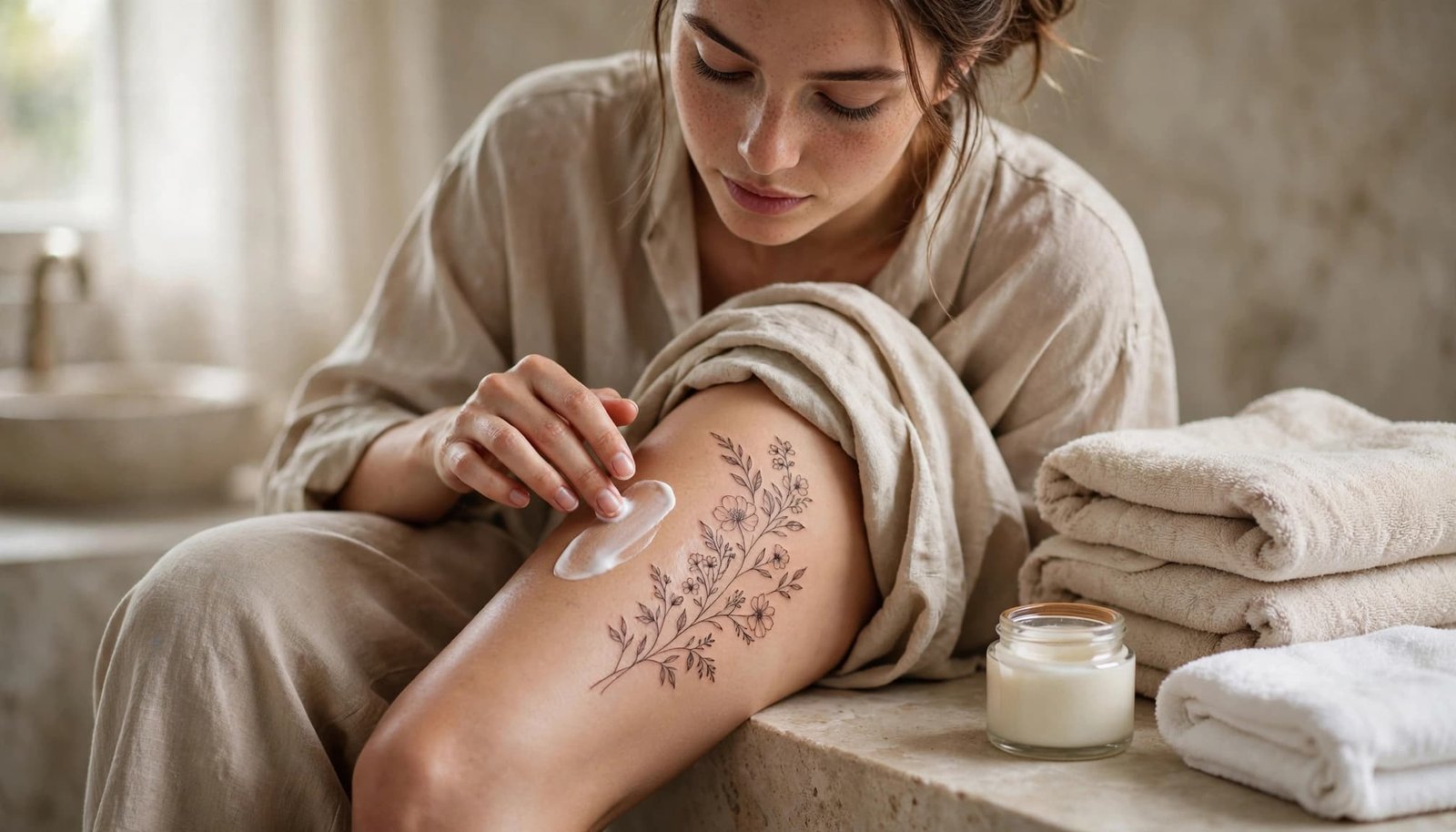
After washing, pat the area dry with a clean paper towel or fresh towel. Don’t rub it. Apply only a thin layer of fragrance-free moisturizer, since heavy layers can trap moisture and irritate the skin. You can find affordable personal care products by comparing prices and using these budget-friendly skincare shopping tips.
Peeling skin can be tempting to pick, especially around fine lines and small details. Let it fall away naturally, and never scratch, pull, or scrub the tattoo. Loose clothing helps reduce friction on the ribs, hips, thighs, under-bust area, and other covered placements.
Avoid swimming, baths, hot tubs, saunas, and other soaking activities until the tattoo has fully healed. Keep it away from direct sun during this stage, too. Sunscreen belongs on healed skin, not a fresh tattoo.
Protect the Design After It Heals
Once the skin has closed and stopped peeling, protect your tattoo from ultraviolet exposure. Cover it with clothing when practical, then apply a broad-spectrum, water-resistant sunscreen with SPF 30 or higher when the tattoo will be outside. The AAD provides additional advice on protecting healed tattoos from the sun.
Fine-line tattoos and color work may sometimes need a touch-up after healing. Schedule an assessment with your artist instead of judging the result while the skin remains irritated or flaky.
Contact a medical professional if redness, swelling, pain, or warmth worsens, or if you notice pus, fever, red streaks, or unusual tenderness. These signs can point to an infection and need medical advice.
Conclusion
The sexiest tattoo is the one that makes you feel confident, comfortable, and connected to the design. Fine-line flowers, botanical sprigs, butterflies, moths, constellations, moons, hearts, script, mandalas, and bold blackwork each create a different mood. Your favorite idea should also suit your preferred level of detail and visibility.
Before booking, match the motif, size, and placement to your body, lifestyle, and long-term preferences. Review the artist’s healed work, confirm safe studio practices, and follow the recommended aftercare routine so your tattoo has the best chance to heal cleanly and retain its detail.
Personalize any inspiration image instead of copying it exactly. Give yourself time to consider the design, placement, and future changes before choosing. A tattoo feels most alluring when it reflects your style rather than a trend you may soon outgrow.
Save the pin for later


- 34 Botanical Tattoo Ideas for Nature Lovers - September 10, 2026
- 22 Rose Tattoo Ideas for Women With Personal Meaning - September 10, 2026
- 25 Magical Mushroom Tattoo Ideas for a Whimsical Design - September 10, 2026
Leave a Reply