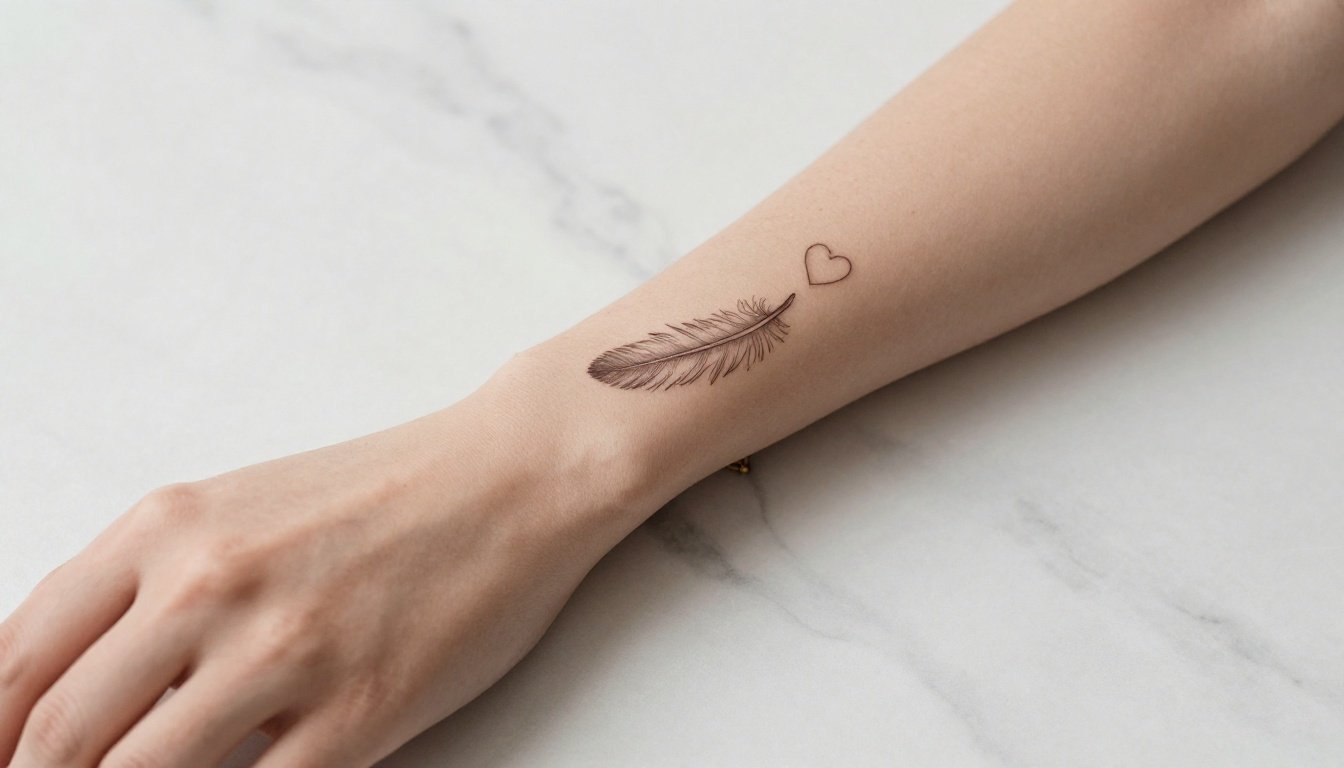
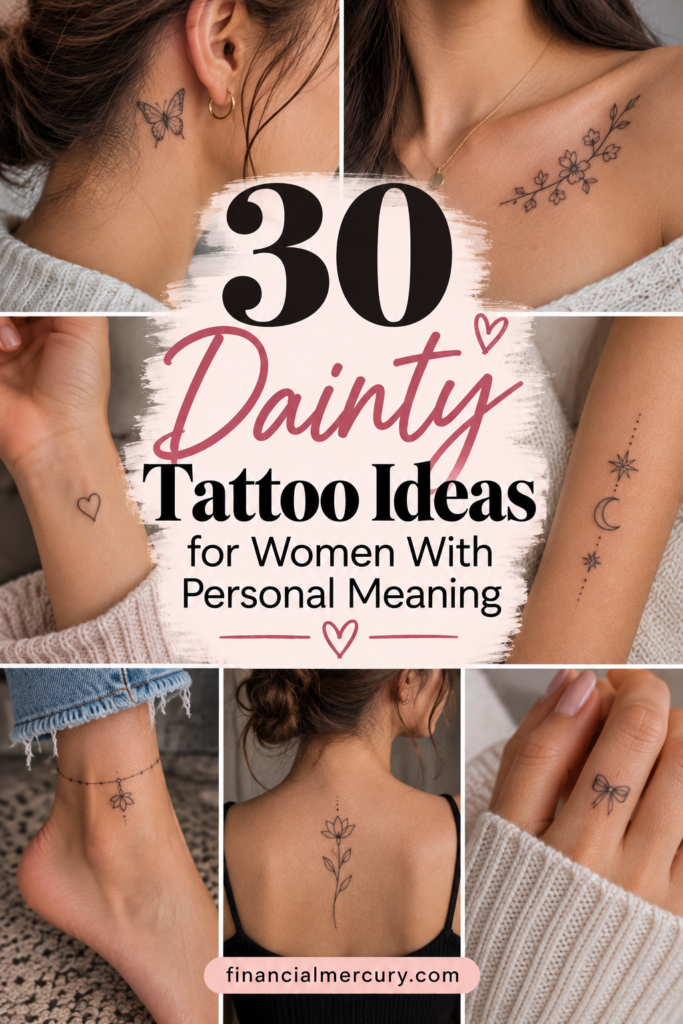
30 Dainty Tattoo Ideas for Women With Personal Meaning
A small tattoo can hold a personal memory, favorite symbol, or quiet reminder without taking over your look. That’s why dainty tattoo ideas for women appeal to anyone who wants body art that feels delicate, meaningful, and easy to customize.
Fine-line designs also fit naturally with your existing style, whether you prefer subtle jewelry, minimalist clothing, or a more curated personal aesthetic. You can adjust the size, line weight, placement, wording, and details to create something that feels personal instead of copying an image exactly. If you’re refining your overall look, these tattoos can complement the same thoughtful choices you make when building a more curated personal style.
Still, a delicate tattoo needs careful planning. The design should suit the available space, the placement should make sense for your lifestyle, and your artist should explain how fine lines may heal and change over time. Proper aftercare matters, too, so plan to keep the area clean, avoid soaking it while it heals, and protect the finished tattoo from excess sun once the skin has recovered.
The 30 ideas below include nature symbols, celestial designs, feminine details, meaningful text, and tiny personal tattoos to help you find a starting point that feels like you.
30 Dainty Tattoo Ideas for Women That Feel Personal and Timeless
A dainty tattoo feels most personal when the design connects to a real memory, relationship, place, or habit. Use these ideas as starting points, then adjust the line weight, scale, placement, and details with your tattoo artist.
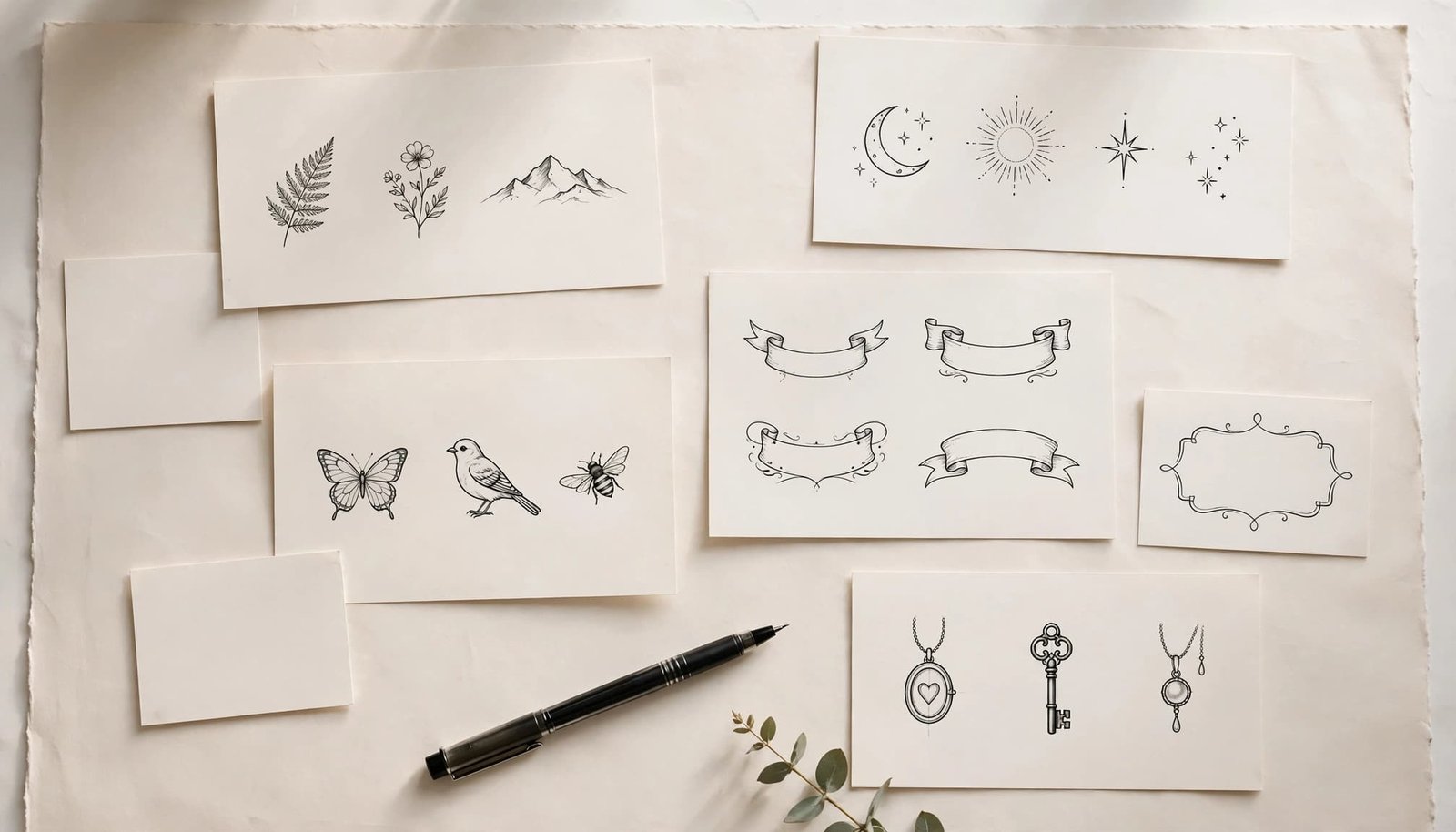
Tiny Nature Tattoos With Soft, Organic Detail
Nature tattoos can express growth, calm, resilience, peace, or a lasting love of the outdoors. Their meaning depends on your own connection to the subject, so even a simple leaf can carry a private story.
- A fine-line wildflower can symbolize personal growth or a season when you learned to stand on your own. Add your birth flower or a short stem to make the design yours. Keep the petals open and use a thin but stable line so it works as a standalone tattoo or part of a botanical collection.
- A tiny lavender sprig suits someone who connects the plant with calm, healing, or a favorite garden. A slightly curved stem can make it feel more natural, while one small dot of purple adds restrained color. It works well alone on the forearm, ankle, or collarbone.
- A delicate olive branch may suggest peace, family heritage, or a place that feels like home. Ask your artist to shape the leaves after a meaningful branch or reference image. A short branch works as a standalone design, while two crossed sprigs can become part of a small collection.
- A small fern can represent resilience, quiet strength, or memories of hiking and camping. Choose a fern shape connected to a specific trail, region, or childhood trip instead of using a generic outline. Simple leaves age more clearly than crowded ones, especially on the upper arm or shoulder blade.
- A minimalist mountain or landscape scene can hold memories of travel, home, freedom, or time spent outdoors. Add one recognizable ridge, lake line, or sun dot from a real place. Keep the scene small enough for a standalone tattoo, but avoid compressing too many features into it.
Forearm, collarbone, upper arm, ankle, and shoulder blade placements all suit these designs. Stems and leaves need enough spacing to stay clear as the tattoo ages. Highly exposed or high-friction areas may fade faster, so ask your artist how the placement fits your daily routine.
Celestial Dainty Tattoos for a Dreamy Look
Celestial designs can reflect change, hope, direction, balance, or a personal connection to astrology. Their clean shapes also make them easy to wear alone or combine into a small group of meaningful symbols.
- A crescent moon may suit someone moving through a new chapter or learning to accept change. Add a tiny star from a meaningful date or use a slightly uneven curve for a handmade feel. A single crescent works beautifully on the inner forearm or ribs.
- A tiny sun can symbolize hope, energy, warmth, or a person who helped you through a difficult time. One small ray can carry a special meaning without making the design busy. Use a medium-fine line if you want it to remain legible as a standalone tattoo.
- A constellation can connect the tattoo to your zodiac sign, a birthday, or a night spent under a memorable sky. Use simple dots and short connecting lines instead of squeezing in too much detail. One small initial beside the constellation can personalize it without overpowering the design.
- A star cluster may represent guidance, friendship, or several people who belong together. Vary the star sizes slightly, or choose the number of stars to match a meaningful group. This compact design fits the back of the arm, shoulder, or behind the ear.
- A sun-and-moon pairing can express balance, two important relationships, or the contrast between different sides of your personality. Keep both shapes clean and use matching line weight so they feel connected. It can stand alone near the ribs or become the center of a celestial collection.
The inner forearm, ribs, shoulder, back of the arm, and behind-the-ear area all work for celestial tattoos. Behind-the-ear designs need extra care because hair, headphones, movement, and sun exposure can cause friction and faster fading.
Feminine Symbols That Stay Simple and Elegant
Feminine tattoos don’t have to follow one style. You can make these symbols romantic, graphic, understated, playful, or modern by changing the line style, angle, scale, and amount of open space.
- A tiny bow can recall a gift, a cherished garment, or a personal love of delicate details. Use an asymmetrical shape or a single loose ribbon end to keep it modern. Fine lines make it work well alone on the wrist, while a slightly larger bow can join a collection.
- A delicate heart may symbolize love, friendship, self-respect, or remembrance. Instead of choosing a standard heart, use an elongated shape or a small break in one side. Leave the interior open so the outline stays readable at a small scale.
- A single pearl or gemstone can represent a birth month, a treasured person, or something formed through patience. Add a restrained birthstone color rather than filling the entire design. One small gem works as a standalone tattoo on the sternum, upper arm, or rib cage.
- A graceful butterfly can suggest transformation, freedom, or a specific period of change. Base the wing pattern on a real species you admire, then simplify it into a few open shapes. Avoid packing in tiny markings, because enclosed details can blur together over time.
- A minimalist feminine profile can honor your identity, a loved one, or an artistic interest in portraiture. A single continuous contour often looks more current than a heavily shaded face. Keep the scale large enough for the nose, lips, and chin to remain distinct.
The wrist, upper arm, shoulder, sternum, and side of the rib cage offer flexible placements. Your artist should preserve open skin between small interior details, especially when the design includes wings, gemstones, or facial features.
Animal and Pet Tattoos With a Personal Story
Animal tattoos become more original when they reference one specific creature instead of using a generic image. A recognizable outline usually ages better than an overly detailed miniature portrait.
- A tiny paw print can honor a current pet, a childhood animal, or a companion you still miss. Use the actual shape of your pet’s paw if you have a clear photo. It works alone on the inner arm or ankle, or beside a pet’s initial in a small collection.
- A minimalist cat or dog outline can capture companionship without requiring a full portrait. Include a distinctive ear shape, tail curve, or collar tag initial to make it recognizable. Use a clean medium-fine line so the outline stays clear on the calf, shoulder, or upper back.
- A small bird in flight may represent freedom, travel, protection, or a favorite species. Choose a bird connected to a place, family memory, or personal interest instead of a generic silhouette. A simple flying shape works as a standalone tattoo on the shoulder or inner arm.
- A delicate snake can symbolize protection, renewal, independence, or a personal connection to nature. Keep the body curve smooth and limit the scales to one or two small sections. A fine-line snake looks elegant along the forearm or ankle, but it needs enough length to remain recognizable.
- A fine-line butterfly or moth can express transformation, nighttime memories, or an interest in the natural world. Use a simplified wing pattern inspired by a real species. Leave open space between the wings and body so it remains readable as a standalone tattoo or part of an animal collection.
Before choosing the final size, ask an experienced fine-line artist how much detail is realistic for the placement. A design that looks clear on a screen may need a larger scale on skin.
Tiny Words, Initials, and Numbers With Meaning
Letters and numbers can make a tattoo feel private without requiring an elaborate image. They also demand careful planning, because a small spacing error can change the meaning or make the design difficult to read.
- A loved one’s initial can honor a partner, child, relative, or close friend. Copy the letter from their handwriting, signature, or an old card for a personal detail. Choose a readable line weight so it works alone or beside a tiny symbol.
- A short handwritten word can preserve a phrase from someone important. Ask that person to write the word on paper, then have the artist clean it up without removing its character. Delicate script needs enough size and spacing to remain readable.
- A meaningful date in small numerals can commemorate a birthday, anniversary, or turning point. Double-check every number and its order before the appointment. Keep the numerals open and evenly spaced, especially if the tattoo will sit along the collarbone or ribs.
- A tiny coordinates tattoo can point to a birthplace, first home, wedding location, or favorite travel destination. Check the coordinates through a reliable map before tattooing them. Because numbers need room to breathe, the forearm or upper arm often works better than a cramped finger placement.
- A one-word reminder, such as “breathe” or “bloom,” can provide a personal cue during stressful moments. Use plain lettering if you want maximum readability, or adapt a loved one’s handwriting for warmth. It works as a standalone tattoo on the shoulder blade, inner forearm, or collarbone.
Fingers and the sides of the hands often fade faster because of washing, friction, and constant use. They may need touch-ups, so less crowded placements are usually better for words, dates, and coordinates.
For general healing guidance, Healthline’s tattoo aftercare advice covers gentle washing, moisturizing, and avoiding sun exposure while the skin heals.
Minimalist Objects and Everyday Keepsakes
Ordinary objects can carry more meaning than elaborate symbols because they connect to routines, interests, and private memories. Keep the drawing clean, then personalize one small feature rather than adding many interior lines.
- A tiny coffee cup can represent comfort, a morning ritual, or a favorite conversation. Add the shape of a real mug or one small charm on the handle. It suits the wrist, forearm, or ankle as a standalone design.
- A small book can symbolize learning, imagination, a favorite story, or a person who encouraged you to read. Use the shape of a beloved book and add only a few page lines. A slightly wider scale keeps the cover and pages clear on the upper arm.
- A simple camera can honor photography, travel, or the way you preserve memories. Personalize it with the shape of a vintage camera you own or a tiny lens detail. Keep the body outline open so it doesn’t become a dark block at a small size.
- A delicate paper airplane can represent travel, creativity, childhood, or a decision to move forward. Base its angle on a real route, such as the direction of a meaningful trip. It works alone on the ankle or joins other travel symbols on the forearm.
- A miniature key or lock can stand for independence, privacy, a new home, or a memory shared with someone special. Add a small charm based on a real key or use a simplified lock shape. Choose enough scale for the teeth and opening to remain distinct on the back of the shoulder.
The best object tattoo is one you’ll still understand and enjoy years later. Choose a clear silhouette, discuss realistic line weight with your artist, and avoid forcing too many memories into one tiny design.
How to Choose a Dainty Tattoo That Fits Your Style
Choosing one design from 30 beautiful ideas can feel harder than finding inspiration in the first place. Start with the meaning, then narrow your options by visual style, size, color, placement, and how the tattoo may work with future body art.
A dainty tattoo can be delicate without being extremely small. In fact, a slightly larger design often preserves fine details more clearly and gives the ink more room to age well. Use the ideas in this guide as starting points, then personalize the details with an experienced tattoo artist.
Match the Design to the Meaning You Want to Keep
Before choosing an image, write down what you want the tattoo to remind you of. The answer could involve a person, memory, value, place, milestone, or period of personal change. Writing first helps you choose a symbol with a real connection instead of selecting a design only because it looks popular online.
For example, a wildflower might remind you of a childhood garden, while a constellation could connect to a birthday or a memorable night outdoors. A simple key may relate to a first home, and a tiny paw print may honor a pet. Your personal story matters more than a fixed definition found in a tattoo idea list.
Symbols can carry different meanings across cultures, families, and individuals. A butterfly may mean transformation to one person and a favorite summer memory to another. Neither interpretation is more correct. Choose the meaning that feels honest to you.
You can also combine two subtle elements, such as:
- A birth flower with a loved one’s initial.
- A constellation with a meaningful date.
- A mountain outline with a tiny sun.
- A pet silhouette with one identifying mark.
Keep the combination simple, though. Every added line needs space, and overcrowding can make a dainty tattoo difficult to read. If two symbols compete for attention, remove one detail or ask your artist to create a cleaner connection between them.
Choose Between Black Ink, Soft Color, and Fine-Line Styles
Black fine-line tattoos usually offer the clearest contrast, which helps small shapes and lettering remain readable. Gray shading creates a softer appearance, but too much shading can make a tiny design look muddy as the ink settles and the skin changes.
Soft color adds personality without requiring a large tattoo. A single lavender petal, blue star, or muted green leaf can highlight the meaning while keeping the design restrained. Pale colors may fade more quickly than darker ink, so they require careful sun protection and aftercare. No color stays exactly the same forever.
Minimalist white details can add small highlights, but white ink often heals differently from black ink and may become less visible over time. Ask your artist which pigments suit your skin tone, the chosen placement, and the amount of sunlight or friction that area receives. The American Academy of Dermatology’s tattoo skin care guidance also explains why tattooed skin needs protection after healing.
Line weight and negative space matter as much as color. A simple shape with open skin between its details often stays clearer than a highly decorated design. Before booking, ask whether the artist recommends a medium-fine line instead of the thinnest possible option.
Check the Size Before You Commit
A design that looks crisp on your phone can become crowded when reduced to a few centimeters. Words lose spacing, animal faces lose recognizable features, and geometric shapes can turn into dark spots when the lines sit too close together.
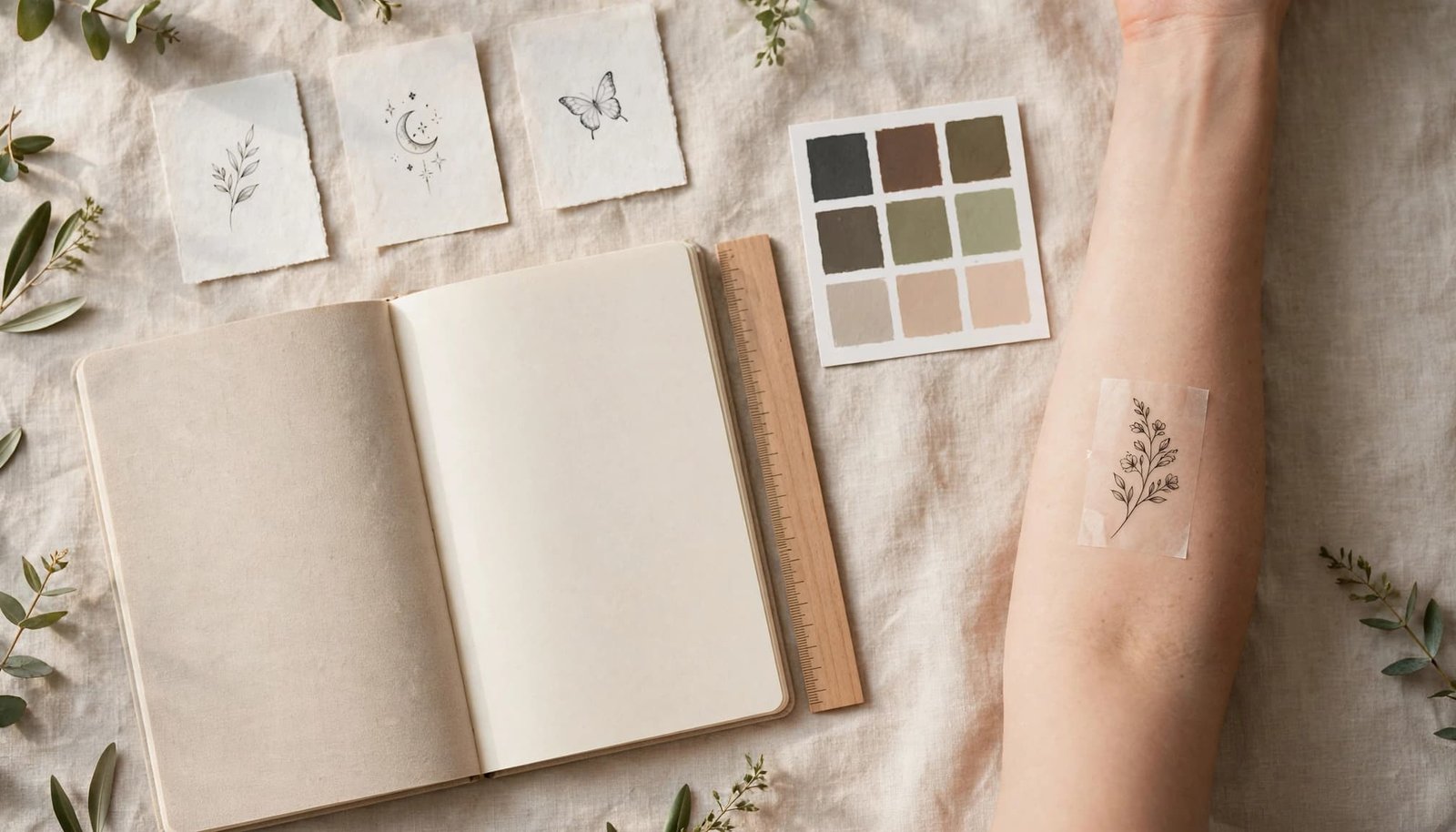
Print the design at the size you are considering and place it against your skin. You can also test the placement with a temporary tattoo or body-safe marker for a day. Move naturally, wear your usual clothes, and notice whether the design feels discreet, visible, or awkward in that location.
A larger size doesn’t make a tattoo less dainty. It can give petals, facial features, letters, and constellation points enough room to remain distinct. Ask your artist for the minimum safe size for the design, then leave open space between nearby lines.
Words, dates, faces, and small geometric tattoos need extra planning. If a phrase only fits when the letters are compressed, choose fewer words or increase the size. Your tattoo should be easy to recognize after healing, not only impressive in the stencil stage.
Find an Artist Who Understands Delicate Tattoos
Look beyond follower counts and polished photos when choosing an artist. Social media popularity doesn’t prove that someone can create clean, durable fine-line work. Instead, review the artist’s portfolio and look for:
- Healed fine-line tattoos, not only fresh work photographed immediately after the appointment.
- Consistent line quality across different designs and body placements.
- Clear examples of small lettering, simple shapes, and delicate color.
- Clean studio practices, including fresh needles and sanitary equipment.
- Straightforward pricing and honest advice about size, placement, and detail.
A fine-line specialist should simplify a design when the original concept contains too much detail. That advice protects the tattoo’s readability rather than taking away from your idea. The FDA notes that tattoo studios are generally regulated by state or local health departments, so ask practical questions about hygiene and the inks used.
Book a consultation before the appointment if this is your first tattoo, especially if you want lettering or a sensitive placement. Bring reference images for the mood, line quality, and placement you like, but don’t ask the artist to copy another person’s tattoo exactly. Show several examples and explain what you want to feel when you look at the finished design.
Finally, consider your future tattoos. A small group of related pieces can look intentional when they share a line weight, color palette, or visual theme. Leave enough space for another design if you may build a collection later. Your first tattoo doesn’t need to predict every future choice, but it should give you room to make those choices comfortably.
Best Placement Ideas for Small and Fine-Line Tattoos
The best placement for a dainty tattoo depends on more than appearance. Visibility, skin movement, friction, sun exposure, workplace rules, and your plans for future tattoos all affect the decision.
A tattoo can look delicate on one body area and feel much bolder on another. Before choosing a spot, ask yourself whether you want to see the design every day, cover it easily, or accept more maintenance for a highly visible placement.
Discreet Placements That Still Show the Design Clearly
The inner forearm is one of the most practical placements for a small tattoo. You can see it easily, but a long-sleeved shirt can cover it at work. The area usually provides enough flat space for flowers, words, dates, and small animal designs without forcing the details too close together.
The upper arm, shoulder, shoulder blade, upper back, and outer thigh offer more privacy. These areas are easier to cover with everyday clothing, which can help if your workplace has a strict dress code. The upper back and shoulder blade also give you room to expand a future tattoo collection without crowding the design.
For a romantic and visible look, consider the collarbone. A small flower, handwritten word, or constellation can follow the natural line of the bone and remain easy to show with a tank top or open neckline. The area may experience some sun exposure, so healed tattoos need regular protection with broad-spectrum, water-resistant SPF 30 or higher, as recommended by the American Academy of Dermatology’s tattoo skin guidance.

Areas with less rubbing and less constant bending often give delicate lines a better chance of staying clear. However, skin still moves. Your artist should look at your body shape, natural curves, and how the design changes when you sit, bend, walk, or relax your arm.
Ask to see the stencil while your body is in a natural position. A design can look straight while standing and shift when your shoulder or wrist moves.
Visible Placements That Need More Maintenance
The wrist, fingers, hands, ankles, feet, and behind-the-ear area can make a tattoo easy to notice, but they also demand realistic expectations. Frequent washing, hand movement, sun exposure, footwear, jewelry, and daily friction can affect healing and long-term sharpness.
Finger and hand tattoos are especially difficult for fine-line details. These areas receive constant use, repeated washing, and rubbing against objects, so small lines may soften or fade sooner than they would on the upper arm or shoulder. Rings and bracelets can create additional friction around a healed tattoo.
Ankles and feet also face regular contact with socks, shoes, and flooring. A design may look beautiful there, but tight footwear can irritate fresh skin during healing. Behind the ear, hair, headphones, and sunlight can create similar problems. The wrist is easier to show and may fit a small symbol well, yet bending and washing still affect the area.
These placements aren’t wrong choices. They simply may need a touch-up sooner, especially when the tattoo uses extremely thin lines or pale color. Ask the artist to show healed examples from the same placement, not only fresh tattoos photographed immediately after the appointment.
During healing, wear loose clothing that doesn’t rub the tattoo, keep fresh ink out of direct sun, and avoid swimming until the skin closes. Cleveland Clinic’s tattoo aftercare instructions also advise avoiding tight clothing, scratching, and direct sunlight while the tattoo heals.
How Placement Changes the Feel of the Same Tattoo
One flower can create several different impressions depending on where you place it. On the collarbone, it may feel romantic and decorative. On the inner arm, the same flower feels subtle and personal. A larger version on the forearm appears bolder, while a design along the ribs feels more private.
Orientation changes the result, too. You might turn a flower toward your hand so the stem follows your arm, or place a bird so it appears to move along the natural direction of your forearm. A word can follow the collarbone, sit vertically along the ribs, or remain horizontal on the upper back.
Matching tattoos don’t need to be identical. Two people can choose the same symbol in different sizes, use complementary flowers, or place related designs on opposite arms. Balanced tattoos share a visual connection without looking copied.
Before booking, decide how often you want to see the tattoo. A forearm or wrist placement gives you a daily reminder, while the shoulder blade, upper back, ribs, and outer thigh keep the meaning more private. Also leave space if you may add another tattoo later. Your artist can assess the skin in person and suggest a size and position that works with both your current design and future plans.
Pain varies from person to person, so online placement charts can’t predict your experience. Skin thickness, sensitivity, nerves, movement, and the artist’s technique all matter. Ask for an in-person assessment before settling on a delicate tattoo placement, especially if you work in a setting where covering the tattoo during healing will be difficult.
Fine-Line Tattoo Healing and Aftercare Basics
Fine-line tattoos need the same careful aftercare as larger designs, but their delicate details make gentle handling especially important. Your tattoo artist’s instructions should come first because coverings, healing methods, and recommended products vary by studio and tattoo placement.
During healing, mild redness, tenderness, slight swelling, peeling, and a small amount of clear fluid can be normal. The area should gradually feel better, though. Increasing discomfort or spreading redness needs professional attention rather than guesswork.
What to Do During the First Days of Healing
Follow your artist’s direction for the initial covering. Some artists use a traditional bandage, while others apply a breathable adhesive film for a different amount of time. Don’t remove, replace, or re-cover the tattoo unless your artist tells you to do so.
When it’s time to clean the area, wash your hands first. Then use lukewarm water and a mild, fragrance-free soap. Clean the tattoo with your fingertips and a light touch, without rubbing, scrubbing, or using a washcloth. A gentle routine protects the healing skin better than aggressive cleaning. Cleveland Clinic’s tattoo aftercare guidance also recommends avoiding hot water, friction, and soaking during the early healing period.
Pat the area dry with a clean disposable towel or a fresh, soft towel. Avoid dragging the towel across the tattoo. Once the skin is dry, apply only a thin layer of the fragrance-free moisturizer or ointment recommended by your artist. A heavy coating can trap moisture and irritate the skin. The American Academy of Dermatology advises choosing a water-based lotion or cream for tattooed skin and avoiding petroleum-based products that may contribute to fading. See its guidance on caring for tattooed skin.
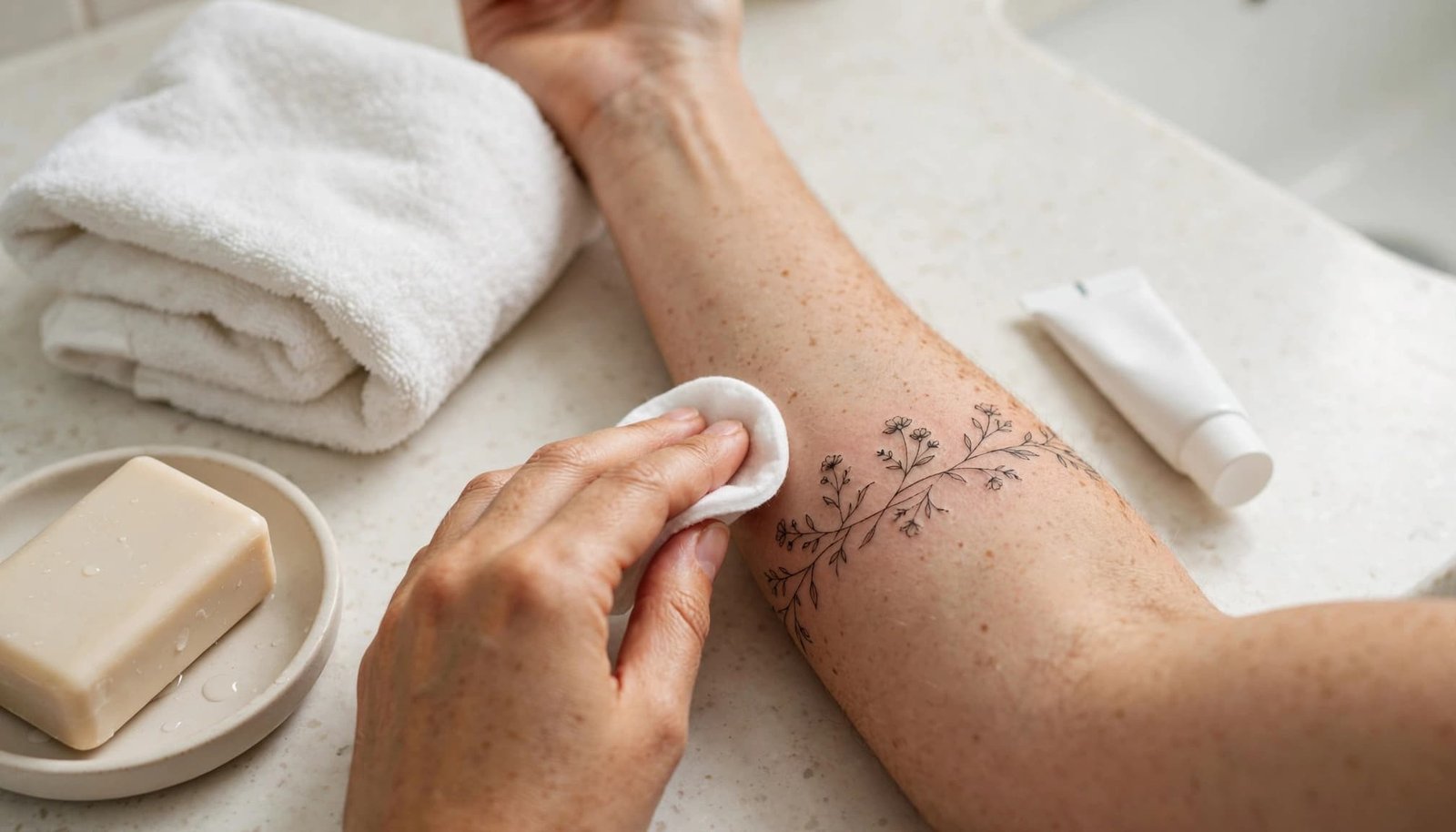
For the first several days, wash and moisturize according to your artist’s schedule, often once or twice daily. Mild peeling and itching can occur as the surface heals. Let flaking skin fall away naturally, and don’t pick, scratch, scrub, or peel it. Removing flakes too early can irritate the area and pull at unevenly healed ink.
Keep the tattoo away from swimming pools, hot tubs, lakes, and baths until the skin has fully healed. Showers are generally easier to manage because they limit soaking. You should also avoid heavy friction, tight clothing, and activities that cause repeated rubbing or excessive sweating around the tattoo.
Loose, breathable clothing can reduce contact with fresh ink. If the tattoo sits near a waistband, bra strap, sock, shoe, or jewelry, adjust your clothing while the skin recovers. Direct sunlight can also irritate a fresh tattoo, so cover the area with clothing when practical. Don’t apply sunscreen to an unhealed tattoo unless your healthcare professional or artist gives you different instructions.
Clear fluid, mild soreness, and light peeling can occur during normal healing. The important pattern is gradual improvement, not symptoms that intensify each day.
How to Protect Fine Lines From Fading
Fine-line ink can soften naturally over time. UV exposure, repeated friction, skin movement, frequent washing, and harsh exfoliation can all affect delicate tattoo lines. High-friction areas, such as fingers, hands, feet, ankles, and places under tight clothing, often need more maintenance than protected areas.
Wait until the tattoo is fully healed before using sunscreen on it. Once the surface has closed and peeling has stopped, apply a broad-spectrum, water-resistant sunscreen with SPF 30 or higher whenever the tattoo will be exposed. Reapply about every two hours outdoors, and apply it again after swimming or sweating. Sunscreen helps, but it doesn’t replace shade or clothing. A sleeve, hat, or shaded spot offers additional protection during long periods outside.
Avoid tanning beds and sunlamps, which can fade tattoo ink and expose your skin to unnecessary UV radiation. Harsh scrubs, exfoliating acids, and rough brushes can also irritate tattooed skin, especially when you use them frequently. Keep the area clean, moisturized, and protected without treating it like a surface that needs constant polishing.
Don’t judge the final tattoo while it still looks shiny, flaky, or slightly muted. The healed result becomes easier to assess after the skin settles. Very fine lines may appear softer than they did in the fresh stencil, and a professional touch-up may improve areas that healed unevenly. Ask the original artist to review the tattoo after complete healing before deciding whether any changes are needed.
When to Ask for a Touch-Up or Medical Advice
Normal fading is usually a cosmetic concern that develops after the tattoo has healed. A touch-up should wait until the skin is no longer peeling, tender, or irritated. Contact the original artist, share a clear healed photo, and follow their recommendation about timing. Requesting more work too soon can stress skin that hasn’t finished recovering.
Healing problems follow a different pattern. Contact a health professional if you notice worsening redness, increasing pain, pus, spreading warmth, or fever. Red streaks moving away from the tattoo, rapidly increasing swelling, or feeling unwell also deserve prompt medical attention.
Don’t rely on online photos to decide whether a concerning tattoo is infected. Images rarely show the full situation, and self-treating with leftover medication or harsh products can make irritation worse. A healthcare professional can assess symptoms and explain what to do next. If the tattoo is healing normally, continue the artist-approved routine and let the skin recover before evaluating its final lines.
Conclusion
The best dainty tattoo is more than a pretty reference photo. It brings together personal meaning, a clear design, a realistic size, a suitable placement, and an artist who understands fine-line work. Whether you choose a flower, constellation, pet symbol, handwritten word, or everyday keepsake, the strongest idea is one that connects to your life.
Save a few designs that feel right, then test their size and placement with a temporary tattoo or printed stencil. Take time to discuss line weight, spacing, visibility, and future touch-ups during a consultation. A thoughtful decision is more reliable than rushing toward a trend that may not fit your style or story.
After your appointment, follow your artist’s healing instructions and protect the tattoo from friction, soaking, and direct sun while the skin recovers. Once it’s fully healed, regular sun protection can help preserve the artwork’s clarity. A delicate tattoo can stay subtle while carrying deep meaning, and the final design should feel like you, not just look good in someone else’s photo.
Save the pin for later

- 30 Trendy Tattoo Ideas for 2026: Styles and Placement - September 27, 2026
- 30 Gorgeous Fine Line Tattoo Ideas to Try - September 27, 2026
- 25 Fine Line Tattoo Ideas for Women With Meaning - September 22, 2026
Leave a Reply