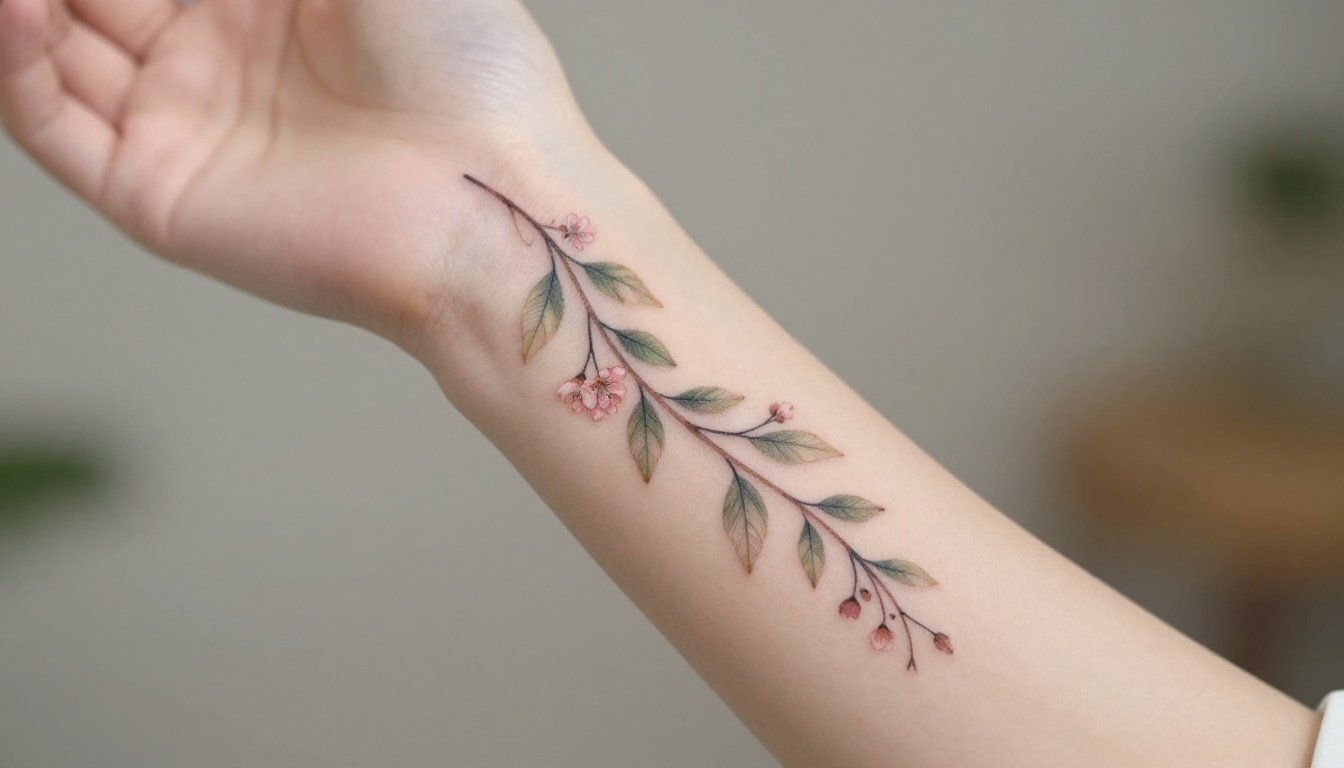
34 Pretty Vine Tattoo Ideas for Women to Inspire Your Next Design
Vine tattoos have a natural rhythm that makes them easy to personalize. Your design can look delicate and airy, graceful as it follows the body’s curves, bold with heavier lines, or deeply personal when you add a meaningful symbol. A simple vine can also become a custom piece with flowers, leaves, thorns, butterflies, fruit, initials, or a favorite word woven through the stem.
Placement changes the entire feel of the tattoo. A fine-line vine around the wrist or ankle can resemble delicate jewelry, while a floral design across the collarbone, along the ribs, or down the spine creates a longer visual flow. You can keep the leaves sparse for a minimalist look, add color for more energy, or build a larger statement piece around the thigh, arm, or calf. Anyone can adapt these ideas to their own style, regardless of how they identify or dress.
These 34 pretty vine tattoo ideas include minimalist sketches, floral branches, wrap-around designs, colorful details, and bold botanical compositions. As you browse, consider which placement, scale, and focal elements feel most like you, then start with the ideas that match your preferred style.
34 Pretty Vine Tattoo Ideas for Women to Inspire Your Next Design
Vine tattoos can be tiny and understated or large enough to follow the body’s natural curves. Use these ideas to compare line weight, placement, flowers, color, and personal details before choosing your design.
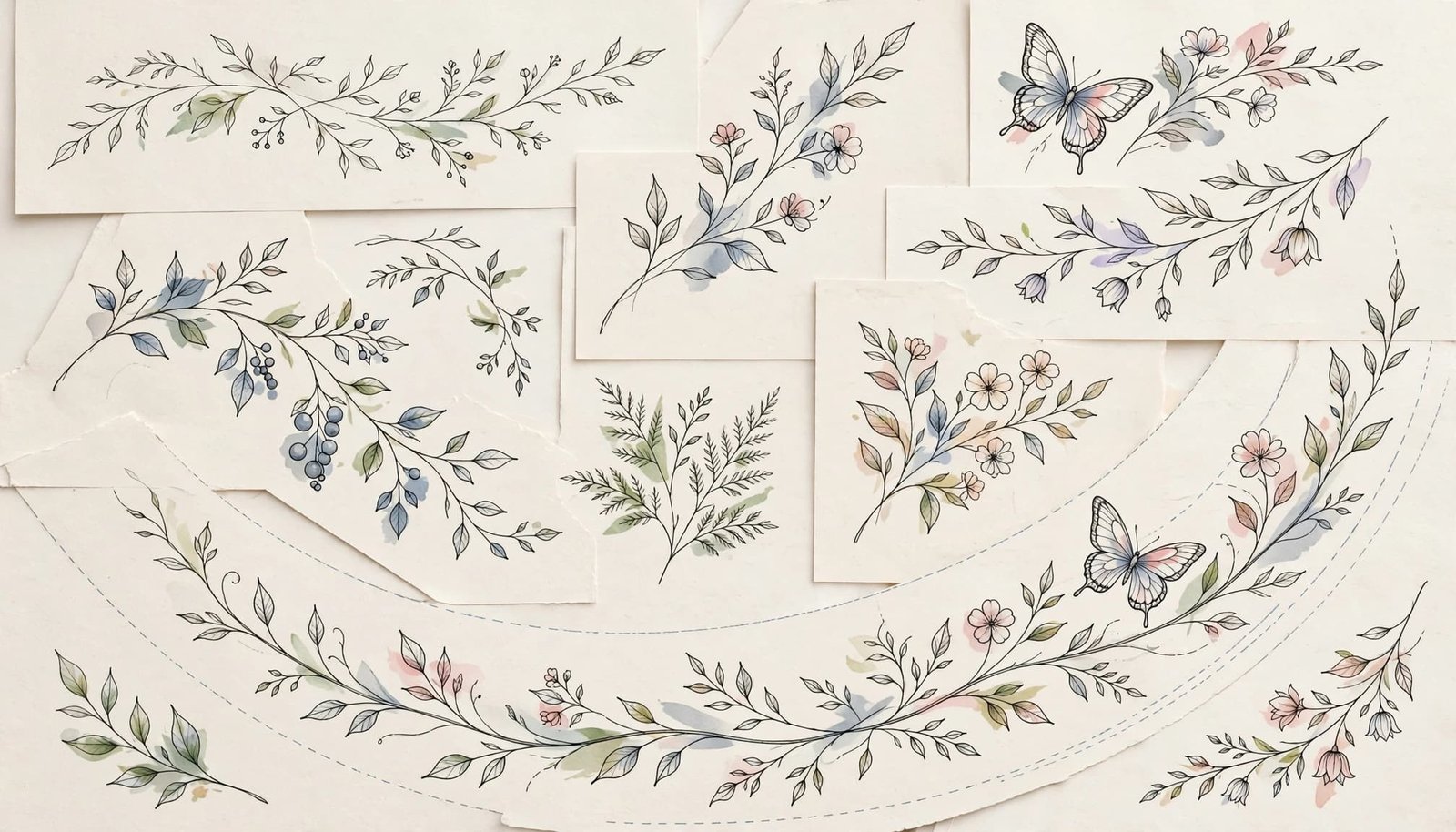
Delicate and Minimalist Vine Tattoos
These designs suit a first tattoo or anyone who prefers airy spacing, thin lines, and small leaves. Keep the composition open because tiny details can soften as the tattoo ages.
- A single-stem wrist vine can look like fine botanical jewelry. Add one meaningful leaf near the center.
- A tiny behind-the-ear vine stays discreet and feels personal. Use a short curved stem with two leaves.
- A fine-line ankle sprig creates a light, graceful accent. Add a tiny bud for a softer finish.
- A minimalist collarbone vine follows the body’s natural line. Personalize it with an initial hidden among the leaves.
- A small heart-shaped vine forms a gentle symbol of love. Use two curved stems and leave the center mostly open.
- A simple finger or hand vine creates a delicate ring-like effect. Choose fewer leaves to protect the design’s clarity.
- A single leaf-and-stem tattoo feels clean and modern. Pick an olive, fern, or eucalyptus-inspired leaf.
- A discreet vine with a short word or initial adds direct meaning. Keep the lettering simple and leave breathing room around it.
Floral Vine Tattoos With Soft, Feminine Detail
Flowers change the mood of a vine more than almost any other detail. Dense petals need enough space, so consider the forearm, shoulder, thigh, or ribs for intricate work.
- A rose vine with small thorns can suggest beauty paired with strength. Place it along the forearm and add a birth-year number.
- A lotus vine suits a calm, reflective design and can suggest spiritual growth. Add soft shading beneath one open bloom.
- A jasmine vine has small, delicate flowers and a light garden feel. Wrap it around the ankle with a subtle scent-inspired memory.
- A wildflower vine feels relaxed and organic. Combine uneven stems with one favorite local flower.
- A daisy vine creates a bright, uncomplicated mood. Place it on the wrist and use one colored center as an accent.
- A peony vine offers fuller petals and a romantic look. Give it room across the upper arm or shoulder blade.
- A mixed-flower family vine can represent loved ones through different blooms. Assign one flower to each important person.
- A vine with tiny blossoms keeps the design airy and understated. Scatter the flowers along the stem instead of clustering them.
- A floral shoulder-to-collarbone vine creates a graceful flowing shape. Balance one larger bloom with smaller flowers near the neck.
Bold, Colorful, and Nature-Inspired Vines
Black ink creates sharp contrast and strong definition, while watercolor accents produce a softer, painted effect. Choose colors that fit your wardrobe and personal style, then protect healed tattoos with broad-spectrum, water-resistant SPF 30 or higher, as recommended by the American Academy of Dermatology.
- A blackwork vine uses heavier leaves and dense shading for a dramatic effect. Place it on the forearm and add geometric gaps.
- A watercolor vine blends muted greens, pinks, or blues around a fine stem. Match the palette to a favorite flower or painting.
- A vine with butterflies adds movement and a sense of lightness. Use different wing sizes to guide the eye along the arm.
- A vine with fireflies creates a nighttime-inspired design. Add tiny yellow dots around a darker stem.
- A grapevine with fruit feels abundant and decorative. Place it along the ribs or thigh, with purple grapes as the focal point.
- A berry vine has a playful woodland mood. Personalize it with blueberries, raspberries, or another favorite fruit.
- A vine paired with musical notes connects nature with creativity. Hide notes from a meaningful song between the leaves.
- A vine with a hummingbird or snake creates a stronger focal point. Choose a hummingbird for an airy feel or a snake for a bolder silhouette.
Wrap-Around and Statement Vine Tattoo Designs
Larger tattoos allow more leaves, flowers, shading, and balanced spacing. Since wrap-around designs change as your body moves, ask your tattoo artist to view the stencil from every angle.
- A bracelet-style wrist vine circles the wrist like botanical jewelry. Add one central flower where the ends meet.
- A forearm wrap can spiral gently toward the elbow. Use changing leaf sizes to make the movement feel natural.
- A climbing upper-arm vine follows the bicep toward the shoulder. Add a flower at the highest point for visual focus.
- A shoulder-and-back vine can sweep over the shoulder blade. Personalize it with flowers linked to important memories.
- A spine vine creates a long, centered composition. Keep the leaves narrow so the design follows the back comfortably.
- A ribcage vine can curve with the body and feel private. Add soft shading or a small word near the lowest leaf.
- A calf-to-ankle vine connects two placements in one flowing design. Use larger leaves on the calf and smaller ones near the ankle.
- A vine garter around the upper thigh is one styling option for a feminine tattoo. Add flowers, thorns, or plain leaves to suit your taste.
- A long side-torso vine creates an elegant vertical line. Choose a favorite flower at the center and let the stem taper toward the hip.
How to Choose the Best Vine Tattoo Placement
The best vine tattoo placement depends on more than how attractive a reference image looks. Consider visibility, pain tolerance, work requirements, daily habits, desired size, and the way the vine can follow your body’s natural shape. A skilled tattoo artist can adjust the stem, leaves, and spacing to suit your anatomy instead of copying a flat image that may not translate well to skin.
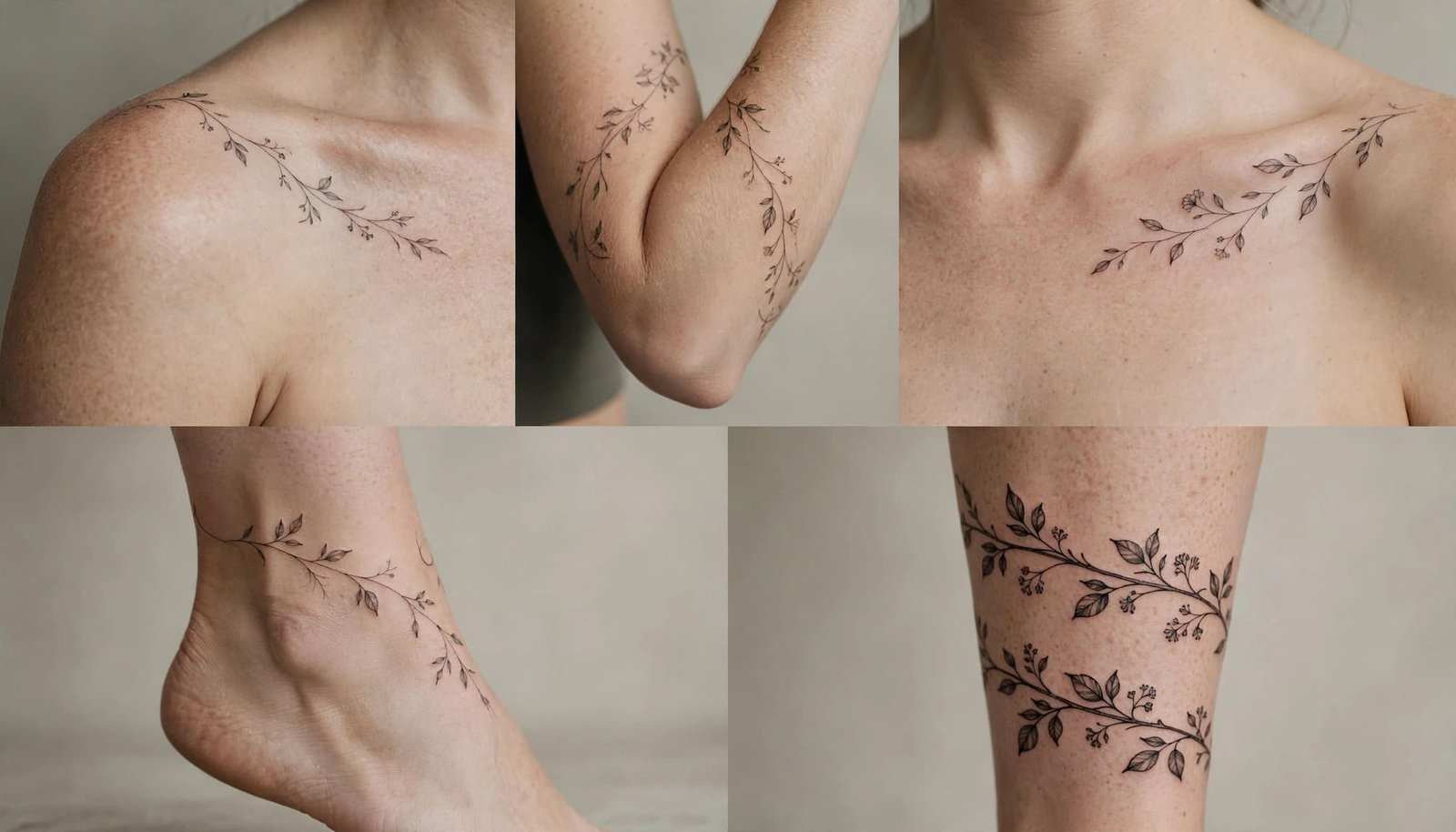
Visible Placements for Elegant Everyday Style
The wrist and forearm work well when you want to see your tattoo often. A slim single-stem vine can trail along the inner wrist or extend up the forearm with plenty of open skin around it. A bolder design can spiral around the wrist like a bracelet or wrap toward the elbow. Short sleeves may leave part of a forearm tattoo visible, while a watch or bracelet can cover a wrist design when needed.
Shoulder and collarbone placements create a graceful look that is easy to show with tank tops, open necklines, and off-the-shoulder clothing. A fine vine can follow the collarbone in a narrow horizontal line, while a fuller floral vine can curve over the shoulder and toward the upper back. Keep jewelry in mind, since necklaces and shoulder straps may compete with detailed leaves or flowers.
The ankle and calf suit slim, growing designs. A narrow vine can climb from the ankle toward the calf, while a wrap-around version can follow the curve of the leg with changing leaf sizes. Ankle tattoos often remain visible with sandals and low-cut shoes but disappear beneath socks, boots, or pants. Calf tattoos offer more room for flowers and shading, although they may show with shorts or shorter skirts.
Sun exposure matters for every visible placement. Healed tattoos benefit from broad-spectrum, water-resistant SPF 30 or higher, applied before outdoor exposure and reapplied regularly, according to the American Academy of Dermatology’s tattoo care guidance. Hands, fingers, feet, and other high-friction areas may fade or need touch-ups sooner because they face frequent washing, rubbing, and sunlight.
Private and Larger Placements for Flowing Designs
The ribs, side torso, back, and spine give longer vines room to stretch. A vertical design can begin beneath the ribs, follow the waist, and taper near the hip. On the back, the artist can center the stem along the spine or let it curve across one shoulder blade. These placements are often easier to conceal beneath work clothing, making them useful if you prefer a more private tattoo.
Long vines look balanced in these areas because the artist can match the design to your body’s curves. Leaves can widen across the ribs, narrow near the waist, or angle outward across the hip. A spine tattoo usually looks best when the leaves remain slim and the spacing stays consistent, rather than forcing a wide design into a narrow line.
The upper thigh is a strong choice for a larger vine garter or a floral design that curves toward the hip. Clothing can cover most thigh tattoos, while swimsuits and shorter hemlines can reveal them. Ribs, collarbone, spine, and other bony areas may feel more intense during tattooing. Larger pieces may also require multiple sessions, especially when they include dense shading, color, or several flowers.
Before choosing a final reference, ask your tattoo artist to place a stencil on your body and view it while standing, sitting, and moving. The right design should follow your anatomy naturally, rather than look correct only in a flat photograph.
Vine Tattoo Styles, Symbols, and Botanical Pairings
The same vine can feel delicate, dramatic, romantic, or meaningful depending on its linework and added symbols. Before choosing a reference, decide whether you want the tattoo to look airy and subtle or bold enough to read clearly across the room.
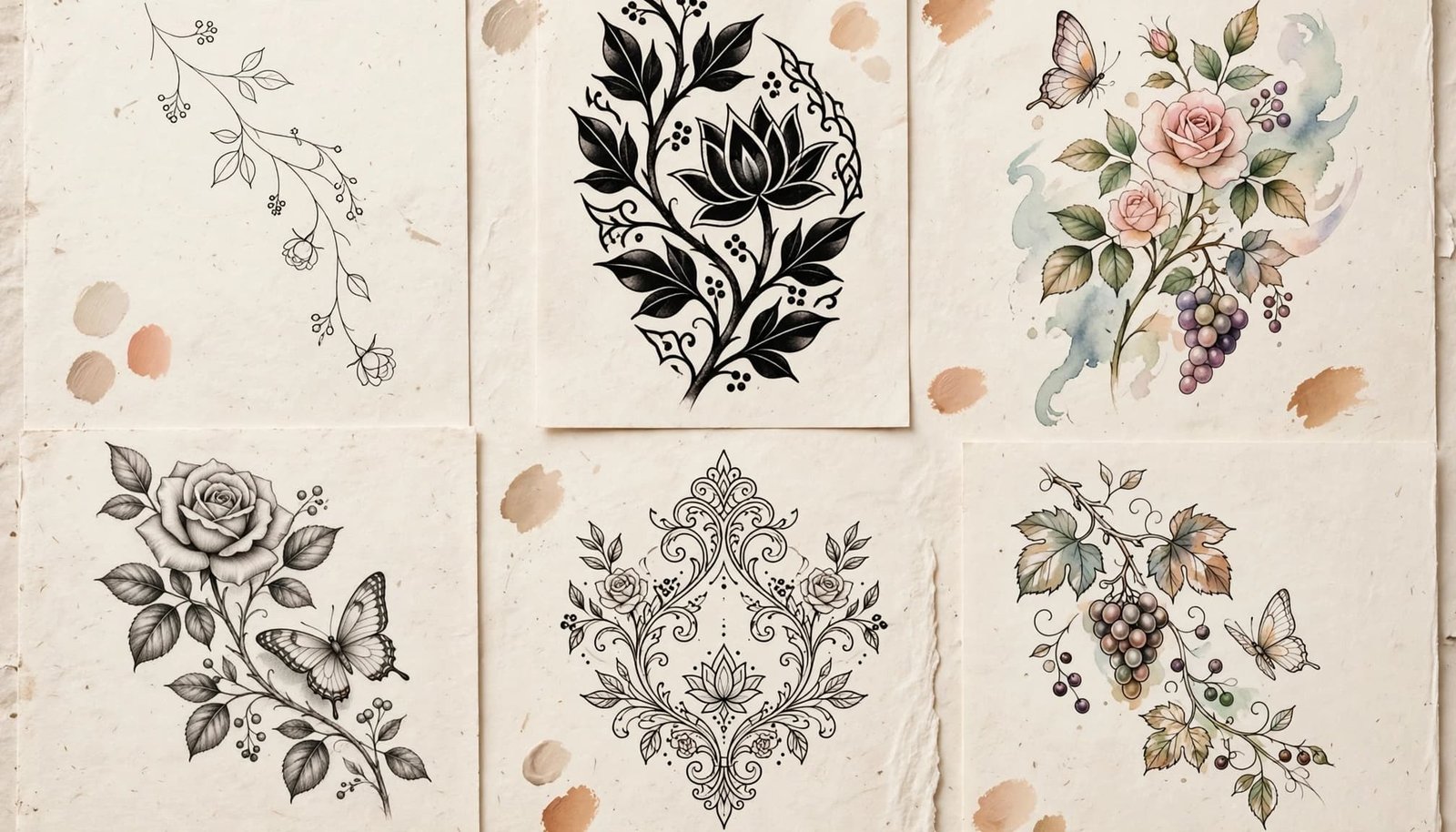
Fine-Line, Blackwork, and Watercolor Looks
Fine-line and minimalist outline vines use thin strokes, open spacing, and simple leaves. They suit small tattoos on the wrist, ankle, collarbone, finger, or behind the ear because the design stays light against the skin. A medium-sized vine can also work in this style, but it needs enough space between leaves and flowers to remain readable.
Line weight matters as a tattoo ages. Very thin details can soften, blur, or lose contrast, especially on high-friction areas such as the hands, feet, and wrists. If longevity is a priority, ask your artist how much structure the design needs. Guides on tattoo styles that age well commonly favor clear shapes, strong contrast, and confident outlines.
Blackwork uses solid black shapes, heavier outlines, and dense shading. It suits medium or large vines on the forearm, calf, thigh, shoulder, or ribs because the bold forms need room to breathe. Blackwork is also easier to notice from a distance, which makes it a good choice if you want a statement tattoo rather than a barely-there accent.
Watercolor vines use soft color washes, blended tones, and occasional splatter effects. They work especially well for medium or large botanical tattoos, where the colors have space to spread without crowding the stem. However, pale color alone can lose definition over time. A clear outline, darker leaf shapes, or a few black anchors gives the watercolor effect a stronger framework.
Realistic botanical vines focus on accurate leaves, natural flower proportions, and detailed shading. This approach needs more space, so the forearm, upper arm, thigh, ribs, and shoulder blade are better choices than a tiny placement. Ornamental vines take a more decorative path, using symmetry, curved flourishes, dotwork, and jewelry-like patterns. They can look elegant around the wrist, ankle, upper arm, or thigh.
Flowers, Thorns, Butterflies, and Personal Details
Vines often suggest growth, renewal, resilience, continuity, connection, loyalty, or personal change. Still, tattoo meanings aren’t fixed. Your vine might honor a relationship, mark recovery, celebrate a new chapter, or simply appeal to you as a beautiful piece of botanical art.
Choose one or two details that connect to your own story instead of adding every popular symbol. A rose with thorns creates a clear contrast between beauty and strength. Butterflies can suggest transformation, but they might also remind you of a loved one, a place, or a particular memory. A lotus flower can express spiritual growth for one person, while another may choose it for its shape or cultural connection.
Fruit and grapes give a vine a harvest or abundance feel. Berries can recall childhood, a favorite season, or time spent outdoors. A family vine can use different flowers for different people, with each bloom chosen for a personal reason rather than appearance alone.
Small details can fit naturally along the stem:
- Initials or a short word can hide between leaves without overwhelming the design.
- A meaningful date can sit beneath a flower or follow the curve of the vine.
- Musical notes can reference a song, instrument, or creative part of your life.
- A small bird, rabbit, cat, or other animal can make the design feel connected to a cherished memory.
Keep lettering and tiny symbols large enough for your artist to tattoo cleanly. A vine feels more personal when every detail has a reason, even if that reason belongs only to you.
How to Personalize a Pretty Vine Tattoo
A pretty vine tattoo becomes more personal when you design it around your life, not just a reference photo. Start with the feeling you want the tattoo to create: delicate, bold, romantic, wild, protective, or meaningful. That choice will guide every detail that follows.
Match the Design to Your Style and Daily Life
First, decide whether you want a discreet accent or a statement piece. A tiny wrist, ankle, or behind-the-ear vine can stay subtle beneath clothing and suit a minimalist wardrobe. Larger designs on the thigh, ribs, shoulder, or calf need more commitment, but they give the leaves and flowers room to breathe.
Your daily routine should shape the placement, too. A hand or finger tattoo faces frequent washing, sunlight, and friction, while an ankle design may rub against socks or shoes. If you exercise often, consider how waistbands, sports bras, watches, or protective gear may touch the area. Workplace visibility matters as well, especially if you need to cover the tattoo with sleeves, a blazer, or jewelry.
Sun exposure can affect the long-term appearance of visible tattoos. Once the skin has healed, the American Academy of Dermatology recommends broad-spectrum, water-resistant SPF 30 or higher to help protect tattooed skin. You can read its tattooed skin care guidance before choosing a placement that receives frequent sunlight.
Intricate flowers, realistic leaves, lettering, and fine shading need more space. On a small or highly visible placement, a simple stem with three or four leaves may stay clearer than a crowded botanical scene. A clean design often ages better than one that tries to fit too many tiny details into a narrow area.
Work With a Tattoo Artist on Size and Line Flow
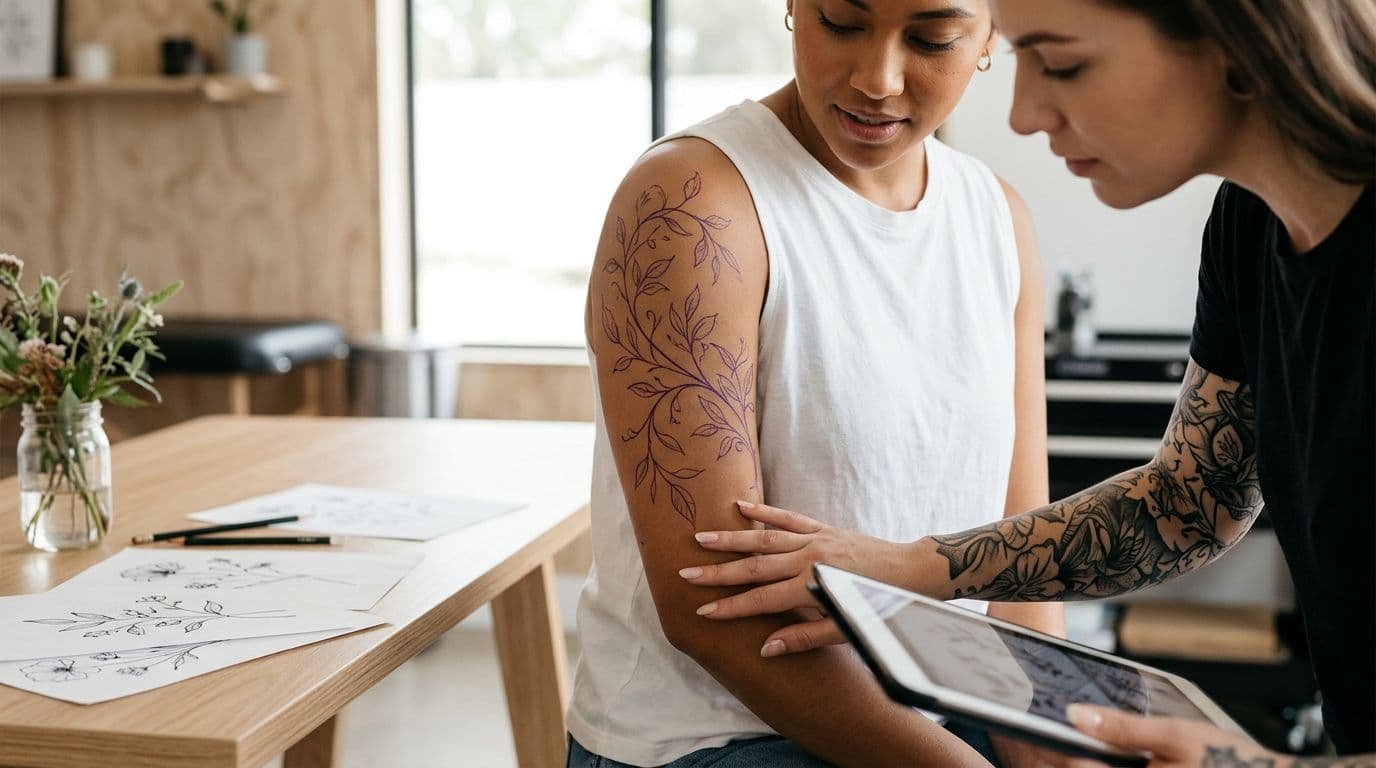
Bring a small collection of reference images to your consultation, but avoid copying one tattoo exactly. Choose one image for the stem direction, another for the leaf shape, and a third for the flower or color idea. Your artist can combine those references into a design that fits your body.
Share your preferred placement, approximate size range, color palette, and personal meaning. For example, a family birth-flower idea could become one connected vine, with each flower placed along the same stem. Thorns can add a protective edge or show that you have endured difficult seasons. If you want the vine to follow an existing scar, consult an experienced artist first and let them assess the skin before planning the design.
During the consultation, discuss line weight and detail level. Fine lines may suit a delicate tattoo, while heavier outlines can help a larger vine remain readable. Your artist should also consider anatomy, skin movement, spacing, and how the design will look when you bend or turn.
Before the needle begins, review the stencil from the front, side, and back. Stand, sit, move your arm, or walk around if the tattoo wraps around a limb. Check every name, initial, symbol, and date carefully. Once the stencil feels balanced and the lettering is confirmed, you can move forward with confidence.
Before You Book: Artist Choice, Cost, and Tattoo Safety
A beautiful vine tattoo starts with more than a reference photo. Before you book, check the artist’s healed work, understand the full cost, and confirm that the studio follows safe hygiene practices. A careful consultation also gives you time to adjust the size, simplify tiny details, and decide whether the design will age well in your chosen placement.
Questions to Ask During the Tattoo Consultation
Start by reviewing the artist’s healed tattoos, not only fresh work photographed immediately after an appointment. Healed photos show how fine lines, color, shading, and small leaves look after the skin has settled. Choose someone with experience in your selected style, whether you want a delicate fine-line vine, colorful botanical work, bold blackwork, or realistic flowers.
Bring your reference images and ask how the design will hold up at your preferred size. A tiny vine may need fewer leaves, simpler flowers, or thicker lines to stay clear over time. Ask whether any details should be removed or enlarged before the stencil is prepared.
Your consultation should also cover practical details:
- Ask how many sessions the tattoo may require, especially if it includes dense shading, several flowers, or color.
- Request an estimated price and ask whether the artist charges by the hour, by the piece, or with a session minimum.
- Confirm whether the estimate includes one touch-up and ask about the studio’s touch-up policy.
- Discuss how placement affects the design, visibility, movement, clothing friction, and healing.
- Ask how long the tattoo may take to heal and whether you should plan time away from swimming, strenuous exercise, or tight clothing.
- Request written aftercare instructions and ask which cleanser, moisturizer, and covering the artist recommends.
Tattoo prices vary widely. Size, detail, color, placement, artist demand, local rates, and the number of sessions all affect the final cost, so one universal price would be misleading. If you need time to save, create a savings plan for a tattoo instead of rushing into a design or choosing an artist based only on the lowest quote.
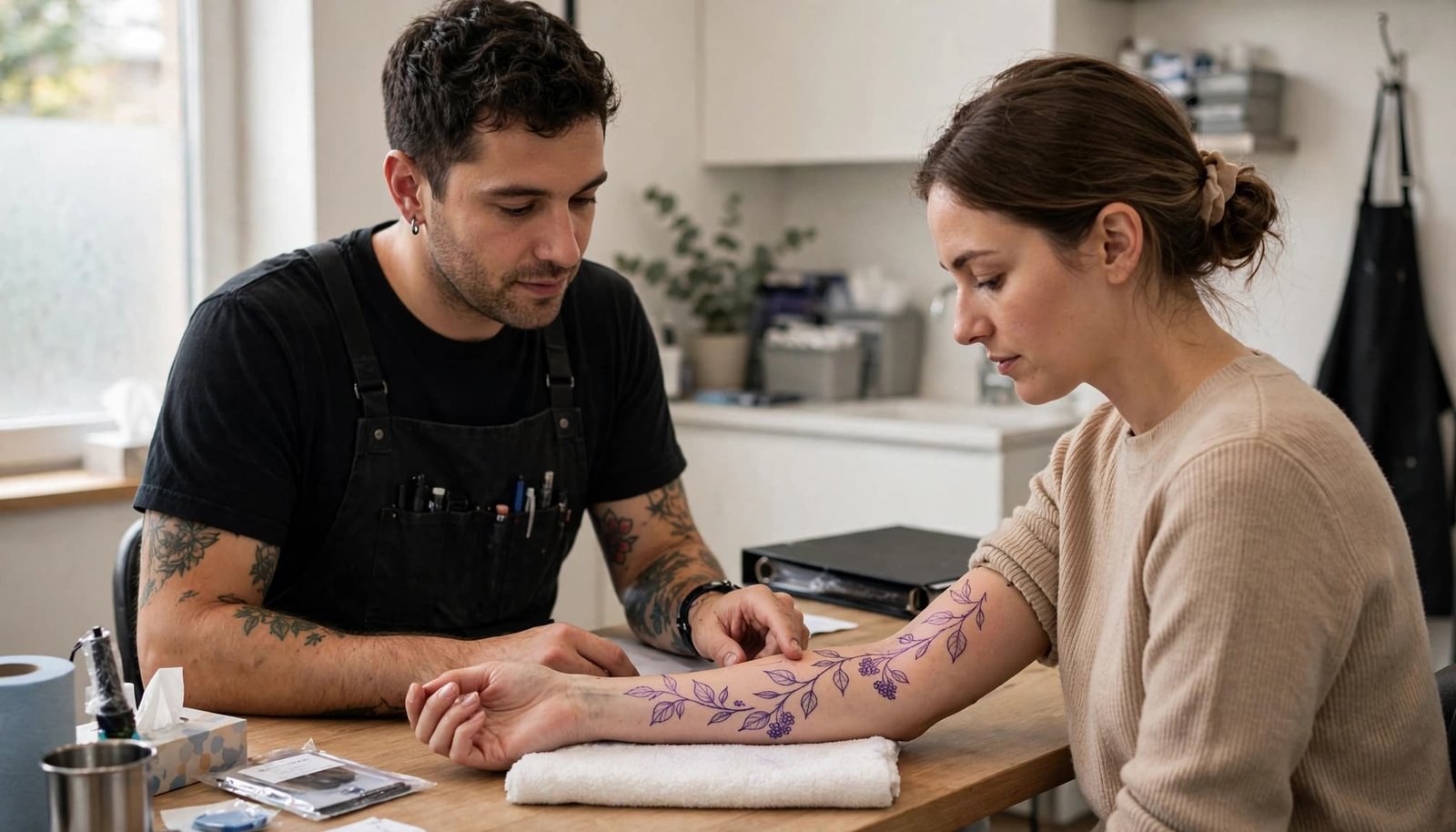
Before the appointment, check that the studio is licensed or properly regulated where required. You should see sealed, single-use needles, fresh gloves, clean work surfaces, and clear consent procedures. Ask how the artist handles ink and reusable equipment. The FDA warns that contaminated ink or unsterile equipment can cause infections, even when a studio appears tidy.
Tell the artist about allergies, unusual scarring, active skin problems, medications, or previous reactions to tattoo products. If you have a medical condition, take medication that affects healing or bleeding, have an active rash, or have pregnancy-related concerns, speak with a qualified medical professional before booking. A professional tattoo artist should answer questions calmly and never pressure you to make a permanent decision quickly.
Basic Aftercare for a Fresh Vine Tattoo
Follow your artist’s written instructions first because coverings, healing products, and recommended timelines vary. In general, wash the tattoo gently with mild, fragrance-free soap and lukewarm water, then pat it dry with a clean towel or paper towel. Don’t rub the skin.
Apply only a thin layer of the recommended moisturizer, since heavy products can trap moisture and irritate the area. Keep your hands away from peeling skin, and don’t pick or scratch while the tattoo heals. Loose clothing can reduce rubbing when the vine sits near your waist, ribs, shoulder, thigh, or ankle.
Avoid swimming, baths, hot tubs, saunas, and other soaking until the skin has healed. Heavy friction from tight clothing, equipment, or intense activity can also disturb the area. Once healed, protect the tattoo with broad-spectrum, water-resistant SPF 30 or higher, as advised by the American Academy of Dermatology’s tattoo care guidance.
Some redness and tenderness can occur early in healing. However, contact a qualified medical professional if redness worsens, pain becomes severe, the area feels increasingly hot or swollen, pus or foul-smelling discharge appears, or you develop a fever or chills. The Mayo Clinic’s tattoo safety guidance also recommends keeping new tattooed skin clean and handling it gently while it heals.
Conclusion
The best vine tattoo balances a pleasing shape with personal meaning and realistic care needs. Whether you prefer a minimalist stem or a detailed floral design, choose linework and spacing that fit the size of your tattoo. Black ink offers a classic look, while color can bring flowers, leaves, fruit, or other nature-inspired details to life.
Placement matters just as much. A small vine on the wrist, ankle, or collarbone can stay visible and delicate, while a statement-sized design on the thigh, ribs, back, or shoulder gives the artwork more room. Visible tattoos need thoughtful sun protection, and private placements may make healing and daily wear easier. Consider these details before choosing between floral and nature-inspired elements.
Save a few reference images, narrow down the placement, and book a consultation with a skilled tattoo artist. Bring your favorite line styles, colors, symbols, and size ideas so the artist can create a design that fits your body instead of copying a flat image. A vine can reflect growth, beauty, resilience, connection, or simply a style you love, and that personal meaning is what makes the finished tattoo feel right.
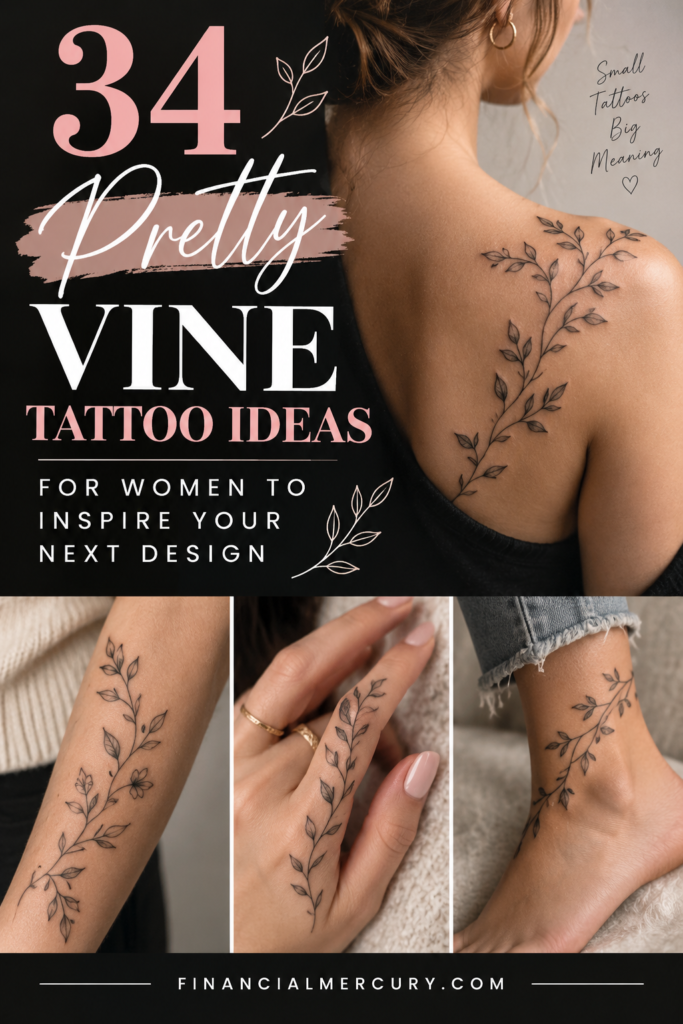
Save the pin for later

- 34 Botanical Tattoo Ideas for Nature Lovers - September 10, 2026
- 22 Rose Tattoo Ideas for Women With Personal Meaning - September 10, 2026
- 25 Magical Mushroom Tattoo Ideas for a Whimsical Design - September 10, 2026
Leave a Reply