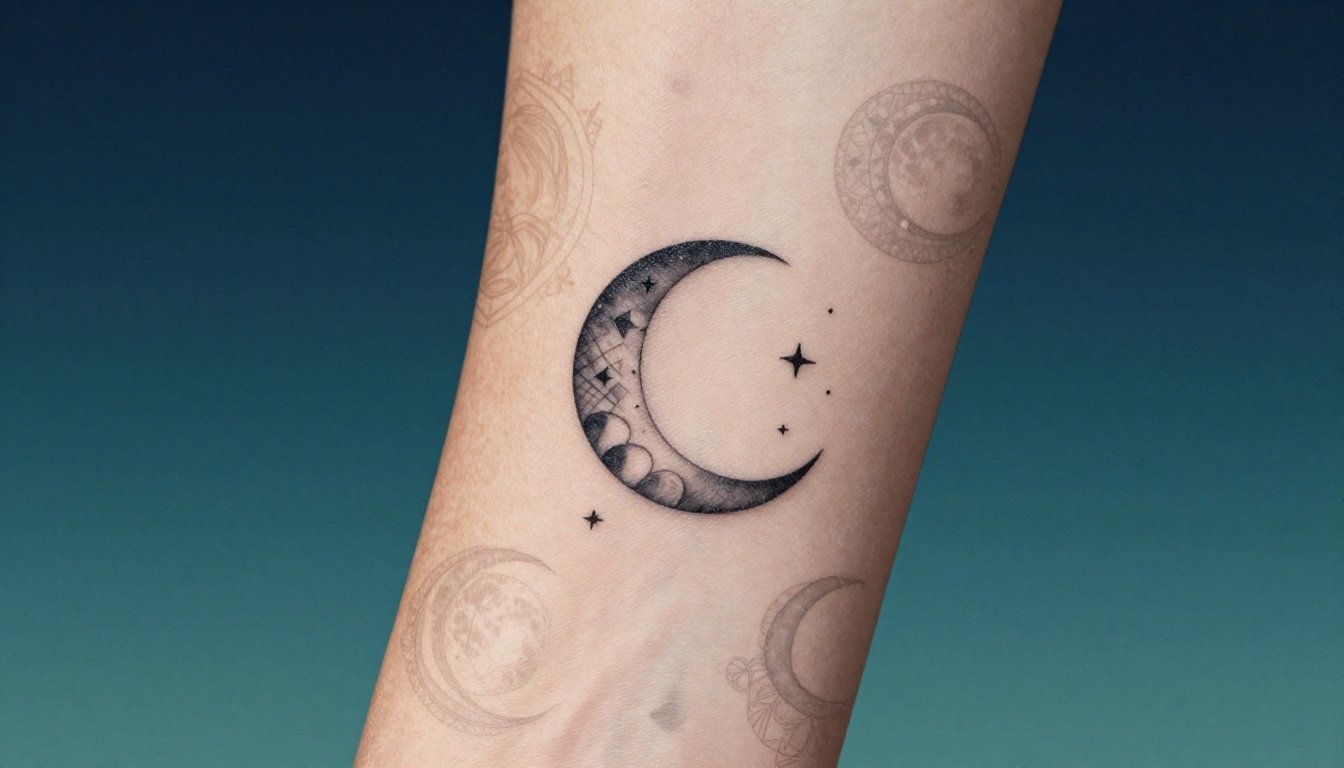
80 Moon Tattoo Ideas for Women, With Meanings and Placements
Moon tattoos can feel delicate as a silver crescent, mysterious beneath a scattering of stars, bold in geometric lines, or deeply personal when tied to a season of change. For many women, the moon carries meanings of growth, intuition, renewal, feminine energy, transformation, and finding light during dark seasons.
This collection brings together 80 moon tattoo ideas for women, including crescent moons, full moons, lunar phases, flowers, stars, animals, landscapes, geometric art, and more. You’ll find inspiration for different styles, meanings, placements, and sizes, along with practical details to consider before choosing a design that will feel right on your skin for years to come.
Start by exploring these moon tattoo ideas and notice which image, symbol, or placement feels most connected to your story.
Key Takeaways
- Moon tattoos can symbolize renewal, intuition, growth, transformation, or finding light during difficult seasons.
- Crescent moons create delicate designs, while full moons and lunar phases offer stronger visual meaning.
- Flowers, stars, animals, and celestial details can turn a familiar moon tattoo into a personal story.
- Placement affects the tattoo’s visibility, scale, and detail, so consider your lifestyle before choosing a spot.
- Protect healed ink from fading with broad-spectrum SPF 30 sunscreen and follow tattoo aftercare guidance.
80 Moon Tattoo Ideas for Women, From Tiny Crescents to Detailed Full Moons
Choose your moon shape by the feeling you want to carry, the message behind it, and the amount of detail you enjoy. Simple designs usually look best at a small size, while faces, craters, shading, and surrounding elements need more room to stay clear over time.
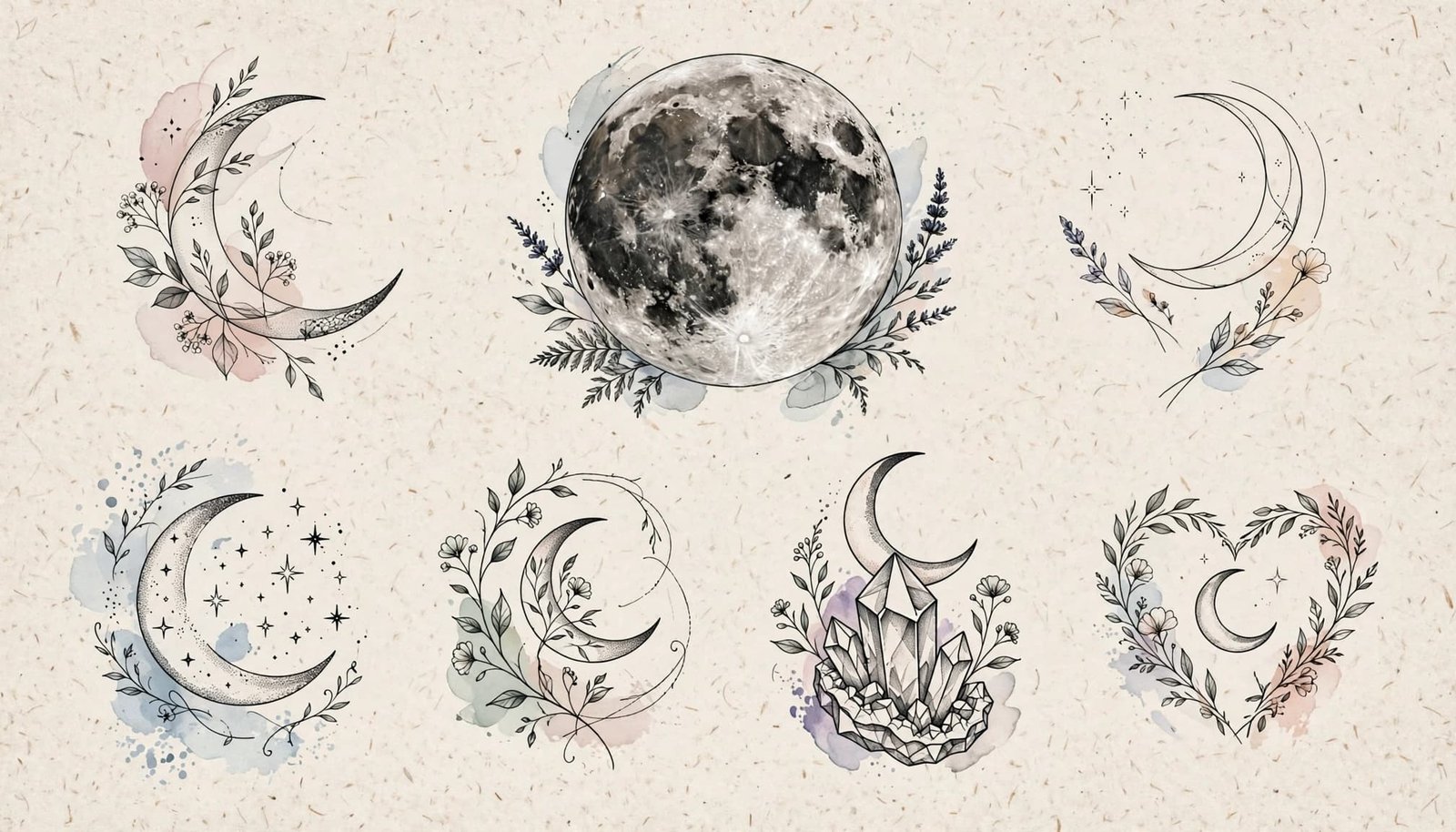
Delicate Crescent Moon Tattoos for New Beginnings
A crescent moon is a natural symbol of growth, change, hope, and fresh starts. Its open shape can suggest a story that is still unfolding, making it meaningful after a major life change, personal healing, or a decision to begin again.
- Tiny black crescent: A solid black crescent looks crisp and timeless on the wrist, ankle, finger, or behind the ear. Its small size keeps the meaning personal and easy to conceal.
- Crescent with a soft face: Add closed eyes, a small nose, and gentle lips for a dreamy feminine moon. The nape or collarbone gives the face enough room to remain recognizable.
- Crescent holding a small star: Place one tiny star inside the curve, as if the moon is protecting a private hope. This design works well on the wrist, ankle, or upper chest.
- Upside-down crescent: Turn the tips toward the ground for a less expected shape. On the collarbone or forearm, this orientation can suggest release, reflection, or looking inward.
- Dotwork crescent: Fill the moon with graduated dots that become lighter toward the tips. Dotwork adds texture without making the design feel heavy, especially on the upper arm or shoulder.
- Crescent with a personal initial: Tuck one meaningful initial into the center or along the lower curve. A finger, rib, or nape placement keeps the tribute subtle.
- Crescent wrapped in a thin vine: A fine botanical stem can wind around the moon and add a sense of natural growth. Consider the ankle, forearm, or collarbone for a graceful vertical layout.
- Crescent with a dangling crystal: Suspend a small crystal from one tip with a thin line. This design pairs well with the wrist or inner forearm, where the crystal can hang naturally.
- Crescent with a small heart: A heart inside the moon creates a tender reminder of self-love, family, or a relationship. Keep it on the finger, behind the ear, or near the collarbone for a delicate finish.
- Crescent paired with a meaningful date: Place a birth date, anniversary, or personal milestone beneath the moon in small, readable numbers. The rib, inner wrist, and upper arm offer enough space for the moon and date to stay balanced.
Full Moon Tattoo Ideas With Power and Presence
Full moons often suggest completion, confidence, intuition, and inner strength. Their circular shape creates a strong focal point, so these moon tattoo ideas suit readers who want more presence than a tiny crescent can provide.
- Realistic cratered moon: Detailed craters and uneven shading can give the tattoo a textured, almost photographic appearance. Choose the forearm, upper arm, thigh, shoulder blade, or calf so the surface details have space.
- Full moon with a feminine profile: Add a woman’s profile within the circle, using flowing hair or soft facial features to create a portrait-like design. The upper arm or thigh works better than a small wrist placement.
- Shaded black-and-gray moon: Layer gray washes and deep shadows for a moody tattoo with strong contrast. This style looks especially striking on the calf, shoulder blade, or outer forearm.
- Full moon framed by clouds: Wispy clouds can cover part of the circle, creating movement and a mysterious night-sky mood. A larger thigh or upper-arm canvas allows the clouds to remain open rather than crowded.
- Moon with rays of light: Draw fine rays around the full moon to suggest confidence, clarity, or finding direction. The shoulder, upper back, and outer thigh provide enough room for an even halo.
- Glowing watercolor moon: Use soft washes of blue, violet, gold, or rose around a pale lunar center. Because watercolor effects need breathing room, the upper arm, thigh, or shoulder blade is a practical choice.
- Full moon reflected in water: Place the moon above rippling lines that mirror its light. This landscape design can hold a memory of calm, travel, or emotional steadiness on the forearm, calf, or back.
- Moon with a tiny quote or word: Add one short word such as “hope,” “breathe,” or “become” beneath the moon. Keep the lettering readable and give the design room on the forearm, ribs, or upper arm.
Realistic surfaces and facial details need more skin space than a simple outline. Scaling them down too far can blur the features and weaken the original design.
Minimalist Moon Tattoos for a Quiet, Personal Symbol
Minimalist moon tattoos use thin lines, open space, and restrained details. They suit people who want a meaningful symbol that feels personal rather than attention-seeking.
- Single fine-line crescent: One clean outline creates an elegant tattoo for the wrist, ankle, rib, or behind the ear. The open interior keeps the design light.
- Two-line moon outline: Draw two slim curved lines to suggest a crescent without filling it in. This looks polished on the collarbone or inner forearm.
- Tiny moon made from dots: A few carefully placed dots can form a barely-there lunar shape. Use an experienced artist because uneven spacing becomes noticeable in such a small tattoo.
- Small moon with three stars: Add three separate dots or tiny starbursts around a crescent. The wrist, ankle, and shoulder are practical placements for this compact arrangement.
- Minimalist moon and sun: Pair a small crescent with a simple sun circle to show balance between rest and action. The forearm or upper arm gives both symbols equal breathing room.
- Simple moon inside a circle: Enclose a crescent in a thin circle for a clean emblem-like design. It works on the finger, wrist, or nape when the lines remain uncomplicated.
- Tiny moon with one botanical stem: Add a single leaf or stem beside the moon for a natural touch. The ankle, collarbone, and inner arm suit this narrow design.
Micro tattoos can blur or fade faster in areas exposed to friction and sunlight. Before booking, choose an artist with strong fine-line work, avoid packing too many details into a tiny design, and protect healed ink with broad-spectrum SPF 30 or higher. The NIH tattoo aftercare review also advises avoiding sunscreen until fresh tattooed skin has fully healed.
Moon Phase and Celestial Tattoo Ideas That Celebrate Change
Moon phases can tell a complete story rather than capture one fixed moment. Waxing means the visible light is increasing, so it can suggest growth or building strength. A full moon may feel like clarity or completion, while waning light can suggest release, rest, or making room for renewal. These meanings are personal, not fixed rules, and your tattoo can hold several at once.
Moon Phase Tattoos for Growth, Healing, and Transformation
NASA lists eight lunar phases, but a tattoo doesn’t need to show every stage. A shortened sequence can still follow the emotional rhythm of change. Before finalizing the design, ask your artist to check the phase alignment, orientation, and spacing carefully. Small inconsistencies become easy to notice in a repeated pattern.
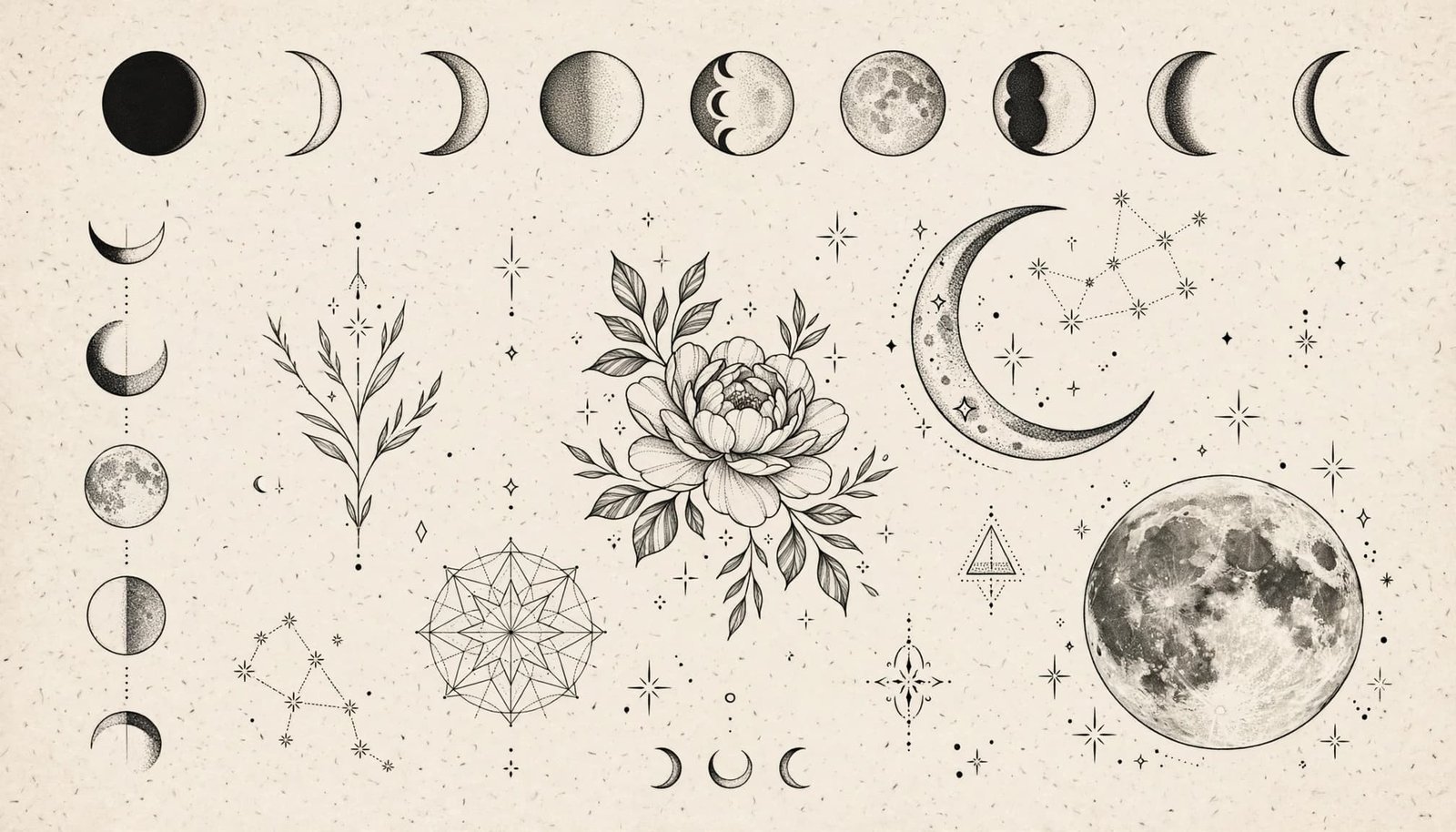
- Horizontal collarbone phase row: Arrange thin crescent, quarter, gibbous, full, and waning moons in a clean line across the collarbone. The placement follows the body’s natural width and can tell a story of growth, fullness, release, and rest.
- Vertical spine phase line: Stack the phases down the spine with even spacing and a fine central guide. This layout feels private and elegant, while the long shape suits a personal journey through healing or major life changes.
- Phases circling the wrist: Wrap small lunar shapes around the wrist like a narrow bracelet. Use fine-line outlines for a delicate finish, or add dotwork and black shading if you want each phase to remain visible at a glance.
- Curved ankle cycle: Follow the curve above the ankle with moons that gently turn from crescent to full and back again. This design works well for someone who wants a celestial tattoo that stays easy to cover.
- Triple moon design: Place a crescent, full moon, and crescent in a symmetrical row. Some people connect the three shapes with the past, present, and future, while others see them as rest, action, and renewal.
- One highlighted phase: Keep most moons in light outline and fill one phase with black ink, gray shading, or a muted color. The highlighted moon can identify a turning point, a season of strength, or the part of your story that feels most important now.
- Phase sequence with dates: Add a meaningful date below one moon or beneath the complete cycle. A birthday, recovery milestone, anniversary, or year of change can make the sequence feel personal without adding a long quote.
- Moon cycle with small words: Place short words such as “grow,” “release,” “rest,” or “begin” beneath selected phases. Keep the lettering large enough to age well, especially if the design sits on the wrist, ankle, or ribs.
- Phases around a central flower: Arrange lunar shapes in a circle around a flower, leaving the bloom as the visual center. The flower can suggest healing or life, while the surrounding moons show that personal growth happens in repeating seasons.
For a realistic reference, NASA’s explanation of the eight Moon phases can help you and your tattoo artist choose an accurate sequence. Your design can still use artistic variation, but the order should feel intentional.
Moon and Stars for a Dreamy Night-Sky Look
Stars can make a moon tattoo feel spacious, romantic, or slightly mysterious. Their scale and spacing control the overall mood. Tiny evenly spaced stars create a delicate look, while larger starbursts, heavier outlines, and dense clusters create a bolder night sky.
- A crescent surrounded by tiny stars suits the forearm, shoulder, or upper back. Leave generous skin between the stars so the design doesn’t become a dark patch over time.
- A moon and shooting star creates movement across the ribs, thigh, or outer forearm. A long fine-line trail gives it a graceful shape without adding much visual weight.
- A moon with a constellation becomes more personal when you choose a meaningful constellation. Use small dots and thin connecting lines, then give the design enough room for every point to remain clear.
- A moon inside a starburst has stronger contrast and a more decorative appearance. The shoulder or upper back can support the wider rays, while the forearm works for a smaller fine-line version.
- A star map behind a full moon creates layered depth with black-and-gray shading. This larger idea fits the thigh or upper back, where the moon, map lines, and negative space can breathe.
- A moon with Milky Way texture uses stippling, scattered dots, and soft gray shading to suggest distant stars. Dotwork adds richness without requiring bright color.
- A moon and North Star design can suggest direction, steadiness, or a trusted point of reference. Place the North Star slightly apart from the moon so it remains the visual anchor.
- A scattered night-sky tattoo with one larger focal moon balances several small stars with one dominant lunar shape. Try the shoulder for medium visibility, the ribs or thigh for more privacy, or the upper back for a larger composition.
Zodiac, Astrology, and Mystical Moon Designs
Personal details can make a celestial tattoo feel more specific than a generic moon and stars design. Your birth date, favorite constellation, or memory of a particular night sky can guide the layout. Before using any spiritual or cultural symbol, confirm its meaning and background so the design shows respect rather than using an unfamiliar mark as decoration.
- Pair the moon with your zodiac constellation, using its actual star pattern beside a crescent or full moon. Fine dots and open spacing keep the design readable on the shoulder or forearm.
- Place a zodiac symbol inside the moon for a compact tattoo with a clear focal point. This works well on the upper arm, thigh, or ribs, where the symbol has room to remain distinct.
- Use a birth chart-inspired crescent with small orbit lines, planets, and selected chart points. You don’t need to copy an entire chart; choosing only meaningful details creates a cleaner result.
- Add a small Saturn or another planet beside the moon for a more dimensional space scene. Keep the planet smaller than the moon so the composition has one clear center.
- A celestial eye inside a moon combines lunar imagery with watchfulness, intuition, or self-awareness. Ask the artist to keep the eye simple if you want a fine-line tattoo that will age gracefully.
- Add subtle spiritual symbols around the moon, such as carefully chosen geometric marks or protective imagery. Research each symbol first, then explain your intended meaning to the artist before it becomes part of the final design.
Whether you choose a full birth chart or one meaningful star, the strongest design usually begins with a detail that belongs to you. That personal connection can guide the moon’s phase, the placement, and the amount of mystery you want the tattoo to hold.
Feminine Moon Tattoo Ideas Inspired by Flowers, Leaves, and Nature
Nature changes the feeling of a moon tattoo. Flowers can make it romantic, leaves can give it an earthy shape, and a landscape can turn it into a memory of home, travel, or solitude. Choose a plant or scene because it means something to you, not only because it fills empty space beautifully.
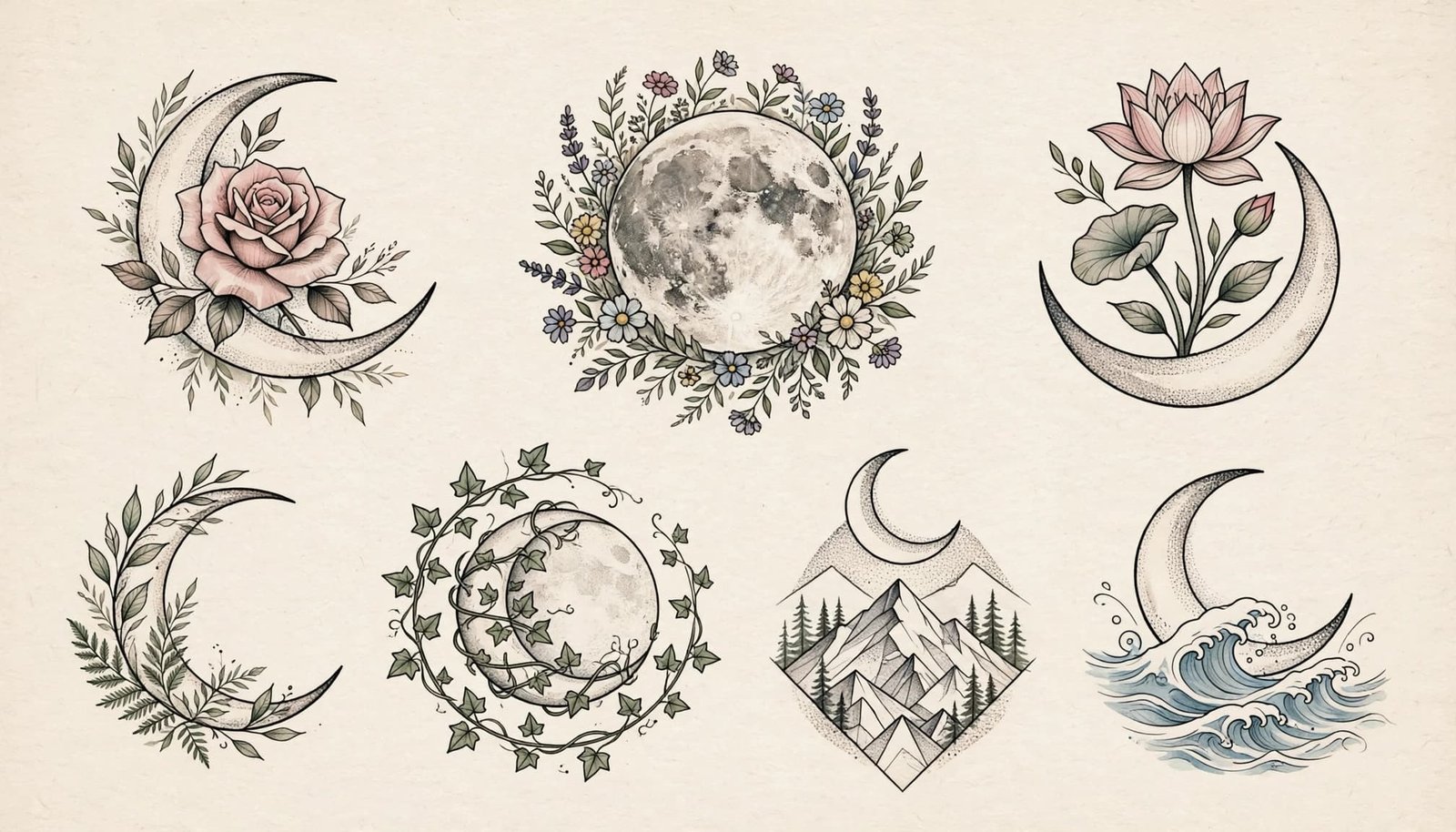
Moon and Flower Tattoos With a Soft, Romantic Feeling
Flower moon tattoos pair lunar symbolism with the character of a specific bloom. A rose can suggest devotion, while a lotus can point to healing after a difficult season. Your birth flower, a favorite garden flower, or a bloom connected to someone you love can make the design feel personal instead of decorative.
- A crescent holding a rose creates a romantic, protective image. The rose may symbolize devotion, love, or beauty that has survived pain. Place the bloom inside the crescent or let its stem follow the lower curve.
- A moon framed by wildflowers feels gentle and untamed. Small daisies, poppies, or meadow blooms can suggest freedom, joy, and a connection to outdoor places. Keep the flowers varied in height so the frame looks natural rather than perfectly arranged.
- A lotus growing from a moon connects renewal with healing. Draw the lotus rising from the lower curve of a crescent or emerging from a moon reflected in water. This design suits the thigh, upper arm, or ribs when the stem needs room to extend.
- A sunflower circling a full moon creates a brighter, more confident tattoo. The sunflower can suggest resilience, warmth, and choosing hope, while the full moon adds intuition and inner strength. Bold petals work better than tiny ones in this composition.
- A moon with lavender has a peaceful, lightly vintage mood. Thin lavender stems can trail from a crescent or sit beside a full moon. Lavender may carry associations with calm, memory, healing, or a treasured garden.
- A moon and cherry blossoms create a delicate design about beauty, change, and the passing of time. Scatter a few blossoms around the lunar shape, but leave enough open skin between each branch and petal.
- A flower-filled moon silhouette uses the outline of a crescent or full moon as a container for leaves and blooms. This gives the tattoo a clear shape while allowing the interior to feel abundant and alive.
- A moon with one birth flower is a simple way to add private meaning. Use your birth month flower, a child’s birth flower, or a bloom connected to a major milestone. One carefully drawn flower often feels more personal than a crowded bouquet.
- A floral triple moon places flowers inside or around waxing, full, and waning moons. The design can suggest personal growth, changing seasons, and the balance between becoming, flourishing, and letting go.
Fine-line flowers need enough space for petals and stems to remain separate as the tattoo ages. Ask your artist to avoid tightly packed details, especially near the wrist, finger, or ankle. Sun exposure can also fade tattoo ink, so healed designs benefit from broad-spectrum, water-resistant SPF 30 or higher when exposed.
Leaf, Vine, and Botanical Moon Tattoos That Feel Earthy
Leaves and vines give moon tattoos a more grounded mood. They can make a celestial design feel wild, peaceful, or connected to a particular landscape. Black ink creates a classic silhouette, muted color adds softness, and dotwork gives the leaves texture without making the tattoo look heavy.
- A crescent made from leaves replaces the lunar outline with overlapping botanical shapes. Pointed leaves create a sharper, woodland feeling, while rounded leaves look softer and more feminine.
- A moon wrapped in ivy suggests attachment, endurance, and growth. Let the vine cross the moon in a loose curve rather than covering the entire shape. Ivy can wrap around a forearm, shoulder, or upper arm naturally.
- A moon with eucalyptus branches has an airy, modern appearance. The rounded leaves soften a sharp crescent and can suggest calm, cleansing, or a love of coastal or desert gardens.
- A botanical wreath around a full moon creates a balanced circular design. Use the same plant around the entire moon for a clean emblem, or mix a few meaningful leaves for a more organic result.
- A moon with fern fronds feels shaded, ancient, and connected to quiet forest paths. Ferns work especially well with black ink and dotwork because their repeated leaflets create texture without requiring bright color.
- A hanging moon with trailing vines creates a vertical tattoo with graceful movement. The moon can hang from a thin botanical stem, while vines fall below it toward the wrist, ribs, thigh, or side of the torso.
Designs with long stems and curved branches need room to follow the body. Consider the shoulder, ribs, upper arm, thigh, or side of the torso, where the botanical lines can bend without crowding the moon. A tattoo artist can also adjust the curve to match your posture and natural body shape.
Moon Tattoos With Mountains, Waves, and Forest Scenes
Landscape moon tattoos turn a celestial symbol into a place. A mountain range may recall a favorite trip, while ocean waves can hold a feeling of freedom or calm. Forests and lakes often feel more private, especially when they echo a childhood home, camping memory, or peaceful escape.
- A mountain range inside a crescent gives the moon a sense of adventure and direction. Use layered peaks for depth, or choose one recognizable ridge connected to a meaningful place.
- A moon over ocean waves can suggest travel, emotional steadiness, or the comfort of returning to the coast. A few curved wave lines keep the design delicate, while heavier shading creates a more dramatic scene.
- A full moon behind pine trees has a calm, nocturnal quality. The pine silhouettes can represent home, solitude, or time spent outdoors. Leave small gaps between the tree branches so the foreground remains readable.
- A moon reflected on a lake creates a symmetrical, peaceful composition. Use horizontal ripples beneath the moon and soften the reflection as it moves downward. This works well on the forearm, calf, or shoulder blade.
- A moon above a desert landscape combines open space with a strong horizon. Add simple dunes, cactus silhouettes, or distant mesas if each detail has personal meaning. Dotwork can create a warm, spacious night-sky mood without adding color.
- A moon shining through a forest window uses dark tree trunks and branches to frame a bright lunar opening. The image can suggest finding calm during isolation or carrying a favorite place with you.
Scene tattoos usually need a medium or large size to preserve depth, silhouettes, and negative space. Before choosing a tiny landscape, ask whether the mountains, trees, waves, and moon will still be distinct when reduced. A slightly larger tattoo often gives the artist enough room to protect the details that make the scene yours.
Moon Tattoos With Sun, Animals, and Artistic Details
Moon tattoos become more personal when you pair them with symbols that show how you move through life. The moon often suggests intuition, reflection, rest, and inward energy, while the sun can point toward action, warmth, confidence, and visible strength. Animals add another layer, but their meanings depend on your own memories, beliefs, and cultural background.
Moon and Sun Tattoos That Represent Balance
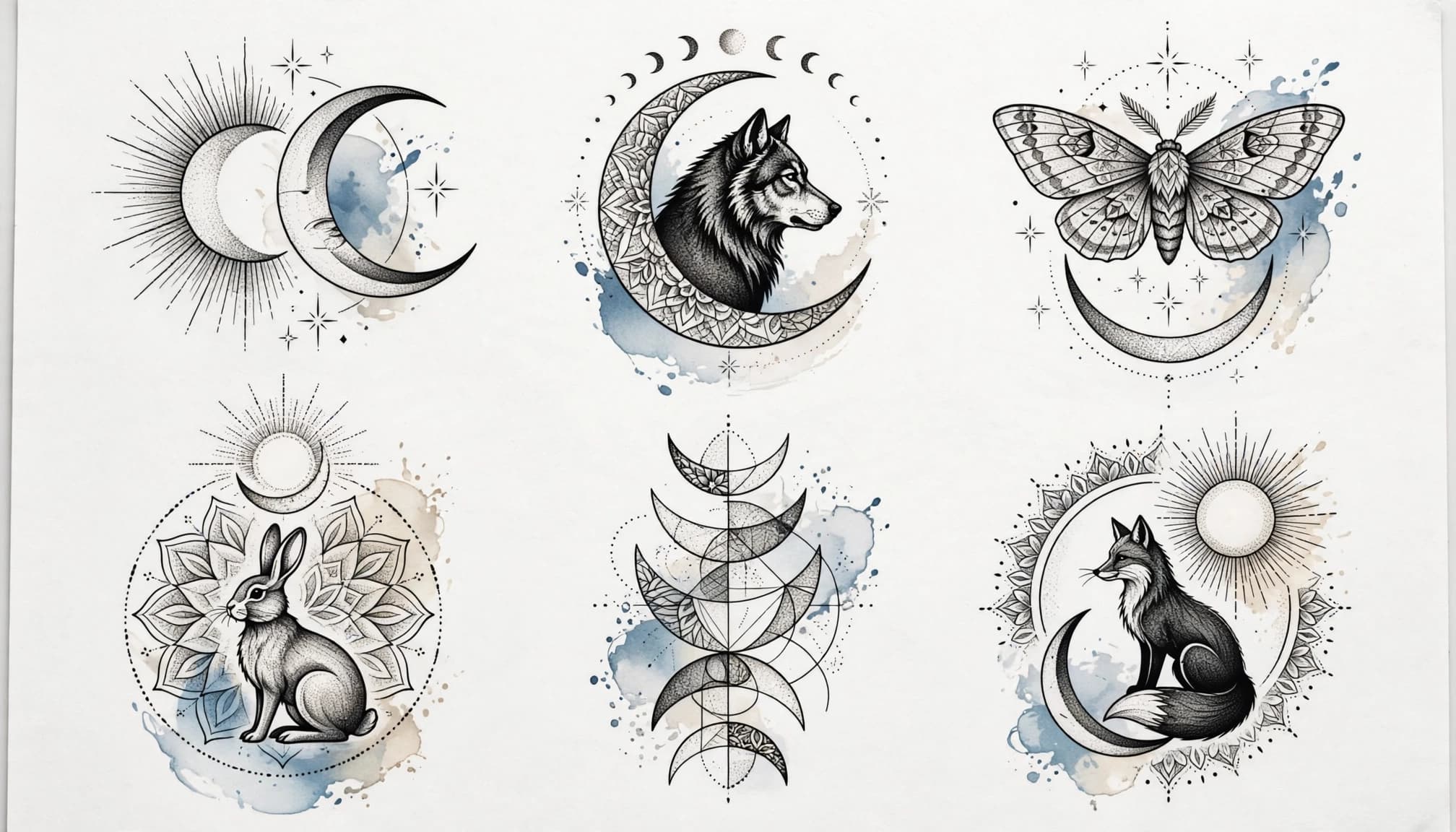
Moon and sun tattoos create a natural contrast between private and public parts of life. They can show the need for both movement and stillness, confidence and reflection, or partnership and personal space. Choose a symmetrical layout for a balanced appearance, or make the design small and simple for a quieter reminder.
- A sun and crescent sharing one circle joins two opposing shapes in a single emblem. The sun can fill one side with rays while the crescent curves around the other, creating a design about personal wholeness.
- A split sun-and-moon face divides one face into warm sunlight and cool lunar shadow. This portrait-style idea can suggest contrast, changing moods, or the different sides you show to the world.
- A moon surrounded by sun rays gives a crescent or full moon a bright halo. The image feels hopeful and confident, especially when the rays extend evenly around the lunar shape.
- A mirrored sun and moon pair places matching symbols on opposite sides of the body. Their symmetry suits the sternum, upper back, chest, or paired wrists, where each design can face its counterpart.
- A small sun tucked inside a crescent creates a compact symbol of warmth held within quiet space. Use clean outlines and minimal rays if you want the tattoo on the wrist, ankle, finger, or behind the ear.
- A yin-yang-inspired celestial design can use two curved halves, one containing a sun and the other a moon. Keep the layout original and avoid copying sacred imagery carelessly. Research the symbols you reference, then work with your artist to create a respectful design based on balance rather than imitation.
A larger tattoo gives rays, facial features, and shading room to remain clear. However, every idea above can become a simple fine-line design when you reduce the number of details.
Moon and Animal Tattoos With Wild, Protective Energy
Animals change the emotional temperature of a moon tattoo. A wolf may feel protective and solitary to one person, while another may connect it with family, grief, or a favorite story. Cultural meanings also vary, so let your own experience guide the image instead of treating one symbol as universal.
- A moon and wolf creates a watchful, atmospheric design. A howling silhouette can feel solitary and free, while a detailed wolf face may suggest loyalty, protection, or a connection to family.
- A moon and cat can feel mysterious, playful, independent, or tender. A curled cat beneath a crescent creates a gentle composition, while alert eyes and pointed ears give it a sharper nocturnal mood.
- A moon with a flying owl adds movement and wisdom without making the design static. Spread the wings across a larger upper back, chest, or thigh placement, or use a simple silhouette for the forearm.
- A whale swimming across a crescent creates a dreamlike scene with a strong sense of calm. The whale may recall the ocean, emotional depth, travel, or a private feeling of freedom.
- A fox beneath a full moon has a clever, woodland feeling. Use a curled fox for warmth and rest, or a standing silhouette for alertness and independence.
- A moth resting on a moon gives the tattoo a delicate but nocturnal mood. Its wings can carry decorative patterns, while the moon provides a quiet backdrop for themes of attraction, change, or seeking light.
- A rabbit silhouetted against lunar glow feels softer and more storybook-like. It may connect with gentleness, childhood memories, fertility, caution, or a favorite nighttime tale.
Animal faces and fur need more space than simple silhouettes. Fine facial lines can merge when packed into a tiny design, so choose an artist who regularly tattoos your chosen animal style. Share several examples of their healed work before booking.
Geometric, Mandala, Watercolor, and Abstract Moon Designs
Artistic styles can make a familiar moon feel unmistakably yours. Fine-line tattoos look light and open, while dotwork builds texture from carefully placed points. Bold blackwork creates stronger contrast, and black-and-gray shading gives the moon a smoky, realistic surface.
- A moon mandala surrounds a central crescent or full moon with repeated petals and symmetrical details. The sternum, upper back, and thigh give the pattern enough space to stay even.
- A geometric crescent made from triangles gives the lunar shape a sharp, modern structure. Leave small gaps between the triangles so the design retains its open quality.
- A dotwork full moon uses dense dots for craters, shadows, and a soft outer glow. The gradual change from dark center to lighter edge creates texture without bright color.
- A moon inside ornamental geometry can resemble a framed celestial window. If the pattern borrows from a religious or cultural tradition, research its origin and avoid using sacred imagery as decoration without understanding its meaning.
- A brushstroke moon uses uneven edges and sweeping ink marks for an expressive, handmade feeling. It works well on the shoulder, ribs, or upper arm, where the irregular shape can remain visible.
- A watercolor blue moon adds cool color and a soft, painted finish. Blue, violet, and gray washes can suggest night air, emotion, or a favorite ocean view.
- An abstract moon made from layered shapes may combine circles, arcs, blocks, and broken lines. This approach suits someone who wants lunar inspiration without a literal moon.
- A negative-space moon with bold black surroundings makes the pale lunar shape emerge from a dark field. Strong blackwork needs careful planning, especially near curved body areas, so the moon remains centered and clean.
Watercolor and very light details need realistic expectations about aging. Sun exposure can fade tattoo ink, so protect healed work with broad-spectrum, water-resistant SPF 30 or higher, and follow style-specific tattoo aftercare advice. Fresh tattoos should stay out of direct sun until fully healed. For any style, ask how the artist expects the lines, color washes, and negative space to look several years later.
How to Choose the Right Moon Tattoo Placement, Size, and Style
Choosing among 80 moon tattoo ideas becomes easier when you focus on four questions: How visible should it be? How much detail should it hold? What personal meaning should it carry? How well will the design age on your skin? A tiny crescent behind the ear makes a different statement than a detailed lunar cycle across the ribs, even when both begin with the same moon symbol.
Best Moon Tattoo Placements for Tiny and Visible Designs
Your placement affects the tattoo’s visibility, shape, comfort, and long-term maintenance. Before choosing a spot, consider workplace rules, clothing friction, sun exposure, and whether the design should follow a straight line or the body’s natural curve.
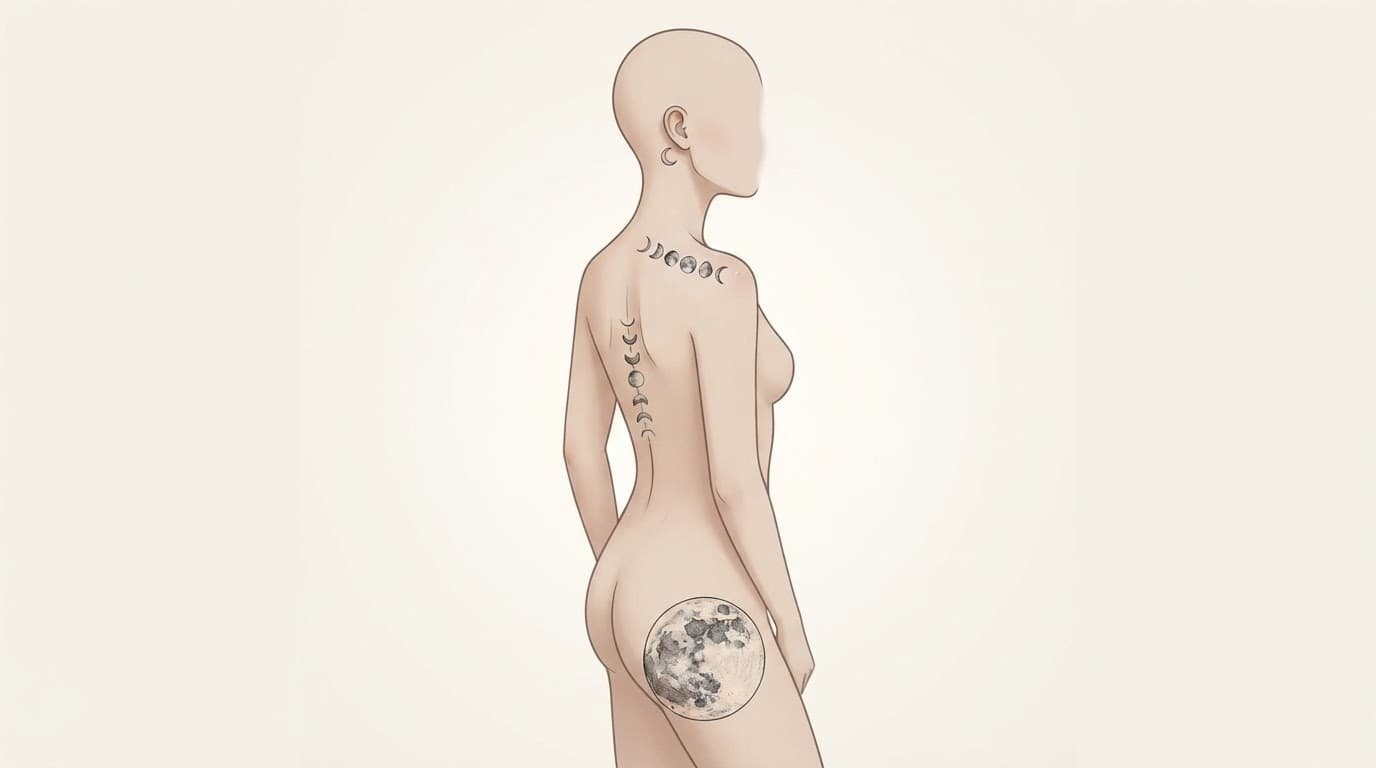
- Behind the ear: This area suits a discreet micro crescent, tiny star, or simple moon outline. Hair can hide it when needed, but frequent sun exposure and hair products may affect upkeep.
- Finger: A miniature moon looks charming on the side or top of a finger. However, frequent washing, hand movement, and friction can cause finger tattoos to fade faster and need touch-ups.
- Wrist: The wrist works well for small crescents, short vertical designs, or a narrow moon phase bracelet. Sleeves and watches may rub against the area, so consider how often the tattoo will be covered.
- Ankle: A tiny moon or curved phase line can follow the ankle neatly. Shoes and socks create regular friction, while exposed skin receives more sunlight during warmer months.
- Nape: The nape suits a small vertical moon, triple moon, or short phase sequence. Hair and collars can conceal it, making this a practical choice for a visible yet private tattoo.
- Collarbone: A horizontal lunar phase line follows the body’s natural width. The collarbone also suits a crescent with flowers, stars, or a short personal date.
- Forearm: Choose the forearm when you want to see your tattoo often. It supports fine-line moons, vertical designs, and medium compositions, although the area remains visible in many workplaces.
- Shoulder: The shoulder gives a round or curved design room to sit naturally. A crescent with flowers, a full moon, or a moon and sun pair can follow the shoulder’s shape.
- Ribs: The ribs provide privacy and enough length for horizontal phases, landscapes, or a detailed moon with waves. Skin in this area can feel more sensitive during the session, and clothing may rub against fresh ink.
- Sternum: A centered mandala moon or symmetrical sun-and-moon design can look striking on the sternum. The area is often more sensitive, so discuss the expected session length and design size with your artist.
- Spine: The spine is ideal for a vertical lunar cycle, hanging crescent, or moon with trailing vines. A straight design should match your posture rather than forcing every phase into a rigid line.
- Thigh: The thigh offers generous space for crater texture, realistic animals, landscapes, and colorful watercolor work. Clothing can cover it easily, and the broad surface supports larger compositions.
- Calf: A calf tattoo suits vertical moons, full moons, and compact landscapes. The design can remain visible with shorts while staying covered by most pants.
- Upper back: The upper back works well for wide phase rows, large celestial scenes, and symmetrical designs. It gives the artist a broad canvas while allowing you to keep the tattoo private under everyday clothing.
Fingers and other high-friction areas often need more maintenance. Ribs and the sternum may feel more sensitive, while the thigh and upper back usually offer more room for larger artwork.
Matching Moon Tattoo Size and Detail to Your Design
Size should follow the design, not the other way around. A tiny tattoo needs clear shapes, open skin, and limited detail because small lines can blur together as the ink settles and ages.
A simple crescent with one star can work behind the ear, on the ankle, or along the finger. A moon face, realistic animal, mandala, or cratered full moon needs more space. Landscapes also benefit from room because mountains, trees, water, and sky require separation to remain readable.
Many phase tattoos and realistic moon designs work better at roughly 5 to 15 centimeters, depending on the body area and the amount of detail. A short five-moon sequence may fit across the collarbone at the smaller end, while a phase-and-landscape composition may need the larger end on the ribs or thigh.
Ask your tattoo artist to prepare a stencil at the planned size. Then view it while standing, sitting, and moving your arm or torso. A design that looks balanced in a chair can feel too wide when your shoulder shifts or too small when your body is relaxed.
Choosing Ink, Linework, and an Artist Who Fits the Idea
The style should match both your taste and the amount of care you want to give the tattoo. Fine-line black ink creates a light, delicate moon, but it needs careful sizing and an artist who works confidently with thin lines. Black-and-gray shading gives craters, clouds, and landscapes stronger contrast.
Bold traditional outlines usually age with more visual strength, while dotwork creates texture through carefully placed points. Watercolor adds soft blue, violet, or pink washes, though pale color and delicate edges may require extra care and can change more noticeably over time.
Review an artist’s healed portfolio, not only fresh tattoos photographed immediately after the appointment. Fresh ink often looks sharper and darker than healed work. Look for examples in your chosen specialty, whether that means fine-line moons, realistic shading, ornamental mandalas, or watercolor.
Use this short consultation checklist:
- Bring reference images and explain which details you like in each one.
- Tell the artist what the moon means to you, especially if you want a customized symbol.
- Discuss size, placement, visibility, body movement, and likely friction.
- Confirm the stencil before the needle starts, including its direction and spacing.
- Ask how the line weight and color may look after healing and several years of aging.
For more inspiration built around symbolism and placement, browse these meaningful tattoo ideas for women before your consultation.
Healing and Aftercare for a Fresh Moon Tattoo
Your tattoo artist’s written instructions should guide your routine because bandage types, ink coverage, and skin reactions vary. In general, wash your hands before touching the tattoo, then clean the area gently with lukewarm water and the recommended mild soap. Pat it dry with a clean towel instead of rubbing.
Apply the thin layer of moisturizer your tattooer recommends. Some artists advise moisturizing several times a day, but follow the product and schedule they provide rather than adding heavy layers. Don’t pick at peeling skin or scratch an itchy area, and limit soaking in pools, hot tubs, baths, lakes, and the ocean while the tattoo heals.
Avoid tight clothing and repeated rubbing, especially over ribs, ankles, fingers, and the sternum. Keep fresh ink out of direct sun until it heals. Once the skin has healed, the American Academy of Dermatology’s tattoo care guidance recommends broad-spectrum, water-resistant SPF 30 or higher for exposed tattooed skin.
A typical healing period may be about three to five weeks, although size, placement, skin type, and tattoo technique can change the timeline. Increasing redness, worsening pain, heat, pus, red streaks, or fever are not normal healing signs. Contact a medical professional if they appear, and seek advice about any reaction that continues or worsens. The AAD’s guidance on possible tattoo skin reactions can help you recognize when fresh ink needs medical attention.
Conclusion
The right moon tattoo begins with the feeling you want to carry forward. A crescent can suggest new beginnings, while a full moon may express confidence, completion, or inner strength. You might choose a meaningful phase, pair the moon with a flower or animal, and settle on a favorite style such as fine-line, dotwork, black-and-gray, geometric, or watercolor. Placement matters just as much, since your body, clothing, comfort level, and desired visibility should guide the final size and detail.
Save a few ideas that catch your eye, then adapt them instead of copying them exactly. Combine the moon shape, symbols, colors, and placement in a way that fits your story. A skilled tattoo artist can refine the design, check its proportions, and help it age well on your skin. You can also browse these meaningful tattoo ideas for women for more personal inspiration.
The best moon tattoo is not simply the prettiest image. It’s the one that feels right for your story, style, body, and comfort level, so it still feels personal years from now.
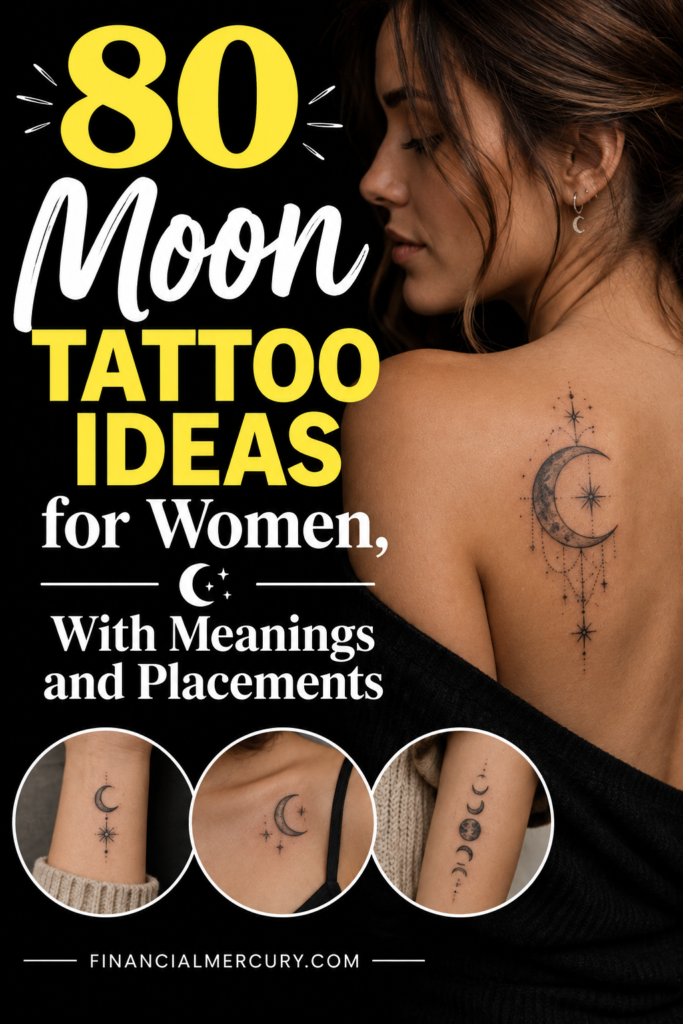
Save the pin for later

- 80 Moon Tattoo Ideas for Women, With Meanings and Placements - September 9, 2026
- 50 Wildflower Tattoo Ideas for a Feminine Look - September 9, 2026
- 100 Gorgeous Sun Tattoo Ideas for Every Style - September 9, 2026
Leave a Reply