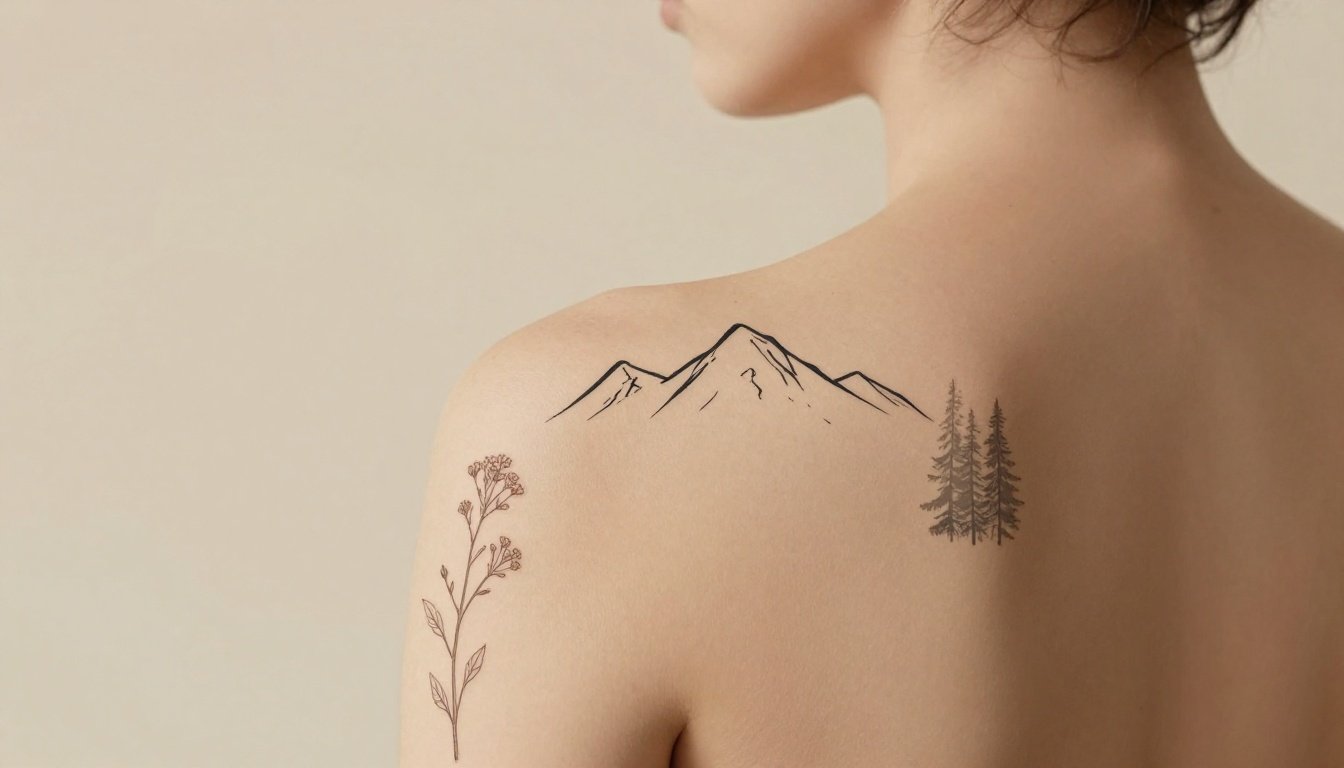
15 Beautiful Nature Tattoo Ideas and Their Meanings
A fine mountain line can stretch across your shoulder, a wildflower stem can curl around your wrist, or a quiet forest can rest between your shoulder blades. Nature tattoos turn those scenes into lasting reminders of growth, freedom, healing, strength, treasured memories, or a love of the outdoors.
Choosing the right design takes more than picking a pretty image. The 15 ideas ahead include botanical tattoos, sweeping landscapes, meaningful animals, and ocean-inspired designs, with guidance on symbolism, tattoo styles, placement, and personal details such as birth flowers, native plants, or favorite places.
You’ll also find practical advice on cultural respect, especially when a design draws from Indigenous traditions, along with basic aftercare for protecting fresh ink. Let’s begin with nature tattoo ideas that can carry a personal story on your skin.
15 Beautiful Nature Tattoo Ideas to Inspire Your Next Design
Treat these ideas as starting points, not tattoos to copy exactly. Your favorite flower, trail, animal, or shoreline can turn a familiar nature motif into a design that feels personal. Consider the image, meaning, style, and placement together before you book an appointment.
Botanical tattoos that celebrate growth and beauty
Botanical tattoos can feel delicate, bold, personal, or symbolic. These five ideas offer plenty of room for customization.
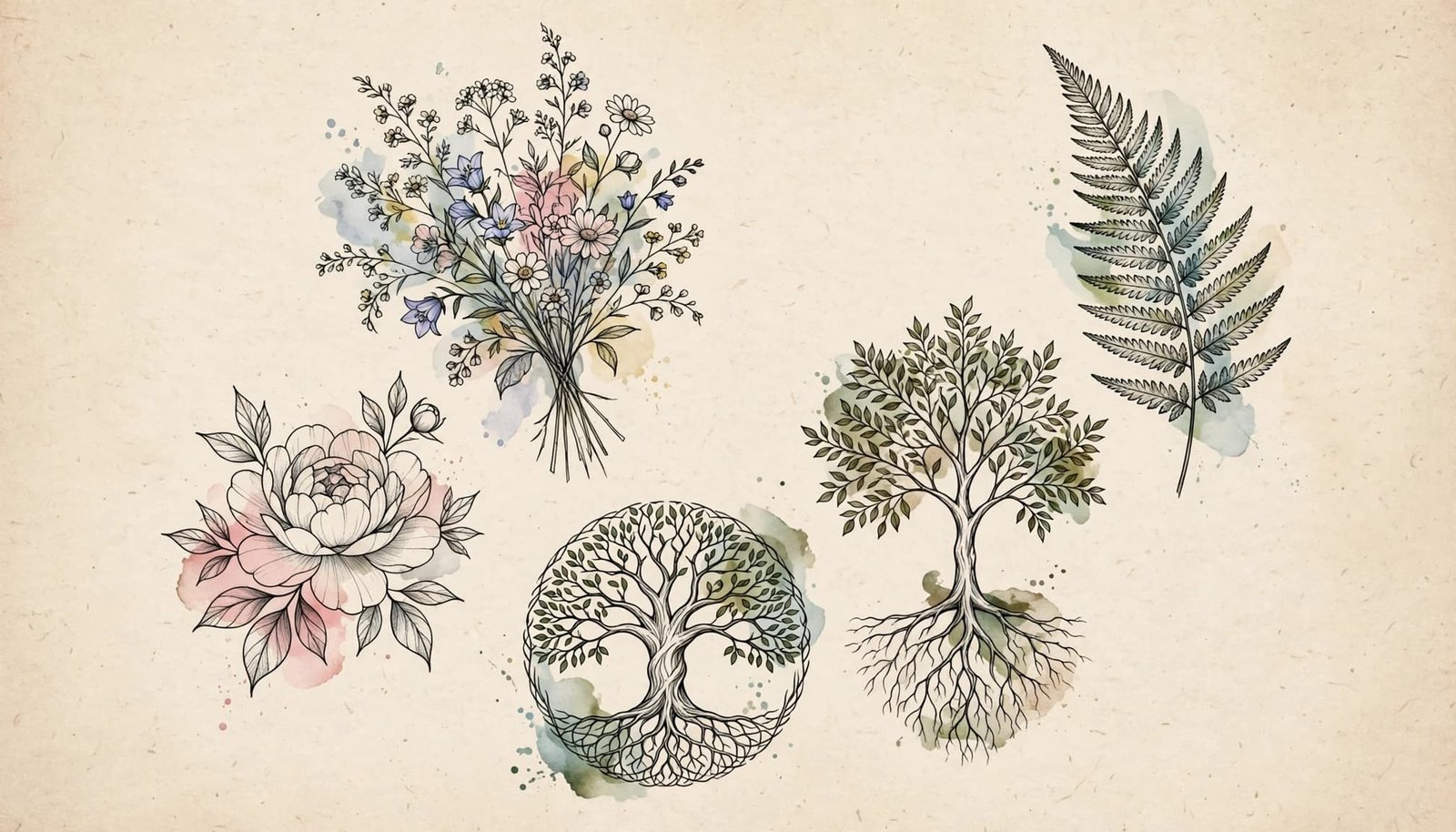
A fine-line wildflower bouquet can celebrate individuality and gentle beauty. Ask your artist to combine several flowers with uneven stems, small leaves, and natural spacing instead of a perfectly arranged bunch. Fine-line black ink suits a subtle forearm or collarbone tattoo, while soft watercolor adds a loose, painted feeling. The ankle and upper back also give this design attractive vertical space.
A single fern frond is a graceful choice for resilience and renewal. Its repeating leaves create movement without requiring heavy detail. Try black ink for a crisp botanical look, negative space for a lighter effect, or muted green watercolor for an organic finish. The ribcage, sternum, forearm, or ankle can all suit its long, narrow shape.
A meaningful birth flower adds a private detail to a beautiful design. Pair the flower with a date, initial, or tiny constellation connected to someone you love. A fine-line version works well on the wrist or collarbone, while a more colorful watercolor flower can sit on the upper arm or upper back. Verify the flower assigned to your birth month before finalizing the sketch.
A tree with deep roots can represent family, personal growth, and the strength gained through difficult seasons. Add initials to the roots, leaves for family members, or a small landscape inside the branches. Black-and-gray ink gives the trunk weight, while negative space keeps a smaller version clear on the ankle or sternum. Larger designs fit the ribcage or upper back.
The Tree of Life combines roots, branches, and circular movement to express connection and life cycles. Before choosing a Celtic, Norse, religious, or other specific version, learn its cultural and spiritual meaning. The symbol carries different associations across traditions. A small fine-line design may fit the forearm, while an elaborate black-and-gray or watercolor version needs the upper back or ribcage.
Mountains, waves, and landscapes with a sense of place
Landscape tattoos become more personal when they point to somewhere real. A favorite trail, childhood beach, quiet lake, or hometown skyline can give the design a story that generic scenery cannot.
A minimalist mountain range is a clean symbol of endurance. Use one continuous line or a few sharp peaks for a small collarbone, wrist, or ankle tattoo. Fine-line and single-line styles keep the image modern, while black-and-gray shading gives the peaks more depth on the calf or shoulder blade.
A tiny wave can hold meanings of calm, change, and emotional steadiness. A simple curved line works on the wrist or ankle, and a small watercolor wave adds movement without making the tattoo large. For a more personal version, shape the wave after a favorite beach or lake.
A mountain and ocean scene brings two different forms of nature into one balanced composition. Fine-line work suits the forearm or collarbone, while black-and-gray realism needs more room on the calf, thigh, or back. Add a recognizable horizon, shoreline, or peak from a place you visit often.
A moonlit forest landscape can suggest mystery, solitude, and comfort in quiet spaces. Fine-line trees create an airy design on the shoulder blade or wrist, while black-and-gray realism gives the moon and forest more atmosphere. Watercolor can add a limited wash of blue or violet, but keep the details clear as the tattoo ages.
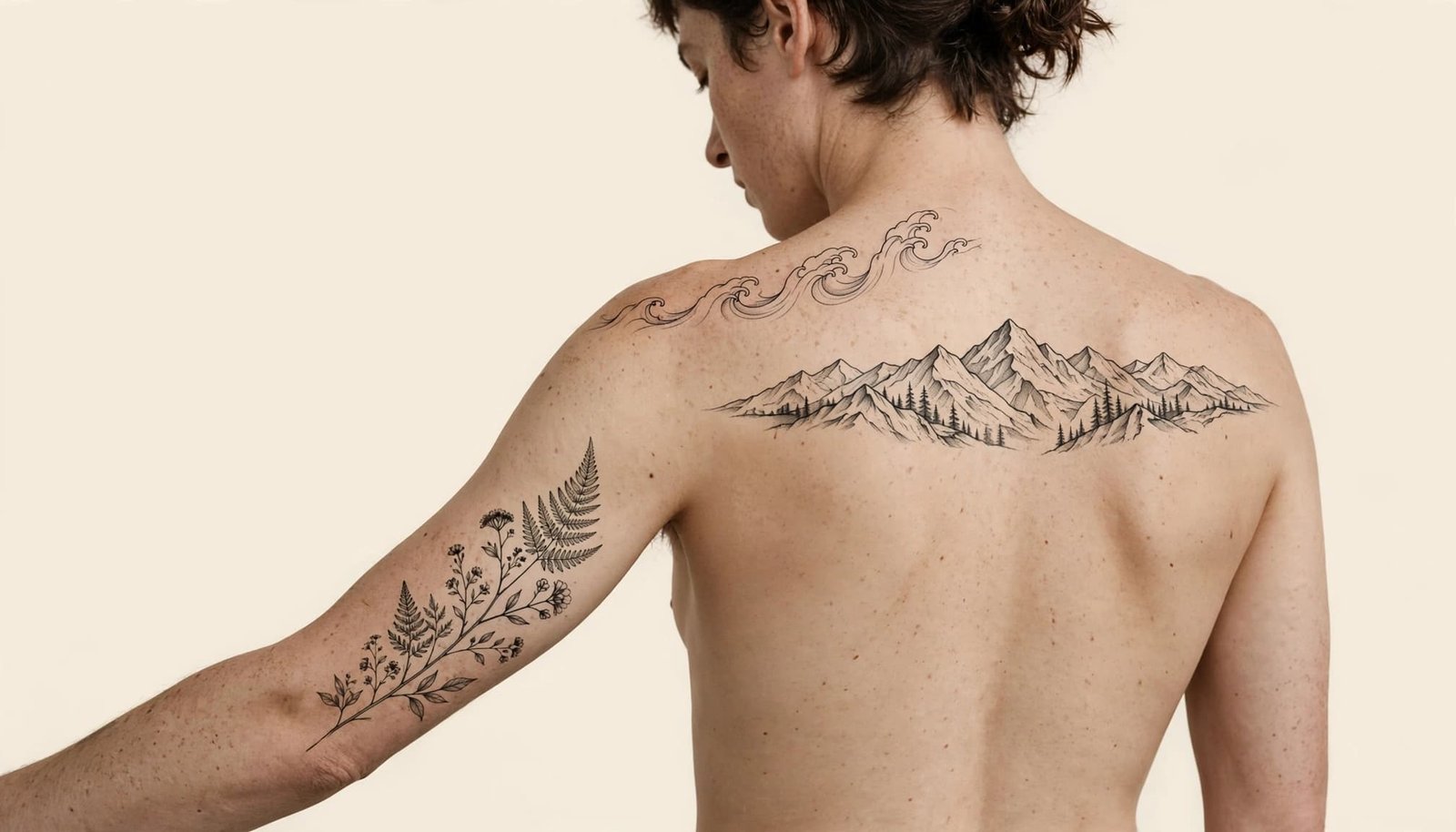
For a larger scene, combine trees, mountains, and water in one illustrative piece. The back, thigh, sleeve, or shoulder blades can support layered details and natural body flow. Ask your artist to build the composition around the body’s shape instead of forcing a rectangular picture onto it.
Wildlife and nature symbols full of meaning
Animal tattoos carry familiar meanings, but your personal connection matters more than a standard symbol list. Choose an animal because of a memory, place, family story, or quality you genuinely recognize in yourself.
A bird in flight can suggest freedom, while a butterfly often points to transformation. A small silhouette keeps either idea simple on the wrist, ankle, or ribs. For more detail, choose a fine-line profile on the forearm or a realistic butterfly on the upper arm.
A deer can express gentleness, intuition, and alertness. Pair a fine-line profile with small flowers or mountain shapes, or choose a realistic portrait for the thigh, back, or upper arm. A snake wrapped around a branch offers a different mood, with renewal and wisdom built into its shedding cycle. Its curved form suits the calf, forearm, or ribs.
For protection, strength, intelligence, or independence, consider a wolf, bear, or owl portrait. Realistic work needs the upper arm, thigh, back, or shoulder, while a small silhouette can fit the ankle or calf. You can also combine the animal with stars, flowers, or mountains to connect its meaning to your own story.
Animal symbolism differs across cultures, so research the tradition behind a design before using it. Most importantly, choose the creature because it has a real place in your life, not because a generic meaning sounds appealing.
Nature Tattoo Styles That Change the Mood of Each Idea
The same mountain, flower, wave, or animal can feel entirely different when the tattoo style changes. A thin fern may look delicate and private, while the same fern in heavy black ink can feel bold and graphic. Before choosing a design, decide what mood you want the finished tattoo to carry.
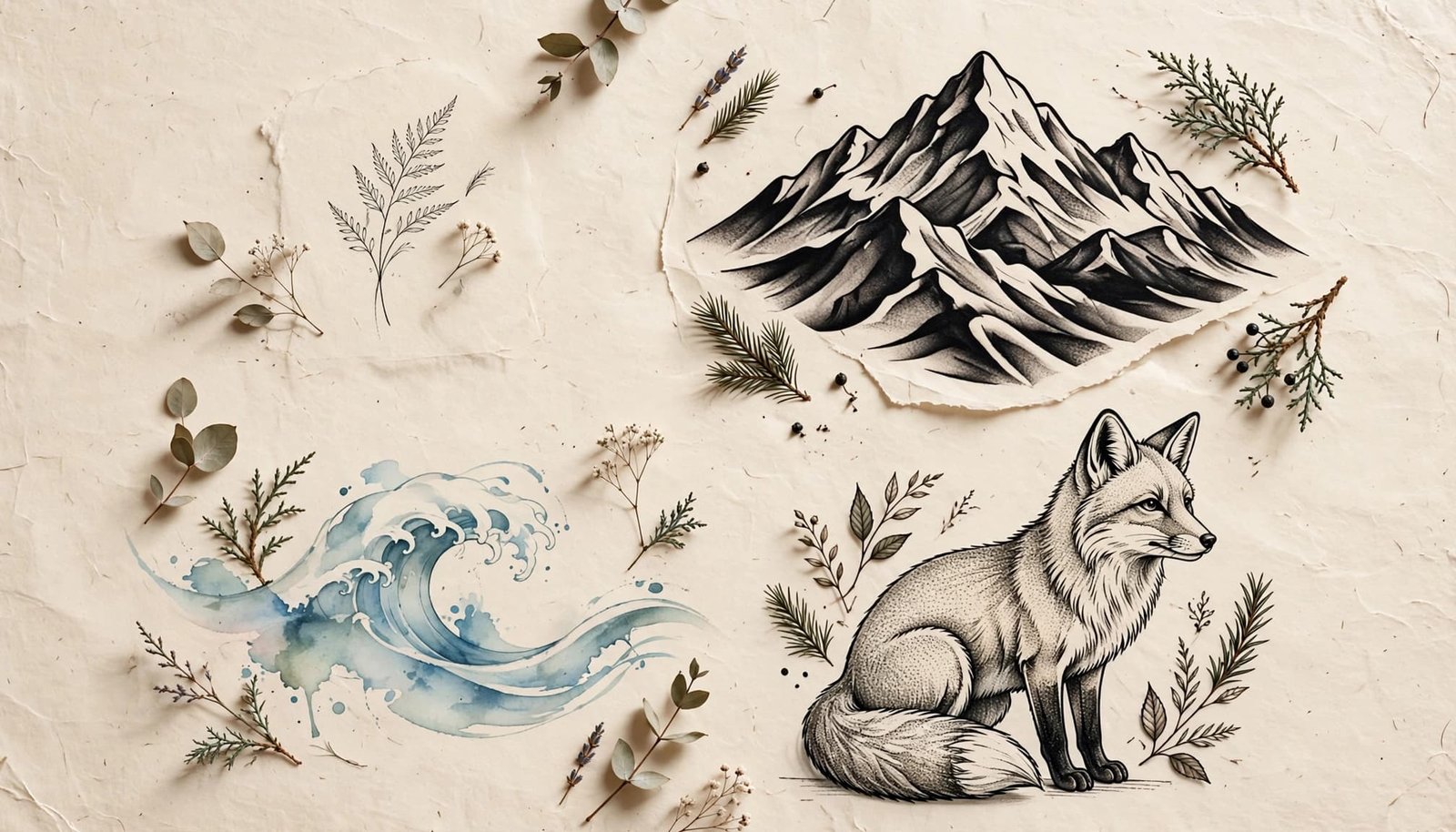
Fine-line and minimalist tattoos keep nature designs light
Fine-line tattoos use narrow, controlled strokes to create a clean and delicate result. They suit small flowers, single leaves, tiny waves, mountain outlines, and simple animal silhouettes. Minimalist designs use fewer details, which gives the image open space and a modern appearance.
This style works well on the wrist, ankle, collarbone, inner arm, or behind the ear. However, very thin lines and tiny details can soften over time, especially when the design has little contrast. Ask your artist how the tattoo may look after healing, not only how it appears in a fresh portfolio photo.
Negative space also matters. Leaving skin between leaves, branches, or mountain peaks helps each shape remain readable. A crowded small tattoo can lose its clarity as the ink settles, so a simpler design often ages better.
Black-and-gray tattoos add depth and lasting contrast
Black-and-gray ink gives nature tattoos a stronger, more timeless mood. Shading can turn a simple mountain range into a distant landscape, or give a wolf, bear, or owl more weight and expression. The artist can create depth with solid black, soft gray washes, and carefully placed skin breaks.
This approach suits larger designs on the upper arm, thigh, calf, shoulder blade, ribs, or back. It also works well for forest scenes, realistic animals, tree roots, and moonlit landscapes. A bold line around the main subject can help the tattoo stay readable, while lighter shading adds atmosphere without filling every space.
Watercolor tattoos bring softness and movement
Watercolor tattoos use loose color transitions and painterly edges to make flowers, waves, butterflies, and sunsets feel airy. Limited color usually creates a more balanced result than using every shade available. Muted blue, green, violet, or rust can suggest a favorite season without overwhelming the design.
Because lighter colors often appear softer as the tattoo heals, ask your artist how they build contrast. A fine black outline or a few darker accents can protect the main shape while preserving the dreamy effect. Also, healed examples matter more than fresh work when you compare portfolios.
Realism, dotwork, and illustrative styles create character
Realism is a strong choice for detailed animal portraits, familiar landscapes, and botanicals with lifelike texture. These designs need enough room for the artist to show fur, bark, feathers, petals, and changing light. A tiny realistic tattoo may lose those details, so scale should match the subject.
Dotwork builds shading and texture from small points, which gives mandalas, leaves, insects, and celestial nature designs a measured, handmade feel. Illustrative tattoos allow stronger outlines, stylized proportions, and storybook details. They can make a forest feel mysterious or a flower feel playful without copying a photograph.
Before booking, study the artist’s healed work and ask about their experience with your skin tone, preferred colors, and chosen size. The FDA also advises consumers to ask what inks a studio uses and to watch for reactions after tattooing in its tattoo safety guidance. Your best style match is the one that fits the design, your maintenance habits, and the artist’s actual strengths.
How to Choose the Right Placement for a Nature Tattoo
The best tattoo placement brings together the design’s size, detail, body shape, visibility, and your daily routine. A small wave may look elegant on the collarbone, while a detailed forest needs more space to keep every tree readable.
Before choosing a spot, consider how the tattoo will look when you move, sit, bend, or wear your usual clothes. Placement should support the design rather than force it into an awkward shape.
Match the tattoo size to the body area
Small nature tattoos suit areas with limited space and simple designs. A tiny leaf, butterfly, crescent moon, or wave can fit nicely on the wrist, ankle, behind the ear, or collarbone. These placements keep the tattoo easy to see, although exposed skin may need more sun protection over time.
Medium designs have room for extra lines, shading, and small personal details. Consider the forearm, upper arm, calf, shoulder, ribs, or spine for a fern, animal profile, mountain scene, or botanical stem. A long flower stem can follow the length of your forearm, while a narrow snake or branch can curve naturally along the ribs.
Large nature tattoos need enough space for detail and breathing room. A forest, mountain range, or ocean scene may look crowded when reduced to a small rectangle. The back, chest, thigh, or a full sleeve can support layered scenery, larger animals, and realistic shading.
A detailed design needs open skin around it. Extra space helps the image stay clear as the tattoo settles and ages.
Let the design follow your natural contours
Body flow can make a tattoo feel connected to you instead of placed on top of you. For example, a wave can follow the collarbone, using the bone’s gentle curve to create movement. A mountain range can stretch across the shoulder blades, while a long botanical stem can run down the forearm or along the spine.
Ask your artist to adapt the sketch to your body rather than copying a flat reference image. Curved designs often work well around the calf, upper arm, hip, or ankle. A straight row of mountains may need a slight arc to look balanced when your arm or back is relaxed.
Think about visibility, pain, and everyday wear
Visible placements can make your tattoo part of your daily style. The wrist, forearm, ankle, and collarbone are easy to show, while the upper arm, thigh, ribs, and back offer more control over when others see it. Work dress codes, family preferences, and future career plans may also influence your choice.
Pain varies by person, but areas close to bone often feel sharper. Ribs, spine, sternum, hands, feet, ankles, and shins can be more sensitive than the outer upper arm or calf. If this is your first tattoo, a less sensitive area may make the experience easier.
Fingers and feet also face constant friction, washing, movement, and shoe pressure. Tiny details can blur or fade faster there, and touch-ups may become part of long-term care. See these tattoo fading factors before choosing a high-friction spot.
Finally, ask your artist for a stencil before the appointment begins. View it standing, sitting, and in a mirror from different angles. Move your arm, bend your leg, and check how clothing covers it. A few minutes with the stencil can reveal whether the placement feels natural before the needle touches your skin.
Ways to Make Your Nature Tattoo Personal and Original
A nature tattoo becomes more meaningful when it carries a detail only you can explain. Start with a memory, place, person, or feeling, then build the design around it instead of copying a popular motif.
Share that story with your tattoo artist before showing reference images. Explain whether you want the tattoo to feel peaceful, protective, playful, strong, or nostalgic. Your artist can then create a design that fits your body and personality rather than reproducing someone else’s work.
Add details that belong to your story
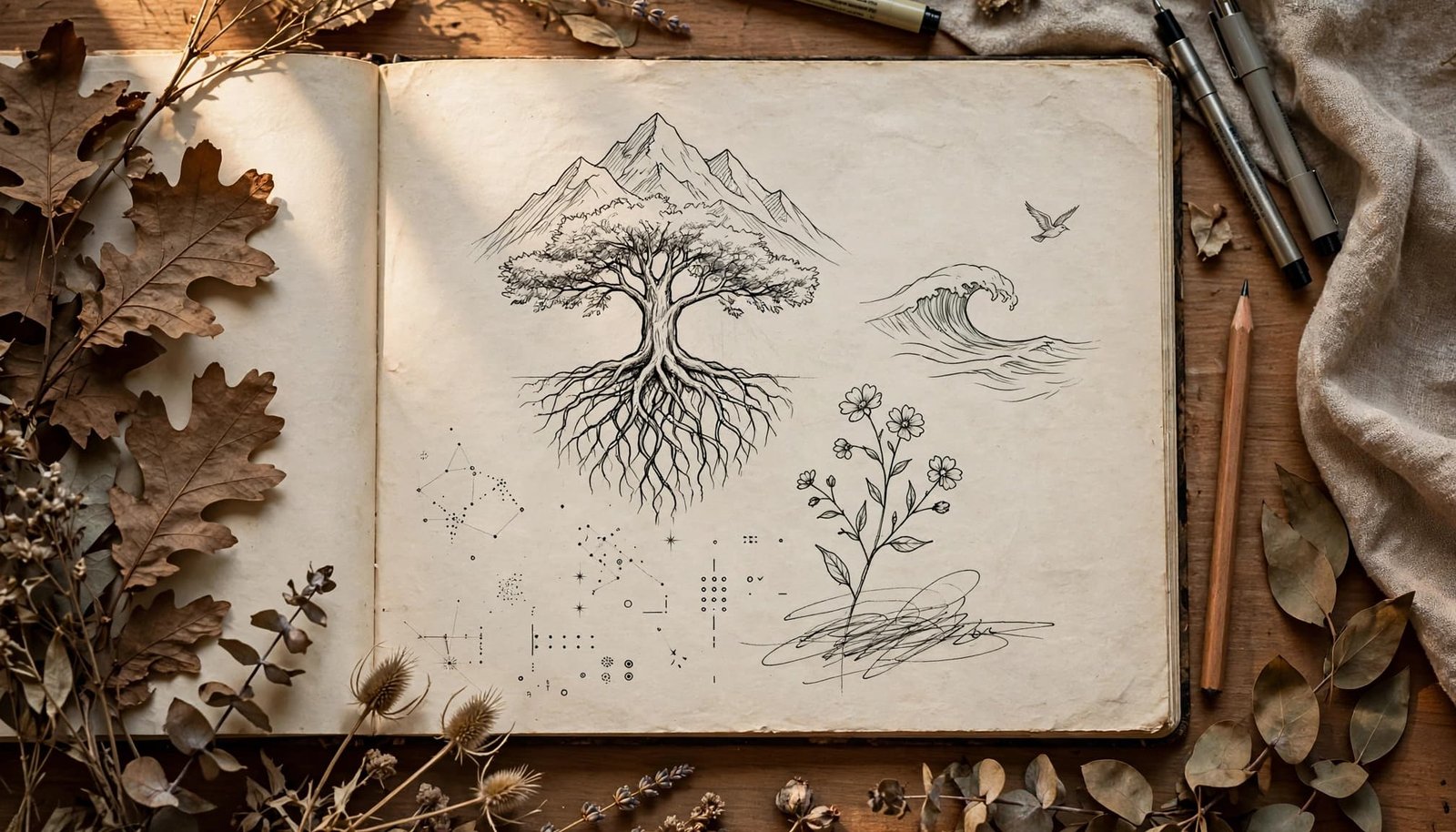
A meaningful plant can make a familiar design feel personal. Choose the pine tree from a childhood camping trip, the lavender that grew in a relative’s garden, or a native flower from your hometown. You might also include a local animal, a favorite trail, or the outline of a coastline you visit often.
Small details can hold just as much meaning as the main image. Consider adding:
- Coordinates for a birthplace, favorite park, proposal site, or memorable trip.
- A short date connected to a loss, beginning, achievement, or family milestone.
- Initials hidden among roots, leaves, stars, or waves.
- Your birth flower paired with a loved one’s birth flower.
- A constellation linked to a birth date or an important night outdoors.
- A tiny object, such as a compass, tent, canoe, camera, or hiking boot.
Keep added details legible at the tattoo’s final size. A short date may work beneath a mountain range, while coordinates can follow a wave or sit inside a banner-free botanical design. Your artist can adjust spacing, line weight, and placement so the personal elements don’t make the image feel crowded.
Combine symbols to tell one clear story
Two simple symbols can say more than a large collection of unrelated images. Roots with a mountain can connect family history to endurance. A wave with a bird can express freedom after a difficult season. A wildflower beside a loved one’s handwriting can preserve both a place and a relationship.
The connection should feel natural rather than decorative. A tree might hold a tiny moon for a parent who loved nighttime walks, or a forest could contain the outline of a lake from a meaningful vacation. When you combine symbols, tell your artist what happened and what emotion you want the finished tattoo to hold.
Handwriting can add an intimate touch, but use a short word or phrase that will remain readable. Ask for a loved one’s actual handwriting when possible, then let the artist adapt it to the tattoo’s scale. A few letters woven into a stem often age better than a long sentence.
Check cultural meaning before choosing a symbol
Some tattoo imagery belongs to a specific community, ceremony, identity, or spiritual tradition. Research the origin before using a pattern because it looks attractive. Traditional Inuit tattoos, for example, can identify cultural belonging and aren’t intended for appropriation by outsiders, as explained by the Anchorage Museum.
When a design draws from Indigenous, religious, Polynesian, Celtic, or another specific tradition, ask your artist about its cultural background. Avoid requesting a vague “tribal” style or copying a sacred pattern from an online image. Instead, take inspiration from broad themes such as mountains, plants, animals, or water and create a design from your own experience. Guidance on Native American tattoo meanings and respect can help you recognize why context matters.
A reputable artist should welcome these questions and suggest respectful alternatives. If a symbol is sacred, ceremonial, or identity-linked, leave it in its proper cultural setting and choose imagery connected to your own life.
What to Know Before Getting a Nature Tattoo
A nature tattoo can look simple on paper, yet the finished result depends on careful planning. Before you book, consider the artist’s skill, the studio’s hygiene practices, the design’s size, and the care your skin will need while it heals.
Research the studio and tattoo artist
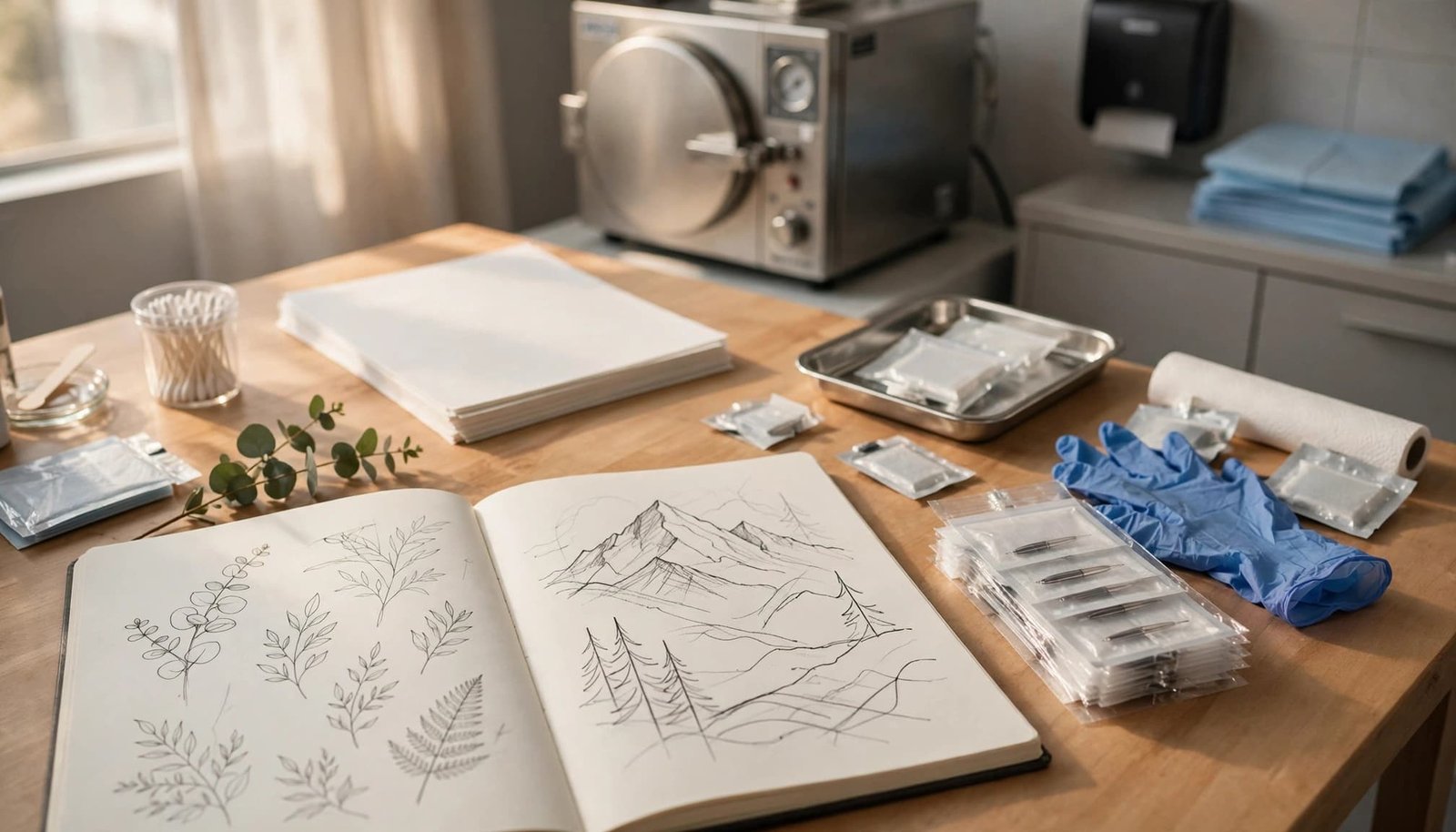
Start by checking whether the studio follows your state’s licensing or registration requirements. Rules vary across the US, so look for current health permits, inspection information, and clear safety policies. A reputable studio should have a clean work area, hand-washing facilities, sealed supplies, and staff who answer questions without rushing you.
Review the artist’s healed tattoo work, not only fresh photographs. Fresh ink often looks darker and sharper than it will after the skin settles. Healed examples show whether fine lines remain clear, colors stay balanced, and detailed shading still reads well.
Choose an artist whose portfolio matches your idea. Someone known for delicate botanicals may not be the right choice for a realistic wolf or a wide mountain scene. During your consultation, ask about:
- Their experience with your preferred style, such as fine-line, realism, watercolor, or black-and-gray.
- How they adapt designs to your skin tone, body shape, and chosen placement.
- Whether they use single-use needles and disposable items.
- How they clean reusable equipment and disinfect work surfaces.
- Which aftercare products and instructions they provide.
Needles should come from sealed packages and open in front of you. Reusable tools must go through proper sterilization, usually with an autoclave. If the artist avoids these questions, treats hygiene as an inconvenience, or pressures you to book immediately, choose another studio.
Plan for time, size, and cost
A tiny leaf or wave may take less time and cost less than a detailed wildlife portrait. A forest scene with layered trees, mountains, and shading can require several hours or multiple appointments. The same applies to realistic feathers, fur, bark, and small botanical details.
Ask for an estimate based on the final size and placement. Also leave room in your budget for a deposit, follow-up session, or future touch-up. A larger tattoo may need more space than you first expect, especially if you want the details to remain readable as the ink ages.
Bring a few reference images, but explain what you like about each one. Your artist can combine the mood, subject, and placement into an original design rather than copying another person’s tattoo.
Follow a simple healing routine
Your artist’s instructions should come first because dressings, products, and healing times can vary. In general, wash your hands before touching the tattoo. Then clean it gently with lukewarm water and a fragrance-free cleanser, rinse carefully, and pat it dry with a clean paper towel.
Apply only a thin layer of the recommended product. More ointment won’t speed healing and may trap moisture against the skin. Avoid picking flakes or scabs, even when the tattoo feels itchy.
Keep the area out of pools, oceans, lakes, hot tubs, baths, saunas, tanning beds, and direct sun until it heals. Tight clothing can rub the skin and irritate fresh ink, so choose loose, breathable fabric instead. Mayo Clinic’s tattoo safety advice also recommends avoiding swimming and sun exposure during healing.
Some redness and tenderness can occur at first. Seek medical advice if redness spreads, swelling worsens, drainage or pus appears, pain increases, the skin feels unusually hot, or you develop a fever, chills, or red streaks. WebMD’s tattoo aftercare guidance also advises medical care when a tattoo isn’t healing properly.
Conclusion
The strongest nature tattoos bring four choices together: a meaningful subject, a suitable style, thoughtful placement, and a skilled artist. A tiny wave or fern can hold as much personal meaning as a detailed wildlife portrait or full landscape when the image connects to your life.
Choose a design that recalls a real memory, value, place, or season of life instead of chasing a passing trend. A favorite trail, family garden, childhood beach, or difficult period can give familiar nature imagery a story that belongs to you. The right size and placement will also help the details stay clear and comfortable over time.
Before booking, save a few visual references and write down what you want the tattoo to mean. Then discuss the idea with a trusted artist who can refine the subject, style, scale, and placement for your body. With thoughtful planning, your nature tattoo can remain a beautiful reminder of where you’ve been and what still matters to you.
Save the pin for later

- 15 Beautiful Nature Tattoo Ideas and Their Meanings - September 6, 2026
- 40 Butterfly Tattoo Ideas for Women - September 6, 2026
- 15 Pretty Daisy Tattoo Ideas for a Soft, Personal Look - September 6, 2026
Leave a Reply