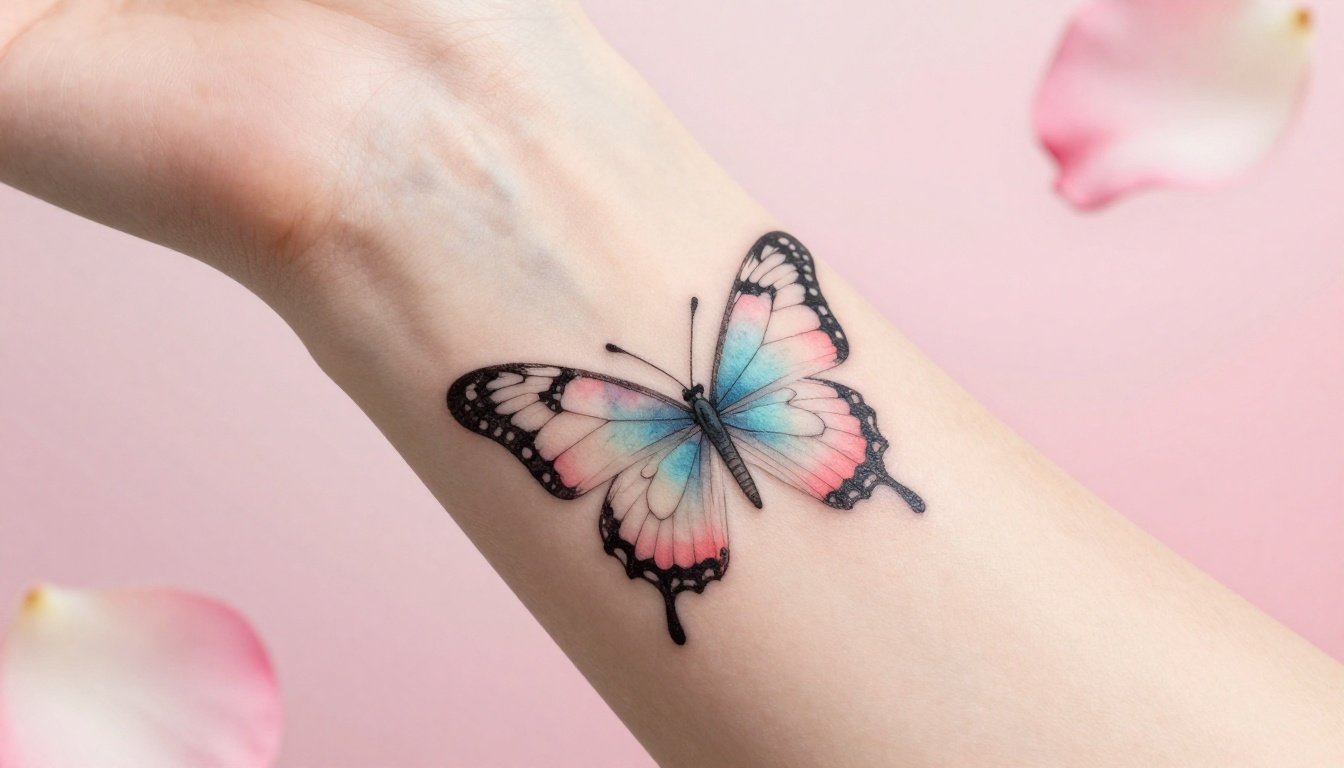
40 Butterfly Tattoo Ideas for Women
A butterfly tattoo can capture the moment you outgrow an old version of yourself, spread your wings after a difficult season, or choose beauty and freedom on your own terms. Its delicate shape may suggest change and hope, while bold wings, dark ink, or vivid color can express strength, resilience, and a story that belongs entirely to you.
Finding the right design takes more than choosing a pretty image. These butterfly tattoo ideas for women include delicate fine-line pieces, colorful watercolor wings, realistic details, floral accents, bold blackwork, and meaningful designs for different personalities, styles, and placements.
You’ll also find guidance for choosing a size and location that fit your lifestyle, along with practical advice for protecting fresh ink as it heals. Start by exploring the designs and meanings that might suit your story best.
Key Takeaways
- Butterfly tattoos can symbolize personal growth, freedom, healing, confidence, or a fresh start.
- Fine-line, watercolor, realistic, floral, and blackwork styles create different moods and levels of visual impact.
- Choose placement based on size, visibility, pain tolerance, clothing, and how the design may age.
- Personal details, such as birth flowers, initials, stars, or meaningful colors, can make your butterfly tattoo unique.
- Choose a reputable studio, confirm sterile practices, and follow proper aftercare. The FDA’s tattoo safety guidance recommends seeking medical advice for unusual redness, bumps, rash, fever, or poor healing.
Butterfly Tattoo Ideas for Women, From Tiny to Bold
Butterfly tattoos can stay soft and discreet or become dramatic, colorful statements. The best design matches your preferred style, personal meaning, and the amount of detail your chosen placement can support.
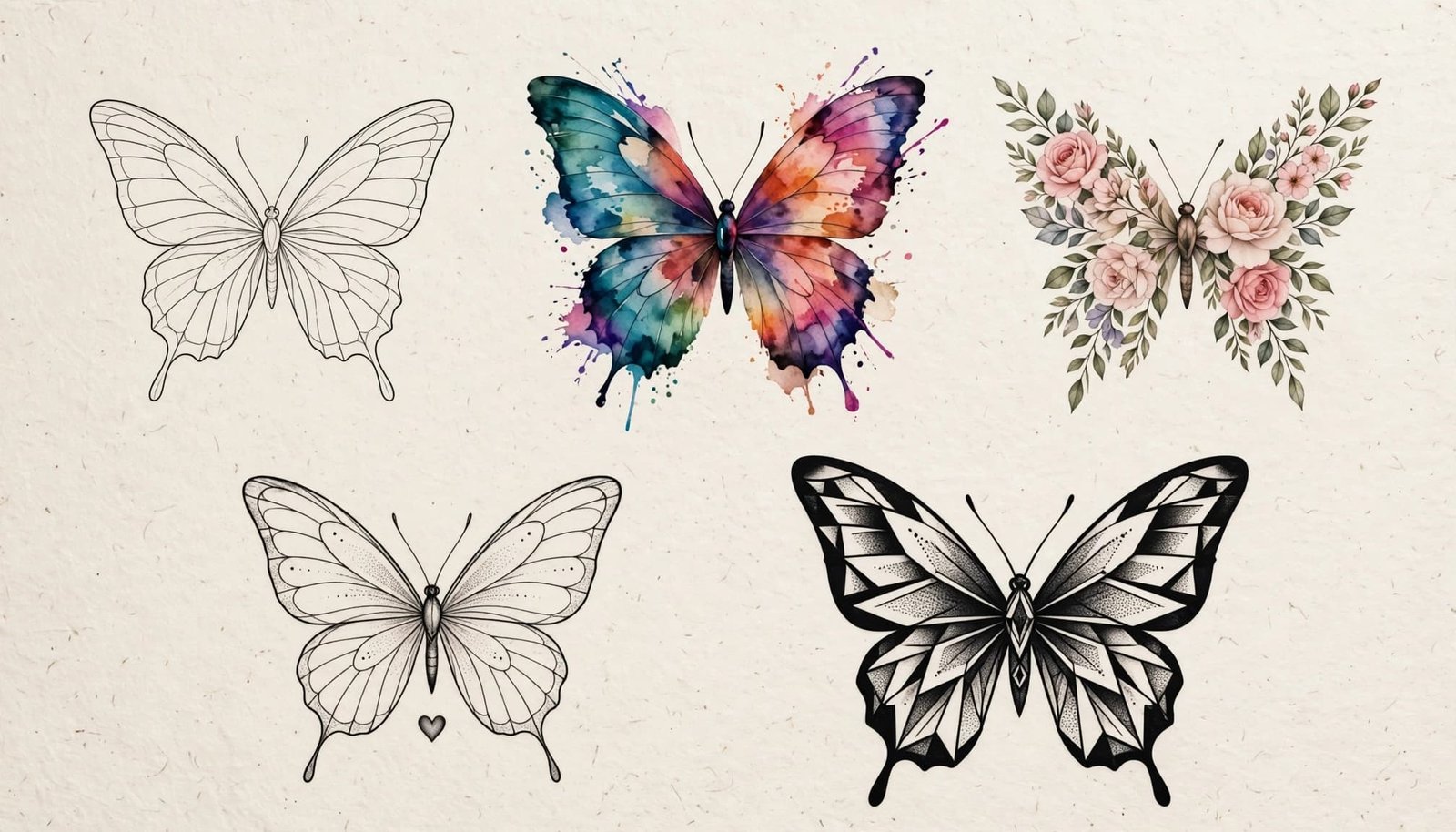
Delicate and Minimal Butterfly Designs
Simple butterfly tattoo ideas work well when you want feminine ink that feels personal rather than loud. Fine details need thoughtful sizing because extremely small lines can soften as the tattoo ages.
- Fine-Line Outline: A clean butterfly outline has an airy, graceful look that suits the forearm, rib, or shoulder.
- Tiny Inner-Wrist Butterfly: This discreet design stays visible to you while remaining easy to cover for work.
- Hidden Behind-the-Ear Butterfly: A miniature butterfly tucked behind the ear feels private, playful, and effortlessly feminine.
- Minimalist Ankle Butterfly: Place a small outline above the ankle for a delicate symbol that moves naturally with your body.
- Single-Line Butterfly: One continuous flowing line creates an artistic design with a modern, understated mood.
- Small Collarbone Butterfly: A petite butterfly along the collarbone adds softness without overwhelming the area.
- Dotted Butterfly: Tiny dots form the wings and create a delicate stippled texture with a gentle, airy finish.
- Micro Heart Butterfly: Add a subtle heart inside or beside the wings to connect transformation with love and self-kindness.
Colorful and Artistic Wing Ideas
Color changes the emotional tone of a butterfly tattoo. Before choosing a palette, ask your artist which pigments will remain readable over time, since sun exposure and skin changes can soften color.
- Soft Watercolor Butterfly: Blended pink, lavender, and blue create a dreamy design associated with hope and freedom.
- Blue Morpho-Inspired Butterfly: Rich blue wings suggest confidence and openness while recalling one of nature’s most striking butterflies.
- Crimson Accent Butterfly: Mostly black wings with one crimson section create passion, courage, and visual focus.
- Pastel Gradient Butterfly: Peach, lilac, mint, and pale blue give the tattoo a cheerful, gentle appearance.
- Stained-Glass Wings: Dark outlines divide jewel-toned sections, creating an artistic design with structure and personality.
- Rainbow-Wing Butterfly: Bright multicolor wings can express joy, identity, pride, or unapologetic self-expression.
- Ombré Butterfly: One shade gradually fades into another, giving the wings depth while keeping the design polished.
- Starry Butterfly: Tiny stars around colorful wings add a hopeful, magical feeling without crowding the central image.
Nature-Inspired Butterfly Compositions
Flowers, leaves, and celestial details give butterfly tattoos a personal setting. Choose one or two companion elements so the composition stays balanced and readable.
- Butterfly on a Flower: A butterfly resting on a rose, daisy, or peony creates a peaceful scene about beauty and renewal.
- Floral Wing Butterfly: Petals blend into the wings, making the butterfly appear partly botanical and highly distinctive.
- Vining Butterfly: Curving vines guide the eye around the butterfly and suit the ribs, thigh, or upper arm.
- Moonlit Butterfly: A crescent moon and a few stars add themes of intuition, dreams, and change.
- Wildflower Butterfly: Small meadow flowers create a free-spirited design with a natural, unpolished charm.
- Birth-Flower Butterfly: Pair the wings with your birth flower or a loved one’s flower for a specific personal connection.
- Leaf-Emerging Butterfly: The butterfly appears between leaves, creating a visual story about growth and a new beginning.
- Butterfly and Moth: Pairing different winged insects can honor contrast, companionship, or two sides of one personality.
Meaningful and Personalized Butterfly Tattoos
A meaningful butterfly tattoo becomes more lasting when its symbols connect to your own life. Keep dates, names, and short lettering large enough to remain legible as the ink ages.
- Initial-Wing Butterfly: Place one or two initials inside the wings to honor yourself, a child, or someone close.
- Date Butterfly: Add a meaningful date beneath the butterfly in a clean, readable typeface.
- Memorial Butterfly: A name, tiny halo, or favorite color can turn the design into a tender remembrance.
- Two Butterflies: Two butterflies can symbolize romantic love, friendship, sisters, or a shared season of change.
- Recovery Butterfly: Use healed skin, open wings, or a bright center to reflect survival and renewed strength.
- “Becoming” Butterfly: A short word such as “becoming” pairs naturally with the butterfly’s transformation symbolism.
- New-Chapter Butterfly: A butterfly leaving a broken chain, fading shadow, or closed door can symbolize moving forward.
- Infinity or Heartbeat Butterfly: Add a small infinity symbol or heartbeat line to connect change with enduring love and life.
Realistic, Geometric, and Edgy Butterfly Styles
Line weight, symmetry, contrast, and scale change the entire mood of a butterfly tattoo. Fine shading feels soft, while heavy blackwork and dramatic wings create a stronger, rebellious statement.
- Micro-Realistic Butterfly: Careful shading and natural wing markings create lifelike detail in a small format.
- Black-and-Gray Butterfly: Smooth shadows give the design depth without bright color, making it elegant and versatile.
- Geometric Butterfly: Triangles, mirrored lines, and precise shapes create a structured look with modern energy.
- Bold Blackwork Butterfly: Solid black wings deliver confidence and make the tattoo remain visually clear from a distance.
- Skull-Motif Butterfly: A tiny skull within the body or wings combines beauty with mortality and darker personal meaning.
- Light-and-Dark Wings: One pale wing and one heavily shaded wing express contrast, balance, or a difficult past beside a hopeful future.
- Sleeve Butterfly: A larger butterfly can anchor a sleeve with flowers, leaves, stars, or ornamental framing around it.
- Dramatic Spread Wings: A large butterfly across the back, chest, or thigh creates a powerful focal point with unmistakable presence.
Because ink quality and skin reactions vary, choose a reputable artist and ask about pigments before booking. The FDA tattoo ink fact sheet also explains why discussing ink safety with your studio matters.
What a Butterfly Tattoo Can Mean in Your Story
A butterfly tattoo can hold a different meaning for every woman who wears one. For some, it reflects personal growth after a difficult season. For others, it honors a loved one, celebrates freedom, or carries a private reminder of who they are becoming. These meanings are common, but they aren’t universal rules. Your design can tell a story that only you fully understand.
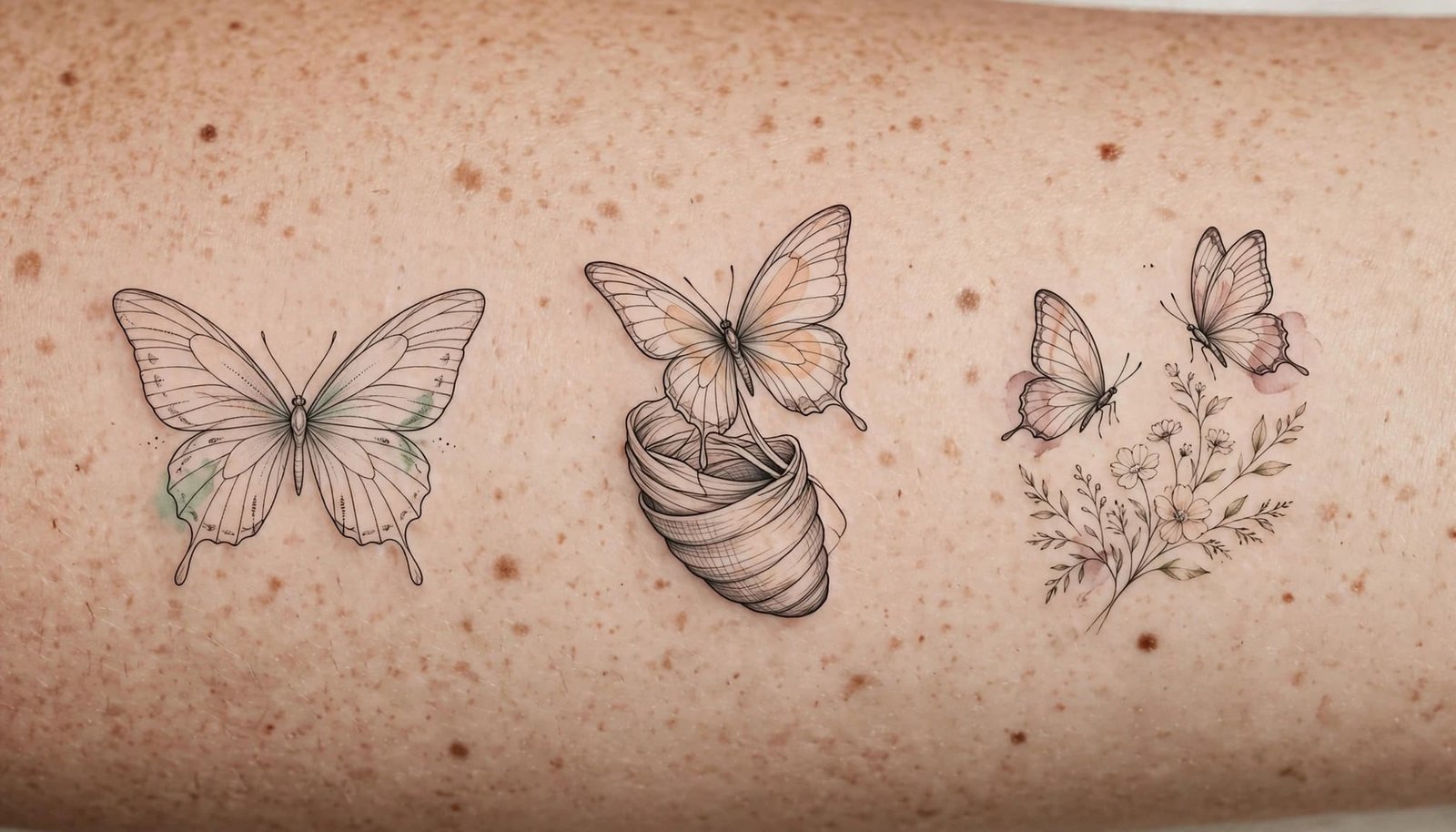
Transformation, Freedom, and Personal Growth
The butterfly’s change from a caterpillar to a winged insect makes it a natural symbol of transformation and rebirth. Open wings may express freedom, independence, or the decision to stop shrinking yourself for other people. A butterfly rising toward the shoulder, collarbone, or upper back can suggest forward movement and a fresh direction.
A butterfly leaving a cocoon gives the design a more personal storyline. It may reflect sobriety, recovery, divorce, leaving an unsafe relationship, or surviving a season that changed your priorities. You don’t need a dramatic image to communicate a major turning point. A tiny outline behind the ear, along the ribs, or near the ankle can hold an intensely private meaning.
Multiple butterflies can show progress, support, or different stages of one life. One small butterfly might honor where you started, while another shows the person you are now. If you prefer symbolism that stays personal, choose a simple design and let its placement carry part of the story.
A butterfly tattoo can honor change without explaining every detail to anyone who sees it.
Love, Femininity, and Inner Strength
Flowers and butterflies create a soft, romantic combination. Roses can suggest love and devotion, wildflowers can feel free-spirited, and a birth flower can connect the tattoo to your identity or someone you love. Paired butterflies may symbolize a relationship, friendship, sisterhood, or a lasting bond between two people.
Soft pink, lavender, peach, and pale blue often give butterfly tattoos a gentle feminine quality. Graceful placements, such as the shoulder, hip, wrist, or collarbone, can add to that feeling. Still, femininity doesn’t have to mean fragility. Bold outlines, dark ink, sharp wing shapes, and heavy blackwork can express courage, boundaries, and resilience.
A black-and-gray butterfly may suit someone who has endured loss or hardship without wanting a colorful design. Strong symmetrical wings can suggest balance and self-trust. In that way, your tattoo can hold both tenderness and strength without choosing one over the other.
Memorial and Spiritual Symbolism
Butterflies are also common memorial symbols because they can suggest the soul, hope, renewal, and an ongoing emotional connection. A white butterfly may suit a remembrance tattoo, while a monarch can connect to family memory, heritage, or a loved one’s favorite natural symbol. Memorial traditions often give butterflies a comforting place in grief, as discussed in this guide to butterfly symbolism after loss.
Personal details make the tribute feel specific. Consider adding:
- A loved one’s name or initials, sized large enough to stay readable.
- Birth and passing dates in a clean, simple typeface.
- A halo, star, moon, or favorite flower.
- A meaningful color connected to the person you remember.
Spiritual meanings should come from your own beliefs, family traditions, and lived experience. Symbolism varies across cultures, so research specific references before using imagery tied to a tradition that isn’t yours. Whether your butterfly honors a soul, a new beginning, or hope after grief, the most lasting meaning is the one you can explain in your own words.
The Best Placement for a Butterfly Tattoo
The best butterfly tattoo placement depends on more than appearance. Consider how much of the design you want to see, how your skin moves, and whether the area can support fine wing markings. Pain sensitivity also varies from person to person, so use general placement patterns as a guide rather than a fixed rating.
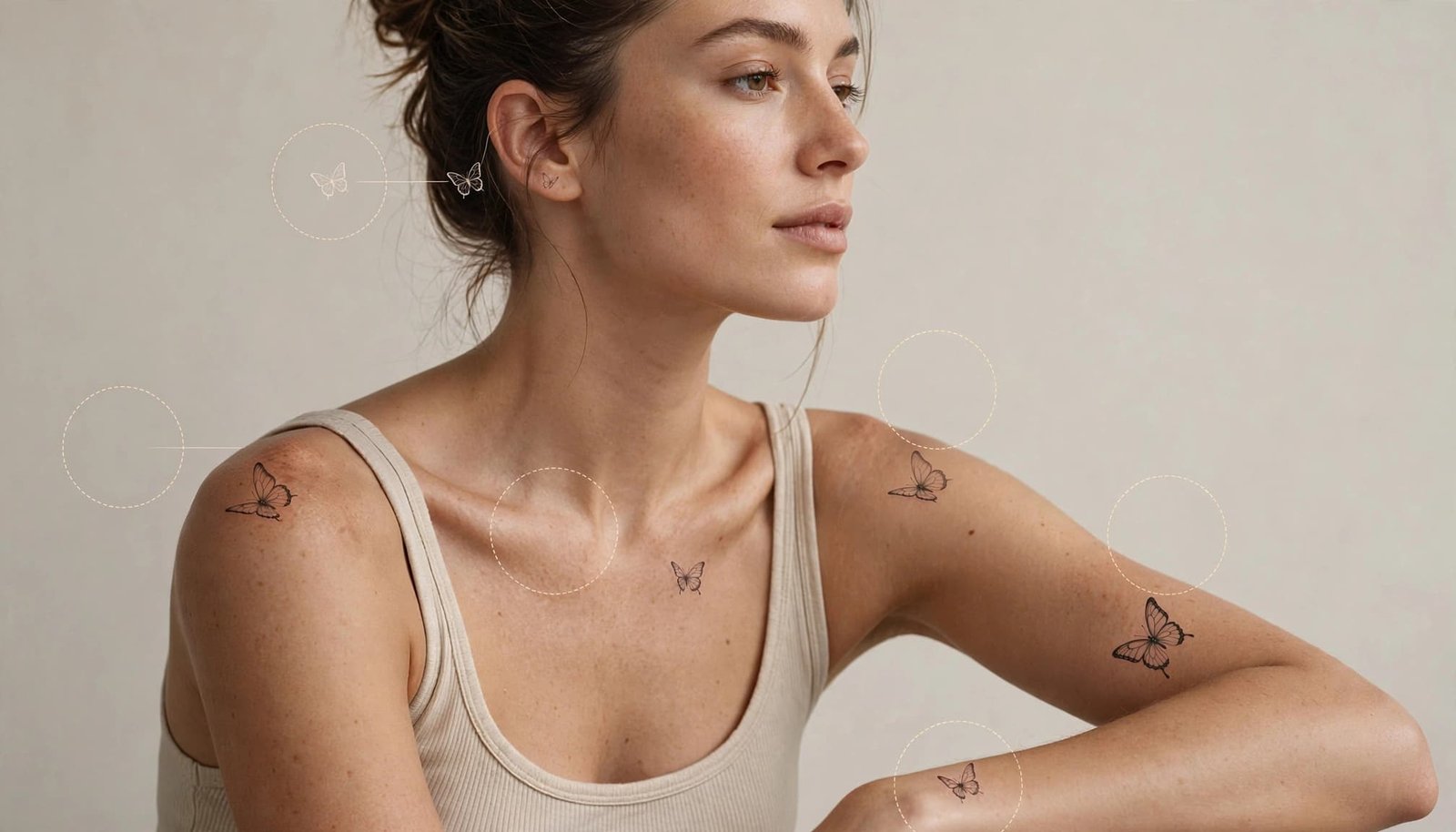
Small and Discreet Placements
Behind the ear, the inner wrist, ankle, foot, side of the neck, and ribs all suit private butterfly tattoos. Behind the ear and along the ribs offer more concealment, while the inner wrist and side of the neck make the design easier to reveal or cover. The ankle and foot keep a small tattoo low and personal, although shoes can create friction during healing.
These areas often support a tiny outline or simple black butterfly better than a highly detailed design. Overly tiny wing markings can blur or merge as ink settles, especially when several lines sit close together. Skin movement also matters. The wrist bends, the ankle flexes, and the ribs expand with breathing, so an artist may simplify the design to keep its shape clear.
Sun and friction can affect long-term appearance. An exposed wrist, neck, ankle, or foot needs consistent sun protection after healing, while socks, shoes, and watchbands may rub against the ink. Follow your artist’s instructions, avoid soaking during healing, and review this tattoo aftercare guide before returning to swimming or intense workouts.
Visible Placements That Show the Wings Clearly
The forearm is one of the easiest placements for enjoying a butterfly tattoo every day. Its relatively stable surface supports small-to-medium designs, and its visibility makes detailed wings easy to appreciate. The upper arm offers more privacy while still leaving room for a graceful butterfly that can remain hidden beneath short sleeves.
A shoulder or shoulder cap gives the design a rounded frame. This placement works well for a butterfly with slightly curved wings, flowers, or ornamental details. The collarbone creates a delicate horizontal space, making it a strong choice for a small butterfly facing inward or resting above the bone.
The calf gives a medium butterfly clear space and good viewing distance. However, its shape changes as you walk and flex your leg. Pain can feel different in each area, but the forearm and outer upper arm are often easier for many people than the collarbone, ankle, or ribs. An artist can usually preserve symmetry and wing detail more easily when the skin offers enough room and remains relatively flat.
Large and Dramatic Placements
For spread wings, realistic shading, flowers, or a sense of movement, consider the shoulder blade, upper back, sternum, side ribs, thigh, or spine. The shoulder blade and upper back provide broad surfaces for a butterfly that appears to rest across the body. A thigh design can become a private statement with room for layered flowers and rich shading.
The sternum and spine create strong central placements, but both areas follow the body’s curves. Side ribs allow a butterfly to stretch vertically or diagonally, although breathing and body movement can change how symmetrical wings appear. A design that looks perfectly balanced while standing may shift slightly when you twist or bend.
Larger tattoos need thoughtful planning around future pieces. Leave enough space for adjoining flowers, stars, or another butterfly if you may build a larger composition later. Discuss the design while standing, sitting, and moving so the wings follow your natural shape.
How to Match Placement With Your Lifestyle
Before booking, consider your workplace, clothing, workouts, and time in the sun. A wrist, forearm, collarbone, or neck tattoo may be visible daily, while the upper back, thigh, ribs, and shoulder blade are easier to keep private. Tight clothing, waistbands, sports gear, and backpack straps can irritate healing skin.
Swimming must wait until the tattoo fully heals. Sun exposure also matters after healing, since ultraviolet light can fade some inks. If you exercise often, choose a spot you can protect from repeated rubbing and sweat during the first stage of healing.
Ask yourself whether you want the butterfly mainly for yourself or for others to see. Then request a temporary version or ask your artist to apply a stencil first. View it in a mirror, under clothing, and while sitting down before you commit.
How to Choose a Butterfly Design That Still Feels Like You
With 40 butterfly tattoo ideas in front of you, start with the story rather than the image. A design can look beautiful on a screen and still feel wrong on your skin. Narrow your choices by deciding what you want the tattoo to carry, then match the style, size, color, placement, and artist to that feeling.
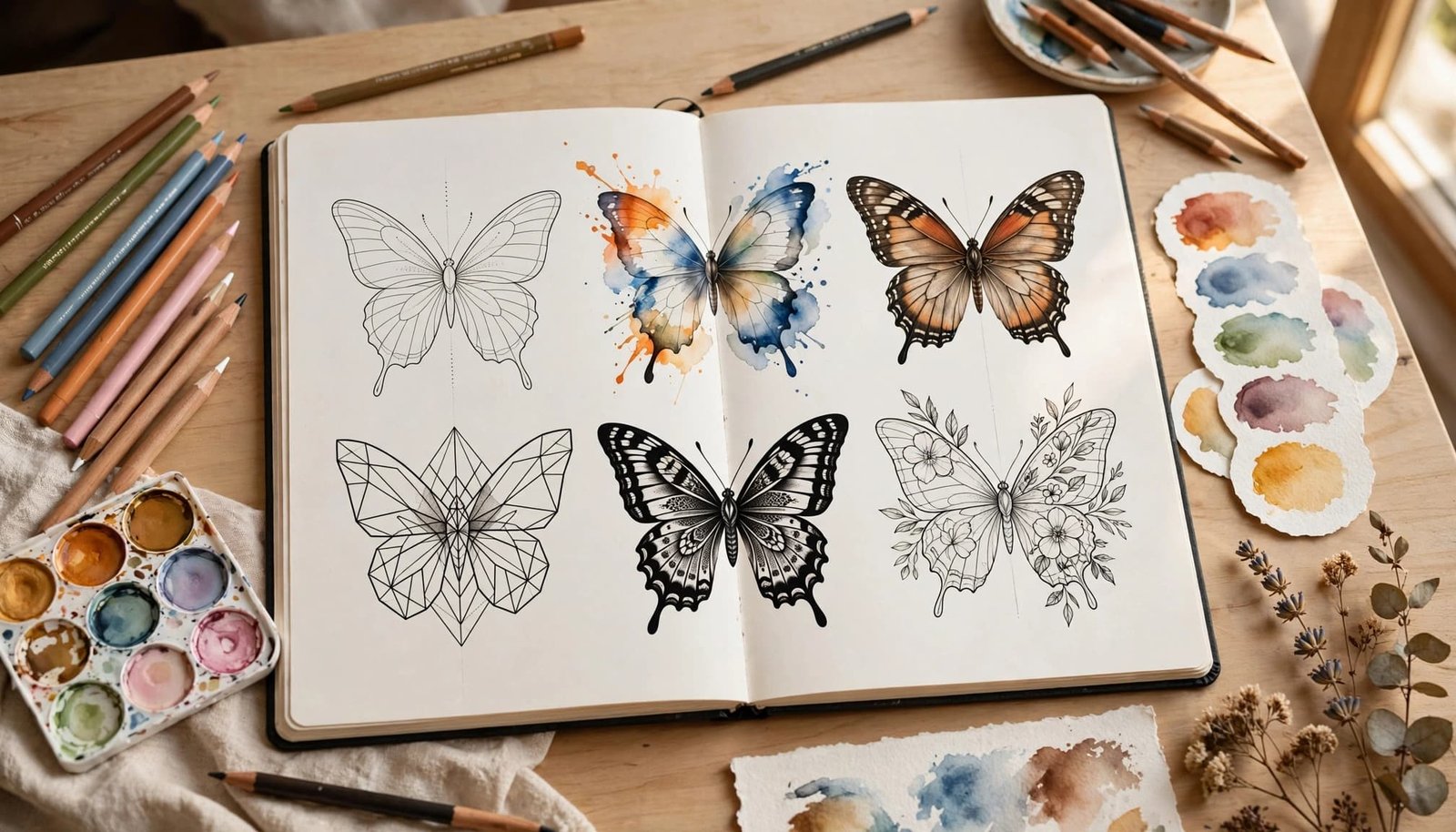
Start With the Feeling You Want to Carry
Choose three words before saving more inspiration. They might be free, healed, bold, peaceful, romantic, or remembered. Those words give your tattoo a direction instead of leaving you to choose a random pretty image.
For example, “free, bright, and playful” may lead to open wings, vivid color, and a larger placement on the shoulder or thigh. “Healed, private, and peaceful” may suit a small black butterfly with closed or resting wings near the ribs, ankle, or upper arm. A memorial design might use a birth flower, star, or meaningful date without needing a busy composition.
Write down your three words, then compare each idea against them. If a design doesn’t support the feeling, remove it from your shortlist.
Choose a Style That Fits Your Skin and Daily Look
Style changes the mood, detail, and long-term needs of a butterfly tattoo.
- Fine-line designs use thin strokes for an airy, subtle appearance. They work best with open space and simplified wing markings.
- Minimalist butterflies reduce the image to an outline, silhouette, or a few clean details. They suit discreet tattoos and simple personal symbols.
- Watercolor designs use blended color and soft edges for an expressive, painterly effect.
- Realistic butterflies need more room for natural shading, wing veins, and accurate markings.
- Geometric designs add structure through symmetry, angles, dots, and repeated shapes.
- Blackwork uses strong black areas and contrast for a bolder, more graphic result.
- Floral designs combine the butterfly with petals, vines, leaves, or a birth flower.
A tiny butterfly cannot hold the same detail as a larger thigh or shoulder piece. If you want realistic wings or watercolor shading, increase the size. If you prefer a delicate tattoo, simplify the interior markings and preserve negative space.
Before booking, review healed work from the artist, not only fresh tattoos. Settled ink shows whether fine lines stay clear, colors remain readable, and dark areas retain their shape. This healed tattoo guide can also help you understand why fresh and healed results look different.
Make the Design Personal Without Making It Busy
Choose one main symbol, then add one or two supporting details. A butterfly with a birth flower and a small star often feels more personal than a crowded design containing every meaningful object.
You might include an initial, date, moon, flower, or single constellation. Keep these details large enough to remain readable. Negative space is part of the design, not wasted skin. Clear gaps help the wings breathe and keep veins, patterns, and edges from merging as the tattoo ages.
A small mood board can help your artist understand your taste. Include several references for color, line weight, placement, and mood, but don’t copy another person’s tattoo exactly. Bring the feeling and visual direction; let the artist create a design that fits your body.
Questions to Discuss With Your Tattoo Artist
Ask whether the artist regularly works in your chosen style and has examples at your intended size. Then discuss:
- How will the design age in this placement?
- Will the color or fine detail need future touch-ups?
- How much space do the wings need to stay clear?
- What healing restrictions should you expect?
- Can you see healed examples with similar line weight and detail?
- Does the placement work with your clothing, work, exercise, and sun exposure?
Share why the butterfly matters, but leave room for the artist to adjust its shape to your skin. The strongest final design keeps your meaning while using professional judgment about scale, spacing, movement, and long-term clarity.
What to Know Before and After Getting Your Butterfly Tattoo
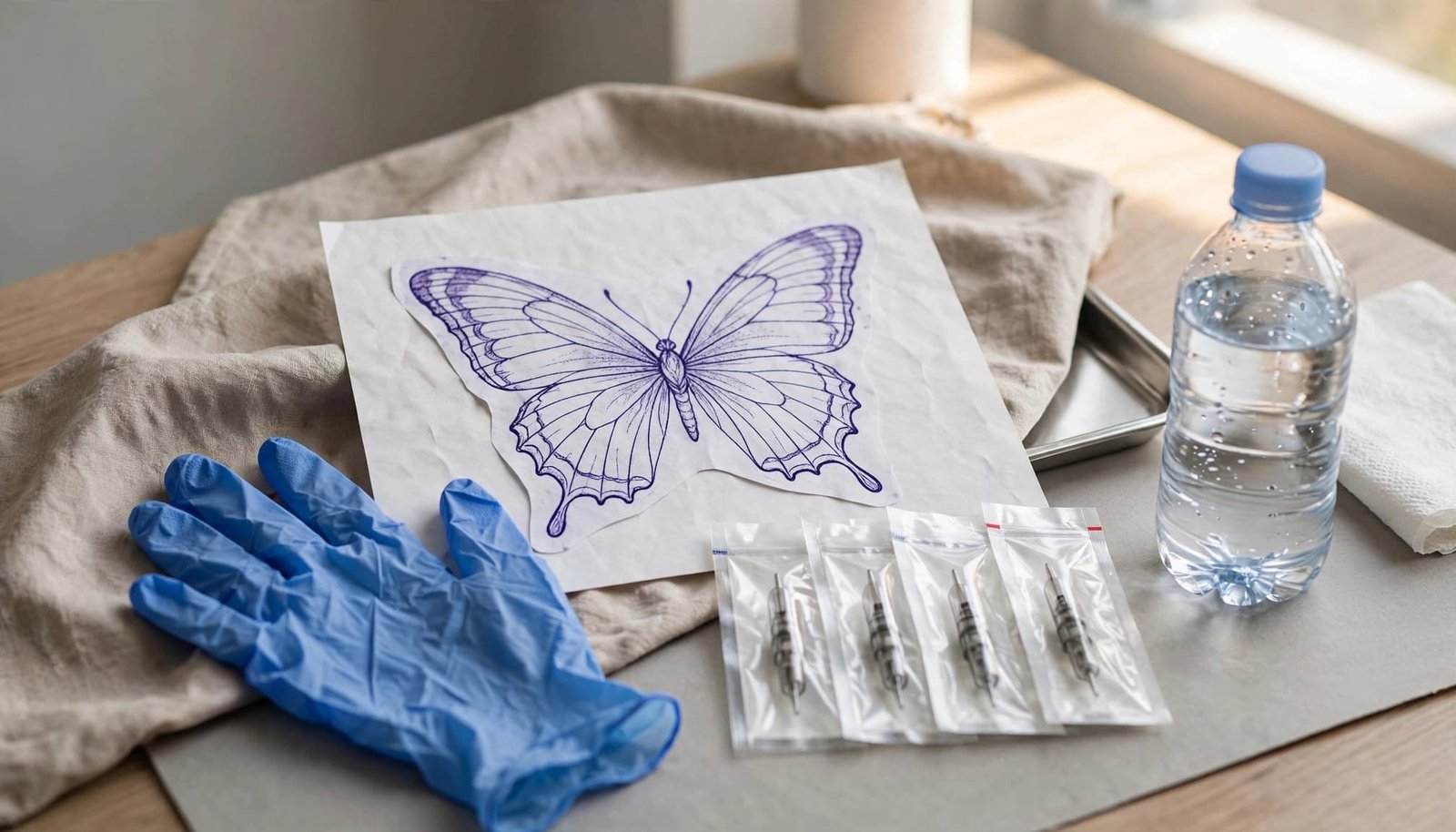
A butterfly tattoo deserves the same care as any permanent change to your skin. Before booking, choose a clean studio with a licensed artist or a professional who follows your state’s tattoo regulations. The artist should open fresh, single-use needles in front of you, wear new gloves, and use properly sterilized equipment. Work surfaces should look orderly, clean, and free from reused supplies.
You should also feel comfortable asking questions. Confirm the artist’s experience with your chosen style, review healed examples, and make sure the consultation feels respectful rather than rushed. Clear consent matters. You should approve the final design, placement, size, and color before the needle touches your skin.
Prepare for a Safe Tattoo Session
Review the stencil while standing, sitting, and looking in a mirror. Check the butterfly’s direction, size, wing symmetry, and placement under clothing. If your design includes lettering, confirm every spelling, number, date, and punctuation mark. A permanent tattoo deserves a final pause, even when you feel excited.
Eat a balanced meal before your appointment and drink water throughout the day. Avoid arriving intoxicated or impaired, since you need to understand the consent process and communicate clearly with your artist. Wear loose, comfortable clothing that gives easy access to the tattoo area without creating pressure or friction.
Tell the artist about allergies, sensitive skin, medications, pregnancy, blood-clotting concerns, immune conditions, or any history of fainting during procedures. Don’t tattoo over a rash, sunburn, cut, infection, or irritated skin. If you feel uncertain about a health concern, ask a healthcare professional before booking.
If the stencil feels wrong, stop and request changes. A few extra minutes of discussion are better than years of wishing you had spoken up.
Simple Fresh-Tattoo Aftercare
Follow your artist’s exact wrap instructions because bandage types and healing methods vary. Leave the covering on for the recommended time, then wash your hands before touching the tattoo. When your artist advises washing, use lukewarm water and mild, fragrance-free soap. Clean the area gently, pat it dry with a clean towel, and never scrub.
Apply only a thin layer of the recommended aftercare product. Thick layers can trap moisture and irritate the skin. As the tattoo heals, mild peeling, dryness, or tenderness can occur. Resist picking, scratching, or pulling at flakes, since these actions can damage the surface and remove pigment.
Avoid swimming, hot tubs, baths, and other soaking until the tattoo heals. Keep it away from direct sunlight, heavy friction, tight clothing, and activities that repeatedly rub the area. Healing often takes about two to three weeks, although your skin, tattoo size, placement, and aftercare routine can change the timeline. Mayo Clinic’s tattoo care guidance also advises gentle washing, patting dry, and avoiding swimming during healing.
Protect the Tattoo for the Long Term
Once the skin has fully healed, apply broad-spectrum sunscreen with SPF 30 or higher whenever the tattoo is exposed. Regular moisturizing can keep the surrounding skin comfortable, while reduced sun exposure helps protect the ink. Fine lines and bright colors may soften or fade over time, especially with frequent ultraviolet exposure.
A touch-up may restore some detail after the tattoo has completely healed. Wait until the skin is settled before discussing corrections with your artist. Don’t judge the final result while the tattoo is still red, swollen, or peeling.
Contact a healthcare professional if redness spreads or worsens, swelling becomes severe, pain increases, or the area produces pus. Fever, chills, worsening warmth, rash, or unusual drainage also deserve medical attention. Cleveland Clinic’s tattoo infection guidance explains that infection symptoms can include worsening pain, swelling, pustules, and fever.
Conclusion
The best butterfly tattoo is not simply the prettiest design. It should fit your story, personal style, body, and future plans, whether you prefer a tiny hidden outline, a meaningful memorial piece, or a colorful statement tattoo.
Save a few favorite ideas, test the placement with a stencil, and discuss the size, detail, and healing needs with a skilled artist. When the design feels true to you, your butterfly can carry a lasting reminder of change, freedom, and hope on your skin.
Save the pin for later


- 30 Trendy Tattoo Ideas for 2026: Styles and Placement - September 27, 2026
- 30 Gorgeous Fine Line Tattoo Ideas to Try - September 27, 2026
- 25 Fine Line Tattoo Ideas for Women With Meaning - September 22, 2026
Leave a Reply