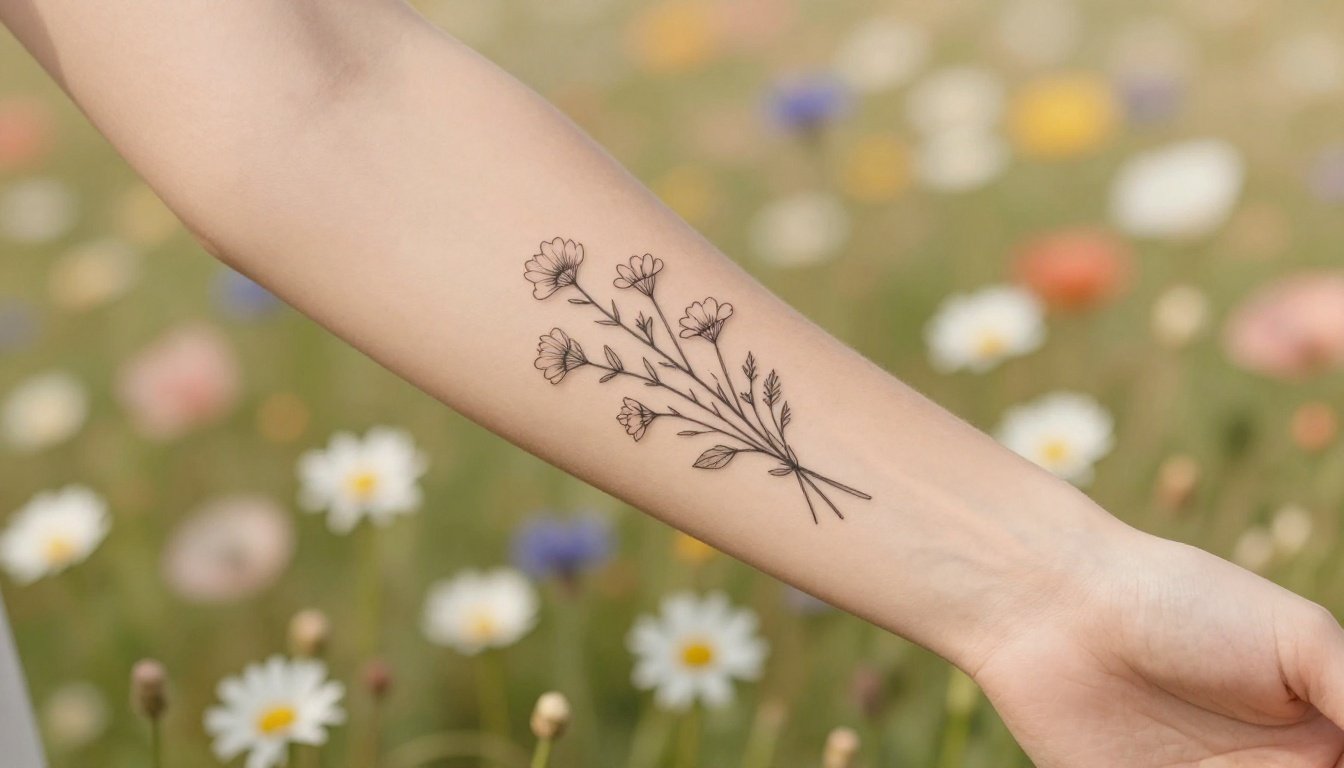
50 Wildflower Tattoo Ideas for a Feminine Look
Wildflowers growing freely in a sunlit field have a beauty that feels personal, untamed, and full of life. Their uneven stems and delicate blooms can inspire a wildflower tattoo that expresses your own version of femininity, whether it feels soft, bold, playful, or quietly strong.
Each flower can hold a different meaning. Your design might speak to freedom, growth, resilience, love, healing, remembrance, or a season of life you never want to forget. A tiny fine-line bloom can keep that meaning subtle, while a birth-flower bouquet can turn family, identity, or important dates into a personal piece of art.
The 50 ideas ahead include tiny wildflower tattoos, meaningful birth-flower bouquets, colorful botanical designs, and larger compositions for the arm, shoulder, ribs, back, thigh, or leg. You’ll also find guidance for choosing flowers, tattoo styles, colors, placement, size, and an artist who can create clean linework that ages well. Start with the designs that catch your eye, then consider which one feels most like your story.
Key Takeaways
- Wildflower tattoos suit feminine styles because their loose stems and delicate blooms can feel soft, free, or quietly bold.
- Choose flowers with personal meaning, such as daisies for new beginnings, poppies for remembrance, or lavender for calm and healing.
- Fine-line designs create an airy look, while color, botanical detail, and larger placement add more visual weight.
- Consider your wrist, arm, shoulder, ribs, thigh, or leg, then match the size to the detail you want.
- Browse flower tattoo design inspiration before choosing an original concept that feels personal.
50 Wildflower Tattoo Ideas for a Feminine Look
Wildflower tattoos can feel delicate, romantic, colorful, or boldly personal. Use these concepts as starting points, then adjust the flower scale, line weight, placement, and symbolism to suit your story.
Tiny Wildflower Tattoos for a Delicate Everyday Look
Small tattoos work beautifully behind the ear, on the wrist, finger, ankle, or side of the hand. Fine-line and single-needle styles create an airy finish, while micro-shading and tiny color accents add dimension. Remember that very small details can soften over time, especially on fingers and hands.
- A single fine-line daisy on the inner wrist suggests innocence and fresh beginnings.
- A single-needle lavender sprig behind the ear carries a calm, soothing mood.
- A tiny blue forget-me-not on the ankle honors memory, loyalty, and lasting affection.
- A micro-shaded baby’s breath cluster on the side of the hand feels light and romantic.
- A small poppy bud on the finger offers a subtle symbol of remembrance and courage.
- A three-leaf clover near the ankle brings a simple note of luck and hope.
- A yellow buttercup on the wrist adds cheerful energy through one tiny color accent.
- A miniature scattered trio of daisy, clover, and lavender creates a playful meadow effect.
- A vertical cornflower behind the ear uses a downward stem for a graceful, modest design.
- Two tiny wildflower buds on the side of the hand suggest friendship, growth, and companionship.
Meaningful Wildflower Bouquets and Birth-Flower Designs
A bouquet gives you room to connect flowers with family, friendship, motherhood, healing, or a new beginning. Personalize the design through stem count, bloom size, dates, initials, or one short handwritten phrase. Keep lettering small and leave breathing room between the flowers so the bouquet remains clear.
- A birth-month bouquet on the forearm combines flowers for your birth month and loved ones.
- Three different flowers on the ribs can honor three siblings through varied bloom sizes.
- A fine-line bouquet tied with a ribbon symbolizes family bonds or a lasting friendship.
- A memorial wildflower bundle on the shoulder can include one flower for someone remembered.
- Hidden initials woven into the stems create a private tribute without dominating the bouquet.
- A seasonal arrangement of spring blooms on the upper arm captures a favorite time of year.
- A mother-and-child bouquet pairs one large bloom with a smaller flower for a tender bond.
- Lavender, daisy, and poppy stems can express healing after a difficult chapter.
- A bouquet with small dates beneath the stems preserves a wedding, birth, or fresh start.
- A fine-line wildflower bundle with one handwritten word can symbolize hope without overcrowding the design.
A strong bouquet usually needs fewer flowers than expected. Spacing helps every petal remain recognizable as the tattoo ages.
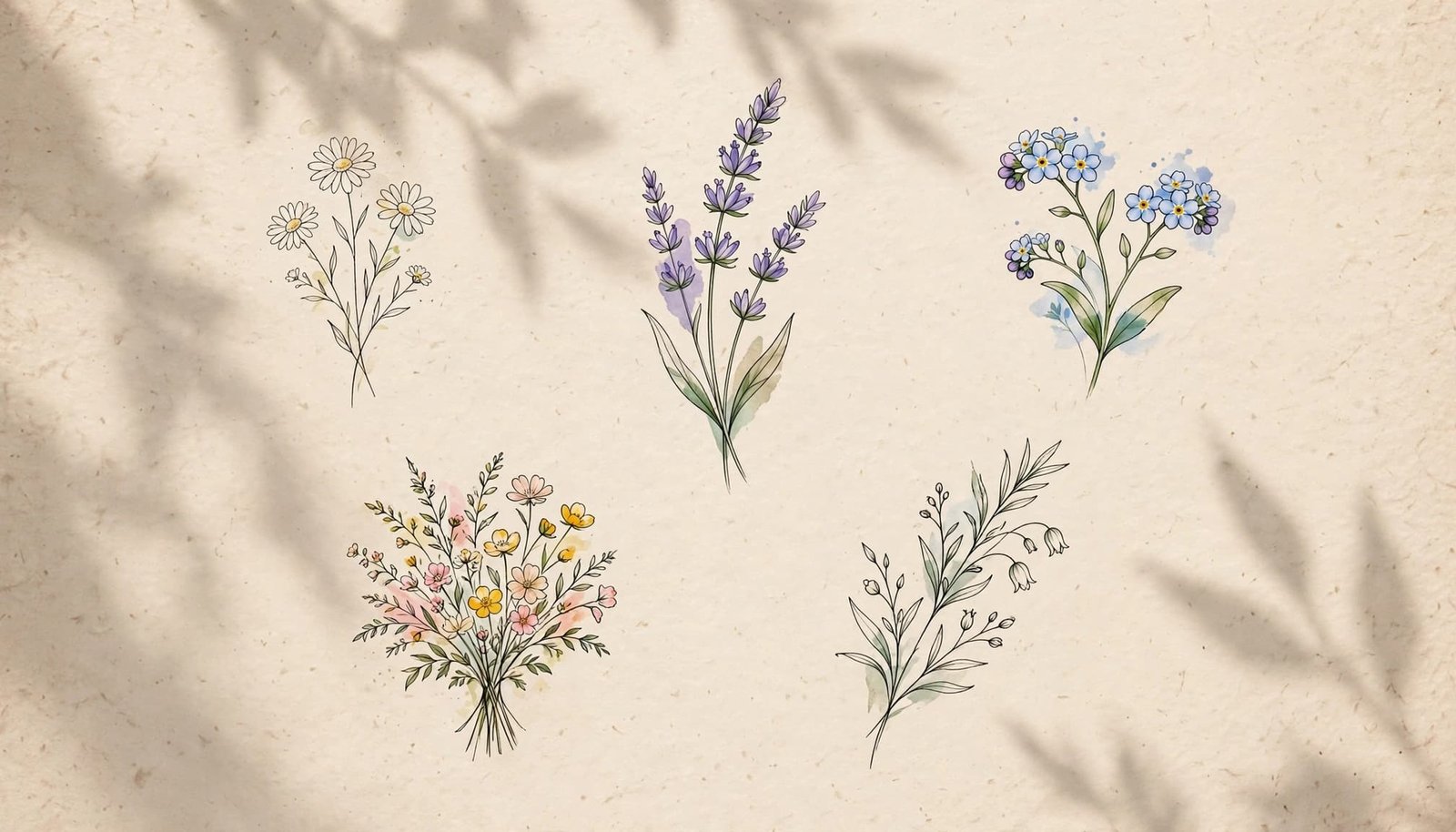
Colorful Feminine Wildflower Tattoos with Garden Charm
Color changes the emotional tone of a wildflower tattoo. Pink can suggest tenderness, yellow can express joy, red can carry passion or remembrance, while blue and violet often feel calm or spiritual. Discuss saturation and your skin tone with the artist, since pale colors may need stronger contrast to stay visible.
- Pink and purple meadow flowers in watercolor create a soft, romantic garden impression.
- A bright sunflower and daisy cluster on the thigh feels warm, open, and optimistic.
- Blue cornflowers with lavender along the calf combine calm color with delicate botanical detail.
- A red poppy field across the shoulder carries passion, remembrance, and striking visual energy.
- Pastel cottagecore blooms around the ankle create a gentle, nostalgic garden style.
- Yellow buttercups mixed with green stems bring cheerful color to a small forearm piece.
- A rainbow wildflower spray across the collarbone celebrates individuality and expressive femininity.
- Colored fine-line daisies and violets on the wrist offer a crisp, modern botanical look.
- Soft color realism can show pink cosmos, blue petals, and natural leaves on the upper arm.
- A botanical illustration of orange poppies and purple blooms gives a classic print-inspired finish.
Elegant Botanical Wildflower Tattoos for Larger Placements
Larger placements allow longer stems, layered foliage, negative space, and more accurate petals. Let the body guide the composition: stems can follow the collarbone, curve around the shoulder, or travel naturally along the spine. Botanical realism, black-and-gray illustration, fine-line realism, and soft micro-shading all suit larger wildflower tattoos.
- A clavicle garland of daisies and baby’s breath follows the collarbone with graceful movement.
- A forearm meadow layers poppies, clover, and grasses in a fine-line realistic composition.
- A shoulder bouquet of lavender and cornflowers creates a soft, balanced botanical shape.
- A spine-growing stem with small wildflowers uses negative space for an elegant vertical design.
- A thigh arrangement of large poppies and smaller filler flowers offers room for accurate petals.
- A sternum wildflower design can curve beneath the chest with symmetrical leaves and open spacing.
- An upper-arm botanical piece combines black-and-gray flowers with soft micro-shaded foliage.
- A quarter-sleeve composition begins at the shoulder and narrows toward the elbow.
- Long buttercup and yarrow stems along the ribs create movement that follows the body.
- A fine-line meadow wrapping around the calf feels graceful while remaining more detailed than a tiny tattoo.
Unique Wildflower Tattoo Concepts with Personal Details
Personal details make a feminine tattoo feel lasting rather than copied from a trend. Keep symbolic elements small, so the flowers remain the visual focus. A tiny moon, insect, frame, date, or word can add meaning without competing with the botanical design.
- Wildflowers growing from a crescent moon suggest renewal, intuition, and personal growth.
- Flowers inside a vintage frame create a preserved-memory design with soft botanical illustration.
- A heart-shaped meadow combines tiny blooms and grasses to express love and emotional openness.
- A single bee visiting a daisy adds movement, connection, and a touch of natural charm.
- A butterfly beside lavender and poppies symbolizes change, healing, and a lighter chapter.
- Flowers emerging from a crack in stone show growth after hardship through bold contrast.
- A celestial bouquet with stars and a crescent moon gives wildflowers a dreamy spiritual mood.
- A pressed-flower tattoo on the forearm uses fine outlines to resemble a treasured keepsake.
- A patchwork collection of separate mini blooms can gather memories from different seasons.
- A free-flowing meadow with one short word, such as “bloom,” keeps the message personal and understated.
For fresh work, follow your artist’s healing instructions and protect healed ink from ultraviolet exposure. The American Academy of Dermatology’s tattoo care guidance recommends broad-spectrum, water-resistant SPF 30 or higher for tattooed skin exposed to sunlight.
What Wildflowers Can Represent in a Feminine Tattoo
A wildflower tattoo can hold a memory, a promise, or a version of yourself that you want to carry forward. The meaning doesn’t come from the flower alone. Your memories, culture, relationships, and life experiences shape what each bloom says.
A daisy may remind one person of childhood summers, while another sees it as a symbol of starting over. That personal connection matters more than a fixed dictionary definition. Use common symbolism as a starting point, then let your own story guide the final design.
Flower Meanings That Make a Wildflower Tattoo Personal
Traditional flower meanings can help you choose a starting point. Floral symbolism has changed across history and cultures, so reference guides such as this overview of the language of flowers are best treated as inspiration, not rules.
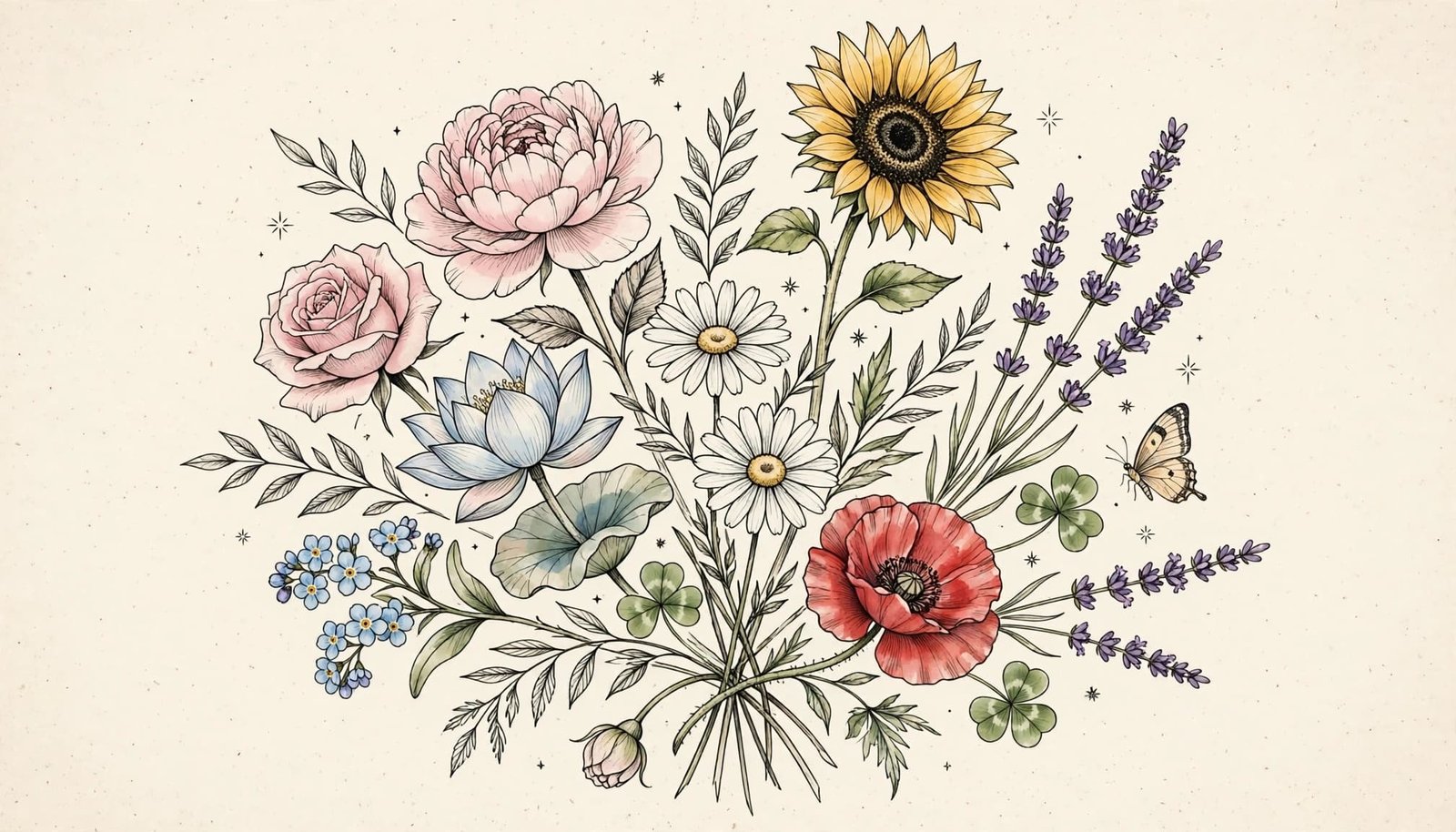
- Daisies often suggest joy, innocence, fresh beginnings, or an uncomplicated kind of love. An open daisy can express confidence and warmth, while a small daisy tucked into a larger bouquet may honor a happy memory.
- Lavender is associated with calm, healing, devotion, and rest. A lavender sprig may suit someone recovering from grief, stress, illness, or a difficult season.
- Poppies can carry meanings of remembrance, freedom, courage, or sacrifice. A red poppy might honor someone who has passed away, while a loose field of poppies can suggest independence and movement.
- Sunflowers bring optimism, loyalty, and hope. Their upward-facing blooms work well for a tattoo about choosing light after hardship.
- Roses can express love, strength, beauty, protection, or the complicated parts of relationships. Thorns add contrast and show that tenderness and toughness can exist together.
- Lotus flowers often represent rebirth, spiritual growth, and rising through difficult circumstances. A flower emerging from water can show healing without needing words.
- Peonies suggest abundance, affection, prosperity, and resilience. Their layered petals suit a fuller, more dramatic feminine tattoo.
- Forget-me-nots connect naturally with memory, loyalty, and lasting affection. They can honor a person, place, or chapter that remains part of your life.
- Clover is commonly linked with luck, hope, and protection. A small clover can celebrate a fortunate turning point or a person who brought good luck into your life.
Symbolism should support your story, not control the design. If a flower has a different meaning in your family or culture, that meaning belongs in the tattoo. You can also choose a bloom simply because its shape, color, or place in your memory feels right.
How Bouquet Details Add Layers of Meaning
Small design decisions can turn a pretty bouquet into a personal keepsake. Flower count is one of the clearest ways to add meaning. Three stems might honor three siblings, while five blooms could represent the members of your household or five years of recovery.
Bloom stage adds another layer. Open flowers can suggest confidence, joy, or a chapter fully lived. A closed bud may represent future hope, an unfinished goal, or a person still growing into their next season. New leaves can point to healing and renewal, while bare stems may show survival after loss.
Other details can carry private references:
- Ribbons may connect the flowers to family, remembrance, or a shared tradition.
- A date or set of initials can identify a person or turning point without taking over the composition.
- Bees, butterflies, and moths can suggest connection, transformation, or freedom.
- Stars may honor guidance, faith, or someone remembered as a source of light.
- Negative space can give a bouquet room to breathe and suggest independence, openness, or possibility.
A scattered arrangement often feels freer than a tied bouquet. In contrast, closely grouped blooms can express family bonds or a strong sense of belonging. Choose details that help someone understand your story, even if that person is only you years from now.
Avoid adding an insect, ribbon, date, or star simply because it looks attractive. Too many accents can make the tattoo harder to read and weaken its emotional focus. A clean design with three meaningful elements usually says more than a crowded bouquet filled with decoration.
Feminine Does Not Have to Mean Soft or Traditional
Feminine tattoos don’t have to be tiny, pink, or delicate. A fine-line daisy can feel airy and romantic, but bold blackwork flowers can feel just as feminine through their curves, scale, and movement.
Line weight changes the mood. Thin lines create softness and lightness, while heavy outlines give a flower confidence and visual authority. Strong contrast can make a black-and-gray poppy feel dramatic. Saturated red, yellow, or violet can give an American Traditional-inspired design an energetic, playful character.
Composition matters as much as the flower itself. A geometric wildflower arrangement feels modern and controlled, while loose stems and uneven spacing create an earthy, free-spirited look. Neo-traditional blooms use bold outlines, rich color, and exaggerated petals for a romantic design with presence. Dark botanical work can pair black leaves with open skin to create a moody, elegant contrast.
Placement also shapes the message. A small shoulder design may feel graceful, while a large thigh or rib piece can feel confident and expressive. Feminine style comes from the relationship between shape, movement, contrast, and placement, not from a narrow size or color rule.
Choosing a Wildflower Style That Fits Your Personality
The best style depends on the mood you want and the amount of detail your placement can hold.
- Fine-line and single-needle tattoos use delicate outlines for an airy, understated appearance. They suit tiny flowers and subtle bouquets, but fine details can soften with time, especially on high-friction areas.
- Botanical illustration emphasizes accurate petals, stems, and leaves. It feels natural and thoughtful, although the artist needs enough space to keep small details clear.
- Watercolor tattoos use loose color, soft edges, and painterly movement. They create a dreamy look, but pale shades may need stronger contrast and occasional touch-ups.
- Micro-realism can make a small bloom look highly detailed. It works best when the design has enough room and the artist understands how fine details age.
- Black-and-gray tattoos rely on linework, shading, and contrast rather than color. They can feel elegant, earthy, or dramatic while remaining easy to coordinate with other tattoos.
- Neo-traditional designs use bold outlines, rich color, and stylized shapes. These flowers usually keep their visual strength better than extremely delicate work.
- Patchwork or sticker-style tattoos let you collect separate flowers over time. Each small piece can represent a different memory, season, or relationship.
Before booking, review an artist’s healed work, not only fresh photographs. Healed tattoos show how the lines, color, and shading settle on real skin. Also discuss placement, detail, and possible touch-ups so your wildflower tattoo remains readable as it becomes part of your everyday life.
The Best Placements for Feminine Wildflower Tattoos
Placement shapes the entire personality of a wildflower tattoo. A tiny stem can feel private on the ankle but become part of your everyday style on the wrist. A large bouquet may look balanced on the thigh yet feel crowded on a narrow forearm.
Your artist also needs to match the design to the body’s movement, available space, and skin texture. Before choosing a location, consider how visible you want the tattoo to be, how it may fit your clothing and routine, and whether the area can hold the detail you love.
Small Placements for Subtle Floral Ink
Small placements suit single stems, tiny blooms, initials, and short flower chains. The wrist and inner arm keep a delicate design easy to see, while the ankle and behind the ear offer a more discreet effect. A single lavender sprig on the inner arm can follow the natural length of the space. Meanwhile, a daisy, forget-me-not, or clover can sit neatly near the wrist bone or ankle.
The side of the hand works well for a narrow stem or two tiny blooms. Fingers can hold a small flower, initial, or simple leaf, but these areas experience frequent friction, hand washing, and sun exposure. As a result, finger and hand tattoos often fade faster and may need touch-ups.
Behind the ear is best for minimal designs with clear outlines. A short flower chain can curve around the ear, while one small bloom keeps the placement light. However, the skin may feel sensitive, and the limited space makes complex shading difficult.
Ask your artist to leave enough separation between petals and leaves. When every detail sits too close together, fine-line ink can blur as it heals and ages.
Hands and fingers are beautiful, visible placements, but they require realistic expectations about fading and maintenance.
Long, Elegant Placements for Stems and Garlands
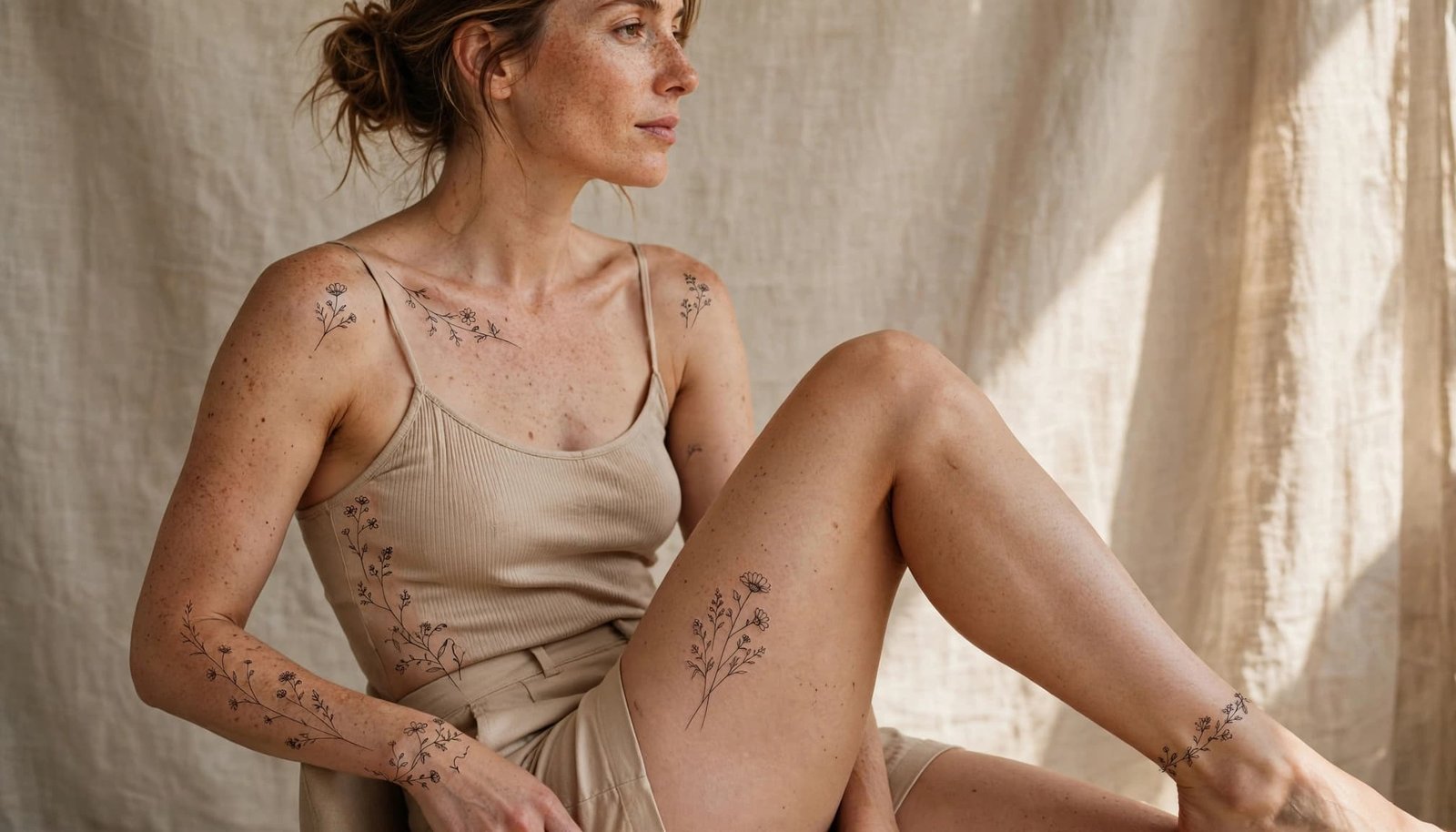
Long placements give wildflower tattoos room to move. The collarbone and clavicle suit curved garlands that follow the body’s natural line. A thin arrangement of daisies, baby’s breath, and grasses can begin near the shoulder and taper toward the center of the chest.
The forearm offers a reliable canvas for vertical stems, narrow bouquets, and meadow-inspired arrangements. A design can run from the wrist toward the elbow, or it can angle slightly to follow the arm’s shape. Scattered petals create a sense of movement without filling every inch of skin.
For a more private composition, consider the spine, ribs, or side body. A climbing flower can travel vertically along the spine, while a curved stem can follow the ribs beneath the breast or along the waist. These placements work well for poppies, lavender, buttercups, and other flowers with long, graceful stems.
Ribs and spine can feel more sensitive because they have less cushioning and sit close to bone. Pain varies from person to person, so your experience may differ from someone else’s. Size matters here, too. A design needs enough room for petals, leaves, and line spacing to heal clearly rather than becoming a crowded strip of ink.
Larger Canvas Areas for Full Wildflower Scenes
Larger areas allow you to build a complete scene instead of arranging a few isolated flowers. The shoulder and upper arm suit layered bouquets, curling stems, and compositions that can later grow into a sleeve. A quarter-sleeve can begin with flowers around the shoulder and extend toward the upper arm without committing you to a full sleeve immediately.
The thigh and hip offer broad, relatively uninterrupted space for meadow scenes, butterflies, insects, and mixed botanical work. You might place tall flowers near the outer thigh, then add smaller blooms and grasses toward the hip. This arrangement gives the design a natural rise and fall.
The back can hold a wide bouquet, a central vertical garden, or a design that spreads across both shoulder blades. A sternum tattoo offers a centered canvas for symmetrical flowers, a heart-shaped arrangement, or a botanical piece that curves beneath the chest. Because these areas provide more room, your artist can add leaf veins, layered petals, small insects, and soft shading without forcing every feature together.
Plan larger work with future tattoos in mind. A shoulder bouquet can remain a finished standalone tattoo, or it can become the first section of a sleeve. Leave intentional breathing room where another stem, flower, or leaf could be added later.
How Visibility and Lifestyle Should Guide Placement
A popular placement online may not suit your daily life. Consider workplace rules, uniforms, clothing preferences, exercise, swimming, sun exposure, and how often you want to see the design.
A forearm or ankle tattoo can become part of your everyday style. You may notice it while reaching for a coffee cup, putting on shoes, or moving through your normal routine. By contrast, a rib, hip, back, or upper-thigh tattoo stays covered more often and may feel more private.
Healing also affects the decision. Tight clothing can rub against a fresh tattoo, while exercise and sweating may irritate the area. Swimming pools, hot tubs, and open water should wait until the tattoo heals. Guidance summarized in this NIH review of tattoo aftercare also recommends keeping fresh tattoos away from sunlight and avoiding sunscreen until the skin has healed.
After healing, sun exposure can fade ink, especially in highly visible areas such as the hands, forearms, shoulders, and ankles. Use clothing or shade when possible, then protect healed tattooed skin with broad-spectrum SPF 30 or higher.
Choose a placement because it fits your body and routine, not because it looks perfect in a social media photo. The right location lets your wildflowers move naturally, keeps the details readable, and helps the tattoo feel like part of your life.
How to Turn a Wildflower Idea Into a Tattoo You Will Love
A beautiful wildflower tattoo begins with more than a saved photo. It needs a clear concept, the right artist, enough room for detail, and a plan for how the design will fit your life. Move through each decision in order, then give yourself permission to pause when something feels uncertain.
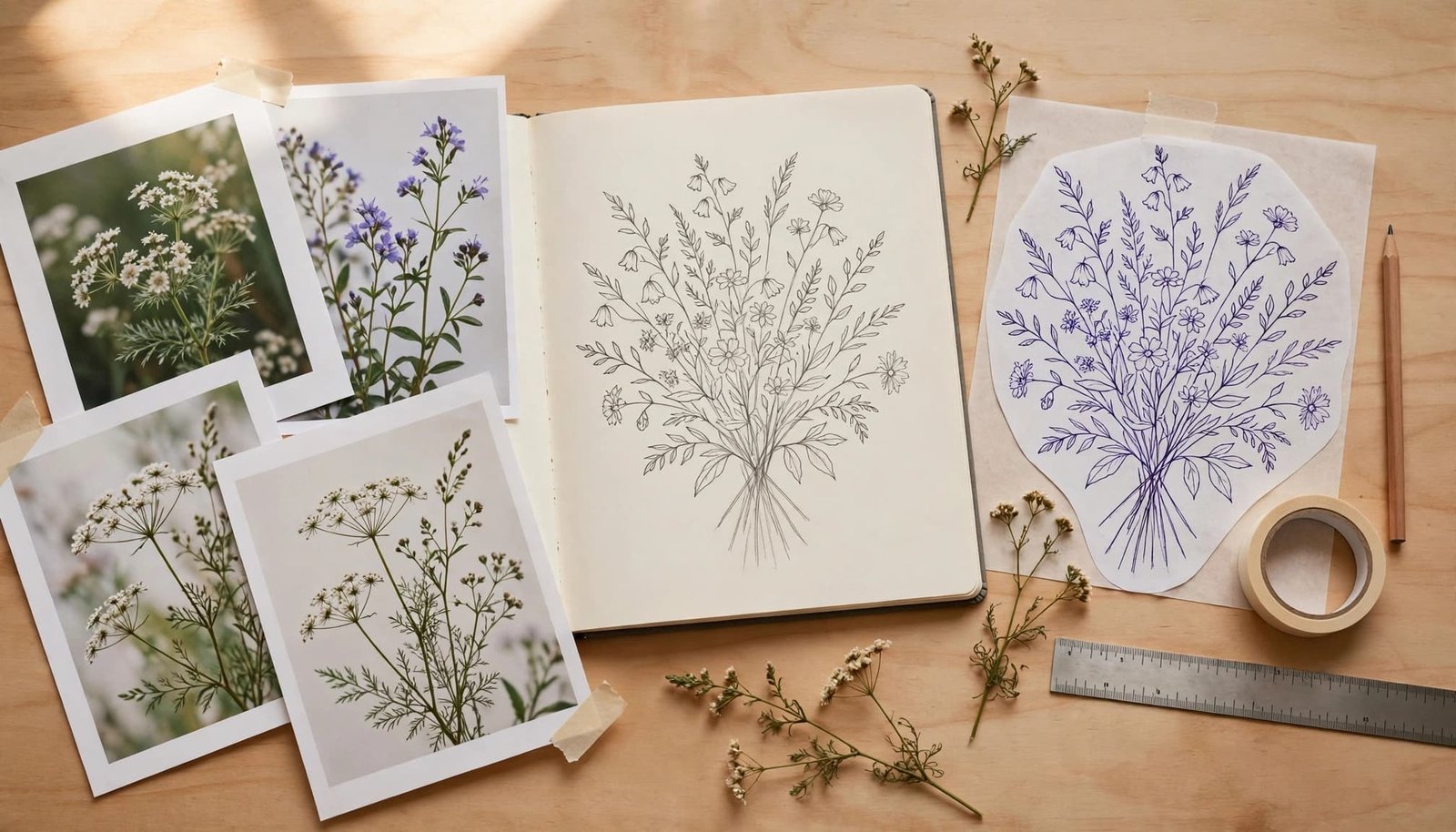
Build a Focused Reference Board Instead of Copying One Tattoo
Collect separate references for the parts you like. One image may show the flowers you want, another may have clean fine-line work, and a third may capture the soft shading or color palette that feels right. Add examples of placement, overall shape, and mood as well.
Your reference board might include:
- Flower species, such as poppies, daisies, lavender, or forget-me-nots.
- Line quality, including delicate single-needle outlines or stronger botanical contours.
- Shading and color, such as black-and-gray texture, watercolor washes, or bright saturated petals.
- Placement and flow, showing how stems follow a forearm, collarbone, thigh, or rib.
- Mood, whether you prefer romantic, earthy, playful, minimal, or dramatic.
Show several images during your consultation, but ask the artist to create an original composition. Copying another person’s tattoo can leave you with a design that carries someone else’s story. It also dismisses the time and creative work behind the original piece.
Give your artist the ingredients, not a finished image to trace. Explain what each reference contributes, then let their drawing choices shape a bouquet that belongs to you.
Choose the Right Size for Detail and Long-Term Clarity
Size controls how much information your tattoo can hold. A miniature single bloom may need only a clean outline and a few leaves. A larger bouquet can include separate petals, leaf veins, gentle shading, insects, dates, or a short word without forcing every element together.
Petals, lettering, and tiny symbols need enough space to remain readable. When fine-line details sit too close, the ink can soften, spread, or fade until separate shapes look like one dark patch. High-friction areas, such as fingers, hands, and ankles, can make that change more noticeable.
A small tattoo can still feel personal. A single daisy on the wrist may carry more meaning than a crowded bouquet that includes every flower you love. On the other hand, a large thigh or upper-arm design gives botanical realism room to breathe.
Trust your artist when they recommend enlarging a flower, simplifying a leaf, removing a date, or spacing the stems farther apart. Those changes protect the design’s clarity rather than taking away from your idea. For fine-line work, a little extra room often makes the difference between a tattoo that looks delicate and one that becomes difficult to read.
Find an Artist Who Understands Botanical Tattooing
Look beyond fresh tattoo photographs. Fresh ink often appears darker and sharper than healed work, so ask to see floral tattoos after the skin has settled. A strong portfolio should show consistent linework, natural flower shapes, balanced compositions, and designs that still look clear over time.
Pay attention to how the artist handles stems and negative space. Do the flowers look arranged with purpose, or do they appear packed together? Can you see clean curves, controlled shading, and enough separation between petals?
Before booking, ask about:
- Current licensing and any required bloodborne-pathogen training.
- Single-use needles, fresh gloves, surface disinfection, and reusable equipment sterilization.
- The artist’s pricing method, minimum charge, deposit, and cancellation rules.
- How many design revisions the deposit includes.
- Whether major changes require another deposit or appointment.
- The touch-up window and whether high-friction placements have different terms.
The FDA’s tattoo safety guidance explains that tattoo inks can cause reactions immediately or years later, so a clean studio and clear aftercare instructions matter. You should feel comfortable asking direct questions before handing over a deposit.
Plan the Budget, Appointment, and Final Design Review
Tattoo prices may depend on the artist’s hourly rate, minimum charge, size, placement, color, detail, and session length. Ask for an estimate before booking, then confirm what the deposit covers. Some artists apply it to the final price, while others use it to reserve the appointment or cover drawing time.
Get the policy in writing, especially for:
- Deposit refunds, transfers, and rescheduling deadlines.
- The cost of major design changes.
- Whether color or additional detail changes the estimate.
- Touch-up timing, eligibility, and aftercare requirements.
- The expected number of sessions for a larger bouquet.
Before the needle begins, inspect the stencil from several angles. Check how the stems curve with your body, whether the bouquet sits at the height you expected, and whether the size matches your clothing and lifestyle. Confirm every spelling, initial, date, and number if your design includes lettering.
Speak up if anything feels wrong. You can request a small adjustment before the tattoo starts, and a good artist expects that conversation. Once the stencil looks balanced, readable, and personal, you can move forward with greater confidence.
Aftercare Tips for Keeping Fine-Line Wildflower Tattoos Fresh
Fine-line wildflower tattoos need gentle care while the skin repairs itself. The first few weeks affect how clearly the petals, stems, and tiny leaves settle, so follow your tattoo artist’s instructions before general advice. Bandage types, healing methods, and recommended products can vary, especially if your artist uses a traditional covering or a medical adhesive film.
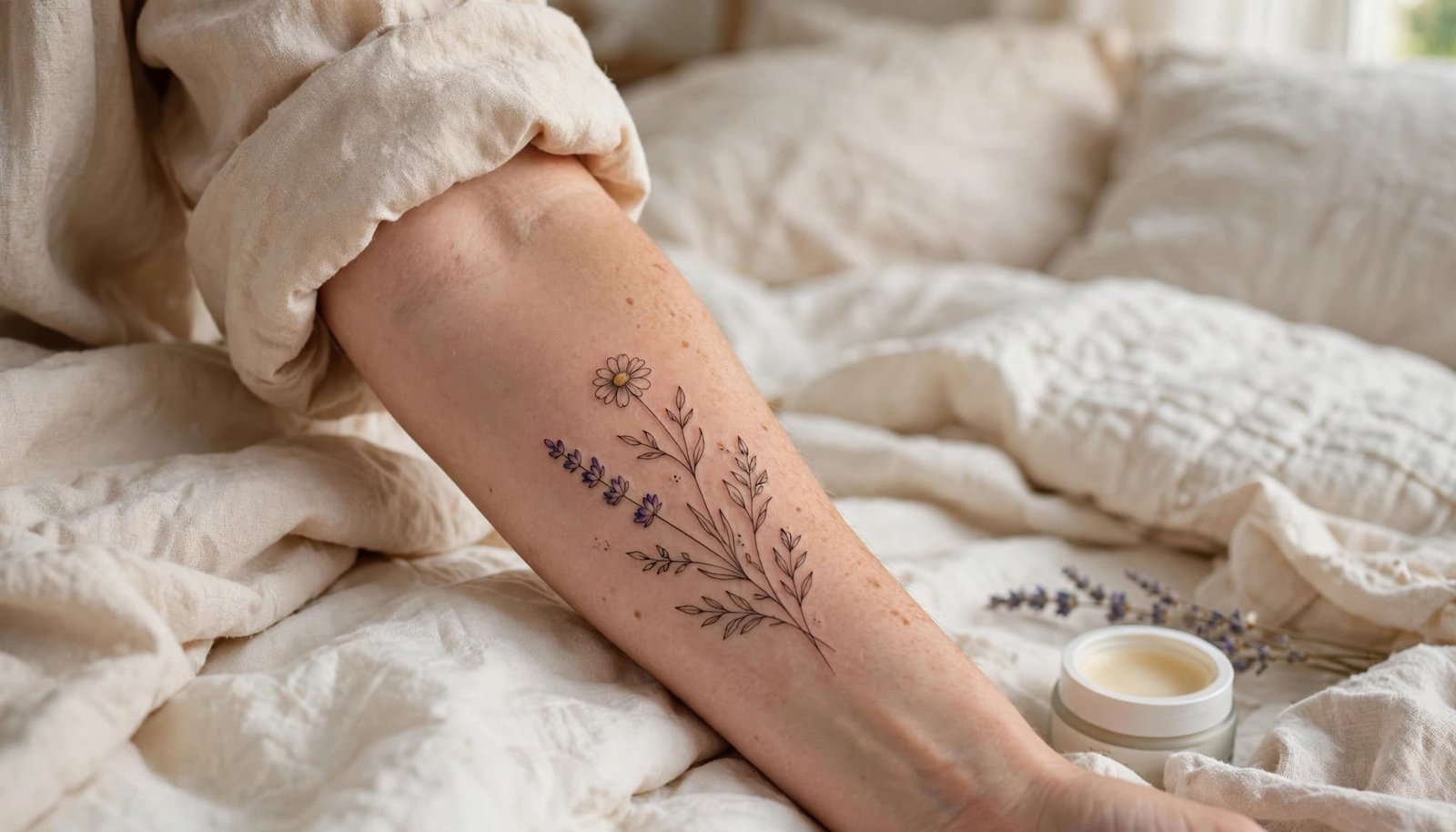
What to Do During the First Few Days of Healing
Mild redness, tenderness, swelling, and warmth can occur during the first couple of days. You may also notice a small amount of clear fluid, ink-colored moisture, or light blood beneath the bandage. As the tattoo heals, the skin can feel itchy, dry, or tight, then begin to peel in small flakes.
These changes should gradually improve. Increasing redness, spreading swelling, or worsening pain needs more attention, especially after the first few days.
Once your artist says it’s time to remove the covering, wash your hands first. Clean the tattoo gently with lukewarm water and a mild, fragrance-free soap. Don’t scrub with a washcloth, loofah, or exfoliating product. Avoid directing a strong shower stream onto the area because forceful water can irritate freshly tattooed skin.
After washing, pat the tattoo dry with a clean paper towel or freshly laundered towel. Rubbing can pull at peeling skin and disturb the fragile surface. Wear loose, clean clothing that won’t press against the flowers, and change your bedding if the tattoo may touch it overnight. Clean fabric helps reduce contact with sweat, dirt, and household bacteria.
Apply only the moisturizer or ointment your artist recommends. Use a thin layer and let the skin breathe. Heavy applications can trap moisture, clog the surface, and cause irritation or small bumps. If the tattoo looks glossy, greasy, or constantly wet, you’re probably using too much.
Peeling is a normal part of healing, but scratching can remove flakes before the skin is ready. Don’t pick at scabs, pull loose edges, or try to smooth the tattoo with your fingernails. Let the skin shed naturally, even when the itch feels distracting.
Fine-line tattoos often look dull or uneven while they peel. Wait until the skin settles before judging the final sharpness of the flowers.
Keep the tattoo out of pools, hot tubs, baths, lakes, rivers, and the ocean while it heals. A brief shower is usually safer than soaking, but follow your artist’s specific timeline. Sweat and intense exercise can also irritate the area, particularly when clothing rubs against fresh ink.
How Sun Exposure and Friction Affect Floral Ink
Ultraviolet light can fade tattoo pigment over time and make delicate lines look softer. Fine-line wildflower tattoos use narrow outlines and light shading, so prolonged sun exposure can affect their crisp appearance sooner than it affects a heavier design.
During healing, cover the area with loose, clean clothing when you go outside. Don’t apply sunscreen to broken, peeling, or freshly tattooed skin unless your artist or a medical professional specifically tells you to do so. Once the tattoo has fully healed, use a broad-spectrum, water-resistant sunscreen with SPF 30 or higher. The American Academy of Dermatology’s tattoo care guidance also recommends protecting tattooed skin from direct sunlight.
Friction creates another problem. Shoes can rub ankle tattoos, waistbands can irritate hip and rib designs, and jewelry can catch on a wrist or collarbone tattoo. Tight sleeves, leggings, bras, and rough fabrics may cause extra redness while the skin remains sensitive.
Choose soft, breathable clothing and keep pressure away from the tattoo whenever possible. If your daily routine involves repetitive rubbing, adjust clothing or equipment until the skin has closed and stopped peeling.
When a Touch-Up May Be Worth Considering
Wait until the tattoo has completely healed before deciding whether it needs a touch-up. The surface may look cloudy, patchy, or lighter during the early stages, but the final result becomes easier to judge once peeling and tenderness have ended.
Some fine-line tattoos need a small adjustment after healing. High-friction placements may lose a little ink, and delicate color can settle unevenly in certain areas. Skin type, placement, healing habits, pigment choice, and the artist’s style all affect how a tattoo settles. A touch-up isn’t automatically a flaw. It can be part of maintaining a small, detailed design.
Contact the original artist before booking another appointment. Ask about their touch-up window, fees, healing requirements, and whether they prefer to inspect the tattoo in person. Don’t let another artist add ink before the original tattoo has healed fully.
Finally, watch for signs that need medical care rather than cosmetic correction. Seek professional help if redness spreads or worsens, the area becomes increasingly hot or painful, pus or foul-smelling drainage appears, or you develop a fever or chills. The AAD’s guidance on tattoo skin reactions can help you recognize when a reaction may need medical attention.
Conclusion
The best wildflower tattoo begins with a personal reason. Choose flowers whose meanings connect to your memories, relationships, healing, or hopes, then shape the design around your personality rather than copying a trend. A birth-flower bouquet paired with a favorite meadow bloom can tell a fuller story, while a tiny stem can hold its own meaning now and grow into a larger piece later.
Style, color, size, and placement should work together. Fine-line black ink may feel airy and understated, while bold color or botanical shading can give the tattoo more presence. A skilled artist can help balance detail with space, choose a placement that suits your routine, and create original linework that will remain readable as the tattoo ages.
Take your time with the artist, design, and aftercare plan. Let the skin heal fully before judging the final color or requesting a touch-up, then protect healed ink with broad-spectrum SPF 30 or higher and sensible sun coverage. The prettiest wildflower tattoo is not simply the most delicate or eye-catching design, but the one that feels connected to your life, your style, and the person you are.
Save the pin for later

- 80 Moon Tattoo Ideas for Women, With Meanings and Placements - September 9, 2026
- 50 Wildflower Tattoo Ideas for a Feminine Look - September 9, 2026
- 100 Gorgeous Sun Tattoo Ideas for Every Style - September 9, 2026
Leave a Reply