30 Beautiful Minimalist Tattoo Ideas for Women
Minimalist tattoos are small pieces of art that can carry a large personal meaning. A fine-line flower, tiny constellation, or simple symbol can hold a memory, belief, relationship, or reminder close to you without taking over your skin.
Fine lines, open space, and simple shapes create a graceful look, but thoughtful design keeps the tattoo from feeling plain. The right concept should fit your story, suit your preferred placement, and come from an experienced tattoo artist who understands delicate linework.
In these 30 beautiful minimalist tattoo ideas for women, you’ll find inspiration alongside symbolism, placement suggestions, questions to ask your artist, pricing guidance, and practical aftercare tips. Start with the designs below, then narrow your choice by considering what you want your tattoo to mean years from now.
30 Beautiful Minimalist Tattoos for Women That Feel Personal
The best small tattoo ideas for women combine a clear shape with a meaning that feels like your own. Use these fine-line tattoos as starting points, then adjust the details, size, and placement with your artist. Even a tiny design needs clean equipment and thoughtful aftercare, so review this tattoo aftercare guide before your appointment.
Fine-Line Flowers, Leaves, and Botanical Tattoos
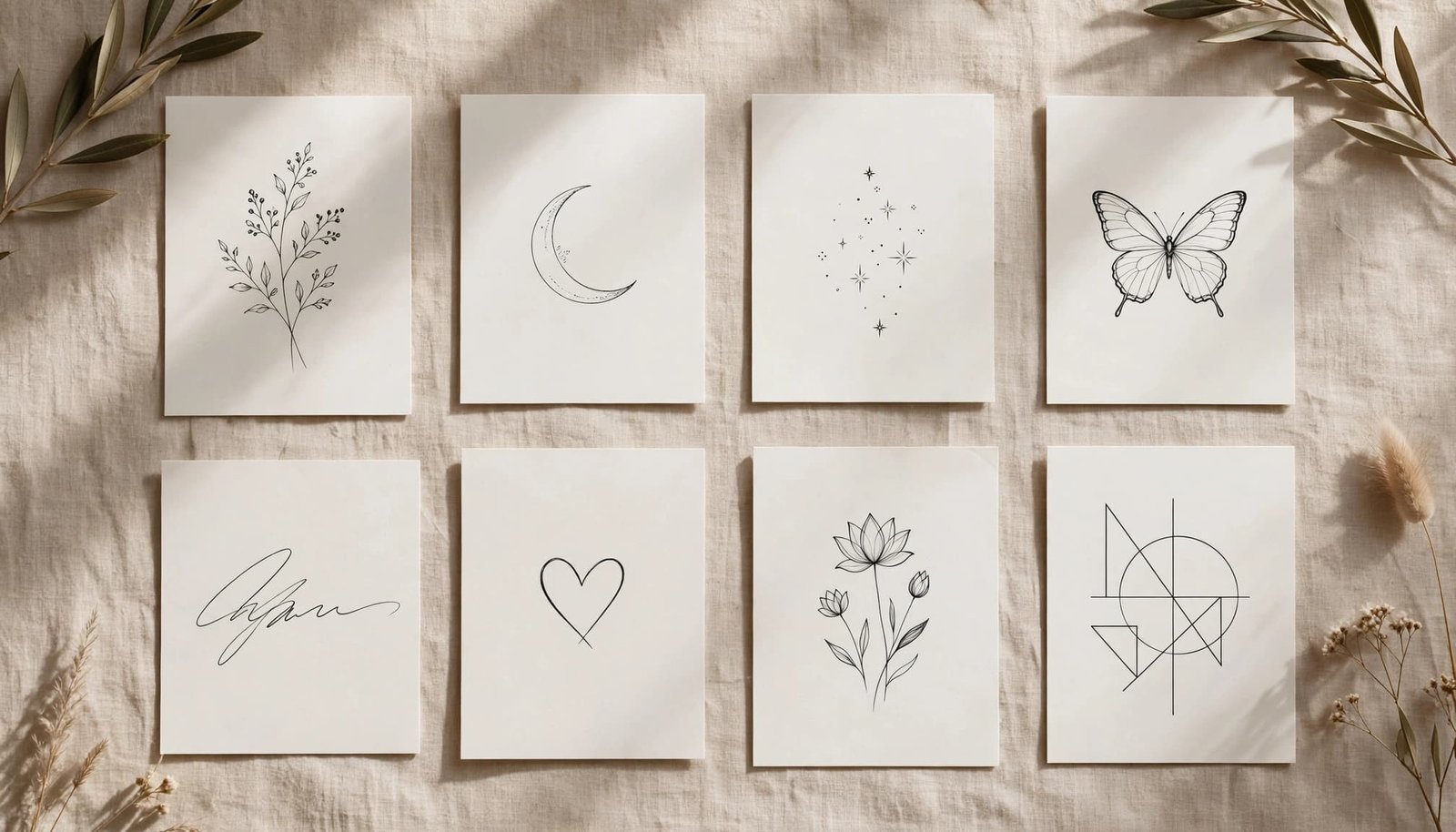
Botanical designs suit meaningful minimalist tattoos because each flower can carry a personal story. Ask your artist to adjust the flower choice, stem length, line weight, and tiny negative spaces.
- A single-stem wildflower has one slender stem and an open bloom. It can suggest growth, healing, or a free spirit. Try the inner forearm or ankle.
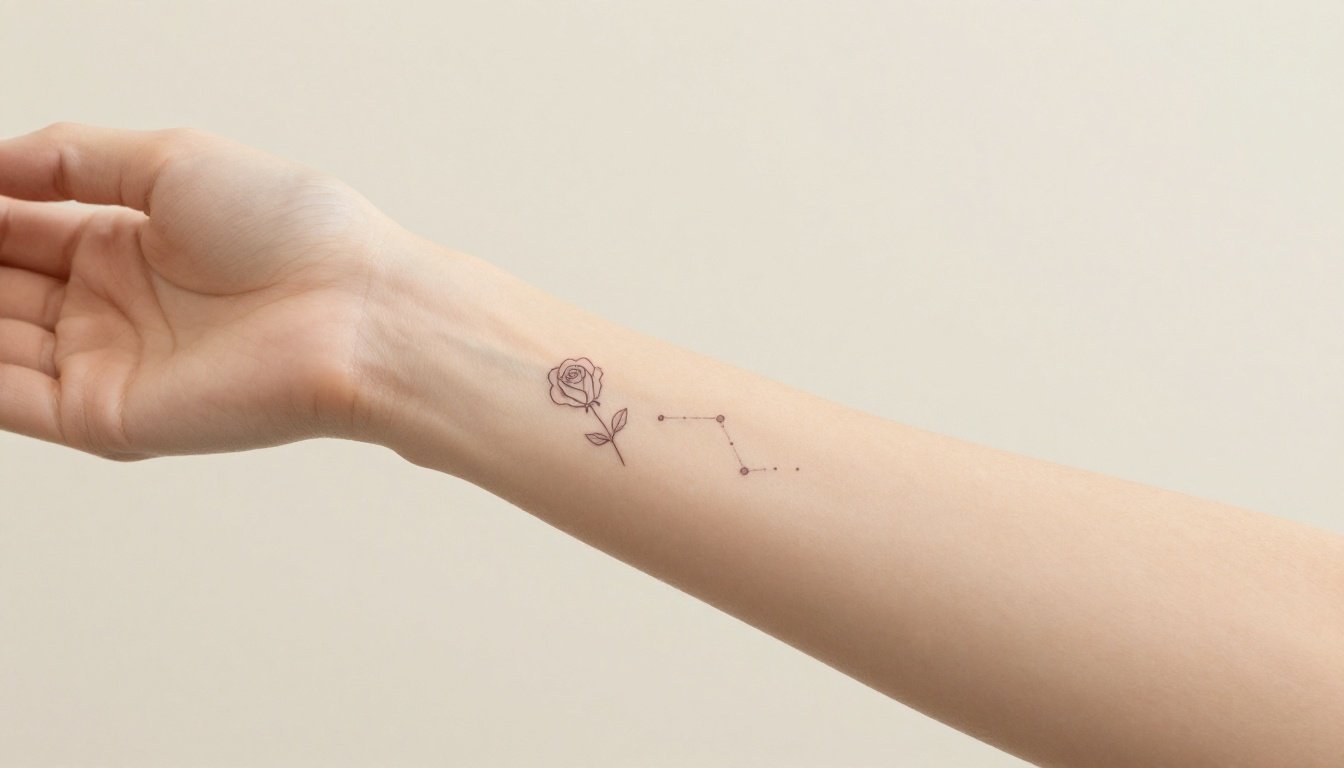
- A tiny rose outline uses one simple contour with a small curved stem. It can express love, femininity, or self-respect. The wrist or collarbone keeps it visible.
- A delicate lavender sprig features a narrow stem and a few small buds. It can symbolize calm, healing, and renewal. Place it behind the ear or along the ankle.
- A crescent-shaped leaf branch curves gently like a sliver of moon. It can reflect nature, change, and personal growth. The shoulder or inner forearm gives the curve room.
- A small fern uses a thin central stem with carefully spaced leaves. Its unfurling shape can suggest resilience and fresh beginnings. Consider the ribs or collarbone.
- A birth flower connects a simple bloom to a special month. It can honor your birth, a child’s arrival, or a loved one’s birthday. The wrist or shoulder works well.
Stars, Moons, and Other Celestial Symbols
Celestial tattoos add a little sky to the skin without needing heavy shading. Keep dots and thin lines spaced carefully, so the design remains readable as it ages.
- A tiny crescent moon can symbolize intuition, change, and private strength. Place it behind the ear, on the wrist, or at the nape.
- A three-star cluster uses three uneven dots or four-point stars. It can hold memories of loved ones, hope, or personal milestones. Try the collarbone or ankle.
- A simple constellation links a few dots with fine lines. Choose a meaningful star pattern to suggest direction and belonging. The ribs or inner forearm suit this design.
- A fine-line sun may contain a small circle with short rays. It can represent optimism, ambition, and renewed energy. Place it on the shoulder or wrist.
- A sun and moon pairing balances two small opposing shapes. It can express harmony, changing seasons, or two sides of your identity. The collarbone or nape creates a graceful layout.
- A north star uses a tiny central star with four longer points. It can remind you to trust your path and keep moving forward. Consider the ankle or behind the ear.
Tiny Animals and One-Line Nature Designs
Animals and nature symbols can feel intimate without looking overly detailed. For very small tattoos, choose a clean silhouette or one confident line instead of fine interior features.
- A butterfly with two open wings can represent transformation, freedom, and a new chapter. The inner forearm or upper arm offers enough space.
- A small bee can feature a rounded body and two simple wings. It may symbolize dedication, community, or protection. Try the ankle or wrist.
- A bird in flight needs only a curved body and two lifted wings. It can suggest freedom, movement, and leaving the past behind. Place it near the ribs or collarbone.
- A cat outline can show one curved back, pointed ears, and a simple tail. It may honor loyalty, independence, or a beloved pet. The inner forearm or behind the ear feels personal.
- A small snake can appear as one winding line with a subtle head. It can express confidence, renewal, and protection. Consider the ankle or upper arm.
- A single-line ocean wave uses one flowing curve with a small crest. It can represent movement, resilience, and a connection to the sea. The wrist or ribcage suits its horizontal shape.
Meaningful Words, Dates, and Personal Markers
Lettering turns a delicate tattoo design into a private reminder. Test every word at the intended size, since very thin script can blur over time.
- A one-word mantra, such as “breathe” or “becoming,” can anchor you during difficult days. The inner forearm or wrist makes it easy to see.
- A loved one’s initial keeps a name close without revealing every detail. Choose a readable letter and place it on the collarbone or upper arm.
- A meaningful date can honor a birth, anniversary, recovery, or fresh start. Check every number twice before choosing the ribs or wrist.
- A small handwritten signature preserves a parent’s, partner’s, or child’s familiar script. The collarbone or inner forearm gives the handwriting room to breathe.
- A short phrase can carry a promise or private lesson. Select a clear font, proof the spelling, and consider the ribs if you want privacy.
- A memorial symbol paired with a word or date might combine a tiny heart, star, or flower with personal lettering. The upper arm or collarbone offers visibility while protecting more private details than a hand tattoo.
Simple Hearts, Spiritual Symbols, and Abstract Lines
Simple symbols can hold love, faith, identity, or balance in only a few marks. Choose spiritual and cultural symbols with care, especially when they come from a tradition outside your own.
- A tiny heart can symbolize romantic love, self-love, or devotion to family. The finger, wrist, or ankle keeps the design discreet.
- A small cross may express faith, protection, or gratitude. Place it behind the ear, at the nape, or near the chest if the meaning feels personal.
- A lotus outline shows an open bloom with clean, curved petals. It can suggest rebirth, healing, and inner clarity. The ankle or collarbone suits its soft shape.
- An infinity loop uses one continuous curve to express lasting connection or an enduring promise. Try the wrist or ribs.
- A continuous-line face creates a profile with one unbroken stroke. It can reflect identity, self-acceptance, or a person who shaped your life. The upper arm or nape works well.
- A minimal geometric shape made from circles or intersecting lines can represent balance, focus, or personal order. Place it on the chest, wrist, or ankle.
How to Choose a Minimalist Tattoo That Still Feels Like You
Saving beautiful tattoo images is a useful first step, but an attractive style may not carry personal meaning. Before booking, ask yourself what you want the tattoo to remind you of and whether you would still value that idea years from now.
Choose a short list of designs, then live with them for a few weeks. Notice which images still feel right after the initial excitement fades. A minimalist tattoo should be simple, not rushed. Once you have a clear direction, ask your artist for a custom sketch rather than copying someone else’s tattoo exactly.
Match the Design to Your Personality and Daily Life
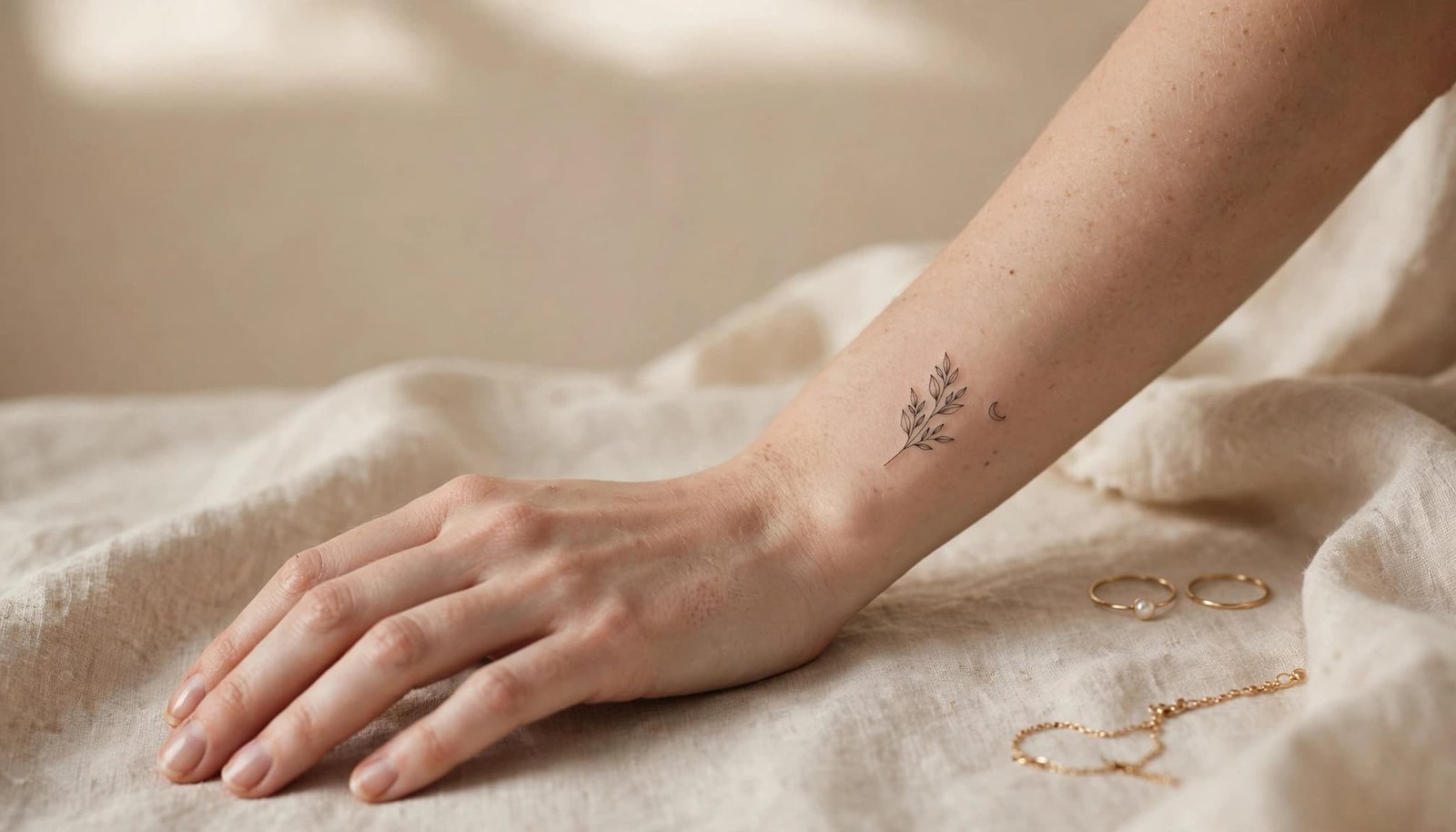
Start with the feeling you want the tattoo to hold. A birth flower, initial, meaningful date, or outline of a special location can turn a familiar symbol into something personal. For example, a small moon paired with a birth flower may honor a new chapter, while a wave with a date could recall a place that changed your life.
Your lifestyle matters just as much as the design. A wrist or inner forearm works well when you want a daily reminder that you can see during ordinary moments. The ribs, nape, and area behind the ear feel more personal because they stay hidden under most clothing.
Consider these practical details before choosing placement:
- Work dress codes may favor the upper arm, ribs, shoulder, or another area covered by professional clothing.
- Jewelry can frame a wrist or collarbone tattoo, but it may also hide a very small design.
- Hobbies that involve gripping, washing, sports, or outdoor work can add friction and sun exposure.
- Skin exposure affects how often you need to protect the tattoo from sunlight.
- Scale and line weight should match the body area. A tiny space may support one clean symbol, while the ribs or forearm can hold a few more details.
Black ink usually gives a minimalist tattoo the clearest structure. A small touch of color can add personality, but ask how that pigment may look as the tattoo heals and ages. Finger tattoos can look striking, although frequent washing, bending, gripping, and rubbing often cause faster fading than tattoos on more stable skin. The FDA also recommends learning about tattoo safety and contaminated ink risks before your appointment through its tattoo safety guidance.
Questions to Ask Before Booking Your Tattoo
Research the artist as carefully as you research the design. Fresh photos can look crisp under studio lighting, so look for healed fine-line work as well. Ask to see examples several months after the appointment, especially if you want tiny lettering, delicate shading, or a single-needle tattoo.
During your consultation, ask:
- Does the artist regularly create single-needle or fine-line tattoos?
- How large must the design be for its details to remain readable?
- Will this placement affect the tattoo’s long-term appearance?
- What local license, permit, or health requirements apply to the artist and studio?
- How does the studio handle handwashing, gloves, needle disposal, and equipment sterilization?
- What is the consultation process, and can the artist create a custom sketch?
- Does the studio explain its touch-up policy before booking?
A clean studio should have clear sanitation procedures, disposable gloves, sharps containers, and separate areas for clean and used equipment. Requirements vary by state and city, so verify the local rules instead of assuming every studio follows the same process.
Bring a few clear references to your consultation, but let the artist adapt the concept to your skin, anatomy, and chosen placement. A thoughtful artist may adjust the spacing, simplify a crowded shape, or increase the size slightly so the tattoo remains legible. That small change can protect both the design and your confidence in it.
The Best Placements for Delicate Tattoos on Women
Placement shapes how often you see your tattoo, how easily you can cover it, and how well the design fits your daily routine. A wrist tattoo can act as a small daily reminder, while a rib tattoo may feel more private and personal. Before choosing a spot, consider visibility, comfort, clothing, sun exposure, and the amount of detail your design needs.
Visible, Discreet, and Workplace-Friendly Placement Ideas
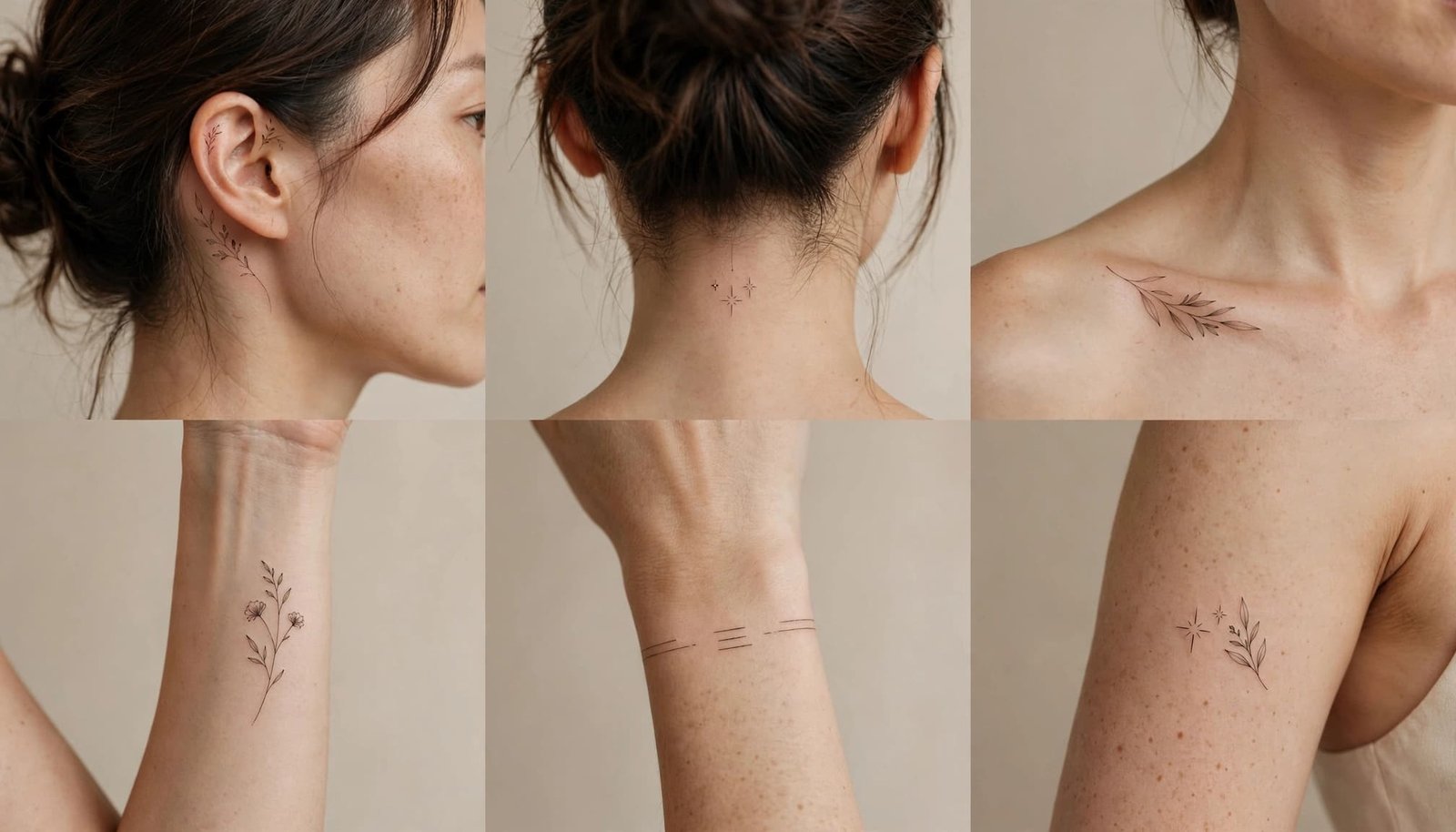
If you want to admire your tattoo often, the inner forearm, wrist, and collarbone are strong choices. The inner forearm gives symbols, small botanical designs, and short words enough room to remain clear. A wrist tattoo feels more intimate and works well for a tiny heart, star, initial, or personal reminder. However, watches, bracelets, frequent handwashing, and sun exposure can affect healing and long-term clarity.
The collarbone creates an elegant frame for florals, fine script, and curved designs. It remains visible with open-neck clothing but can disappear beneath a blouse, sweater, or work uniform. The ankle also suits small nature tattoos, such as a leaf, wave, bee, or sprig. Socks and shoes may rub the area during healing, so plan your appointment around a period when you can wear loose, breathable footwear.
For easier coverage, consider the upper arm, shoulder, ribs, nape, or area behind the ear. The upper arm and shoulder offer slightly more room for a butterfly, botanical branch, or simple geometric design. Clothing usually covers them, which can help when your workplace has tattoo restrictions. The ribs are a popular choice for private words, dates, and memorial pieces, although the skin moves with breathing and clothing may brush against it.
Behind the ear and the nape create discreet placements for tiny stars, moons, initials, or symbols. Hair can cover both areas, but collars, hair products, and regular movement may create contact during healing. Finger tattoos look delicate and striking, yet they can be difficult to hide in some settings. Frequent washing, gripping, bending, and friction also mean they may fade sooner and need more maintenance.
A discreet placement can still feel personal, while a visible placement can become part of your everyday style. Choose based on your real routine, not only on how a design looks in a saved photo.
How Placement Changes the Size and Detail of a Design
A tiny tattoo cannot hold unlimited detail. As lines move closer together, they may blur or lose definition over time. That matters most for small lettering, dates, geometric patterns, and designs with several interior details.
For example, a behind-the-ear star may work beautifully at a very small scale because its shape is simple and recognizable. A botanical branch needs more breathing room. On the inner forearm, the artist can spread the leaves along a longer curve and preserve open space between each line.
Words and dates need enough room for every letter and number to remain readable. Geometric lines also need proper spacing, especially if the design includes circles, angles, or intersections. Skin movement, clothing friction, and sun exposure can gradually soften fine lines, so the smallest possible version isn’t always the best version.
Ask your artist to recommend a size that will age well. An experienced tattooer may simplify a crowded design, widen the spacing, or make the piece slightly larger. Those adjustments protect the clarity of your minimalist tattoo without taking away its delicate character. For healing guidance, the Cleveland Clinic’s tattoo aftercare advice recommends gentle cleaning, loose clothing, and avoiding direct sunlight while the skin heals.
Cost, Comfort, and Aftercare for Fine-Line Tattoos
A minimalist tattoo may look small, but the appointment involves more than a few quick lines. Your price, comfort level, healing routine, and future touch-ups all depend on the artist, placement, design, and studio standards. Plan for the full experience rather than judging the tattoo by its size alone.
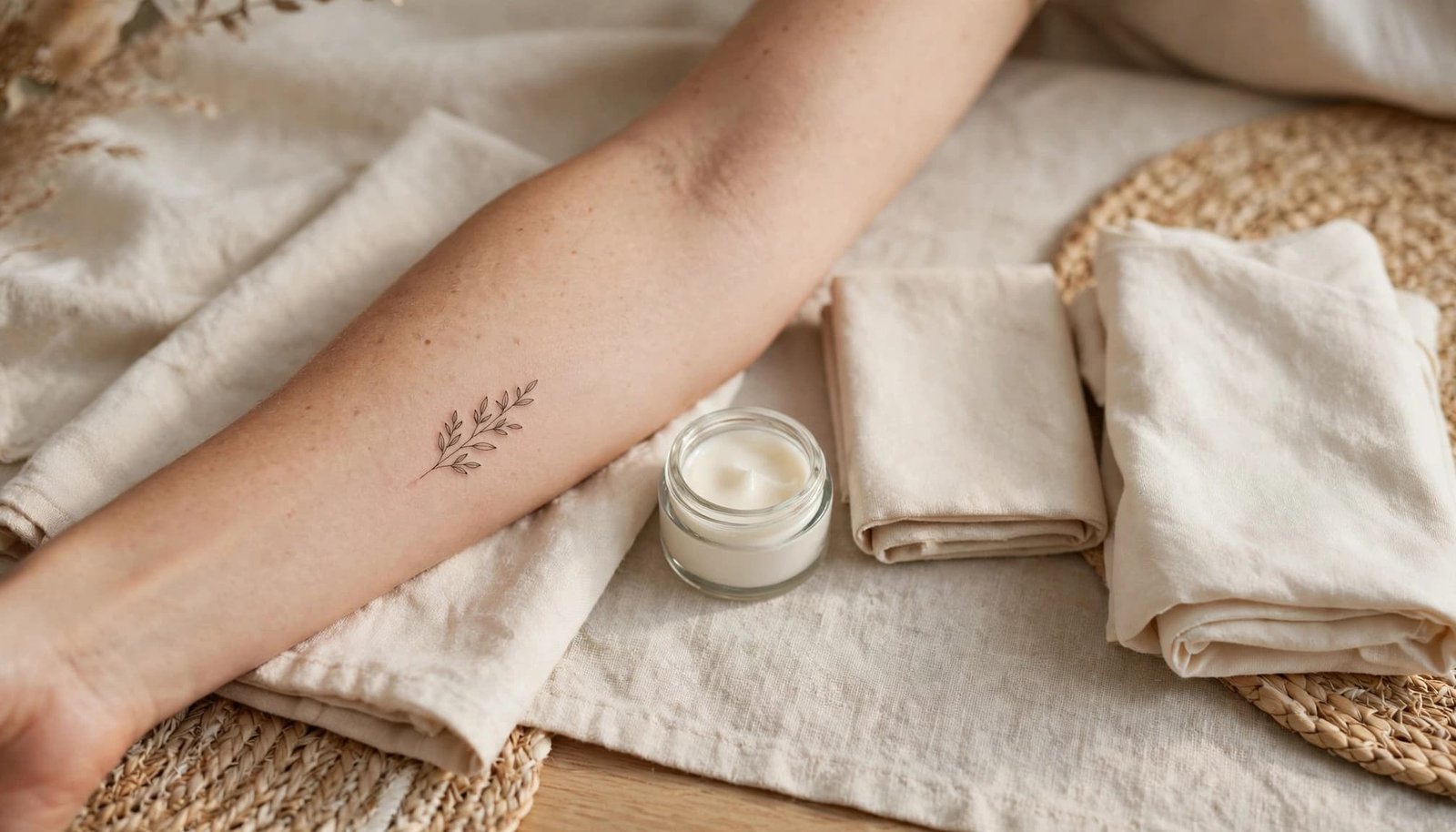
What Fine-Line Tattoos Usually Cost
A tiny tattoo is not always a cheap tattoo. The quote may include consultation time, a custom drawing, sterilized equipment, room setup, disposable supplies, and the artist’s skill. Many professional studios also charge a minimum, even when the design takes only a short time to tattoo.
As broad US examples, a small professional tattoo may cost around $50 to $80 in some settings, while studio minimums can reach $150 to $300. These figures are not universal rates. Prices vary by city, artist experience, design complexity, placement, color, and the studio’s pricing structure.
Before booking, ask what the quote covers. Confirm whether it includes:
- A custom design or only a basic walk-in concept.
- The consultation and any required deposit.
- A future touch-up, if the studio offers one.
- Changes to the design after the appointment.
- Extra charges for color, lettering, or a difficult placement.
Request a written quote from a local studio after sharing the design, approximate size, and placement. The lowest price should not outweigh safe practices, healed-work photos, and an artist who regularly creates fine-line tattoos. Clean equipment and steady technique protect your skin and the design.
Simple Steps for a Safe Healing Process
Most tattoos heal on the surface in about two weeks, although deeper layers of skin may continue settling for longer. Follow your artist’s written instructions first, especially if they use a specialized bandage or recommend a particular moisturizer. General guidance from Mayo Clinic’s tattoo safety advice also supports gentle washing, moisturizing, and sun protection.
Use this simple routine while the tattoo heals:
- Wash the area gently with mild soap and water twice a day.
- Pat it dry with a clean towel or paper towel instead of rubbing.
- Apply a thin layer of mild moisturizer as directed by your artist.
- Leave flakes and scabs alone, and avoid picking or scratching.
- Wear loose clothing so fabric does not stick to the tattoo.
- Avoid pools, hot tubs, lakes, rivers, baths, and other water where the tattoo could soak.
- Keep the fresh tattoo out of direct sunlight until the skin has healed.
Some tenderness, redness, peeling, or itching can occur during normal healing. Contact a medical professional if redness spreads, pain or swelling worsens, the area feels increasingly warm, drainage or pus appears, or you develop a fever, chills, or an unusual rash.
How to Keep Minimalist Ink Looking Clean
Fine lines can soften with age. Sun exposure, repeated friction, skin changes, and the natural aging process all affect delicate ink. Once the tattoo heals, use a broad-spectrum sunscreen with SPF 30 or higher when the area will be outdoors, and reapply it during extended sun exposure.
Pay attention to high-friction placements. Shoes can rub ankle tattoos, rings can wear down finger designs, and tight sleeves or watchbands can irritate wrist ink. Fingers, ankles, and other areas that bend, wash, or contact clothing often need touch-ups sooner than more protected skin.
During healing, avoid applying too much ointment. Heavy layers can keep the skin overly moist and interfere with delicate linework. A touch-up later is also normal, especially for fine-line tattoos. Aging does not automatically mean the artist did poor work. Choose a size and placement that give the design room to age gracefully.
Conclusion
The most beautiful minimalist tattoo is one that feels personal, suits its placement, and comes from a careful professional. Botanicals, celestial symbols, animals, lettering, spiritual marks, and abstract lines all offer simple ways to carry meaning without overwhelming the skin.
Take time with the idea, ask for a custom sketch, confirm the price before booking, and follow proper aftercare while the tattoo heals. A few quiet lines can hold growth, love, faith, freedom, or a new beginning without needing to explain themselves to everyone.
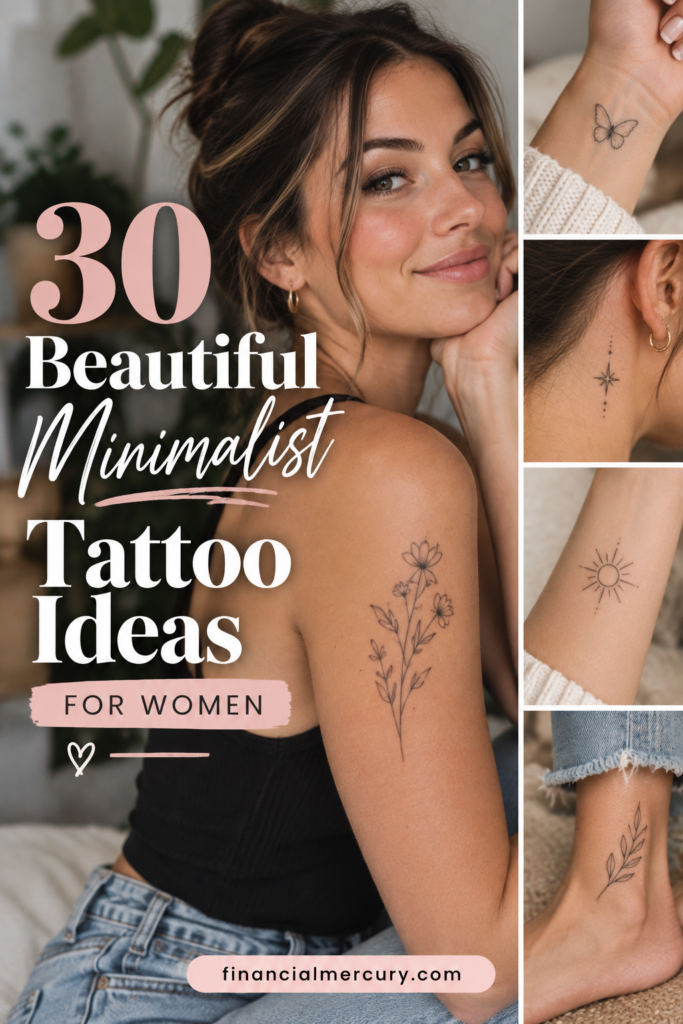
Save the pin for later

- 30 Beautiful Minimalist Tattoo Ideas for Women - September 15, 2026
- 25 Tiny Fine Line Tattoo Ideas for a Subtle Look - September 15, 2026
- 30 Meaningful Flower Tattoo Ideas for Women - September 15, 2026
Leave a Reply