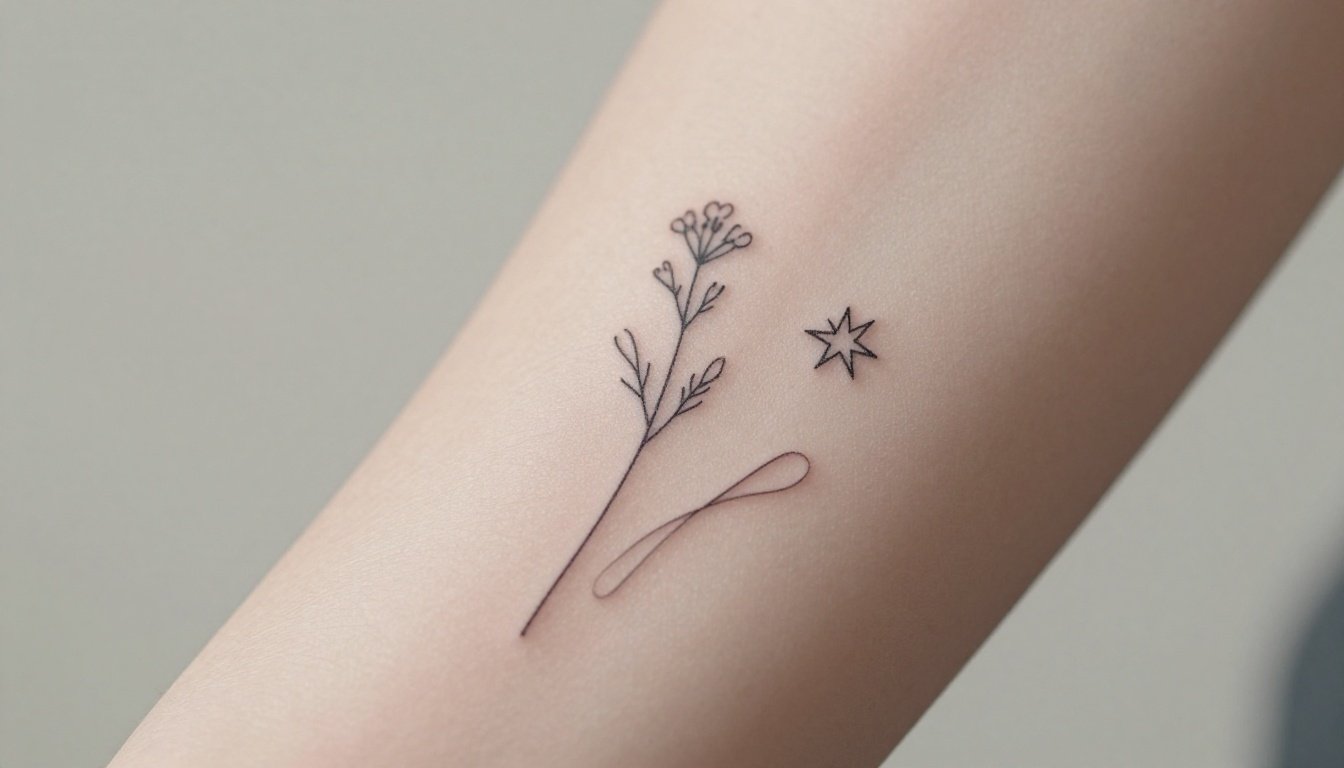
30 Minimalist Tattoos That Never Go Out of Style
A quiet sprig, a single star, or one fine line can hold a lasting meaning without taking up much space. Minimalist tattoos feel personal because their beauty comes from clear shapes, thoughtful placement, and a story that still matters after passing trends fade.
Before you book an appointment, consider how the design will age, where it will sit, and how proper aftercare can help fine-line ink stay readable. The 30 ideas below include symbolism, placement suggestions, and practical care tips to help you choose a timeless tattoo with confidence.
30 Minimalist Tattoos That Never Go Out of Style
The best minimalist tattoos pair a simple image with a story you will still recognize years later. Personalize each idea through line weight, scale, placement, handwriting, or one meaningful detail.
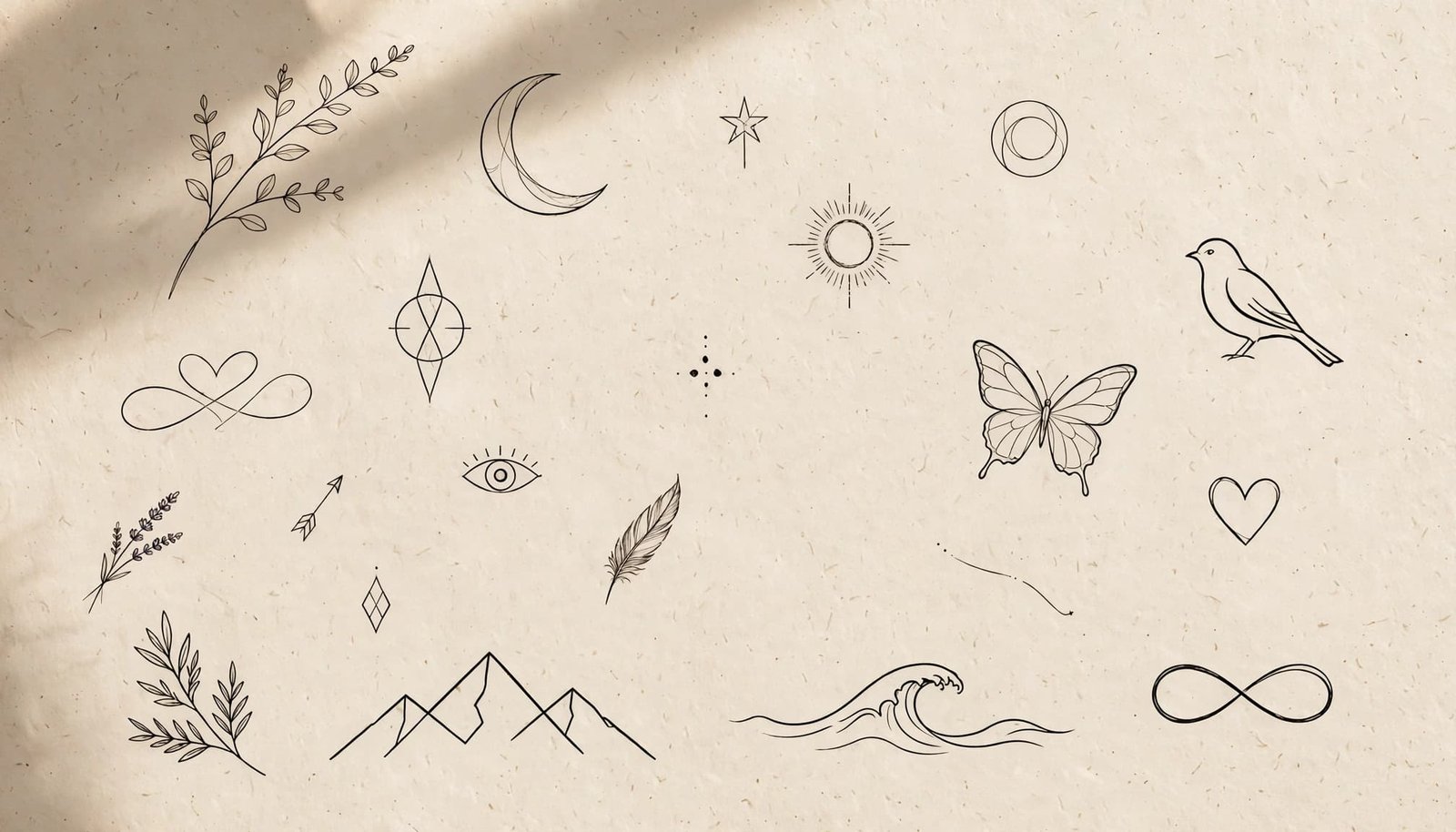
Botanical Tattoos That Represent Growth and Memory
- A single wildflower uses one stem and open petals to suggest growth or a remembered season. Try the forearm or ankle.
- A delicate olive branch carries associations with peace and healing. Its curved leaves suit the collarbone or upper arm.
- A tiny fern symbolizes renewal and steady growth. Place it along the ribcage or shoulder.
- A lavender sprig can recall calm, healing, or a special garden. The forearm and ankle give its narrow shape room.
- A simple sunflower outline brings warmth, hope, and affection. Consider the shoulder or upper arm.
- A birth-flower stem connects family, birthdays, or a loved one. The collarbone or ribcage can hold a graceful vertical design.
Choose a flower linked to a real person, place, season, or life chapter instead of copying a generic image. Very small leaves need enough space between lines to remain clear.
Celestial and Nature Tattoos for Quiet Wonder
- A crescent moon suggests cycles, guidance, and change. It fits the wrist or upper back.
- A tiny sun expresses hope and warmth. Place it on the shoulder or inner arm.
- A four-point star offers a clean symbol of direction and optimism. The calf or ribs gives it breathing room.
- A simple constellation can honor a birth sign or personal night sky. Try the upper back or inner arm.
- A mountain horizon recalls adventure, endurance, and a favorite landscape. The forearm or calf works well.
- A single ocean wave captures calm, movement, and love of nature. Consider the ribs or wrist.
Keep celestial tattoos open and uncluttered. Sun-exposed placements need protection after healing, since UV light can fade some inks. The American Academy of Dermatology’s tattoo care guidance recommends broad-spectrum, water-resistant SPF 30 or higher.
Animal and Insect Tattoos With Clear Symbolism
- A flying bird represents freedom, movement, or a new direction. The inner bicep or shoulder blade gives it space.
- A butterfly outline speaks to transformation and personal change. Place it on the ankle or upper arm.
- A cat silhouette can honor independence or a beloved companion. The forearm or thigh suits its clean profile.
- A small dog profile carries loyalty, comfort, and memory. Consider the chest or inner bicep.
- A bee symbolizes community, purpose, and shared effort. The ankle or forearm keeps its shape visible.
- A tiny fish suggests movement, adaptability, or a favorite water memory. Try the ribs or shoulder.
Use a clean silhouette or a few recognizable lines so the image remains legible as it ages. Detailed wings and fur need more room than an overly tiny tattoo allows.
Simple Shapes and Symbols With Lasting Appeal
- A circle suggests wholeness and continuity. The upper arm or outer forearm offers stable placement.
- A triangle can express change, balance, or personal direction. Try the calf or shoulder.
- A small heart keeps love close without heavy detail. The wrist or upper arm works well.
- An infinity loop speaks to continuity and lasting connection. Place it on the forearm or thigh.
- A minimalist arrow points toward direction, progress, or a new beginning. The outer forearm makes its orientation clear.
- Balanced dots or arcs can symbolize harmony and measured change. The calf or shoulder gives the spacing room.
Small shifts in symmetry, line weight, and spacing can make familiar symbols personal. Generous negative space also helps geometric tattoos stay readable.
Personal Line Art and Memory-Based Tattoos
- A loved one’s handwritten word preserves a familiar voice. Place it on the ribs or inner arm.
- A meaningful date in simple numerals records a private milestone. The upper back or hip offers discretion.
- Coordinates of a special place can point to a hometown, meeting place, or favorite trip. Try the upper thigh or ribs.
- A continuous-line face creates an intimate portrait with one flowing stroke. The shoulder blade or upper arm suits it.
- A tiny music note can honor a song, instrument, or shared memory. Consider the ankle or inner arm.
- A minimalist key or lock suggests trust, privacy, or belonging. The upper thigh or chest gives the shape room.
Check dates, handwriting, and coordinates carefully before tattooing. Also research any religious or culturally specific symbol before using it, especially when its meaning extends beyond your personal story.
How to Choose a Minimalist Tattoo That Still Feels Like You
A long inspiration list can make every design look appealing, but trend appeal rarely lasts as long as personal meaning. Start with the story behind the tattoo, then reduce it to one clear image that still feels right when you picture it years from now.
Start With Meaning, Then Simplify the Image
Before saving more reference photos, write down what you want the tattoo to hold. Begin with a memory, value, person, place, or feeling. Describe the story in a few sentences, including the detail you would miss most if the memory became blurry.
Next, choose one central symbol. A generic flower may suggest beauty or growth, while a specific flower connected to your grandmother’s garden, a hometown trail, or a childhood summer carries a more personal meaning. The difference is small visually, but significant emotionally.
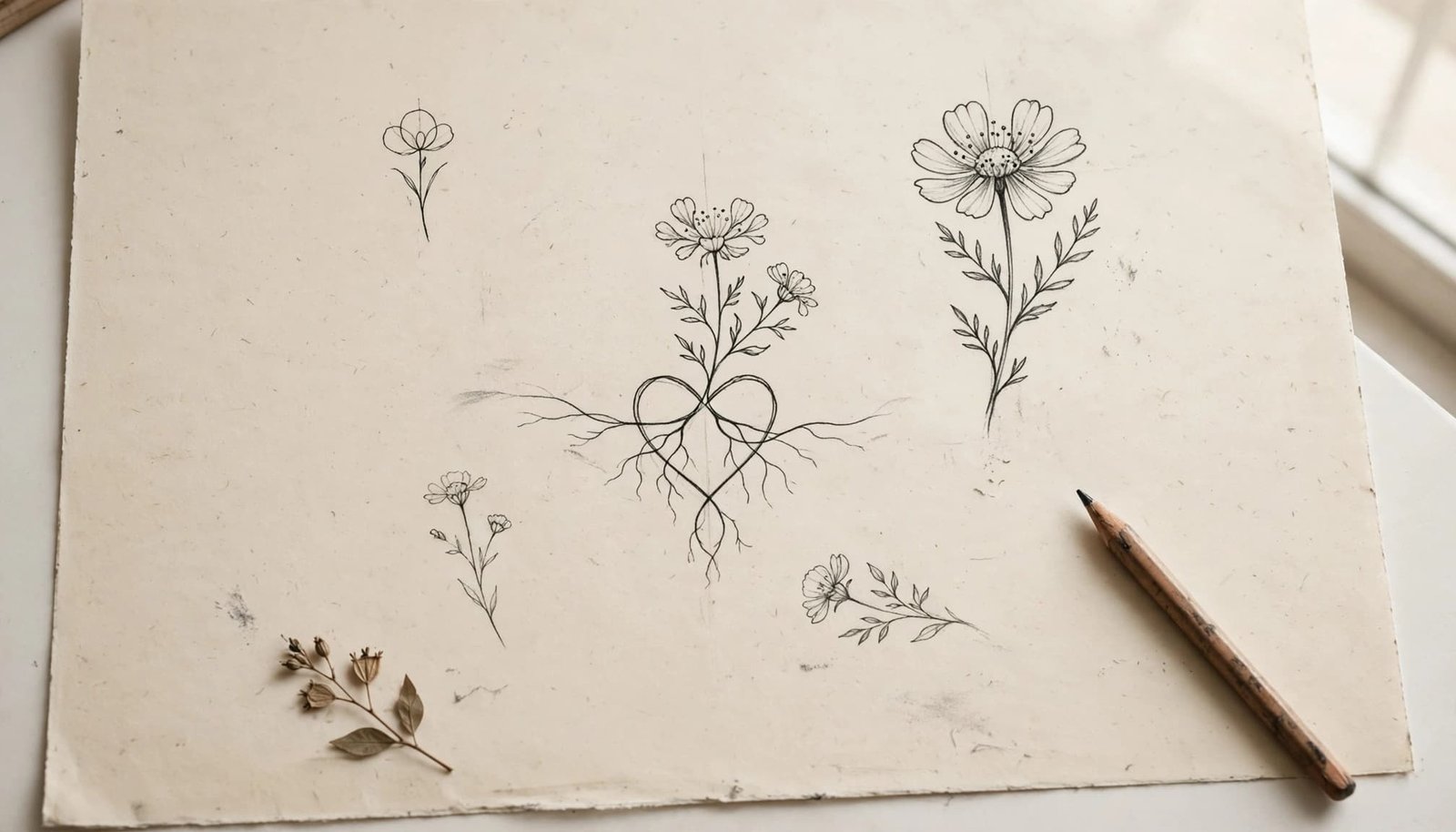
Then remove details one at a time. Ask yourself whether the tattoo needs extra leaves, shading, text, dates, or decorative lines. A simple design should still make sense without a long explanation. If the image becomes meaningless after every personal detail disappears, keep one defining feature, such as an unusual petal shape, a crooked stem, or a small gap in the line.
Timeless doesn’t mean emotionless. A single outline can hold grief, affection, pride, or hope when its shape connects to a real part of your life.
Your next decision is visibility. A wrist, forearm, or ankle keeps the reminder in your daily view. The ribs, upper thigh, shoulder blade, or chest offers more privacy. Consider your work, comfort with questions, and whether you want the tattoo to feel like a personal note or an open statement.
Collect three to five references that show qualities you like, such as scale, line weight, or placement. Give them to your tattoo artist as direction, then ask for an original drawing rather than combining copied elements.
Make the Design Original and Culturally Respectful
Personal details can make a familiar symbol feel unmistakably yours. Your handwriting, a custom sketch, unusual spacing, a meaningful date, or two related ideas can create a design with its own identity. For example, a small wave paired with a single star may recall a specific night near the ocean without copying a popular flash design.
However, don’t choose a sacred, ceremonial, tribal, Indigenous, or religious symbol only because it looks attractive. Many tattoo traditions carry family, spiritual, or community meaning that an outsider may not understand. Read about the symbol’s origin, learn how the community uses it today, and ask whether it belongs to a living tradition.
Resources discussing tattooing and cultural appropriation can help you recognize why context matters beyond the image itself. If reliable information is difficult to find, or the symbol’s meaning remains unclear, choose another design. A personal tattoo doesn’t need borrowed sacred imagery to feel distinctive.
The Best Placement for Fine-Line Tattoos That Need to Age Well
Placement is part of the tattoo design, not an afterthought. Fine-line tattoos use less ink than bold designs, so very small details may fade or blur sooner, especially when the skin faces constant rubbing, movement, washing, or sunlight. The right location gives your design enough protection and space to remain recognizable.
Stable Placements That Protect Small Details
Areas with thicker skin, less daily friction, and lower movement often give minimalist tattoos a steadier home. Common options include the outer forearm, upper arm, shoulder, inner bicep, upper back, upper thigh, calf, and ribcage.
These placements suit simple botanical drawings, small animals, symbols, and clean line art because clothing usually causes less direct rubbing. The upper arm and shoulder also offer enough room for a design that is minimalist without being microscopic. Meanwhile, the upper thigh and upper back provide privacy and protection during everyday activities.
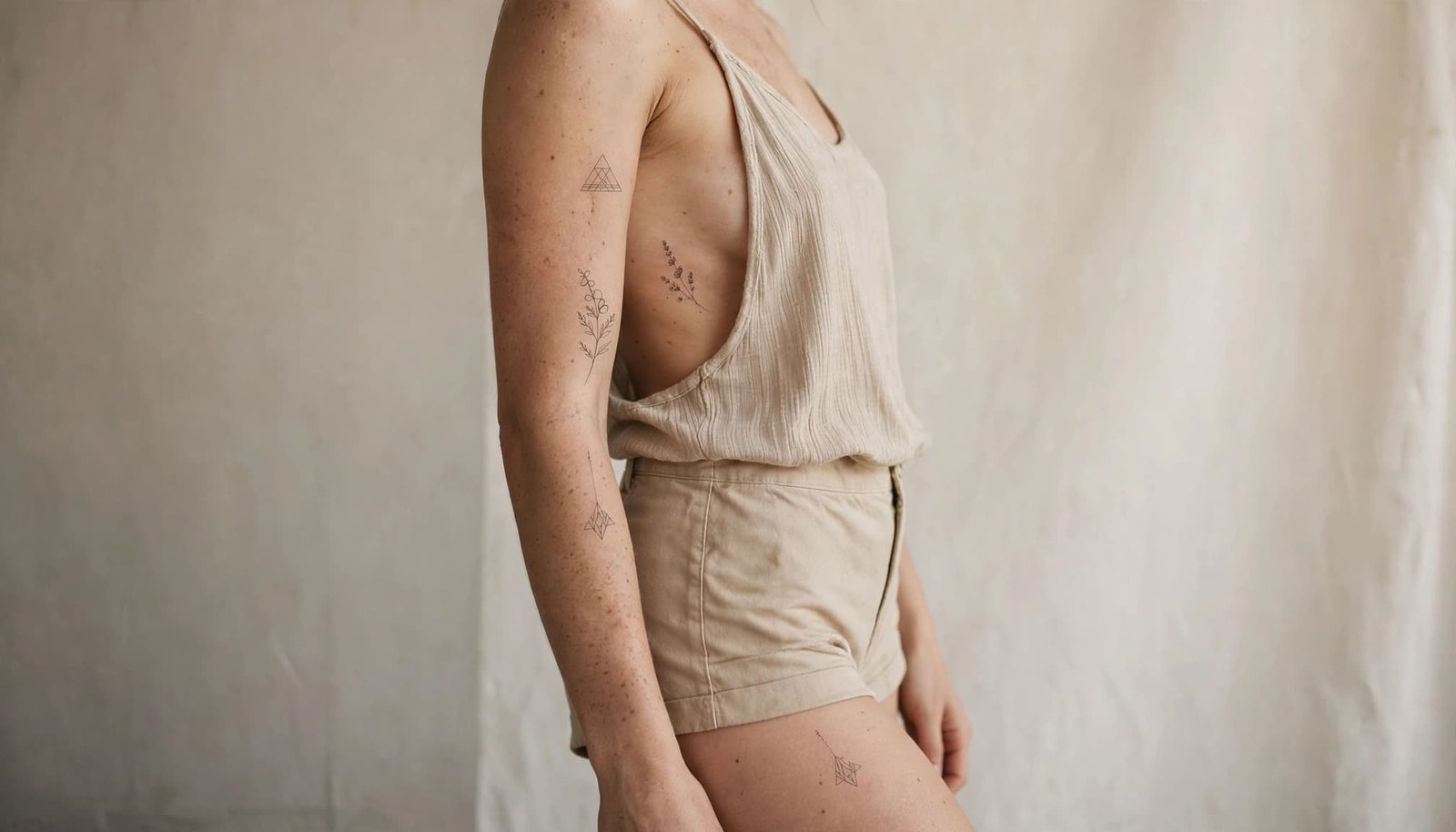
The outer forearm is easy to see and works well for vertical designs, but it receives heavy sun exposure. Once the tattoo has fully healed, protect it with broad-spectrum, water-resistant SPF 30 or higher. Clothing helps during healing, since sunscreen belongs on healed skin rather than an open or peeling tattoo.
High-Friction Areas That May Need More Maintenance
Hands, fingers, feet, ankles, inner elbows, knees, wrists, and inner lips can be beautiful choices, but they often demand realistic expectations. Frequent handwashing, shoes, socks, clothing seams, bending, and everyday movement can place more stress on the ink. Hands, wrists, and feet may also receive regular sun exposure.
These locations aren’t forbidden. They simply work best with designs that can tolerate some softening over time. A simple heart may age better on a finger than a tiny portrait with several facial details. An open symbol may remain clearer on the wrist than tightly packed lettering.
A high-wear placement can still be meaningful, but you may need more frequent touch-ups to keep the original shape crisp.
Ask your artist how the design might change in that specific location. Your job, workout routine, footwear, clothing, and willingness to schedule maintenance all matter. A tattoo that looks perfect in a reference photo may need a different scale or line weight on your skin.
Why Spacing and Scale Matter More Than Tiny Detail
A minimalist tattoo doesn’t have to be microscopic. Give the lines enough weight and leave open space between elements so the image can breathe. Tightly packed parallel lines may merge, while tiny lettering can lose clarity as the ink softens.
Simplified shapes, strong silhouettes, and generous negative space usually age more gracefully. For example, a single mountain outline may stay recognizable longer than a miniature landscape filled with trees, texture, and shading.
Before approving the stencil, ask your artist to show the design at its actual tattoo size. View it from the distance where you normally will, not only in a close-up image. If the details disappear when you take one step back, the design may need more scale, fewer lines, or a simpler silhouette.
How to Keep a Minimalist Tattoo Clean, Sharp, and Meaningful
A minimalist tattoo stays beautiful when thoughtful design and careful aftercare work together. Fine lines need the right scale, enough spacing, and gentle handling while the skin heals. They also need protection years later, especially when placed on areas exposed to sunlight or daily friction.
Choose an Artist Who Understands Fine-Line Work
Start by reviewing an artist’s healed tattoo photos, not only fresh work taken immediately after an appointment. Fresh ink often looks darker and sharper than it will after the skin settles. Healed examples show whether the artist creates consistent line weight, clean curves, balanced spacing, and designs that remain readable over time.
During your consultation, discuss your skin type, chosen placement, preferred scale, healing history, and the possibility of future touch-ups. Tell the artist about past reactions, difficult healing, or tattoos that faded quickly. Placement matters because skin on the hands, fingers, feet, and wrists experiences more movement, washing, friction, and sun exposure.
An experienced artist may recommend enlarging your design or removing a few details. That advice protects the tattoo’s clarity rather than changing its meaning. When too many lines compete for a very small space, they can soften together as the tattoo ages. A simplified flower, symbol, or animal can hold the same personal story while staying easier to recognize.
Before the needle touches your skin, ask to see the stencil at its actual size. Look at it from a normal viewing distance, not only inches away. If the shape disappears when you take a step back, give it more room or simplify the design.
Follow a Gentle Healing Routine
Follow your artist’s specific instructions because wrap types and healing methods vary. In general, keep the artist’s wrap or protective film on for the recommended time. Once you remove it, wash the tattoo gently with lukewarm water and fragrance-free soap, then pat it dry with a clean towel.
Apply only a thin layer of unscented moisturizer or tattoo-safe balm. Heavy layers can leave the skin overly damp and irritated. Let the tattoo breathe, and avoid picking flakes or scabs, even when peeling makes the lines look uneven for a short time.
While the skin heals, avoid pools, baths, hot tubs, and saunas. Don’t wear tight clothing over the tattoo, and keep it away from direct sunlight. Sunscreen belongs on fully healed skin, so use clean clothing or shade for protection during the early healing period.
Some redness, soreness, itching, flaking, and clear fluid can occur during normal healing. However, contact a medical professional if redness spreads or darkens, pain worsens, pus appears, or you develop fever, chills, or open sores. The American Academy of Dermatology’s tattoo reaction guidance explains warning signs that need medical attention.
Protect Fine Lines Long After the Tattoo Heals
Ultraviolet light is one of the biggest causes of tattoo fading. Once your tattoo is fully healed, apply a broad-spectrum, water-resistant SPF 30 or higher whenever the area will be exposed. The American Academy of Dermatology’s tattoo care guidance also recommends applying sunscreen before going outside and reapplying it during extended exposure.
Regular unscented moisturizer helps healed skin stay comfortable and keeps the tattoo looking clear. Still, no product can prevent every change. Touch-ups may become part of normal maintenance, especially for tattoos on the hands, fingers, feet, wrists, and other high-friction areas.
A touch-up doesn’t mean the original tattoo failed. It means you are caring for meaningful art that lives on active skin. When you protect the lines, respect the healing process, and accept occasional maintenance, your small design has a better chance of staying legible and personal for years.
Conclusion
The most timeless minimalist tattoo is simple enough to stay clear and personal enough to remain meaningful. Botanicals, celestial symbols, animals, geometric shapes, and memory-based line art can all carry lasting beauty when the design connects to your own story.
Choose a symbol you will still value years from now, then work with a skilled artist, select a realistic placement, and follow careful healing and sun-protection habits. One small mark can hold an entire chapter of your life.
Save pin for later


- 25 Fine Line Tattoo Ideas for Women With Meaning - September 22, 2026
- 30 Minimalist Tattoos That Never Go Out of Style - September 22, 2026
- 25 Fine Line Tattoo Ideas for a Feminine Look - September 22, 2026
Leave a Reply