30 Gorgeous Fine Line Tattoo Ideas to Try
Fine line tattoos are small, graceful pieces that can carry personal meaning without feeling heavy. Made with very thin lines and little shading, they create a soft, delicate look that suits everything from tiny botanicals and celestial symbols to meaningful matching tattoos.
Choosing your first design can feel overwhelming, especially when you want something beautiful that will still feel right years from now. This collection of 30 gorgeous fine line tattoo ideas will help you compare symbolism and placement while keeping practical details in view, including artist selection, fading, healing, and aftercare. Start with the designs that catch your eye, then find the fine line tattoo that feels personal to you.
30 Gorgeous Fine Line Tattoo Ideas to Try for Every Style
These fine line tattoo ideas are grouped by mood and meaning, so you can compare delicate designs with personal stories behind them. Use them as starting points, then customize a flower, date, initial, or symbol until the tattoo feels like yours. Before booking, review practical guidance on caring for tattooed skin.

Delicate Flowers, Leaves, and Botanical Sprigs
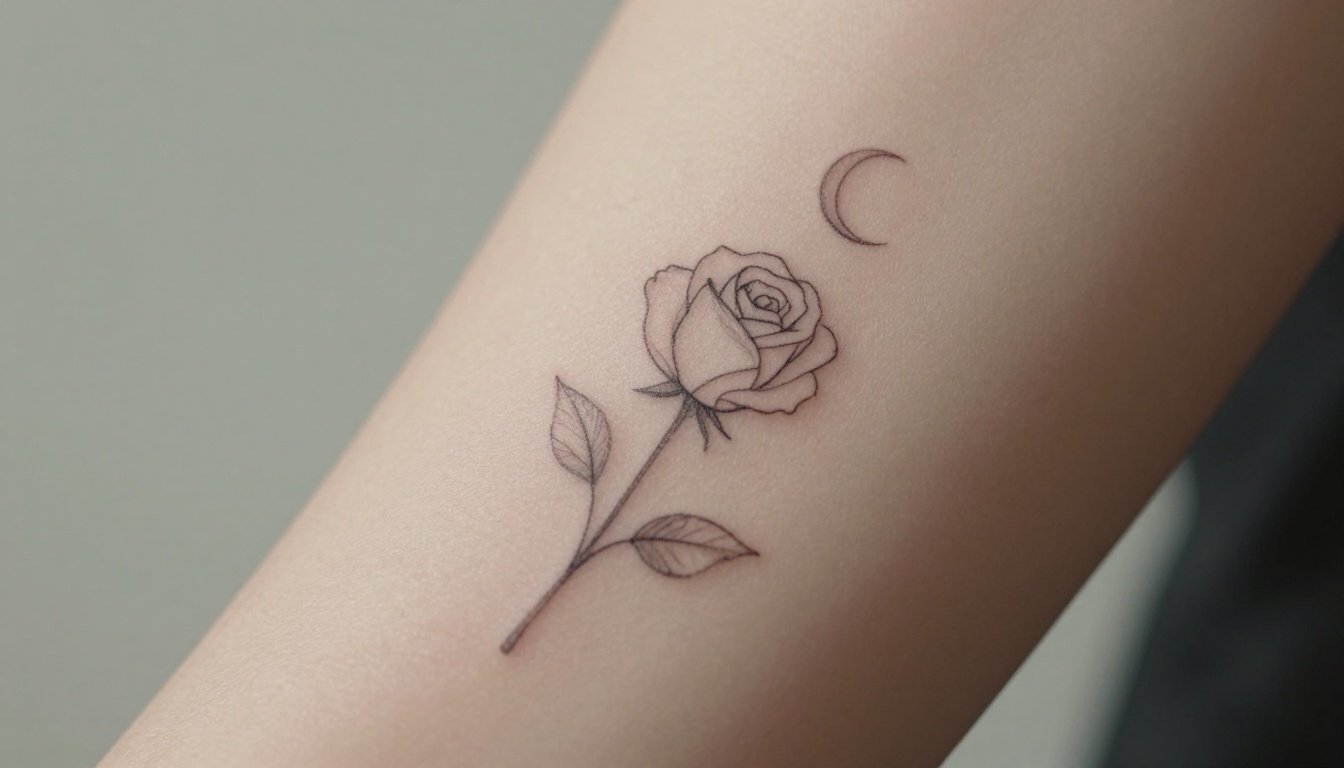
Botanical tattoos suit first tattoos, meaningful designs for women and men, and anyone who prefers soft natural imagery. A single-stem wildflower can suggest growth after a difficult season, while a fine line rose adds a graceful symbol of love. A tiny lavender sprig brings a calm, gentle mood, and a winding botanical vine can represent steady growth or a life that keeps reaching forward.
For family or a personal milestone, choose a birth flower bouquet with one bloom for each important person or year. These designs look beautiful on the wrist, collarbone, forearm, ribs, ankle, or shoulder blade. Add a birth date, initial, or small word only if it leaves the flowers plenty of breathing room.
Moon, Sun, and Other Celestial Fine Line Ideas
Celestial tattoos can feel dreamy, hopeful, spiritual, or balanced without taking up much space. A crescent moon with scattered stars creates a quiet night-sky look, while a delicate sunburst brings warmth and optimism. A small planet with one orbit suits curious personalities, and a constellation can connect the tattoo to a zodiac sign or meaningful night.
For balance, pair a sun and moon in two small circles or complementary shapes. Simple celestial forms work well as tiny tattoos, especially on the wrist, ankle, sternum, or behind the ear. However, tiny dots and close lines may soften over time, so ask the artist to leave enough space between details.
Tiny Animals, Birds, and Nature-Inspired Symbols
A single-line butterfly captures freedom and transformation with only a few graceful curves. A small bird in flight can suggest independence, travel, or hope, while a cat or dog silhouette keeps a beloved companion close. A fine line snake may symbolize protection, renewal, or personal strength.
For an adventurous design, choose a minimalist mountain and wave scene. It can hold memories of a favorite trip or a lasting love of nature. An experienced artist can simplify a favorite animal without losing its character by preserving its posture, ears, tail, or most recognizable profile. Consider the inner arm, ankle, upper arm, shoulder, or behind the ear for placement.
Meaningful Symbols, Words, and Personal Details
A tiny heart can honor healing, family, friendship, or self-love. A meaningful arrow suggests direction after a major decision, while a short handwritten word preserves the emotion of a personal message. Coordinates can identify a hometown, first meeting place, or location tied to a life-changing moment.
A small date or clean Roman numeral date offers a private memorial or milestone tattoo. Script needs careful sizing because letters placed too close together can blur as the tattoo ages. Check every spelling, number, date, and original handwriting sample before your appointment.
Fine Line Portraits, Hands, and Artistic Line Drawings
A simplified profile portrait can honor a loved one with a few elegant contours. Two hands reaching toward each other suggest connection, faith, or family, while a continuous-line face brings a modern art-gallery feel. A fine line eye can express awareness, protection, or intuition.
For something unusual, choose a tiny architectural outline or an art-inspired shape from a favorite building, museum, or painting. These personal designs require an artist with strong line control and a portfolio of healed work. Choose a size that leaves facial features and small details readable instead of forcing too much into a tiny space.
Matching, Couple, and Memorial Tattoo Ideas
Matching tattoos can include two stars, connected initials, half-heart designs, or a shared flower. They don’t need to be identical; related images often make more sense when each tattoo can stand alone. A small memorial ribbon or date can honor someone without filling the skin with competing details.
For a memorial tattoo, consider a favorite flower, handwriting sample, meaningful date, or simple symbol. Couples might choose two pieces of one design, while friends could share a small image that recalls a private memory. The best matching tattoos leave room for each person to choose a placement and size that feels comfortable.
How to Choose a Fine Line Tattoo That Still Feels Like You
The best fine line tattoo ideas begin with a personal story, not a trend. Before choosing a flower, symbol, or placement, ask yourself what feeling you want the tattoo to hold. Is it connected to family, healing, travel, love, independence, or a moment you never want to forget?
A trend can catch your eye, but meaning gives a design staying power. Start by writing down the memory or feeling behind the tattoo. Then choose one main symbol that captures it. Once you have that foundation, decide how much space the design needs and remove details that may blur, crowd, or lose their meaning over time.
Build a Personal Design Instead of Copying a Trend
A reference image should guide your artist, not become a design you copy without thought. Collect several examples and write down what you like about each one. Maybe you prefer the shape of one flower, the spacing in another tattoo, and the soft curve of a third design. Those details give your artist useful direction while leaving room for an original concept.
A few meaningful elements can create a personal fine line tattoo without making it complicated. Consider these combinations:
- Pair your birth flower with a small date connected to a family member or milestone.
- Combine a constellation with initials, a zodiac symbol, or a meaningful star pattern.
- Place a simple wave beside a handwritten word connected to the ocean, travel, or calm.
- Add a tiny initial to a botanical sprig instead of squeezing several symbols into one design.
Fine lines need breathing room. When symbols sit too close together, small gaps can disappear as the tattoo heals and ages. A crowded design may look delicate in a reference photo but lose clarity on actual skin. Ask your artist to simplify the idea if every detail cannot remain readable at the planned size.
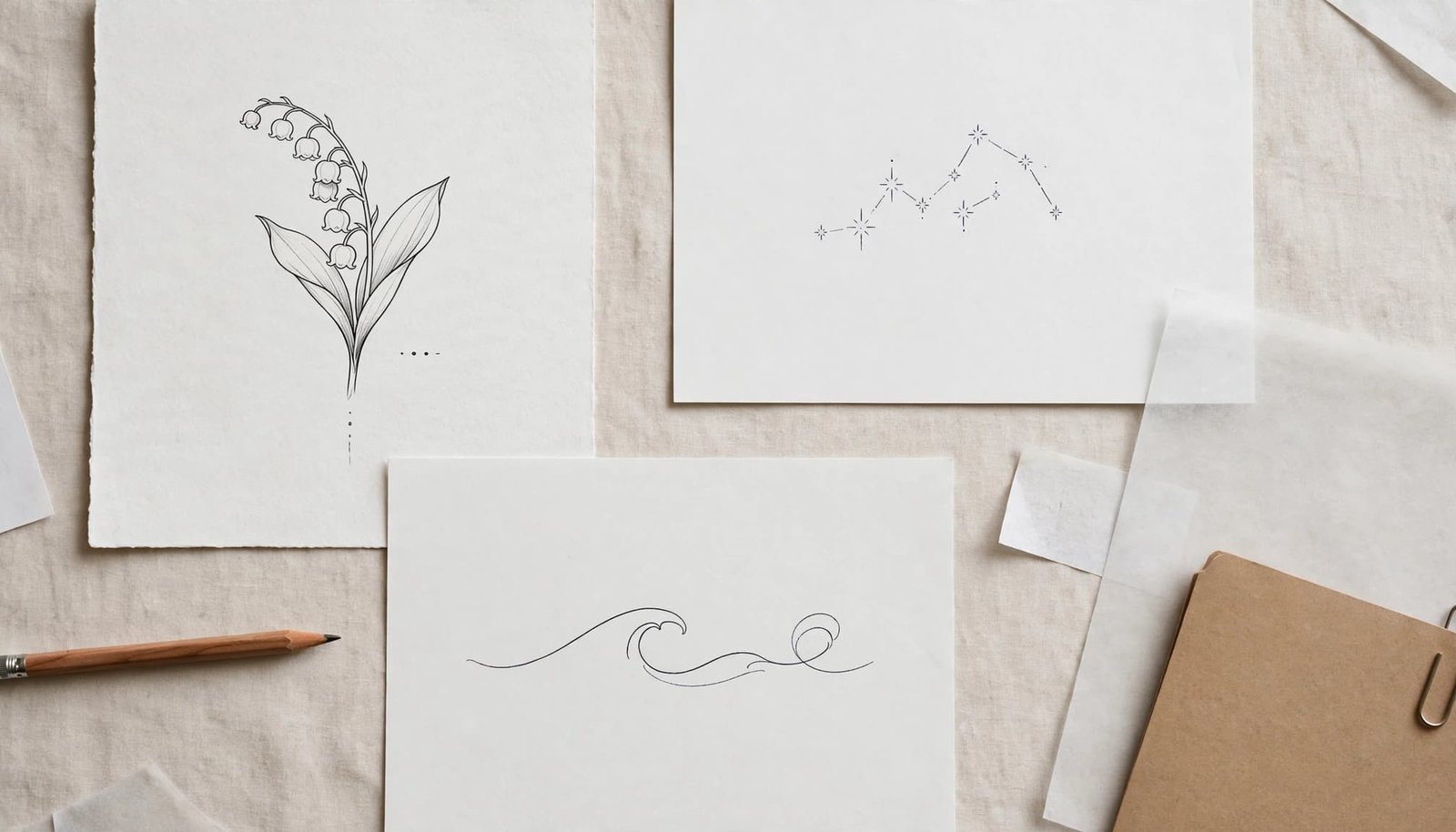
Request a custom sketch before your appointment, especially if you want handwriting, dates, or several symbols combined. Review the design from different angles, including the angle you will see when looking down at your own arm or leg. Check every letter, number, and symbol before approving the stencil.
What to Check in a Fine Line Tattoo Artist’s Portfolio
Choose an artist who regularly works in fine line or single-needle styles. A strong portfolio should show more than fresh tattoos photographed under bright studio lighting. Look for healed examples, because healed skin reveals how well the artist manages spacing, detail, and line stability.
Pay attention to crisp gaps between lines, smooth curves, even line weight, and clean small details. Also compare tattoos placed on body areas similar to yours. A design that looks excellent on a flat forearm may need adjustments for a curved rib, narrow wrist, or frequently bent ankle.
Before booking, ask practical questions about:
- The minimum price and what the deposit covers.
- Whether the deposit is refundable if you change the design.
- How many revisions the artist allows before the appointment.
- Whether touch-ups are included and how soon you must request one.
- What healing process and aftercare products the artist recommends.
- How the design will change for your skin tone, body shape, and placement.
Studio policies vary, so read them before paying a deposit. The American Academy of Dermatology also advises reviewing tattoo safety and skin reactions before getting tattooed. Choose placement with visibility, work, family, sun exposure, and future expansion in mind. Low-friction areas are often easier to heal and protect, while hands, feet, elbows, and other high-use areas may need more maintenance.
The Best Placements for Delicate Fine Line Tattoos
Placement affects how visible, comfortable, and easy to protect your fine line tattoo will be. Consider how your skin moves, where clothing rubs, and how much sunlight or washing the area receives. A design that looks perfect in a still photo should also feel right when you bend your wrist, lift your arm, or walk through daily life.
Low-Friction Spots That Can Help Lines Stay Clear
The inner forearm is popular because it offers a relatively smooth surface, easy visibility, and less friction than the palm or fingers. You can admire a small flower, word, or symbol without twisting your body, while clothing usually causes less rubbing than it would around the ankle or waist.
The upper arm also gives fine line tattoos a good balance of visibility and protection. You can show the design in short sleeves or cover it with clothing when needed. Its broader surface gives an artist more room to space delicate details, which can help a botanical sprig, moon, or small animal remain readable.
A shoulder blade placement feels more private and artistic. The area has enough space for a slightly larger design, and it avoids much of the constant washing and gripping that affect hand tattoos. However, backpacks, tight clothing, and sleeping positions can still create friction during healing.
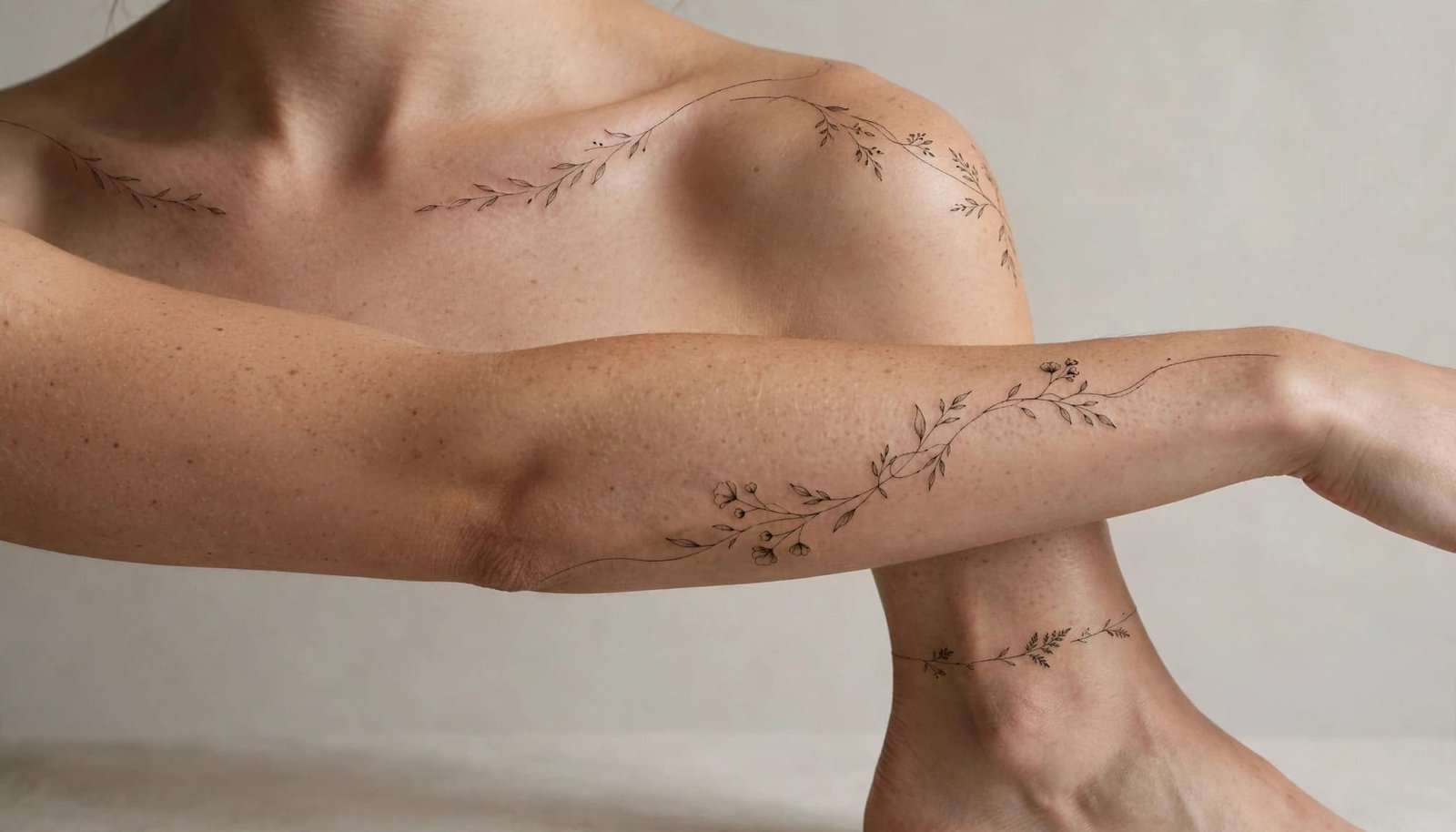
Some collarbone placements offer an elegant middle ground. A fine line flower, constellation, or short phrase can remain visible without being as exposed as a wrist tattoo. Because the collarbone has limited padding and a prominent bone, though, the experience may feel more sensitive for some people.
Ribs, ankles, and behind-the-ear placements can look beautiful, but they bring different concerns. Ribs may stretch with breathing and body movement, ankles encounter socks and shoes, and behind-the-ear tattoos can face hair products, sweat, and regular washing. Pain also varies by person, so your artist’s placement advice matters.
Once the tattoo has fully healed, protect exposed areas with a broad-spectrum, water-resistant sunscreen rated SPF 30 or higher. The American Academy of Dermatology’s tattoo care guidance recommends applying sunscreen before sun exposure and reapplying it regularly. Keep fresh tattoos out of direct sun until the skin heals.
Popular Spots That May Need More Maintenance
Fingers, hands, and feet offer a stylish, intimate look, especially for tiny symbols, initials, and matching tattoos. Still, these areas experience constant movement, washing, gripping, sweat, socks, shoes, and surface friction. As a result, fine lines may soften or fade sooner than they might on a more protected part of the upper arm.
Wrist tattoos can also face frequent movement and sun exposure, although they usually offer more stability than fingers. Feet may receive extra wear from walking and footwear, while finger tattoos often lose crispness along the sides and near joints. A touch-up may become part of maintaining the original appearance.
No placement guarantees a specific tattoo lifespan. Ink, skin, healing, sun exposure, body movement, and daily habits all affect how a fine line tattoo changes.
Before choosing, compare four practical questions:
- Will the design receive regular sunlight?
- Will clothing, jewelry, shoes, or equipment rub against it?
- Can you protect the area during healing?
- Are you comfortable requesting a touch-up later?
Your final decision should balance the look you want, your artist’s advice, your skin and lifestyle, and the maintenance you can realistically provide. A delicate tattoo feels most personal when its placement fits both your body and your everyday routine.
Fine Line Tattoo Healing, Aftercare, and Long-Term Care
Fine line tattoos need gentle care while the skin repairs itself. Although the design may look small, the tattoo still creates an open skin wound that needs protection from bacteria, friction, moisture, and sunlight. Follow your artist’s wrap instructions first, since bandage types and removal times can differ.
Mild redness, tenderness, light swelling, peeling, itching, and tightness can happen during normal healing. The first few days often feel the most sensitive. Peeling commonly begins within the first one to two weeks, while the surface may look healed after roughly two to four weeks. Deeper skin remodeling can continue for several months, so the tattoo may change in texture and appearance during that time.
How to Protect Fine Lines From Early Fading
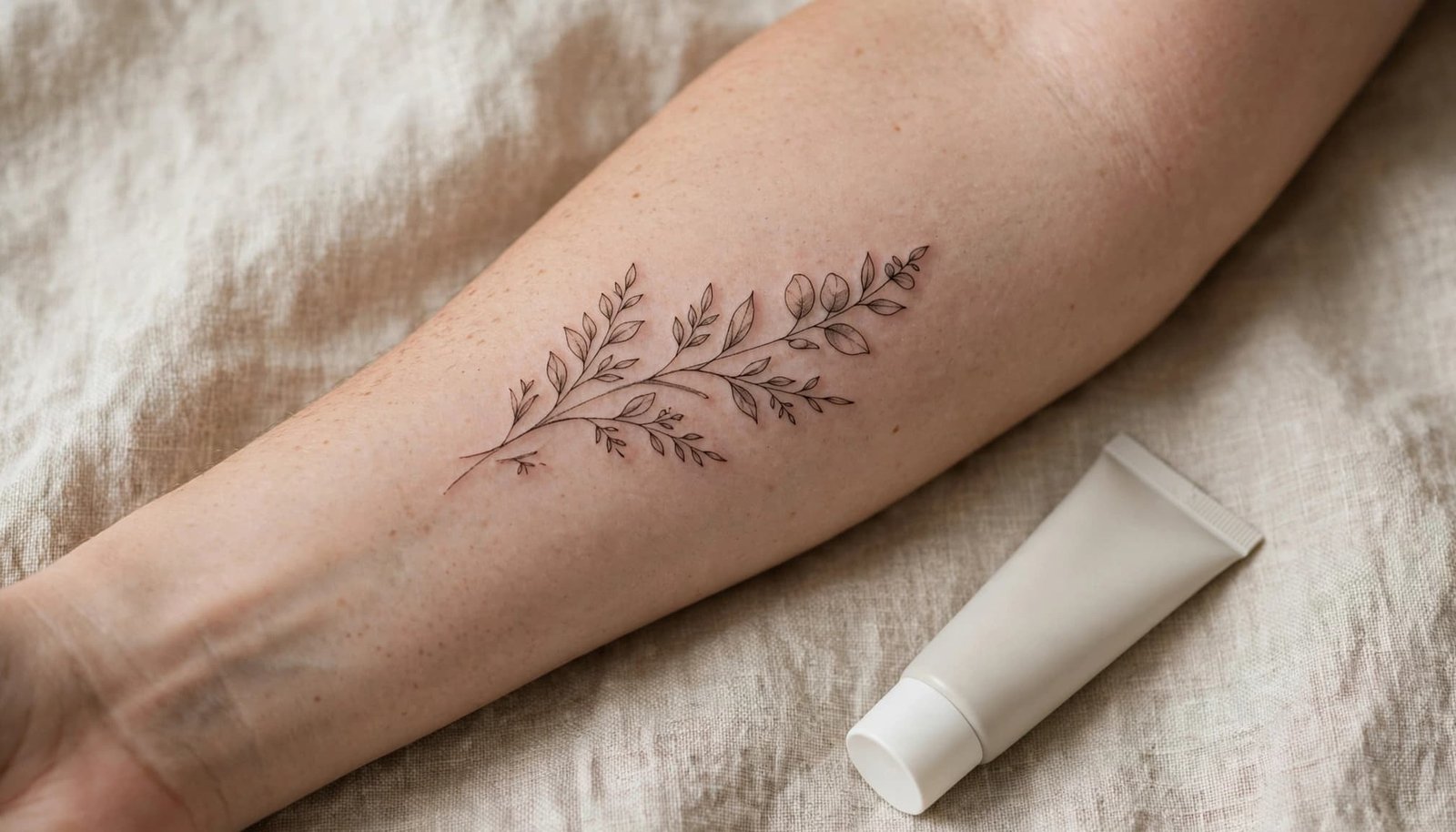
After removing the wrap as directed, wash your hands before touching the tattoo. Clean the area gently with lukewarm water and mild, fragrance-free soap, then pat it dry with a clean paper towel or soft towel. Avoid rubbing, scrubbing, or covering the area with a thick layer of product. A thin layer of the moisturizer recommended by your artist is usually enough.
During healing, keep the tattoo away from swimming pools, oceans, lakes, baths, hot tubs, and spas. Showering is generally fine, but soaking can soften the skin and raise the chance of irritation or infection. Loose, clean clothing can also reduce friction from waistbands, straps, socks, and tight sleeves.
Never scratch, pick, or peel flakes from a healing tattoo. Let the skin shed naturally, even if the peeling feels annoying. Pulling at flakes can remove pigment unevenly and leave a fine line looking patchy before it has had time to settle.
A fresh tattoo can look lighter after peeling because the outer skin is shedding and new skin is forming. That change isn’t always a sign that the artist made a mistake.
Keep direct sunlight away from the tattoo while the surface remains open or peeling. Once the skin has fully closed and healed, apply a broad-spectrum, water-resistant sunscreen with SPF 30 or higher. The American Academy of Dermatology’s sunscreen guidance recommends applying sunscreen before sun exposure and reapplying it at least every two hours when you’re outdoors.
Fine lines can soften over time, especially on fingers, hands, feet, ankles, and other high-friction areas. Placement, skin type, sun exposure, body movement, ink, and aftercare all affect how the tattoo ages. Take a clear photograph once the tattoo has healed, then compare it with the original design. If you notice clear patchiness after the artist’s recommended healing period, contact the studio to ask whether a touch-up is appropriate.
Choose a licensed, hygienic studio before you ever begin the healing process. The artist should use single-use needles, fresh gloves, clean equipment, and proper sterilization procedures. Seek medical care if redness spreads or worsens, pain becomes severe, swelling increases, pus or foul-smelling drainage appears, a rash spreads, or you develop fever or red streaks near the tattoo. These symptoms need professional assessment rather than extra moisturizer or home treatment. The AAD’s guide to tattoo skin reactions can also help you recognize changes that deserve attention.
Conclusion
The prettiest fine line tattoo is the one that fits both your style and your story. Save a few favorite ideas, personalize the symbolism, and choose a placement with realistic expectations for healing, sun exposure, and natural softening over time.
Before booking, look for an artist who shows healed fine line work and can adapt the design to your skin and lifestyle. A small, thoughtful tattoo can hold a powerful memory for years, even as its delicate lines naturally soften with time.
Save pin for later


- 30 Trendy Tattoo Ideas for 2026: Styles and Placement - September 27, 2026
- 30 Gorgeous Fine Line Tattoo Ideas to Try - September 27, 2026
- 25 Fine Line Tattoo Ideas for Women With Meaning - September 22, 2026
Leave a Reply