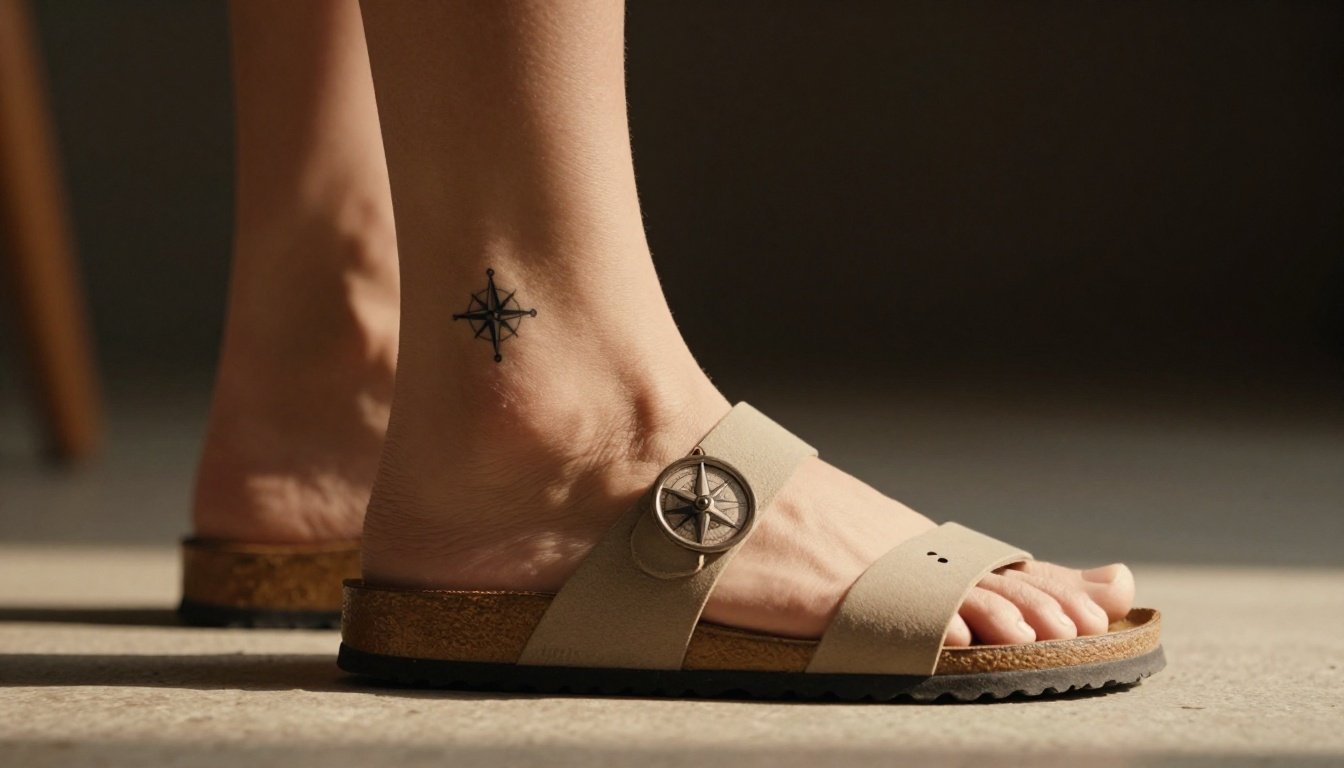
Ankle Tattoo Ideas: Meaningful Designs for Every Placement
A small ankle tattoo can carry a whole story in a few delicate lines. Tucked beneath a sandal strap or peeking above a sneaker, it feels personal without taking over your body, giving you a meaningful detail to notice every time you move.
Ankle tattoos suit anyone who wants a design that’s visible in sandals but easy to cover with shoes, socks, or clothing. Still, the placement deserves thoughtful planning because the ankle has little padding, sees frequent movement, and can rub against footwear while it heals. Your choice of symbol, size, style, and placement will shape both the look and the experience.
These ankle tattoo ideas bring together creative designs, personal symbolism, placement options, realistic pain and healing facts, cost factors, and practical ways to work with a tattoo artist. Start by exploring designs that can fit the ankle’s small, curved canvas while still telling your story.
Ankle Tattoo Ideas for Every Style and Meaning
Ankle tattoos give small designs a personal stage. The same idea can feel soft, bold, playful, or serious depending on its size, line weight, color, and position around the ankle. Before choosing a design, consider how it will look against the ankle’s curve and how much detail the skin can hold over time.
Small symbols that carry a personal message
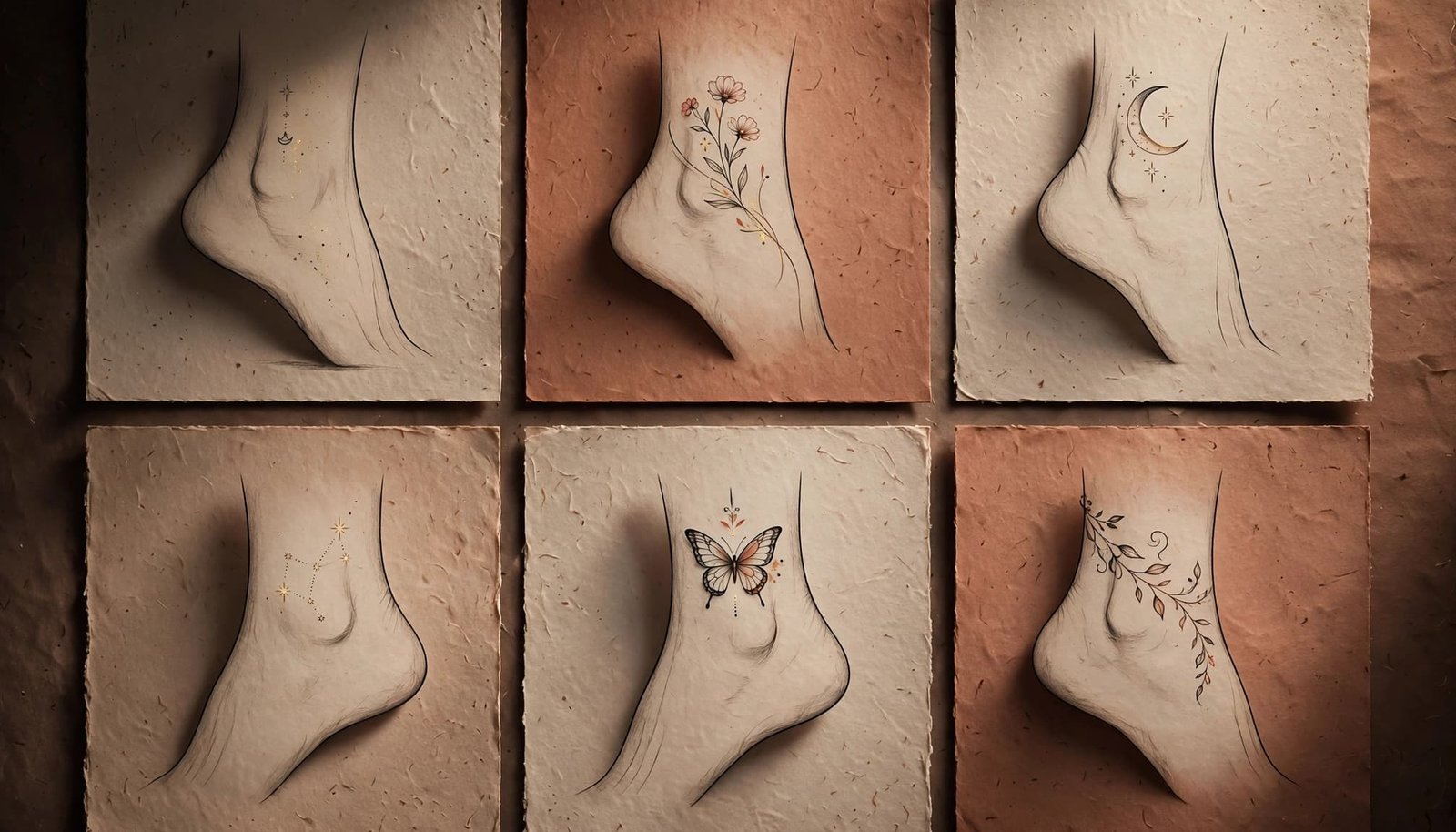
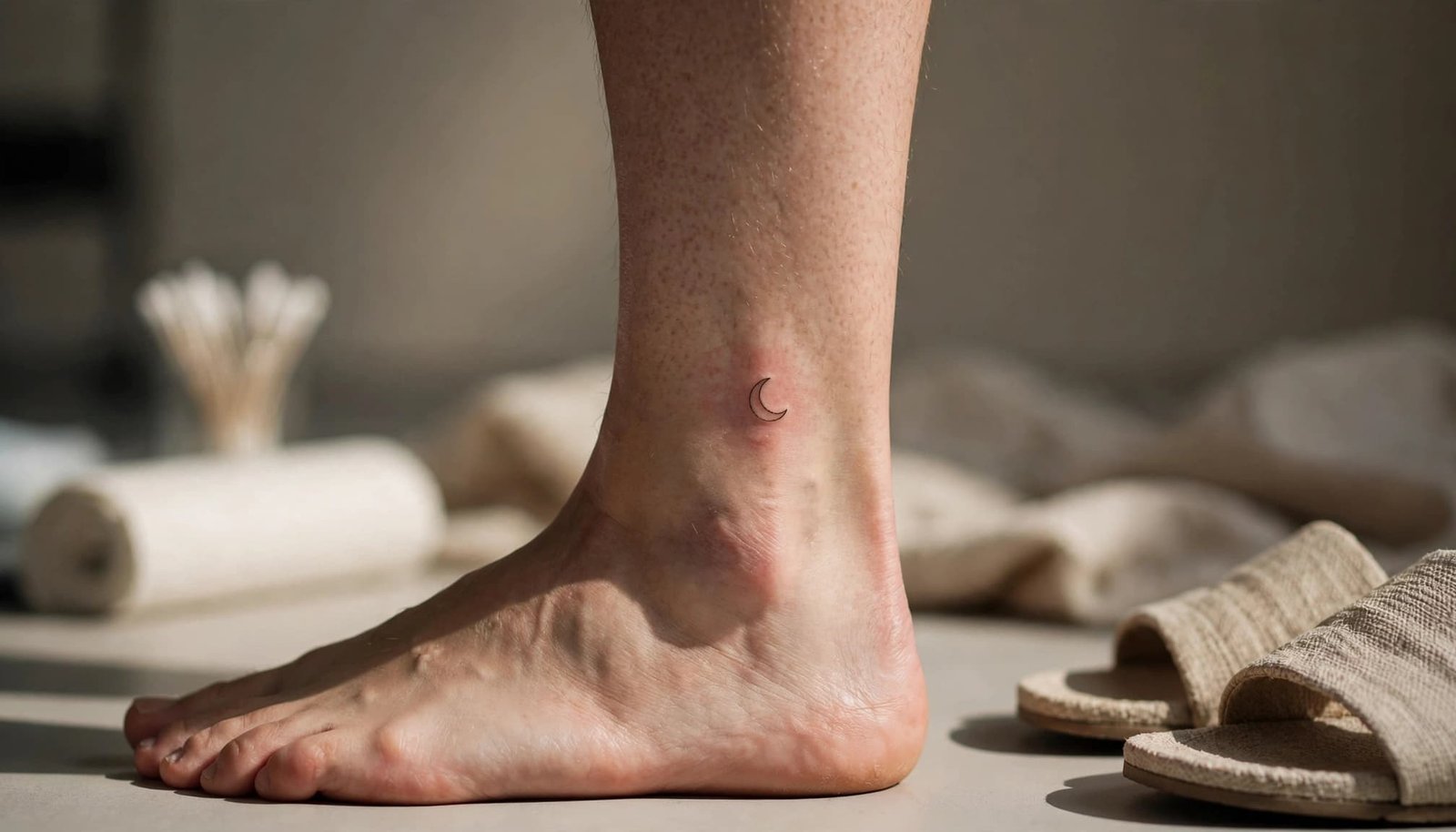
Simple symbols work well when you want meaning without a large tattoo. A star can suggest hope or direction, while a moon may reflect change, intuition, or a love of the night. Hearts often express affection, arrows can point toward a goal, and anchors can suggest steadiness during difficult seasons.
Initials, tiny crosses, zodiac symbols, and meaningful dates create an even more personal design. A date might honor a birth, anniversary, recovery, or fresh beginning. Still, symbolism doesn’t come with one fixed definition. Your reason for choosing the image matters more than a dictionary meaning.
Micro tattoos look delicate, but extremely fine lines and crowded details can blur as the tattoo ages. Ask your artist to leave enough spacing between elements and choose a line weight that suits the size. A small black star may stay crisp on the outer ankle, while a slightly larger colored moon can create a softer mood above the foot.
Flowers, leaves, and fine-line botanical designs
Botanical ankle tattoos can hold memories without looking overly formal. A birth flower connects the design to a month or loved one, while a wildflower may suggest independence, childhood, or a favorite place. Roses often relate to love and remembrance, lavender can suggest peace, and an olive branch may speak to calm or reconciliation.
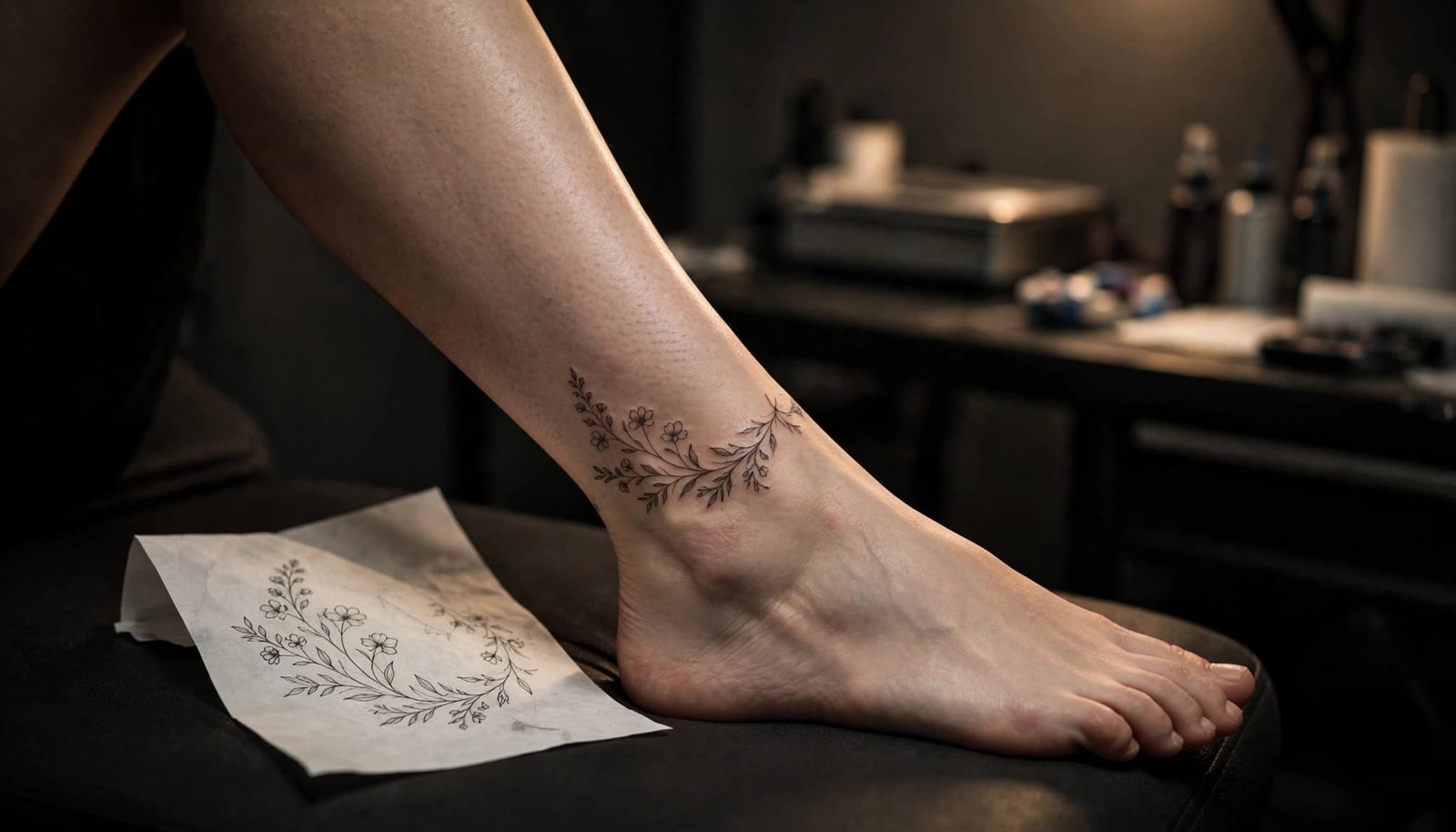
A single stem looks clean on the outer ankle, especially when its shape follows the leg rather than crossing the joint. Vines can curve toward the foot and create gentle movement, while a small leafy sprig fits neatly below or behind the ankle bone. Fine-line work gives these designs an airy appearance, but the artist still needs room for each leaf and petal.
Color changes the feeling as much as the flower itself. Black ink feels classic and graphic, muted green gives a natural quality, and a small touch of red can make a rose feel more romantic. If your tattoo includes fine detail, plan for careful healing and sun protection. The American Academy of Dermatology’s tattoo care guidance recommends gentle washing, moisturizer, and avoiding sun exposure while the skin heals.
Celestial, animal, and nature-inspired ankle tattoos
Constellations, suns, waves, and mountains suit people who feel connected to travel, open spaces, or a favorite landscape. A butterfly can express transformation, while a bird may suggest freedom or a desire to keep moving. Cats, bees, woodland plants, and small ocean motifs can also point to home, curiosity, or a beloved animal.
Complex scenes need simplification on the ankle. An artist might reduce a mountain range to two clean peaks or use a few lines to suggest a wave. That restraint helps the design remain readable instead of turning into a dark patch.
Words, matching tattoos, and personal story designs
Short words, coordinates, song lyrics, handwritten notes, and anniversary dates can turn the ankle into a private reminder. Check spelling, translation, punctuation, and handwriting before your appointment. Bring the original note or a clear reference if the lettering carries personal meaning.
Matching ankle tattoos don’t need to be identical. Couples, siblings, and friends might choose two halves of one image, such as a sun and moon or a lock and key. When placed together, paired symbols can form a complete picture while still giving each person an individual tattoo.
How to Choose the Best Ankle Placement for Your Design
Ankle placement affects far more than visibility. The curve of the skin, nearby bone, daily movement, footwear, and design shape all influence how your tattoo looks and heals. For many people, the outer ankle is the easiest starting point because it offers a relatively flat, readable surface. Other placements create a more private or dramatic effect, but they may require extra planning.
Outer ankle placement for visibility and clean detail
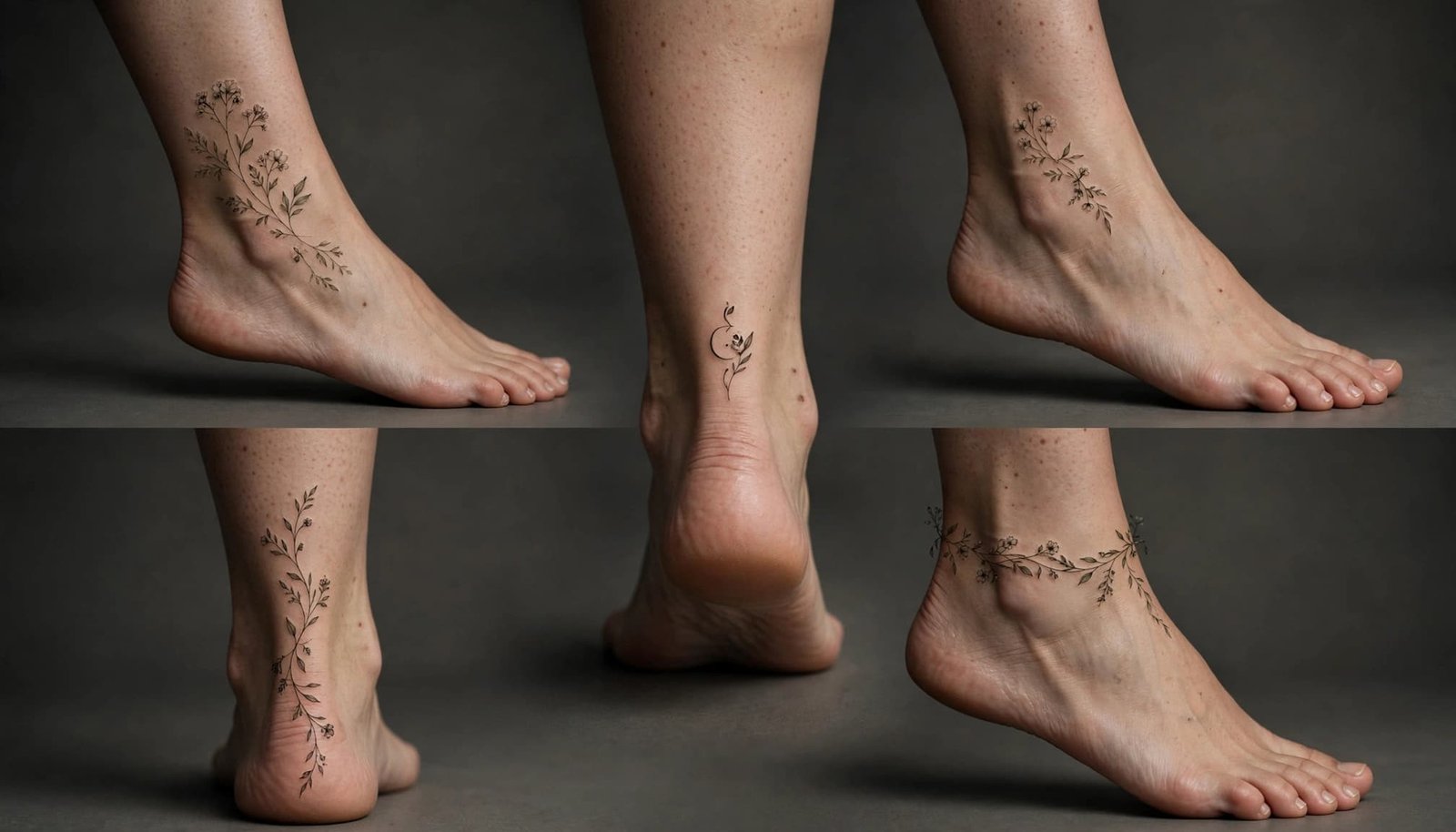
The outer ankle is a popular choice for small to medium designs because the surface is flatter than the areas directly over the joint. Flowers, symbols, names, stars, and simple portraits can sit there without bending sharply around the leg. As a result, the design often looks balanced from a distance and remains easy for you to see.
A flower stem can follow the line of the lower leg, while a small symbol can sit neatly beside the ankle bone. Simple portraits also benefit from this placement because the flatter skin gives the artist more control over proportions and spacing.
Visibility depends on your shoes and clothing. Low shoes, sandals, and cropped pants may leave the tattoo on display, while socks, boots, and full-length pants can usually cover it. That flexibility makes the outer ankle a practical choice if you want a tattoo that can move between personal and visible settings.
Inner ankle placement for a more private tattoo
The inner ankle feels more discreet, making it a fitting home for personal words, initials, memorial symbols, and quiet designs. You may catch glimpses of it when sitting or changing clothes, but most people won’t see it unless you choose to show them.
However, the inner ankle has thinner skin and sits close to bone. That can make the tattoo feel more sensitive during the appointment, especially when the needle passes near the ankle joint. Before booking, consider whether socks, boots, or shoe edges will rub across the area. During healing, friction can cause irritation, so loose footwear and careful aftercare matter. Guidance for foot tattoos also recommends limiting tight shoes and repeated rubbing while the skin recovers. Learn more about foot tattoo aftercare.
Ankle bone, Achilles, and wrap-around designs
A tattoo directly over the ankle bone can look sharp and eye-catching, but it may feel more uncomfortable because the area has little padding. The Achilles area creates a different challenge. Walking constantly stretches the skin behind the ankle, and shoe backs can press against it.
Bracelet-style bands, ornamental borders, vines, and flowing designs can follow the joint beautifully. Still, wrap-around tattoos need careful alignment so the pattern meets cleanly on every side. Movement, swelling, and friction can also make healing harder. Your artist may recommend more than one session, particularly if the design includes dense shading or detailed ornamental work. Consider the foot transition, too, since a design that extends downward must follow both the ankle’s curve and the changing shape of the foot.
How to Make Your Ankle Tattoo Idea Look Good for Years
A design that looks beautiful on a phone screen may need changes before it reaches your ankle. Digital images often hide scale, skin texture, movement, and the way ink softens as it heals. Choose the concept first, then adjust its size, spacing, color, and line weight for your body and daily routine.
Match the design size to the ankle’s shape
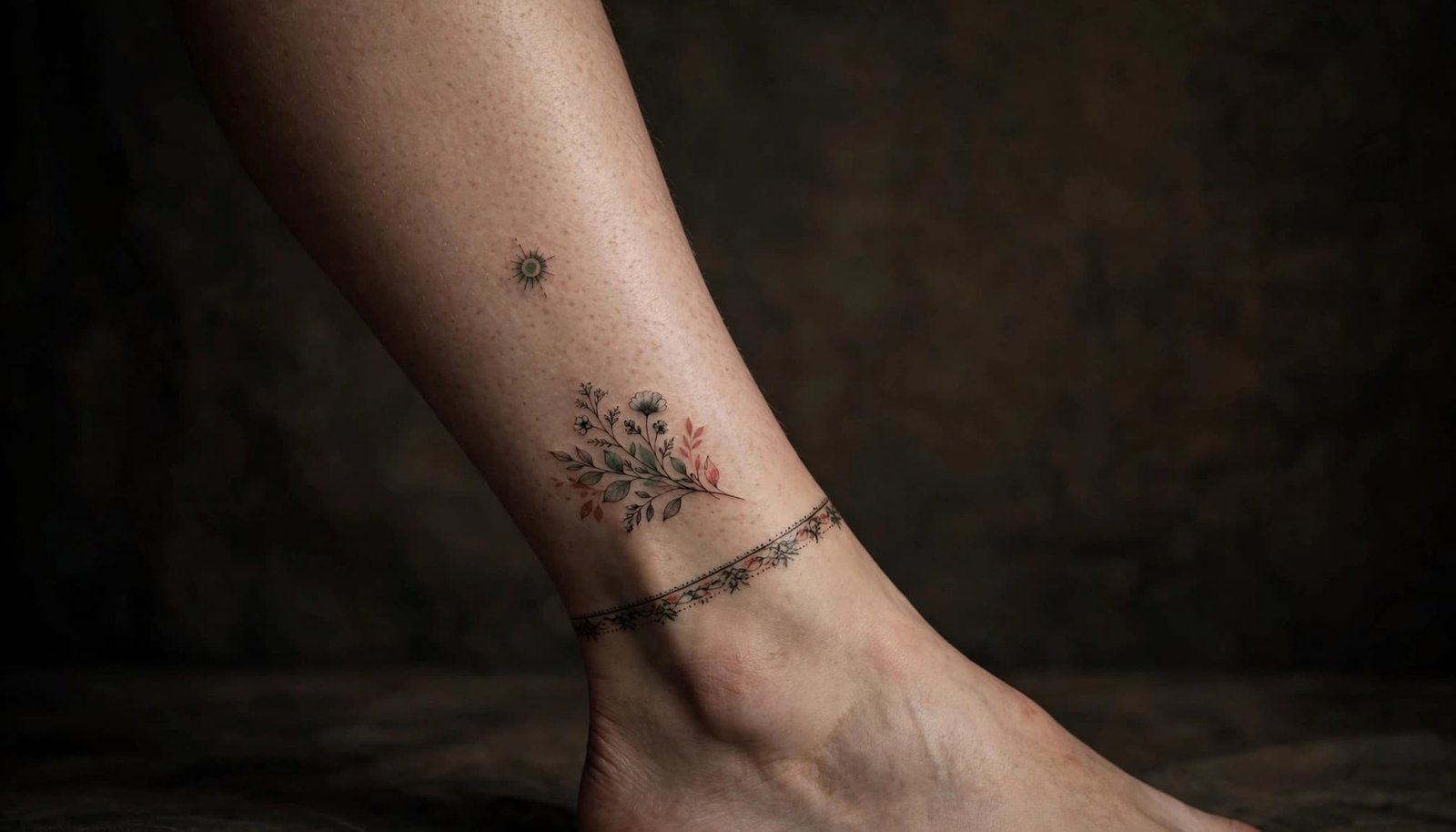
Tiny symbols need breathing room. A small star, initial, or heart can look clean when the lines have space around them, but crowded details may merge as the ink softens. Detailed portraits, mandalas, and floral compositions usually need more room because their features depend on clear spacing and proportion.
Before you commit, test the design on your ankle with a temporary tattoo, paper stencil, or your artist’s placement drawing. Walk around, sit down, wear your usual shoes, and view it from different angles. Does the shape follow the ankle’s curve, or does it look compressed against the bone?
Letters and numbers need special care. Packaged lettering can lose clarity when narrow strokes sit too close together, especially in a small date or phrase. Ask your artist to widen the spacing or simplify the font rather than forcing every detail into a tiny area.
Choose a tattoo style that fits your daily life
Each style creates a different balance between softness and long-term readability:
- Fine-line and minimalist tattoos feel delicate, but they depend on spacing and careful aftercare.
- Blackwork and traditional designs use stronger contrast and bold outlines, which can help the image stay readable.
- Watercolor tattoos offer soft color transitions, although lighter pigments may fade faster with repeated sun exposure.
- Ornamental tattoos suit wrap-around placements, but their repeating details need enough room to align.
- Realistic tattoos require more space than a small ankle often allows, particularly for faces, animals, and shaded scenes.
Your skin tone also affects contrast. Black ink may appear especially crisp on some skin tones, while a tattoo artist may adjust saturation, outline weight, or color choices for better visibility on yours. Ask to see healed work from the artist, not only fresh tattoo photographs. Healed images reveal softened lines and true color retention. Protecting healed ink from sunlight also helps preserve its appearance, while fresh tattoos need careful protection during healing. The Mayo Clinic’s tattoo safety guidance covers basic precautions and healing concerns.
Keep the meaning personal and culturally respectful
The strongest ankle tattoo ideas usually connect to a real memory, value, person, place, or turning point. A small shell might recall a childhood beach, while a flower could honor someone who helped you through a difficult year. That private connection gives the design staying power after a trend has passed.
Research symbols, scripts, and religious imagery before using them. If you want words in another language, check the spelling and meaning with a trusted fluent speaker. Also learn whether a symbol belongs to a culture, faith, or community you do not belong to, then avoid designs that treat sacred or identity-based imagery as decoration. A personal tattoo should carry meaning without borrowing someone else’s heritage carelessly.
Pain, Healing, and Ankle Tattoo Aftercare
Ankle tattoos can look delicate, but the placement needs thoughtful aftercare. The skin is thin, the bones sit close to the surface, and the joint bends with almost every step. Pain varies by person, design, and exact location, while healing depends on how well you protect the tattoo from friction, moisture, and sunlight.
What the tattoo session may feel like
For many small ankle tattoo ideas, the appointment is short and focused. You may feel vibration, warmth, tenderness, or a sharper sensation when the needle passes close to the ankle bone. The outer ankle often feels more manageable than the inner ankle or Achilles area, where the skin can feel more sensitive and less padded.
Larger designs, wrap-around bands, heavy shading, and detailed botanical pieces may take longer or require more than one session. Your experience also depends on your pain tolerance, the artist’s technique, and how long you remain in one position.
Before your appointment, eat a proper meal and drink water. Wear loose pants or clothing that leaves the ankle easy to reach. During the session, tell your artist if the pain becomes difficult to manage. A short pause, position change, or conversation about comfort can make the appointment easier.
How to protect the tattoo while it heals
Follow your artist’s written aftercare instructions first, especially if they use a specific bandage or healing product. In general, clean the area gently with mild, fragrance-free soap, then pat it dry with a clean towel. Avoid rubbing, scrubbing, or leaving the skin damp.
Apply only a thin layer of the lotion or product your artist recommends. Too much product can keep the area overly moist and make it harder for the skin to settle. For additional dermatology guidance, Cleveland Clinic’s tattoo aftercare advice covers moisturization, sun protection, and common healing concerns.
Don’t scratch peeling skin or pick at small flakes and scabs. Also avoid soaking the tattoo in baths, pools, hot tubs, or the ocean until your artist confirms that swimming is safe. Saunas, direct sun, tight socks, and shoes that rub the design can cause irritation during this stage.
Surface healing often takes roughly two to four weeks, although deeper settling and color changes can continue for several months. If swelling occurs, elevate your foot when resting. Contact a qualified medical professional if you notice worsening redness, increasing pain, unusual discharge, fever, or other symptoms that concern you.
Plan around shoes, exercise, and daily movement
Ankles bend, swell, and press against socks and footwear throughout the day. As a result, healing can feel more annoying than it would on a less active area of the body. Shoe backs may scrape the Achilles area, while tight socks can trap heat against the tattoo.
Schedule your appointment when you can avoid long walks, running, intense workouts, pools, and beaches. Restrictive boots deserve extra caution because their edges may sit directly over fresh ink. Loose sandals or roomy footwear can reduce contact when conditions allow, but don’t expose a new tattoo to unnecessary sun.
Aftercare timelines vary by design, placement, and your skin’s response. Ask your artist when you can return to normal workouts, swimming, boots, and other daily activities. Planning a quieter few days gives the tattoo room to heal without turning every step into a source of friction.
Ankle Tattoo Cost, Artist Selection, and Appointment Planning
A thoughtful ankle tattoo starts before you sit in the chair. Your artist, design size, placement, budget, and healing schedule all affect the final result, so give each decision enough attention.
Find an artist who understands ankle placement
Start by reviewing healed portfolio photos, especially ankle tattoos in the style you want. Fresh ink often looks darker and sharper than it will after the skin settles. Look for healed fine-line florals, lettering, portraits, or ornamental work if those details matter to your design.
The studio should look clean, organized, and professional. Check whether the artist follows your state’s licensing and health department rules, uses sealed needles, and explains hygiene practices without hesitation. The FDA also advises consumers to ask about tattoo ink and contact a health professional if they have concerns after tattooing. You can read its tattoo safety guidance before your consultation.
Pay attention to communication, too. A good artist should listen to your idea, explain what will work on the ankle, and suggest changes without dismissing your preferences. They should also be willing to adjust the scale, line weight, and exact placement. A design that looks perfect on a screen may need more breathing room on curved skin.
A low price can become expensive when poor spacing, blurred lines, or uneven placement requires correction or cover-up work.
Shop minimums are common, so don’t choose a studio only because it advertises the lowest rate. This matters most for lettering, fine-line tattoos, portraits, and custom designs, where precision and drawing time affect the cost.
Prepare the design before booking
Bring reference images, but ask your artist for an original design rather than copying another person’s tattoo. Save examples that show the mood, line quality, composition, or color you prefer. Your artist can then create a piece that fits your ankle and still feels like yours.
Before booking, decide whether you want the tattoo on the inner or outer ankle, how visible it should be, and whether it should sit above the bone, behind the Achilles, or wrap around the joint. Confirm the approximate size, color palette, and exact wording for names, dates, or short phrases. Check every letter and number before the stencil is applied.
Ask the studio about:
- The shop minimum, deposit amount, and whether the deposit transfers after rescheduling.
- Touch-up policies, including deadlines and whether ankle friction affects eligibility.
- Cancellation rules, late arrivals, and design-change fees.
- Expected healing time and when you can wear boots, exercise, or swim.
- Recommended aftercare products and whether your skin may react to adhesive film.
For US readers, broad price estimates often look like $50 to $100 for a tiny symbol, $100 to $200 for a simple fine-line design, and $200 to $450 for a detailed floral or ornamental piece. Large custom work, portraits, and wrap-around designs can cost more, especially when the artist charges for drawing time or has a high-demand schedule. Prices vary by location, experience, detail, color, and shop minimum, so request a clear written quote before confirming your appointment.
Conclusion
The best ankle tattoo ideas balance personal meaning with practical placement. A design that fits your story, body, comfort level, and daily life will feel more lasting than one chosen only because it is detailed or fashionable.
Compare inner, outer, and wrap-around placements, give the artwork enough room to stay clear, and choose an artist with strong, healed work. After your appointment, protect the tattoo from friction and give it enough time to heal properly.
Save the ankle tattoo ideas that catch your eye, then refine them into a personal design before booking. Your finished tattoo should feel like a small part of your story that belongs exactly where it is.
Save the pin for later


- 30 Trendy Tattoo Ideas for 2026: Styles and Placement - September 27, 2026
- 30 Gorgeous Fine Line Tattoo Ideas to Try - September 27, 2026
- 25 Fine Line Tattoo Ideas for Women With Meaning - September 22, 2026
Leave a Reply