Floral Vine Heart Name Tattoo Ideas for Personal Meaning
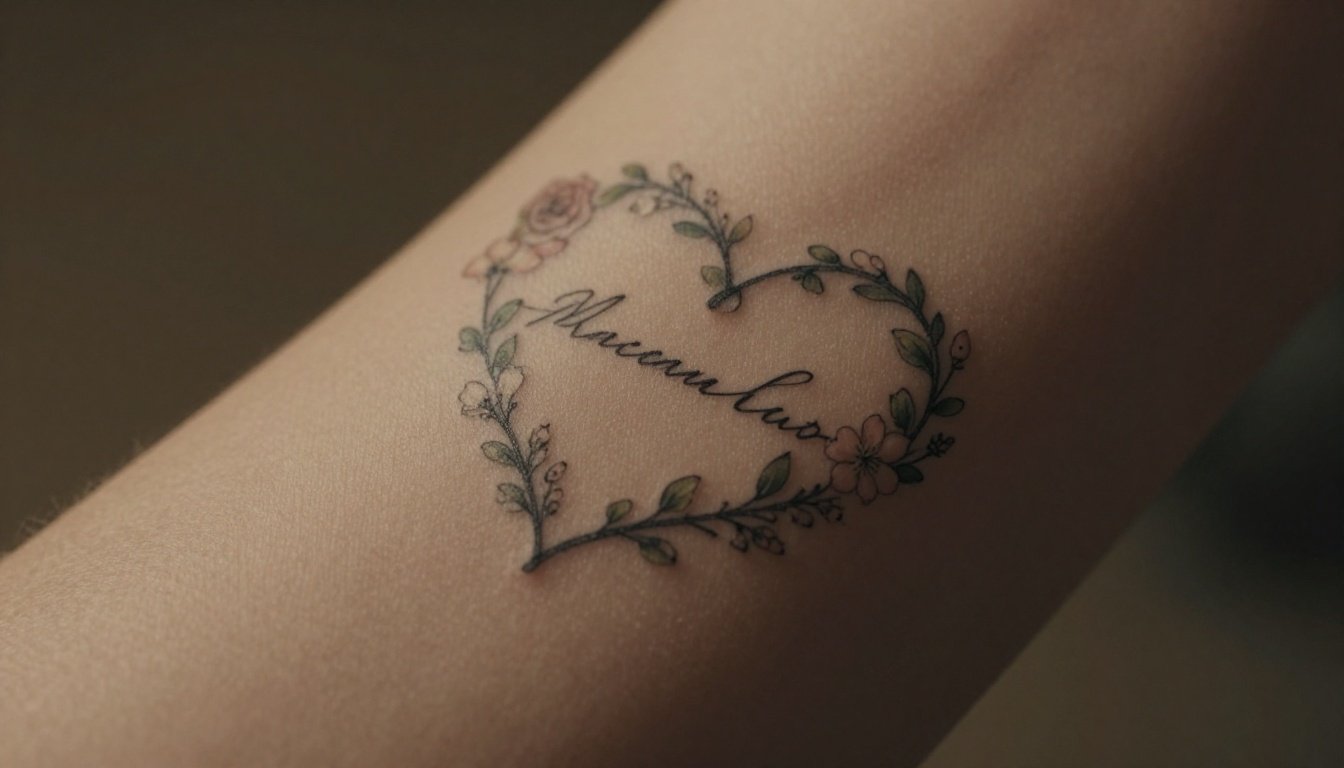
A floral vine curves into a heart, wrapping around a name that carries a story only you can tell. With soft petals, winding stems, and personal lettering, a floral vine heart name tattoo can feel romantic, personal, and timeless without being limited to romantic love.
Your flower choice can honor family, friendship, healing, or someone you remember, while the font, placement, and size shape the tattoo’s overall mood. Before choosing a design, consider symbolism, flower styles, lettering, placement, cost, and proper aftercare so the fine details stay beautiful as your tattoo heals. Next, explore meaningful ways to personalize this heart-shaped design.
Key Takeaways
- A floral vine heart name tattoo can honor a partner, family member, friend, child, or someone you remember.
- Flower symbolism, lettering style, line weight, and placement shape the design’s personal meaning.
- Choose an artist with strong fine-line and lettering work, especially when the name uses small script.
- Review the spelling, font, size, and stencil placement before the tattoo begins.
- Follow professional tattoo aftercare guidance to protect delicate lines while your skin heals.
What a Floral Vine Heart Name Tattoo Can Represent
A floral vine heart name tattoo brings four elements into one personal design. The heart expresses love and emotional connection, while the vine suggests growth, continuity, endurance, and a bond that keeps reaching forward. Flowers add mood and memory, and the name places one person at the emotional center.
That person might be a partner, child, parent, close friend, or someone you carry in memory. The meaning can be romantic, familial, or a reminder of a relationship that shaped your life. Since symbolism is personal, use traditional flower meanings as inspiration rather than strict rules.
Heart Shapes That Keep the Name at the Center
The clearest layout places one name inside a heart formed by winding vines. The open center gives the lettering room to breathe, while the stems create a natural frame without competing for attention. Another option uses the vine only for the heart outline, with small flowers resting near the curves or at the point below.
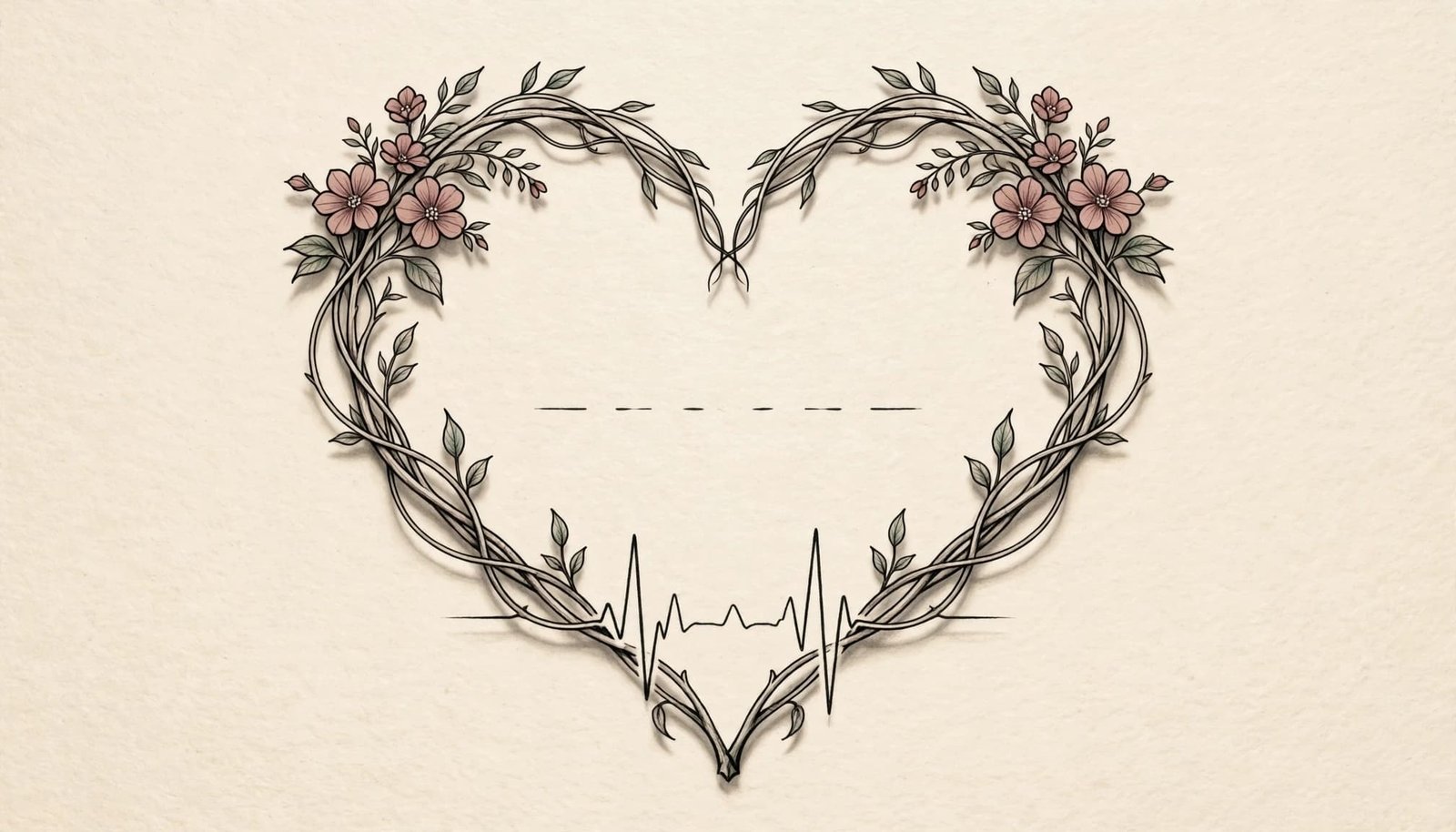
A heartbeat line can weave through the lower vine or connect subtly to one side of the heart. This detail can suggest a loved one who remains part of your everyday life. However, the vine should support the lettering instead of hiding it. Crowded stems, overlapping petals, and heavy shading can make a small name difficult to read as the tattoo ages.
One name creates a clean focal point, especially when paired with a simple script or elegant serif font. Initials need less space, so they can sit inside a smaller heart or share the design with extra leaves. Dates and multiple names require more room, wider spacing, or a larger placement. Before choosing a final size, ask your tattoo artist to show the stencil on your skin and check every letter from a normal viewing distance.
Choosing Flowers for Love, Memory, or Strength
Flower choice can guide the tattoo’s emotional tone:
- Roses can express love, beauty, courage, and resilience. Their color can add another layer, such as affection, friendship, or remembrance. See this flower tattoo symbolism guide for additional ideas.
- Wildflowers suit someone who values freedom, individuality, and an unplanned path. A mix of small blooms can also reflect a relationship that feels natural and one of a kind.
- Lilies can suggest tenderness, care, or remembrance, making them fitting for a parent, child, or loved one who has passed away.
- Daisies bring associations with innocence, joy, fresh starts, and playful memories.
- Lavender is a natural choice for calm, healing, peace, and steady comfort after a difficult season.
The strongest choice often comes from a real detail. Choose the flower from a shared garden, a favorite season, a meaningful place, or a story only the two of you know. A bloom may look beautiful, but a personal connection gives the floral vine heart name tattoo its lasting meaning.
Floral Vine Heart Name Tattoo Ideas That Feel Personal
A floral vine heart name tattoo becomes personal through small design choices. The lettering, line weight, flower details, and added symbols should support the name rather than compete with it. Bring an artist personal references, such as a handwritten note, favorite flower, or meaningful photograph, instead of copying another tattoo exactly.
Fine-Line Script, Handwriting, and Bolder Lettering
Fine-line script pairs naturally with an airy vine. Its soft curves can echo the heart shape and give the design a romantic, delicate mood. However, script becomes difficult to read when the name is squeezed into a very small space.
Handwritten lettering feels more intimate, especially when the artist works from an actual note or signature. Small serif fonts add a classic quality, while simple print lettering offers the clearest result for short names or initials. Test the exact name in several fonts at the intended tattoo size before choosing.
Spacing affects the balance as much as the font. Capital letters may need extra room, long names can stretch across the heart, and accents or unusual letterforms may require careful adjustment. A bolder style often ages more clearly because stronger lines retain contrast as ink softens over time. Fine-line tattoos can lose some sharpness, especially in high-friction areas, so discuss long-term readability with your artist.
Black Ink, Soft Color, and Botanical Detail
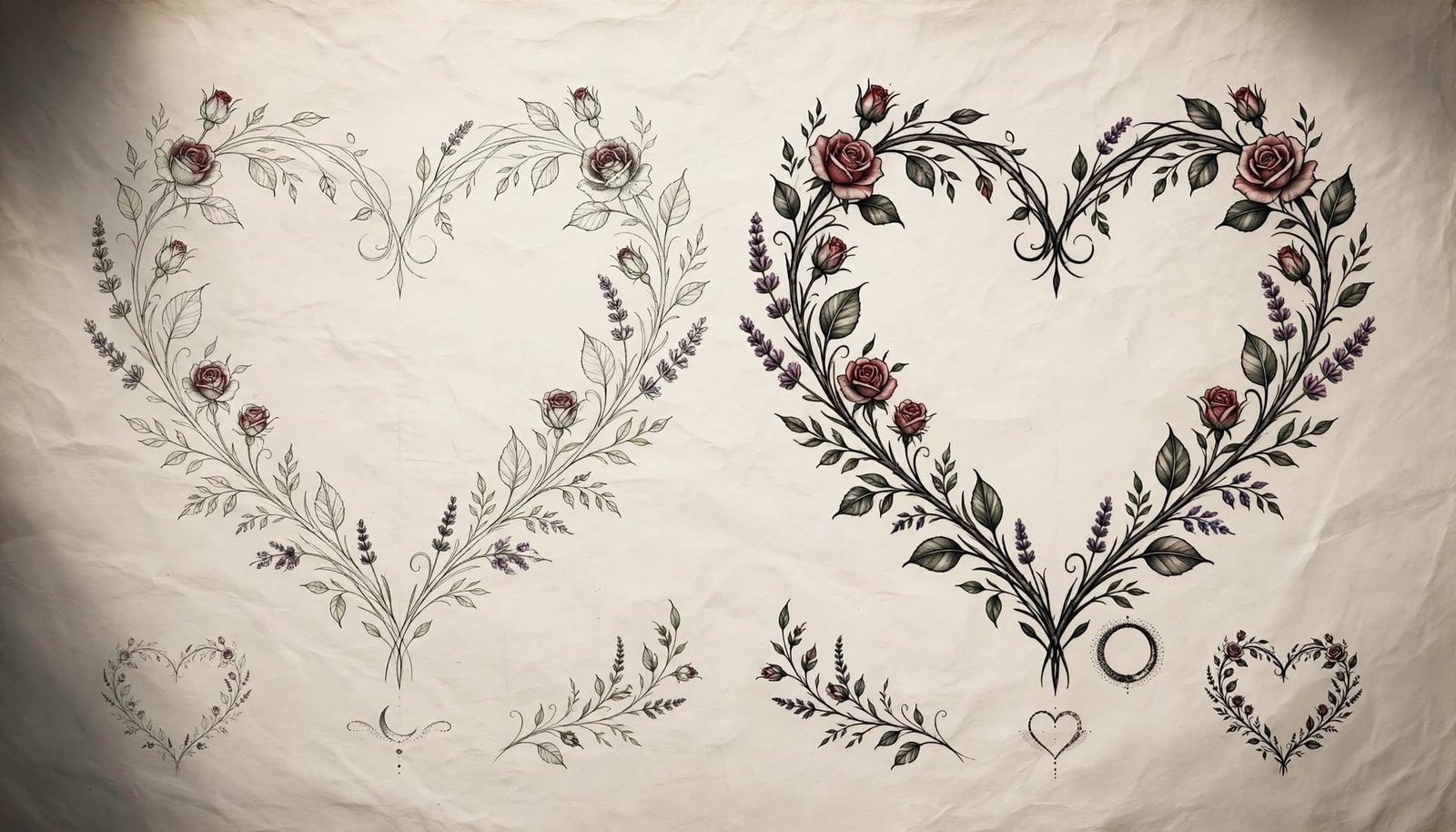
Black and gray ink gives a floral vine heart a clean, lasting appearance. A delicate black ink design might use one continuous vine, simple leaf outlines, and an open heart around the name. Light gray shading can add depth without making a small tattoo feel heavy.
Muted color brings another layer of meaning. Green leaves can suggest renewal, red roses can emphasize love, purple lavender can recall peace or healing, and one small colored bloom can connect the tattoo to a favorite memory. Too many shades, however, may pull attention away from the name. Color tattoos also need protection from ultraviolet light, so use broad-spectrum tattoo sun protection on healed skin.
Match detail to the tattoo’s size. Simple outlines suit a small wrist or rib design, while fuller petals, layered leaves, and gentle shading need more space. Your artist should choose line weight and detail based on your skin, placement, and the name’s long-term readability.
Personal Details That Add Meaning Without Clutter
A birth flower can honor someone’s month, while initials or a small date can make the tribute more specific. A butterfly may suggest change, a bird can express freedom or remembrance, and a tiny star can symbolize guidance. Even one meaningful leaf can carry more weight than several decorative symbols.
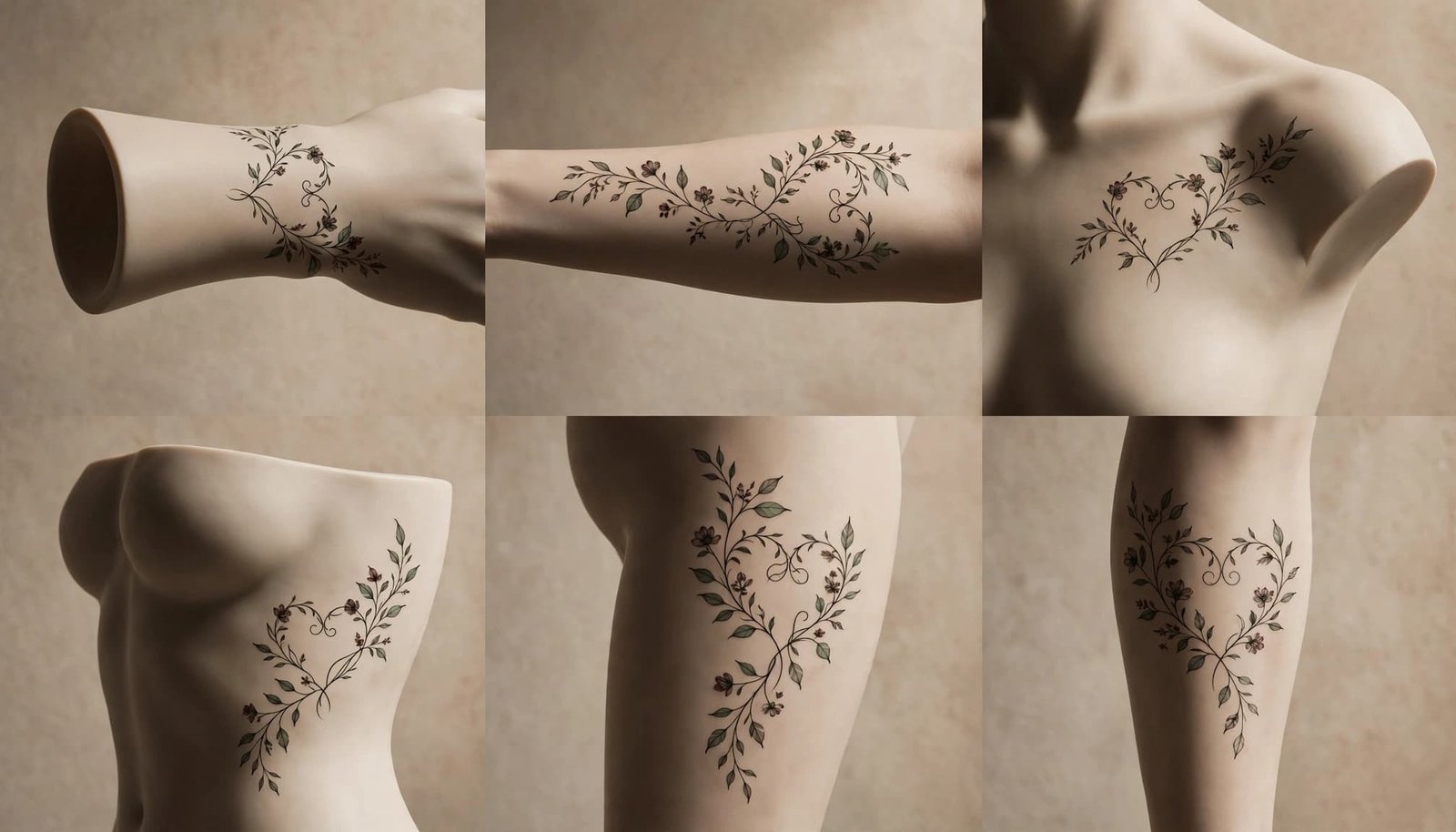
Choose one or two supporting details and leave the name easy to read. A memorial design might place a date beneath the heart, while a bracelet-style vine can wrap around the wrist with the name tucked into one open curve. A trailing botanical heart can extend toward the collarbone or shoulder, giving the design a lighter, more natural flow.
Before your consultation, ask yourself:
- Who does this tattoo honor?
- What feeling should it hold?
- Which visual detail expresses that feeling best?
A clear answer keeps the heart from becoming crowded and helps your artist create something that belongs to your story.
How to Choose the Best Placement and Tattoo Size
Placement affects how your floral vine heart name tattoo looks, heals, and fits into daily life. Consider visibility, clothing friction, skin movement, pain sensitivity, and the amount of detail your design needs. Curved areas often suit vines because the stems can follow the body’s natural lines instead of looking stiff.
Wrist, Forearm, and Ankle Options
The wrist works well for a small, simple heart with one short name. Its visibility makes the tattoo easy to admire, but watches, sleeves, frequent hand movement, and sunlight can add friction over time. Keep the leaves and petals open rather than packing several tiny details into a narrow space.
A forearm gives you more room for a wraparound or bracelet-style vine. It can hold longer lettering, a larger heart, or a vine that follows the arm’s length. You can also choose an inner forearm for a more personal view or an outer forearm for greater visibility.
The ankle or foot can suit a delicate design, especially with a short name or initials. However, shoes, socks, and walking create regular rubbing, so fine details may need simplifying. Ask your artist how the stencil will follow your movement when you bend your wrist, rotate your arm, walk, or point your foot.
Ribs, Collarbone, Chest, and Over-the-Heart Placement
A collarbone tattoo has an elegant horizontal flow. A floral vine heart can sit beneath the bone, with the name centered while stems curve toward the shoulder. This placement is visible with open necklines but easy to cover for work or formal occasions.
An over-the-heart tattoo carries a direct personal meaning. Placing the name inside or beside the heart can make the tribute feel private, even when the design appears under a shirt. Ribs offer a longer canvas, allowing the vine to curve along the side or trail vertically toward the waist.
Ribs and chest areas may feel more sensitive for some people. Choose a session length you can handle comfortably, and discuss the exact placement before booking. The artist should account for posture, breathing, natural curves, and nearby clothing such as bra straps or waistbands.
Back, Spine, Thigh, and Calf Designs
Larger placements give botanical details room to breathe. The thigh, upper back, calf, and spine can hold several flowers, heavier shading, multiple names, or a vine that travels vertically without forcing the lettering into a cramped heart.
These areas also create different visibility choices. A thigh or upper-back tattoo stays hidden beneath most clothing, while a calf design appears more often with shorts or dresses. The spine can create a graceful centered layout, but the design should follow the body’s natural line rather than look pasted onto it.
View the stencil while standing, sitting, and moving. A tattoo that looks balanced at rest may stretch or tilt when you bend, walk, or turn.
Matching the Design to the Name and the Future
Name length should guide the tattoo’s scale. Long spelling, capital letters, unusual accents, script flourishes, a date, or a possible second name all require additional space. Tiny lettering, leaves, and petals can blur or merge as ink softens, especially in high-friction areas.
Leave breathing room around every letter. Check the spelling several times, review the capitalization, and inspect the stencil from different angles before the needle starts. The American Academy of Dermatology also recommends considering skin free of moles, since tattoos can make early skin changes harder to notice; see its tattoo skin care guidance.
Finally, consider how the name may feel if a relationship or personal circumstance changes. A meaningful symbol, initial, or private phrase can offer more flexibility than a full name when the future feels uncertain.
Cost, Artist Selection, and Safe Healing for a Name Tattoo
A floral vine heart name tattoo needs more planning than a quick flash design. Price, artist skill, design scale, and aftercare all affect whether delicate lettering stays clear and attractive over time.

What Changes the Price of a Floral Name Tattoo
US tattoo prices vary by studio location, artist experience, size, detail, color, and design time. Many shops also have a minimum charge, so even a tiny one-name tattoo may cost the shop’s minimum rather than a reduced hourly rate.
A simple fine-line heart with one name usually takes less time than a large, shaded design with multiple flowers, dates, and layered leaves. Custom drawing time, color blending, heavy shading, lettering adjustments, and extra revisions can all raise the final price. A highly experienced artist may also charge more because you are paying for precision, design judgment, and years of technical practice.
Ask for a written estimate before booking. Confirm whether the price includes the consultation, custom drawing, revisions, color, touch-ups, and the tattoo session itself. Avoid choosing an artist based only on the lowest quote. Poor spacing or weak linework can cost more to fix than a careful tattoo costs initially.
During a consultation, the artist can also tell you when the design needs to be larger. A heart with tiny flowers and small script may look lovely on a phone screen but lose readable detail on skin. Giving the lettering and leaves enough room helps the tattoo age more gracefully.
How to Find an Artist for Fine Floral Linework
Review an artist’s healed tattoos, not only fresh work. Fresh ink often looks sharper and darker than healed skin. Look for clean, consistent lines, readable names, balanced botanical shapes, and examples close to your preferred size and placement.
Before paying a deposit, ask about the studio’s hygiene practices, artist licensing, and local health requirements. You should also understand the consultation process, deposit policy, revision limits, and whether the artist creates original designs.
Bring reference images for mood, flower type, lettering style, and composition. Then ask the artist to draw a custom floral vine heart rather than copy another person’s tattoo. Before the needle begins, inspect the stencil carefully. Verify every letter, accent, date, capitalization choice, and curve in the heart.
Simple Aftercare Steps for Clean, Lasting Results
Follow your artist’s instructions about the initial covering, since bandage types and wear times differ. After removing it as directed, wash your hands, clean the tattoo gently with mild soap and water, and pat the area dry with a clean towel. Apply only a thin layer of the recommended ointment or fragrance-free moisturizer.
Too much product can keep the skin overly moist and interfere with healing. Also avoid picking scabs, scratching flaky skin, soaking in pools or baths, swimming, saunas, tanning, strong sun exposure, and tight clothing that rubs the tattoo. Healing times vary, so wait until the skin has fully settled before returning to activities that expose it to water, heat, or friction.
Some redness, soreness, itching, flaking, clear fluid, and scabbing can occur early. However, worsening redness, unusual swelling, increasing heat, pus, odor, fever, spreading redness, or severe pain needs prompt attention from a qualified health professional. For additional guidance, review these tattoo infection warning signs.
Conclusion
A floral vine heart name tattoo feels most personal when every part has a clear purpose. Take time to choose a flower with real meaning, then balance the design with readable lettering, a suitable scale, thoughtful placement, and an artist skilled in fine floral work and names.
Before the needle starts, review the stencil carefully and confirm the spelling, size, and position. With patient planning and careful healing, the name held inside a living vine heart can become a small garden of memory, love, or growth carried on your skin.
Save the pin for later

Exploring personal symbols, style, and placement

- 30 Trendy Tattoo Ideas for 2026: Styles and Placement - September 27, 2026
- 30 Gorgeous Fine Line Tattoo Ideas to Try - September 27, 2026
- 25 Fine Line Tattoo Ideas for Women With Meaning - September 22, 2026
Leave a Reply