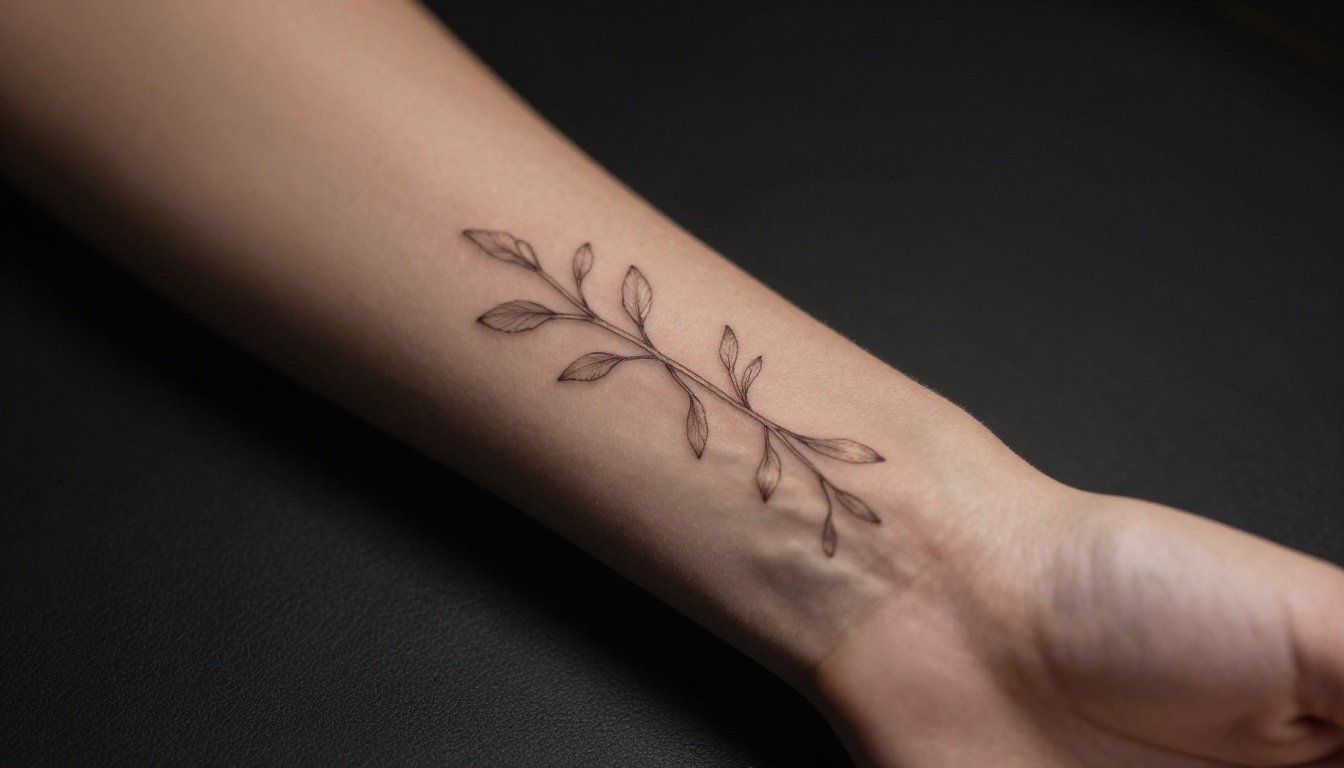
30 Small Forearm Tattoo Ideas With Big Impact
A small tattoo can carry a large emotional meaning when its shape, placement, and linework are chosen with care. The forearm is a popular canvas because its flat surface keeps details readable, it’s easy to see, and a long sleeve can cover it when needed.
Its natural length also suits vertical designs, whether you prefer a slender flower, a short meaningful word, or a fine-line symbol that follows the arm. Still, visibility matters, so choose an idea that fits your story, lifestyle, work setting, and long-term comfort.
The 30 small forearm tattoo ideas ahead include nature symbols, meaningful words, celestial images, animals, geometric marks, and tiny personal designs. Use them as creative starting points, then shape your favorite concept into something that feels personal rather than copied.
Key Takeaways
- Small forearm tattoos create strong visual impact when the design, scale, and placement work together.
- Fine-line botanicals, celestial symbols, animals, words, and geometric shapes offer varied personal styles.
- Choose artwork that fits your story, daily clothing, workplace, and comfort with visible ink.
- Ask your artist about sterile equipment and ink details, as the FDA’s tattoo safety guidance recommends careful precautions.
- During healing, wash gently, moisturize lightly, avoid picking, swimming, tight sleeves, and direct sunlight.
Small forearm tattoo ideas with big impact
Small forearm tattoos can feel personal without taking over your arm. Designs around 1 to 3 inches usually offer enough room for clean lines, although your artist may adjust the size according to detail, spacing, and skin placement.
Because the forearm has a long, visible shape, both vertical motifs and compact symbols work well. Let these ideas inspire your own version rather than treating any meaning as universal. A moon may suggest change to one person and comfort to another.
1. Fine-line botanical sprig
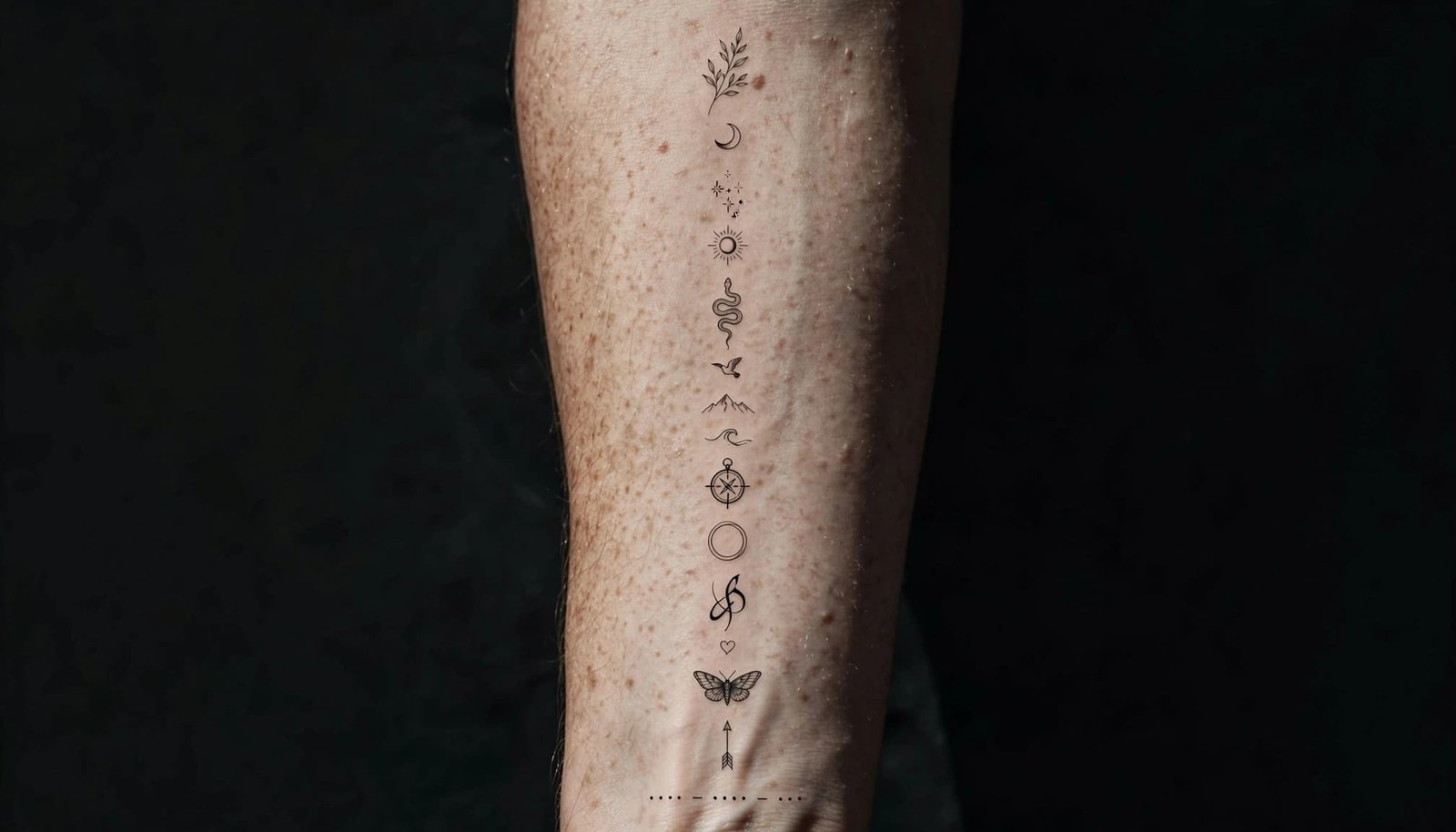
A slender botanical sprig brings a quiet, organic mood to the forearm. Choose an olive branch, eucalyptus stem, fern, or flower from a meaningful place. Its narrow shape can follow the arm vertically, while sparse leaves help the design stay readable at a small size.
2. Crescent moon
A fine-line crescent moon can express change, intuition, rest, or a personal connection to nighttime. Add one tiny star or leave the shape alone for a cleaner look. The curve fits neatly on the inner forearm, where its compact silhouette remains easy to recognize.
3. Tiny star cluster
Three or four small stars can create a light, open design without filling much skin. You might connect them to a favorite memory, a family member, or a period of finding direction. Keep enough space between each star so they don’t blur together over time.
4. Minimalist sun
A simple circle with short rays has a warm, confident presence. It can suggest energy, hope, a birthday, or the comfort of a person who brightens your life. Place it horizontally on the forearm, or use a vertical ray pattern that follows the arm’s length.
5. Delicate snake
A small snake tattoo can have an elegant, slightly mysterious mood. Its meaning might relate to renewal, protection, transformation, or personal strength, depending on your story. A gently curved body uses the forearm’s natural length, but the artist needs enough room to separate the coils and scales.
6. Small bird silhouette
A single bird in flight adds movement to a small tattoo collection. It may remind you of freedom, travel, independence, or someone you miss. A side-facing silhouette works well near the wrist or outer forearm, while a taller design can point toward the elbow.
7. Mountain outline
A single-line mountain range gives the forearm a calm, outdoorsy character. The peaks may recall a trip, a home landscape, or a challenge you worked through. Keep the outline simple, with limited interior shading, so the peaks remain crisp at roughly 1 to 2 inches wide.
8. Small ocean wave
A curved wave can carry memories of the coast, a love of water, or a reminder to accept movement in life. Its horizontal shape suits the outer forearm, while a narrow vertical wave can follow the arm. One strong contour often looks better than several crowded lines.
9. Tiny compass
A minimalist compass offers a sense of direction without requiring a large piece. You could connect it to travel, a new beginning, or your effort to stay grounded. Use only the main points and a clean circle, because tiny lettering and dense markings may lose clarity.
10. Geometric circle
A small circle can feel balanced, modern, and open to interpretation. It might represent wholeness, a repeating cycle, a relationship, or simply your preference for restrained artwork. Place it alone for a subtle statement, or add one fine line through it for a more distinctive shape.
11. Personal word or initial
One short word, date, or initial can hold more meaning than a complex illustration. Choose lettering that remains legible at its final size, then ask your artist how the font will age. A short horizontal word fits the forearm neatly, while vertical lettering creates a more unusual composition.
12. Tiny heart
A small heart can express affection, self-compassion, grief, or a bond with someone important. Avoid assuming it must have a romantic meaning. A simple outline fits almost anywhere on the forearm, and a slightly elongated heart can echo the arm’s natural direction.
13. Moth
A tiny moth adds a softer, nocturnal mood with a touch of mystery. It may suggest attraction to light, personal change, or a private interest in nature. Because wings create a balanced shape, the design works well centered on the inner forearm, with minimal interior detail.
14. Fine-line arrow
An arrow brings a clear sense of movement and direction to a small tattoo. It could point toward a goal, honor a turning point, or simply suit your visual style. Its long, narrow form is especially natural on the forearm, but the line should remain bold enough to age well.
15. Meaningful marks or symbols
A set of tiny marks can encode a private memory without spelling it out. Consider a simplified birthstone shape, a constellation pattern, a musical note, or a symbol drawn from your own sketchbook. Keep the arrangement open and avoid overly fine spacing. Before choosing an ink color or symbol with cultural meaning, review the FDA tattoo safety fact sheet and discuss the design with a reputable artist.
Meaningful small forearm tattoo designs for every style
The strongest small forearm tattoos don’t rely on size alone. Contrast, placement, and personal context can give a simple design the presence of a much larger piece. A dark symbol against open skin catches the eye, while a fine-line image placed along the arm can feel private and intentional.
Before choosing words, sacred imagery, or cultural motifs, consider the history behind the design. Ask whether you understand its meaning, whether the symbol belongs to a living tradition, and whether your artist has experience rendering it respectfully.
16. One-word script tattoo
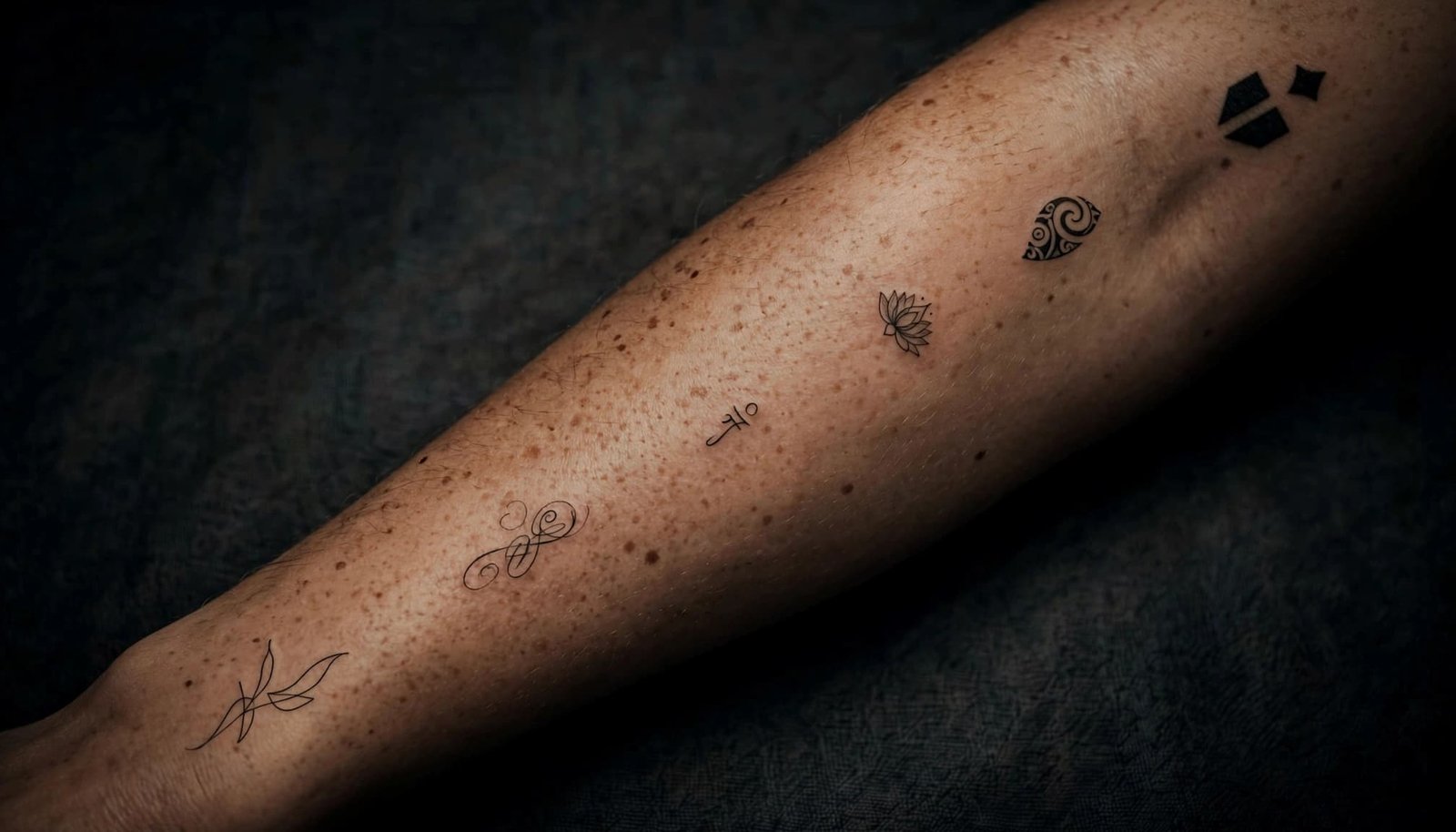
A single word such as “breathe,” “always,” or “home” can carry a personal reminder wherever you go. Choose lettering that matches the feeling behind the word, such as soft cursive for tenderness or clean typewriter lettering for a more direct style.
Ask your tattoo artist to show the phrase at its actual size. Fine script can close together as it ages, especially when the letters sit too tightly.
17. Family initial
One initial can honor a parent, child, partner, or even a former version of yourself. Place it near the inner forearm for a private connection, or choose the outer forearm if you want the letter to remain visible.
A custom serif, handwritten initial, or small monogram gives the design more character than a standard font. Keep the shape simple so the letter stays clear.
18. Roman numeral date
A meaningful date in Roman numerals creates a discreet design with a classic appearance. You might choose a birth date, anniversary, recovery milestone, or the day you began a new chapter.
Double-check every numeral before the appointment. Because this tattoo carries exact information, ask another trusted person to verify the conversion.
19. Handwritten note
A short phrase copied from a loved one’s handwriting can turn a small forearm tattoo into a personal keepsake. Use a note, signature, recipe card, or old letter as the reference.
Preserve the original line quality, including slight imperfections. Those irregular details often hold more emotional value than polished lettering.
20. Abstract continuous line
A single flowing line can form a face, figure, wave, or completely open shape. The design feels artistic without explaining itself to everyone who sees it.
Placement changes its mood. A vertical line can lengthen the forearm visually, while a compact curve near the wrist feels more intimate.
21. Broken circle
A circle with one deliberate opening can suggest growth, freedom, or a life that remains unfinished. Its meaning stays personal, which makes it useful if you prefer symbolism without an obvious picture.
Use bold linework for a graphic look, or choose a thin imperfect circle for a softer art-inspired style. Leave enough negative space around it so the opening remains visible.
22. Minimalist eye
An eye can symbolize awareness, intuition, protection, or the ability to see yourself honestly. A simple almond shape with one small iris keeps the design readable at a small scale.
Sacred or protective eye symbols carry different meanings across cultures. Research the tradition first, then explain your intended meaning to the artist rather than copying an image from a flash sheet.
23. Small religious symbol
A cross, star, Om, crescent, or other spiritual symbol can anchor your faith on the forearm. Select imagery connected to your own practice, family, or spiritual history.
Sacred symbols deserve more care than a quick online search. Learn how the symbol is used, whether its orientation matters, and whether adding decorative elements changes its meaning.
24. Mandala fragment
A small mandala fragment can bring balance and repetition to a minimalist tattoo. Rather than shrinking a large, detailed mandala, use one section with clear shapes and generous spacing.
Some mandala forms connect to specific religious and cultural traditions. Work with an artist who understands the source imagery, especially if your design draws from Hindu or Buddhist practice.
25. Cultural pattern with personal roots
A pattern connected to your family heritage can honor language, place, or ancestry. Research the design’s origin and avoid treating a sacred or ceremonial motif as simple decoration. The Smithsonian’s coverage of Native tattoo traditions shows how tattooing can carry identity, history, and cultural pride across generations.
A smaller excerpt may work better than compressing an entire pattern. Include only elements you can explain and connect to your own story.
26. Bold black triangle
A solid black triangle creates impact through contrast rather than size. It can suggest direction, stability, change, or a personal connection to a mountain or architectural shape.
Place it on the outer forearm for a graphic statement. Since packed black ink draws attention, check that the shape complements your other tattoos and won’t look crowded beside fine-line work.
27. Black band detail
A narrow black band can honor a loss, signal strength, or simply create a striking minimalist accent. Its clean shape works horizontally around the forearm or as a short band across one side.
Measure carefully before committing. A band that looks balanced on the stencil can feel different when the arm turns, so view it from several angles.
28. Tiny flame
A small flame can symbolize courage, creativity, faith, or a drive that refuses to disappear. Use solid black for a bold emblem, or combine a dark outline with a small area of open skin.
Avoid packing in too many tongues of flame. Two or three clear points will age more cleanly than miniature decorative detail.
29. Personal abstract symbol
Draw a symbol that only you can decode, perhaps a shape built from a childhood sketch, a shared mark, or the outline of a meaningful object. Abstract art becomes more memorable when its hidden meaning has a real source.
Bring several sketches to your artist. They can refine the proportions while preserving the irregular feature that makes the design yours.
30. Blackwork talisman
A compact blackwork talisman combines strong shapes, small cutouts, and deliberate negative space. It may draw from a personal protective symbol, an invented emblem, or a meaningful geometric arrangement.
Keep cultural and spiritual references clear rather than mixing sacred imagery casually. A reputable artist can help you create a bold design without borrowing symbols you don’t understand. For ink and studio questions, review the FDA’s tattoo safety guidance and ask how the studio handles ink, sanitation, and aftercare.
Choose the best forearm placement for visibility and comfort
Forearm placement changes how often you see your tattoo, how easily others notice it, and how comfortable the appointment feels. Before choosing a design, decide whether you want a visible accent or a personal detail that stays mostly yours.
The forearm also gives you flexibility. Sleeves can cover much of it, while short sleeves may reveal the outer and wrist-facing areas. Your workplace dress code, daily routine, and comfort with visible ink should guide the final position.
Outer, inner, wrist, and elbow placement
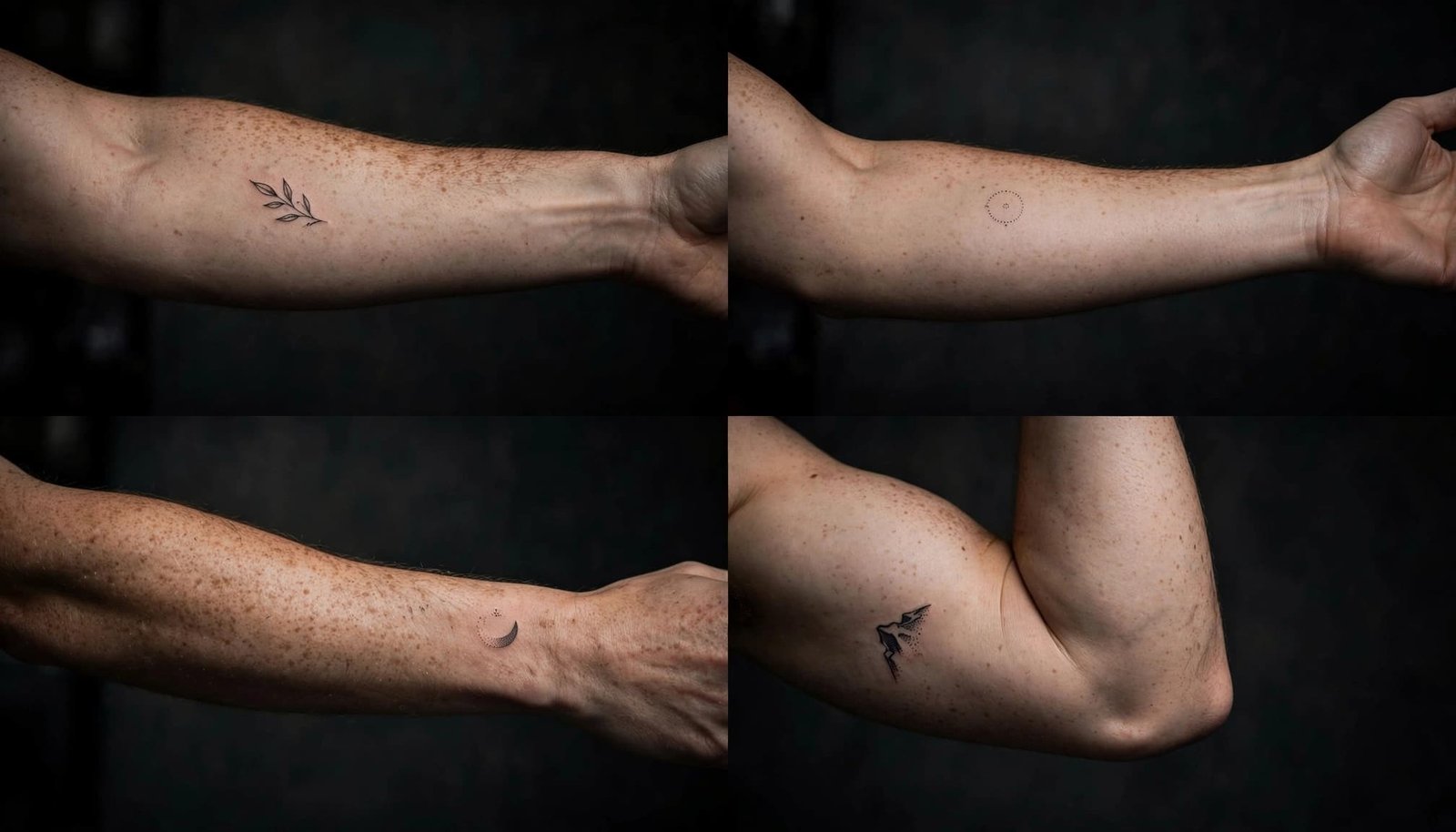
The outer forearm is usually the most visible option. It faces outward when your arm rests naturally, so bold symbols, blackwork, arrows, and geometric designs get immediate attention. Mid-forearm placement often offers a practical balance between visibility and comfort.
The inner forearm feels more private because you control when the design faces other people. This area suits personal words, initials, delicate botanicals, and fine-line symbols. However, skin near the wrist can feel more sensitive because it is thinner and closer to bone and tendons.
A wrist-adjacent tattoo has a delicate, intimate quality, but it may receive more friction from cuffs, watches, desks, and daily movement. Keep tiny details limited in this area. The elbow-side forearm gives a design more distance from the wrist, although the elbow crease itself can feel sharper during tattooing. Healthline’s tattoo pain location guide identifies the wrist and inner or outer elbow among more sensitive areas.
Match the layout to your arm
Vertical designs follow the forearm’s natural length. A narrow flower, snake, phrase, or arrow can make the arm look longer and keep the artwork easy to read. Horizontal designs suit compact symbols, small waves, bands, and dates, especially when you want the tattoo to face forward as your arm hangs by your side.
Your dominant arm gets more daily use, so the non-dominant arm may offer less rubbing and fewer awkward positions during healing. Still, visibility matters more for some people. Choose the dominant arm if you want to see the tattoo while working, writing, or reaching, and choose the other arm if you prefer a calmer, less noticeable placement.
Leave breathing room around the design, particularly if you may add more tattoos later. A small piece can look lost in open skin, but crowding it against another tattoo makes both designs harder to appreciate. During healing, loose sleeves and reduced pressure help protect fresh ink. Cleveland Clinic recommends avoiding tight clothing, direct sun, and water immersion until the tattoo heals, as explained in its tattoo aftercare guidance.
Test the position before your appointment
Print the design or draw it at its intended size. Tape it to your arm, then view it while standing, sitting, and wearing your usual work and casual clothing. Turn your wrist naturally, bend your elbow, and check whether the tattoo still faces the direction you want.
Leave the mock-up in place for a full day if possible. That simple test can reveal whether the size feels too small, the wrist sits too close to a watch, or a sleeve hides more than expected.
Match the tattoo style to how you want it to age
A small forearm tattoo should suit your taste today and still look clear years from now. Fine details can soften as ink spreads slightly, skin changes, and sunlight breaks down pigment, so your preferred style affects long-term readability.
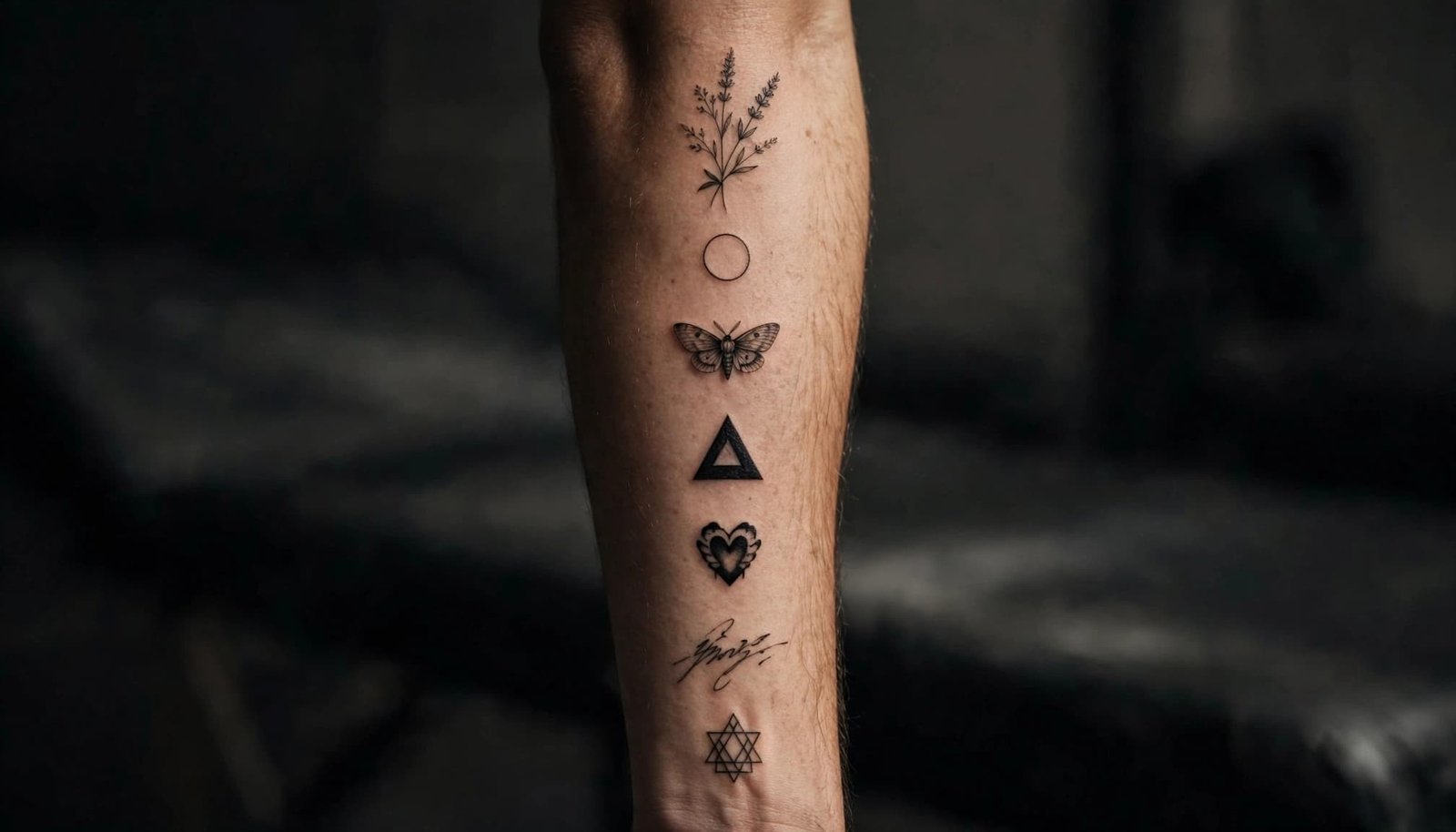
Compare popular tattoo styles
Each style has a different balance of delicacy, contrast, and detail:
- Fine-line tattoos look soft and elegant, especially with botanicals, stars, and minimalist symbols. However, very thin lines can fade or soften sooner when the tattoo is extremely small. Give fine-line designs enough size and contrast to remain readable.
- Minimalist tattoos rely on simple outlines and open skin. A clean circle or single symbol can age well because it has fewer details to lose. Avoid shrinking several design elements into one tiny space.
- Micro-realism tattoos can show impressive shading in a small image, but they need careful planning. Tiny facial features, fur, and tonal changes may merge as the tattoo ages. Choose a skilled realism artist and accept that the reference may need simplification.
- Blackwork tattoos use dark fills and strong contrast. These bold shapes usually have more visual margin when lines soften, making blackwork a dependable choice for long-term impact.
- Simple traditional tattoos also age well because they use clear outlines, limited colors, and recognizable shapes. A small heart, bird, or dagger often stays readable longer than a highly detailed miniature.
- Script tattoos depend on letter spacing and line weight. Keep words short, leave room between letters, and avoid hairline fonts that may merge over time.
- Geometric tattoos can remain crisp when their lines are bold and their negative space is generous. Dense grids, tiny repeating shapes, and closely packed dots are more likely to blur.
The more a tattoo depends on tiny gaps, the more carefully you must plan its final size.
Ask your artist to adapt the reference instead of copying every detail into an undersized design. They may remove interior lines, enlarge an important feature, or increase the spacing between letters. That adjustment protects the idea while giving the ink room to age.
Protect the design from everyday wear
Sun exposure is one of the main causes of tattoo fading. The outer forearm is generally more forgiving than the wrist, elbow crease, hands, or other high-friction areas because it offers a flatter, steadier surface. Still, it receives regular sunlight, especially during warmer months.
After the tattoo heals, apply broad-spectrum SPF 30 or higher to exposed skin and reapply it during extended outdoor time. A peer-reviewed review of tattoo aftercare also recommends sun protection after healing, while fresh tattoos should stay out of direct sun and avoid sunscreen until the skin closes (tattoo aftercare research).
Sleeves, watches, desk edges, and repeated movement can add friction. Skin also changes with age, weight shifts, and natural loss of elasticity. Those changes affect every tattoo, so choose a style with enough contrast and spacing to remain recognizable rather than chasing perfect permanence.
Plan the tattoo with the right artist, budget, and aftercare
A small forearm tattoo deserves the same care as a large piece. The design may take less time, but the artist still needs to manage scale, line weight, placement, and skin movement. Plan each stage before the appointment so your idea arrives as clear artwork and heals into a tattoo you can enjoy for years.
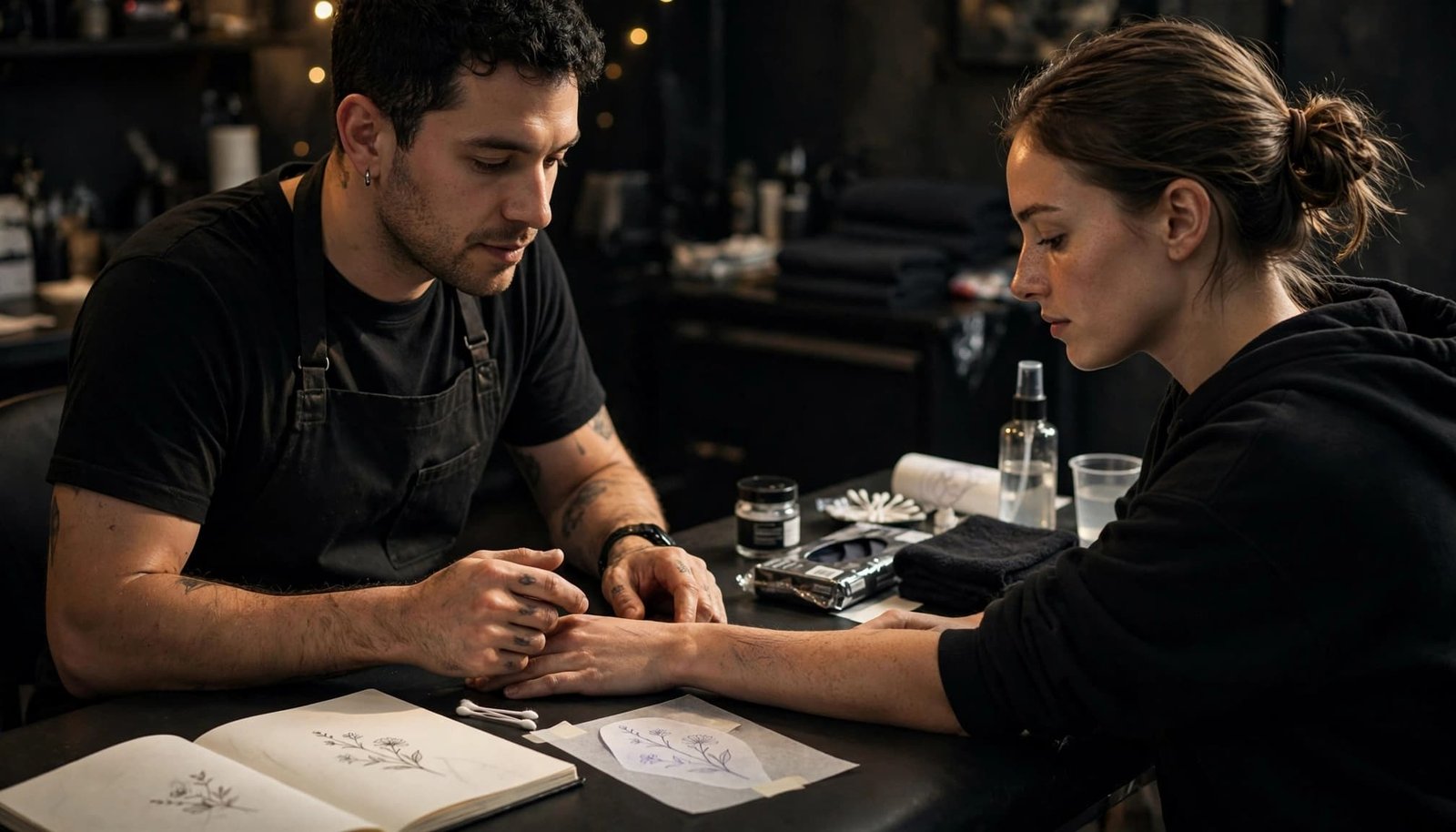
Find an artist who fits the design
Start by searching for an artist who regularly works in your chosen style. A fine-line botanical tattoo, bold blackwork symbol, and tiny script design each require different skills. Review the artist’s portfolio, then look for healed tattoo photos, not only fresh work taken immediately after the appointment.
Fresh ink often looks darker and sharper than healed ink. Healed examples show whether delicate lines stay readable, whether color remains even, and how the artist handles small details. Ask about the age of those photos if the timing isn’t clear.
During your consultation, discuss:
- The final size and whether the design needs simplification.
- Line weight, spacing, shading, and color choices.
- Inner or outer forearm placement, viewing direction, and stencil angle.
- How the tattoo will look when your arm hangs naturally.
- Possible touch-ups and whether they cost extra.
Bring reference images, but also explain what you like about each one. Your artist can combine those preferences into an original design rather than shrinking a detailed image beyond a readable size.
Set a realistic tattoo budget
In the United States, a small tattoo may cost roughly $80 to $250, but that range is only a starting point. Many studios have a minimum charge, even when the tattoo takes less than an hour. Artist reputation, city, custom design time, color, detail, and appointment length can all raise the final price.
Ask for a quote before booking and confirm whether the deposit applies to the tattoo cost. A custom drawing may also require a separate design fee. If your budget is limited, tell the artist early. They may recommend a simpler design or a slightly larger size that takes less time to tattoo cleanly.
Follow a simple aftercare routine
Your artist’s bandage instructions come first because coverings differ. Leave the bandage or adhesive film on for the recommended time, and wash your hands before removing it. For general aftercare guidance, WebMD’s tattoo care instructions also recommends avoiding swimming and sun exposure during early healing.
After removing the covering, wash the tattoo gently with lukewarm water and fragrance-free soap. Don’t scrub or hold it under a strong shower stream. Pat the area dry with a clean towel or paper towel, then apply a light layer of the moisturizer your artist recommends.
During healing:
- Avoid picking flakes or scabs, even when the skin feels itchy.
- Reduce rubbing from tight sleeves, watches, and rough fabrics.
- Stay out of pools, baths, hot tubs, lakes, and ocean water.
- Keep the tattoo away from direct sunlight.
Surface healing often takes about two to four weeks, while deeper healing can take six to eight weeks. Once the skin has fully healed, protect the tattoo with broad-spectrum sunscreen. That habit helps preserve fine lines, dark contrast, and color as the years pass.
Conclusion
Small forearm tattoos can leave a lasting impression without covering a large area. The 30 ideas in this guide show how wildflowers, constellations, initials, animals, geometric marks, and bold symbols can suit the forearm’s natural shape while carrying personal meaning.
The strongest choice is the design that still feels important when you remove the explanation. Narrow your favorites to one idea, then work with a skilled artist to adjust its size, spacing, line weight, and direction. Clear shapes, thoughtful placement, and enough contrast will help the tattoo stay readable as it ages.
Choose carefully, especially when the design includes cultural or spiritual imagery. During healing, follow your artist’s instructions, keep the tattoo clean, avoid soaking it or exposing it to direct sun, and protect the healed skin with broad-spectrum SPF 30 or higher. Impact comes from clarity, placement, contrast, and personal meaning, not from taking up more skin. With time, the finished piece can settle naturally into your forearm and become part of your story.
Save the pin for later

- 30 Trendy Tattoo Ideas for 2026: Styles and Placement - September 27, 2026
- 30 Gorgeous Fine Line Tattoo Ideas to Try - September 27, 2026
- 25 Fine Line Tattoo Ideas for Women With Meaning - September 22, 2026
Leave a Reply