26 Creative Abstract Elephant Tattoo Ideas With Meaning
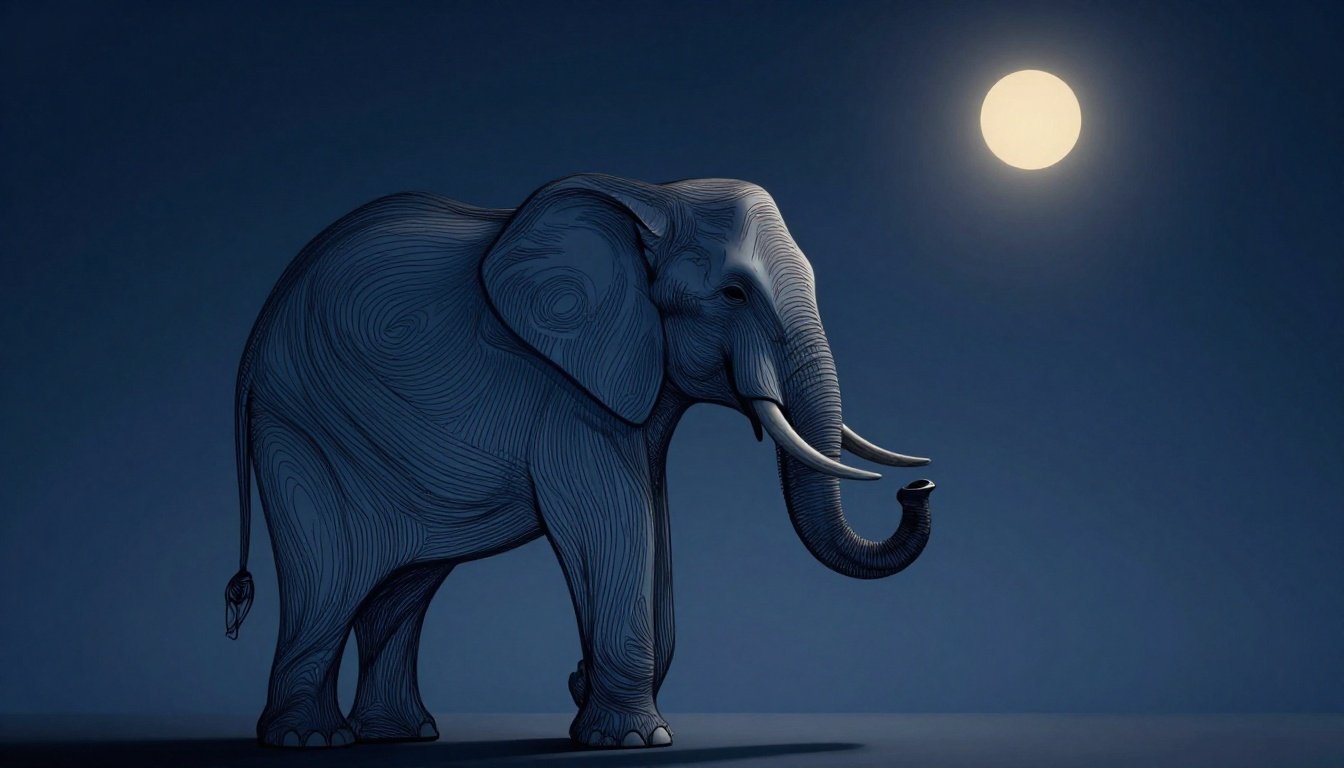
A few bold lines curve into an elephant’s head, its trunk lifting toward a small sun, while open space gives the design room to breathe. Even without realistic details, an abstract elephant tattoo can feel full of strength, wisdom, memory, and family.
Finding the right concept can be challenging when you want something personal without a portrait-like image. These 26 original design directions will help you consider symbolism, placement, style, size, and the details that make an elephant tattoo feel like yours. You’ll also find guidance on cultural respect, since elephant imagery carries different meanings across regions and traditions.
Before choosing a design, consider how fine lines, shading, and size may age on your chosen area. After your appointment, follow your artist’s instructions, wash with clean hands and mild fragrance-free soap, pat the tattoo dry, avoid picking or scratching, and stay out of pools, hot tubs, and direct sun while it heals. Start with the first abstract elephant tattoo idea and see which shape speaks to your story.
Key Takeaways
- Abstract elephant tattoos use flowing lines, geometric shapes, and negative space to create a personal design without realistic detail.
- Common meanings include strength, wisdom, protection, memory, family, patience, and lasting love. Explore common elephant tattoo meanings before choosing your symbol.
- Add suns, flowers, mandalas, initials, or birth dates to connect the elephant with your own story.
- Match the design to your placement, skin space, preferred line weight, and how the tattoo may age over time.
- Choose a reputable artist, ask about ink brands, follow aftercare instructions, and seek medical advice if healing becomes unusual.
26 Creative Ways to Design an Abstract Elephant Tattoo
Abstract elephant tattoos let you keep the animal’s meaning while choosing a less expected shape. These first 14 ideas range from tiny symbols to detailed designs filled with color, nature, and personal memories.
Minimal Lines and Quiet Symbols
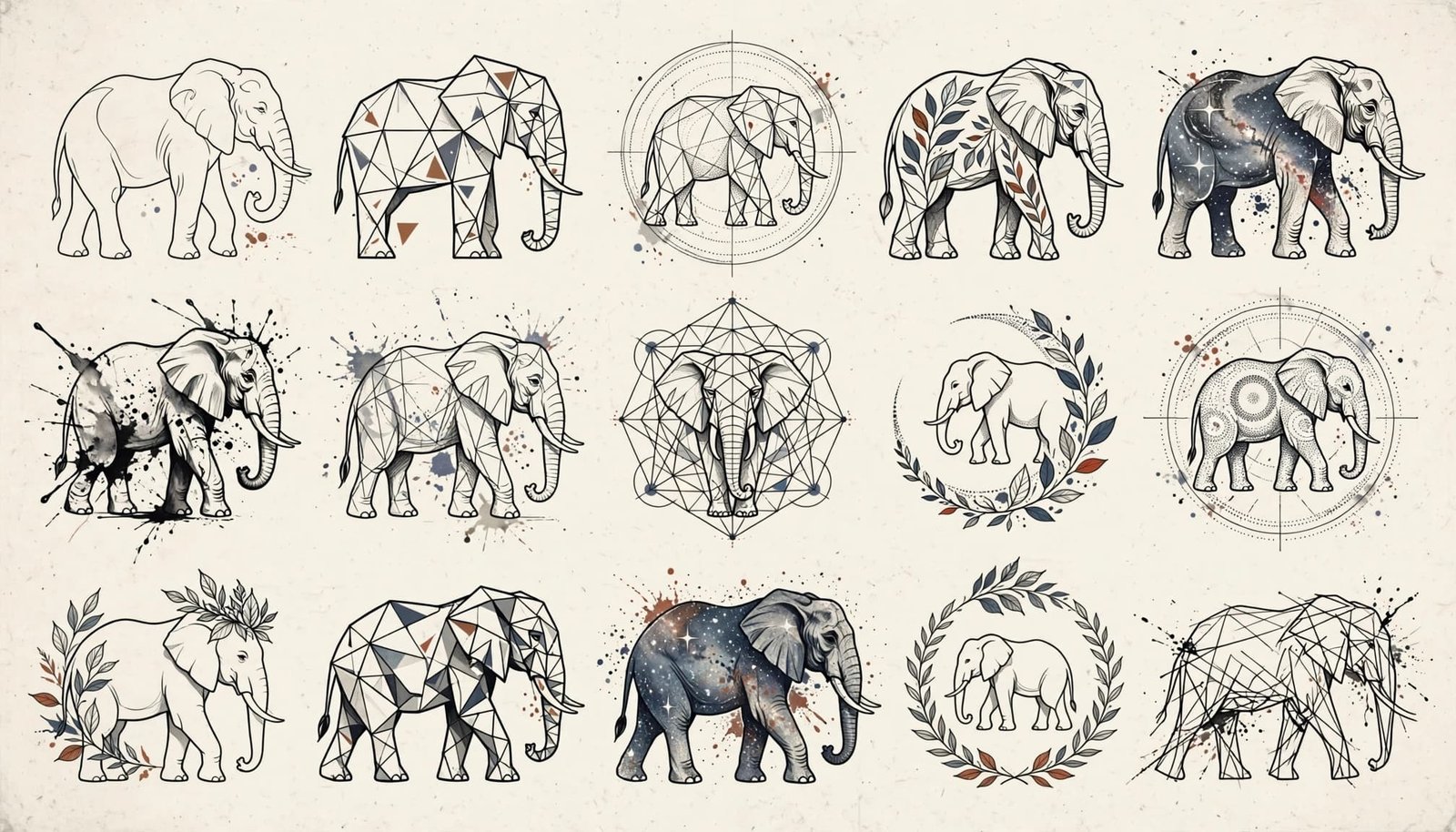
1. Continuous-line elephant: One unbroken line can trace the ears, head, trunk, and tusk in a single flowing motion. Its calm simplicity suits someone who values patience, family, or a subtle reminder of inner strength.
2. Broken-line elephant: Separate strokes create an incomplete outline with small gaps around the face and trunk. The open design can suggest healing, change, or memories that remain meaningful even when parts of the story are missing.
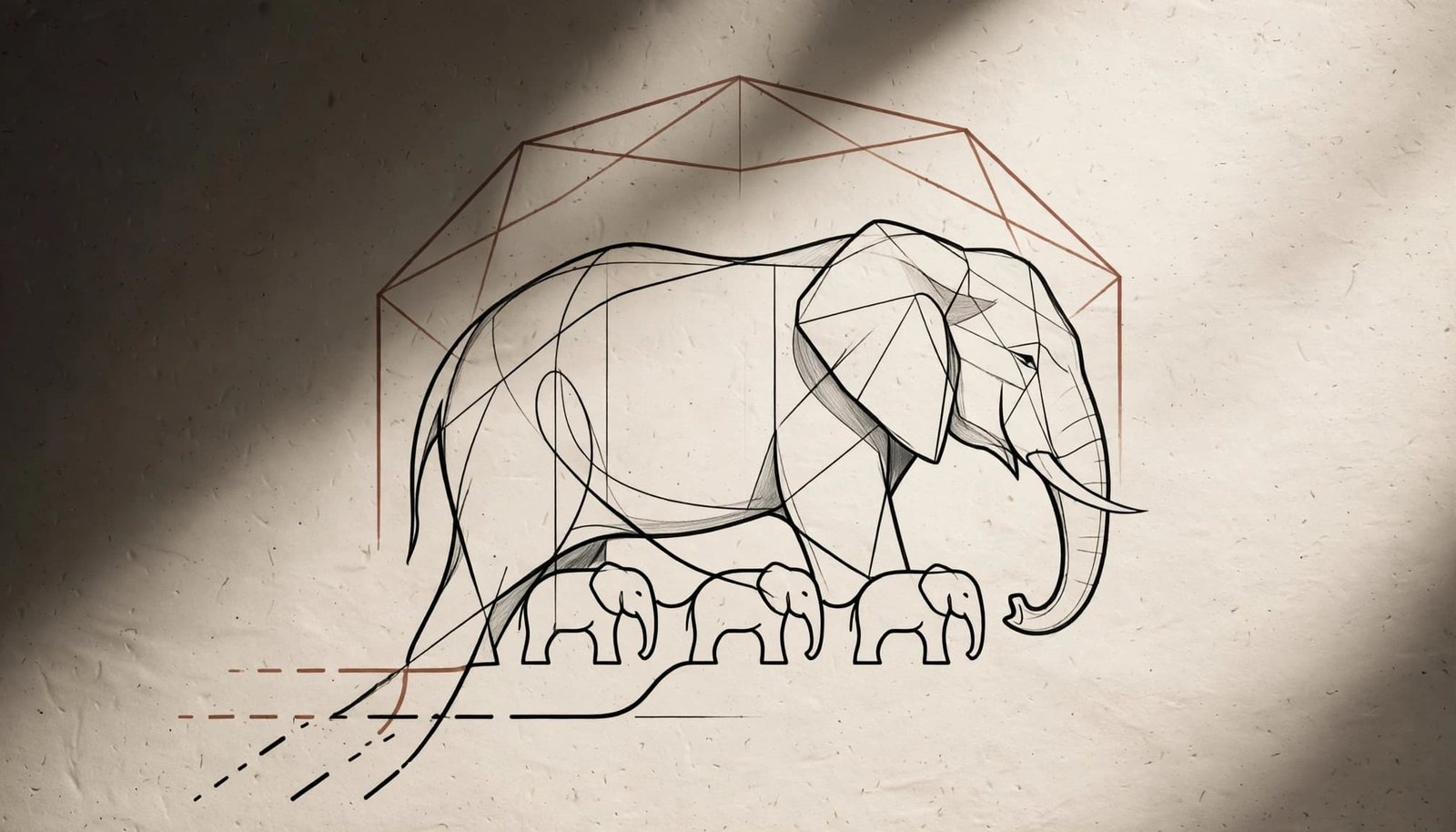
3. Negative-space silhouette: Instead of filling the elephant with ink, the artist leaves its shape open against shaded skin or another tattoo. This airy approach works well for someone who wants strength without a heavy, solid image.
4. Tiny abstract icon: Reduce the elephant to a few curves, a dot for the eye, and one recognizable ear shape. Small tattoos need fewer details to stay clear over time, so this idea fits the wrist, ankle, collarbone, behind-the-ear area, or finger side.
5. Word or symbol trunk: Let the trunk curve into an initial, a short word, a heart, or a personal mark. Ask your artist to shape the lettering carefully so the trunk still reads as part of the elephant.
Clean designs suit people who want their tattoo to feel personal without drawing constant attention. Fine lines can soften with age, especially where skin receives friction or sun, so ask your artist how the chosen line weight may heal and age. The AAD’s tattoo care guidance also recommends protecting healed tattoos from ultraviolet light.
Geometry, Symmetry, and Strong Graphic Shapes
6. Triangles and circles: Build the elephant from sharp triangles for the ears and rounded circles for the head and body. Angles suggest focus and strength, while curved shapes give the design a friendlier mood.
7. Symmetrical mandala elephant: Place matching petals, arcs, and dots inside or around the elephant’s face. If you choose culture-inspired patterns, discuss their origin with your artist and avoid copying sacred imagery as generic decoration.
8. Bold geometric silhouette: Use solid black shapes to form a strong elephant profile with only a few cutout details. This graphic style suits someone who wants a confident tattoo that remains visible from across a room.
9. Brushstroke silhouette: Uneven, sweeping marks can suggest the elephant in motion, almost like ink dragged across paper. The loose edges feel artistic and expressive, making this a good choice for someone who values freedom and individuality.
Fine-line geometry feels light and precise, while solid blackwork has more visual weight. Forearms, upper arms, calves, shoulder blades, and thighs give larger shapes room to breathe without crowding the design.
Nature, Color, and Personal Storytelling
10. Ink-splash elephant: Loose splashes can burst from the ears or dissolve around the body. This design often fits themes of imagination, travel, or emotional release.
11. Half-realistic, half-abstract face: Keep one side detailed and turn the other into sweeping lines or geometric planes. The contrast can connect a real family memory with personal growth.
12. Galaxy-filled body: Fill the elephant’s body with stars, planets, and soft nebula-like shading. It suits dreamers who connect the animal with wonder, distance, or a loved one remembered across time.
13. Botanical elephant: Build the ears, trunk, or body from leaves, vines, and stems. Botanical details can suggest healing, family roots, patience, or a bond that continues to grow.
14. Watercolor wash: Pair a simple outline with a flowing wash of blue, purple, green, or warm sunset color. Color adds emotion, while black and gray create a quieter, more timeless look.
An ornamental pattern can also surround the elephant with carefully researched motifs rather than borrowed sacred symbols. Detailed portrait-style concepts may need about 10 to 15 cm or more to remain readable, especially when they include facial features, leaves, or star fields.
More Abstract Elephant Tattoo Ideas With Meaning
The final 12 ideas use familiar elephant shapes in unexpected ways. Treat them as starting points, then keep only the details that support your story and suit your preferred tattoo style.
Family, Memory, and Protection in Abstract Form
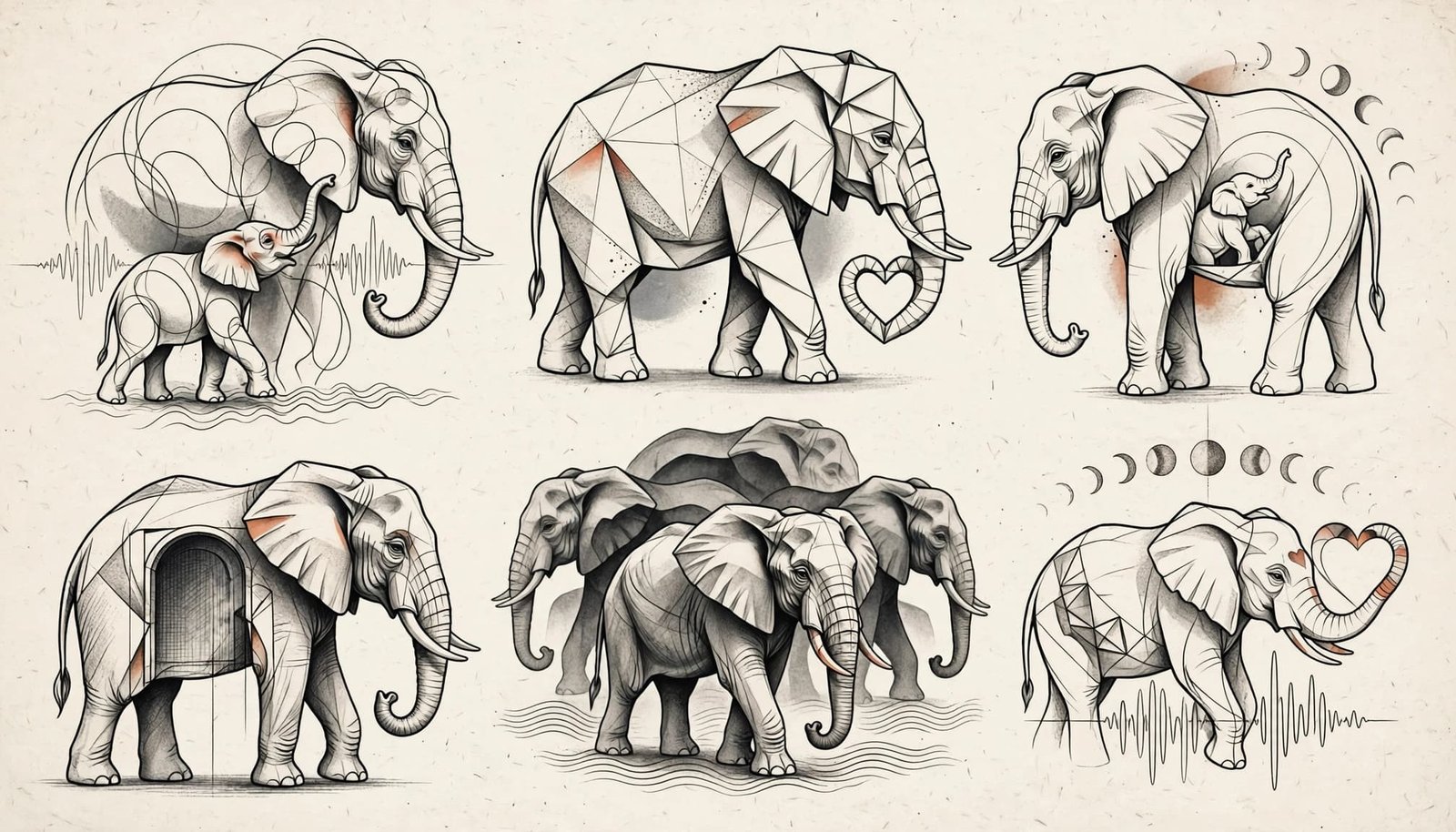
15. Connected mother and calf: Two elephants can emerge from one continuous contour, with the smaller calf tucked close beneath the mother’s ear or trunk. The design may suggest family loyalty, protection, and a bond that grows over time, although its meaning belongs to the person wearing it. A fine-line version suits the ribs, forearm, or shoulder blade.
16. Hidden little elephant: Place a small elephant inside a larger outline, perhaps within the ear, chest, or curve of the trunk. This private detail can honor a child, younger self, or loved one held close in memory. Keep the inner figure simple so the design stays readable.
17. Shadow herd: One solid elephant casts two or three overlapping shadows, creating the suggestion of a herd without drawing every animal in full. The shadows can symbolize family members, shared history, or people who remain part of your life after separation. Blackwork gives this concept a strong graphic shape, while graywash creates a softer memory-like effect.
18. Heart-curled trunk: Curve the trunk into a small heart, using the shape as the only obvious symbolic detail. It can express love, devotion, compassion, or affection for a partner, parent, child, or friend. A small flower, initial, or birth year may fit beside the heart, but adding too many details can make the design feel crowded. For more ideas about elephant symbolism, see this guide to elephant tattoo significance.
19. Memory contour: Build the elephant from broken lines, then add one discreet initial, date, or tiny flower along the outline. The gaps can suggest time, while the uninterrupted sections keep a loved one’s memory present. Place the personal detail inside an ear or beneath the body rather than across the face.
Dreamlike Designs for Change and Self-Expression
20. Fingerprint swirl elephant: Form the head and ears with fingerprint-like curves that follow your own imagined pattern. The swirls can connect the tattoo with identity, individuality, and the parts of yourself no one else can copy. Uneven line spacing and open negative space will keep it abstract.
21. Calm-and-chaos face: Divide the elephant’s face into two visual moods. One side uses smooth, balanced contours; the other breaks into jagged lines or scattered fragments. This contrast can speak to emotional balance, recovery, or the strength required to live with opposing feelings.
22. Floating elephant head: Remove the body and let the head hover with an open lower edge. The unusual proportion creates a dreamlike image that may suggest independence, imagination, or leaving an old identity behind. A small placement such as the upper arm or collarbone gives the shape room without overwhelming it.
23. Moon-phase elephant: Pair the elephant’s outline with crescent and full moon forms. The changing phases can connect the design with growth, renewal, cycles, or a new beginning. Fine lines and carefully spaced negative areas work well on the forearm or back.
24. Sound-wave elephant: Construct the ears, trunk, or entire profile from sound-wave lines. This idea suits musicians and anyone carrying a meaningful voice, song, or spoken memory. Let the lines fade at the edges so the elephant remains recognizable without looking overly literal.
25. Doorway elephant: Cut a doorway or window into the elephant’s body, leaving the interior open or filled with a small moon, plant, or horizon. It can suggest inner strength, change, fresh possibilities, or a private place within yourself. Uneven lines make the image more abstract than a standard silhouette.
Paper, Shadow, and Memorial-Inspired Concepts
26. Origami or memorial elephant: Folded geometric planes can turn an elephant into an origami figure, with sharp edges that suit blackwork or fine-line styles. A memorial version can use the same abstraction, adding initials or dates within one fold, ear, or shadow. Graywash softens the design, while limited color draws attention to one personal detail.
Large solid areas need careful planning because they carry more visual weight and may require a longer healing period. Ask your artist how blackwork, fine-line, graywash, or limited color will affect the design’s balance, especially if you combine a herd shadow with memorial details.
How to Match an Abstract Elephant Tattoo to Your Body
The right placement depends on more than available skin. Consider the elephant’s size, direction, detail, visibility, and how the area moves throughout the day. An elongated silhouette often reads naturally along the forearm, upper arm, thigh, back, or chest, while compact areas suit simpler symbols.
Best Placements for Detailed Elephant Designs
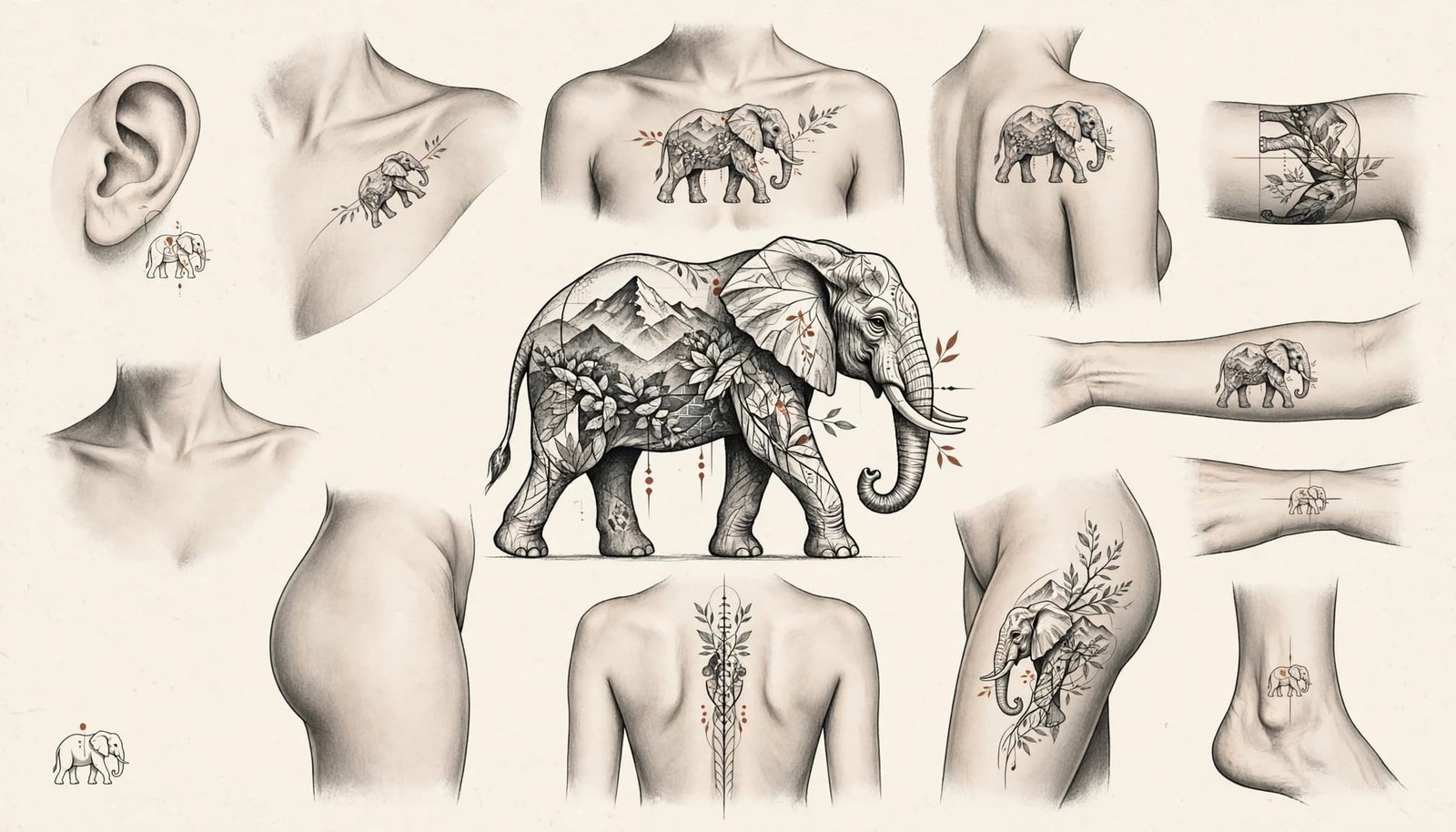
The back, chest, thigh, and shoulder blade offer broad, stable canvases for herd scenes, mother-and-calf designs, mandalas, landscapes, and layered shading. These areas give an artist enough room to preserve the gaps between ears, trunks, leaves, stars, and geometric shapes. Without that spacing, an abstract elephant can become a dark cluster instead of a clear composition.
An upper-arm tattoo works well when you want a detailed design that remains easier to cover. The back and thigh provide even more room for a full scene, while the chest can follow the natural curve of the body. A shoulder-blade design gains visual movement from the bone beneath it, but the artist should position the elephant so important features don’t distort when you lift or rotate your shoulder.
A realistic or realism-adjacent elephant portrait often needs at least 10 to 15 cm to keep facial features readable. Full herd scenes, landscapes, or mandalas may require more space. Ask your artist to measure the actual stencil on your body before approving the final size.
Small Placements for Simple Abstract Elephants
Wrists, ankles, collarbones, behind-the-ear areas, and the side of a finger suit single-line art, simple silhouettes, tiny geometric icons, and small symbols. These placements work well when you want a tattoo that feels personal but remains easy to hide or reveal.
The spine and collarbone can also support a narrow elephant outline, especially when the design follows the body’s vertical or horizontal line. However, areas that bend, rub, or receive frequent sun exposure need careful planning. A wrist may meet watchbands and sleeves, an ankle may rub against socks and shoes, and a finger experiences constant washing and friction.
Smaller tattoos cannot hold as much detail, and very fine lines may soften over time. Rather than shrinking every feature from a large reference design, let your artist simplify it. One clean ear, curved trunk, and open body usually age better than a miniature portrait packed with tiny shading.
Blackwork, Graywash, Fine-Line, or Color?
Your technique should support the design, your skin, and your daily routine. Blackwork creates bold contrast and a strong graphic look, while fine-line work feels light and delicate. Graywash adds soft depth to shadows, herd scenes, and memorial-inspired designs. Color can bring mood to a sunset, botanical detail, or watercolor wash.
Gray shading and watercolor effects may need extra sun protection because ultraviolet light can fade some tattoo inks. After the skin heals, follow the American Academy of Dermatology’s tattoo care guidance, including broad-spectrum SPF 30 or higher on exposed skin.
Public placements, such as the forearm, wrist, calf, or collarbone, remain visible during work and everyday activities. Private areas, including the back, thigh, chest, and upper arm, offer more control over visibility. Clothing friction, exercise, sweating, and sun exposure should influence your choice as much as appearance. Compare the artist’s healed portfolio, not trends alone, before selecting a style.
How to Make Your Abstract Elephant Tattoo Original, Respectful, and Easy to Live With
An abstract elephant tattoo feels most personal when its meaning guides the design. Before collecting reference images, write down the memory, value, person, or change you want the tattoo to hold. Then choose shapes, lines, and colors that support that idea.
Start With Meaning, Then Choose the Visual Language
Give each idea a visual form that feels natural. Wisdom may work best as a calm elephant outline surrounded by open space. Protection can appear as a sheltering arch over the head. Family may fit connected outlines, while healing can take shape through broken lines that gradually become whole.
One strong symbol usually creates a cleaner tattoo than several unrelated details. If the elephant already carries the main message, you may only need one supporting element, such as a moon, flower, initial, or small geometric shape. What could you remove without weakening the story?
Use this short design checklist before your consultation:
- Choose the preferred size and placement.
- Decide whether you want fine, medium, or bold line weight.
- Select black and gray, muted color, or a brighter palette.
- Write the personal meaning in one clear sentence.
- List the details the tattoo must include.
- Name the details you want removed if the design becomes crowded.
Motifs connected with Indian henna, African ornament, or other traditions need careful research. Discuss their origin and use with your artist instead of copying a pattern as vague exotic decoration. A respectful design understands where a motif comes from and avoids treating sacred or community-specific imagery as a visual accessory.
Work With the Right Tattoo Artist
Choose an artist whose healed portfolio matches the skills your concept needs. Look for geometric precision, fine-line control, solid blackwork saturation, smooth graywash, color blending, or custom abstract composition. A general portfolio may look impressive, yet the right artist should show work close to your desired style.
Bring reference images for mood, balance, line movement, and structure. Use them to explain what attracts you, but don’t copy another person’s tattoo. Your artist can combine those visual qualities with your story and create a design that belongs to you.
Ask to see the stencil on your body before the needle starts. Check its size, direction, spacing, and visibility while you move naturally. Also ask how the concept will age at that size and whether any tiny details should be simplified. Open gaps and clear shapes often remain more readable than a crowded miniature composition.
Protect the Design During Healing and Over Time
Follow your artist’s wrap instructions because healing timelines vary by dressing type. Wash gently with lukewarm water and mild, unscented soap, then pat dry instead of rubbing. Apply only a thin layer of the recommended moisturizer, and wear loose clothing that won’t create tight friction.
Avoid scratching, picking, swimming, soaking, and heavy sweating while the skin heals. Surface healing often takes around two to three weeks, but your artist’s instructions come first. Don’t apply sunscreen until the tattoo has healed. Afterward, broad-spectrum SPF 30 or higher helps protect black, gray, and color work from fading. Seek qualified medical care if redness spreads, pain worsens, bumps or pus appear, fever develops, or the tattoo doesn’t seem to be healing. GoodRx’s tattoo aftercare guidance lists warning signs that deserve medical attention.
Conclusion
An abstract elephant tattoo can be bold, delicate, mysterious, or deeply personal without looking realistic. The strongest designs begin with a clear meaning, then bring that meaning to life through the right line style, scale, placement, and level of detail. Choose an artist with proven skill in your preferred technique, and review healed work before making a decision.
Cultural respect matters when you borrow ornamental patterns or spiritual imagery. So does proper aftercare, since gentle healing and long-term sun protection help preserve the design’s clarity. Most importantly, choose only the few elements that truly belong in your story, then give them enough space to remain readable as the tattoo ages.
With thoughtful planning, your abstract elephant tattoo can turn a memory, value, or bond into artwork that feels lasting and unmistakably yours.
Save the pin for later

- 30 Trendy Tattoo Ideas for 2026: Styles and Placement - September 27, 2026
- 30 Gorgeous Fine Line Tattoo Ideas to Try - September 27, 2026
- 25 Fine Line Tattoo Ideas for Women With Meaning - September 22, 2026
Leave a Reply